
Journalist

Lee Hyo jung
hyo@ajunews.com
-
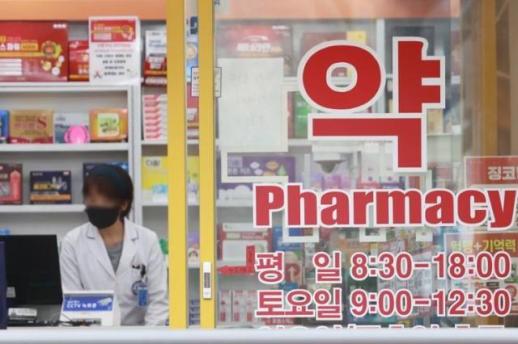 Korea’s Big Drugmakers Post Strong Q1 Gains, but Face Price-Cut Pressure in H2 South Korea’s leading traditional drugmakers are extending solid growth in the first quarter, with operating profit rising by double digits from a year earlier. Industry officials said Tuesday that Yuhan Corp., GC Biopharma and Chong Kun Dang Pharmaceutical Corp. each posted double-digit operating-profit growth in the January-March period from a year earlier. Yuhan reported consolidated first-quarter revenue of 526.8 billion won and operating profit of 8.8 billion won, up 7.2% and 37.3%, respectively. The company missed market expectations because milestone revenue tied to its lung cancer drug, Lazertinib, was not booked in the quarter. Chong Kun Dang, on a separate basis, posted revenue of 447.7 billion won and operating profit of 17.6 billion won, up 12.2% and 36.9%. The company benefited from steady sales of established prescription drugs such as Godex and Dilatrend, along with a co-marketing boost from the obesity drug Wegovy. Prescriptions for Wegovy have been expanding in the domestic obesity-treatment market, contributing more meaningfully to sales, the report said. Among the traditional drugmakers, GC Biopharma is drawing the highest expectations. Securities-industry consensus forecasts put its first-quarter revenue at 439.2 billion won, up about 14% from a year earlier, with operating profit expected to jump about 40% to around 12.2 billion won. A key driver is Aliglo, a blood product that has gained traction in North America. Aliglo is estimated to have generated about $21 million (about 31 billion won) in first-quarter sales, helped by expanding prescriptions in the United States. The company also benefited from strong sales of the obesity drug Mounjaro, distributed through its affiliate GC Wellbeing. Daewoong Pharmaceutical Co., which has yet to report results, is also expected to post growth. Analysts forecast first-quarter revenue of 388.3 billion won and operating profit of 44.2 billion won, up about 8.9% and 14.2%. They cited rising global sales of the botulinum toxin product Nabota and steady domestic prescriptions for the gastroesophageal reflux disease drug Fexuclu. The bigger concern is the second half. Companies face continued cost pressure from global supply-chain instability, including the Middle East war, and a government push to cut drug prices. The Ministry of Health and Welfare plans to issue an administrative notice this month on a revision to its standards for setting and adjusting drug prices. The revision is expected to include changes to generic pricing formulas, tighter criteria for stepwise price cuts, and measures related to policy add-ons and support for so-called exit-prevention drugs. The government is aiming for implementation in August. “Companies got through the first quarter with new-drug sales and efficient cost control, but government pricing policy and rising global logistics costs are external variables management cannot control,” an industry official said. “In the second half, performance gaps will become clearer between companies with strong new-drug portfolios and those without.” The official added that with profitability likely to shrink as prices fall, failure to expand R&D and overseas sales could lead to a downturn in results. * This article has been translated by AI. 2026-05-06 18:33:18
 -
 Samsung Biologics union to shift from strike to open-ended work-to-rule campaign The Samsung Biologics labor union is ending a five-day, full-scale strike that began May 1 and will return to worksites on May 6, shifting to an open-ended work-to-rule campaign. The union is also said to be weighing an extension of the strike, raising the possibility of a prolonged dispute if an agreement is not reached soon. Industry officials said May 5 that labor and management plan to resume talks with a one-on-one meeting on May 6 between a human resources executive and the union chair, followed by a tripartite meeting on May 8 with the Labor Ministry participating. With the sides far apart, however, many in the industry say a deal remains uncertain, fueling concerns that production disruptions and losses totaling several hundred billion won could become reality. The two sides held their first tripartite meeting at 10:15 a.m. the previous day for about two hours but only confirmed their differences. They later met separately with the Labor Ministry, but did not produce additional agenda items or a concrete path forward. In a statement, the union said management asked both sides to halt all forms of labor action and to mutually withdraw legal disputes, including allegations of unfair labor practices. The union said it refused, arguing it would only lower the level of action without gaining anything in return. The union launched the company’s first full-scale strike since Samsung Biologics was founded in 2011, starting on Labor Day, May 1. Estimated losses so far are about 150 billion won to 300 billion won. If the stoppage continues, projected losses from production disruptions could reach about 640 billion won, according to estimates cited in the industry. Ahead of the planned May 1 strike, the union also abruptly halted work in some processes starting April 28. That stoppage reportedly froze a key aliquoting process, triggering knock-on disruptions across production lines and disrupting process flow. The company has reportedly selected which products to keep producing and discarded some products that were deemed likely to deteriorate. As a result, production has already been disrupted for products including cancer drugs, medicines related to human immunodeficiency virus, or HIV, and treatments for atopic dermatitis, according to the report. An industry official said biologic drugs can require an entire batch to be discarded if even one step is delayed, amplifying losses. A major sticking point is the union’s demand that the collective bargaining agreement require prior union consent for key management matters such as hiring, performance evaluations and mergers and acquisitions. The company has maintained that such provisions are difficult to accept because they directly affect management and personnel authority, viewing them as an infringement on management rights. A business community official warned that requiring prior union consent for M&A or major staffing decisions could undermine management’s ability to make decisions for future growth and could ultimately leave the company less competitive. The union plans to return to work starting the afternoon of May 6 but begin an open-ended work-to-rule campaign by refusing overtime and holiday work. It has also signaled it could launch a second strike if no agreement is reached. An industry official said the risks extend beyond direct losses from halted production, citing potential penalties for contract nonperformance, heightened scrutiny from regulators and customers switching to alternatives. The official added that in the global contract development and manufacturing organization, or CDMO, market, fast-following competitors are closing in, and delayed decision-making could cost orders. The official also said the strike risk, emerging amid an international environment of strengthening U.S. protectionism, could increase the chance of competitors benefiting at Samsung Biologics’ expense. 2026-05-05 15:49:14
 -
 Profit-Linked Bonus Demands Spread Across South Korea’s Top Industries Labor disputes are flaring simultaneously at some of South Korea’s flagship companies, spanning semiconductors, autos, biotech and telecommunications, as unions push for bigger, profit-linked bonuses. The Samsung Electronics union has warned of a general strike while demanding the removal of a bonus cap and distribution of 15% of operating profit. The Samsung Biologics union began its first full-scale strike since the company’s founding on May 1. The Hyundai Motor union is seeking bonuses equal to 30% of net profit, and the LG Uplus union is also demanding 30% of operating profit, widening what has become a contest over “profit-linked bonuses” across industry. Unions argue that stronger results justify a larger share. But the demands are increasingly seen as going beyond routine pay bargaining, as signals emerge that could affect companies’ capacity to invest, production stability, supply-chain confidence, gaps between prime contractors and suppliers, and ultimately national industrial competitiveness. Some in the industry trace the current dynamic to SK hynix, where bonuses around 10% of operating profit have come to be treated as a benchmark. Once a higher ratio is set at one company, other unions find it harder to accept less, and negotiations can shift from productivity to symbolic one-upmanship — a dynamic often described as a “bonus chicken game.” The issue is not confined to individual companies. Since the implementation of the so-called Yellow Envelope Act, bargaining demands by subcontractor unions toward prime contractors have surged, with requests filed at multiple worksites — including Hanwha Ocean, POSCO and Hyundai Motor — from the first day of enforcement. As large-company unions raise profit-linked compensation standards, prime contractors’ cost burdens grow, increasing the likelihood that pressure is passed on through tighter supplier pricing or reduced investment. That, in turn, highlights a long-standing bottleneck in Korean industry: bargaining power rises for regular workers at big firms, while smaller suppliers, nonregular workers and subcontracted labor can face greater instability. As bonus payouts grow, companies may have less room to raise payments to partner firms, potentially widening wage gaps between large companies and small and midsize businesses. Critics warn that what appears to expand labor’s share could deepen the labor market’s dual structure. The industrial reality is unforgiving. Semiconductors, biotech and autos face global competition, heavy capital spending and pressure to shift technologies. If bonuses harden into an automatic fixed share of profits rather than rewards tied to productivity gains, management can become locked into short-term cash distribution while investment is pushed back. When unions seek to maximize payouts based on short-term performance, spending on research and development, facility expansion and new businesses — often the first sources of future growth — is more likely to be squeezed. The need now, the article argues, is not escalation but a reset of rules. Bonus systems should reflect more than a simple share of operating or net profit, incorporating investment execution, cash flow, industry cycles and future cost provisions. Before strikes and all-out confrontation, labor and management should institutionalize bonus formulas, upper and lower limits, and adjustment principles for downturns. It also calls for broader discussion of how compensation systems at major prime contractors ripple through suppliers and the wider industrial ecosystem. South Korea’s economy rests on exports, manufacturing and the competitiveness of advanced industries. The current bonus conflicts are both a dispute over labor’s fair share and a warning light that could erode the power of the country’s growth engine. Just as unions should weigh not only today’s profits but also tomorrow’s survival, companies should treat labor not simply as a cost but as a pillar of sustainable competitiveness. The article concludes that this is not a problem that ends with one side’s victory. It says negotiations should focus on sustainability — not a test of strength — so that sharing industrial gains does not damage the industry’s future. * This article has been translated by AI. 2026-05-03 18:03:46
 -
 Samsung Biologics Q1 revenue tops 1.2 trillion won; operating profit 580.8 billion won Samsung Biologics said it extended its growth streak in the first quarter, starting the year strongly as it targets annual revenue of 5 trillion won. The company reported first-quarter revenue of 1.2571 trillion won and operating profit of 580.8 billion won, it said in a regulatory filing on the 22nd. Revenue rose 25.8% from a year earlier and operating profit increased 35%. Samsung Biologics maintained its full-year revenue growth guidance of 15% to 20%, citing full utilization at Plants 1 through 4 and a ramp-up at Plant 5. The outlook, first presented in January, does not include any revenue contribution from its acquisition of a manufacturing site in Rockville, Maryland. The company said it plans to provide updated guidance reflecting that deal later. As of the end of the first quarter of 2026, Samsung Biologics reported assets of 11.9950 trillion won, equity of 7.9228 trillion won and liabilities of 4.0722 trillion won. It said its balance sheet remained stable, with a debt-to-equity ratio of 51.4% and a borrowing ratio of 11.6%. The company also reported steady order activity across contract manufacturing (CMO) and contract development (CDO). Cumulative orders since its founding totaled 112 CMO deals and 169 CDO deals, with cumulative contract value reaching $21.4 billion, it said. Samsung Biologics said it is expanding global production capacity. It completed the acquisition of the Rockville facility at the end of March, securing local staff and infrastructure and building a continuous production system. It said it is also strengthening order competitiveness through closer coordination with global drugmakers. The company said it has enhanced its service portfolio by bringing master cell bank production and vector construction in-house, enabling an end-to-end service that can move from vector build to an IND submission within nine months. It also said it secured flexible production capacity through the CEPI network to improve its ability to respond to global public health crises. Despite the strong results, labor risk was cited as a potential burden. The Samsung Biologics Mutual Growth Labor Union held a rally on the 22nd and stepped up pressure in wage and collective bargaining talks. Labor and management have held 13 rounds of negotiations since December but have not reached an agreement. The union said it plans a large-scale strike on May 1 if differences are not narrowed. Market participants have raised concerns that a strike could disrupt production and increase earnings volatility. Samsung Biologics posted 2025 revenue of 4.5570 trillion won, up 30.3% from a year earlier, and has set a 2026 revenue target of 5.3200 trillion won. A bio industry official said, "If the union goes ahead with a strike, disruptions to the May production schedule are unavoidable," adding, "We cannot rule out penalties for contract violations with global clients and potential damage to trust."* This article has been translated by AI. 2026-04-22 16:30:20
 -
 Pharos iBio Presents Next-Gen Cancer Drug Data at AACR, Targets Global Market AI-driven drug developer Pharos iBio disclosed new research on next-generation cancer candidates at the American Association for Cancer Research meeting in San Diego, the company said. It said the presentations focused on overcoming drug resistance and expanding combination-therapy strategies, a major trend in global drug development. Pharos iBio said it presented three posters on April 20 (local time) at AACR, highlighting results from its core pipeline programs. The company released combination-study findings for PHI-101, also known as “lasmotinib,” an FLT3 inhibitor in development. The study used five approved or investigational menin inhibitors, including Johnson & Johnson’s “bleximenib” and Syndax’s “revumenib.” Pharos iBio said lasmotinib showed anti-cancer synergy when given in combination. When combined with bleximenib, tumor growth inhibition (TGI) remained at 82% to 89% two weeks after dosing was stopped, it said. The company also introduced PHI-601, a next-generation menin inhibitor, as a new strategy for treating acute myeloid leukemia. PHI-601 is being developed to reduce the menin protein itself through a targeted protein degradation (TPD)-based mechanism, it said. In preclinical research on PHI-501, a BRAF inhibitor, the company said anti-cancer effects improved when combined with immune checkpoint inhibitors. It said it observed potential for the candidate as a combination asset by modulating immune responses. Nam Gi-yeop, head of new drug development at Pharos iBio, said the company would “strengthen competitiveness as a combination-strategy partner in the global oncology market” based on its differentiated R&D capabilities.* This article has been translated by AI. 2026-04-22 11:15:17
 -
 Samsung Biologics Faces Strike Threat as Court Ruling Looms Labor tensions at Samsung Biologics are edging closer to a strike after management and the union failed to reach a deal following 13 rounds of wage and collective bargaining talks since last December. With global competition intensifying, industry officials warn a walkout could disrupt production and damage confidence in South Korea’s biotech sector. Industry sources said Tuesday that the Samsung Biologics Sangsaeng Union plans to hold a rally of about 2,000 workers Wednesday at the company’s headquarters in Songdo, Incheon, and begin an all-out strike on May 1. The two sides have been unable to narrow differences over pay raises, the company’s excess-profit incentive (OPI) and the size of encouragement payments. The union has argued compensation should reflect Samsung Biologics’ operating profit of about 2 trillion won last year. It has recently stepped up pressure after securing majority status as a local chapter under Samsung Electronics’ umbrella union, according to the report. Samsung Biologics has asked the Incheon District Court to issue an injunction barring union industrial action. A court decision, expected as early as this week, is seen as a key turning point for whether the strike proceeds as planned. The company cited Article 38 of the Trade Union and Labor Relations Adjustment Act, which restricts actions that obstruct normal operations or halt work needed to protect facilities during labor disputes. The company argues that if skilled workers leave production lines, the stability of its contract manufacturing processes for biopharmaceuticals could be undermined. It has said a production stoppage could result in losses of 640 billion won a day and harm global trust. The union has maintained a hard line. Union leader Park Jae-seong said he expects the court to dismiss the injunction request because the company is making what he called excessive claims. Still, he said even if the ruling favors management, the request does not seek a total ban on all labor action, and the May 1 strike would continue within what is allowed, with possible changes in participation depending on the decision. Park also said the union is planning a second round of action, even if it means going unpaid. The union has also voiced dissatisfaction with follow-up measures after a personnel information leak in November last year. It is demanding that limits on access to personal data be written into work rules and that personnel action be taken against those suspected of union-busting, the report said. Concerns are growing that a strike could weaken the company’s competitiveness and disrupt drug supplies. The medicines Samsung Biologics produces are mainly cancer treatments or therapies for rare diseases that require ongoing dosing, raising fears that supply problems could pose risks directly affecting patients’ lives. Because Samsung Biologics’ business is based on contract development and manufacturing for global drugmakers rather than its own new drugs, a prolonged dispute could also hurt its credibility, industry officials said. Biopharmaceutical production involves cultivating and purifying living cells and requires continuous operation; even a single disruption could force the disposal of batches that took months to produce. A prolonged strike risk could extend beyond the company and erode global trust in the broader “K-bio” brand, the report said. A biotech industry official said that if a strike leads to a production halt, the company’s competitiveness in global contract bids would likely take a serious hit. 2026-04-21 18:17:56
 -
 Samsung Bioepis Unveils Preclinical Data on First New Cancer Drug Candidate at AACR 2026 Samsung Bioepis said it has disclosed preclinical data for SBE303, a next-generation antibody-drug conjugate (ADC) cancer drug candidate, for the first time at the American Association for Cancer Research’s AACR 2026 annual meeting, as it moves beyond biosimilars to accelerate development of its own new medicines. The company said the data were presented at the meeting in San Diego, held April 17-22 (local time). SBE303 is a next-generation ADC designed to target nectin-4, a protein overexpressed in tumor cells. Samsung Bioepis said it is its first new-drug pipeline developed through joint research and licensing agreements under an open-innovation strategy with domestic and overseas partners Intocell (South Korea) and Frontline (China). According to preclinical results presented in an on-site poster session on April 20 (local time), SBE303 showed improved tumor-cell binding specificity and more efficient intracellular drug delivery compared with existing nectin-4-targeted therapies, the company said. In safety assessments, Samsung Bioepis said SBE303 produced improved results in tests for skin toxicity, a common adverse reaction associated with nectin-4-targeted therapies. It also said no interstitial lung disease (ILD), a serious side effect that can cause irreversible damage, was observed. The company said the highest non-severely toxic dose (HNSTD) was 40 mg/kg, adding that the finding supports the potential for clinical use by securing a wide therapeutic safety margin. Samsung Bioepis said it has begun global Phase 1 clinical trials of SBE303 in the United States and South Korea. It said it plans to evaluate drug safety and early efficacy in 149 patients with advanced refractory solid tumors from March this year through July 2030. 2026-04-21 11:42:20
 -
 Samsung Biologics Makes Debut at AACR, Targeting Early-Stage Oncology Clients Samsung Biologics is taking part for the first time in the American Association for Cancer Research (AACR), one of the world’s largest cancer conferences. With AACR focused on preclinical and early clinical-stage research, the company aims to promote its contract research, development and manufacturing (CRDMO) capabilities and win clients in the early phases of drug development. According to the industry on April 20, AACR is considered one of the world’s three major cancer meetings, along with the American Society of Clinical Oncology (ASCO) and the European Society for Medical Oncology (ESMO). This year’s event is expected to draw more than 22,000 cancer researchers and pharmaceutical and biotech industry participants from about 140 countries. The meeting runs April 17-22 (local time) at the San Diego Convention Center in California. Samsung Biologics said it is seeking to secure early-stage customers by starting collaboration when demand is high for contract research (CRO) and contract development (CDO), then carrying projects through to commercial production — an approach it described as an “early lock-in” strategy. Jung Hyung-nam, vice president and head of Samsung Biologics’ Bio Research Center, said the company will “provide CRO and CDO services from the early development stage of innovative new drugs and establish ourselves as a trusted partner in drug development.” At AACR, Samsung Biologics has prepared a promotional booth as well as oral and poster presentations. On April 21, Alexis Santana, organoid sales director, will present on “Samsung Organoid: Enhancing Clinical Relevance in Anticancer Drug Development,” outlining how organoid services with high patient similarity could improve the success rate of drug development. The company will also present posters featuring data showing that Samsung Organoid reproduces patients’ genetic characteristics and drug responses and demonstrates a high correlation with clinical outcomes, along with a separate poster on the therapeutic and manufacturing efficiency of its bispecific antibody platform, S-DUAL.* This article has been translated by AI. 2026-04-20 17:49:34
 -
 Korean Drugmakers Head to AACR 2026 to Showcase Next-Gen Cancer Research Hanmi Pharmaceutical, Yuhan, Samsung Bioepis and Celltrion, among South Korea’s major drug and biotech companies, are heading to San Diego ahead of the American Association for Cancer Research’s AACR 2026 meeting. The companies plan to present early-stage findings on next-generation cancer drug candidates, highlight emerging trends and seek future technology-licensing opportunities. Industry officials said on April 17 that AACR, which runs through April 22 (local time), is considered one of the world’s three major cancer meetings, along with the American Society of Clinical Oncology and the European Society for Medical Oncology. AACR is known as a venue where preclinical and early clinical results are concentrated, and is widely viewed as a stage for gauging potential blockbuster candidates and licensing prospects. This year’s meeting is expected to spotlight next-generation modalities including antibody-drug conjugates, CAR-T therapies, radiopharmaceuticals and RNA-based treatments. Hanmi Pharmaceutical will present nine preclinical studies, the most among Korean companies. Its lineup spans targeted therapies and newer approaches, including an EZH1/2 dual inhibitor combined with a DNA damage inducer, a p53 mRNA cancer therapy, a 4-1BB x PD-L1 bispecific antibody and a B7H3 x PD-L1 bispecific ADC. The market expects Hanmi to extend its record of leading Korean firms in the number of presentations for four consecutive years, underscoring its research and development strength. Yuhan will also take the AACR stage, presenting research aimed at broadening the intersection of targeted cancer therapy and immuno-oncology. The move is seen as part of an effort to expand global partnerships, as AACR can serve as a starting point for licensing talks and co-development discussions. Samsung Bioepis will present preclinical data on SBE303, an ADC candidate and the company’s first new-drug pipeline, positioning it as an independent drug developer on the global stage. The company recently received U.S. Food and Drug Administration approval for an investigational new drug application for a Phase 1 clinical trial of a nectin-4-targeting ADC. Celltrion Pharm will introduce two new candidates using its dual-payload ADC platform, AD2C. The design aims to reduce dose-limiting toxicity while improving efficacy, as the company seeks differentiation in the next-generation oncology market. Biotechs scheduled for oral presentations are also drawing attention. Verismo Therapeutics, a subsidiary of the HLB Group, will present interim Phase 1 results for SynKIR-110, a CAR-T candidate for solid tumors. It will also disclose preclinical results for SynKIR-310, a CAR-T candidate for blood cancers, which was reported to have recorded a 100% survival rate, the only one to do so among comparator groups. Rznomics will give an oral presentation of interim clinical results for RZ-001, a gene therapy for liver cancer. The approach targets telomerase mRNA to induce both cancer cell death and immune cell infiltration, and is expected to draw interest because it will be the first disclosure of proof-of-concept data for the company’s RNA editing and replacement technology. A representative of a Korean pharmaceutical company said the meeting is a chance to show how competitive Korea’s oncology platforms are on the international stage. “Preclinical and early clinical stages carry high risk, but if successful, they can lead to technology exports and a reassessment of corporate value,” the person said. 2026-04-17 19:03:00
 -
 Hanmi Launches Task Force to Commercialize Obesity Drug Efpeglenatide; Other Pharma-Bio Updates Hanmi launches companywide task force to commercialize obesity drug efpeglenatide this year "The development of Efe reflects Hanmi’s spirit of not being discouraged by failure and turning it into a bigger opportunity." Lim Ju-hyeon, vice chair of Hanmi Group, made the remarks April 13 at Hanmi C&C Square in Seoul as the company launched a cross-company consultative body, dubbed the “Efe Project–Seosa,” aimed at commercializing the obesity drug candidate efpeglenatide, known as Efe, within the year. The event included Lim and Hwang Sang-yeon, Hanmi Pharmaceutical’s new CEO and the company’s first chief executive hired from outside since its founding, along with key executives from new product development, marketing and R&D, the company said. The group plans to hold formal meetings monthly to align execution strategies across development, clinical work, marketing, production and distribution. Lim said Efe’s Phase 3 cardiovascular outcomes trial showed results indicating a reduced risk of major adverse cardiovascular events. She said the drug has strong protective effects for cardiovascular and kidney disease compared with other drugs in the same class currently on the market. Hwang said the company must now shift to detailed commercial preparation. “It feels like a torchbearer has just entered the main Olympic stadium,” he said, adding that Hanmi should create results “beyond sales.” He said he is confident the drug can be developed into a “premium, Korea-style obesity treatment” and pledged to grow Efe into a new engine of innovation-led growth. Daewoong Pharmaceutical wins Indonesian approval for GERD drug Fexuclu Daewoong Pharmaceutical said its self-developed gastroesophageal reflux disease treatment Fexuclu has received marketing authorization in Indonesia, as the company expands its push into Southeast Asia. The drug has now been approved in 16 countries, including South Korea, Indonesia, China, Mexico and India, and has been launched in six countries, the company said. Daewoong said April 17 that Fexuclu 40 mg, whose active ingredient is fexuprazan, was approved in Indonesia for the treatment of erosive GERD. The company also said it applied to South Korea’s Ministry of Food and Drug Safety on April 10 for an investigational new drug plan for a multinational Phase 3 trial jointly conducted in South Korea and Indonesia, seeking to expand the drug’s indication to treat gastric ulcers. Indonesia, with a population of 280 million, is the world’s fourth-most populous country and Southeast Asia’s largest economy, the company noted. A company official said a China launch is also approaching and that the Indonesian approval is expected to accelerate Fexuclu’s global expansion. Daewoong CEO Park Sung-soo said the approval in Indonesia, a key market in Southeast Asia, would be an important turning point for the company’s global push. GC Biopharma USA to present IVIG quality and safety data at U.S. conference GC Green Cross said its U.S. subsidiary, GC Biopharma USA, will present research evaluating the quality and safety of intravenous immunoglobulin products at an international conference in Denver, Colorado, running April 18-22 local time. The company said the study compared protein size and particle forms in commercially available IVIG products to assess the degree of aggregation. IVIG is widely used to treat immune disorders, and as use has increased, the importance of quality and safety has grown, it said. Protein aggregation can affect drug safety and adverse reactions during administration, making control of aggregation during manufacturing a key quality factor, the company said. The study compared five products, including GC Green Cross’ ALYGLO. The analysis found ALYGLO had lower levels of excessively aggregated proteins (multimers) and damaged protein fragments than competing products, while maintaining relatively higher levels of monomers and dimers, which are considered normal functional structures, the company said. A GC Green Cross official said the company will continue working to provide safer, more reliable treatment options for patients. Lunit to supply integrated breast cancer AI diagnostics to Lexington Clinic in the U.S. Medical AI company Lunit said it has supplied an integrated breast cancer AI diagnostic solution to Lexington Clinic in the United States, as it accelerates expansion in the Americas and aims to broaden its presence in the global breast screening market. Lunit said April 17 that Lexington Clinic adopted its mammography AI image analysis software, Lunit INSIGHT MMG, and its 3D mammography AI solution, Lunit INSIGHT DBT, to build an AI-based breast cancer diagnostic system. The clinic also introduced solutions from Lunit International, formerly Volpara, covering image quality optimization, breast density assessment and patient follow-up management. That will allow the full breast cancer diagnostic workflow to be operated on Lunit’s platform, the company said. Lunit said the deal means that about a year after integrating Lunit and Lunit International products, it has supplied the combined solution to more than 330 medical institutions across the Americas, supporting about 1 million mammography screenings annually. CEO Seo Beom-seok said supplying an end-to-end integrated solution to a large U.S. medical group and expanding to more than 330 sites reflects the combination of Lunit’s AI technology and Lunit International’s market capabilities. He said the company will continue to expand its influence beyond the Americas into the global breast cancer screening market.* This article has been translated by AI. 2026-04-17 14:51:00