
Journalist

Lee Hyo-jeong
hyo@ajunews.com
-
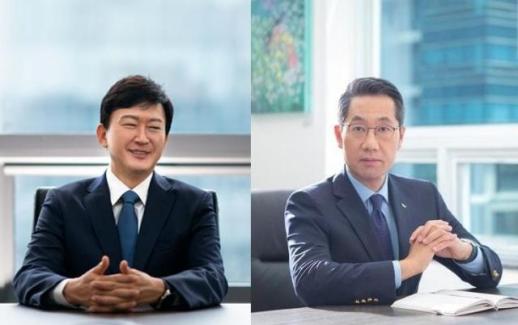 Bio CEOs Likely to Win Renewed Terms as Record Results Head Into Shareholder Meetings Top executives at major South Korean biotech companies including Samsung Biologics, Celltrion and SK Biopharmaceuticals are expected to extend a run of CEO reappointments this year, buoyed by record results posted last year. Analysts say the companies still face major growth tasks, including expanding contract development and manufacturing (CDMO) capacity, building antibody-drug conjugate (ADC) businesses and broadening global new-drug portfolios. Industry officials said March 16 that regular shareholder meetings at Samsung Biologics, Celltrion and SK Biopharmaceuticals are expected to put CEO reappointment items on the agenda. With each company delivering all-time-high performance, the market is largely betting on approvals. Samsung Biologics reported 4.557 trillion won in revenue last year and 2.0692 trillion won in operating profit, putting it within reach of surpassing 5 trillion won in revenue this year. The company roughly doubled operating profit in just two years after first topping 1 trillion won in 2023, results seen as validating its strategy to widen its lead in CDMO. That performance has strengthened the outlook for another term for CEO John Rim. Rim became CEO in December 2020 and won one reappointment at the 2023 shareholders meeting. If the agenda item passes as proposed at the meeting scheduled for March 20, he would begin a third term. Key tasks ahead include rebalancing global capacity around its fifth plant and its Rockville, Maryland, production base; turning its ADC business into visible revenue; and winning orders for a sixth plant. The company has been pursuing new contracts by promoting integrated ADC drug substance and drug product manufacturing since last year, and securing commercial production deals that translate into sales is viewed as a priority. Industry watchers say the effort ties into a longer-term order strategy after the sixth plant begins full operations next year, calling it a potential inflection point for another step up in scale. With labor-management wage talks repeatedly faltering, Rim’s role as a key figure in resolving the dispute has also drawn attention. Celltrion posted record results last year on a consolidated basis, exceeding 4 trillion won in revenue and 1 trillion won in operating profit. Its operating margin reached 36%, easing profitability concerns raised at the time of its merger with Celltrion Healthcare in just one year. The company has set a goal of reaching 5.3 trillion won in revenue in 2026 by reducing reliance on biosimilars and expanding CDMO and new-drug businesses starting this year. Investors are also focused on whether CEO Ki Woo-sung will be reappointed. Industry officials say his chances look strong given his role in driving merger synergies and earnings growth under the integrated Celltrion structure. Still, the shift toward a “post-biosimilar” business model is seen as a work in progress. Celltrion has signaled plans to spin off CDMO into a separate subsidiary and to secure global customers through U.S. facility acquisitions, raising concerns that risks could emerge if order volume and profitability do not follow. SK Biopharmaceuticals has been scaling up quickly on the strength of its epilepsy drug cenobamate, sold in the United States as Xcopri. Revenue rose from 246.2 billion won in 2022 to 354.9 billion won in 2023 and 547.6 billion won in 2024, marking 40% to 50% growth for two consecutive years. With Xcopri’s U.S. sales climbing, the company is seen as having achieved both a return to profitability and a stronger business structure. Last year, it reported 706.7 billion won in revenue and 203.9 billion won in operating profit. The outlook for reappointing CEO Lee Dong-hoon has also improved. The company is pursuing both expanded indications for Xcopri and expansion into Europe and Asia, while accelerating development of central nervous system (CNS) candidates and next-generation platform-based drugs including RPT, TPD and CGT. However, heavy reliance on a single product leaves commercialization of follow-on pipelines and diversification of global partnerships as Lee’s biggest challenges. “Record results may have delivered reappointments, but the next few years will determine whether those renewals were truly earned,” an industry official said. “Each company will have to prove its chosen growth engines by turning them into concrete orders, revenue and profit.” * This article has been translated by AI. 2026-03-16 10:21:00
 -
 Hanmi Pharm Names Hwang Sang-yeon as CEO Candidate, Signaling Possible First Outside Hire Hanmi Science, the holding company of the Hanmi Group, is moving to replace the CEO of Hanmi Pharmaceutical and reshape the company’s board. It has nominated Hwang Sang-yeon, head of the private equity division at HB Investment, as a new inside director to succeed CEO Park Jae-hyun, in a bid to stabilize management. If Hwang’s appointment is confirmed after a shareholders meeting scheduled for later this month, Hanmi Pharmaceutical would be led by an externally recruited CEO for the first time since its founding. Hanmi Science and Hanmi Pharmaceutical said they each held board meetings on March 12 and approved an agenda item for Hanmi Pharmaceutical’s shareholders meeting later this month to nominate Hwang as a new director candidate. Hwang is expected to be selected as CEO after the regular shareholders meeting and a subsequent board meeting. Born in 1970, Hwang earned bachelor’s and master’s degrees in chemistry from Seoul National University. He previously served as head of the research center at Mirae Asset Securities and as chief investment officer at Allianz Global Investors, and later became CEO of Chong Kun Dang Holdings. In 2025, he joined venture capital firm HB Investment as head (vice president) of its newly established private equity fund unit. The market expects that, with experience in both the biotech industry and capital markets, he will help coordinate complex interests between major shareholders and management and strengthen the company’s competitiveness. Hanmi Pharmaceutical’s current and former CEOs — Lee Kwan-soon, Woo Jong-soo, Kwon Se-chang and Park — were professional managers promoted internally who led the company’s growth over decades. Hanmi Pharmaceutical’s board currently has 10 members: four inside directors — Park Jae-hyun, Lim Jong-hoon, Park Myung-hee and Choi In-young; four outside directors — Yoon Do-heum, Kim Tae-yoon, Lee Young-gu and Yoon Young-kak; and two other non-executive directors — Shin Dong-kuk and Kim Jae-kyo. The terms of five members — Park Jae-hyun, Park Myung-hee, Yoon Young-kak, Yoon Do-heum and Kim Tae-yoon — expire this month. At its meeting, Hanmi Science approved an agenda item to reappoint audit committee member Kim Tae-yoon (outside director) and to nominate Hwang, Kim Na-young, head of Hanmi Pharmaceutical’s new product development division, former lawmaker Chae Yi-bae, and Han Tae-joon, president of Ghent University Global Campus, as new directors. * This article has been translated by AI. 2026-03-12 18:18:00
 -
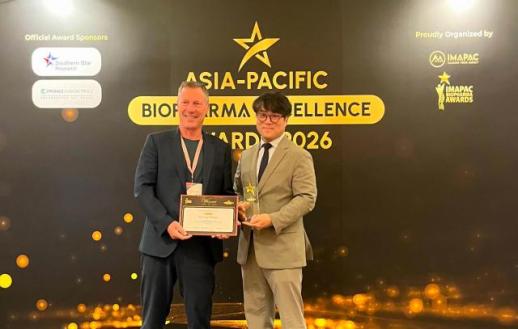 Samsung Biologics Showcases CDMO Platform at BMA 2026, Wins CMO Award Samsung Biologics said it used a global biopharmaceutical technology event to promote its contract development (CDO) capabilities and earned recognition for its contract manufacturing (CMO) competitiveness. The company said it took part in the Asia Biopharmaceutical Manufacturing Conference (BMA 2026), held March 11-12 in Singapore. Now in its 13th year, BMA is billed as Asia’s largest biopharmaceutical technology event and is sponsored by global pharma and biotech consulting firm IMAPAC. Organizers said 500 companies and more than 1,200 participants attended. At the conference, Samsung Biologics presented on its high-concentration formulation development platform, S-HiCon, highlighting its CDO technology. Lim Heon-chang, head of the CDO Development Center’s Formulation Development Group, shared key development cases using S-HiCon, along with challenges and how they were addressed, and introduced the company’s main CDO services. Launched in 2024, S-HiCon is designed to help clients develop high-concentration formulations by drawing on Samsung Biologics’ formulation development experience. The company said it has secured nine CDO-related technology platforms to meet a range of needs. These include Developick, a platform to assess development feasibility; S-Choice, an in-house cell line platform; and S-Transient, a transient expression platform for candidate materials. The company said it provides tailored CDO services from early development through investigational new drug (IND) applications. Samsung Biologics also received an award at the ABEA 2026 ceremony held alongside the conference, which it said underscored its CMO competitiveness. ABEA honors companies in the Asia-Pacific region for performance in areas including bioprocessing, logistics and supply chain management, clinical trial expertise, organizational capability and technology over the past year. The company said it won the Bioprocessing Excellence in Korea Award in recognition of its process development capabilities and global-level quality and production systems, which support clients across the full biopharmaceutical development process through end-to-end services. * This article has been translated by AI. 2026-03-12 13:57:00
 -
 Korea Pharma and Health Brief: MFDS, Chong Kun Dang, Celltrion, SK Chemical, SNUH, CHA Hospital MFDS expands free pickup delivery for food foreign-object reports to meat and imports South Korea’s Ministry of Food and Drug Safety and the Korea Food Safety Information Service said on March 11 they will expand a free pickup delivery service for consumers reporting foreign objects found in food, extending it this year to livestock products and imported foods. The service began last year to eliminate the need for complainants to bring evidence to investigators in person or mail it themselves. After a consumer files a report, the integrated reporting center for illegal and substandard foods at the Korea Food Safety Information Service arranges the pickup. The complainant packs the foreign object and related evidence, such as product packaging, and leaves it at a chosen location for a courier to collect. The free pickup service, which can be requested at the time of reporting, was selected as an exemplary proactive administrative case by the Office for Government Policy Coordination last year. A total of 1,602 cases were handled from March 17 to Nov. 30 last year. Chong Kun Dang wins MFDS approval for type 2 diabetes drug Duvie-M Pol SR Chong Kun Dang said in a March 11 filing that it received MFDS approval for its type 2 diabetes treatment Duvie-M Pol SR, about a year after applying in April last year. The drug is intended for adults with type 2 diabetes for whom combination therapy with lobeglitazone, empagliflozin and metformin is appropriate. The company said it plans to launch the product in South Korea within the year. Celltrion launches Europe rollout of Remsima liquid IV formulation Celltrion said it has begun a full-scale European launch of its liquid formulation of infliximab for autoimmune diseases, sold as Remsima, which it described as the only such liquid formulation available worldwide. Celltrion’s Nordic unit said March 11 it won national tenders in Denmark and Norway for the intravenous liquid formulation of Remsima. In Norway, sales began immediately after the award, and the company will supply the product through January 2028. Celltrion said it expects to secure about 35% of the local infliximab IV market. Celltrion said it is the only company globally to hold and have registered patents related to a liquid infliximab formulation. Compared with a lyophilized formulation, the liquid version cuts preparation time by about 50% and reduces labor and consumables costs during dosing preparation by about 20%, the company said. Celltrion said it plans to expand the rollout across Europe this year, starting with the Nordics and extending to France, the Netherlands and the Czech Republic. SK Chemical launches 300 mg high-dose Joins F for osteoarthritis SK Chemical said March 11 it launched Joins F tablets (JoinsF) 300 mg, a higher-strength version of its osteoarthritis drug Joins. JoinsF increases the active ingredient from 200 mg to 300 mg, or 1.5 times the earlier dose. With a typical daily dose of 600 mg, the new product is designed for twice-daily dosing, compared with three times a day for the 200 mg tablets. Because osteoarthritis is commonly associated with aging and often requires long-term medication, the company said reducing dosing frequency should ease the burden on patients. SK Chemical also said patient costs are expected to fall. The reimbursement-listed ceiling price for JoinsF 300 mg, listed on March 1, is 488 won per tablet. Based on the recommended regimen, the daily cost is 976 won, about 16% lower than the 1,170 won daily cost for Joins 200 mg. The company said the tablet is only about 5% to 10% larger than before despite the higher content, and its thickness was reduced to minimize discomfort when swallowing. Park Hyun-sun, head of business at SK Chemical, said, "Osteoarthritis is an area where professional treatment is essential to relieve symptoms," adding, "We will continue efforts to improve convenience by listening closely to patients and actively reflecting feedback from the field." Seoul National University Hospital develops pre-chemotherapy model to flag high-risk VOD in pediatric transplants Researchers at Seoul National University Hospital said they developed a machine-learning prediction model to identify, before transplant, pediatric patients at high risk of veno-occlusive disease (VOD), a potentially fatal complication. The hospital said March 11 that a team led by professors Hong Kyung-taek and Kang Hyung-jin of pediatrics and Han Do-hyun of translational medicine analyzed 720 types of blood proteins in 51 pediatric patients who received high-intensity preconditioning chemotherapy ahead of hematopoietic stem cell transplantation. In the analysis, 25 patients who did not develop VOD had higher levels of GCLC, a liver detoxification enzyme, even before chemotherapy. By contrast, 26 patients who developed the disease had lower levels of the enzyme, and significantly lower expression of FBP1, a protein involved in maintaining liver function, indicating greater vulnerability to liver toxicity. High-intensity chemotherapy used in stem cell transplants for children with serious illnesses such as leukemia can damage small liver blood vessels and trigger VOD. The condition occurs in about 15% to 30% of patients, and when severe, the mortality rate can reach as high as 80%, the hospital said. Hong said, "Patients with veno-occlusive disease showed distinctly different blood proteome patterns even before chemotherapy," adding that the identified patterns could help clinicians screen high-risk patients early, develop prevention strategies and carry out safer transplant treatment. Bundang CHA Hospital team finds real-world benefit of nivolumab-ipilimumab combo in advanced liver cancer Researchers at CHA University’s Bundang CHA Hospital said they confirmed real-world clinical effectiveness of combination immunotherapy with nivolumab and ipilimumab in patients with advanced hepatocellular carcinoma. The hospital said March 11 that a team led by oncology professors Jeon Hong-jae and Kim Jung-sun analyzed 116 patients treated with the nivolumab-ipilimumab combination at six medical institutions in four Asian locations: South Korea, Hong Kong, Taiwan and Singapore. About half of the patients had previously been treated with atezolizumab and bevacizumab, while the rest had no prior immunotherapy. The team compared treatment response, survival outcomes and immune-related adverse events based on prior immunotherapy exposure. Across all patients, the objective response rate was about 31%, the researchers said. The response rate was about 42% among patients without prior immunotherapy and about 20% among those previously treated with atezolizumab and bevacizumab. Among responders, the median duration of response was about 24 months. Patients who experienced immune-related adverse events, including thyroid dysfunction, had longer progression-free survival and overall survival than those who did not, the team said, suggesting such events may serve as a clinical indicator for predicting response. Jeon said the findings could provide important evidence for developing patient-tailored treatment strategies and sequential immunotherapy approaches.* This article has been translated by AI. 2026-03-11 16:15:00
 -
 Yuhan Unveils 100th Anniversary Slogan and Emblem: 'A Century of Trust, A Century of Promise' Yuhan on Tuesday unveiled its 100th anniversary slogan and emblem at the 55th memorial ceremony for the late Dr. Yu Il-han, held at Yuhan University in Bucheon, Gyeonggi Province. The slogan, “A Century of Trust, A Century of Promise,” reflects the company’s pledge to build on the trust it has earned since its founding and to remain committed to human health in the next 100 years. The emblem, released the same day, uses three core colors to express Yuhan’s identity and direction: carrying forward the Yuhan spirit, completing a century of innovation, and opening a new era in human health through new drug development. “Yuhan Green” symbolizes the company’s founding spirit sustained over 100 years. “Progress Blue” represents its DNA of continuous innovation. “Future Orange” points to a future of improved human health through new drug development and incorporates the brand color of Yuhan’s innovative new drug, “Leclaza.” Yuhan said it aims to add new responsibilities to the trust it has maintained and to build innovation on accumulated integrity, with the goal of becoming a major global company that protects healthy lives beyond South Korea. A Yuhan official said the company will “carry forward the Yuhan spirit, complete 100 years of innovation, and begin a new 100 years of human health through new drug development,” adding that it will keep working “with the next generation for a world where everyone becomes healthier and happier.”* This article has been translated by AI. 2026-03-11 16:12:00
 -
 Samsung Biologics, Eli Lilly to open Lilly Gateway Labs hub in Songdo Samsung Biologics said it will partner with U.S. drugmaker Eli Lilly and Co. to establish a South Korea hub for Lilly Gateway Labs (LGL), an open-innovation program designed to select and nurture promising biotech startups. The company said Monday it signed an open-innovation partnership agreement with Lilly at its headquarters in Songdo, Incheon, aimed at supporting high-potential Korean biotechs. Under the agreement, a new LGL site will be created inside Samsung Biologics’ second Bio Campus. The company said it will be LGL’s second location outside the United States, following China. Lilly launched LGL in 2019 to identify and develop promising biotech companies. LGL provides more than office and lab space, offering R&D collaboration, expert mentoring, direct investment and support for attracting outside funding, Samsung Biologics said. Since LGL’s launch, companies in the program have raised more than $3 billion (about 4.4121 trillion won), and more than 50 drug-development programs have been accelerated, it said. Samsung Biologics said Lilly had been exploring an expansion into South Korea, citing the market’s growth potential, and decided to collaborate after assessing Samsung’s global-scale infrastructure and startup-support experience. The new LGL hub is expected to move into an open-innovation center called “C-Lab Outside,” which Samsung Biologics is building with a target completion date of July 2027. The five-story facility, with a total floor area of 12,000 square meters, is under construction at the second Bio Campus in Songdo. The two companies said they will jointly run the full process of selecting and supporting 30 promising biotechs that will be based there. Samsung Biologics CEO John Rim said the partnership will help bring a global drugmaker’s open-innovation capabilities to promising Korean biotechs. “We will expand an organic, win-win cooperation model and secure sustainable growth momentum for K-bio,” he said. * This article has been translated by AI. 2026-03-11 08:06:00
 -
 Korean Drugmakers Warn Price Cuts and Middle East Turmoil Could Cripple Industry, Seek Joint Study "Steep drug price cuts will bring down the pharmaceutical industry." The emergency committee for reforming the drug pricing system, formed to promote industry development, issued that warning at an emergency news conference March 10 at the Korea Pharmaceutical and Bio-Pharma Manufacturers Association. The group said signs of strain are already emerging across the sector as the government pushes price cuts and as a newly erupted Middle East situation drives up costs. It urged the government to immediately launch joint studies with industry on three areas: analyzing the impact of price cuts, restoring order in drug distribution, and developing plans to modernize the pharmaceutical industry in a sustainable way. The Ministry of Health and Welfare is set to hold a subcommittee meeting of the Health Insurance Policy Deliberation Committee on March 11 to discuss drug pricing reforms. The government has said it would lower the pricing benchmark for generics from 53.55% of the original drug price to a level in the 40% range. After strong industry opposition, the agenda item was put on hold at the committee in February. With the government and industry at odds over the proposed "40% range" benchmark, the subcommittee discussion is expected to shape a more detailed outline at the committee’s full meeting later this month. The industry says that given listed companies’ operating profit margins of around 5%, it can tolerate a cut only to 48.2%, about 10% lower than the current level. Noh Yeon-hong, a co-chair of the committee, said fears of a "fourth oil shock" are spreading due to the Middle East situation. He said surging international oil prices and exchange rates are sharply increasing cost burdens. He added that companies are already considering cutting research and development and facility investment, halting new hiring and reducing production. Noh said the burden is likely to grow given South Korea’s heavy reliance on imported active pharmaceutical ingredients. He said companies have moved into emergency management, shelving new investment plans. Firms are scaling back or reconsidering R&D and capital spending, he said, while others are giving up on new hiring, voluntarily canceling approvals for low-profit products, or reviewing production-line reductions. The committee formally proposed government-industry joint research on the ripple effects of price cuts, measures to restore distribution order, and a sustainable modernization strategy. The proposed studies would cover: the impact on public health and the industry structure if the government’s reform plan is implemented as drafted; the current state of distribution practices and possible reforms amid a surge in pharmaceutical sales promotion agents, known as CSOs, and commission payments; and broader measures for sustainable advancement. "The pharmaceutical industry is a national strategic industry directly tied to public health," Noh said. He urged the government to accept the request for joint research, produce results within a year, and develop implementation plans to improve transparency and predictability in policymaking and increase acceptance in the field.* This article has been translated by AI. 2026-03-10 14:24:42
 -
 Korea Drugmakers Warn Proposed Price Cuts Could Hit R&D; Rate Set to Be Key South Korea’s push to cut drug prices to reduce national health insurance spending is sharpening anxiety across the pharmaceutical industry. Companies say a government-driven cut could weaken incentives to invest in research and development for new medicines, and leave smaller firms weighing survival options. With the government and industry still far apart on how deep the cuts should be, attention is turning to upcoming talks at the Health Insurance Policy Deliberation Committee, known as Geonjeongsim. Industry officials said Monday the government plans to submit a drug-pricing system overhaul to a Geonjeongsim subcommittee meeting Wednesday. The session is expected to reveal the basic framework, including revised pricing formulas for generics and off-patent medicines. The government previously said it would lower the pricing benchmark for generics from 53.55% of the original drug’s price to the “40% range,” aiming to implement the change in July. But after strong industry opposition, Geonjeongsim in February held off on formally taking up the agenda. With both sides now locked in a tug-of-war over what “40% range” means, the subcommittee discussion is expected to shape a more detailed outline for a Geonjeongsim plenary meeting later this month. Drugmakers warn that if the rate is set in the low 40% range, it could upend domestic profit structures and reshape investment in new drug development. An industry group, the Emergency Countermeasures Committee on the Drug Price Reform Plan, estimates that applying such a cut to all domestically made prescription drugs last year would result in annual industry losses of up to 3.6 trillion won. One pharmaceutical executive said that if the government pushes through cuts without social consensus, small and mid-sized companies could be left with few options beyond restructuring or mergers and acquisitions. Some in the industry also fear the gap with global drugmakers will widen. According to the Korea Health Industry Development Institute, the 10 largest global pharmaceutical companies spent a combined $127 billion on R&D in 2023. U.S. drugmaker Merck alone invested $31 billion, accounting for more than half of its annual sales. By contrast, South Korean sales leaders Yuhan Corp. and GC 녹십자 each invested about 190 billion won in R&D in 2023, roughly 10% of their sales. Compared with Merck’s spending, that is about a 230-fold difference. An industry official said further price cuts would make it “inevitable” that the new-drug development market would collapse. The market is focused on the size of the cut as the biggest variable. The government is targeting the low 40% range, while many drugmakers are pressing for a softer approach in the high 40% range. An industry official said even a difference of a few percentage points could significantly shake companies’ profit structures, adding that unilateral cuts would make R&D investment impossible. The Korea Pharmaceutical and Bio-Pharma Manufacturers Association plans an emergency briefing Tuesday to present the industry’s position. The briefing will be led by association Chairman Noh Yeon-hong and board Chairman Kwon Ki-beom, who is also chairman of Dongkook Pharmaceutical. Some observers say the issue is less the direction of policy than the pace. Jeong Yun-taek, head of the Pharmaceutical Industry Strategy Research Institute, said it is necessary to closely watch the fallout from the Middle East war, and advised adjusting the timeline — including a one-year delay — given instability such as potential disruptions in medicine supplies.* This article has been translated by AI. 2026-03-09 17:24:33
 -
 Hanmi Pharmaceutical Faces Renewed Governance Fight Ahead of Shareholder Meeting A governance dispute at Hanmi Pharmaceutical has reignited after cracks emerged in a “four-party alliance” formed in the name of stabilizing control of the group. The market is watching the company’s regular shareholders meeting expected later this month as a potential turning point for Hanmi’s governance, with a likely vote battle over whether CEO Park Jae-hyun will be reappointed and how the board will be reshaped. According to the industry on the 7th, the Hanmi Pharmaceutical Group ended a family management-control dispute that had continued from 2024 after Chairwoman Song Young-sook, Hanmi Pharmaceutical Group Vice Chairwoman Lim Ju-hyun, Hanyang Precision Chairman Shin Dong-kuk and private equity firm La Defense Partners joined forces to form the four-party alliance. Centered on Hanmi Science (41.42% stake), the alliance secured a majority of voting rights at Hanmi Pharmaceutical and launched a professional management system. Hanmi Pharmaceutical posted strong results last year, with revenue of 1.5475 trillion won and operating profit of 257.7 billion won, appearing to move into a more stable phase. Tensions surfaced late last year as Shin pressed what the article described as management interference. Shin increased his stake in Hanmi Science to as much as 30% and opposed Park’s reappointment, calling Hanmi Pharmaceutical “a corrupt organization.” Song, however, publicly backed Park, saying, “Major shareholders should not directly intervene in management and should only present a sound direction.” With the alliance’s shareholder agreement on joint voting effectively neutralized, the lines of confrontation have sharpened ahead of the meeting. Attention is focused on the Hanmi Pharmaceutical shareholders meeting expected this month, where Park’s reappointment and a board overhaul are key agenda items. Shin has continued buying shares, raising his overall stake to 29.83%. Song’s side has secured 25.58% of voting rights, including shares held by the Im Seong-gi Foundation. The National Pension Service (6.64% stake) and retail shareholders, who account for about 30%, are also expected to be pivotal. At the center of the dispute is whether to keep the professional management system. Song has stressed governance stability, saying, “Founder Chairman Im Seong-gi also trusted professional managers,” while Shin has countered by pointing to “insufficient internal controls.” If Park wins reappointment, the current board is expected to remain and the professional management system would likely be reinforced. If the proposal fails, directors aligned with Shin could enter the boardroom, and the dispute could drag on. An industry official warned that despite pipeline progress in areas such as obesity and diabetes, management uncertainty could weigh on the stock price and hinder technology transfers, adding that governance risk could hurt global partnerships. The official said the meeting will be watched as either a turning point for Hanmi’s future or the start of a “third round” of the dispute.* This article has been translated by AI. 2026-03-07 06:04:21
 -
 Celltrion Vice Chairman Kim Hyeong-gi to Step Down; Inside Director Nominee Changed Kim Hyeong-gi, vice chairman and head of Celltrion’s global sales business who is known as a close aide to Chairman Seo Jung-jin, is stepping away from day-to-day management. Celltrion said on March 6, in a revised regulatory filing on its notice convening a shareholders meeting, that it changed its nominee for inside director ahead of its regular shareholders meeting scheduled for March 24. The company replaced Kim with Shin Min-cheol, head of the management division and a company president. A key agenda item for the meeting had been proposals to reappoint co-CEOs Ki Woo-sung and Kim as inside directors, with their terms set to expire at the end of March. After Kim indicated his intention to retire, the company plans to seek shareholder approval to appoint Shin as an inside director in his place. Kim is known as a core associate of Seo, with ties dating back to their time at Daewoo Motor. Shin, who is set to fill Kim’s role, oversees the management division after serving as head of the financial management headquarters and the management headquarters, and is expected to be appointed an inside director pending shareholder approval. * This article has been translated by AI. 2026-03-06 20:57:00