
Journalist

Hwang Jin Hyun
jinhyun97@ajunews.com
-
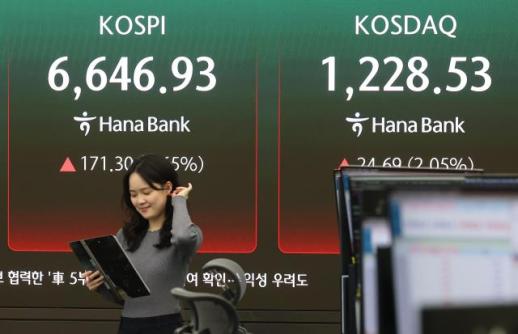 AI Boom Splits Asian Stocks: Korea, Taiwan and Japan Rise as India, Southeast Asia Fall Asian stock markets are diverging depending on who benefits from the artificial intelligence boom. Despite an energy shock triggered by the Iran war, Northeast Asian markets have rebounded on strong tech shares, while South and Southeast Asia remain weighed down by higher oil prices. Bloomberg reported on April 27 that Taiwan’s TAIEX rose 9.9% from the start of the Iran war on Feb. 28 through April 24. Over the same period, South Korea’s KOSPI gained 3.7%, Japan’s Nikkei 225 added 1.5%, and China’s CSI 300 rose 1.25%. The CSI 300 tracks the 300 largest stocks by market capitalization in Shanghai and Shenzhen. By contrast, South and Southeast Asian markets stayed weak. India’s Nifty 50 fell 5.8%, Indonesia’s Jakarta Composite Index dropped 10.4%, and the Philippine Stock Exchange index slid 9.5%. The MSCI ASEAN index declined 7.5%. Analysts pointed to AI as the key driver of the gap. Marvin Chen, a strategist at Bloomberg Intelligence, said South Korea, Taiwan and Japan all have high dependence on oil, but “AI ultimately made the difference.” Bloomberg said demand tied to the AI boom has helped the global semiconductor supply chain, including Taiwan Semiconductor Manufacturing Co., Samsung Electronics and SK hynix, and appears relatively insulated from geopolitical risks. In India and Southeast Asia, however, rising oil prices are feeding inflation, worsening current accounts and weakening currencies, while also limiting policymakers’ room to respond. Sonal Varma, an economist at Nomura Holdings, cited several factors: India and Southeast Asia are more exposed to the energy shock than Northeast Asia and have fewer buffers; Northeast Asia’s fiscal conditions are relatively solid; and the AI boom is supporting growth and markets in Northeast Asia but offering little lift to India and Southeast Asia. South Korea, meanwhile, showed relative weakness in currency markets despite gains in equities. Since the war began, China’s yuan has risen 0.5% against the dollar, while the won has fallen 2.7%, one of the larger declines among major Asian currencies. Gary Tan, a portfolio manager at Allspring Global Investments, said the divergence reflects a clash between a long-term, technology-led structural shift and a short-term, war-driven macroeconomic shock, with Asia at the center of both trends.* This article has been translated by AI. 2026-04-27 14:49:36
 -
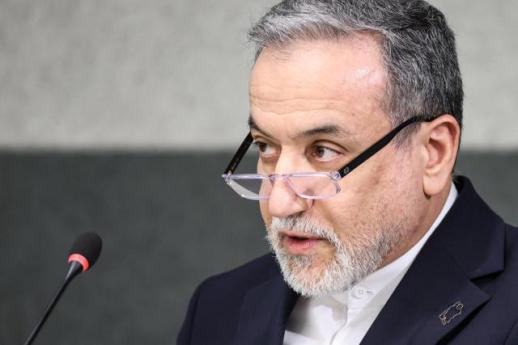 Iran floats phased ceasefire plan via mediators as Trump urges direct talks With U.S.-Iran talks on ending the war stalled, Iran has put forward both a phased framework and a separate compromise proposal through mediators in an effort to break the impasse. But sharp differences over the nuclear issue — and reported divisions inside Iran — have left the prospects for renewed negotiations uncertain. Lebanon-based pro-Hezbollah outlet Al Mayadeen reported that Iran delivered a three-step proposal to mediating countries on April 26 (local time), calling first for a guaranteed ceasefire, then maritime cooperation in the Strait of Hormuz, and only afterward talks on Iran’s nuclear program. The report said Iran indicated it could return to negotiations if the United States accepted the framework. The plan separates issues by stage. In the first phase, Iran would discuss only a halt to U.S. and Israeli military action and demands guarantees against renewed attacks on Iran and Lebanon. If that is agreed, the second phase would address management of the Strait of Hormuz, including plans to work with Oman on a new legal framework. The third phase would take up the nuclear program, but only after agreements in the earlier phases, the report said. Separately, Iran has also floated a compromise, Axios reported, citing a U.S. administration official and two sources familiar with the matter. Iran proposed, through mediators including Pakistan, opening the Strait of Hormuz and declaring an end to the war first, then continuing nuclear talks later, Axios said. The idea is to resolve Iran’s control of the strait and the U.S. maritime blockade up front, seek a long-term ceasefire or end-of-war agreement, and then move to nuclear negotiations. Axios said the approach could create negotiating space while sidestepping domestic pushback in Iran over putting the nuclear issue on the table. Iranian leaders are divided between hard-liners and moderates on how to proceed, and hard-liners are strongly opposed to making the nuclear program a negotiating agenda item, the report said. A source said Iranian Foreign Minister Abbas Araghchi told mediators there is no agreement within Iran’s leadership on how to handle U.S. demands related to uranium enrichment. It remains unclear whether Washington would accept Iran’s proposals. The maritime blockade is seen as a key tool to pressure Iran in any future nuclear talks, and lifting it early could reduce U.S. leverage. The United States is currently demanding at least a 10-year halt to uranium enrichment and the removal of existing enriched uranium from Iran, the report said. As pressure continues, President Donald Trump said he wants direct talks with Iran. In a phone interview with Fox News, Trump said he would not have U.S. negotiators travel for 18 hours and that he would handle it by phone. “So if they want, they can call us,” he said. Trump added that Iran knows what must be in an agreement and insisted it cannot have nuclear weapons. “Otherwise, there’s no reason to meet,” he said. Araghchi returned to Islamabad on April 27 and met with Pakistan’s army chief, Asim Munir, among others. Iran’s semi-official Tasnim news agency said the visit aimed to convey Iran’s demands for ending the war through mediator Pakistan. Araghchi was reported to have presented key issues including a new legal framework for the Strait of Hormuz, compensation for war damage, guarantees against renewed attacks, and lifting the maritime blockade on Iran. An Iranian official said the ongoing discussions focus on conditions to end the recent military conflict and are “not related at all” to the nuclear issue raised by some. Araghchi also arrived in Russia and plans to meet President Vladimir Putin as part of Iran’s diplomatic efforts related to the war. Trump, meanwhile, is expected to hold a Situation Room meeting at the White House on April 27 with national security and foreign policy advisers to discuss the stalled talks and next steps, U.S. administration officials told Axios. 2026-04-27 14:16:00
 -
 SCMP: South Koreans’ trips to China surge as visa rules ease and ties improve South Koreans are traveling to China in rapidly growing numbers, driven largely by looser visa rules and improving bilateral relations, a Hong Kong newspaper reported. The South China Morning Post reported on the 27th that the rise in visits by South Korean tourists and content creators has coincided with China’s eased visa policies and a steadier trend in South Korea-China ties. China has allowed South Koreans to stay visa-free for up to 30 days for tourism, business and family visits since 2024, the report said. The measure was extended in November last year, reducing what had been a major barrier for short trips. Geographic proximity and a calmer diplomatic climate have also supported more people-to-people exchanges. About 3.16 million South Koreans visited China last year, up 36.9% from the previous year. In January this year, more than 300,000 visited, a 48% increase from a year earlier. Destinations are also broadening beyond traditional choices, with Shanghai, Shenzhen in Guangdong province, Chengdu in Sichuan province and Zhangjiajie in Hunan province drawing attention, the report said. The increase has been especially notable among online content creators. They have highlighted China’s mobile payment systems, high-speed rail and relatively low prices, presenting scenes that differ from some existing perceptions. SCMP said creators have documented street food, advanced technology and large-scale infrastructure, while also comparing similarities and differences with South Korea. A YouTuber based in China was quoted as saying, “Since the visa waiver, visits to China by Korean creators have noticeably increased,” adding that China-related content is drawing strong interest on South Korean platforms. SCMP said the trend has also aligned with a period of more stable ties. It cited continued high-level exchanges, including President Lee Jae-myung’s visit to China in January, as helping create momentum for expanded economic and cultural cooperation. China has expanded visa-free entry policies since the COVID-19 pandemic to attract more foreign visitors. Seventy-nine countries are currently eligible for visa-free entry, including 50 granted the benefit unilaterally by China. According to China’s National Immigration Administration, 30.08 million people entered visa-free last year, accounting for 73.1% of all foreign arrivals. SCMP said the policy is not only boosting tourism but also producing a “soft power” effect by improving perceptions of China.* This article has been translated by AI. 2026-04-27 11:37:13
 -
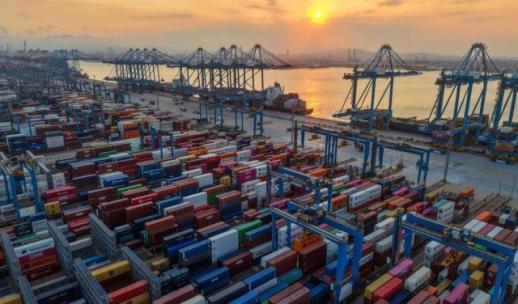 China’s 2026 Imports Seen Rising 5% on AI Investment, Biggest Gain in Five Years China’s imports are expected to rise sharply this year, supported by expanding investment in artificial intelligence, according to a forecast cited by Bloomberg News. Bloomberg reported on April 26 (local time) that a survey this month of 17 economists put China’s 2026 import growth at 5%. That is more than double the March estimate and would be the strongest increase in five years, marking a break from four years of stagnation and declines. The forecast for export growth was also revised up, to 4.9% from 3.6%. Even so, the goods trade surplus is expected to come in only slightly above about $1.2 trillion, little changed from 2025, suggesting the expansion of the surplus seen over the past two years may slow. Serena Zhou, chief economist at Mizuho Securities, said “the Chinese government recognizes that a massive trade surplus is not sustainable.” While she expects imports to rise 7.5% this year, she added that “overseas demand remains the key growth driver” and that “the recovery in domestic demand is not yet clear.” China’s trade has held up better than expected despite an energy supply shock triggered by the Iran war. In the first quarter of 2026, imports rose 23% from a year earlier and exports increased 15%, both posting double-digit gains. At the same time, the imbalance in the economy is deepening as industrial output and investment expand while consumption remains weak. The International Monetary Fund has said this structure is contributing to wider global imbalances. A surge in imports in March was driven by stronger demand for semiconductors and advanced manufacturing equipment linked to AI investment. Pantheon Macroeconomics said the value of semiconductor imports jumped 54% from a year earlier, accounting for about one-third of the overall increase. Import volumes, however, rose 14%, indicating higher prices also played a role. An expected global increase in AI investment — projected at about $2.5 trillion this year — has become a key driver of Asian trade. China has emerged as the largest supplier of AI-related products, but it still relies heavily on imports for core technologies such as advanced semiconductors. Standard Chartered said China’s AI-related imports mainly come from Taiwan and South Korea, and that exports from both economies to China have risen sharply. Other factors supporting import growth include a stronger yuan and higher commodity prices. The yuan has gained about 7% against the dollar over the past year, boosting purchasing power, while rising copper and aluminum prices have lifted the value of related imports. Global oil prices have not yet had a major impact on China’s imports, with March crude oil imports only slightly lower. Still, reduced shipping through the Strait of Hormuz could become a headwind for energy imports. Pantheon Macroeconomics forecast April import values for oil and gas will fall 14% and 18%, respectively. On the export side, analysts said some spillover benefits from the war are also supporting demand. With interest rising in electric vehicles and solar panels, Chinese companies are expanding their presence in overseas markets. Erica Tay, an economist at Maybank Securities, said China’s economy showed greater resilience to the supply shock from the Iran war than other Asian economies, adding that stronger demand for electric vehicles and solar power products is benefiting Chinese firms.* This article has been translated by AI. 2026-04-27 10:48:19
 -
 Trump Says Iran Should Call to Negotiate, Not Expect U.S. Delegation U.S. President Donald Trump is increasing pressure on Iran, saying he may pursue negotiations by phone rather than in-person talks. He also argued that maritime blockades are working and claimed Iran’s oil pipelines could soon suffer internal explosions, extending what he described as economic pressure. In a phone interview with Fox News on April 26 (local time), Trump said he would not send “people” on an 18-hour trip as a U.S. negotiating team. “We’ll do it by phone. So if they want, they can call us,” he said. Referring to a call the previous day with Pakistan, Trump said, “We’re not going to do this anymore,” adding, “We have all the cards.” He said Pakistan would continue to stay involved, underscoring that it would keep its mediating role. “They know what has to be in the (final) deal,” Trump said. “They can’t have nuclear weapons. Otherwise there’s no reason to meet.” The remarks came as Trump weighs whether to resume face-to-face talks with Iran after saying he would keep a ceasefire in place until negotiations end. The United States had planned to send a delegation to Pakistan for talks, but has held off after Iran showed what the article described as a passive stance toward negotiations. Trump’s comments about “phone negotiations” were interpreted as a message aimed at pressuring Iran while reducing reliance on the talks. On the war with Iran, Trump said, “We’ve done a great job, and we’re going to have a big victory.” He added, “I hope they act smart, but even if they don’t, we’re going to win anyway.” On blockade measures targeting Iran-linked vessels in places including the Strait of Hormuz and the Pacific, Trump called them “incredibly effective,” claiming it means Iran “can’t make a lot of money anymore.” He said that when a pipeline carrying large volumes of oil can no longer keep loading containers or ships and the line becomes blocked, “the pipe mechanically explodes internally underground.” He claimed it had happened to Iran and said the blockade left it without ships. “It just explodes,” Trump said, adding that “they say they have only three days left” before that happens. He said that once it explodes, it cannot be restored, and even if it were repaired it would reach only about 50% of its current scale. Trump also complained about the North Atlantic Treaty Organization, saying it “didn’t help us properly.” He said the United States had “poured trillions of dollars” into supporting NATO for a long time, but “when we needed a little help, they weren’t there,” adding, “So we have to remember that.” On China’s role, Trump said he did not think it had helped much. “It could help, but I don’t think there’s a lot they can do,” he said, adding that China could have acted “much worse,” but he did not think it had done so. Trump also said he had “good conversations” with Russian President Vladimir Putin and Ukrainian President Volodymyr Zelenskyy, without specifying when. “We’re trying to solve the Russia-Ukraine situation,” he said. “I hope we can do it.”* This article has been translated by AI. 2026-04-27 10:06:16
 -
 Iran Foreign Minister to Visit Russia After Returning to Pakistan Amid Stalled Talks Iranian Foreign Minister Abbas Araghchi is set to travel to Russia after making a return trip to Pakistan shortly after visiting Oman, as negotiations between the United States and Iran to end the war remain stalled. Iranian media said the flurry of travel and calls reflects efforts to align negotiating terms and secure support from regional partners. According to Iran’s state-run IRNA news agency, Araghchi on April 26 (local time) met in Oman with Sultan Haitham bin Tariq Al Said, then immediately returned to Islamabad to meet Pakistan’s army chief, Asim Munir, and other officials. Iran’s semiofficial Tasnim news agency said the visit was aimed at using Pakistan, described as a mediator, to convey Iran’s demands for ending the war. Araghchi presented key agenda items to Pakistani officials, including a new legal framework for the Strait of Hormuz, compensation for war damage, guarantees against renewed attacks by the parties to the conflict, and lifting a maritime blockade on Iran. An Iranian official said the ongoing discussions are focused on conditions to end the recent military conflict and are “not related at all” to the nuclear issue. After Pakistan, Araghchi is expected to head to Moscow, the final stop on his trip. Russia’s Foreign Ministry confirmed he plans to hold high-level talks there. Kazem Jalali, Iran’s ambassador to Russia, told ISNA news agency that Araghchi is scheduled to meet Russian President Vladimir Putin in Moscow on April 27. Jalali said Araghchi will hold in-depth talks with senior Russian officials on the status of the ceasefire and the ongoing negotiations, as well as recent shifts in the regional situation. In a post on X, Jalali said Araghchi would meet Putin as part of what he called continued “diplomatic jihad” to advance Iran’s national interests amid external threats. He said Araghchi is expected to outline Iran’s negotiating goals and plans and seek Russian support. Iran has also expanded diplomatic contacts with neighboring and other countries. Iranian state media reported that Araghchi held a series of calls on April 25-26 with the foreign ministers of Egypt, France, Qatar, Saudi Arabia and Turkey, and met Oman’s ruler the same day. The outreach comes as the United States and Iran have not finalized a schedule for a second round of talks, leaving negotiations in a deadlock, according to the report. CNN reported that Araghchi discussed “diplomacy and a ceasefire” and “recent regional developments” with Egyptian Foreign Minister Badr Abdelatty. In his call with French Foreign Minister Jean-Noel Barrot, Araghchi said European countries have an important role to play in sustaining a ceasefire. Qatari Prime Minister and Foreign Minister Sheikh Mohammed bin Abdulrahman Al Thani told Araghchi that Qatar is ready to continue playing an active role in mediation and promoting dialogue to end the war. Iranian media also reported that Araghchi briefed Saudi Foreign Minister Faisal bin Farhan Al Saud on Iran’s diplomatic efforts to end the war and ease tensions.* This article has been translated by AI. 2026-04-27 09:40:43
 -
 Iran Offers Three-Stage Negotiation Plan, Says Talks Could Resume if U.S. Accepts Iran has presented mediators with a three-stage framework for negotiations and has indicated it could return to talks if the United States accepts the structure, according to a report. Lebanon-based pro-Hezbollah outlet Al Mayadeen reported on April 26 (local time) that Iran conveyed a phased proposal that begins with guarantees of a cease-fire, moves to maritime cooperation in the Strait of Hormuz, and then addresses Iran’s nuclear program. The report said Iran has signaled it would rejoin negotiations if Washington accepts the framework. The proposal divides issues by stage. In the first stage, Iran would seek a halt to U.S. and Israeli military actions and guarantees against renewed attacks on Iran and Lebanon, and it would not discuss other topics at that stage. If an agreement is reached in the first stage, talks would move to a second stage focused on management of the Strait of Hormuz. Iran is said to be considering a new legal regime to govern the strait in cooperation with Oman. In the third stage, Iran’s nuclear program would be placed on the agenda, but only if agreements are reached in the first two stages. Separately, Iranian Foreign Minister Abbas Araghchi returned to Islamabad on the same day and met with Pakistan’s army chief, Asim Munir, among others. Iran’s semi-official Tasnim news agency said the visit was intended to deliver Iran’s demands for ending the war through mediator Pakistan. Araghchi was reported to have presented Pakistan with key issues including a new legal regime for the Strait of Hormuz, compensation for war damage, guarantees against renewed aggression, and lifting a maritime blockade on Iran.* This article has been translated by AI. 2026-04-27 09:00:09
 -
 Oil Rises as U.S.-Iran Talks Stall; U.S. Stock Futures Edge Lower International oil prices opened the week higher as efforts to restart peace talks over the Iran war remained stalled. According to Bloomberg, as of 8:17 a.m. Korea time on the 27th, June Brent crude futures were up 1.71% at $107.13 a barrel, while June West Texas Intermediate futures rose 1.69% to $96.00. Both benchmarks were up more than 2% earlier before paring gains. The move followed disappointment after a second round of U.S.-Iran talks that had drawn attention over the weekend again ended without results. President Donald Trump canceled a planned weekend visit by senior envoys to mediator Pakistan, and Iran said it would not negotiate as long as threats continued. A ceasefire posture has largely held since early April, but the Strait of Hormuz remains effectively closed after both the United States and Iran blocked it, cutting off passage through the strategic chokepoint. The disruption is affecting supplies of oil, fuel, natural gas and even fertilizer, raising concerns about mounting inflation pressure. Mona Yacoubian, director of the Middle East program at the Center for Strategic and International Studies, said both sides want to avoid an all-out clash but the strait remains shut. “Right now, the standoff is continuing without a clear solution,” she said. The Iran war has entered its ninth week, pushing up energy prices and triggering shortages of key fuels such as liquefied petroleum gas in India. Airlines have also cut flights, and the International Energy Agency has said the conflict is causing the largest supply shock in history. Markets are increasingly weighing the possibility that oil prices could become entrenched above $100 a barrel. “As time goes on, the likelihood of a short-term agreement is getting lower,” said Robert Yawger, a managing director at Mizuho Securities. “Oil is likely to trade above $100.” Traders say if the Strait of Hormuz closure persists, demand will have to fall to match supply that is down at least 10%. A supply loss of about 1 billion barrels is already seen as unavoidable, more than double the emergency reserves countries had released. The U.S. military has continued maritime interdictions, including blocking sanctioned vessels in the Arabian Sea. U.S. Central Command said 37 ships have changed routes since the blockade began. U.S. stock index futures were slightly lower amid uncertainty over the U.S.-Iran talks. Dow Jones futures were at 49,280.00, down 0.23% from the previous session, while S&P 500 futures fell 0.17% to 7,178.25. Nasdaq 100 futures were down 0.20% at 27,380.00. 2026-04-27 08:25:36
 -
 Suspect in WHCA dinner shooting identified as 31-year-old Caltech graduate Cole Thomas Allen Authorities identified the man arrested in the shooting at the White House Correspondents' Association annual dinner attended by President Donald Trump as a Southern California teacher and video game developer. The Los Angeles Times and other local media reported that the suspect was Cole Thomas Allen, 31, who lives in Torrance, California. The shooting occurred during the annual dinner in Washington. Allen rushed toward the dining area and opened fire, throwing the room into chaos. Trump was immediately evacuated from the stage by security personnel. Allen was arrested at the scene shortly after the attack. Authorities said he had a shotgun, a handgun and several bladed weapons. Prosecutors charged him with two counts involving the use of a firearm and one count of assaulting a federal official with a dangerous weapon. Washington federal prosecutor Jeanine Pirro said the suspect "tried to cause as much harm and destruction as possible." Allen was described as a high-achieving student in engineering and science. He graduated from the California Institute of Technology in 2017 with a mechanical engineering degree and earned a master's degree in computer engineering in 2025 from California State University, Dominguez Hills. On LinkedIn, he describes himself as a game developer, engineer, scientist and teacher. He worked as a teacher at C2 Education, a test-prep and tutoring company, and was named "Teacher of the Month" in December 2024. He also worked as an indie game developer. His game "Bohrdom," trademarked in 2019, was released on the Steam platform and has been described as a nonviolent game inspired by chemical models. People who knew him said they were stunned. Dylan Wakayama, chairman of the Torrance-based nonprofit Asian American Civic Trust, said students viewed Allen as very smart and strong in biology, math and science, and described him as gentle and quiet. Neighbors said they saw him often, exchanged greetings and considered him quiet and not disruptive. His political leanings appeared unclear. Federal Election Commission records show he donated $25 in 2024 to a Democratic fundraising group, but voter registration records list him as unaffiliated. The FBI and other investigators were searching a Torrance home believed to be Allen's residence as they looked into the background of the case and his motive. 2026-04-26 17:25:04
 -
 Trump Says Suspect Acted Alone in Shooting at White House Correspondents Dinner, Doubts Iran Link President Donald Trump said April 25 that investigators appear to believe a suspect acted alone in a shooting at the White House Correspondents’ Association dinner venue, and he said he did not think Iran was involved. According to The Associated Press and other outlets, Trump told a White House news conference he initially thought the sound was “a tray falling.” He said it was loud and seemed to come from some distance away. Trump said the suspect rushed from about 50 yards (about 45 meters) away and that Secret Service agents responded immediately. He said one agent was shot but survived because he was wearing “a very good bulletproof vest.” Trump said he was evacuating after hearing gunfire while attending the dinner that evening at the Washington Hilton hotel in Washington. No attendees were reported wounded, and the suspect was arrested at the scene. Trump identified the suspect as Cole Thomas Allen, 31, and said, “They seem to think it was a lone wolf. I do, too.” He described Allen as someone with “very serious mental problems” and said authorities searched his apartment. Asked about a possible Iran connection, Trump said, “I don’t think so,” adding, “But you don’t know. We’re going to learn a lot.” The article noted Trump’s approval rating has been very low amid a recent rise in oil prices tied to the Iran war. An AP-NORC poll released April 21, based on interviews April 16-20 with 2,596 U.S. adults and a margin of error of plus or minus 2.6 percentage points, put his approval at 33%, the lowest of his second term. Trump also spoke about political violence, saying participating in politics in the United States comes with a price. “Political violence is happening all over the world,” he said, adding it was hard to imagine a more dangerous job. “No country is free” of it, he said. He urged Americans to “resolve conflicts peacefully” in response to the incident. CBS News, citing multiple sources, reported Allen told law enforcement after his arrest that he had intended to shoot at Trump administration officials. Trump again argued the incident underscored the need to build a White House ballroom. “I didn’t want to say it, but this is why we need the facilities we’re planning at the White House,” he said, calling it a larger and safer space. He said it would be safe from drone attacks and protected by bulletproof glass, and that the Secret Service and the military were requesting it. He said there had been calls for a ballroom for 150 years, but “today is a little different,” adding that security now must be at a level “nobody has ever experienced before.” Trump also said assassination attempts target “the most influential person,” and praised his record, saying the United States had become “the hottest country” in the world after years of being mocked. He said the shooting would not stop him from winning the war with Iran. Appearing with Trump, Acting Attorney General Todd Blanche said the suspect would soon be charged, including on firearms-related counts. 2026-04-26 15:54:53