

Journalist

Hwang Jin-hyun
jinhyun97@ajunews.com
-
 International Oil Prices Rise Amid Iran Conflict Stalemate International oil prices opened higher this week as tensions surrounding the Iran conflict and the Strait of Hormuz continue. According to MarketWatch, as of 8:38 a.m. Korean time on May 18, West Texas Intermediate (WTI) crude oil futures for June rose nearly 1.75%, surpassing $107 per barrel. At the same time, July Brent crude futures also increased by 1.14%, exceeding $110. This rise follows the conclusion of President Donald Trump's visit to China over the weekend, which ended without significant breakthroughs, and the ongoing stalemate in negotiations to end the war with Iran. Previously, on May 15, WTI futures had crossed the $105 mark, while July Brent futures closed the week up 8%, finishing above $109 per barrel. Amid the persistent Middle East crisis, U.S. stock index futures are showing a downward trend. Currently, Dow Jones Industrial Average futures are down 112 points (0.23%) at 49,505.00, S&P 500 futures are down 10.25 points (0.14%) at 7,422.00, and Nasdaq 100 futures are down 37.75 points (0.13%) at 29,194.00. As a fragile ceasefire between the U.S. and Iran holds, tensions surrounding the Strait of Hormuz persist. The Associated Press reported that Israel is coordinating with the U.S. regarding the potential resumption of airstrikes against Iran. On the same day, President Trump used social media platform Truth Social to pressure Iran to agree to a peace deal. He stated, "Iran doesn't have much time," warning that they should act quickly or risk losing everything. Additionally, reports of a fire near the Barakah nuclear power plant in the United Arab Emirates, suspected to be caused by a drone attack linked to Iran, have heightened market anxiety. The UAE authorities confirmed that there was no impact on the reactor and that the plant is operating normally. The Barakah plant is also notable as the first commercial nuclear power plant in the Middle East, built by Korea Electric Power Corporation. MarketWatch highlighted that the ongoing conflict is driving up global oil and gas prices, raising inflation concerns. According to the American Automobile Association (AAA), the average price of gasoline in the U.S. is currently $4.51 per gallon. The consumer price index (CPI) for April also rose to 3.8%, marking the highest increase since May 2023. Meanwhile, investors are closely watching the upcoming earnings reports from major U.S. retailers such as Walmart, Target, Home Depot, and Lowe's this week. The impact of high fuel prices and inflation on consumer sentiment could be reflected in these results. Walmart executives previously warned that retail sales could be affected if gasoline prices reach between $4.50 and $5 per gallon. Additionally, investors are keeping an eye on Nvidia's quarterly earnings report scheduled for May 20. As the rally in artificial intelligence (AI) stocks continues, Nvidia's performance is seen as a key indicator for investor sentiment in the tech sector. 2026-05-18 08:56:10
 -
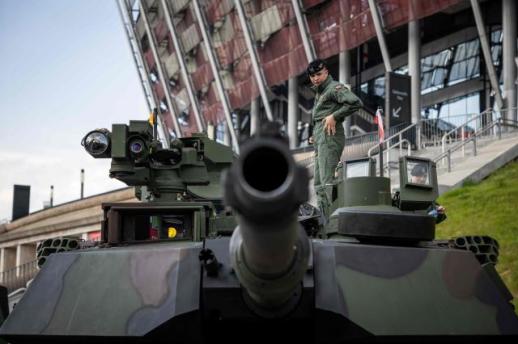 U.S. Halts Deployment of 4,000 Troops to Poland, Surprising Pentagon and European Allies The United States has suspended plans to deploy over 4,000 Army troops to Poland. On May 15, U.S. Defense Secretary Pete Hegseth announced the cancellation of the rotational deployment of the 2nd Armored Brigade Combat Team, part of the 1st Cavalry Division stationed at Fort Hood, Texas. This unit includes more than 4,000 personnel and equipment, with some troops and gear reportedly already en route to Europe. A Pentagon official expressed surprise to Politico, stating, "We did not expect this decision at all." U.S. and European officials have reportedly convened urgently to understand the reasons behind the decision and to discuss potential further actions. The specific reasons for the cancellation of the deployment to Poland have not been disclosed. Hegseth has previously praised Poland for its defense spending, which approaches 5% of its GDP. Former President Donald Trump also suggested relocating U.S. troops from Germany to neighboring Poland. Polish President Karol Nawrocki, a close ally of Trump, has publicly called for the transfer of U.S. troops stationed in Germany to Poland. Earlier, Trump announced the withdrawal of 5,000 U.S. troops from Germany immediately after German Chancellor Friedrich Merz criticized the U.S. response to the Iran conflict. In contrast, Poland has had minimal public disputes with the Trump administration, making this decision particularly unexpected. Retired General Ben Hodges, former commander of U.S. Army Europe, told Politico that the role of U.S. forces in Europe is primarily to deter Russia, protect U.S. strategic interests, and reassure allies. He noted, "Now, a very important asset that was supposed to be part of that deterrence has disappeared." The Pentagon clarified that this decision was not abrupt. Acting Pentagon spokesperson Joel Valdez stated, "The decision to withdraw troops followed a comprehensive and multilayered process reflecting the views of key commanders and the entire command structure of U.S. forces in Europe," adding that it was not an unexpected last-minute decision. However, concerns remain about the overall clarity of U.S. strategy in Europe. Bloomberg reported that the decision is part of a broader review of U.S. troop presence in Europe. Lithuanian Defense Minister Robertaas Kaunas told Bloomberg that Lithuania had been informed about the potential changes to U.S. troop rotations in Europe, indicating that the U.S. had alerted allies about a possible temporary halt in troop rotations while reviewing its deployment plans. However, he noted that he had not received any information regarding the withdrawal of U.S. troops from Lithuania. Poland, which was not notified in advance, expressed its surprise but sought to downplay the implications. Prime Minister Donald Tusk assured reporters, "We have been guaranteed that changes in U.S. troop deployments will not affect Poland's security," emphasizing that the decision is logistical and will not directly impact deterrence or our security. Polish Defense Minister Włodzimierz Kosiniak-Kamysz also stated on X (formerly Twitter) that this issue relates to previously announced changes in U.S. troop deployments in Europe and is not related to Poland. Currently, about 500 U.S. troops are permanently stationed in Poland, while approximately 10,000 are deployed on a rotational basis.* This article has been translated by AI. 2026-05-17 18:03:00
 -
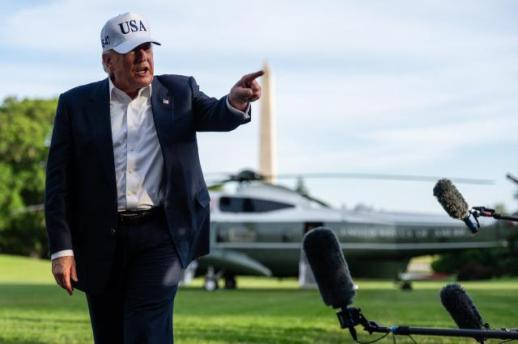 Trump Suggests Weapon Sales to Taiwan Depend on China Negotiations Donald Trump, President of the United States, indicated that the issue of arms sales to Taiwan could be used as a bargaining chip in negotiations with China following a recent U.S.-China summit. In an interview with Fox News' Bret Baier aired on May 15, Trump responded to a question about whether he would approve additional arms sales to Taiwan, stating, "I have not approved it yet. I could approve it, or I could not approve it." He added, "I am holding off on the arms sales to Taiwan, and that depends on China. It’s a very good negotiating chip for us. $12 billion worth of arms is a lot of weapons." Trump emphasized the geographical distance between the U.S. and Taiwan in relation to Taiwan's defense. He noted, "When you look at the situation, China is a very, very powerful country, and Taiwan is a very small island," pointing out that Taiwan is 59 miles (about 95 km) from mainland China, while the U.S. is 9,500 miles (about 15,000 km) away. However, Trump expressed a preference for maintaining the status quo in the Taiwan Strait, stating he does not want war. He remarked, "I don’t want a situation where someone says, ‘Let’s declare independence because the U.S. is backing us.’" He added, "I think while I’m in office, they (China) won’t do anything, but honestly, when I’m not there, they might attack (Taiwan)." Trump also voiced strong dissatisfaction with Taiwan's semiconductor industry, saying, "I would love to see all the semiconductor manufacturers in Taiwan come to the U.S. It would be a great thing to do given the urgency of the situation." He expressed hope that by the end of his term, 40-50% of the global semiconductor industry would be based in the U.S. He claimed that previous administrations allowed Taiwan to grow in the semiconductor sector without tariffs, stating, "They (Taiwan) have stolen our semiconductor (industry) for many years." He added, "We lost the semiconductor industry, but it’s all coming back." When asked whether Taiwanese people should feel safer or less safe following the U.S.-China summit, Trump responded, "Neutral," indicating there would be no change in policy toward Taiwan. He reiterated, "I don’t want someone to declare independence and have us go to war 9,500 miles away. I hope both Taiwan and China exercise restraint." Additionally, Trump mentioned that he raised the issue of the release of Jimmy Lai, a pro-democracy media tycoon imprisoned in Hong Kong, with Chinese President Xi Jinping, noting that Xi's response was "not positive." He quoted Xi as referring to Lai as a "nightmare." This interview took place on May 15 in Beijing, the day after Trump's summit with Xi.* This article has been translated by AI. 2026-05-17 17:06:00
 -
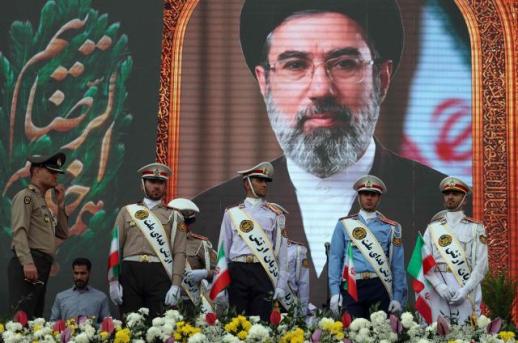 Iran-Backed Militants Expand Attack Plans to Include U.S. Soil Concerns are growing that Iran-backed militant groups may expand their activities beyond the Middle East, including potential attacks on U.S. soil, following revelations of their plans to target Western nations. The New York Times reported on May 16, citing an indictment released in a Manhattan federal court, that Mohammad al-Sadi, a senior official of the Iraqi militia Kata'ib Hezbollah, has been charged with plotting at least 20 attacks against Western countries, including the United States, since the onset of the war in late February. Al-Sadi is accused of planning a firebomb attack at a synagogue in Belgium and a terrorist act against a Bank of America building in Paris. Investigations in the U.S. revealed he also attempted to attack a synagogue in New York City. Iraqi media outlet Saberin News, linked to the militia, reported that al-Sadi was arrested by Turkish security forces while traveling to Moscow via Turkey. While Kata'ib Hezbollah has not commented on al-Sadi's arrest or the charges against him, his lawyer claims he is a "political prisoner and a war captive." This incident raises alarms about the potential for Iran's proxy forces, previously focused on the Middle East, to extend their operations into the U.S. and Europe. Aaron Zelin, a scholar at the Washington Institute for Near East Policy, told the Times, "They (Kata'ib Hezbollah) are now expanding their operational scope beyond war zones to Western countries, suggesting that Iran-supported 'Axis of Resistance' is becoming involved in more attacks against the West." Experts believe that groups like Kata'ib Hezbollah are likely conducting overseas operations with the approval of Iran's Islamic Revolutionary Guard Corps (IRGC). Given the potential backlash against Iran, which is already engaged in conflict with the U.S., it would be difficult for these proxies to operate independently without IRGC consent. Since the late 1980s, Iran has built a network of proxy militias known as the 'Axis of Resistance' throughout the Middle East. These groups have grown into significant armed forces in Iraq and have reportedly participated in attacks targeting the U.S. Embassy in Iraq and oil facilities in Gulf nations following the recent war. The U.S. has repeatedly highlighted the threat posed by Iran-backed militant groups. According to The New Region, U.S. Central Command (CENTCOM) Commander Brad Cooper stated during a Senate Armed Services Committee hearing on May 14 that "in just 30 months before the start of Operation Epic Fury, Iran-backed terrorist groups attacked U.S. troops and diplomats over 350 times. This equates to more than one attack every three days, resulting in the deaths of four U.S. service members and nearly 200 injuries." In response, the U.S. government has increased pressure on Iran-backed militias in Iraq, offering rewards of up to $10 million (approximately 15 billion won) and imposing related sanctions. A State Department spokesperson explained that the reward program for Abu Ala al-Walai, the leader of Kata'ib Sayyid al-Shuhada (KSS), is part of efforts to dismantle Iran-backed militias in Iraq and advance U.S.-Iraq relations.* This article has been translated by AI. 2026-05-17 16:34:19
 -
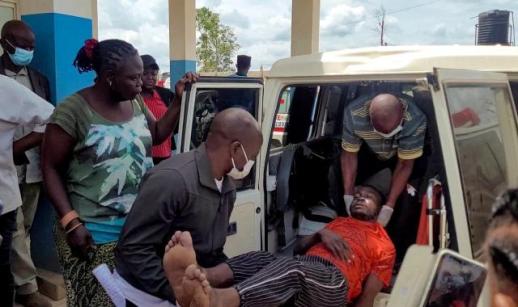 WHO Declares International Health Emergency Over Ebola Outbreak in Congo and Uganda The World Health Organization (WHO) has declared an "International Public Health Emergency" (PHEIC) in response to the Ebola outbreak in the Democratic Republic of Congo and Uganda. However, the organization stated that the situation does not meet the criteria for a global pandemic. According to reports from the Associated Press and others, WHO announced on May 17 via social media platform X (formerly Twitter) that the outbreak poses a public health risk to other countries due to the international spread of the disease, which has already been documented. As of May 16, the WHO reported eight confirmed Ebola cases, 246 suspected cases, and 80 suspected deaths across at least three health zones in Ituri Province, including Bunia, Lwampala, and Mongbwalu. The Africa Centers for Disease Control and Prevention (CDC) noted that there are 336 suspected cases of Ebola. In Uganda's capital, Kampala, two confirmed cases have recently been identified, one of which resulted in death. Both individuals had traveled to the Democratic Republic of Congo, although no direct link between them has been established, according to WHO. A confirmed case was also reported in Kinshasa, the capital of the Democratic Republic of Congo, involving a person who had returned from Ituri. This outbreak has been linked to the Bundibugyo strain of the Ebola virus. WHO noted a high positivity rate, with eight out of 13 initial samples testing positive, and there has been an increase in reports of suspected cases and clusters of deaths throughout Ituri Province, raising concerns that the actual number of infections may be significantly higher than official counts. WHO Director-General Tedros Adhanom Ghebreyesus stated, "There is considerable uncertainty regarding the actual number of infections and the geographical spread of this outbreak. Our understanding of the epidemiological links among suspected cases is also limited." WHO highlighted that at least four healthcare workers have died from suspected viral hemorrhagic fever symptoms, raising concerns about the potential for transmission within healthcare facilities and gaps in infection prevention and control measures. The absence of approved treatments or vaccines for the Bundibugyo virus has further exacerbated the seriousness of the situation. Nevertheless, WHO emphasized that the outbreak does not qualify as a global pandemic. WHO has urged the Democratic Republic of Congo and Uganda to activate their national disaster and emergency response systems immediately. It recommended enhancing surveillance, contact tracing, laboratory testing, and infection prevention measures in both the affected and neighboring regions. Confirmed cases should be isolated and treated promptly, while contacts should be monitored daily for 21 days following exposure, with international travel restrictions advised. Additionally, WHO recommended implementing exit screening for individuals exhibiting unexplained fever symptoms at international airports, seaports, and major land border checkpoints. However, it advised against closing borders or imposing travel and trade restrictions, warning that such measures, if implemented without scientific justification, could drive movement through unofficial border channels, complicating containment efforts. The Democratic Republic of Congo has experienced repeated Ebola outbreaks since the virus was first identified there in 1976. This outbreak is particularly concerning as it is caused by the relatively rare Bundibugyo strain, rather than the more commonly reported Zaire strain. Ebola is a deadly infectious disease that causes fever, muscle pain, vomiting, and diarrhea, and is transmitted through contact with the bodily fluids of infected individuals, contaminated materials, or deceased persons. Its high fatality rate has led to recurrent large-scale health crises in the African region.* This article has been translated by AI. 2026-05-17 15:56:16
 -
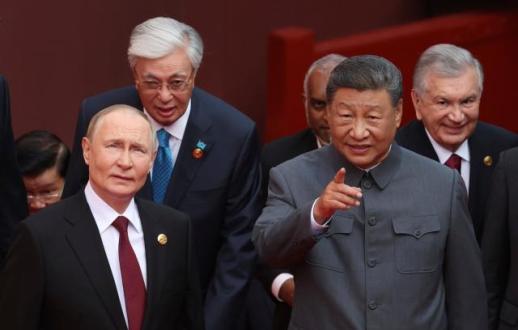 Intense Diplomacy Follows US-China Summit as Putin Heads to China and Takaiichi Visits South Korea Donald Trump’s recent visit to China has sparked renewed diplomatic activity in Northeast Asia. Following the US-China summit, which did not yield significant breakthroughs on key issues like Iran and trade, neighboring countries such as Russia and Japan are ramping up their diplomatic efforts. On May 16, the Kremlin announced that President Vladimir Putin will visit China from May 19 to 20 at the invitation of President Xi Jinping. The Kremlin stated, "This visit coincides with the 25th anniversary of the Treaty of Good-Neighborliness and Friendly Cooperation between the two countries." Chinese state media Xinhua also reported, citing the foreign ministry, that President Putin will make a state visit to China during this period. According to Russian sources, President Putin plans to hold talks with President Xi to discuss bilateral issues, enhance their comprehensive partnership, and address major international and regional matters. Additionally, he is expected to meet separately with Chinese Premier Li Qiang to discuss economic and trade cooperation. Putin’s visit comes just four days after President Trump concluded his trip to China on May 15. The South China Morning Post reported that the series of summits amid ongoing global uncertainties, including the Ukraine conflict and tensions in Iran, reflects China’s efforts to maintain relations with both the US and Russia. Russia is closely monitoring potential changes in US-China relations. Shanghai International Studies University scholar Shen Dingli told Singapore’s Lianhe Zaobao, "While President Putin does not need to directly assess the outcomes of the US-China summit, his visit to China indicates Russia's significant interest and concern regarding possible shifts in US-China relations." Following Putin, Serbian President Aleksandar Vučić, known for his pro-China and pro-Russia stance, has also announced a visit to China. According to TASS, President Vučić stated, "I understand that President Putin will visit China on May 19 and 20, as already announced, and a few days later, we will visit China to meet with President Xi." Serbia is recognized as a prominent pro-China country in Europe, actively participating in China’s Belt and Road Initiative and pursuing infrastructure projects such as power plants and railways. While expressing a desire to join the European Union (EU), President Vučić continues to strengthen ties with Russia. Takaiichi Heads to South Korea During the same period as Putin’s visit to China, a South Korea-Japan summit is also set to take place. Japanese Prime Minister Sanae Takaiichi will visit Andong, the hometown of President Lee Jae-myung, from May 19 to 20 for a two-day summit. This visit is a reciprocal trip following President Lee’s visit to Takaiichi’s hometown in Nara Prefecture in January. On the first day, May 19, the two leaders will engage in a small group and expanded summit, hold a joint press conference, and share a dinner, along with additional social activities. They are expected to discuss practical cooperation in areas directly affecting people's lives, including the development of South Korea-Japan relations, economic issues, social matters, and public safety. Prior to this, Takaiichi spoke with President Trump on May 15 after his visit to China. According to Kyodo News and NHK, Takaiichi reported that she had a 15-minute phone call with Trump, during which he provided detailed insights about his trip to China. Takaiichi stated, "We exchanged views on various issues surrounding China, including economic security, and discussed the situation in Iran. We confirmed our commitment to maintaining close communication between Japan and the US." Japan's relations with China have rapidly cooled since Takaiichi’s remarks on Taiwan last November, effectively engaging in an economic conflict with China. Amid the ongoing Middle East conflict, Takaiichi is expected to seek a breakthrough through shuttle diplomacy with President Lee. Meanwhile, The Hill, a US political news outlet, assessed that the recent US-China summit did not produce clear breakthroughs on key issues such as Iran and trade. Notably, the Chinese side barely mentioned the Iran issue in its official statements, while tensions over the reopening of the Strait of Hormuz and the Taiwan issue remain unresolved.* This article has been translated by AI. 2026-05-17 15:13:29
 -
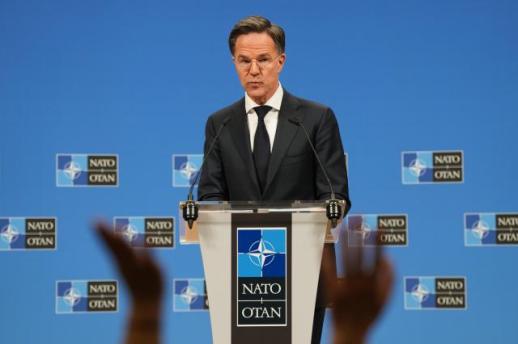 NATO Secretary General Rutte to Pressure European Defense Firms for Investment and Production Boost NATO Secretary General Mark Rutte is expected to pressure major European defense firms to increase investment and production. The Financial Times reported on May 16, citing sources familiar with the matter, that Rutte plans to meet with key European defense groups this week in Brussels. During the meeting, Rutte is expected to urge defense companies to expedite investments and ramp up production, laying the groundwork for significant defense agreements to be announced at the NATO annual summit in Ankara this July. NATO has requested that companies submit information on major investment plans and production expansion possibilities ahead of the meeting. While Rutte regularly engages with executives from major European defense firms, sources noted that gathering representatives from multiple companies in one location is unusual. The Financial Times described the meeting as indicative of NATO's urgency to showcase progress in European defense production ahead of the Ankara summit. The push for increased production in the European defense sector is partly driven by former President Donald Trump's demands for increased defense spending. NATO member countries agreed at last year's summit in The Hague to raise defense spending to 5% of their GDP in response to Trump's requests. NATO officials believe that prominently featuring arms contracts and defense investment expansion at the Ankara summit could demonstrate that the agreement to increase defense spending is yielding tangible results. One official told the Financial Times, "This is aimed at making defense spending increases appear more substantial." Rutte reportedly wants European defense firms to proactively invest rather than wait for large new government orders. However, he is also expected to listen to companies about specific challenges they face in expanding production. Some companies are expected to present plans for expanding facilities and workforce, securing key raw materials, and strengthening supply chains. Discussions are also anticipated on reducing reliance on components from China and Taiwan. The conflict surrounding Iran has further intensified the pressure on Europe to bolster its defense capabilities. According to the Financial Times, the U.S. Department of Defense announced earlier this month plans to withdraw 5,000 troops stationed in Germany amid tensions between Trump and German Chancellor Friedrich Merz. Some officials have indicated that the troop withdrawal plan and the depletion of critical munitions due to the Iran conflict have underscored the need for Europe to rapidly enhance its production capacity and military capabilities. If European NATO allies achieve the goal of spending 5% of their GDP on defense, it is estimated that annual defense spending could increase by a total of $1 trillion (1,500 trillion won) by 2035 compared to 2024. A NATO official stated, "The Secretary General regularly meets with industry and financial institutions across the alliance to encourage increased production, innovation, and investment to meet our capability needs."* This article has been translated by AI. 2026-05-17 14:09:59
 -
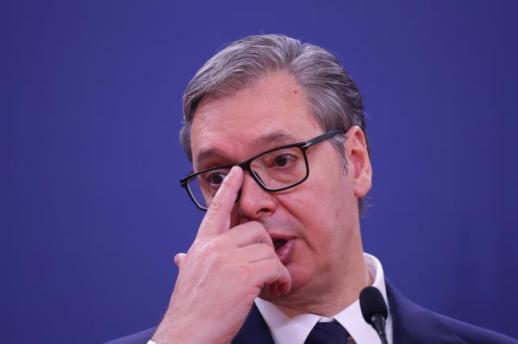 Serbian President to Visit China for Talks with Xi Jinping Following Putin's Trip Aleksandar Vučić, the President of Serbia, is expected to visit China soon for talks with President Xi Jinping. According to reports from TASS and other outlets on May 16, Vučić announced during a public address that he would meet with Xi a few days after Russian President Vladimir Putin's visit to China. "We are waiting for final confirmation. I understand that President Putin will visit China on the 19th and 20th, as has already been announced. A few days later, we will visit China to meet with President Xi," Vučić stated. Putin is scheduled to make a state visit to China at the invitation of Xi to mark the 25th anniversary of the signing of the Treaty of Friendship and Cooperation between the two countries. This visit comes just four days after U.S. President Donald Trump concluded his trip to China. While the U.S. and China have struggled to reach clear agreements on key issues such as Iran, Taiwan, and trade disputes, there are expectations that Russia and China will showcase their strategic partnership during this summit. Vučić emphasized, "It is a special honor for us to officially visit China following President Trump and President Putin. I have high hopes for this visit." Serbia, under Vučić's leadership, is considered one of the most pro-China countries in Europe. The nation has actively participated in China's Belt and Road Initiative, which aims to connect Central Asia and Europe through land and maritime routes, and has pursued infrastructure projects such as power plants and railways. Additionally, while Vučić has expressed a desire for Serbia to join the European Union, he continues to maintain close ties with Russia. His attendance at last year's Victory Day celebrations in Moscow, where he stood alongside Putin, has raised concerns in the West regarding Serbia's alignment amid increasing pressure on Russia.* This article has been translated by AI. 2026-05-17 11:30:00
 -
 BlackRock Considers Up to $10 Billion Investment in SpaceX IPO World's largest asset management firm BlackRock is reportedly considering an investment of up to $10 billion in Elon Musk's space company SpaceX, which is expected to go public next month. On May 16, U.S. technology news outlet The Information cited multiple sources stating that BlackRock is exploring the possibility of investing between $5 billion and $10 billion in the SpaceX IPO through its $536 billion active fund. Given that SpaceX plans to raise up to $75 billion through this offering, BlackRock's investment could account for as much as 13.3% of the total shares available. Despite raising significant funds from the market, SpaceX intends to limit investor influence over its management. CEO Musk is expected to hold special shares that grant him ten votes per share. Nonetheless, major investors, including BlackRock, are actively pursuing opportunities in SpaceX. The Information noted that BlackRock's motivation for a large investment stems from the current value of its SpaceX holdings, which is approximately $300 million. This amount is relatively small compared to other major investors like Fidelity, Baillie Gifford, and Franklin Templeton.* This article has been translated by AI. 2026-05-17 11:15:43
 -
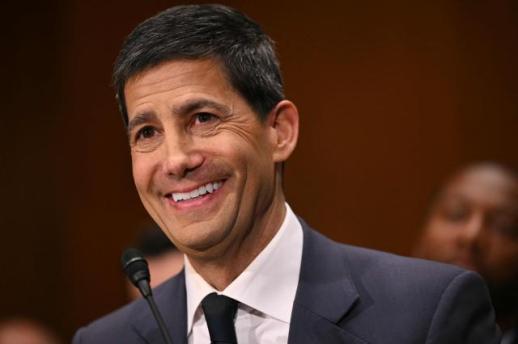 Kevin Warsh, Next Fed Chair, Reports Sale of $1.68 Million in Coupang Shares Kevin Warsh, the incoming chair of the U.S. Federal Reserve, is set to sell a significant portion of his shares in Coupang, the parent company of Coupang Inc. On May 16, the U.S. Securities and Exchange Commission (SEC) disclosed that Warsh plans to sell 102,363 shares of Coupang Class A common stock. The shares, which he received as part of his compensation for serving on Coupang's board from August 2021 to June 2025, are valued at approximately $1.68 million (about 25.2 billion won). This sale is seen as a measure to address potential conflicts of interest ahead of his Fed chair appointment, as the Fed's ethics rules prohibit its chair and directors from holding individual company stocks. Despite this sale, Warsh still holds over 459,000 shares of Coupang, meaning the sale represents about 22.3% of his total holdings. It appears he is opting for a staggered sale to minimize market impact, and additional sales of his remaining shares may follow. Warsh has served on Coupang's board since October 2019 but stepped down from his position after being confirmed by the Senate as the next Fed chair on May 13. Coupang stated that Warsh's resignation was due to his upcoming role as Fed chair and emphasized that it was not related to any disagreements regarding the company's operations, policies, or practices. Additionally, Warsh is noted for being the son-in-law of Ronald Lauder, heir to the Estée Lauder cosmetics fortune, and is considered one of the wealthiest individuals to have held the Fed chair position. According to a financial disclosure made public in April, Warsh and his spouse have a combined net worth of at least $200 million (approximately 300 billion won).* This article has been translated by AI. 2026-05-17 11:03:20