

Journalist

Hwang Jin-hyun
jinhyun97@ajunews.com
-
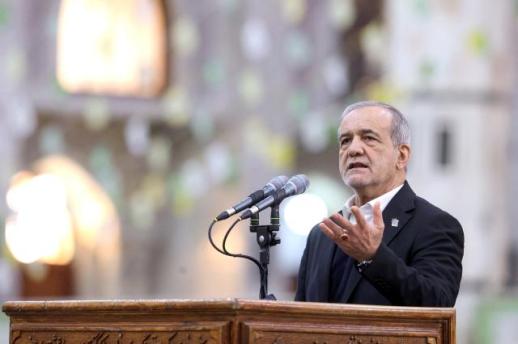 Iran President Says Leadership Should Not Be Limited to Small Group Amid ongoing challenges in U.S.-Iran peace negotiations, President Masoud Pezeshkian, identified as a pro-negotiation figure, made remarks seemingly targeting the power structure dominated by the Islamic Revolutionary Guard Corps (IRGC). On May 31, local time, Pezeshkian stated during a cabinet meeting that "Iran's leadership should not consist solely of a limited group of leaders and bureaucrats." He emphasized that not only the general public but also all social groups, economic stakeholders, and scientists should participate in Iran's decision-making process. "The more the public engages in decision-making and problem-solving, the greater the likelihood of resolving issues," he added. Pezeshkian also urged that those in positions of responsibility must stand with the people during times of hardship to address problems together. These comments come as hardliners, including the IRGC, are gaining influence amid the backdrop of war and peace negotiations with the United States. The IRGC possesses military power that surpasses the regular army, justifying its role in safeguarding Iran's theocratic regime, and has exerted significant influence across the economy and political landscape. Pezeshkian is reportedly opposing military confrontation in favor of negotiations in the ongoing peace talks with the U.S., standing in contrast to internal hardliners. As speculation grows about conflicts with hardliners centered around the IRGC, Iranian opposition media have reported that Pezeshkian has expressed a willingness to resign due to the IRGC's control over state affairs. Iran International, a media outlet based in the UK, cited internal sources claiming that Pezeshkian submitted an official resignation letter to the office of Supreme Leader Ayatollah Seyyed Mojtaba Khamenei. The report stated that Pezeshkian wrote in his resignation letter, "The president and government have been effectively excluded from the major and critical decision-making processes of the state, leading to a situation where hardliners within the IRGC have taken control of governance, making it impossible for the government to function and fulfill its legal responsibilities. Therefore, I will resign immediately." However, the Iranian presidential office denied the resignation rumors, stating, "President Pezeshkian will not cease his service to the Iranian people."* This article has been translated by AI. 2026-06-01 11:18:00
 -
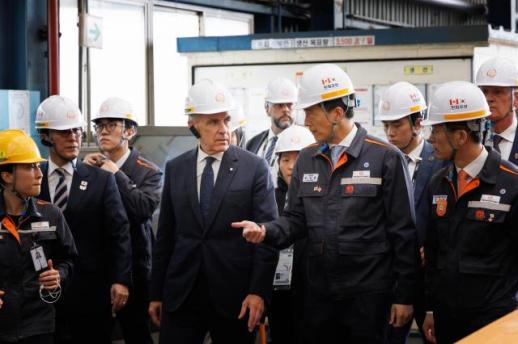 Hanwha Ocean and TKMS Compete for Canadian Submarine Contract As the competition for Canada’s next-generation submarine program intensifies, both South Korea's Hanwha Ocean and Germany's ThyssenKrupp Marine Systems (TKMS) are finalizing their bids, drawing attention from Canadian media. According to the Canadian Press on May 31, the federal government is currently evaluating final bids from Hanwha Ocean and TKMS for a major contract to supply up to 12 submarines to the Royal Canadian Navy. This project is estimated to be worth billions of dollars and could become the largest military procurement in Canadian history. Steven Pure, Canada’s Minister of Procurement, stated on May 27 that a winner will be selected by the end of June, noting that Canada is completing the procurement process for submarines in less than a year, which is unusually fast compared to the typical five-year timeline for major naval vessel procurements. Hanwha Emphasizes Quick Delivery and Economic Benefits Hanwha Ocean is promoting its strengths in rapid delivery schedules and economic impacts within Canada. The company plans to deliver four submarines by 2034, utilizing its shipyard in Geoje, which heavily employs robotics, and will provide an additional submarine each year thereafter. Furthermore, the Dosan Ahn Chang-ho, the lead ship of the Changbogo-III Batch I class, arrived at the Esquimalt naval base in British Columbia on May 24, enhancing Hanwha's promotional efforts in the bidding process. Hanwha claims that its recent bid reflects economic opportunities exceeding CAD 70 billion (approximately USD 52 billion) according to KPMG evaluation criteria, potentially creating around 500,000 jobs and generating about CAD 100 billion in GDP effects from 2026 to 2044. Earlier this year, Hanwha invested up to CAD 345 million (approximately USD 258 million) in Algoma Steel, Canada’s largest steel producer, and secured a contract to use Algoma's steel for submarine construction. The company has also signed agreements with Canadian firms to support industries affected by tariffs and to promote liquefied natural gas (LNG) exports. Glen Copeland, CEO of Hanwha Defense, expressed a desire for Hanwha to supply all equipment to the Canadian military, aiming to stand alongside well-known Korean brands like LG, Kia, and Hyundai in Canada. He noted, "While Hanwha is a well-known brand in Korea, it is not yet recognized as a tier-one defense contractor in North America. Building our brand here is essential for success." TKMS Highlights NATO Interoperability In contrast, TKMS is emphasizing interoperability with NATO allies. The company highlighted that the German and Norwegian fleets are jointly tracking Russian submarine movements, sharing knowledge, data, and equipment. TKMS has a strong tradition of supplying conventional submarines to NATO member countries. Regarding collaboration with Canadian companies, TKMS is focusing on quality over quantity, carefully evaluating whether integration within the supply chain is feasible before selecting partners. Oliver Burkhardt, CEO of TKMS, stated during a recent visit to Ottawa for CANSEC, Canada’s largest defense exhibition, "The important thing is not the number of MOUs but their quality. We are collaborating with key players like CAE, Cohere, and Seaspan." CAE is a Canadian simulator company, Cohere is a Canadian AI firm, and Seaspan is a Canadian shipyard. Both CAE and Cohere are also collaborating with Hanwha Ocean. Initially, TKMS proposed delivering Canada’s first submarine by 2034 but has recently strengthened its proposal to deliver four submarines by 2036, which includes delaying the delivery schedule for one submarine each from Germany and Norway. Additionally, TKMS has promised CAD 160 billion in economic activity, CAD 86 billion in GDP effects, and the creation of over 650,000 jobs throughout the project duration. Burkhardt remarked, "It’s the third quarter of the game, and it’s still a tie. Let’s see who wins. We are ready." However, the Canadian Press noted that both Hanwha and TKMS have largely focused on geopolitical partnerships and domestic economic impacts in their bids, with little mention of the actual performance capabilities of the submarines. Canada is accelerating its submarine procurement due to the aging of its existing fleet. The four Victoria-class submarines are scheduled to be decommissioned by 2035, with reports indicating that only one is currently operational. Some of the remaining submarines may need to be decommissioned for parts. While the next-generation submarine program requires significant funding, the companies involved have promised substantial economic cooperation, raising expectations for considerable economic benefits. Daniel Carey, head of the national automotive cluster at Deloitte, who has also participated in submarine projects in the UK, commented on the Canadian submarine program, saying it will be "eye-wateringly expensive" but will bring tremendous value to the Canadian economy.* This article has been translated by AI. 2026-06-01 10:54:00
 -
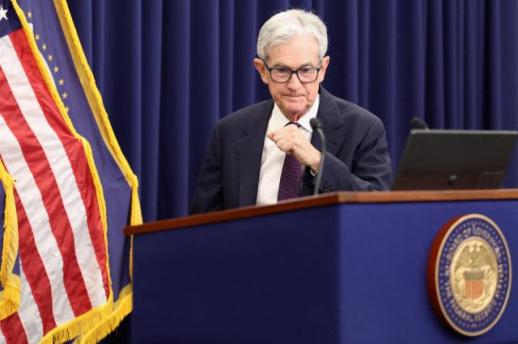 Powell Criticizes Trump Administration's Attempts to Dismiss Fed Officials Jerome Powell, former Chair of the U.S. Federal Reserve, warned that if a precedent is set for dismissing Fed officials based on policy disagreements, future administrations may follow suit. On May 31, Powell made these remarks at the John F. Kennedy Courage Award ceremony in Boston, stating, "If any administration finds a way to dismiss Fed officials for policy differences, future administrations will do the same." He described the trust built over decades in the Fed as an "invaluable asset" and emphasized the obligation of himself and his colleagues to protect it. Powell also noted that the administration has "no role whatsoever" in the appointment or oversight of the 12 regional Federal Reserve Bank presidents. These regional presidents participate in interest rate decisions alongside Fed governors appointed by the president, reaffirming the need for monetary policy decisions to remain independent from the White House. The Wall Street Journal highlighted that Powell's comments suggest why he has remained on the Fed Board after stepping down as chair, as it is common for Fed chairs to leave public office after their term. Powell's statements come as the Supreme Court is expected to soon rule on President Donald Trump's attempt to dismiss Fed Governor Lael Brainard. Trump sought to remove Brainard over allegations of mortgage fraud. Fed governors can only be dismissed for "just cause," not merely policy disagreements. The Trump administration contends that such actions are not an attack on the Fed's independence but rather a move to restore accountability. Treasury Secretary Scott Vessenet recently referred to Kevin Warsh, the new Fed chair, as the "new sheriff," asserting that he will return the Fed to its foundational principles of accountability and trustworthiness. In his speech, Powell acknowledged the need for institutional reform while stressing the importance of preserving the institution.* This article has been translated by AI. 2026-06-01 10:54:00
 -
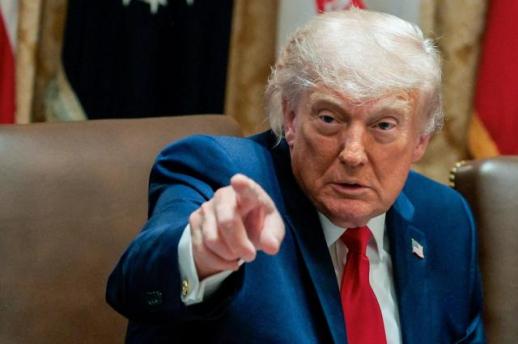 Trump: Iran Must Not Develop or Acquire Nuclear Weapons President Donald Trump has stated that he will not allow Iran to develop or acquire nuclear weapons. In an interview on May 30 with Fox News, hosted by his daughter-in-law Lara Trump, the president discussed the potential for a peace agreement with Iran, saying, "I will make a deal. We can open the Strait of Hormuz immediately with a signature." However, he emphasized that a key condition is that Iran must not possess nuclear weapons. Trump noted, "They (Iran) agreed. They originally said they would not develop nuclear weapons, and when I asked, 'What if you buy nuclear weapons?' they said they would not develop or purchase military weapons in any way. That is a significant difference." He added, "I am not in a hurry. Slowly, but surely, we are getting what we want," and warned, "If we do not get what we want, we will end it in another way," suggesting the possibility of resuming military action if negotiations break down. Trump's comments come as the U.S. and Iran continue to negotiate the final details of a peace agreement. Earlier, The New York Times reported that Trump had not approved a preliminary memorandum of understanding (MOU) between the U.S. and Iran and had sent it back to Iran with strengthened conditions. However, specific details of the revisions were not disclosed. Iranian news agency Tasnim reported that Iran is also expected to propose new amendments. A source stated, "The exchange of drafts between the two sides is ongoing, and Iran will certainly reflect its own amendments in the agreement. Nothing has been finalized yet." The source also noted that Iran is thoroughly preparing for the possibility of a no-deal situation.* This article has been translated by AI. 2026-06-01 09:24:00
 -
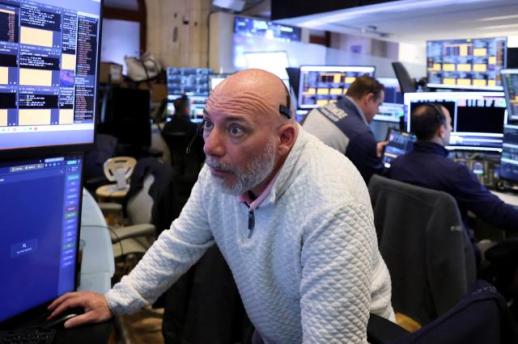 Oil Prices Rebound Amid Stalled U.S.-Iran War Negotiations As negotiations surrounding the end of the Iran war remain stalled, international oil prices began the week on a rebound. According to Bloomberg, as of 8:30 a.m. KST, West Texas Intermediate (WTI) crude futures rose by 2.45% ($2.14) to $89.50 per barrel, while Brent crude futures increased by 2.10% ($1.91) to $93.03 per barrel. Oil prices had plummeted nearly 20% in May amid expectations that the U.S.-Iran conflict could soon conclude, but renewed geopolitical uncertainties and stalled negotiations have led to a rebound. This trend reflects the lack of a definitive agreement regarding the cessation of hostilities between the U.S. and Iran. The New York Times reported that President Donald Trump has intensified the conditions for a potential agreement. In a Fox News interview the previous day, President Trump stated that he would not rush into a deal with Iran, asserting, "Slowly but surely, I believe we are getting what we want. If we do not get what we want, we will end it another way." Reports also emerged that the U.S. Navy targeted a commercial vessel attempting to evade an Iranian port blockade, according to the Associated Press. Experts have cautioned that the recent decline in oil prices was overly reliant on optimistic forecasts. Stephen Innes, managing partner at SPI Asset Management, noted in a report, "The market is acting as if the U.S.-Iran war is winding down and that the oil market will soon return to normal. While the war may be approaching its final phase, physical energy systems do not recover as quickly as financial markets." U.S. stock index futures are also showing slight gains. At the same time, Dow Jones Industrial Average futures rose by 5.90 points (0.01%) to 51,038.60. S&P 500 futures increased by 10.80 points (0.14%) to 7,590.90, while Nasdaq 100 futures climbed by 68.40 points (0.23%) to 30,401.60. This performance is attributed to strong expectations surrounding artificial intelligence (AI), which have buoyed semiconductor and related stocks, despite ongoing uncertainties in the Middle East.* This article has been translated by AI. 2026-06-01 08:39:00
 -
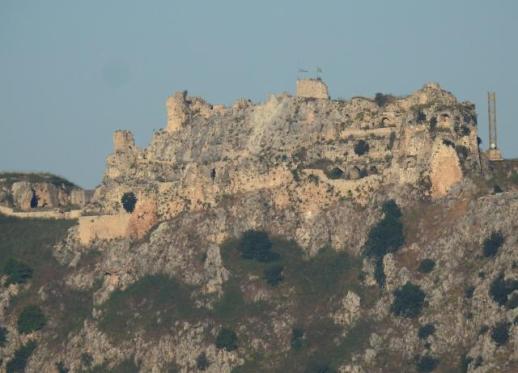 Israeli Forces Intensify Offensive Against Hezbollah, Capture Beaufort in Southern Lebanon Israeli forces have intensified their offensive against the Lebanese militant group Hezbollah, announcing the capture of the strategic location of Beaufort in southern Lebanon. According to reports from the Jerusalem Post and others on May 31, Israeli ground troops crossed the Litani River and entered the Beaufort ridge and the Wadi al-Saluki area, securing the region. The Israeli military stated that the operation began a few days prior, aiming to eliminate the threat posed by Hezbollah to residents in northern Israel. Before the ground troops advanced, the Israeli Air Force conducted extensive airstrikes targeting Hezbollah infrastructure in the area. Artillery and tank fire also supported the ground forces. Additionally, the Israeli military is conducting operations near Nabatiyeh, a major Hezbollah stronghold in southern Lebanon, and is prepared to expand its operations in that area. Israeli Defense Minister Yoav Gallant stated on social media platform X (formerly Twitter) that it has been 44 years since the Battle of Beaufort during the First Lebanon War, and that Israeli forces have once again raised the Israeli flag and the Golani Brigade banner. He emphasized that the operation is not yet complete, asserting, "The Israeli military is determined to crush Hezbollah's power and complete its mission." The entry of Israeli forces into the Beaufort ridge marks the first time since the withdrawal from southern Lebanon in 2000 that they have regained control of the area. Beaufort is considered a strategic high ground in southern Lebanon. During the First Lebanon War in 1982, Israeli Golani reconnaissance units captured this outpost from armed groups that were using it to launch rockets toward the Galilee region. Israeli forces maintained control of the area until their withdrawal from southern Lebanon under then-Prime Minister Ehud Barak's orders in May 2000. Following Prime Minister Benjamin Netanyahu's directive to intensify operations against Hezbollah, Israeli forces have expanded their operations beyond the existing control line known as the "Yellow Line," which is about 10 kilometers from the border. On May 29, they crossed the Litani River, approximately 30 kilometers north of the "Blue Line," which effectively serves as the border between Israel and Lebanon. Meanwhile, Iran is reportedly negotiating a ceasefire in Lebanon, including conditions involving Hezbollah, as it seeks to finalize a memorandum of understanding (MOU) for peace. This development suggests that the expansion of Israeli ground operations in Lebanon could influence U.S.-Iran negotiations for a ceasefire.* This article has been translated by AI. 2026-05-31 17:42:00
 -
 AI Investment Surge Expected Ahead of SpaceX and OpenAI IPOs SpaceX, OpenAI, and Anthropic, leading U.S. artificial intelligence (AI) companies, are expected to drive new momentum for Asian AI supply chain firms as they prepare for their initial public offerings (IPOs). According to Bloomberg on May 30, investors believe that the IPOs of SpaceX, OpenAI, and Anthropic will trigger a new cycle of technology investment. A significant portion of the funds raised is expected to flow into Asian supply chains, including manufacturers of server components, specialty materials, cooling parts, and power equipment. Asian hardware companies are already seen as major beneficiaries of the expanding data center construction. Increased investment in AI infrastructure has boosted the stock prices of major semiconductor firms like TSMC, Samsung Electronics, and SK Hynix, propelling them into the $1 trillion market capitalization club. However, the rapid rise in the stock prices of large semiconductor firms has led some investors to be cautious about valuation pressures. As a result, analysts predict that the next phase of AI investment will broaden to include electronic components, server assembly, advanced materials, and power equipment. Ken Wong, a portfolio specialist at Eastspring Investments in Hong Kong, stated, "AI IPOs could further fuel a capital investment boom at a time when Asian semiconductor stocks appear overheated. We are currently reducing our semiconductor exposure in favor of focusing more on electronic component manufacturers." The competition for AI leadership has significantly increased investments in computing networks by major tech companies like Meta Platforms and Amazon. Bloomberg noted that the IPOs of SpaceX, OpenAI, and Anthropic could alleviate some concerns about the sustainability of funding amid rising debt levels. Fabien Ip, a market analyst at IG International, suggested that the IPOs could lead to an additional $70 billion in AI spending on top of the $750 billion already committed by major hyperscalers. He remarked that the recent performance of semiconductor companies shows a clear ripple effect towards Asia, indicating that the AI rally is expanding beyond purely AI-related stocks. Indeed, recent trends in Asian stock markets have shown strength in manufacturers of electronic components for servers and companies involved in semiconductor materials and technologies. South Korea's Samsung Electro-Mechanics and Japan's Ibiden have been among the top performers in the MSCI Asia index this year. Investors are now shifting their focus beyond large semiconductor firms to companies whose AI infrastructure spending effects have yet to be fully reflected in their earnings, according to Bloomberg. The risk of concentration in specific stocks and limits on single-stock investments are contributing to the broader spread of AI investment across the supply chain. Song Zhe, a senior investment specialist at BNP Paribas Asset Management, predicted that the next phase of the rally will be characterized by stock-specific trends rather than indiscriminate semiconductor trading. He noted that he is focusing on companies in Taiwan and China involved in advanced packaging, substrates, testing, optical connections, power, cooling, and servers, which have upward earnings forecasts that could support their valuations. Bloomberg also reported that AI applications are emerging as a new investment area. Interest is growing in so-called "physical AI" fields, such as robotics and autonomous vehicles, which aligns with NVIDIA's expansion in related businesses and has drawn attention to partner companies like LG Electronics. Power supply is identified as a critical bottleneck area. With the surge in data centers, there is increasing interest in nuclear and alternative energy sources, and rising oil prices due to the Iran conflict are stimulating demand for power-related investments, according to Bloomberg. In the South Korean market, solar company HD Hyundai Energy Solutions and nuclear-related Daewoo Engineering & Construction have shown strong performance this year. In India, the Adani Group is expanding its environmentally friendly power-based data center business, driving up the stock prices of its energy affiliates. Gian Si Cortesi, a fund manager at Gam Investment Management, assessed power supply as the "most underweighted bottleneck area." However, he warned that if AI demand does not justify the massive investment scale, companies may reduce capital expenditures, leading the market to face overcapacity and sharp valuation declines.* This article has been translated by AI. 2026-05-31 16:57:00
 -
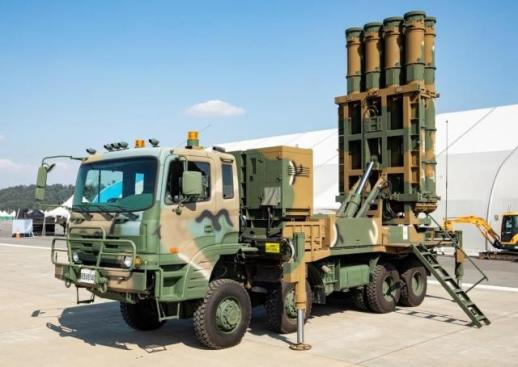 Hanwha Aerospace Discusses New Weapon Exports with Germany and the UK Hanwha Aerospace is in discussions with European countries, including Germany and the UK, regarding new weapon export contracts amid a global increase in military spending triggered by the Ukraine and Iran conflicts. On May 30, during an interview with Bloomberg TV at the 23rd Asia Security Summit (Shangri-La Dialogue) in Singapore, Alex Wong, Chief Strategy Officer of Hanwha Aerospace, shared these insights. "Demand is outpacing supply," Wong stated, adding that the recent conflicts in Ukraine and currently in Iran have highlighted the necessity for global militaries to enhance their production capabilities and ammunition stockpiles. Wong noted that Hanwha is engaging in discussions not only with existing clients like Poland and Romania but also with potential customers in Germany and the UK. He elaborated that the talks encompass not just the procurement of defense systems but also considerations on where to establish new production capabilities and how to utilize local workforce resources. "To protect citizens, a multi-layered and integrated missile defense system is essential," Wong explained. "We cannot afford to wait; we want to secure these systems immediately and hope to localize supply chains to build resilience and rapidly increase production during conflicts." In this context, Wong mentioned that Hanwha Aerospace is increasing domestic production to meet the surging demand for ammunition, missiles, and various weapon systems while also expanding manufacturing bases in Europe and the United States. "Our customers need more ammunition and more intercept missiles," he said. "We have been shifting production to meet that demand." Bloomberg reported that Europe is considered a key growth market for Hanwha Aerospace. Following a commitment from most NATO member countries to raise defense spending to around 5% of GDP last year, European militaries are expanding their acquisition of ground weapon systems, long-range strike capabilities, artillery, and advanced missile defense systems. Hanwha Aerospace is accelerating its efforts in the European market by opening a new office in Berlin this year. After securing a missile contract with Poland last year, the company also won a contract worth 1.3 trillion won to supply Chunmoo multiple launch rocket systems to Norway in February.* This article has been translated by AI. 2026-05-31 16:09:00
 -
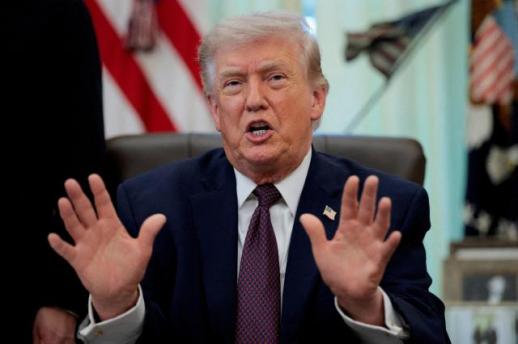 Trump Delays Announcement on Iran Agreement, Raising Uncertainty Over Peace Talks Amid delays in announcing a peace agreement with Iran, uncertainty surrounding the deal has intensified. The two nations have shown differences over key issues, including Iran's nuclear program and navigation through the Strait of Hormuz, raising questions about whether a peace agreement can be reached this time. The New York Times reported on May 30, citing three officials, that President Trump has not yet approved the draft memorandum of understanding (MOU) aimed at ending the war between the U.S. and Iran. According to the report, Trump has strengthened the preliminary conditions outlined in the peace MOU and sent a revised document back to Iran. However, specific details of the changes have not been confirmed. Previously, on May 29, Trump discussed the approval of the peace MOU during a meeting in the White House Situation Room but concluded the meeting without a separate announcement. The draft MOU reportedly includes a 60-day extension of the ceasefire between the U.S. and Iran, full opening of the Strait of Hormuz, and an agreement on Iran's denuclearization during the extended ceasefire period. On the same day, Trump mentioned on social media platform Truth Social that key conditions include a ban on Iran's nuclear weapons development, the complete opening of the Strait of Hormuz without tolls, immediate removal of underwater mines by Iran, and U.S.-led excavation and removal of highly enriched uranium buried at Iranian nuclear facilities. The White House also stated that any agreement Trump makes with Iran would only be beneficial to the U.S. and meet his red lines. As criticism grew among hardliners within the Republican Party regarding the Trump administration's approach to Iran's nuclear issue, it is interpreted that Trump has conveyed even tougher demands to quell these concerns. In contrast, Iran has criticized the U.S. for maintaining a maritime blockade and making excessive demands. Mohsen Rezaei, a senior Iranian official and former commander of the Islamic Revolutionary Guard Corps (IRGC), stated, "As expected, the U.S. president is betraying diplomacy for the third time." He added, "By continuing the maritime blockade and pursuing excessive demands in negotiations, he has proven that he is not a negotiator and is pursuing other objectives." U.S. Hints at Military Options Amid these developments, the U.S. has indicated that military options against Iran remain on the table. Defense Secretary Pete Hagel stated at a press conference following the Shangri-La Dialogue in Singapore that the U.S. military's blockade of Iran remains strong and that they are prepared to resume military intervention if peace negotiations fail. He emphasized, "The Strait of Hormuz will be an open waterway, freely accessible to the world, without tolls. That is how it should be." On the same day, U.S. forces reportedly fired missiles at a Gambian-flagged cargo ship heading toward an Iranian port, according to U.S. Central Command (CENTCOM). CENTCOM stated that the vessel was observed passing through international waters toward the Iranian port and that over 20 warnings were issued regarding violations of the U.S. maritime blockade. The U.S. Treasury Department is also increasing pressure on Iran regarding navigation issues in the Strait of Hormuz. On May 29, the Treasury announced that Americans should not use any services provided by the Iranian government, including safe passage services, regardless of toll payments. Earlier, on May 27, the Treasury's Office of Foreign Assets Control (OFAC) designated the newly established Persian Gulf Strait Authority (PGSA), created by Iran to manage navigation in the Strait of Hormuz, and all individuals or entities cooperating with it as special sanctions targets. Since the outbreak of war, Iran has effectively blocked the Strait of Hormuz, securing unprecedented leverage. Iran has been overtly asserting its control over the strait, recently proposing tolls of up to $2 million per vessel (approximately 300 million won) as part of its management and licensing system for navigation. Consequently, despite Trump's earlier mention of making a 'final decision' regarding the peace agreement on May 29, the lack of clear updates has raised concerns about the potential for renewed military conflict, further increasing uncertainty surrounding the peace agreement. On the other hand, some mediators suggest that a significant portion of the agreement has already been finalized. A senior Arab official involved in directly mediating peace negotiations between the U.S. and Iran stated to NBC News on May 28 that both negotiating teams had agreed on ceasefire conditions a few days prior, but both sides are delaying final confirmation and announcement. The official explained, "It was already wrapped up three days ago in Doha. Now everyone is playing a game of who comes first, the chicken or the egg," expressing frustration over the delay.* This article has been translated by AI. 2026-05-31 15:42:00
 -
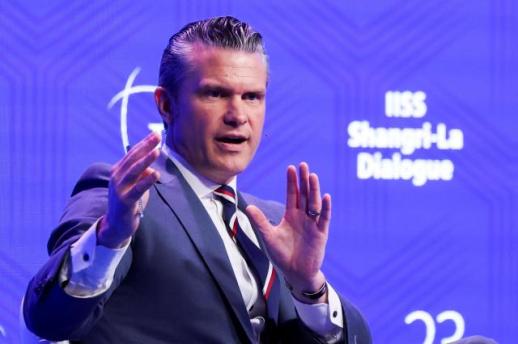 U.S. Defense Secretary Confirms Strong Iran Maritime Blockade Amid Military Actions U.S. Secretary of Defense Pete Hegseth reaffirmed the commitment to maintaining a maritime blockade against Iran, stating that military intervention could resume if peace negotiations fail. On May 30, during a press conference at the U.S. Embassy in Singapore following the Shangri-La Dialogue, Hegseth emphasized, "We have the capability to resume operations if necessary, and our resources are more than adequate both there and globally." He added, "This reflects how we balance precision weapons with ample ammunition." Hegseth noted that the blockade operations against Iran are "firmly in place" and mentioned that the issue of the Strait of Hormuz was frequently discussed during bilateral meetings at the conference. He stated, "The Strait of Hormuz will be an open waterway, a toll-free passage for the world, as it should be." On the same day, the U.S. military launched missiles at a Gambian-flagged cargo ship heading for an Iranian port, according to U.S. Central Command (CENTCOM). CENTCOM reported that the vessel was observed transiting international waters toward the Iranian port in the Gulf of Oman and that it had received over 20 warnings regarding violations of the U.S. maritime blockade. Military authorities confirmed that the ship was incapacitated by the missiles and is no longer heading to Iran. No information on casualties has been released. When asked whether the U.S. is considering a permanent withdrawal of troops from Middle Eastern bases attacked by Iran, Hegseth responded, "That is a decision for President Trump to make," adding that such decisions will be based on the final outcomes of peace negotiations with Iran. He concluded, "Currently, we are focused on maintaining our readiness to re-engage militarily if necessary."* This article has been translated by AI. 2026-05-31 14:30:00