

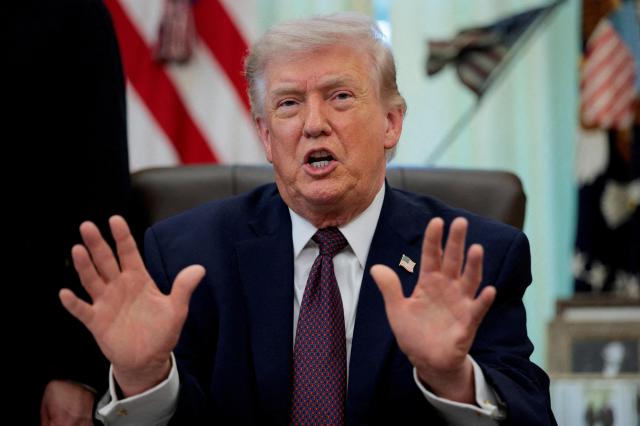
Amid delays in announcing a peace agreement with Iran, uncertainty surrounding the deal has intensified. The two nations have shown differences over key issues, including Iran's nuclear program and navigation through the Strait of Hormuz, raising questions about whether a peace agreement can be reached this time.
The New York Times reported on May 30, citing three officials, that President Trump has not yet approved the draft memorandum of understanding (MOU) aimed at ending the war between the U.S. and Iran. According to the report, Trump has strengthened the preliminary conditions outlined in the peace MOU and sent a revised document back to Iran. However, specific details of the changes have not been confirmed.
Previously, on May 29, Trump discussed the approval of the peace MOU during a meeting in the White House Situation Room but concluded the meeting without a separate announcement. The draft MOU reportedly includes a 60-day extension of the ceasefire between the U.S. and Iran, full opening of the Strait of Hormuz, and an agreement on Iran's denuclearization during the extended ceasefire period.
On the same day, Trump mentioned on social media platform Truth Social that key conditions include a ban on Iran's nuclear weapons development, the complete opening of the Strait of Hormuz without tolls, immediate removal of underwater mines by Iran, and U.S.-led excavation and removal of highly enriched uranium buried at Iranian nuclear facilities. The White House also stated that any agreement Trump makes with Iran would only be beneficial to the U.S. and meet his red lines.
As criticism grew among hardliners within the Republican Party regarding the Trump administration's approach to Iran's nuclear issue, it is interpreted that Trump has conveyed even tougher demands to quell these concerns.
In contrast, Iran has criticized the U.S. for maintaining a maritime blockade and making excessive demands. Mohsen Rezaei, a senior Iranian official and former commander of the Islamic Revolutionary Guard Corps (IRGC), stated, "As expected, the U.S. president is betraying diplomacy for the third time." He added, "By continuing the maritime blockade and pursuing excessive demands in negotiations, he has proven that he is not a negotiator and is pursuing other objectives."
U.S. Hints at Military Options
Amid these developments, the U.S. has indicated that military options against Iran remain on the table. Defense Secretary Pete Hagel stated at a press conference following the Shangri-La Dialogue in Singapore that the U.S. military's blockade of Iran remains strong and that they are prepared to resume military intervention if peace negotiations fail. He emphasized, "The Strait of Hormuz will be an open waterway, freely accessible to the world, without tolls. That is how it should be."
On the same day, U.S. forces reportedly fired missiles at a Gambian-flagged cargo ship heading toward an Iranian port, according to U.S. Central Command (CENTCOM). CENTCOM stated that the vessel was observed passing through international waters toward the Iranian port and that over 20 warnings were issued regarding violations of the U.S. maritime blockade.
The U.S. Treasury Department is also increasing pressure on Iran regarding navigation issues in the Strait of Hormuz. On May 29, the Treasury announced that Americans should not use any services provided by the Iranian government, including safe passage services, regardless of toll payments.
Earlier, on May 27, the Treasury's Office of Foreign Assets Control (OFAC) designated the newly established Persian Gulf Strait Authority (PGSA), created by Iran to manage navigation in the Strait of Hormuz, and all individuals or entities cooperating with it as special sanctions targets.
Since the outbreak of war, Iran has effectively blocked the Strait of Hormuz, securing unprecedented leverage. Iran has been overtly asserting its control over the strait, recently proposing tolls of up to $2 million per vessel (approximately 300 million won) as part of its management and licensing system for navigation.
Consequently, despite Trump's earlier mention of making a 'final decision' regarding the peace agreement on May 29, the lack of clear updates has raised concerns about the potential for renewed military conflict, further increasing uncertainty surrounding the peace agreement.
On the other hand, some mediators suggest that a significant portion of the agreement has already been finalized. A senior Arab official involved in directly mediating peace negotiations between the U.S. and Iran stated to NBC News on May 28 that both negotiating teams had agreed on ceasefire conditions a few days prior, but both sides are delaying final confirmation and announcement. The official explained, "It was already wrapped up three days ago in Doha. Now everyone is playing a game of who comes first, the chicken or the egg," expressing frustration over the delay.
* This article has been translated by AI.

Copyright ⓒ Aju Press All rights reserved.