

Journalist

Joonha Yoo
joonhayoo94@ajunews.com
-
 KOSPI tumbles 3.3% as chip-cycle peak fears trigger foreign selloff SEOUL, May 19 (AJP) - South Korean benchmark KOSPI tumbled 3.3 percent Tuesday as foreign investors offloaded shares amid growing concerns that the global memory-chip cycle is nearing its peak. Foreign investors drove the decline on the main bourse, selling 5.34 trillion won ($3.55 billion) worth of shares to outweigh combined purchases by retail and institutional investors. The selloff heavily impacted semiconductor and artificial intelligence-related stocks following an overnight slump in U.S. tech shares. The index ended at 7,271.70, dropping from an intraday high of 7,446.57 to a low of 7,141.91. Large-cap semiconductor stocks dragged the market lower, with industry leader Samsung Electronics falling 2.0 percent to 275,500 won and SK hynix dropping 5.2 percent to 1,745,000 won. Automakers and technology-related shares suffered steep losses alongside chipmakers. Hyundai Motor plunged 8.9 percent to 604,000 won, LG Electronics tumbled 11.7 percent to 191,700 won, and Hanmi Semiconductor lost 9.2 percent to 288,000 won. Mirae Asset Securities also declined 5.8 percent to 66,400 won. Moving against the broader market trend, Korea Electric Power Corp. rose 4.0 percent to 39,150 won. The gain followed expectations that the government will accelerate a high-voltage direct current transmission project on the west coast to expand renewable-energy capacity and strengthen grid stability. LG Innotek climbed 4.3 percent to 793,000 won after NH Investment & Securities raised its target price from 700,000 won to 1 million won. The brokerage cited spillover effects from package substrate shortages and stronger-than-expected benefits from camera specification upgrades for major clients. The tech-heavy KOSDAQ index fell 2.4 percent to close at 1,084.10, pressured by a selloff in growth stocks. Retail investors bought 107.1 billion won on the junior board, while foreign and institutional investors sold 12.3 billion won and 55.8 billion won, respectively. KOSDAQ-listed Doosan Robotics sank 15.1 percent to 100,100 won, and Taihan Fiber Optics fell 6.7 percent to 21,550 won. Conversely, I-ROBOTICS jumped 7.4 percent to 4,295 won after reporting a return to profitability with a first-quarter net profit of 450 million won, driven by stronger overseas orders and a 20.1 percent rise in sales. The decline in Seoul followed a mixed session on Wall Street, where the Dow Jones Industrial Average rose 0.3 percent to 49,686.12, while the Nasdaq Composite fell 0.5 percent to 26,090.73. Across Asia, Japan's Nikkei 225 fell 0.6 percent, while China's Shanghai Composite rose 0.5 percent and Hong Kong's Hang Seng Index gained 0.4 percent. Oil prices retreated from recent highs as West Texas Intermediate crude fell 1.3 percent to $103 a barrel and Brent crude declined 2.1 percent to $109.80. The pullback occurred after U.S. President Donald Trump said he had paused a planned military strike on Iran at the request of Gulf allies, prompting hopes for renewed negotiations. The South Korean won weakened against the U.S. dollar. The local currency closed at 1,506.10 won per dollar, down 1.0 percent from the previous session. 2026-05-19 16:09:44
 -
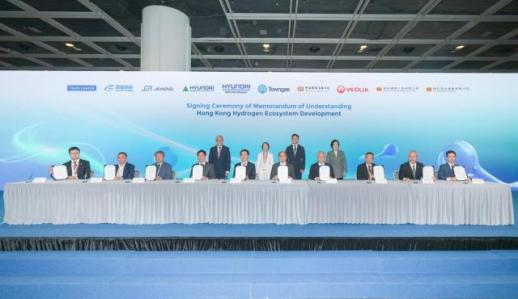 Hyundai Motor Group signs multilateral MOU to build hydrogen ecosystem in Hong Kong SEOUL, May 18 (AJP) - Hyundai Motor Group said Monday it has signed a multilateral memorandum of understanding with nine other companies to create a hydrogen ecosystem in Hong Kong, positioning the city as a gateway for the group's broader push into the Asia-Pacific hydrogen market. Hyundai Motor and Hyundai Engineering & Construction signed the agreement during the International Hydrogen Development Symposium 2026 at the Hong Kong Convention and Exhibition Centre. The agreement involves 10 companies, including South Korean firms Hyundai Motor, Hyundai Engineering & Construction and JING, as well as Hong Kong, Chinese and international partners including Towngas, Veolia, China Certification & Inspection Group, Guofu Hydrogen Energy, Templewater, Chun Wo Construction and Chun Wo Bus. Under the agreement, the companies will work to develop waste-to-hydrogen facilities that produce low-carbon hydrogen from landfill gas, build liquid hydrogen refueling stations and introduce hydrogen-powered mobility services. Liquid hydrogen refueling stations can store more hydrogen per unit volume than gaseous hydrogen stations, making them better suited for areas with limited available land. Hyundai Motor Group said the project is designed to support Hong Kong’s energy transition by creating a local hydrogen value chain that connects production, charging and mobility use. Hong Kong has limited land available for renewable energy production and relies heavily on imported energy. According to the city’s Census and Statistics Department, its dependence on imported primary energy stood at about 98.7 percent last year. The project comes as the Hong Kong government, which redefined its hydrogen roadmap in 2024, has been supporting hydrogen commercial vehicles and refueling infrastructure through the New Energy Transport Fund. Hyundai Motor will oversee the broader hydrogen ecosystem project, including hydrogen production, refueling infrastructure and the supply of hydrogen mobility. Hyundai Engineering & Construction will design and build waste-to-hydrogen facilities optimized for Hong Kong’s hot and humid climate. Hyundai Motor Group has been expanding its hydrogen business in South Korea and overseas. The group has built biogas-based clean hydrogen production facilities in Cheongju and Paju and began applying a similar waste-to-hydrogen model in Indonesia last year. In 2023, it established HTWO Guangzhou, its first overseas hydrogen fuel cell system production base, as part of efforts to expand in the Greater China market. Shin Seung-kyu, executive vice president in charge of energy and hydrogen policy at Hyundai Motor Group, said the agreement was signed to support Hong Kong’s hydrogen policy and build a local hydrogen ecosystem based on the group’s hydrogen business capabilities and experience. He said Hyundai Motor Group will continue to expand cooperation and business opportunities across the Asia-Pacific hydrogen market, starting with Hong Kong. 2026-05-18 18:00:10
 -
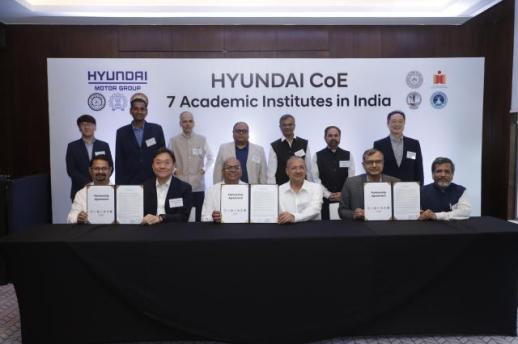 Hyundai Motor, Kia expand EV research network with Indian universities SEOUL, May 18 (AJP) - South Korean automakers Hyundai Motor and Kia have expanded their joint research network with leading Indian universities to strengthen core technologies in electric vehicle batteries and electrification, the companies said Monday. Four universities — IIT Hyderabad, IIT Kanpur, Visvesvaraya National Institute of Technology Nagpur and Tezpur University — signed agreements to participate in the network under the Hyundai Center of Excellence for future mobility technology. Hyundai Motor and Kia launched the center on April 23, 2025, with IIT Madras, IIT Delhi and IIT Bombay as part of efforts to strengthen industry-academia research cooperation in India. With the latest additions, the network now includes seven universities across India. They will work on 39 joint research projects covering batteries, electrification, advanced materials and AI-based vehicle-to-grid platforms. Hyundai Motor and Kia said the expanded network will focus on battery designs tailored to local market conditions, electrification performance technologies and talent development in future mobility. Kim Chang-hwan, executive vice president in charge of electrification energy solutions at Hyundai Motor and Kia, said the agreement represents “a shared promise for the future,” adding that Hyundai Motor Group and Indian academia will continue cooperation in future mobility technologies. The expansion comes as Hyundai Motor and Kia strengthen their presence in India, where the companies posted record first-quarter sales and recently signed an agreement with TVS Motor Company to develop India-focused electric three-wheelers. 2026-05-18 17:53:50
 -
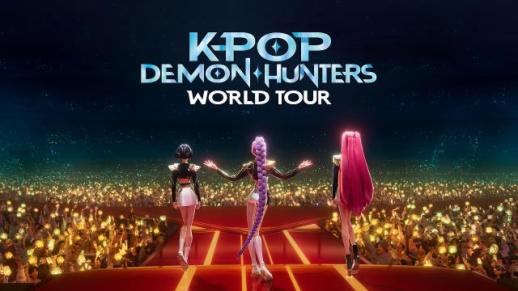 Netflix, AEG Presents announce plans for 'K-Pop Demon Hunters' concert tour SEOUL, May 18 (AJP) - Streaming giant Netflix and live entertainment company AEG Presents announced on May 15 that they plan to develop a global concert tour based on the animated film "KPop Demon Hunters," though no performers, tour dates or cities have been announced. The two companies said the project would draw on the film's music and fictional K-pop universe to create a live stage experience for audiences worldwide. Neither company disclosed the format of the performances — whether concerts, a theatrical production or a hybrid live production — nor a projected launch timeline. "KPop Demon Hunters," directed by Maggie Kang and Chris Appelhans and produced by Sony Pictures Animation in partnership with Netflix, follows HUNTR/X, a fictional K-pop girl group whose members secretly battle supernatural forces while maintaining their image as stadium-filling pop stars. The film and its soundtrack have also gained attention during the awards season. Its song "Golden" won Best Song Written for Visual Media at the Grammy Awards, Best Original Song at both the Golden Globes and the Academy Awards, while the film took Best Animated Feature at both ceremonies. AEG Presents, one of the world's largest live entertainment companies, has previously promoted tours for major K-pop acts including BLACKPINK, ATEEZ, LE SSERAFIM and TOMORROW X TOGETHER, among others. The announcement comes as the film's soundtrack has become one of the year's biggest music releases, expanding the property's reach beyond streaming. 2026-05-18 17:53:06
 -
 South Korean chipmakers rescue Seoul market despite broad Asia selloff SEOUL, May 18 (AJP) - South Korean stocks ended higher on Monday as heavyweight semiconductor shares helped the benchmark index recover from a sharp early plunge. The market stood out against a broader selloff across Asia triggered by rising global bond yields, renewed oil price pressures and weakness in United States technology shares. The KOSPI rose 0.6 percent to close at 7,516.04, rebounding from an intraday low of 7,142.71 to reach a high of 7,636.20. The recovery occurred despite heavy foreign selling, as overseas investors offloaded 3.65 trillion won, or 2.43 billion dollars, worth of shares. Retail and institutional investors absorbed the selloff, purchasing 2.21 trillion won and 1.39 trillion won respectively. Samsung Electronics drove much of the recovery, climbing 3.9 percent to close at 281,000 won. The gains came even as labor tensions remained in focus ahead of a planned strike by company unions on May 21. A local court partially accepted an injunction request from Samsung against illegal strike activity, recognizing the need to maintain safety operations and wafer protection work at semiconductor facilities. The unions said they would proceed with the planned action, arguing the court ruling did not block the strike itself. Business groups and shareholder organizations stepped up pressure on the union to withdraw the plan, warning of potential damage to the core semiconductor industry of South Korea. Workers are demanding the removal of a performance bonus cap set at 50 percent of their annual salary and want 15 percent of operating profit allocated to a uniform bonus pool. SK hynix gained 1.2 percent to 1,840,000 won, supported by continued optimism over demand for high-bandwidth memory. The advance came despite concerns that rising global bond yields could pressure valuations for artificial intelligence-related technology companies. Other large-cap shares faced steep declines. Hyundai Mobis plunged 9.2 percent to 571,000 won, tracking weakness across Hyundai Motor Group shares after the sharp morning drop triggered a sell-side sidecar for the second consecutive session. LG Electronics dropped 9.8 percent to 217,000 won, while LS Electric fell 2.1 percent to 253,500 won. Doosan Robotics slid 7.5 percent to 117,900 won, while cable manufacturer Daehan Electric Wire fell 3.2 percent to 58,100 won and Gaon Cable jumped 12.3 percent to 380,000 won. The technology-heavy KOSDAQ failed to match the broader market rebound, falling 1.7 percent to close at 1,111.09. The junior index moved between a high of 1,122.57 and a low of 1,071.66, with institutions selling 255.1 billion won and retail investors offloading 7.7 billion won, while foreigners bought 237.2 billion won. Jusung Engineering surged by the daily limit of 30 percent to 182,200 won on the KOSDAQ. The company announced it had shipped the world's first ALG-based transistor full integration manufacturing equipment to a global chipmaker, adding the technology could expand to display and solar applications. Mirae Asset Venture Investment jumped 22.8 percent to 67,400 won, boosted by expectations that SpaceX could accelerate its initial public offering timeline. Mirae Asset Group has reportedly invested about 400 billion won in the aerospace company through funds since 2022. Jeju Semiconductor rose 12.5 percent to 92,600 won after reporting first-quarter revenue surged 273 percent from a year earlier to 180.5 billion won. The company said operating profit jumped 1,713 percent to 67.1 billion won, driven by higher DRAM prices and stronger demand for memory chips used in mobile and automotive applications. Sphere Corporation advanced 14.6 percent to 48,150 won after reporting first-quarter consolidated revenue grew 106 percent year-on-year to 45 billion won. The company attributed nearly all of its revenue to an aerospace special alloy supply business supported by growth in the global space industry. Hanmi Semiconductor plunged 14.1 percent to 317,000 won following an earnings shock. The company posted revenue of 50.9 billion won and operating profit of 8.5 billion won, down 65.5 percent and 87.9 percent respectively, citing a decline in Asian sales and a gap in TC bonder orders. Regional markets ended broadly lower as investors reacted to rising bond yields, higher oil prices and renewed weakness in United States technology shares. Japan's Nikkei 225 fell 0.9 percent to 60,877.5, China's Shanghai Composite declined 0.5 percent to 4,116.9 and Hong Kong's Hang Seng Index lost 1.5 percent to 25,566.6. Oil prices extended gains as stalled talks between the United States and Iran and continued disruptions around the Strait of Hormuz kept supply concerns elevated. Brent crude rose 2.3 percent to 107.80 dollars a barrel, while West Texas Intermediate climbed 1.9 percent to 111.28 dollars. The VIX volatility index rose 6.8 percent to 18.4, and the Philadelphia Semiconductor Index dropped 4 percent to 11,588.5. The South Korean won weakened slightly, trading at 1,500.3 won against the dollar, down 2.3 won, or 0.1 percent, from the previous session. 2026-05-18 16:00:47
 -
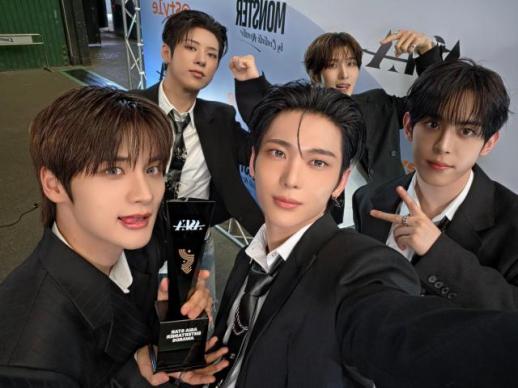 NOWZ wins ASEA Hot Trend award for second straight year SEOUL, May 18 (AJP) - K-pop boy band NOWZ won the Hot Trend award for the second consecutive year at the 2026 Asia Star Entertainer Awards (ASEN) held Saturday in Japan, the group's agency Cube Entertainment said Monday. The five-member act — Hyunbin, Yoon, Yeonwoo, Jinhyuk and Siyun — received the award during the ceremony at Belluna Dome in Saitama. Formerly known as NOWADAYS, NOWZ debuted in April 2024 as Cube Entertainment's first new boy group in eight years. The group changed its name to NOWZ last year and has since been expanding its activities in Japan and other Asian markets. Accepting the award, NOWZ thanked its fans, known as DayN, and agency staff, saying the group would continue to connect with audiences through future activities. NOWZ opened the ceremony with a medley of songs by senior Cube Entertainment artists — BEAST's "Fiction," BTOB's "I'll Be Your Man," i-dle's "TOMBOY" and Pentagon's "Shine" before performing "EVERGLOW," the title track from its first mini album "IGNITION" released last year, and "AMMO," a lead track from its first Japanese EP "NOWZ" released in March. NOWZ has recently expanded its activities in Japan through appearances on local platforms and broadcasters, including ABEMA and TV Tokyo. The group also released the digital single "Our Beginning," produced by group's leader Hyunbin. 2026-05-18 12:57:11
 -
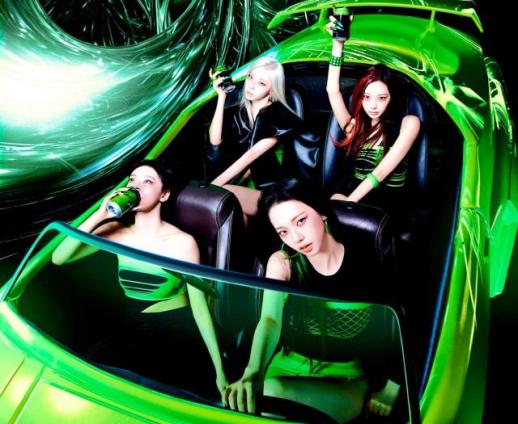 aespa to release second full-length album 'LEMONADE' on May 29 SEOUL, May 18 (AJP) - K-pop girl band aespa will release its second full-length album "LEMONADE" on May 29, SM Entertainment said Monday. The 11-track album, which includes the title track "LEMONADE," the prerelease single "WDA (Whole Different Animal) (Feat. G-DRAGON)" and a featured version of "LEMONADE," will be released at 1 p.m. (0400 GMT) through major streaming platforms and as a physical copy. aespa — consisting of Karina, Giselle, Winter and Ningning — debuted in 2020 with "Black Mamba" and is known for its AI avatar and metaverse-themed concept, as well as hits including "Next Level," "Savage," "Spicy” and "Drama." LEMONADE is an electronic dance track built around a heavy synth bass sound. Its lyrics draw on the phrase “If life gives you lemons, make lemonade,” using the metaphor to express turning hardship into opportunity. The group previewed the album through music video and concept photo teasers for “WDA,” emphasizing a darker visual direction and hip-hop-based performance style. SM Entertainment said the title track will show a contrasting side of aespa and mark a new chapter in the group’s fictional universe. 2026-05-18 12:56:56
 -
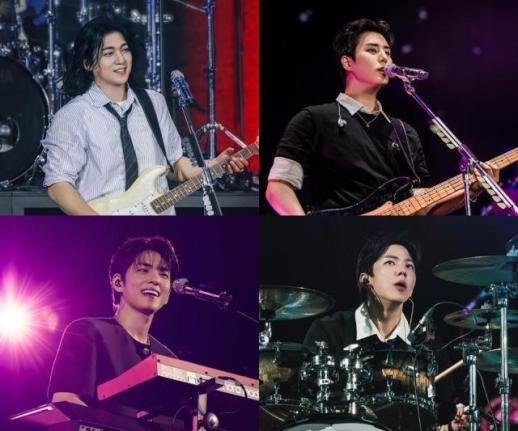 DAY6 to hold three KSPO Dome concerts for 10th anniversary tour finale SEOUL, May 18 (AJP) - K-pop band DAY6 will hold three concerts at KSPO Dome in July as the finale of its 10th anniversary tour, JYP Entertainment said Monday. The four-member group — Sungjin, Young K, Wonpil and Dowoon — will stage "DAY6 10th Anniversary Tour FINALE in SEOUL" from July 3 to 5 at KSPO Dome in Olympic Park in Seoul's Songpa District. The concerts will close out the group's 10th anniversary tour, which launched at Goyang Stadium in Gyeonggi Province in August 2025 and spanned 27 shows across 16 cities in South Korea and abroad. The domestic leg of the tour, which ran from February through May, included stops in Daegu, Gwangju, Daejeon and Busan. DAY6 debuted under JYP Entertainment in 2015 and has built a strong following with self-written pop-rock songs built around band performance and emotionally direct lyrics. The group has steadily expanded its concert footprint in South Korea, selling out venues including Jamsil Indoor Stadium, Inspire Arena and Gocheok Sky Dome — which the group became the first K-pop band to headline — before drawing 80,000 fans across two sold-out shows at Goyang Stadium last August as part of the current tour. The upcoming finale concerts will mark DAY6's third appearance at KSPO Dome in a little over a year. The band previously performed at the venue in May 2025 for the finale of its third world tour and returned in December for its special concert "The Present." The group is scheduled to continue the tour in Kobe, Japan, on June 20 and 21 before returning to Seoul for the finale. Further details on ticket sales will be announced through the group's official social media channels at a later date. 2026-05-18 12:56:25
 -
 KOSPI sinks more than 6%, erasing weekly gains in violent foreign selloff SEOUL, May 15 (AJP) — South Korean stocks suffered a brutal reversal Friday as the benchmark KOSPI plunged more than 6 percent, wiping out all gains made earlier this week after foreign and institutional investors rushed to lock in profits once the index briefly crossed the 8,000 mark. The KOSPI closed down 6.12 percent at 7,493.18 after swinging wildly between an intraday high of 8,046.78 and a low of 7,371.68. The selloff marked the first intraday drop of more than 6 percent since March 23 and highlighted how quickly sentiment deteriorated as concerns mounted over rising Japanese interest rates, surging oil prices and a broader global bond-yield repricing. The index had initially extended its AI-driven rally in early trading, supported by continued gains in robotics and semiconductor-related shares, before foreign investors abruptly turned into aggressive sellers. Retail investors rushed in to buy the dip, purchasing a net 7.22 trillion won ($5.50 billion) worth of KOSPI shares. Foreign investors dumped 5.6 trillion won, while institutions sold 1.73 trillion won. Volatility intensified in the afternoon, prompting the Korea Exchange to activate a sell-side sidecar at 1:28 p.m. after KOSPI200 futures plunged more than 5 percent. The sharp reversal came despite relatively firm semiconductor sentiment overnight in the United States, where the Philadelphia Semiconductor Index rose 0.5 percent amid continued optimism surrounding AI demand and NVIDIA-linked supply chains. Investors instead shifted focus toward mounting macroeconomic risks tied to global interest rates and energy markets. Brent crude futures climbed above $107 per barrel while West Texas Intermediate crude traded above $103 as tensions surrounding Iran and the Strait of Hormuz escalated further. Concerns deepened after reports indicated severe disruptions to oil flows through the strategic shipping route, fueling fears of prolonged supply shortages and renewed global inflation pressure. The Korean won also weakened sharply alongside the equity rout, ending at 1,500.3 per dollar, up 0.5 percent from the previous session, as investors sought safe-haven assets. Semiconductor heavyweights led the decline as foreign investors concentrated selling on large-cap AI beneficiaries that had powered the recent rally. Samsung Electronics fell 8.6 percent to 270,500 won, while SK hynix dropped 7.7 percent to 1,819,000 won. Foreign investors sold more than 1.17 trillion won worth of Samsung Electronics shares and 639.9 billion won worth of SK hynix during the session. The broad market weakness contrasted with continued speculative strength in selected robotics and physical AI-related stocks. LG Electronics surged 10.8 percent to 240,500 won, extending its recent rerating rally after stronger-than-expected earnings and expanding cooperation with global AI firms including NVIDIA and Google DeepMind. Investors increasingly viewed the company as a potential hardware-platform beneficiary in the emerging physical AI ecosystem. Doosan Robotics also jumped 19.3 percent to 127,400 won as investors rotated into humanoid robotics and automation-related plays. The stock has recently attracted strong inflows on expectations that tightening U.S. restrictions on Chinese robotics technologies could benefit Korean suppliers. Transportation-related redevelopment plays also remained resilient despite the broader market collapse. Dongyang Express rose 17.1 percent while Chunil Express gained 12 percent as investors continued betting on redevelopment value tied to Seoul Express Bus Terminal assets ahead of local election-related policy discussions. In contrast, construction and infrastructure shares came under heavy pressure as risk appetite deteriorated rapidly. Daewoo E&C plunged 12.6 percent to 28,500 won, while Doosan Enerbility fell 5.4 percent and Korea Electric Cable dropped 7.1 percent. The tech-heavy KOSDAQ also slumped sharply, falling 5.14 percent to 1,129.82 after moving between 1,197.23 and 1,110.16 during the session. Foreign investors bought a net 398.2 billion won worth of KOSDAQ shares, while retail investors sold 144.9 billion won and institutions offloaded 13.7 billion won. Robotics-related names that had surged earlier in the week reversed sharply. Cosmo Robotics plunged 16.3 percent after recent speculative gains, while broader secondary battery and semiconductor equipment shares also weakened significantly. Elsewhere in Asia, Japan’s Nikkei 225 fell 2.2 percent to 61,268.90 as AI-related shares came under pressure following disappointing earnings guidance from Fujikura, raising concerns over stretched semiconductor and data-center valuations. Hong Kong’s Hang Seng Index fell 1.9 percent to 25,898.8, while China’s Shanghai Composite dropped 1.2 percent to 4,218.4. 2026-05-15 16:43:34
 -
 From K-Pop to K-Ink: Korea prepares to bring tattooing into the open SEOUL, May 15 (AJP) - Since a 1992 Supreme Court ruling effectively restricted tattoo procedures to medical professionals, South Korea’s tattoo industry has operated in a legal gray zone. Under the newly passed Tattooist Act, the country is now building its first national licensing and safety framework for non-medical tattoo practitioners. The law, overseen by the Ministry of Health and Welfare, passed the National Assembly on Sept. 25, 2025 and is scheduled to take effect two years after promulgation, with enforcement expected around September or October 2027. Despite the legal restrictions, tattoo culture and cosmetic tattoo procedures have expanded rapidly in South Korea alongside the rise of K-beauty and Korean cultural exports. Industry estimates suggest that around 350,000 people were engaged in tattoo-related work in Korea as of 2021, while the Korea Tattoo Association estimates the domestic tattoo market at roughly 1 trillion won, ($667 million). An anonymous tattoo artist said one of the biggest changes under the new system would be the ability to work more openly without fear of legal uncertainty. “For many tattoo artists, being able to work in our own studios without constantly worrying about legal risks is probably the biggest change,” the artist said. Under the new law, non-medical tattoo practitioners who pass a national licensing examination and obtain government certification will be permitted to legally perform tattoo procedures. The framework also introduces hygiene and safety requirements including sterilization standards, single-use needles, infectious waste disposal rules, mandatory safety education and liability insurance requirements for tattoo businesses. Tattoo studios will be required to register with local governments, while tattoo artists must maintain records related to procedures, pigments and side effects. Tattooing minors without parental consent and performing tattoo procedures outside registered workplaces will also be prohibited. The Ministry of Health and Welfare and tattoo-related organizations participated in a consultation meeting attended by more than 40 industry groups on Tuesday, officials discussed licensing examinations, hygiene standards, temporary business registration measures and safety management rules for tattoo facilities. “The purpose of the Tattooist Act is to allow non-medical tattoo practices while ensuring public health and hygiene management,” Vice Health Minister Kim Han-sook said during the meeting, according to the ministry. As the government prepares subordinate regulations for the new framework, industry groups are also moving to establish formal educational standards for tattoo practitioners. On Friday, the Korea Tattoo Association held a publication event in Seoul for three standardized tattoo textbooks covering advanced tattoo techniques, cosmetic tattoo procedures, hygiene management and safety practices. The association said it had officially submitted the books a day earlier to the health ministry, the Korea Health Personnel Licensing Examination Institute and the Ministry of Food and Drug Safety as reference materials for future licensing, regulatory and safety policies. The association described the publication effort as part of a broader push to move the industry away from informal apprenticeship-style training practices that had long dominated the sector amid the absence of official standards. “For a long time, the industry remained outside institutional systems,” Chairman of Korea Tattoo Association, Song Kang-seop said in a statement. “Submitting standards created by the industry itself to government authorities is, in a sense, the first step toward standing before the government with confidence.” 2026-05-15 15:34:37