

Journalist

Yoo Joonha
joonhayoo94@ajunews.com
-
 From chalkboards to AI: How South Korea turns election night into must-watch TV shows SEOUL, June 4 (AJP) - With vote counting for this year's local elections underway on Wednesday, millions of viewers did not simply refresh their phones for results; they sat down and watched. The country's election night broadcasts have evolved into some of the most elaborate live television events in the country. What began as a functional exercise in relaying vote totals has become a high-stakes arena where major networks aggressively compete, blending real-time data and predictive modeling with immersive studio design and entertainment-style graphics. Wednesday's local elections offered the latest glimpse into this competition. Major terrestrial networks once again treated the ballot-counting process as their annual flagship production. MBC anchored its broadcast around a 33.7-meter LED media wall and a rotating LED cube, alongside an AI-generated countdown video. KBS focused on institutional staging and data-heavy presentation. SBS, meanwhile, expanded its partnership with OpenAI, deploying a dedicated AI situation room alongside generative video art. It was not always this way. When South Korea returned to direct presidential elections in 1987, election broadcasts were closer to public-service bulletins than prime-time entertainment. Anchors read numbers from counting centers, and simple tables and maps told viewers who was leading. The first major shift came in 1995, when MBC and Gallup Korea broadcast their own election-night predictions during local elections, correctly calling all 15 regional governor races. The move sparked legal controversy, but forced a rewrite of the rules. Exit polling was formally legalized the following year, and from that point broadcasters could frame the entire night the moment polls closed — explaining momentum and uncertainty before the first ballots were counted. Graphics and technology did the rest. In 2012, SBS introduced VIPON, its real-time graphics system, pairing live vote data with animated parodies of popular Korean dramas and films. The approach drew strong viewer responses, set the tone for the following decade and soon drew international attention — SBS won a platinum award at the 2018 Houston International Film Festival for its 2017 presidential election coverage, and outlets including the BBC and the Washington Post later covered the format extensively. Today, these broadcasts double as technology showcases. KBS brought viewers into a virtual studio via a metaverse platform during the 2022 presidential election. In 2025, MBC produced an AI-generated countdown video while SBS deployed a generative AI situation room in partnership with OpenAI Korea. SBS pushed that further in 2026, running an AI situation room analyzing election data in real time alongside a ChatGPT-powered assistant for viewers to look up candidate pledges and voting trends. The ratings battle remains fierce. During the 2025 presidential election, MBC's broadcast peaked at 14.5 percent nationwide — the only major terrestrial network to record double-digit ratings. In the 2022 presidential election, KBS led with a peak of 11.1 percent. In the 2026 local elections, MBC again topped the ratings with a peak of 8.3 percent, its third consecutive election victory. The contrast with other countries is striking. In the U.S., some 42.3 million viewers tuned in across 18 networks during the 2024 presidential election, but the format remains rooted in maps, vote totals and panel discussion. Fox News led that night with around 10.3 million viewers in primetime, while CNN drew 5.1 million — a 26 percent decline from 2020, continuing a longer trend of falling linear viewership on election night. Britain's BBC drew a peak of 4.5 million viewers for its 2024 general election coverage, with a cumulative 7.3 million tuning in across all broadcasters at the 10 p.m. exit poll announcement. The coverage was authoritative but deliberately restrained. Japan's NHK delivers results with similar formality — a presentation style that makes South Korean broadcasts look, by comparison, like a different genre of television. Some Japanese networks have begun taking note: during the 2026 general election, Fuji TV introduced Korean-style election graphics, drawing attention in both countries. Part of South Korea's distinction is structural. Broadcasters are allowed to release exit poll data as soon as voting closes, giving networks an immediate narrative to build around. Part of it is also cultural. South Korean audiences have come to treat election night as a collective ritual — a shared experience that combines politics, suspense and spectacle. Whether that approach helps citizens better understand elections or risks turning politics into entertainment is a debate media critics continue to revisit. Each election cycle now brings a contest not only among candidates, but among networks competing to define what democracy looks like on screen. 2026-06-04 17:45:47
 -
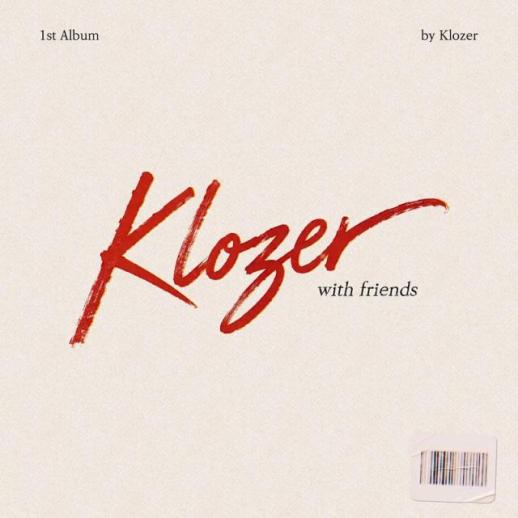 Producer Klozer set to release first full-length album SEOUL, June 4 (AJP) - South Korean producer and artist Klozer is set to release his first full-length album on Thursday, according to distributor Danal Entertainment. The 10-track eponymous album is scheduled to be available on AURORA, Danal Entertainment’s global music distribution platform, as well as other music streaming sites. All songs on the album were written and composed by Klozer. The title track, "More Than Expected," features Babylon and Newaile. The R&B soul track was written and composed by Klozer, Kangta, a former member of K-pop group H.O.T., Youngjun, Babylon and Newaile. The album also includes "Falling," featuring Kim Won-jun; "Only for a While," featuring Dmeanor; "YUSE," featuring Jin Hyo-jung; "Watermelon," featuring Byeol Eun; and "Once Again." Previously released tracks "Lowkey," featuring Lee Ba-da; "Waiting for You," featuring Danny Koo; and "Walking on Snow," featuring Yoo Seong-eun, are also included on the album. Klozer has worked as a producer on projects including Danny Koo's "Danny Sings" and Baek Z Young's "Ordinary Grace." He has also collaborated with K-pop groups CNBLUE and TVXQ, as well as artists including Taeyeon, Doyoung, Ben and Hwang Ga-ram. 2026-06-04 15:29:09
 -
 Kia begins production of hybrid version of Sportage SUV at Georgia plant SEOUL, June 4 (AJP) - Kia has begun production of the hybrid version of its Sportage SUV at a plant in Georgia, U.S., marking the first Kia model and first hybrid vehicle in the plant's lineup, the automaker said on Thursday. Kia America and Hyundai Motor Group Metaplant America (HMGMA) held a ceremony at the Ellabell, Georgia, plant on Tuesday to mark the start of production, with the first vehicle produced there brought onto the stage by an autonomous parking robot. The Sportage is the third model to be built at HMGMA, following Hyundai's Ioniq series of electric vehicles. Kia said the addition expands the plant's scope to cover both electric and hybrid vehicles. The start of production gives Kia more capacity to serve the U.S. SUV market and supports its broader push to electrify its lineup in North America. Kia plans to combine production capacity at HMGMA with its existing plant in West Point, Georgia, to secure annual production capacity of up to 550,000 vehicles by 2030. Tuesday's ceremony was attended by Georgia governor Brian Kemp, Kia North America and Kia America President and CEO Yoon Seung-kyu, HMGMA CEO Tony Heo, Korean Consul General in Atlanta Lee Jun-ho, and other employees. Kemp said HMGMA has built a strong team since production began in 2025 and is now adding another vehicle for customers across the country. Yoon said the Metaplant represents Kia's second major investment in Georgia and reflects the company's view of the state as a growing automotive manufacturing center. "The Sportage, which received product upgrades last year, is one of Kia's best-selling models," Yoon said. "Production at the Metaplant is expected to further strengthen Kia's growth in the U.S." Heo said the plant was able to prepare for its first hybrid and first Kia model through its flexible production system and manufacturing capabilities. 2026-06-04 15:10:31
 -
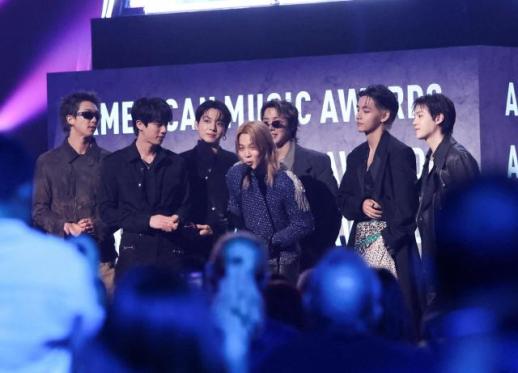 BTS to release limited-edition vinyl in celebration of 13th anniversary of their debut SEOUL, June 4 (AJP) - K-pop juggernaut BTS will release a limited-edition vinyl version of their fifth full-length album "ARIRANG" on June 12, one day before the group marks the 13th anniversary of their debut, BigHit Music said Tuesday. K-pop juggernaut BTS will release a vinyl version of their fifth full-length album "ARIRANG" next week, their agency BigHit Music said on Thursday. The limited-edition album, set for release on June 12, a day before the 13th anniversary of their debut, will include all tracks from "ARIRANG" as well as two bonus tracks, "Voice Message: Love Song" and "NORMAL (Korean version)." The vinyl will feature 16 tracks in total. "Voice Message: Love Song" features the members speaking in the form of voice messages around the question, "What Is Your Love Song?" The track is designed as an extension of the album's message, adding a more personal element to the release. The vinyl will also include the South Korean version of "NORMAL," a track from "ARIRANG" that BigHit described as dealing with emptiness, fear and the desire for ordinary life behind the spectacle of the stage. The release comes as BTS prepares for this year's annual fan celebration event marking their debut anniversary. The group released the timetable for the 2026 edition earlier in the week, with more details scheduled to roll out over about two weeks. BTS will also hold "BTS World Tour 'Arirang' In Busan" at Busan Asiad Main Stadium on June 12 and 13. 2026-06-04 14:38:07
 -
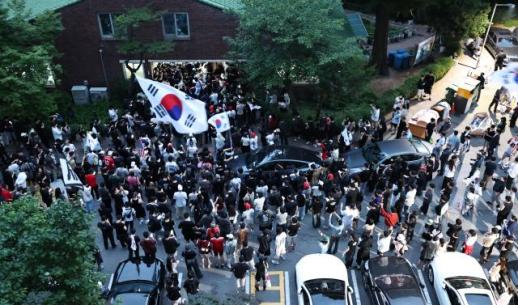 Ballot paper shortage disrupts local elections as ballot box remains unretrieved SEOUL, June 4 (AJP) - A rare logistics failure disrupted this year's local elections in Seoul, where ballot papers ran out at 14 polling stations, delaying voting and angering voters. At one station, a ballot box remained unretrieved as of Thursday morning, fueling further criticism of the already embattled National Election Commission (NEC) over its handling of the vote. The NEC is the independent agency responsible for overseeing the country's elections. The disruption began around 4:40 p.m. the previous day, when ballot papers ran out at several polling stations in southern Seoul, leading to long queues as voters waited for additional ballot papers to arrive. Election officials issued waiting numbers to those who arrived before the 6 p.m. closing time, allowing them to vote even after polls had officially closed. As of Thursday morning, a ballot box at a polling station in Jamsil, in Seoul's Songpa district, had yet to be retrieved, as protesting voters claimed their voting rights had been infringed, according to the NEC. Voting was extended until 10 p.m. there after a shortage of ballot papers disrupted the normal process. However, even after voting ended, the ballot box could not be immediately transferred for counting, as some residents and protesters objected to its removal amid anger over the shortage. Election officials did not immediately proceed with the transfer, and the box remained unretrieved as of Thursday morning. The NEC blamed stronger-than-expected turnout, saying more voters than projected showed up at certain polling stations, exhausting the supply of ballot papers. It said it supplied additional ballot papers to affected stations once the shortage was identified and allowed those already in line to vote after the official closing time. But the surge was widely anticipated, as Wednesday's elections had already seen early voting turnout of 61 percent, up 10.1 percentage points from 50.9 percent in the 2022 local elections, the second-highest level ever recorded in a South Korean local election. The all-time high remains the 68.4 percent recorded in the first local elections in 1995. Local elections are held separately from general elections, which historically draw higher turnout; the 2024 general elections, for comparison, recorded 67 percent. The NEC issued a public apology, admitting that ballot paper shortages caused "great confusion and concern," and said it felt responsible for undermining public trust in fair election management. However, the apology left key questions unanswered, including how many voters were directly affected, whether anyone left without casting a ballot, and why the initial allocation of ballot papers fell short. The incident came after a similar problem during early voting for the 2024 general elections, when some polling stations ran short of printer ink for ballot papers following stronger-than-expected turnout. An unusually long proportional representation ballot, which listed dozens of parties, also pushed ink use beyond available supplies. South Korea is not the first country to face such problems. In Germany, the 2021 federal election in Berlin was later partially rerun after widespread election-day disruptions including ballot shortages, incorrect ballots and long delays. The Federal Constitutional Court ordered a repeat vote in 455 of Berlin's 2,256 electoral districts. Similar irregularities also led to a full rerun of the Berlin state election in 2023, in which CDU candidate Kai Wegner replaced SPD incumbent Franziska Giffey as governing mayor. The NEC said it would hold a comprehensive briefing once counting is completed, covering the cause of the shortage, the handling of the ballot box and any follow-up measures. Meanwhile, incumbent Oh Se-hoon of the main opposition People Power Party (PPP) was re-elected Seoul mayor, defeating strong contender Chung Won-o from the ruling Democratic Party (DP) by approximately 30,000 votes, a margin of less than one percentage point, to secure a fifth term despite unprecedented disruptions in parts of the city. 2026-06-04 11:27:32
 -
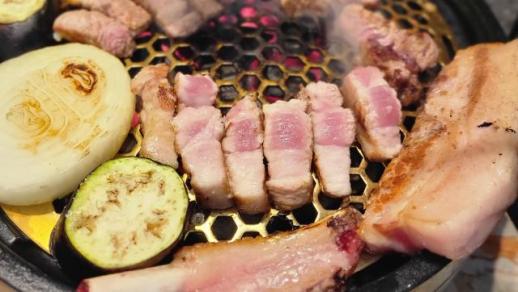 K-BBQ draws fresh attention as Jensen Huang's Seoul dinner plan puts samgyeopsal in spotlight SEOUL, June 02 (AJP) - Nvidia CEO Jensen Huang’s reported plan to visit a Samgyeopsal (pork belly) restaurant, a staple of Korean barbecue (K-BBQ), during his upcoming trip to Seoul has turned a casual dinner itinerary into a cultural talking point, putting the charcoal-grilled pork menu back in the spotlight as one of South Korea’s most visible dining experiences for foreign visitors. Huang is expected to visit South Korea this week after appearing at the Computex trade show in Taipei, where Nvidia hosted a separate dinner with Korean technology partners. Korean media reports have suggested that he could hold an informal “Samgyeopsal Somaek” gathering, pairing grilled pork with soju and beer, accompanied by conglomerate leaders in Seoul. The attention surrounding the possible meal reflects a broader pattern. For many foreign visitors, Korean barbecue is no longer just a restaurant option. It has become one of the easiest ways to experience Korea at the table — by grilling meat, sharing side dishes, and learning how people eat together here. A similar effect was seen after Huang’s earlier “Kkanbu” fried chicken gathering in Seoul with Samsung Electronics Executive Chairman Jay Y. Lee and Hyundai Motor Group Executive Chair Chung Eui-sun. After news of the meeting spread, the franchise Kkanbu Chicken briefly topped search rankings on food delivery platforms such as Baemin and Coupang Eats, while some branches reportedly paused delivery orders due to overwhelming demand. The episode showed how quickly a high-profile dining scene can turn into consumer interest. Korean barbecue, often referred to overseas as K-BBQ, has garnered popularity among foreign gourmets as it offers more than grilled meat. The table itself becomes part of the appeal: the charcoal or gas grill stove in the middle, the sound of meat cooking, the Banchan (side dishes) spread across the table, the lettuce wraps, and the small acts of serving others. For Koreans, much of this feels ordinary. For many first-time foreign diners, that ordinariness is what makes the meal stand out. A 37-year-old freelance designer based in Ilsan said her earliest memory of samgyeopsal came from a weekend family dinner. “It was not a special day, but I still remember the smell of meat cooking on the grill and my parents cutting the meat for me,” she said. “In Korea, barbecue is something people become familiar with from childhood.” She said grilled meat appears in many everyday settings — office dinners, gatherings with friends, family meals, post-exam outings, payday meals and nights when someone needs comfort. “When Koreans say, ‘Let’s go eat meat,’ it does not always mean just filling the stomach,” she said. “It often means sitting down together and talking.” That everyday role helps explain why barbecue occupies a different place in Korean food culture. Around the grill, people naturally take on small roles. Someone turns the meat. Someone cuts it. Someone passes side dishes or fills a glass. A well-cooked piece is often offered to another person first. These gestures are rarely explained in Korea because they are part of the routine. But for foreign diners, they can be the part of the meal that feels most different. Unlike restaurant meals that arrive fully prepared from the kitchen, K-BBQ often continues at the table. Diners wait for the meat, turn it, cut it, wrap it and combine it with garlic, ssamjang, kimchi or other side dishes. The meal gives people something to do together before they even begin eating. Lukas, a 29-year-old visitor from Germany, said he first saw Korean barbecue in Korean dramas and YouTube videos before trying it in Seoul with a Korean friend. “What surprised me most was that customers cook the meat themselves,” he said. “In Germany, food usually comes from the kitchen already prepared. But with K-BBQ, it felt like the meal was still happening at the table.” He said the format felt different from German barbecue, which is often held outdoors and is usually less centered on one shared grill at the table. “Everyone was watching the same grill and waiting for the meat,” he said. “That was different for me. It felt like the time at the table mattered as much as the food.” The format can also be awkward at first. For diners unfamiliar with Korean barbecue, even simple questions — when to turn the meat, how long to wait, what to eat together — can require help from friends or staff. But that learning process can make the meal more social. “At first, I was a little nervous,” Lukas said. “I worried that I might burn the meat. But the workers there told me when to turn it over, and the staff stayed alongside me to help me get used to the grilling. After a while, I got the hang of it and ever since, I am pretty good at grilling in Korean BBQ.” A moment that stayed with him was when his friend made a Ssam, placing meat, garlic and ssamjang inside lettuce before handing it to him. “It was very new to me when one of my friends made me this big lettuce wrap, you can't see that kind of generosity in Germany often,” he said. “It was very interesting experience and it felt less like just eating food and more like being welcomed.” This sense of intimacy is something global audiences have grown familiar with through pop culture. Global cultural icons like BTS have frequently broadcasted their love for K-BBQ on reality shows like "In the SOOP" or "Run BTS." For millions of international fans, watching the world’s biggest pop stars take turns flipping pork belly, managing the smoke, and feeding one another wraps (ssam) has turned an exotic dining habit into an aspirational lifestyle. Academic research also supports the idea that Korean popular culture can turn interest in Korean food into actual consumption. A 2023 PLOS ONE study on samgyeopsal consumption in the Philippines found that utilitarian and hedonic motivation, Korean influence, and attitude were associated with actual behavior toward eating samgyeopsal among Filipino respondents. A separate 2025 study of Korean drama viewers in Türkiye found that 77 percent of respondents began trying Korean food after watching Korean dramas, though the survey sample was heavily female and concentrated among younger viewers. For K-BBQ, that link between media and dining is useful because the meal is easy to understand visually. Meat is placed on the grill, flipped, cut, wrapped and shared. The table changes as the meal goes on. For people who first see Korean food through dramas, YouTube or social media, barbecue offers a scene that is easy to remember and easy to recreate. That has helped Korean barbecue become more than a menu item in overseas cities. Many diners visit K-BBQ restaurants not only to eat Korean food, but to try a Korean-style group meal — one built around a shared grill rather than individual plates. Still, the same features that make K-BBQ distinctive can make it harder to expand. Restaurants need ventilation systems, staff who can guide first-time customers, consistent meat quality and enough side dishes to support the full meal. Operators also have to decide how much to adapt to local dining habits without making the experience feel generic. There is also a risk that K-BBQ abroad becomes reduced to unlimited meat, loud interiors and novelty. The stronger version of Korean barbecue is not just about volume. It is about the way the meal gives people a reason to stay at the table longer, talk more and take care of small things for one another. For Korean diners, turning meat, cutting pieces, passing banchan or making a wrap for someone else may not feel special. For foreign diners, those same gestures can become the memory they take from the meal. That may be why Korean barbecue has continued to travel well. It is not only a way to eat Korean meat. It is a way to see how Koreans gather, share and spend time around food. 2026-06-02 17:39:19
 -
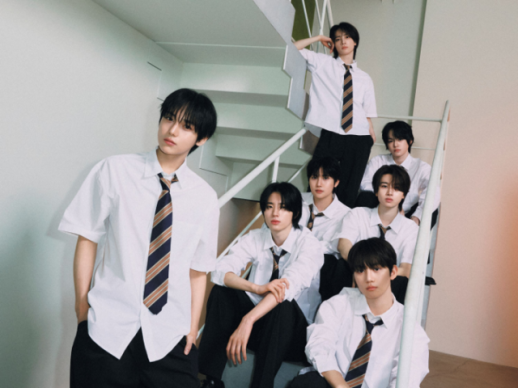 New boy band to hold debut showcase in Tokyo later this month SEOUL, June 2 (AJP) - A new boy band will make a debut, Starship Entertainment said on Tuesday. In partnership with Japanese entertainment agency Amuse, the seven-member rookie band, dubbed AEN, will consist of four Korean and three Japanese members: Bomin, Haru, Haruto, Jiyong, Junseo, Kaira, and Kyuhyun. Their name stands for "a new era of now" and also carries the meaning of "eternity" in Japanese. Six members excluding Haruto, previously appeared on Starship Entertainment's audition project "Debut's Plan," which aired last year. AEN will hold their first showcase in Tokyo on June 27, with about 3,000 fans to be invited to the event through a lottery. Fans can sign up for the showcase until June 8, with details available on AEN's Japanese website. 2026-06-02 15:12:48
 -
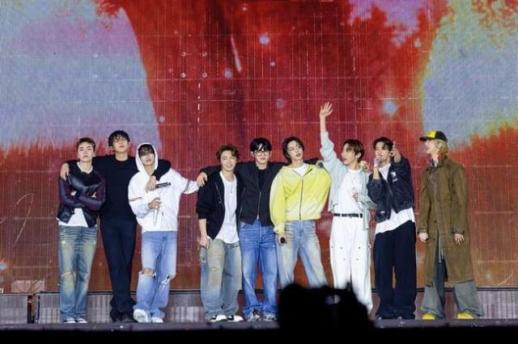 K-pop boy band SEVENTEEN Land at No. 7 on Billboard's Midyear Top Tours chart SEOUL, June 2 (AJP) - K-pop boy band SEVENTEEN ranked seventh on Billboard's midyear Top Tours chart, according to the biannual rankings compiled by the American music magazine. In the chart tracking the highest-grossing concert tours worldwide over the six-month period, the 23-member band generated about US$88 million from 25 shows during the tracking period from Oct. 1, 2025 to March 31, 2026. According to the group's agency Pledis Entertainment, their ranking was the highest among any K-pop act, drawing more than 574,000 concertgoers during the period. SEVENTEEN launched their world tour in September last year before wrapping it up with encore concerts in Incheon in April. Among fellow K-pop acts, girl group TWICE came next, placing 12th with about $58.3 million in revenue from 28 shows and more than 434,000 attendees. Another boy band TOMORROW X TOGETHER ranked 15th, earning about $53 million from 20 shows and drawing more than 412,000 concertgoers. Meanwhile, American singer Lady Gaga topped the overall chart with about $236.2 million in revenue, followed by Puerto Rican rapper Bad Bunny with about $230.3 million. 2026-06-02 14:50:41
 -
 Monthlong outdoor exhibition to feature Seoul's city design project SEOUL, June 2 (AJP) - An exhibition along the walking path of Dongdaemun Design Plaza will kick off later this week, the Seoul Metropolitan Government said on Tuesday. The exhibition under the banner of "Design Seoul Walk," is scheduled to run from Friday to June 25 along a 150-meter sloped section of the DDP walking path, allowing visitors to explore Seoul's public design projects as they move through the space. The exhibition moves design out of the gallery and into the city itself, tracing its presence across public campaigns, transport information, safety facilities, public art, and street furniture. The exhibition space will feature a restrained palette of white, gray and black, with QR codes placed on major displays, allowing visitors to access background information and project details on their phones. One section looks at how Seoul has built a consistent visual identity across the city including public campaign logos and a redesigned subway map. Another section covers projects designed to make the city safer and more user-friendly including the conversion of unused subway spaces into public facilities such as lockers for runners, improved street kiosks, and enhanced safety signage. The exhibition will also feature a media art project that uses the exterior of DDP as a large-scale digital canvas, along with public art installations and products developed through city support for design startups and small and medium-sized companies. Visitors can also interact with examples of Seoul's "fun design" projects — including benches, lighting, and photo spots featuring pictograms inspired by city landmarks. "The exhibition aims to show how design has shaped the city and people's everyday lives," said Choi In-gyu, a city official. "We hope visitors discover how design adds value to daily life — and how much pleasure it can bring." 2026-06-02 14:24:07
 -
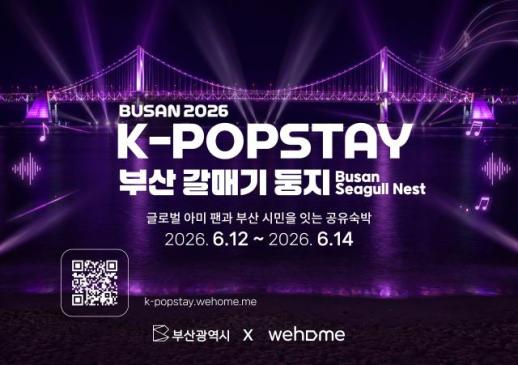 Home-sharing platform launches program for BTS fans SEOUL, June 2 (AJP) - Home-sharing platform Wehome will launch a homestay project in Busan during K-pop boy band BTS' upcoming concerts in the southern port city as part of their world tour, it said on Tuesday. Wehome is a home-sharing platform for local and foreign travelers in South Korea. In cooperation with with the Busan Metropolitan Government and the Busan Citizens' Organizations Council, it will conduct a project to connect visiting BTS fans with local residents willing to offer spare rooms or unused space during the concert period. BTS' concerts are scheduled for June 12 and 13 at Busan Asiad Main Stadium. The concerts are expected to draw large numbers of domestic and overseas fans, raising concerns about accommodation shortages and sharp increases in lodging prices. Under the project, Busan residents can voluntarily offer space in their homes to international visitors free of charge. Wehome said the project is intended to give overseas fans an alternative lodging option while allowing residents to introduce Busan to visitors. The project is part of Wehome's local lifestyle-sharing initiative aimed at helping overseas K-pop fans experience Korean daily life by staying with local residents or fans. Wehome will operate a dedicated website to handle host-guest matching, reservations, multilingual customer support, liability insurance and welcome kits. The project is aimed at easing accommodation problems that often arise during major concerts and international events, when hotel rooms become scarce and prices soar. Jo Sanku, founder and chief executive of Wehome, said the project goes beyond providing lodging, aiming instead to connect global ARMY members, known as BTS fans, with residents of Busan. "The essence of the sharing economy is using idle resources to solve social problems," Jo said. "Busan Seagull Nest is a new sharing-economy model that connects global ARMY with Busan citizens and addresses accommodation shortages through citizen participation." Wehome said it is the only home-sharing platform in South Korea to have transitioned from a six-year regulatory sandbox pilot under the Ministry of Science and ICT to a temporary permit for shared accommodation. The sandbox system allows companies to test new business models under eased regulations. 2026-06-02 13:49:12