
Journalist

Joonha Yoo, and Yoo Na-hyun
joonhayoo94@ajupress.com
-
 KOSPI rises on easing Middle East tensions, but falls short of 6,000 threshold SEOUL, April 14 (AJP) - The South Korean stock market closed higher on Tuesday, lifted by easing oil prices and signs of diplomatic progress between the U.S. and Iran, though tensions in the Strait of Hormuz kept investors cautious. The country's benchmark KOSPI rose 2.7 percent to close at 5,967.8 after briefly breaking above the 6,000 level in early morning trade. The index repeatedly hovered around the threshold throughout the session but failed to sustain its gains, losing momentum to finish below the psychologically important level. Elsewhere in Asia, markets also closed higher in line with the improved global sentiment. Japan's Nikkei 225 rose 2.4 percent to 57,877.4, while China's Shanghai Composite gained 0.7 percent to 4,016.7. Hong Kong’s Hang Seng Index advanced 0.7 percent to 25,827.9. Investor sentiment was supported by signs of continued talks between Washington and Tehran. While the first set of negotiation over Iran's uranium enrichment program remain unresolved, disagreemtns between the two sides appeared to narrow, with the U.S. proposing a 20-year suspension and Iran countering with a five-year halt. Oil prices declined despite heightened supply risks. Brent crude fell 1.2 percent to US$98.19 a barrel and West Texas Intermediate dropped 3 percent to $96.1, even as U.S. naval forces enforced a blockade in the Strait of Hormuz, forcing at least two China-bound oil tankers to turn back. The divergence suggests markets are pricing in a contained conflict scenario rather than an immediate supply disruption. Volatility indicators also pointed to stabilizing risk conditions. The Volatility Index (VIX) edged down 0.6 percent to 19.12, while the dollar index slipped 0.2 percent to 98.2. The Philadelphia Semiconductor Index (SOX) rose 1.7 percent, reinforcing strength in technology shares globally. Institutional and foreign investors drove the rally on the KOSPI, buying a combined 2.08 trillion won ($1.41 billion) worth of shares, while retail investors sold 2.39 trillion won, suggesting profit-taking into strength and contributing to the late-session fade. Among large-cap stocks, Samsung Electronics rose 2.7 percent to 206,500 won, while SK hynix surged 6.1 percent to 1,103,000 won, extending gains on expectations for strong earnings and continued AI-driven demand. Hyundai Motor gained 2.7 percent to 491,500 won, and Kia rose 1.2 percent to 149,200 won. In contrast, battery and defensive shares lagged. LG Energy Solution fell 0.4 percent to 400,000 won, while Samsung Biologics and Hanwha Aerospace declined 0.9 percent to 1,536,000 won and 0.5 percent to 1,523,000 won, respectively. The junior KOSDAQ rose 2.0 percent to 1,121.9, though gains were driven primarily by retail investors, who bought 116.5 billion won, while institutions and foreigners were heavy sellers, offloading 128.9 billion won and 6.7 billion won, respectively, suggesting a more speculative tone. The Korean won strengthened modestly to 1,478.9 per dollar. Overnight, U.S. equities closed higher, with the Dow Jones Industrial Average rising 0.6 percent, the S&P 500 gaining 1.0 percent and the Nasdaq advancing 1.2 percent, as markets continued to price in the possibility of further diplomatic progress despite the absence of a formal agreement. 2026-04-14 17:58:06
 -
 Korean stocks fall as Hormuz blockade threat triggers risk-off SEOUL, April 13 (AJP) — Korean stocks closed lower Monday as investors moved to the sidelines amid fresh uncertainty in the Middle East, following U.S. threats to launch a maritime blockage operation in the Strait of Hormuz starting later in the day. The benchmark KOSPI fell 0.9 percent to 5,808.6, after trading between a high of 5,827.73 and a low of 5,730.23. Regional markets moved in tandem. Japan’s Nikkei 225 declined 0.7 percent and Hong Kong’s Hang Seng Index dropped 1.2 percent, while China’s Shanghai Composite Index edged up 0.06 percent, the only major market in the region to remain in positive territory. Investor positioning reflected a clear shift to risk aversion. Foreign investors sold a net 456.4 billion won ($306.6 million), while institutions offloaded 701.6 billion won. Retail investors absorbed the selling, buying a net 750 billion won. The retreat came as oil prices surged on escalating geopolitical tensions. Brent crude jumped 6.8 percent to $101.6 a barrel, while West Texas Intermediate rose 7.3 percent to $103.6, after Washington moved to impose targeted maritime restrictions on vessels linked to Iranian ports following failed weekend negotiations. The escalation followed the collapse of ceasefire talks between the United States and Iran in Islamabad, with both sides trading blame for the breakdown, deepening uncertainty over energy supply routes through the Gulf. Large-cap stocks in Seoul were broadly weaker. Samsung Electronics fell 2.4 percent to 201,000 won, Hyundai Motor dropped 2.3 percent to 478,500 won, LG Energy Solution declined 2.6 percent to 401,500 won, and Samsung Biologics slipped 1.3 percent. In contrast, SK hynix rose 1.3 percent to 1,040,000 won, extending gains in line with global semiconductor strength, as the Philadelphia Semiconductor Index advanced 2.3 percent. Hanwha Aerospace also added 1.5 percent. Losses were concentrated in industrial and cyclical sectors. Doosan Enerbility fell 0.9 percent, while the KRX Construction Index dropped 1.6 percent to 1,721.7, as expectations for Middle East reconstruction demand weakened after the diplomatic breakdown. Despite the decline, volatility remained relatively contained. The CBOE Volatility Index fell 1.3 percent to 19.23, suggesting markets are still pricing in a controlled disruption rather than a full-scale supply shock. In currency markets, the won strengthened slightly to 1,488.7 per dollar, while the dollar index rose 0.3 percent to 98.99. The junior KOSDAQ outperformed, rising 0.6 percent to 1,099.8. Retail investors led gains on the secondary board, buying a net 264 billion won, while foreign and institutional investors sold 148.7 billion won and 93.2 billion won, respectively. Sector gains were concentrated in digital infrastructure themes. Optical communication stocks surged 10.5 percent, while telecom equipment and 5G-related shares climbed 10.4 percent and 7.8 percent. Among notable movers, Silicon Two jumped 10.7 percent to 47,200 won, while Pearl Abyss rose 3.1 percent to 57,300 won. EcoPro fell 1.8 percent to 143,700 won, extending weakness in secondary battery shares. 2026-04-13 17:09:57
 -
 BTS tops Billboard 200 for 3rd week, heads to Japan this week SEOUL, April 13 (AJP) -K-pop supergroup BTS wrapped up its three-day concert run in Goyang over the weekend, drawing more than 132,000 attendees, while extending its record as the first Korean act to top the U.S. charts for three consecutive weeks. According to Billboard on Sunday (local time), BTS’ fifth studio album ARIRANG held on to No. 1 on the Billboard 200 — the industry’s main weekly albums ranking based on sales, streaming and track-equivalent units — for a third straight week. The album outperformed new releases from Morgan Wallen and Kanye West. The group staged three concerts on April 9, 11 and 12 at Goyang Stadium using a 360-degree, in-the-round setup designed to engage all sides of the venue, attracting a combined 132,000 fans. The opening night on April 9 went ahead despite heavy rain, with fans filling the stadium under umbrellas in the group’s signature purple. The performance concluded without disruption, setting the tone for the remaining shows. Next stop is Tokyo, with performances scheduled at Tokyo Dome on April 17 and 18. The tour marks BTS’ first global tour in six years, underscoring the group’s return to large-scale international performances. Separately, BTS announced an additional global live-viewing event for its Busan concert, scheduled for June 13. The announcement was revealed through a surprise video with a qr code shown during the end credits in theaters following the April 11 live-viewing screening of the Goyang concert. 2026-04-13 09:56:30
 -
 Asian markets rise as Japan leads gains ahead of Washington-Tehran talks SEOUL, April 10 (AJP) - Japan leads gains in Asian markets Friday as optimism over planned Washington-Tehran talks lifts risk appetite, even as lingering supply concerns keep sentiment in check. This shift toward diplomatic engagement disrupts the recent pattern of defensive trading, as investors weigh the potential for a breakthrough in the Islamabad summit against persistent geopolitical friction. In Tokyo, the Nikkei 225 jumped 1.84 percent, led by gains in semiconductor and large-cap stocks following strength in American tech shares. Despite the strong headline gain, broader market breadth remained weak, with declines outnumbering advances on the Tokyo Stock Exchange’s Prime Market. In Seoul, the benchmark KOSPI rose 1.4 percent to close at 5,858.9, after touching an intraday high of 5,918.59 and a low of 5,850.83. Foreign investors led the rally, buying 1.1 trillion won, while retail and institutional investors sold 1.23 trillion won and 293.8 billion won, respectively. Sector gains were led by telecom equipment and display panel stocks, which jumped 8.34 percent and 6.8 percent, respectively, while themes such as optical communication and shipping surged more than 12 percent and 9 percent. Among large caps, Samsung Electronics rose 1 percent to 206,000 won, while SK hynix gained 2.9 percent to 1,027,000 won. Hyundai Motor added 2 percent, and Hanwha Aerospace climbed 3.9 percent. In contrast, LG Energy Solution and Samsung Biologics fell. The tech-heavy KOSDAQ gained 1.6 percent to close at 1,093.63, extending gains throughout the session. On the KOSDAQ, institutions bought 93.1 billion won, while individuals and foreign investors sold 82.3 billion won and 1.9 billion won, respectively. The Korean won weakened 0.5 percent to 1,483.9 per dollar. Overnight, major American indexes closed higher, with the Dow Jones Industrial Average, S&P 500 and Nasdaq each rising about 0.6 to 0.8 percent. The Philadelphia Semiconductor Index advanced 2.1 percent, supporting gains in Seoul chipmakers. Oil prices rose, with Brent crude climbing 1.8 percent to 97.7 dollars a barrel and West Texas Intermediate gaining 1.8 percent to 99.6 dollars, as supply concerns persisted amid tensions in the Middle East. Despite the gains, prices are on track for a weekly decline of more than 10 percent following a Washington-Tehran ceasefire agreement. Meanwhile, the Chicago Board Options Exchange Volatility Index fell 7 percent to 19.57, signaling easing risk sentiment, though it remained elevated enough to suggest lingering caution among investors. 2026-04-10 17:49:01
 -
 Hanwha's capital playbook under scrutiny as FSS halts Solutions' rights offering SEOUL, April 10 (AJP) - South Korea’s financial regulator has put the brakes a 2.4 trillion won ($1.7 billion) rights offering by Hanwha Solutions, in a move that is drawing attention to the group’s broader capital-raising practices and governance structure. The Financial Supervisory Service (FSS) on April 9 ordered the company to revise its securities filing, citing incomplete formal requirements and insufficient or unclear disclosure of key information that could hinder investor decision-making. The request suspends the effectiveness of the filing, delaying the company’s plan to raise fresh capital at a time when its financial position has come under increasing pressure. Hanwha Solutions had announced on March 26 that it would issue new shares worth 2.4 trillion won, with 1.5 trillion won earmarked for debt repayment and the remaining funds allocated to investments in solar and other businesses. The scale of the issuance — equivalent to roughly 42 percent of existing shares — triggered an immediate market backlash, with shares plunging more than 20 percent over two sessions. While the company framed the move as necessary to stabilize its balance sheet and support future investment, investors criticized the structure as shifting the burden of financial restructuring onto shareholders through significant dilution. The latest regulatory intervention comes amid growing scrutiny of large-scale equity financing across the Hanwha group, where similar transactions have repeatedly triggered sharp market reactions. Hanwha Aerospace offers a notable precedent. In March last year, the company approved a record 3.6 trillion won rights offering — the largest in Korean market history — to fund defense investments, including overseas production expansion and unmanned aerial vehicle engine development. Despite its growth-oriented rationale, the announcement led to a more than 13 percent drop in share price the following day. Investor backlash intensified over concerns about dilution and capital allocation, particularly given the company’s strong operating cash flow at the time. The controversy eventually forced a revision of the plan, with the offering size reduced to 2.3 trillion won and part of the funding shifted to a third-party allotment involving group affiliates. The sequence — large-scale equity issuance, sharp share price decline, and subsequent structural adjustment — has established a recurring pattern in the group’s capital strategy. That pattern has also intersected with governance concerns. In the case of Hanwha Aerospace, criticism extended beyond financing structure to questions about ownership consolidation, following transactions that increased the controlling family’s influence within key affiliates. Against this backdrop, market participants say the FSS’s latest move signals a shift toward more proactive oversight of equity financing that may materially impact minority shareholders. “The regulator appears to be responding not just to disclosure issues, but to repeated market concerns over how capital raising is structured,” an industry official said. Despite the regulatory setback, the group has sought to signal support. Hanwha Corp., which holds about 36.7 percent of Hanwha Solutions, has committed to fully subscribe to its allocation and take up an additional 20 percent in oversubscription, investing about 843.9 billion won. The move is widely seen as an attempt by the controlling shareholders to share the financial burden, even as questions persist over how that burden is ultimately distributed between the group and minority investors. Hanwha Solutions said it would “take the regulator’s request seriously” and prepare a revised filing that reflects feedback from shareholders and the market, emphasizing that it would prioritize shareholder value. Still, the underlying challenge remains unresolved. With net debt exceeding 12 trillion won and leverage rising sharply following years of aggressive investment, the company faces mounting pressure to secure funding without triggering further shareholder resistance. The latest intervention raises a broader question for the Hanwha group: how to balance large-scale investment, financial stability and shareholder value, as regulatory scrutiny intensifies and investor tolerance for dilution continues to narrow. 2026-04-10 16:51:32
 -
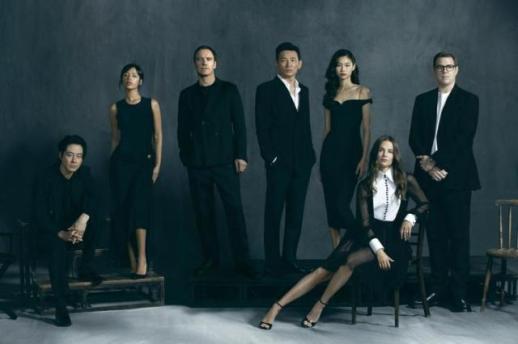 Na Hong-jin's 'Hope' enters Cannes Competition after 4-year silence for Korea SEOUL, April 10 (AJP) - Na Hong-jin breaks a four-year silence for South Korean titles at Cannes with Hope, a big-budget thriller that puts him back in the Palme d’Or race. The South Korean director’s fourth feature was named to the 21-film Competition lineup unveiled Thursday (local time), marking the first time since Decision to Leave in 2022 that a Korean film has entered the festival’s top-tier section. The return carries weight beyond selection. Hope is Na’s most ambitious project to date — both in scale and in reach — positioning him not just as a returning auteur but as a director making a calculated leap into the global mainstream. Set in a fictional port village near the Demilitarized Zone, the film unfolds as a science-fiction thriller centered on a mysterious presence that plunges the community into crisis. It is also his first project partially shot in English, with a hybrid cast that bridges Korean and Hollywood talent. The lineup pairs Hwang Jung-min, Zo In-sung and Jung Ho-yeon with Oscar-winning couple Michael Fassbender and Alicia Vikander, alongside Taylor Russell and Cameron Britton. The scale reflects that ambition. With a production budget exceeding 50 billion won ($37 million), Hope ranks among the most expensive Korean films ever made and marks the first Cannes Competition entry for its distributor, Plus M Entertainment. The selection extends Na’s long-standing relationship with Cannes. His debut The Chaser screened in the Midnight section in 2008, followed by The Yellow Sea in Un Certain Regard and The Wailing in the Out of Competition section in 2016 — the latter cementing his reputation for blending genre with unsettling atmosphere. This year’s Competition lineup features a heavyweight field of international auteurs, including Pedro Almodóvar, Asghar Farhadi, Hirokazu Kore-eda and Ryusuke Hamaguchi, setting up a tightly contested Palme d’Or race. The 79th Cannes Film Festival will run from May 12 to 23 in Cannes, France. 2026-04-10 11:35:20
 -
 FSS puts brake on Hanwha Solutions' rights offering despite owner backing SEOUL, April 10 (AJP) - The rights offering plan by Hanwha Solutions to raise 2.4 trillion won to lessen its debt load drew a correction order from authorities despite the owner family offering to share the burden. The Financial Supervisory Service said it had requested the company to submit a revised securities filing, citing incomplete formal requirements and insufficient or unclear disclosure of key information that could hinder investors' decision-making. The filing has not been accepted and its effectiveness has been suspended, meaning the subscription schedule and overall issuance process could change. If the company fails to submit a corrected filing within three months, the plan will be considered withdrawn. Hanwha Solutions said it would "take the request seriously" and prepare a revised filing that reflects feedback from shareholders and the market, emphasizing that it would prioritize shareholder value. Shares rose nearly 1 percent as investors approved of the regulatory move. The company on March 26 announced the plan to issue 72 million new shares to raise 2.4 trillion won, and more than half - 1.5 trillion won – was earmarked for debt repayment and the remainder for investment. The scale of the issuance - equivalent to roughly 42 percent of existing shares - and the heavy allocation toward debt reduction have triggered strong backlash from investors, who argue that the plan shifts the burden of financial restructuring onto shareholders. Shares of Hanwha Solutions fell more than 20 percent over two sessions following the announcement. The controversy has since widened into governance concerns, including whether the move could constitute a breach of directors' fiduciary duties under the revised Commercial Act. The Korea Corporate Governance Forum criticized the timing of the board decision, noting it came shortly after a shareholders' meeting, raising questions over whether independent directors had sufficient time for proper review. Retail investors have also begun mobilizing. On the Act platform, minority shareholders have requested access to the shareholder registry and are seeking to build a coalition aimed at securing a 10 percent stake, which would enable them to call an extraordinary general meeting or pursue management changes. They have also called on the National Pension Service to take a more active role, arguing that passive management amid falling share prices could undermine its fiduciary duty. Political criticism has added to the pressure. Rep. Ahn Cheol-soo said allocating a majority of the proceeds to debt repayment effectively transfers the consequences of management decisions onto shareholders. The regulator has classified the case as a priority review, typically applied to large-scale offerings or those with a significant portion of proceeds used for debt repayment. While the FSS does not have the authority to block the deal outright, it can demand revisions - as seen in a similar case involving Hanwha Aerospace last year. The latest development comes despite efforts by the group to shore up investor confidence. The parent firm, Hanwha Corp., which holds about 36.7 percent of Hanwha Solutions, has decided to fully subscribe to its allocated shares and take up an additional 20 percent in oversubscription, committing about 843.9 billion won. The move is widely seen as an attempt by the owner family to signal support and share the financial burden, as minority shareholder resistance intensifies. Hanwha Solutions has defended the capital increase as necessary to stabilize its balance sheet amid weakening performance in its solar and chemical businesses. Its net debt stood at about 12.2 trillion won at the end of last year, with its net debt-to-EBITDA ratio rising to 29.1 times, highlighting mounting leverage pressures. The company has also faced covenant-related risks, having received a waiver on overseas borrowings after failing to meet certain financial conditions. It said the capital raise is aimed at preventing a credit rating downgrade, easing refinancing pressure and supporting continued investment, including in solar technologies. Still, market attention remains focused on the broader question - not just how much capital is being raised, but why the company’s financial position deteriorated to the point where such a large-scale rights offering became necessary, and how the burden should be shared among management, controlling shareholders and minority investors. 2026-04-10 10:10:32
 -
 Asian stocks slip as Middle East tensions offset truce optimism SEOUL, April 09 (AJP) -Asian stocks edged lower Thursday as the celebratory mood over a temporary truce between the U.S. and Iran faded just a day after the agreement. The benchmark KOSPI fell 1.61 percent, or 94.33 points, to close at 5,778.01, after trading between a high of 5,862.41 and a low of 5,757.49. Foreign investors led the selling, offloading 874.7 billion won ($590 million), while retail and institutional investors bought a combined 504.8 billion won. Among large-cap stocks, Samsung Electronics fell 3.1 percent to 204,000 won, while SK hynix dropped 3.4 percent to 998,000 won. Hyundai Motor declined 3.6 percent, and Kia lost 5.5 percent. Sector performance was broadly negative, with transport equipment, electronics and insurance shares leading declines, while defensive sectors such as telecommunications and chemicals posted gains. The tech-heavy KOSDAQ fell 1.3 percent to 1,076.00, after moving between 1,091.38 and 1,068.82 during the session. Retail investors led buying on the KOSDAQ, purchasing 931.2 billion won, while foreign and institutional investors sold 423.9 billion won and 512.0 billion won, respectively. Market sentiment remained fragile despite a Pakistan-mediated two-week truce between Washington and Tehran, as uncertainty over its durability grew. Tensions escalated after Israel launched large-scale airstrikes across Lebanon on Wednesday (local time), even as the truce was being announced. According to Lebanese authorities, at least 182 people were killed and 890 injured, with casualties expected to rise. Lebanon’s prime minister condemned the attacks and declared a national day of mourning, raising concerns over potential disruptions to shipping through the Strait of Hormuz. U.S. President Donald Trump said American forces would remain deployed in the region until the agreement is fully implemented, warning of escalation if negotiations fail. Japan’s Nikkei 225 fell 0.7 percent, while China’s Shanghai Composite and Hong Kong’s Hang Seng Index declined 0.7 percent and 0.3 percent, respectively. The Korean won weakened in tandem, with the dollar rising to 1,482.0 won. Oil prices moved higher, with Brent crude gaining 3.0 percent to $97.7 per barrel and West Texas Intermediate rising 3.1 percent to $97.3. Market volatility eased, with the VIX falling 17.2 percent, while the Philadelphia Semiconductor Index surged 6.3 percent. 2026-04-09 17:38:19
 -
 Hyundai Motor, Kia to report double-digit fall in Q1 income despite robust sales SEOUL, April 10 (AJP) – South Korea's top automakers Hyundai Motor and Kia are expected to deliver double-digit falls in their respective first-quarter operating profit on multiple whammies - U.S. tariffs, currency-driven cost pressures and recall-related expenses – despite robust sales. Hyundai Motor is projected to report operating profit of 2.94 trillion won ($2.0 billion) for the January–March period, down 19 percent from a year earlier, and its sister marque Kia 2.45 trillion won, down 18.7 percent, according to market consensus compiled by FnGuide. Top-line momentum, however, remains intact. Hyundai Motor’s sales are expected to rise 4 percent on year to 46.17 trillion won, while Kia is forecast to post a record 29.67 trillion won, up 5.9 percent. Hyundai Motor is scheduled to release earnings on April 23, and Kia the following day. The earnings compression reflects a convergence of external shocks. A 15 percent tariff imposed by the United States on imported vehicles since last year is estimated to have added roughly 1 trillion won in costs for Hyundai Motor and between 600 billion won and 800 billion won for Kia in the first quarter alone. Currency moves compounded the pressure. The Korean won weakened about 6 percent against the dollar from December through March, inflating warranty-related provisions by an estimated 300 billion won. One-off factors also weighed. A recall tied to an electrified seat defect in the Palisade SUV last month led to a temporary halt in sales, adding to cost burdens. Despite margin pressure, both automakers continued to benefit from a richer product mix. Demand for higher-margin SUVs, hybrids and electric vehicles remained firm, supporting revenue growth and cushioning the earnings decline. Combined global sales reached 1.75 million units in the first quarter, with Hyundai Motor selling 975,213 vehicles and Kia 779,169 — broadly sustaining last year’s record pace. In the United States, combined sales rose 2.6 percent to a quarterly high of 430,720 units. Electrification trends also remained a bright spot. Hyundai Motor sold 60,214 eco-friendly vehicles during the quarter, including a record 39,597 hybrids, while Kia posted its strongest first-quarter EV sales at 34,303 units. Looking ahead, both companies are set to accelerate new model rollouts to defend margins. Hyundai Motor plans to introduce hybrid versions of the Avante and Tucson, while Kia will launch EV4 and EV5 models. Premium brand Genesis is also preparing hybrid variants of the GV80 and the flagship GV90. While near-term earnings are under pressure, the combination of resilient volumes, improved mix and electrification momentum is prompting a gradual valuation reset, as investors shift focus from cyclical margins to longer-term competitiveness in the evolving mobility landscape. 2026-04-09 15:29:35
 -
 Hormuz reopening hopes spark 7% KOSPI surge as oil plunges SEOUL, April 08 (AJP) - The prospect of the Strait of Hormuz reopening under a two-week ceasefire ignited Asian markets on Wednesday, sending South Korea’s benchmark KOSPI soaring nearly 7 percent. The index, after jumping as high as 5,919.60, closed up 6.9 percent at 5,872.3. A buy-side sidecar was triggered shortly after the open as the KOSPI 200 surged more than 5 percent at the opening bell. The rally was driven by a sharp reversal in global energy markets. Brent crude plunged more than 15 percent to $92.89 a barrel, while U.S. West Texas Intermediate fell 16.1 percent to $94.6, after U.S. President Donald Trump said he would delay military action against Iran for two weeks under a conditional ceasefire tied to the reopening of the Strait of Hormuz. The de-escalation, reportedly accepted by Tehran and involving coordinated maritime access, eased fears of supply disruptions along a route that carries roughly 20 percent of global oil flows. The drop in crude prices tempered inflation concerns and triggered a broad risk-on move across global markets. Investor positioning reflected the shift. Foreign investors bought 2.43 trillion won ($1.65 billion) worth of local equities, while institutions added 2.71 trillion won. Retail investors moved in the opposite direction, selling a combined 5.42 trillion won, indicating profit-taking into the rally. Large-cap stocks led gains, particularly in semiconductors and cyclicals. Samsung Electronics rose 7.1 percent to 210,500 won, while SK hynix surged 12.8 percent to 1,033,000 won, supported by expectations of record first-quarter earnings and upward revisions in target prices. Automakers also advanced, with Hyundai Motor gaining 7.4 percent to 508,000 won and Kia rising 5.6 percent to 159,200 won. LG Electronics jumped 9 percent to 116,700 won after reporting record quarterly revenue, as analysts raised target prices on expectations of a structural shift toward robotics and AI-driven infrastructure. In contrast, select defense stocks retreated, with Hanwha Aerospace falling 3.5 percent to 1,484,000 won, reflecting a decline in geopolitical risk premiums. The tech-heavy KOSDAQ gained 5.1 percent to 1,089.9, trading between 1,071.35 and 1,090.04. Foreign investors bought 240.5 billion won, while institutions added 371.1 billion won. Retail investors sold 583.6 billion won, suggesting gains were driven by institutional and offshore inflows. The Korean won strengthened sharply, with the dollar falling 26 won to 1,471.0 — the steepest drop since March 24 — as the dollar index slipped 1 percent to 98.7. Despite the rally, volatility remained elevated, with the VIX rising 6.7 percent to 25.78, underscoring lingering uncertainty. Across the region, Japan’s Nikkei 225 climbed 5.5 percent to 56,360.2, while China’s Shanghai Composite rose 2.4 percent to 3,984.6 and Hong Kong’s Hang Seng gained 3.1 percent to 25,897.1, led by energy-sensitive and export-oriented sectors. 2026-04-08 16:34:42