
Journalist

by Joonha Yoo
joonhayoo94@ajupress.com
-
 KOSPI closes at fresh record as Korea defies broader Asia weakness SEOUL, May 08 (AJP) - South Korea's benchmark KOSPI index closed at an all-time high for a fourth consecutive session on Friday. Domestic investors absorbed a significant sell-off by foreign funds as geopolitical tensions in the Middle East rattled regional markets. The index edged up 0.1 percent to finish at a record 7,498.0. It fluctuated during the day between a low of 7,318.96 and an intraday record of 7,511.01. Regional sentiment soured following reports of renewed military clashes between the United States and Iranian forces near the Strait of Hormuz. The escalation weighed on Wall Street overnight, with the Dow Jones Industrial Average sliding 0.6 percent and the S&P 500 declining 0.4 percent. Foreign investors sold a net 5.59 trillion won (3.81 billion dollars) of KOSPI shares, marking a flight toward safe-haven assets. Domestic retail and institutional investors countered the trend by purchasing 3.98 trillion won and 1.55 trillion won, respectively. Technology shares were mixed as global demand for artificial intelligence components provided a buffer against broader market volatility. Samsung Electronics fell 1.1 percent to 268,500 won, while SK hynix gained 1.9 percent to close at 1,686,000 won. Automobile and robotics companies led the session's gains as investors shifted toward physical AI technologies. Hyundai Motor surged 7.2 percent to 613,000 won after its robotics affiliate, Boston Dynamics, released footage of the Atlas humanoid robot performing advanced movements. The momentum extended to infrastructure and software firms within the automotive ecosystem. Hyundai AutoEver and Gaon Cable both surged 30 percent to close at 592,000 won and 477,000 won, respectively. Industrial and energy sectors saw profit-taking following recent rallies. SKC plunged 8.2 percent to 159,900 won, while Samsung Heavy Industries dropped 5.2 percent to 31,950 won and Doosan Enerbility fell 5.0 percent to 129,600 won. The tech-heavy KOSDAQ index rose 0.7 percent to close at 1,207.7, outperforming the main board. Foreign investors were net buyers on the secondary market, adding 404.4 billion won worth of shares. Other regional markets struggled, with Japan's Nikkei 225 slipping 0.2 percent to 62,713.7. Hong Kong's Hang Seng Index fell 0.8 percent to 26,413.5 as concerns over energy disruptions persisted. The South Korean won weakened 0.8 percent to 1,469.1 per dollar amid the rising geopolitical uncertainty. In the energy market, West Texas Intermediate crude gained 0.4 percent to end at 95.1 dollars. 2026-05-08 17:24:43
 -
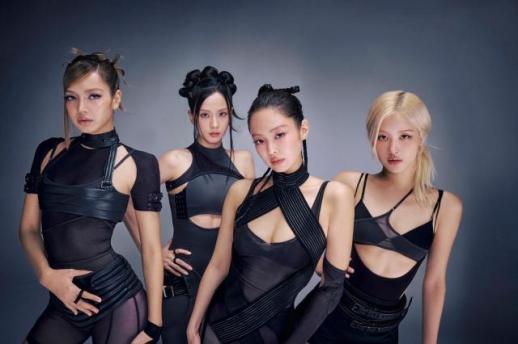 YG doubles operating profit Q1 on year on BLACKPINK comeback SEOUL, May 08 (AJP) - South Korea’s K-pop powerhouse YG Entertainment more than doubled first-quarter operating profit as revenue from BLACKPINK and rising contributions from younger artists boosted earnings, reinforcing expectations for a stronger comeback cycle this year despite weaker-than-expected net profit. According to its earnings report released Thursday, YG Entertainment posted an operating profit of 19.4 billion won ($13.2 million) in the January-March period, up 103.9 percent from a year earlier. Revenue jumped 46.9 percent to 147.1 billion won, while net profit slipped 4.6 percent to 9.8 billion won. The company’s sales exceeded market expectations, while operating profit largely matched analyst forecasts. According to local market tracker FnGuide, analysts had projected first-quarter operating profit of 19.3 billion won and revenue of around 138.1 billion won. Net profit, however, missed the consensus estimate of roughly 15.0 billion won. Compared with the previous quarter, operating profit and revenue fell 13.1 percent and 14.3 percent, respectively, reflecting fewer large-scale artist activities. Net profit, however, rose 23.9 percent from the prior quarter. YG attributed the earnings growth to expanding monetization of artist intellectual property, including merchandise and licensing revenue from younger acts such as BABYMONSTER and TREASURE, alongside continued contributions from BLACKPINK-related touring and album sales. BLACKPINK’s latest release, Deadline, sold more than 1.77 million copies in its first week, according to Hanteo Chart, underscoring the group’s enduring global commercial power. The company is expected to maintain stronger earnings momentum in the second half of the year as major artists ramp up activities and touring schedules expand globally. According to FnGuide, YG Entertainment is projected to post operating profit of 80.8 billion won and annual revenue of 590.1 billion won in 2026, surpassing its previous peak in 2023, when operating profit reached 79.5 billion won and revenue totaled 569.2 billion won. BABYMONSTER is scheduled to begin its second world tour in Seoul in June before expanding into Latin America, Oceania and Europe. TREASURE is also expected to release a new album in June and continue solo and unit activities in the second half. YG is additionally preparing to debut a new boy group in September as part of its broader push to strengthen its next-generation artist pipeline. Shares of YG Entertainment closed down 0.2 percent at 50,200 won on Friday. 2026-05-08 16:26:47
 -
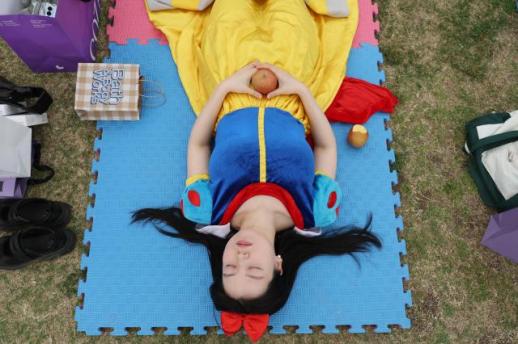 2026 Han River Napping Championship Draws Hundreds Amid Sleep Crisis Last weekend, a peculiar scene unfolded at Yeouido Hangang Park as hundreds gathered for the '2026 Han River Napping Championship.' Amid the bustling 'Seoul Spring Festa,' over 170 participants laid down on mats, soon filling the air with synchronized breathing and the occasional soft snore. In this open space, free from chatter or music, they embraced the tranquility of the outdoors. Now in its third year, the napping championship may seem lighthearted, but participants faced a competitive ratio of 70 to 1 to secure a spot. Each came prepared, armed with sleep masks labeled 'Offline,' mosquito repellent, ergonomic neck pillows, and even plush toys. One participant, dressed in a princess costume, had a sign that read, "Do not wake me unless you are a prince," while another, dressed as Jesus, peacefully closed his eyes. Before the competition began, a brief commotion arose when members of the idol group ONF, E-shon and Seung-jun, appeared, momentarily breaking the silence with soft gasps and camera clicks. However, once the event commenced, fans and idols alike lay side by side on the mats, united in their quest for rest. I was fortunate to join the event as a reporter after a spot opened up due to a no-show. Assigned number 58, I was surrounded by a weary college student and a fatigued office worker. Despite the uneven ground beneath my thin mat, a sense of calm washed over me as the noise from a pre-event yoga session faded away, leaving a heavy silence as 170 people closed their eyes together. However, this was no ordinary nap. Every 30 minutes, the announcer's voice pierced the silence, and sounds of mosquitoes played over the speakers as staff members gently tickled participants' feet with feathers, attempting to rouse them. Any movement or opened eyes resulted in immediate disqualification, leading to a growing number of dropouts as time passed. Those who remained had their heart rates monitored every half hour, with the participant maintaining the lowest, most stable heart rate declared the winner. This transformation of the basic act of sleeping into a quantified performance highlighted a societal shift. A pressing question arises: when did we start learning how to 'sleep well'? Sleep was once a natural response to fatigue, but now many rely on sleep-inducing apps, white noise, melatonin, and sleep journals just to fall asleep. The heart rate monitoring during the napping contest starkly illustrates this change. While each participant had their own story, a common thread emerged: exhaustion. "I can only sleep 3 to 4 hours a day," said 30-year-old office worker Nam Ji-soo, who attended with her team leader, both aware of each other's burnout. The irony of choosing a napping contest by the Han River as a form of rest was bittersweet. College student Park Jun-seok, dressed in traditional attire inspired by the film 'The King's Man,' identified social media and smartphone notifications as modern-day sleep thieves. "Even when I lie down to rest, I end up scrolling through reels for hours. With exams approaching, I'm completely drained, so I actually feel confident about winning today," he said, his playful tone masking genuine fatigue. Another participant, 53-year-old Hwang Doo-sung, clutched a blanket given to him by his girlfriend, who had come to support him. "I’m exhausted from work all week, and today I really want to win. My girlfriend is watching from outside, so I feel motivated," he shared, smiling at the thought of her cheering him on. The high turnout for this event reflects a growing concern. In the past five years, the number of sleep disorder patients has increased by 1.3 million, and prescriptions for insomnia medications have quadrupled. South Koreans average just 6 hours and 58 minutes of sleep, ranking among the lowest in the OECD. In a country known for its hard work, sleep is becoming a luxury. Professor Kim Jae-hwi from Chung-Ang University analyzed this phenomenon, noting that sleep, which should be a private act, has turned into a public performance. The liberating atmosphere of the Han River and the unusual experience of napping among strangers can help alleviate stress. Some participants remarked, "I can't sleep at home, but I fell asleep quickly here," suggesting that the permission to simply lie down is comforting. Conversely, Professor Kim Yoon-tae from Korea University emphasized the need for structural changes that allow young people and workers to genuinely rest. He pointed out that while government-sponsored events like this are significant, they also highlight the paradox of many people struggling to find real relaxation. The napping contest, while festive, carries an underlying sense of melancholy. The two-hour competition concluded with Kim Jong-pil maintaining the most stable heart rate, earning him first place. Hwang Doo-sung proudly secured second place, likely buoyed by the blanket from his girlfriend. Park Jun-seok also received recognition as the second-best dressed participant. I, however, did not finish the competition. Although I could ignore the mosquito sounds, I instinctively flinched when a feather brushed my hand, leading to my disqualification. Yet, I felt no regret. The time spent napping under the guise of reporting was a sweet reprieve from a society that never stops producing. In a world where productivity never pauses, even the act of doing nothing requires events, equipment, and justification. Regardless of who won, for me, number 58, that time spent napping was a rare and cherished moment of rest. 2026-05-08 11:14:08
 -
 Japan leads Asia rally, KOSPI hits new high SEOUL, May 07 (AJP) - Japan led a broad rally across Asian markets on Thursday, with the Nikkei 225 surging to a fresh all-time high as easing oil prices, renewed optimism over a possible U.S.-Iran agreement and another global surge in AI-linked semiconductor shares fueled aggressive buying across the region. The Nikkei 225 jumped 5.6 percent to close at a record 62,833.8, while the broader TOPIX gained 3.4 percent after Japanese markets reopened following an extended holiday break. The Nikkei had last closed at 59,513.1 on May 1 before the holiday period and has since surged 3,320.7 points through Thursday’s close. Technology shares led the advance, with SoftBank Group soaring more than 16 percent as investor appetite for AI-related stocks intensified after another powerful overnight rally on Wall Street. The rally extended a global semiconductor surge after AMD reported stronger-than-expected quarterly earnings, with operating income jumping about 83 percent from a year earlier while revenue climbed nearly 38 percent. The results sent AMD shares up 18 percent overnight, lifting the Philadelphia Semiconductor Index 4.5 percent. The Nasdaq rose 2.0 percent, while the S&P 500 advanced 1.5 percent to another record close. The Dow Jones Industrial Average also gained 1.2 percent. Investor sentiment further improved after reports suggested the United States and Iran were moving closer to a broader de-escalation framework in the Middle East. Brent crude fell another 2.9 percent to $98.3 a barrel, extending the previous session’s sharp decline, while West Texas Intermediate crude dropped 2.6 percent to $92.6. Lower oil prices helped ease inflation concerns and boosted appetite for risk assets across Asia. South Korea’s benchmark KOSPI also hit another record high, though gains were more moderate compared with Japan’s explosive rally. The index closed up 1.4 percent at 7,490.1 after moving between an intraday low of 7,257.9 and a record high of 7,531.9. Foreign investors sold a net 7.15 trillion won ($4.94 billion) worth of KOSPI shares, while retail and institutional investors bought 5.99 trillion won and 1.10 trillion won, respectively, indicating that local buying continued to absorb heavy offshore profit-taking following the market’s recent surge. Samsung Electronics rose 2.1 percent to close at 271,500 won after hitting a record high of 277,000 won during the session, while SK hynix climbed 3.3 percent to 1,654,000 won as semiconductor shares continued to dominate market momentum. Hyundai Motor advanced 4.0 percent to 572,000 won. Among other notable gainers, Samsung E&A surged 21.5 percent to 64,400 won, GS Engineering & Construction rose 11.0 percent to 39,350 won and SKC gained 8.0 percent to 174,100 won. Defense and infrastructure-related stocks, however, saw sharp profit-taking after recent rallies. Hyundai Rotem plunged 10.3 percent to 235,000 won, LIG Defense & Aerospace dropped 11.5 percent to 866,000 won and Taihan Cable & Solution fell 7.4 percent to 64,100 won. Platform and telecom shares also weakened despite solid earnings releases. SK Telecom fell 2.4 percent to 93,200 won, LG Uplus slipped 0.2 percent to 15,370 won and Kakao declined 2.3 percent to 45,250 won. The tech-heavy KOSDAQ underperformed broader markets, falling 0.9 percent to close at 1,199.2 after fluctuating between 1,196.6 and 1,219.6 during the session. Foreign investors bought 175.7 billion won worth of KOSDAQ shares, while institutions and retail investors sold 135.0 billion won and 12.4 billion won, respectively. Among KOSDAQ-listed names, Daehan Optical Communication jumped 19.3 percent to 21,800 won. Kolon Tujin rose 10.6 percent to 114,600 won, Jusung Engineering gained 5.9 percent to 135,100 won, Seojin System surged 14.5 percent to 68,100 won, Simtech advanced 13.5 percent to 106,500 won and Eugene Technology climbed 5.9 percent to 146,900 won. The Korean won strengthened slightly, with the local currency rising 0.1 percent to 1,447.7 per dollar. China’s Shanghai Composite rose 0.5 percent to 4,178.9, while Hong Kong’s Hang Seng Index climbed 1.5 percent to 26,617.1 in afternoon trading, supported by gains in technology shares and renewed expectations for deeper AI cooperation discussions between the United States and China ahead of a possible Trump-Xi summit. The sharp divergence between Korea’s largest AI-linked stocks and the broader market has continued to widen. According to Bloomberg data, the total market capitalization of Korea-listed companies has surged 71 percent this year to $4.59 trillion, overtaking Canada’s roughly $4.5 trillion equity market. Samsung Electronics and SK hynix have both more than doubled this year as investor demand for AI chip leaders intensified. 2026-05-07 18:06:28
 -
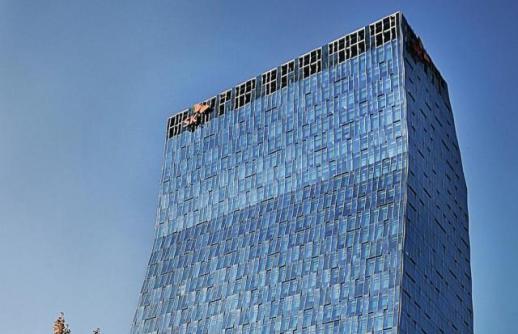 SK Telecom turns to AI infrastructure as core mobile business weakens SEOUL, May 7 (AJP) - South Korea's largest mobile carrier SK Telecom is increasingly turning to artificial intelligence (AI)-driven infrastructure as its new growth engine. According to its first-quarter earnings report released on Thursday, SK Telecom posted an operating profit of 537.6 billion Korean won (US$393 million) in the first three months of this year, down 5.3 percent from a year earlier, reflecting a slump in its core telecom business. Revenue also fell 1.4 percent to 4.39 trillion won, while net profit declined 12.5 percent to 316.4 billion won, sending its shares down 2.2 percent to 93,400 won later in the day. Its AI data center business, however, emerged as the fastest-growing sector, with revenue up 89.3 percent from a year earlier to 131.4 billion won, driven by higher utilization at new facilities and increased demand for GPU-as-a-Service (GPUaaS), a cloud computing subscription service that allows individuals and organizations to rent high-performance graphics processing units (GPUs). SK Telecom is now repositioning itself as an all-in-one AI company offering everything from underlying technology, infrastructure and AI models to consumer apps and services, in a bid to capitalize on growing demand in the emerging AI market. Meanwhile, smaller rival LG Uplus posted stronger earnings as AI-related infrastructure and mobile service revenue supported profitability. Operating profit reached 272.3 billion won, up 6.6 percent from a year earlier. Revenue rose 1.5 percent to 3.80 trillion won and net profit increased 8.4 percent to 176.0 billion won. Like SK Telecom, LG Uplus is rapidly expanding its AI offerings for both consumers and businesses. The company is rolling out AI-powered customer service centers, virtual call assistants and autonomous network systems to reduce costs and improve efficiency. But shares of LG Uplus slipped 0.3 percent to 15,360 won, despite its rosy performance. 2026-05-07 12:28:30
 -
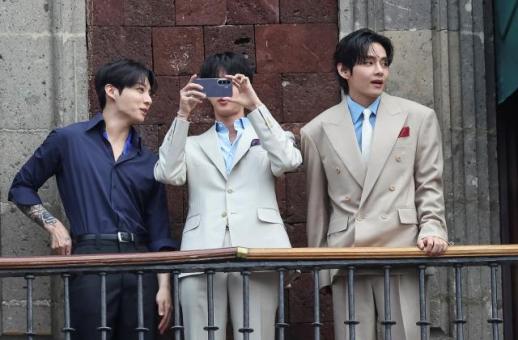 BTS gets state-visit red-carpet treatment in Mexico SEOUL, May 07 (AJP) - K-pop supergroup BTS appeared alongside Mexican President Claudia Sheinbaum at the presidential office in Mexico City on Thursday, drawing tens of thousands of fans ahead of the group's sold-out stadium concerts. Sheinbaum welcomed the seven-member band during her regular morning press briefing, known as "Mañanera," describing BTS as artists who "always convey messages of friendship, peace and love." The group is scheduled to perform at Estadio GNP Seguros on Thursday, Saturday, and Sunday, the third stop on the North American leg of their "ARIRANG" World Tour, following Tampa and El Paso. All three concerts were sold out immediately after tickets went on sale, local organizers said. The Mexico City Chamber of Commerce estimated the performances could generate approximately $107.5 million in economic activity. After Mexico City, the tour moves on to Stanford and Las Vegas before heading into Europe. BTS is also set to return to Latin America in October, with dates scheduled in Bogotá, Lima, Santiago, Buenos Aires and São Paulo. Member Jimin shared a brief video from the scene on his Instagram story, captioning it "Mexico, Gracias" with purple heart. BTS remains the most-streamed K-pop act in Mexico, which ranked as the world's fifth-largest K-pop streaming market, according to a report published by Spotify in August 2025. The group's 2020 album "MAP OF THE SOUL : 7" topped Mexico's most-streamed K-pop albums list, while "Dynamite" ranked as the country's most-streamed K-pop song. Eight of Mexico's top 10 most-streamed K-pop albums were BTS releases, Spotify said. On the global charts, BTS' latest title track "SWIM," from its fifth studio album "ARIRANG," ranked No. 2 on both Billboard's weekly Global Excl. U.S. and Global 200 charts for a sixth consecutive week as of May 4. 2026-05-07 10:23:41
 -
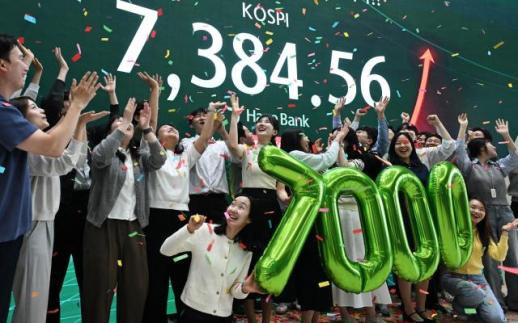 KOSPI shatters 7,300, outpacing Asia as foreign buying floods chip stocks SEOUL, May 06 (AJP) - South Korea’s benchmark KOSPI surged to a fresh record high Wednesday, sharply outperforming regional peers as foreign investors piled into semiconductor heavyweights, while most Asian markets posted more modest gains and Japan remained closed for the Golden Week holiday. The KOSPI jumped 6.5 percent to close at 7,384.56, after moving between an intraday low of 7,093.00 and a high of 7,426.60, briefly breaking above the 7,400 level during the session. The latest advance highlights the extraordinary pace of the rally, with the index surging from 4,949.59 on January 26 to above 7,300 in just over three months, driven largely by concentrated gains in semiconductor heavyweights. Foreign investors purchased 3.13 trillion won ($2.15 billion) worth of shares, while retail and institutional investors sold 572.4 billion won and 2.31 trillion won, respectively, indicating that the rally was overwhelmingly driven by offshore flows. Investor sentiment was underpinned by a strong lead from Wall Street, where the S&P 500 and the Nasdaq Composite closed at record highs, while the Dow Jones Industrial Average rose 0.7 percent. The Philadelphia Semiconductor Index climbed 4.2 percent. Sentiment was further buoyed by easing geopolitical tensions after Marco Rubio said the U.S. military operation against Iran, dubbed “Operation Epic Fury,” had concluded successfully, easing concerns over potential disruptions in the Strait of Hormuz. Oil prices extended declines, with Brent crude falling 1.4 percent to $108.3 per barrel and West Texas Intermediate crude dropping 1.4 percent to $100.8, while the VIX volatility index fell 5 percent to 17.38. The easing risk environment supported the Korean won, which strengthened to 1,454.5 per dollar, down 1 percent from the previous session, extending its recovery toward levels seen before the recent escalation in Middle East tensions. Despite South Korea’s heavy reliance on Gulf energy imports, the KOSPI has remained resilient, reflecting strong global liquidity conditions and concentrated inflows into semiconductor exporters. Sector gains were led by semiconductors and financials, with chip-related stocks and equipment makers jumping 12.1 percent. Life insurers and brokerage firms rose 11.2 percent each, supported by expectations of improved earnings amid surging trading activity. Among large-cap stocks, Samsung Electronics surged 14.4 percent to close at 266,000 won, supported by expectations of a prolonged memory upcycle and reports that Apple is considering the company as a potential foundry partner alongside Intel as part of efforts to diversify supply chains beyond TSMC. SK hynix rose 10.6 percent to 1,601,000 won, while SK Square gained 9.9 percent to 1,089,000 won. LG Energy Solution added 2.12 percent to 482,000 won, and Hyundai Motor rose 2.0 percent to 550,000 won. In contrast, Doosan Enerbility slipped 0.2 percent to 127,000 won, Hanwha Aerospace fell 2.2 percent to 1,433,000 won, while Samsung Biologics edged down 0.3 percent to 1,480,000 won and Samsung Electro-Mechanics declined 0.7 percent to 912,000 won. The KOSDAQ slipped 0.3 percent to close at 1,210.20, after moving between 1,197.01 and 1,220.90. Retail investors bought 610.1 billion won, while foreigners and institutions sold 61.6 billion won and 543.9 billion won, respectively. The divergence reflected continued weakness in biotech shares and fund rotation into large-cap semiconductor stocks on the main board. Among KOSDAQ heavyweights, Ecopro BM rose 6.03 percent to 228,500 won, and Ecopro gained 4.5 percent to 162,800 won, while Rainbow Robotics advanced 2.5 percent to 702,000 won. However, Alteogen fell 2.6 percent to 363,500 won, Samchundang Pharm slipped 0.9 percent to 406,000 won, and Lino Industrial dropped 3.4 percent to 116,700 won. HLB rose 1.3 percent to 61,700 won. Elsewhere in Asia, Hong Kong’s Hang Seng Index rose 1.1 percent to 26,178.8, and China’s Shanghai Composite gained 1.14 percent to 4,158.88, while Japanese markets remained closed for the Golden Week holiday. 2026-05-06 17:11:47
 -
 KOSPI hits record high, approaching the 7,000 mark SEOUL, May 04 (AJP) - Korea’s benchmark KOSPI led gains across Asia on Monday, surging more than five percent to a fresh high as markets in China and Japan remained closed for holidays, while Hong Kong posted comparatively modest gains. The KOSPI closed 5.12 percent higher at a record 6,936.99, after moving between an intraday low of 6,741.63 and a high of 6,937.00. The rally was driven by strong foreign and institutional buying, with foreign investors purchasing 3.00 trillion won ($2.04 billion) worth of shares and institutions adding 1.94 trillion won, while retail investors sold 4.79 trillion won, indicating a market led by offshore and institutional flows. Large-cap technology and semiconductor stocks led the advance, supported by continued optimism over artificial intelligence investment and improving global tech sentiment. SK hynix jumped 12.5 percent to close at 1,447,000 won, after touching an intraday high of 1,450,000 won, while SK Square surged 17.8 percent to 991,000 won. Samsung Electronics rose 5.4 percent to 232,500 won, extending gains across the broader chip sector. Gains also spread to other sectors. LG Energy Solution climbed 2.5 percent to 472,000 won, while Hyundai Motor added 1.5 percent to 539,000 won. In the industrial and defense sector, Hanwha Aerospace rose 3.4 percent to 1,465,000 won and Doosan Enerbility edged up 0.1 percent to 127,200 won, while HD Hyundai Heavy Industries slipped 0.7 percent to 680,000 won. Biotech heavyweight Samsung Biologics rose 1.02 percent to 1,485,000 won. By sector, conglomerates led the gains, rising 11.6 percent, followed by electrical equipment and securities, which both climbed 8.6 percent. Theme-wise, cable-related stocks surged 17 percent, while power equipment and optical communication sectors advanced 11.4 percent and 10.5 percent, respectively. On the junior KOSDAQ, the index rose 1.8 percent to close at 1,213.74, moving between 1,211.39 and 1,222.65 during the session. Foreign investors bought 555.3 billion won worth of shares, while retail investors sold 448.9 billion won, and institutions offloaded 73.6 billion won. Among major stocks, battery and materials names led the gains. EcoPro rose 1.9 percent to close at 155,800 won, while EcoPro BM jumped 4.6 percent to 215,500 won. Biotech stocks were mixed. Alteogen gained 1.2 percent to 373,000 won, while HLB edged up 0.2 percent to 60,900 won and Peptron climbed 2.7 percent to 267,500 won. Samchundang Pharm, however, fell 1.4 percent to 409,500 won. In the robotics and equipment sector, Rainbow Robotics rose 3.2 percent to 685,000 won, while LEENO Industrial added 1.3 percent to 120,800 won. The Korean won strengthened 0.5 percent to 1,467.7 per dollar. Elsewhere in Asia, Hong Kong’s Hang Seng Index rose 1.3 percent to 26,120.0, while Japan’s Nikkei 225 and China’s Shanghai Composite remained closed for holidays. Market sentiment was also supported by developments in the Middle East, as the United States announced a new initiative, dubbed “Project Freedom,” aimed at facilitating the movement of commercial vessels through the Strait of Hormuz. Under the plan, U.S. Central Command said it would deploy guided missile destroyers, more than 100 aircraft and unmanned platforms, and around 15,000 personnel to support maritime operations. However, officials indicated that direct naval escort of commercial ships would not be part of the operation, suggesting a coordination-based approach involving governments, insurers, and shipping firms. The initiative comes amid mounting pressure in global energy markets, with more than 2,000 vessels and approximately 20,000 crew members stranded in and around the Strait of Hormuz, according to the International Maritime Organization. Oil prices remained volatile. Brent crude traded at $108.8 per barrel, up 0.6 percent, while West Texas Intermediate rose 0.5 percent to $102.5. 2026-05-04 17:27:28
 -
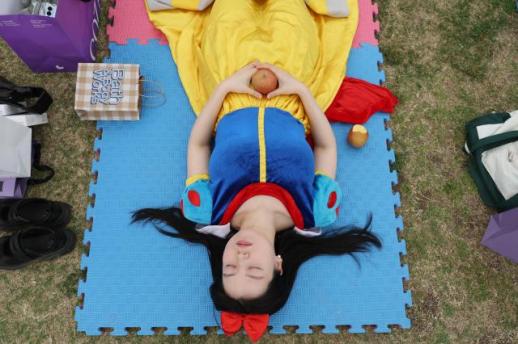 In South Korea, even sleep becomes a public competition SEOUL, May 04 (AJP) - In South Korea, where overwork and sleep deprivation have become almost a national condition, even rest now comes with rules, timers and a scoreboard. At the Han River on Saturday afternoon, 170 contestants arrived armed with plush toys, mosquito-proof determination and creative signs — including one reading, “Don’t wake me up unless you’re a prince” matched in modern-day Sleeping Beauty gown for Seoul’s annual Han River Napping Championship. Since overwork and chronic sleep deprivation come with the journalist’s job, I joined them. The rule was paradoxically simple: fall asleep in public — deeply — while everyone watches. Going to sleep required rituals and performance. A pre-nap yoga session intended to relax participants did the opposite for someone unaccustomed to stretching both muscles and stress. Some contestants clung to oversized stuffed animals like emotional-support teammates. One wore a sleep mask labeled “Offline.” Another built a miniature “sleep zone” complete with neck pillows and warning tape. The challenge was not merely to nap. It was to nap competitively. Lying among 170 strangers in an open public space, the experience of trying to rest became something communal — and for many, strangely unfamiliar. Participants were fitted with heart-rate monitors checked every 30 minutes, while organizers wandered through the crowd armed with feathers and mosquito sound effects to sabotage sleepers. Winners were chosen based on how steadily and deeply their heart rates dropped over time, turning the ancient human act of collapsing from exhaustion into quantified performance art. Then every 30 minutes, the host’s microphone shattered the silence again. From afar, the riverside scene looked peaceful, almost whimsical. Up close, it resembled a wellness survival game show: rest under observation, relaxation under evaluation. Yet for many participants, the event felt less absurd than oddly familiar. “I usually sleep about three to four hours a day,” said Nam Ji-soo, a 30-year-old office worker. “Work doesn’t really stop, and even on weekends, it’s hard to feel fully rested.” University student Park Jun-seok blamed the modern holy trinity of insomnia — social media, short videos and endless notifications. “You lie down to rest, but something always distracts you,” he said. “Social media and YouTube end up being the biggest cause of my lack of sleep.” Their exhaustion reflects a broader national pattern. South Korea ranked near the bottom globally in the IKEA Sleep Report 2025, placing 50th out of 57 surveyed markets with one of the world’s lowest sleep satisfaction levels. Koreans averaged just 6 hours and 27 minutes of sleep per night, among the shortest durations recorded. And even that may be optimistic. A separate 2025 study by the Korean Society of Sleep Research estimated actual average sleep time at only 5 hours and 25 minutes. Another report found Koreans sleep roughly 90 minutes less than the OECD average. Perhaps most revealing is what happens before bed: nearly 70 percent of adults use smartphones until the moment they fall asleep, while more than 60 percent keep their phones beside them overnight. The sleep deficit is coupled with overwork and stress, and experts say the daydreaming or sleeping contests reflects something deeper about modern Korean life. “Sleeping is something we usually do alone, in a private space. But here, it happens in public,” said Kim Jae-hwi, a psychology professor at Chung-Ang University. “Koreans are turning the most private time into a public show.” And perhaps that is what made the scene feel strangely fitting. In a country where productivity rarely powers down and smartphones follow people into bed, even doing nothing now requires an organized event, a heart-rate tracker and an official excuse to rest. For one afternoon at the Han River, sleep stopped being invisible. It became performance, competition — and somehow, entertainment. For me, it was the rarest luxury of all: sanctioned rest disguised as work. 2026-05-04 17:23:28
 -
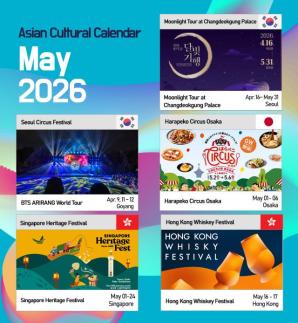 Asian Culture Calendar SEOUL, April 30 (AJP) - South Korea Apr. 8 - May 27 Gyeongbokgung Saenggwabang Apr. 16 - May 31 Moonlight Tour at Changdeokgung Palace May. 2 - 3 Ajou Motor College Festival May. 4 - 5 Seoul Circus Festival May. 5 - 10 Hangang River Festival May. 13 - 24 Suragan Sisik Gonggam May. 16 - 17 Yeon Deung Hoe May. 22 - 25 Hwaseong Boating Festival Japan May. 1 - 6 Harapeko Circus Osaka May. 2 - 3 Nyanko Expo May. 2 - 5 Saku Hot-Air Balloon Festival May. 3 - 4 Hakata Dontaku Festival May Hong Kong May. 16 - 17 Hong Kong Whiskey Festival May. 24 Cheung Chau Bun Festival Singapore May. 1 Mayday SG Festival 2026 May. 1 - 24 Singapore Heritage Festival May. 15 - 30 Singapore International Festival of Arts (SIFA) 2026-05-01 13:33:03