


Latest by
-
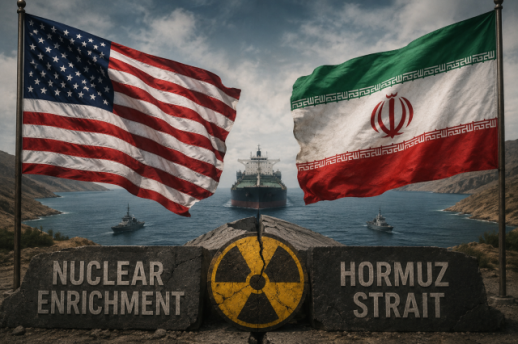 U.S.-Iran Technical Talks Likely to Resume on June 30 U.S. Secretary of State Marco Rubio announced that follow-up technical talks between the United States and Iran regarding the implementation of their ceasefire memorandum of understanding (MOU) are set to resume in Switzerland on June 29 or 30. These negotiations will address key issues such as nuclear matters, sanctions relief, and management of the Strait of Hormuz. On June 24, during a press briefing in Kuwait while touring the Gulf region, Rubio stated, "The technical negotiation teams will reconvene on the 29th or 30th." He added, "The teams are divided into several thematic working groups and will return to Switzerland; I believe it will be on the 30th." Pakistan also confirmed the possibility of the talks resuming. Tahir Andrabi, a spokesperson for the Pakistani Foreign Ministry, mentioned during a regular briefing that "the talks are expected to resume next week, likely on Tuesday, the 30th." However, he noted that there is also a possibility for the meetings to occur on the 29th or July 1. Statements from both the U.S. and Pakistan suggest that the follow-up technical talks are highly likely to take place in Switzerland on June 30. Pakistan, along with Qatar, is playing a mediating role in the process of the U.S.-Iran MOU signing and subsequent negotiations. The United States and Iran signed the ceasefire MOU on June 17 and held high-level talks in Bürgenstock, Switzerland, to discuss implementation strategies. Following that, the working teams were formed to address issues related to nuclear matters, sanctions, compliance checks, and navigation in the Strait of Hormuz. This upcoming meeting is expected to be a pivotal moment in determining whether negotiations can advance to the stage of resolving core issues. Both sides are required to reach a final agreement within 60 days, but disagreements remain regarding the sequencing of nuclear inspections, sanctions relief, and management of the Strait of Hormuz.* This article has been translated by AI. 2026-06-25 06:16:00
 -
 Mencius and Xunzi: Are Humans Innately Good or Evil? After Confucius's death, China entered a period of immense upheaval. The order of the Spring and Autumn period collapsed, and the Warring States period was marked by continuous conflict. Feudal lords competed for dominance, while the populace suffered from war and poverty. Amid this turmoil, people began to ponder how to stabilize the nation and create a humane society. In this context, Confucianism evolved from a philosophy of personal cultivation into a political philosophy for governing the state and organizing society, with two towering thinkers, Mencius and Xunzi, at its center. While Confucius outlined the path humans should follow, Mencius and Xunzi posed a more fundamental question: What is the nature of humanity? Are humans inherently good, or are they driven by desire? This question transcended mere philosophical debate; understanding human nature was essential to understanding politics, education, and governance. If humans are innately good, the role of politics would be to nurture that goodness; if they are driven by desire, then laws and institutions must control it. Ultimately, the debate between Mencius and Xunzi became a cornerstone of East Asian political philosophy, influencing contemporary ideas about democracy, the rule of law, education, and management. Mencius was a thinker with deep trust in human nature, believing that humans are fundamentally good. This belief is known as the theory of innate goodness. He explained that if people saw a child about to fall into a well, they would instinctively feel alarm and compassion, not out of self-interest or desire for honor. Mencius believed that this instinct reflects human nature. He described four innate sprouts of goodness within humans: the feeling of compassion, which is the beginning of benevolence (仁); the sense of shame for wrongdoing, which is the beginning of righteousness (義); the inclination to yield and consider others, which is the beginning of propriety (禮); and the ability to discern right from wrong, which is the beginning of wisdom (智). Mencius referred to these as the Four Beginnings (四端). He believed that everyone is born with these potentials and can cultivate them through education and self-cultivation. Mencius's philosophy extended into political thought. He viewed the people as the foundation of the state, famously stating, "The people are the most valuable, the state comes next, and the ruler is the least important" (民爲貴 社稷次之 君爲輕). The fact that such a statement emerged during an era dominated by absolute monarchs 2,500 years ago is remarkable. Mencius prioritized the hearts of the people over the power of the ruler, asserting that a ruler who loses the people's support loses legitimacy. He advocated for governance through virtue rather than force, believing that the purpose of politics is to enrich and comfort the populace. Today, concepts such as popular sovereignty, welfare states, and human dignity reflect Mencius's ideas. While institutional democracy developed in the West, the notion that the people should be at the center of governance has long been a principle in the East. In this sense, Mencius is not merely a Confucian scholar but a pioneer in the history of political thought. In contrast, Xunzi took a more pragmatic view of human nature. Having experienced the harsh realities of the late Warring States period, he believed that human nature could not be viewed solely through an optimistic lens. He argued that humans are born with desires for wealth, power, and self-interest. If these desires are left unchecked, society inevitably descends into chaos. Thus, he asserted, "Human nature is evil" (性恶説). However, Xunzi's theory of innate evil should not be understood as a purely negative view of humanity. The 'evil' he referred to does not imply crime or moral decay; rather, it acknowledges that humans possess desires. Everyone has a tendency toward self-centeredness, and if this is not properly managed, conflict and disorder will arise. Therefore, he believed that education and training are essential, and that society requires laws and institutions. Xunzi particularly emphasized the importance of learning. He believed that humans are not born complete but must continuously learn and cultivate themselves. He famously stated, "Without learning, one cannot become a gentleman," highlighting the power of postnatal education. This pragmatic approach greatly influenced later Chinese legalist thought, with figures like Han Feizi and Li Si, who unified China under the Qin Dynasty, being notable examples of Xunzi's intellectual legacy. While Mencius trusted in human conscience, Xunzi placed his faith in the power of institutions. Mencius was a philosopher of morality, while Xunzi was a philosopher of order. Interestingly, successful nations and organizations throughout history have often utilized both Mencius's and Xunzi's philosophies. A state that does not trust its citizens is prone to dictatorship, while a society lacking laws and institutions is likely to descend into disorder. The same applies to businesses; they must respect and trust their members while also ensuring fair evaluations and clear rules. Schools should honor students' autonomy while teaching fundamental norms and responsibilities. Ultimately, a healthy community is possible when the idealism of Mencius and the realism of Xunzi are balanced. Here, we discover another greatness of Confucianism. It does not solely speak of human goodness or evil; rather, it simultaneously acknowledges human potential and limitations. Mencius saw hope within humanity, while Xunzi recognized the dangers. These two perspectives do not clash but instead provide complementary views that allow for a more nuanced understanding of human existence. One of Confucianism's core texts, the Doctrine of the Mean, emphasizes this spirit of balance. Achieving harmony without leaning toward one extreme or the other is the path that humanity and society should pursue. In fact, the long-standing debate between the theories of innate goodness and innate evil ultimately forms a complete picture within the philosophy of the Doctrine of the Mean. Humans possess the potential for goodness but also harbor desires, necessitating both education and cultivation as well as laws and institutions. Today, we live in an era of artificial intelligence and digital revolution. Technology is advancing rapidly, increasingly replacing human capabilities. However, no matter how advanced technology becomes, questions about human nature will persist. AI can calculate but cannot possess conscience. Algorithms can predict but cannot bear moral responsibility. Even with the emergence of superintelligence, the forces that sustain human society will ultimately be the age-old values of trust, responsibility, conscience, and restraint. In this regard, Mencius and Xunzi are becoming increasingly relevant today. Mencius urges us not to lose hope in humanity, while Xunzi warns us to be cautious of human desires. Mencius emphasizes a warm heart, while Xunzi stresses the importance of rational institutions. The Doctrine of the Mean teaches us to harmoniously integrate these two approaches. Perhaps the greatest challenge humanity faces in the 21st century is preserving our humanity amidst technological advancement. The debate between Mencius and Xunzi, which began 2,500 years ago on the Chinese mainland, is far from over. It lives on in our politics, education, business management, and within our families and communities. The question of whether humans are good or evil ultimately leads to the question of what kind of humans we should strive to be. The most important lesson that Confucianism imparts is the belief that through continuous cultivation and reflection, humans can become better beings. If Confucius opened the path, Mencius sowed hope, and Xunzi established order, then the spirit of East Asian civilization that blossomed from that foundation is ultimately about human dignity. What matters more than the size of a nation is the dignity of its people; what matters more than technological advancement is human morality; and what matters more than the strength of power is the responsibility of its leaders. This truth, which remains unchanged even in the age of AI, was already taught to us by Mencius and Xunzi 2,500 years ago.* This article has been translated by AI. 2026-06-25 06:04:00
 -
 Election Commission Faces Criticism Over Voting Paper Shortage The protests at the Jamsil counting center, triggered by a shortage of ballots during the June 3 local elections, have now entered their third week. While attendance has decreased and the significance of the protests has been questioned, some citizens continue to raise their voices for the restoration of voting rights. A young man in his twenties, holding a sign that read, "Without elections, democracy ends," expressed his hope that the situation would be resolved quickly. Their demands are clear: an investigation into the ballot shortage and measures to prevent a recurrence. This local election recorded a turnout of 61%, the second-highest in history. Typically, local elections attract less voter interest compared to presidential or parliamentary elections. Nevertheless, the desire of voters to fully realize their sovereignty through their votes was reflected in this election. However, the Central Election Management Commission (CEMC), which is responsible for overseeing and managing elections, has been unable to shake off the label of being the worst in history. Due to the ballot shortage, many voters were forced to either vote after the official closing time of 6 p.m. or leave without casting their ballots. The CEMC faces significant criticism for its failure to respond to a situation that was foreseeable. Even at polling stations, the possibility of a ballot shortage was anticipated. At around 11:34 a.m. on election day, the Songpa District Election Commission recognized the potential for a shortage and contacted the Seoul Election Commission, but no immediate action was taken. It was only five hours later that the seriousness of the situation was communicated to the CEMC. Noh Tae-ak, the former chairman of the CEMC, received his first report just 40 minutes before the voting deadline, and it was revealed that Heo Cheol-hoon, the former secretary-general, only became aware of the situation at 5:10 p.m., confirming the CEMC's complacency. Public outrage has been fueled by the CEMC's failure to fulfill its primary role of election management while simultaneously abusing its position and authority. Allegations of overseas trips funded by the CEMC budget for purposes such as "election observation" serve as a prime example. Officials have traveled to destinations like the Maldives and Kota Kinabalu, spending millions of won on these trips. Former Chairman Noh also faced controversy for using CEMC funds for accommodation and airfare while taking his spouse on three overseas trips, yet these details were not included in the post-trip reports that should have been transparently disclosed. A thorough investigation into the CEMC, which has taken no responsibility while reaping benefits, is essential. The joint investigation team established after the local elections is conducting a comprehensive investigation into the ballot shortage, allegations of lost ballot storage boxes, and the overseas trip allegations. Currently, the team is reconstructing the events through the analysis of seized materials and the questioning of election officials, aiming to clarify the accountability of higher-ups, including former Chairman Noh, and impose strict penalties if negligence is found. Addressing the structural issues within the CEMC is also a necessary task for future improvement. While the CEMC has operated independently for the sake of citizens' voting rights, it has also been criticized as an "unchecked power." Additionally, the leadership of the CEMC is held by current judges, raising concerns about their lack of expertise in budget, organization, and personnel administration, which hinders their ability to contribute to fair elections. Improvements across the entire CEMC system are needed to ensure that the essential democratic requirement of voting rights is not compromised. Even if such reforms take time, meticulous efforts are necessary to prevent a recurrence of such incidents. Only then can trust in the CEMC be restored and public confidence be rebuilt.* This article has been translated by AI. 2026-06-25 06:04:00
 -
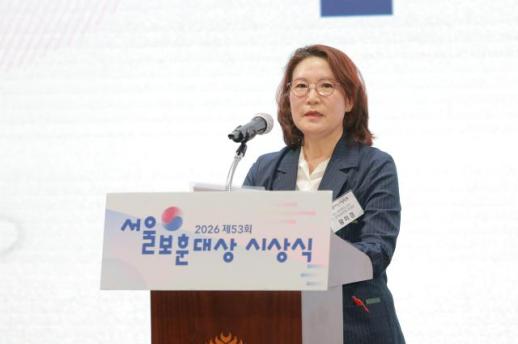 Compensation for Veterans' Sacrifices Must Balance Support and Honor Veterans deserve appropriate compensation and respect for their sacrifices. In recognition of June as National Veterans Month, Aju Business Daily has prepared a three-part series on honoring veterans. As of May, there are 25,040 surviving veterans from the Korean War and 159,540 from the Vietnam War. Given that many veterans are in their 80s and 90s, enhancing veterans' policies is an urgent issue. To ensure appropriate compensation for the sacrifices made by veterans, policies must balance living support, honor, and the promotion of a culture of remembrance. No Seung-yong, a professor at Seoul Women's University, stated in an interview on June 24, "Future veterans' policies must balance 'living support' and 'honoring their sacrifices.' While economic support is important, a culture that respects and remembers those who sacrificed for the nation must also be cultivated." Since 2002, the government has provided a veterans' honor allowance to honor those who dedicated themselves to the nation. As of 2026, the monthly payment is 490,000 won. In addition to this, local governments provide an average of 263,000 won in veterans' allowances. The role of local governments also needs to be expanded. Hwang Mi-kyung, a professor at Seoul Christian University, emphasized, "Local governments should pay more attention to the care of veterans and their families. They complement the role of the national government. The allowance system should be strengthened, and the involvement of city and district council members is necessary." Support policies for the next generation also need to be carefully developed. Instead of providing uniform cash support to the children of veterans, opportunities for scholarships, psychological counseling, and participation in national record and honor inheritance projects should be expanded. Professor No suggested, "In other countries, scholarship programs and leadership initiatives for veterans' descendants are operated to pass on the value of dedication to the nation to the next generation. We also need to systematically expand scholarship programs for veterans' descendants and capacity development programs for families of national merit." Ryu Hyun-sook, a senior researcher at the Korea Institute of Public Administration, noted, "There are quite a few memorial facilities across regions. It is also the role of the Ministry of Veterans Affairs to inform and pass on the history and assets of veterans to future generations," adding that the ministry should actively promote its work. The Ministry of Veterans Affairs has established a 'Comprehensive Veterans Culture Portal' to provide various videos, exhibitions, and educational materials related to veterans' culture, which were previously scattered across different agencies. The portal has been in service since May 11. Previously, information about national cemeteries, including the Seoul and Daejeon National Cemeteries, as well as the Independence Hall and Provisional Government Memorial Hall, was dispersed across multiple websites, making it inconvenient for users to find related materials. The portal allows users to search for veterans' culture materials by type, theme, era, and region, providing integrated access to related content. Users can also check detailed information about the materials through links to the respective agency websites. Additionally, the portal features a comprehensive search function and offers various information about veterans' culture exhibitions, events, and education, along with an AI recommendation feature for users' interests. Kwon Oh-eul, Minister of Veterans Affairs, stated, "The Comprehensive Veterans Culture Portal is an integrated platform that connects scattered records and content of veterans, allowing citizens to conveniently search for and access veterans-related information without time and space constraints. We plan to continuously expand services so that citizens can engage with and utilize veterans' culture content in their daily lives." * This article has been translated by AI. 2026-06-25 06:04:00
 -
 Manufacturing Sector Rises While Non-Manufacturing Declines; Business Sentiment Outlook Dims Business sentiment among companies has turned negative, with a decline in the construction sector and a slow recovery in domestic demand leading to a drop in the overall business sentiment index (CBSI). According to the Bank of Korea's "June Business Survey and Economic Sentiment Index (ESI)" released on June 25, the CBSI fell to 97.7 this month, a decrease of 1.2 points from the previous month, marking the largest drop since January 2022. The CBSI is a sentiment indicator calculated using key metrics from the business conditions survey index (BSI). A score above the long-term average of 100 (2003-2024) indicates optimistic sentiment, while a score below 100 reflects pessimism. The trends in manufacturing and non-manufacturing sectors diverged. The manufacturing CBSI rose by 0.4 points to 101.2, the highest level since August 2022 (102.9). Improvements in financial conditions and new orders contributed to this increase, with respective rises of 0.4 points and 0.2 points. Conversely, the non-manufacturing CBSI dropped by 1.2 points to 97.7. Continued poor performance in the construction sector, along with a decline in sentiment in the arts, sports, and leisure services due to base effects from the previous month’s holiday, contributed to this downturn. Lee Heung-hoo, head of the Bank of Korea's Economic Sentiment Survey Team, stated, "Manufacturing improved thanks to strong IT exports, while non-manufacturing declined due to the sluggish construction sector and base effects in the arts, sports, and leisure industries." The outlook for future business conditions has also worsened. The projected CBSI for next month is 95.2, down 2.4 points from the previous month. The manufacturing outlook is at 98.2, a decrease of 2.1 points, while the non-manufacturing outlook is at 93.2, down 2.7 points. The economic sentiment index (ESI) stands at 96.8, a decline of 0.7 points from the previous month. The seasonally adjusted value remains unchanged at 95.1 compared to the previous month.* This article has been translated by AI. 2026-06-25 06:04:00
 -
 Pakistan's Role in US-Iran Peace Talks Raises Questions About Economic Benefits Pakistan is asserting its presence on the international stage by leading recent peace negotiations between the United States and Iran in Switzerland. However, opinions are divided on whether this diplomatic role will translate into economic benefits for the country. Reuters reported on June 23 that while Pakistan's involvement in the negotiations could serve as a diplomatic asset, it is unlikely to yield significant economic gains. Experts suggest that economic development stems more from internal reforms than from available funds. Alongside Qatar, Pakistan coordinated the negotiations between the US and Iran, drawing attention for its efforts. Iran, which achieved significant outcomes in the talks, including the release of frozen funds, extended a warm welcome to Pakistan. According to Al Jazeera, on June 23, Iranian President Masoud Pezeshkian traveled directly to Islamabad. During a press conference, he emphasized the need to elevate the relationship between Iran and Pakistan to a level befitting their status in the Islamic world, stating, "We can create a successful cooperation model based on solidarity and brotherhood," as reported by the Pakistani daily Dawn. Pakistani officials, including President Asif Ali Zardari, Prime Minister Shehbaz Sharif, and Foreign Minister Ishaq Dar, gathered to welcome President Pezeshkian at Nur Khan Air Base near Islamabad. As a mediator, Pakistan received a warm reception in the US as well. US Vice President JD Vance reportedly embraced General Asim Munir, the powerful chief of the Pakistani military, during the post-war negotiations at the Bürgenstock resort in Switzerland, asking, "How have you been?" On June 24, Al Jazeera reported that Vance humorously remarked during his speech at the Swiss negotiation venue, "I have two very important people in my life—one is my Indian wife (Usha Vance) and the other is my Pakistani friend, Munir." Despite this diplomatic stature, Pakistan's economic situation remains precarious. With a population of 250 million, the country faces significant challenges, including economic inequality, a narrow tax base, and repeated International Monetary Fund (IMF) bailouts, as noted by Reuters. The formalization of the underground economy is also a major issue. Last year, only 1.3% of Pakistanis filed income tax returns, and just 7.7% of adults owned debit or credit cards. Moreover, the United Arab Emirates (UAE), a Middle Eastern Islamic nation that had previously maintained friendly relations with Pakistan, has recently expelled many Pakistani workers, causing economic repercussions. The New York Times reported that in one region of northwestern Pakistan, 900 individuals were expelled and returned home within weeks. The newspaper attributed the UAE's displeasure to Pakistan's failure to strongly condemn Iran's missile and drone attacks, which have caused significant damage to the UAE. In April, the UAE recalled a $3.5 billion loan to Pakistan, equivalent to one-fifth of the country's foreign reserves. Fortunately, Saudi Arabia deposited an additional $3 billion into Pakistan's central bank, preventing a deeper crisis. Over 2 million Pakistanis reside in the UAE, and they sent home $8 billion last year. Bloomberg noted that Pakistan's role as a mediator in the ongoing conflict could help it escape the shadow of wealthier regional competitor India and potentially attract foreign capital. Al Jazeera also suggested that the recent easing of US sanctions might revive discussions on Pakistan's long-desired pipeline project with Iran. Domestically, there are calls for economic reforms rather than merely relying on the "crumbs" from mediation efforts. Dawn columnist Khurram Hussain pointed out, "Whether Iran remembers us favorably or whether the US offers generous rewards is beyond our control. However, domestic economic issues cannot be resolved by a grateful neighbor or a benevolent benefactor."* This article has been translated by AI. 2026-06-25 05:04:00
 -
 Korea's National Soccer Team Aims for Round of 32 at World Cup The South Korean national soccer team stands on the brink of making history by qualifying for the knockout stage of the FIFA World Cup for the second consecutive tournament. Under the guidance of coach Hong Myung-bo, the team will face South Africa in their final group match on June 25 at 10 a.m. KST at the Estadio BBVA in Monterrey, Mexico. Currently sitting in second place in Group A with one win and one loss (3 points), South Korea can secure advancement to the Round of 32 with just a draw against fourth-place South Africa (1 draw, 1 loss; 1 point). If they qualify, it will mark only the fourth time in history that South Korea has progressed past the group stage and the first time they have reached the knockout rounds in consecutive tournaments. A victory would also represent the first two wins for South Korea in an away World Cup and the first for a Korean coach. However, optimism must be tempered. To achieve their goal, the team must overcome three significant challenges: extreme heat, strict officiating, and a historical jinx against African teams. The climate in Monterrey is particularly daunting, as it is the second hottest city among the tournament venues, with temperatures expected to feel like 40 degrees Celsius due to high humidity (50-70%) during the match, which kicks off at 7 p.m. local time on June 24. This could lead to severe fatigue and diminished focus in the second half. Coach Hong expressed confidence during a press conference on June 24, stating, "The players are accustomed to Korea's hot and humid summers. We have prepared for the climate with high-altitude training, so it shouldn't significantly impact our performance." The officiating by Argentine referee Facundo Tello also poses a potential challenge. Known for his strict rulings, Tello has previously issued red cards to ten players in his domestic league and handed out five yellow cards in the recent Canada-Bosnia and Herzegovina match. Players Lee Kang-in, Baek Seung-ho, and Lee Gi-hyeok, who each carry a yellow card, must maintain their composure against South Africa to avoid missing the Round of 32. In terms of FIFA rankings, South Korea (ranked 23rd) holds a significant advantage over South Africa (61st). However, historical performance against African teams raises concerns; South Korea has only one win, one draw, and two losses against African nations in World Cup history, with their last victory dating back to the 2006 World Cup against Togo. On a positive note, South Korea has won its last two group stage matches in World Cup history, demonstrating strength in final group matches (3 wins, 2 draws, 5 losses overall). KBSN analyst Kim Dae-gil remarked in a phone interview on June 24, "The match against South Africa is essentially a one-off game, so scoring first is crucial. If the game remains 0-0 for too long, it could become unfavorable for us. If we concede late in the second half, we might not have a chance to recover, putting us at risk of elimination. African teams tend to gain momentum after scoring first, so we need to take the initiative and score early to control the game."* This article has been translated by AI. 2026-06-25 00:04:00
 -
 Trump: Iran Not Charging Fees for Strait of Hormuz Passage President Donald Trump announced on June 24 that Iran has informed the United States it will not charge any fees for passage through the Strait of Hormuz.According to Yonhap News Agency, Trump shared this information on his social media platform, Truth Social, stating, "Despite the fake news from troublemaking sources, Iran has told the U.S. that there are 'no tolls, insurance fees, or any other kind of charges' for passage through the Strait of Hormuz."He warned, "If this notification is false, subsequent negotiations will end immediately."Trump also emphasized that the U.S. has never provided money to Iran or released frozen funds abroad. He claimed that some of the Iranian funds under U.S. control would go to American farmers and ranchers."Iran is in desperate need of food," Trump added, stating, "We will only purchase it (food) from the U.S. for them."* This article has been translated by AI. 2026-06-24 21:52:00
 -
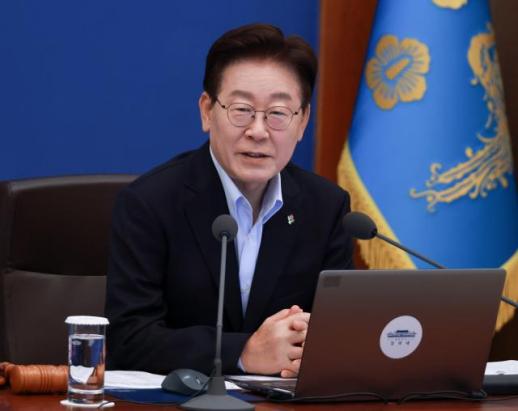 President Lee Calls for Support for Sewol Ferry Disaster Survivors President Lee Jae-myung expressed his deep sorrow on June 24 following the news of the recent passing of a survivor from the Sewol ferry disaster. He stated that the government will explore national-level support measures for the survivors.According to Yonhap News, President Lee wrote on Facebook, "It is difficult to even imagine what kind of feelings they have endured for the past 12 years," and pledged to consider all possible government actions to assist.He noted, "While time is said to heal all wounds, healing does not happen automatically," adding that a society that suppresses pain without adequate mourning will inevitably face problems.The president emphasized the need to listen more attentively to the voices of survivors and bereaved families, vowing to fulfill the government's responsibilities that have not been sufficiently addressed. He also stated that any acts of mockery or insult towards victims and their families will be thoroughly investigated and met with strict consequences.Addressing the survivors, President Lee urged them not to burden themselves with the expectation of living extraordinary lives in place of those who have passed. He encouraged them to let go of their guilt and to cherish the small joys in life with their loved ones. He concluded by expressing his regret that, as the President of South Korea, he has allowed the nation to remain stuck in the events of April 16, 2014, for the past 12 years.* This article has been translated by AI. 2026-06-24 21:40:00
 -
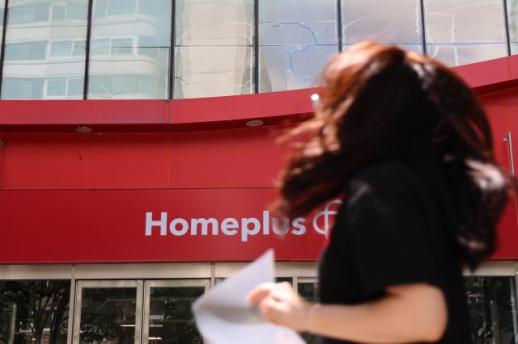 Homeplus Appeals to Government to Prevent Bankruptcy Amid Financial Crisis Homeplus and its labor union have urged the government to intervene and prevent the company from going bankrupt. According to Yonhap News on June 24, Homeplus issued a joint statement with the labor union, stating, "Since entering rehabilitation procedures in March of last year, we have been making efforts to reduce our store footprint and sell our supermarket division, but we are now facing a dire financial crisis due to depleted operating funds." To avert bankruptcy, they have requested an emergency operating loan of 200 billion won from their largest creditor, Meritz Financial Group, with the majority shareholder, MBK Partners, agreeing to provide a joint guarantee for 100 billion won. However, they claim that Meritz Financial Group has refused to provide support. Homeplus and the labor union warned, "If funds are not secured by the 30th, it will be difficult to avoid bankruptcy," adding that Meritz, which has secured 64 stores as collateral, would recover over 1.8 trillion won through auctioning off the properties to recoup the loan principal and overdue interest. They emphasized, "Meritz Financial Group stands to gain more from Homeplus's bankruptcy than its survival, which would cause irreversible damage to employees, suppliers, and general creditors." The Homeplus labor union also called on the government and the rehabilitation court to fulfill their roles. They stated, "If the state and the rehabilitation court do not do their part, it will only assist speculative capital in profiting at our expense," demanding a response from the Blue House. In response, Meritz stated that the 100 billion won loan is already available for disbursement and reiterated that guarantees from both MBK and Chairman Kim Byung-joo are necessary. Meritz added in a statement, "We have already deposited 100 billion won into an escrow account to save Homeplus and urge Chairman Kim and MBK to demonstrate their commitment through actual financial contributions." Meanwhile, the Seoul Rehabilitation Court sent a notice to Homeplus's creditors and labor union the previous day, requesting a funding plan of 200 billion won by the 30th.* This article has been translated by AI. 2026-06-24 21:28:00