
Journalist

Ryu Yuna
julia37@ajupress.com
-
 KOSPI surges over 6%, USD-KRW falls under 1,500 on Hormuz reopening news SEOUL, April 8 (AJP) — South Korea’s benchmark KOSPI zoomed above 5,800 by flying 6 percent upon the opening bell Wednesday on expectations of the reopening of the Strait of Hormuz as a part of the ceasefire terms of the United States that Tehran reportedly accepted. The main index opened sharply higher, jumping 6.56 percent to 5,855.29, while the tech-heavy KOSDAQ rose 4.13 percent to 1,079.58. Japan’s Nikkei 225 also climbed more than 4 percent. A buy-side sidecar was triggered on the KOSPI 200 after the index surged past the 5 percent threshold. U.S. President Donald Trump said Tuesday (local time) he would suspend military operations against Iran for two weeks, writing on Truth Social: “I agree to suspend the bombing and attack of Iran for a period of two weeks. This will be a double-sided CEASEFIRE!” The decision, announced about 90 minutes before the deadline, is conditional on Iran ensuring the full and safe reopening of the Strait of Hormuz. The proposal — reportedly mediated by Pakistan — has been accepted by both sides, raising expectations for a broader agreement and easing concerns over oil supply disruptions. Improved risk sentiment lifted Asian markets, with Seoul leading gains on expectations of stabilizing energy prices and reduced geopolitical risk. Large-cap stocks rallied broadly. Samsung Electronics jumped 7.12 percent to 210,500 won, while SK hynix surged 8.95 percent to 998,000 won. Automakers and battery makers also advanced. Hyundai Motor rose 5.39 percent to 498,500 won, Kia gained 5.57 percent to 159,200 won, and LG Energy Solution added 2.57 percent to 419,000 won. Bio and industrial shares were higher, with Samsung Biologics up 4.35 percent to 1,655,000 won, Doosan Enerbility rising 5.06 percent to 99,700 won, and HD Hyundai Heavy Industries gaining 5.32 percent to 495,000 won. Financials led the rally. KB Financial Group jumped 7.91 percent to 158,300 won, Samsung Life Insurance rose 8.11 percent to 240,000 won, Shinhan Financial Group added 6.35 percent to 97,200 won, and Mirae Asset Securities climbed 8.13 percent to 66,500 won. Other major gainers included Samsung C&T, up 9.49 percent to 300,000 won; Celltrion, rising 5.32 percent to 204,000 won; Hanwha Ocean, advancing 6.20 percent to 128,400 won; Samsung SDI, up 3.07 percent to 470,500 won; and Hyundai Mobis, gaining 4.87 percent to 409,000 won. Hanwha Systems was the only major decliner, falling 2.34 percent to 1,501,000 won. The U.S dollar dropped nearly 20 won to 1,477.5, breaking below the 1,500 level. 2026-04-08 09:40:47
 -
 Samsung earnings surprise boosts KOSPI as markets remain cautious over Trump's ultimatum to Iran SEOUL, April 7 (AJP) - South Korea's benchmark KOSPI got off to a good start on Tuesday as a strong earnings surprise from Samsung Electronics supported sentiment, although gains were limited as Asian and other markets braced for U.S. President Donald Trump's final ultimatum to Iran. The KOSPI pared earlier gains, rising 0.64 percent to 5,485.43. Gains were supported by Samsung Electronics rising 1.81 percent to 196,600 won after posting record-breaking quarterly earnings. The electronic giant reported preliminary first-quarter revenue of 133 trillion won ($89 billion) and operating profit of 57.2 trillion won ($42.3 billion), both record highs that far exceeded market expectations. Over 90 percent of operating profit is estimated to have come from the memory chip segment, supported by rising prices for high-bandwidth memory (HBM), DRAM, and NAND products. Its detailed earnings report will come out later this month. Another major chipmaker, SK hynix rose 2.93 percent to 912,000 won. Among large-cap industrials, LG Energy Solution climbed 1.03 percent to 416,750 won, Hyundai Motor rose 0.53 percent to 471,500 won, and Hanwha Aerospace added 1.03 percent to 1,465,000 won. SK Square jumped 3.49 percent to 504,000 won, and Doosan Enerbility edged up 0.31 percent to 96,000 won. Financial shares were also higher, with KB Financial Group gaining 1.76 percent to 150,500 won and Shinhan Financial Group rising 0.75 percent to 93,600 won. Samsung C&T advanced 2.04 percent to 275,000 won. On the downside, Kia slipped 0.20 percent to 151,300 won, Celltrion edged down 0.05 percent to 195,700 won, Samsung Life Insurance fell 0.22 percent to 225,500 won, Mirae Asset Securities declined 0.16 percent to 63,100 won, and Hyundai Mobis dropped 0.64 percent to 386,000 won. The junior KOSDAQ, meanwhile, reversed course to trade 0.07 percent lower at 1,046.60 shortly after the day's trading began. Shares of Samchundang Pharm plunged 9.71 percent in the morning. The pharmaceutical company failed to ease investor concerns despite holding a press briefing to address controversies surrounding whether its oral semaglutide is a generic drug and the substance of its underlying technology. Elsewhere in Asia, Japan's Nikkei 225 extended gains, rising 0.22 percent to 53,530.05 in the morning trade. According to Kazuaki Shimada, chief strategist at IwaiCosmo Securities, the index has remained relatively resilient to rising oil prices as market focus shifts toward growth in artificial intelligence-related stocks. Chip-related shares led gains, with Advantest rising 1.41 percent to 22,130 yen and Tokyo Electron adding 0.86 percent to 38,700 yen. China's Shanghai Composite Index rose 0.10 percent to 3,884.15, while Hong Kong's stock market remained closed for the extended Easter holiday. In the currency market, the won remained relatively stable, with the dollar trading at 1,509.70 won, compared with 1,506.3 won at the previous day's close. Overnight on Wall Street, all three major indexes closed higher. The Dow Jones Industrial Average rose 165.21 points, or 0.36 percent, to 46,669.88, the S&P 500 gained 0.44 percent to 6,611.83, and the Nasdaq Composite advanced 0.54 percent to 21,996.34. Trump has warned Iran that it must reopen the Strait of Hormuz by Tuesday or face large‑scale strikes on its energy infrastructure and power plants, even as some diplomatic channels and cease‑fire proposals remain under discussion. With the deadline set for 8 p.m. Eastern Time, investors are turning cautious, as a potential strike on Iran's energy infrastructure could trigger broader disruptions in global energy markets. 2026-04-07 11:30:13
 -
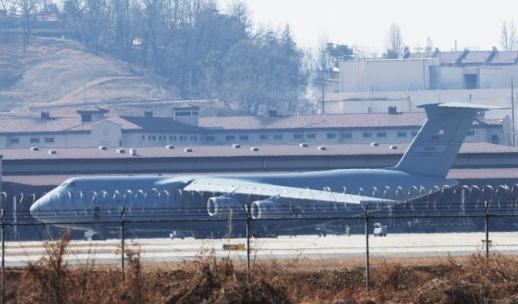 Chinese AI role in Iran war flags lessons for Seoul SEOUL, April 6 (AJP) — The war in the Gulf is underscoring a critical lesson for South Korea, which faces its own security risks on the Korean Peninsula: the growing role of Chinese AI and satellite technologies in tracking and exposing military movements. Chinese firms are increasingly using publicly available data — including commercial satellite imagery, Automatic Dependent Surveillance-Broadcast (ADS-B) and Automatic Identification System (AIS) signals — and applying AI to integrate and analyze them to track military activity. By combining multiple datasets, these systems can infer troop movements, carrier routes and force deployments without relying on classified intelligence. China-based geospatial analytics firm MizarVision has released analyses tracking U.S. carrier strike group movements and troop deployments in the Iran conflict, highlighting how AI is evolving beyond data processing into a tool capable of reconstructing military intelligence. China is also accelerating efforts to integrate domestically developed AI models into military systems, including autonomous drones, simulation platforms and battlefield automation. The U.S. House Select Committee on China has described such applications as an “imminent threat,” while U.S. Defense Secretary Pete Hegseth said Washington is aware of the developments and is taking steps to respond. While Seoul aims to rank among the world’s top three AI powers, analysts say it still trails the United States and China, with constraints in skilled labor and private investment limiting its ability to respond to AI-driven security risks. The implications extend beyond technology competition, pointing to structural shifts in the security environment. Lee Shin-wha, a professor of Political Science and Diplomacy at Korea University, said advances in AI and data are rapidly blurring the boundary between the economy and national security. “Security is no longer defined solely by military power,” she said. “It is evolving into a new domain that integrates data, AI and cyber capabilities, placing South Korea in a more exposed position between China and North Korea.” She warned that long-standing asymmetric capabilities developed by China and North Korea in cyber domains are now expanding through the use of commercial technologies and data. Lee also raised concerns over data security, saying potential data flows and leakages in key industries such as semiconductors and advanced manufacturing should be treated as national security issues, calling for stronger legal and institutional safeguards. As information approaches real-time availability, she said, warfare is likely to shift further into information and cognitive domains, warning that failure to secure information superiority could leave countries at a strategic disadvantage. Kang Jun-young, a professor at the Graduate School of International and Area Studies at Hankuk University of Foreign Studies, said the use of commercial resources for military purposes has already become unavoidable. He added that governments should strengthen legal frameworks and clearly define policy responses to address the issue at the national level. Lee also stressed the need for a broader security strategy that extends beyond traditional military power to include cyber and cognitive domains, requiring coordination across government and closer collaboration between technical experts and policymakers. She noted that key institutions such as the National Intelligence Service already treat cyber capabilities as a core pillar, but said further efforts are needed to strengthen expertise and institutional capacity. Lee also pointed to the growing role of asymmetric technologies such as drones, noting that lessons from the Russia–Ukraine war demonstrate how they can reshape the battlefield. She warned that advances in AI and data technologies have “opened a Pandora’s box,” calling for an integrated national strategy that aligns technological development with security policy. Concerns are also rising over how these trends could apply to the Korean Peninsula. Rep. Yu Yong-weon of the People Power Party said “China is helping Iran by analyzing commercial satellite data to disclose U.S. aircraft deployments and carrier movements,” warning that similar exposure could occur in Korea. He said key facilities — including Osan Air Base and Camp Humphreys in Pyeongtaek, as well as Gyeryongdae and Cheongju Air Base — could be vulnerable to detection through high-resolution satellite imagery and data analysis. Yu urged the government to treat the issue as an immediate security concern, calling for measures such as hardened aircraft shelters and stronger monitoring of Chinese commercial satellite activity. 2026-04-06 17:51:26
 -
 Korean and Japanese stocks higher on tech optimism SEOUL, April 06 (AJP) - Asian equities rose modestly Monday as investors weighed conflicting signals from the Middle East, with U.S. President Donald Trump setting an April 7 deadline ahead of potential strikes on Iranian power grids while OPEC+ pledged a limited output increase, as tech-heavy Korea and Japan outperformed ahead of strong semiconductor earnings. Japan’s Nikkei 225 gained 1.15 percent to 53,733.44, while Korea’s KOSPI advanced 1.4 percent to 5,452.80. Chinese markets were closed for the Qingming Festival holiday, and Hong Kong’s Hang Seng Index was shut for Easter. The secondary KOSDAQ initially rose 0.71 percent but later reversed course, slipping 0.29 percent to 1,060.71. Oil market concerns eased slightly after OPEC+ agreed to raise output by 206,000 barrels per day from May. The increase, however, represents less than 2 percent of the estimated disruption linked to the Strait of Hormuz, where more than 12 million barrels per day have been affected, according to the International Energy Agency. While the scale suggests limited immediate relief, the move signaled producers’ willingness to stabilize markets, lending modest support to risk sentiment. Semiconductor stocks led gains in Seoul. Samsung Electronics rose 3.49 percent to 192,700 won ahead of its preliminary first-quarter earnings release on Tuesday, with expectations that quarterly operating profit could approach or exceed last year’s full-year level of 43.6 trillion won amid the ongoing memory chip boom. Consensus estimates compiled by FnGuide put operating profit at around 38 trillion won. SK hynix also climbed 2.05 percent to 894,000 won, with Shinhan Securities forecasting first-quarter revenue at 50.4 trillion won, up 53.5 percent from the previous quarter, and operating profit at 35.5 trillion won, up 85.1 percent. Othe large-cap stocks were mixed. Hyundai Motor fell 0.32 percent, while Kia rose 1.00 percent and Hyundai Mobis edged down 0.26 percent. Defense and shipbuilding shares showed limited direction. Hanwha Aerospace slipped 0.55 percent, Hanwha Ocean fell 1.33 percent, and Hyundai Heavy Industries edged up 0.10 percent. Biopharmaceutical shares posted modest gains despite emerging trade risks. Samsung Biologics rose 0.39 percent and Celltrion gained 0.31 percent after the United States announced new tariff measures targeting patented pharmaceuticals under Section 232 of the Trade Expansion Act. The measures include tariffs of up to 100 percent on certain patented drugs and ingredients, with implementation scheduled from late July through September. However, products from countries with trade agreements — including Korea — will face a reduced tariff of around 15 percent. Generic drugs and biosimilars, along with related materials, are exempt from tariffs for one year, limiting the near-term impact. Financial stocks also edged higher. KB Financial Group rose 0.21 percent, Shinhan Financial Group gained 0.87 percent, and Samsung Life Insurance advanced 1.36 percent. On the KOSDAQ, Samchundang Pharm surged 5.40 percent after its largest shareholder withdrew a planned block deal, easing concerns over a potential large share sale and addressing doubts over the scale of its U.S. supply contract. The won remained relatively stable, with the dollar trading at 1,508.80 won, compared with 1,505.2 won at Friday’s close. 2026-04-06 11:04:26
 -
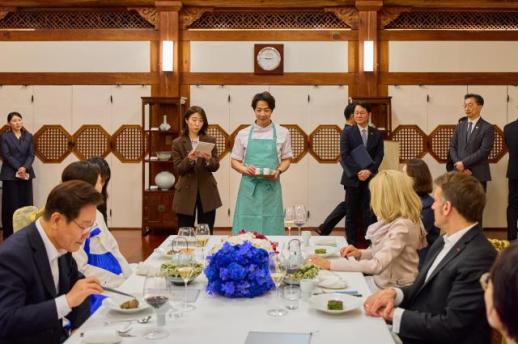 Korean-French fusion and K-pop flair greet Macron couple in Seoul SEOUL, April 03 (AJP) - Winning over a French palate is no small task — even more so when the guests are the president of France and his wife. South Korea answered with a carefully staged blend of Korean tradition and French culinary technique at a state dinner hosted by President Lee Jae Myung for President Emmanuel Macron and Brigitte Macron on Thursday. Chef Son Jong-won, known for “Culinary Class Wars 2,” was brought in for the occasion, crafting a menu that followed a classic French course structure while reinterpreting Korean ingredients and forms. The opening course reimagined Korea’s ssam (wrap) culture into refined, bite-sized dishes — including three-color wheat wraps, Jeju sweet shrimp wraps and East Sea scallops with truffle. The trio subtly echoed the French national motto of liberty, equality and fraternity. A grilled Jeju pomfret, made with premium deokja, was paired with kumquat-infused doenjang sauce, maitake mushrooms, clams and sansho pepper, offering a balance of depth and delicacy. Samgyetang followed, transformed into a French-style chicken roulade while retaining its identity as Korea’s signature ginseng chicken soup. The main course featured layered Korean beef sirloin in a mille-feuille style, served with abalone — a pairing that combined richness with restraint. Dessert came as a buckwheat crepe filled with sweet potato mousse, inspired by Korea’s roasted sweet potatoes, presented in a traditional mother-of-pearl lacquer box. It was accompanied by camellia mistletoe tea made from locally sourced ingredients. The meal was paired with two French wines and a Korean traditional liquor, underscoring the evening’s theme of balance between the two culinary traditions. Chef Son personally served the main course, explaining the concept behind the dishes. Attention to detail extended beyond the table. Guests were welcomed with Eiffel Tower-shaped bread displays, while macarons were prepared by Korea’s national team — winners of the Coupe du Monde de la Boulangerie. K-pop, naturally, had a part. Brigitte Macron received signed albums by BTS, Stray Kids and G-Dragon, along with traditional Korean ceramic tableware. The visit marks the 140th anniversary of diplomatic ties between South Korea and France. It is Macron’s first visit to Korea since taking office in 2017, and the first by a French president in 11 years. 2026-04-03 15:59:02
 -
 Asian stocks rebound as Hormuz passage hopes ease war fears SEOUL, April 3 (AJP) — Asian markets continued to seesaw with each development in the Iran war, but moved higher in early Friday trading on rising hopes for the reopening of the Strait of Hormuz. Japan’s Nikkei 225 rose 1.08 percent to 53,029.41, while China’s Shanghai Composite Index edged up 0.21 percent to 3,927.59. Hong Kong’s Hang Seng Index was closed from Friday through April 6 for the Easter holiday. In Seoul, the benchmark KOSPI rebounded at the open after a sharp sell-off in the previous session, when geopolitical fears triggered a sidecar trading curb. As of 10:51 a.m., the index rose 2.71 percent to 5,376.08, while the tech-heavy KOSDAQ gained 1.02 percent to 1,067.08. In currency markets, the Korean won strengthened slightly against the U.S. dollar, with the exchange rate falling to 1,509.40 won from 1,519.7 in the previous session. Sentiment was supported by reports that Tehran is drafting a post-war maritime protocol with Oman to guarantee safe navigation through the Strait of Hormuz, potentially including transit fees instead of a full blockade. Overnight on Wall Street, major indexes ended mixed after recovering from early losses tied to war concerns. The Dow Jones Industrial Average fell 0.13 percent, while the S&P 500 rose 0.11 percent and the Nasdaq Composite gained 0.18 percent. The Philadelphia Semiconductor Index and the Russell 2000 also posted modest gains. Oil prices remained volatile. U.S. West Texas Intermediate briefly surged toward $114 per barrel following remarks by U.S. President Donald Trump, before paring gains on Iran-Oman negotiation headlines, reflecting persistent uncertainty over supply risks. Brent crude futures for June delivery settled at $109.03 per barrel, up 7.8 percent from the previous session. All major stocks in Seoul traded higher in early deals, with gains seen across sectors. Tech and chipmakers led advances, with Samsung Electronics rising 3.64 percent to 184,900 won and SK Hynix jumping 5.60 percent to 876,500 won. Autos and mobility stocks also traded higher, with Hyundai Motor up 2.04 percent at 475,000 won and Kia gaining 1.93 percent to 153,500 won. Hyundai Mobis rose 0.64 percent to 392,000 won. Energy and industrials advanced, as LG Energy Solution added 0.62 percent to 407,000 won, Hanwha Aerospace rose 1.20 percent to 1,434,000 won, Doosan Enerbility gained 2.88 percent to 96,300 won, and HD Hyundai Heavy Industries climbed 4.21 percent to 457,500 won. HD Hyundai Electric rose 1.81 percent to 898,000 won, while Hanwha Ocean advanced 1.84 percent to 121,500 won. Among biopharmaceutical stocks, Samsung Biologics climbed 0.44 percent to 1,592,000 won and Celltrion gained 0.61 percent to 197,900 won. Financials edged higher, with KB Financial Group rising 0.96 percent to 147,900 won, Shinhan Financial gaining 1.96 percent to 93,500 won, Samsung Life climbing 3.69 percent to 225,000 won, and Mirae Asset Securities advancing 3.73 percent to 63,900 won. Other large caps also moved higher, with Samsung C&T rising 1.52 percent to 268,000 won and SK Square gaining 2.56 percent to 481,500 won. The combination of overnight gains in U.S. tech shares, a firmer won and stronger futures points to a short-term technical rebound in Korean equities, though lingering geopolitical risks ahead of the weekend are likely to cap further upside. 2026-04-03 11:18:26
 -
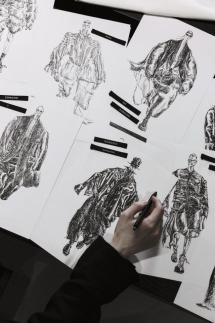 INTERVIEW: How Jay Songzio shaped BTS's return in armor and restraint SEOUL, April 3 (AJP) — More than 18 million viewers tuned in live. Add to that over 30 million registered fans worldwide, and the scale of the moment becomes clear. When the lights rose on March 21 over all seven members of BTS — together on one stage for the first time in nearly four years — it was less a comeback than a global event. The afterglow has yet to fade. The album ARIRANG has climbed the Billboard charts, and its music videos continue to ripple across platforms. Just as indelible, however, were the clothes: armor-like silhouettes that accentuated the forceful, experimental tracks like “Body to Body,” “Hooligan,” and “FYA,” with the backdrop of Korea’s ancient Gwanghwamun gateway. Behind that visual language stood Songzio, the high-end contemporary label founded in 1993 by designer Song Zio — and now steered by his son, Jay Songzio. “A look comes together when someone wears it,” said Jay Songzio, the brand’s creative director. “When different pieces come together on a person to create a striking look, that’s when I feel it works.” Based in Seoul and Paris, the label operates roughly 120 stores worldwide, with flagship boutiques in both cities and a new New York location underway. Under Jay Songzio, the house has expanded beyond menswear into womenswear, steadily widening its global footprint. A collaboration rooted in identity BTS had worn Songzio before, but the 2026 “ARIRANG” comeback at Gwanghwamun Square marked a deeper collaboration — one that began at the conceptual stage and evolved in tandem with the performance itself. At its core was a shared intent: to foreground Korean identity. Songzio’s longstanding philosophy — reinterpreting tradition through a modern lens — aligned naturally with that ambition. The collaboration, initiated by HYBE roughly two months before the performance, sought a distinctly Korean design partner to match both the symbolic weight of the “Arirang” concept and the historic venue. The choice carried its own message. BTS, long associated with European luxury houses, turned instead to a domestic designer for a landmark return — reinforcing the global positioning of Korean culture across both music and fashion. The result was “Lyrical Armor”: a concept merging the strength of traditional armor with a lyrical, almost poetic sensitivity. Drawing on early Joseon-era armor and hanbok worn by artists and performers, the collection envisioned what the brand described as “heroes of a new era who overcome turbulent history to create the future.” There was no fixed reference point. The designs emerged through an iterative back-and-forth process, evolving alongside the performance narrative. Each member was assigned a persona: RM as the hero, Jin the artist, Suga the architect, J-Hope a traditional performer, Jimin the poet, V a scholar-like figure, and Jungkook the pioneer. The group was not passive. Members contributed feedback on color, accessories and silhouette — details that shaped the final look. Netflix said the performance drew 18.4 million global viewers within 24 hours. An unconventional path to design Jay Songzio studied art history and mathematics before spending years in Paris, gradually growing into the brand. “Fashion became part of my life,” he told AJP. “It naturally blended into my worldview — art, fashion and everyday life don’t feel separate.” His references range widely: Renaissance and Romantic painting, classical literature, cinema. He sees fashion much like film — a multidisciplinary medium where narrative, character and visual language converge. At the center of his philosophy lies restraint. “Even as the world changes, maintaining your own identity is important,” he said, adding that patience is essential. This sensibility also defines how he diverges from his father. Where Song Zio pursued seasonal reinvention, Jay emphasizes repetition — building a recognizable identity over time. “Most people don’t follow shows every six months,” he said. “What matters is leaving a clear impression of what the brand represents.” Emotion, restraint and ‘avant-garde elegance’ For Songzio, beauty is not stylistic but authentic. “It’s about how convincingly you express your own language,” he said. “That’s what makes something beautiful.” Emotion, in his framework, is not excess but discipline. “Authenticity matters most. You should be able to explain your work naturally,” he said. He describes his creative state as deliberately restrained — a balance the brand calls “avant-garde elegance,” where experimental form meets composure rooted in Eastern sensibilities. That restraint is visible even in color. “It’s a color that suits restraint,” he said of black, describing it as a canvas rather than a direct emotional statement. His process favors purity — an idea he traces to Pablo Picasso’s notion that it takes a lifetime to draw like a child. “Purity means expressing your emotions and inspiration without over-filtering,” he said. It also informs his technique. He prioritizes hand sketching over digital tools. “Small differences can create huge results,” he said. “The tactile process of making clothes matters. Even a small detail — like the placement of a button — feels different when it’s drawn by hand.” For him, design is unfinished until worn. “A look comes together when someone wears it,” he repeated. “When different pieces come together on a person to create a striking look, that’s when I feel it works.” Reinterpreting ‘han’ on stage Nowhere did these ideas converge more clearly than in the BTS stage costumes. The project reimagined “han” — the idiosyncratic Korean sentiment often translated as heart-wrenching sorrow — as a forward-driving force. By merging armor’s rigidity with the fluidity of hanbok, the garments were built to transform through layering, asymmetry and detachable elements. The scale extended beyond BTS themselves to an 80-member performance team. “Han is deeply emotional, but it also drives you forward,” he said. “We wanted to reinterpret it as a forward-looking force.” He described it as a “common mentality” shaped by Korea’s turbulent history — not merely grief, but resilience and momentum. Designing for the stage Rather than impose a single narrative, Songzio approached the BTS collection through individual character arcs. He was particularly drawn to V’s “doryeong” concept — a young nobleman or scholar-like figure. “It combines strength and softness, which aligns well with our direction,” he said. The visual strategy leaned on stark contrast: black and white. White elements cut through the potential heaviness of armor-inspired forms, sharpening visibility on stage. Early designs also explored transformability. Layered garments were engineered to evolve during performance, though achieving this without appearing visually heavy proved a technical challenge. For Songzio, it was also an opportunity — long deferred — to push Korean elements more boldly into his work. The brand’s ambitions extend beyond the stage. A new flagship in New York is underway, conceived not merely as retail space but as a platform for Korean artists. Collaborations continue as well, including ongoing work with The Walt Disney Company, reinterpreting figures such as Mickey Mouse through Songzio’s distinct lens. At its core, the philosophy remains consistent: avant-garde yet elegant, structured yet fluid, rooted in identity yet open to reinterpretation. The Gwanghwamun stage offered a rare convergence — a moment when that philosophy reached a global audience. More than a costume project, the collaboration placed Songzio within a broader cultural narrative, one in which Korean design actively shapes how the country presents itself to the world. Between armor and hanbok, tradition and modernity, restraint and expression, Songzio continues to chart its course — on its own terms. 2026-04-03 10:33:36
 -
 Songzio Designs Armor-Inspired Looks for BTS’ ‘ARIRANG’ Comeback Stage BTS returned as a full seven-member group for the first time in four years with an outdoor comeback stage expected to draw 160,000 people and streamed live worldwide on Netflix. When the group appeared at 8 p.m. on March 21 with Gwanghwamun as the backdrop for the live “ARIRANG” performance, the armor-like costumes drew nearly as much attention as the music. Behind the scene watched around the world was South Korean fashion brand Songzio, which blended tradition and modernity, toughness and lyricism in the stage looks. “Clothes are completed when someone wears them. When one person wears different outfits and an impressive look is created, that’s when I feel it’s complete,” said Song Jae-woo, Songzio’s creative director, who built each BTS member’s comeback identity. Song combined the strength of traditional armor with the flexibility of hanbok, using zippers, draping and asymmetrical structures so silhouettes could shift onstage. He also produced costumes for an 80-member performance team, in addition to the seven members. The stage personas were set as RM as a “hero,” Jin an “artist,” Suga an “architect,” J-Hope a “sorikkun” (traditional singer), Jimin a “poet,” V a “doryeong” (young nobleman) and Jung Kook a “pioneer.” Netflix said the performance drew 18.4 million viewers. Song said he aimed to express “a hero of a new era” by combining early Joseon-era warrior armor with the sensibilities of an artist and a traditional singer. “Rather than simply reproducing Korean sentiment, I focused on translating it into futuristic energy,” he said. Founded in 1993, Songzio has presented avant-garde menswear based in Seoul and Paris and has recently introduced women’s collections. The collaboration went beyond making stage outfits, expanding to participation from the planning stage of “ARIRANG.” The concert’s push to foreground Korean elements aligned with the brand’s design philosophy of reinterpreting tradition in contemporary ways. The collection’s keyword was “Lyrical Armor,” described as “singing armor” — pairing the toughness of traditional armor with a lyrical sensibility to add emotion and narrative to images of protection and resistance. By combining early Joseon-era armor with hanbok associated with artists and traditional singers carrying the mood of sijo and folk songs, the project sought to portray “heroes of a new era who overcome turbulent history and build a new future.” Songzio said the project was an attempt to realize the brand’s aesthetics on one of the most widely viewed stages. Song, the son of founder-designer Songzio, now leads the brand. He studied mathematics and art history, then moved to Paris after Paris Fashion Week and grew with the label there. “Living with fashion, it naturally becomes part of life. It keeps worldview, art and fashion from being separated in everyday life,” he said. He said his designs draw on Renaissance and Romantic painting, classical literature and film. “Fashion is similar to film. It’s a genre that combines many fields, and it contains images, an era and stories of characters. I work by imagining each person’s narrative,” he said. He said he is currently reading Ovid’s “Metamorphoses” and works by Aeschylus. Another source of inspiration, he said, is “han,” a Korean concept of deep, complex feeling. “I think ‘han’ isn’t simple sadness. It’s emotionally rich, but it also contains the power to move forward,” he said. He said the project focused not on reproducing that emotion but on converting it into forward-looking energy. His operating philosophy, he said, is not to be impatient. “Even in a changing world, it’s important to keep what’s yours. If you do, I believe a good opportunity will come someday,” he said. Asked about differences from the founder, he pointed to repetition. “It’s important to repeatedly imprint the brand identity, because the public doesn’t watch shows every six months,” he said. He said “authenticity” is his key standard. “Whether it’s minimalism or avant-garde, what matters more than form is persuasiveness. When it’s expressed authentically, I find it beautiful,” he said. “You should be able to answer naturally when asked why you did it. In the end, what’s inside matters most.” He said he tries to restrain emotional swings and described his aim as “avant-garde elegance,” seeking elegance within the experimental — an elegance he said connects to Eastern sensibilities. He said his frequent use of black reflects a choice to maintain restraint rather than display a specific emotion. He also emphasized hand sketching over digital work. “A very subtle difference changes the result. The ‘hand feel’ in the process of making clothes matters,” he said. His designs begin by hand, he said, but are completed on the person wearing them. That approach, he said, naturally strengthened character-driven design. He said he was especially attached to V’s “doryeong” concept. “I focused on making each character’s narrative clearer,” he said. “It fits the brand’s direction well, with an image that has both strength and lyricism.” For the stage, the team maximized visual impact through a black-and-white contrast, a choice meant to keep structural designs from appearing too heavy. Early concepts included detachable layering so changes could appear within a single look. Song said the bolder incorporation of Korean elements helped relieve “a thirst I’d had to some extent,” and aligned closely with the “ARIRANG” concept. Songzio said its aesthetics are completed in the tension between the avant-garde and elegance — structured yet flexible, tough yet lyrical. The brand said it is preparing new expansions including a Disney collaboration, activewear, an “Oriental futurism” collection and a New York flagship. The New York store is being planned as an art space, beyond retail, in collaboration with Korean artists. Songzio framed its work as more than making clothes: patience over haste, restraint over excess, and identity over trends. At Gwanghwamun, the brand said, the outfits were not simply stage costumes, but a narrative completed on people. 2026-04-03 09:18:21
 -
 Seoul leads Asian selloff as Trump speech lacks Hormuz roadmap SEOUL, April 02 (AJP) -Asian stocks sank Thursday, with Seoul bearing the brunt after U.S. President Donald Trump’s primetime address on the Iran war failed to offer clarity on the endgame or a strategy to restore traffic through the Strait of Hormuz, a critical artery for global oil trade. Japan’s Nikkei 225 fell 2.38 percent to 52,463.27, reversing earlier gains as selling accelerated in the afternoon. Hong Kong’s Hang Seng Index dropped 0.83 percent to 25,085.28, while China’s Shanghai Composite declined 0.74 percent to 3,919.29. South Korea’s benchmark KOSPI tumbled 4.47 percent to 5,234.05, erasing most of the previous session’s rally. The tech-heavy KOSDAQ slid 5.36 percent to 1,056.34, with a sharp afternoon drop triggering a sell-side sidecar after simultaneous declines in KOSDAQ 150 futures and the underlying index at 2:34 p.m. Despite declaring Iran’s military capabilities “neutralized,” Trump warned of potential large-scale attacks within two to three weeks. Markets, which had priced in a signal toward de-escalation, instead reacted to renewed uncertainty and the absence of a clear reopening timeline for Hormuz by unloading risk assets. The reaction underscored Seoul’s vulnerability to energy shocks and external demand swings, given its heavy reliance on Middle East crude and export-driven tech sector. Tech shares led the decline. Samsung Electronics fell 5.91 percent to 178,400 won, while SK hynix plunged 7.05 percent to 830,000 won. Samsung Electronics preferred shares dropped 6.98 percent to 118,600 won. Automakers also retreated, with Hyundai Motor down 4.61 percent at 465,500 won, Kia falling 3.03 percent to 150,600 won, and Hyundai Mobis losing 4.77 percent to 389,500 won. Battery and energy stocks were mixed. LG Energy Solution edged down 0.61 percent to 404,500 won and SK Square dropped 6.29 percent to 469,500 won, while Samsung SDI rose 2.55 percent to 443,000 won. In biopharma, Samsung Biologics gained 0.83 percent to 1,585,000 won, while Celltrion fell 4.51 percent to 196,700 won. Defense and heavy industry names showed divergence. Hanwha Aerospace surged 6.30 percent to 1,417,000 won, supported by expectations of prolonged geopolitical tension, while HD Hyundai Heavy Industries fell 2.77 percent to 439,000 won, Hanwha Ocean dropped 6.06 percent to 119,300 won, and Doosan Enerbility declined 6.02 percent to 93,600 won. Financials were broadly weaker, with KB Financial down 1.21 percent to 146,500 won, Shinhan Financial slipping 1.71 percent to 91,700 won, Samsung Life falling 4.41 percent to 217,000 won, and Mirae Asset Securities plunging 7.51 percent to 61,600 won. The Korean won weakened sharply, with the dollar rising to 1,515.90 won from 1,501.3 won, reflecting heightened risk aversion and dollar demand tied to energy imports. 2026-04-02 17:02:31
 -
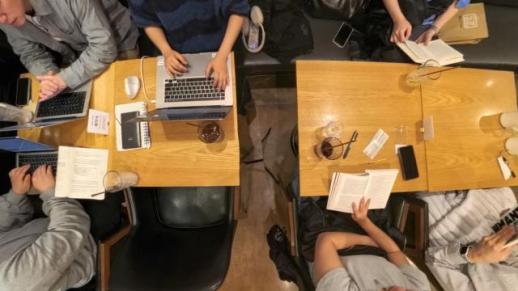 Alone but together: inside Korea's burgeoning "admin night" culture SEOUL, April 1 (AJP) — “Roasted sweet potato.” “Yes.” “Hamster Prince!” “Yes.” “Homebody.” “Yes.” It’s 8pm Tuesday and organizers in a café in the Gwanak district of southern Seoul have started a roll call of participants, using their nicknames. One by one, people share what they plan to accomplish that day. “I’ll finish the book I started last week.” “I’ll wrap up a blog post.” “I’ll revise my thesis.” Then comes the rule. “No talking for the next two hours,” says Choi Kyong-won, 28, one of the organizers. Within seconds, the room has fallen silent. The only sounds are keyboards tapping and pages turning. Some use laptops, others tablets. A few put on lectures, while others pull out journals. Choi says the habit of simply declaring a goal creates the pressure needed to follow through. “Once you say what you’ll do, you feel accountable. It helps you focus,” she says. The concept, also known in the United States and the United Kingdom as “Admin Night” and “Life Admin Party,” has gained traction as a practical way to tackle everyday responsibilities. Originally, the concept referred to setting aside time to complete routine administrative tasks, such as managing emails, organizing schedules, and handling paperwork. More recently, it has evolved into a broader format where participants work on self-development or personal projects. The approach is closely linked to the psychological concept of “body doubling,” a behavioral strategy in which the mere presence of others enhances focus and task execution. The subtle sense of being observed creates a form of accountability, discouraging distractions and encouraging sustained concentration. Kwak Keum-joo, a professor of psychology at Seoul National University, says this reflects a broader psychological mechanism similar to social facilitation, where the presence of others enhances performance, even among strangers. “Even unfamiliar others can motivate us,” she says. “It’s a form of voluntary solitude, being alone but not entirely disconnected.” For many in their 20s and 30s, Admin Night represents a shift in lifestyle. Instead of after-work social drinking, participants choose structured time to complete tasks. What began as early-morning “miracle routines” has extended into the evening, reflecting a broader “productive living” trend. At its core, the appeal lies in a balance: being together with other people but without interference. Participants in the café say they turned to Admin Night for its efficiency. Unlike traditional study groups or book clubs, the format minimizes personal interaction and is designed to keep individuals focused on their own tasks within a fixed time frame. The sessions operate on a nickname basis, with limited interaction aside from the brief sharing of goals at the start and equally brief post- mortem at the end. While some participants are regulars, the atmosphere remains centered on individual work rather than relationship-building. Co-organizer Cho Hyun-jun, 32, a YouTuber and freelancer, says the idea grew out of his own experience working alone after graduating during the pandemic. “Working independently, I often found myself in environments that weren’t conducive to focus,” he says. “I started gathering people in similar situations about four years ago, initially as a study group.” The shift to fully online interactions during COVID-19 reinforced the need for offline spaces, he says. Having spent most of his junior and senior years at university engaged in remote study, he says the lack of in-person interaction has shaped how his generation approaches relationships. Choi says young people tend to prefer clear boundaries between work and personal life. They favor purpose-driven interactions, and prioritizing individual goals over group dynamics. “In many groups, socializing can blur the original purpose,” she says. “As casual conversation grows, focus fades. We aimed to stay true to the group’s function.” The sessions are held on Tuesdays and Thursdays, and have run for more than eight rounds to date. Participants include office workers, students and freelancers in their 20s and 30s, with the community now exceeding 100 members. “A sense of being watched” drives productivity Participants often describe the experience in simple terms: a feeling of being “watched.” They bring tasks from travel planning and video editing to academic writing and job applications that share a common thread of work that is personal and has been out off for too long. Cho says the most notable moments are when participants stay fully focused throughout the session. “Seeing people remain focused for two straight hours without leaving their seats show we have tapped into a real need,” he says. “Not alone, but not about relationships” The appeal of the gathering extends beyond productivity to its emotional impact. “When I come here, I feel reassured seeing others living just as diligently,” says Cho, adding that many participants report a boost in self-esteem. Choi says many young people feel fatigued by relationships and instead find comfort in interactions that remain brief and low commitment. “There’s no need to impress anyone or expend emotional energy, which makes it less burdensome,” she says. Experts say the shift reflects broader changes in how younger generations approach relationships. Kwak says the tendency to avoid emotionally demanding interactions predates the pandemic but was significantly reinforced by it. “There was already a tendency to avoid emotionally draining relationships,” she says. “But COVID-19 strengthened it, as people had fewer chances to meet and became more used to limited, controlled interactions.” She notes that many students spent their university years almost entirely online, shaping a preference for more structured and less demanding forms of connection. At the same time, she says, young people are not rejecting relationships altogether, but redefining them. They seek connection, but without the burden of deep emotional investment. A global shift toward low-commitment connections The trend is not unique to South Korea. Similar formats, including coworking sessions, silent study clubs and “deep work” meetups, have been gaining traction in the United States and Europe, particularly as remote work reshapes daily routines and highlights the limits of working alone. According to the OECD, face-to-face interactions have declined since the COVID-19 pandemic, particularly among younger people. At the same time, the rise of remote work has intensified both flexibility and isolation. A 2025 report by Gallup found that about 25% of remote workers experience daily loneliness, significantly higher than those working on-site. This has coincided with rapid growth in shared work formats. Globally, there are now around 42,000 coworking spaces serving more than 5 million users, reflecting rising demand for flexible, low-commitment work environments. Digital alternatives have also emerged. Platforms such as Focusmate and Flow Club now offer “virtual body doubling,” where users keep their cameras on while working alongside others online to maintain focus. Global coworking reports suggest such spaces can help reduce isolation, providing a sense of community without requiring deep social ties. Kwak says that young South Koreans may be at the forefront of this shift. “They are practical and selective, maintaining boundaries while still seeking connection,” she says. “It’s a more efficient and, in many ways, a more mature and wise approach.” Two hours, loosely connected “It’s 9:50 p.m. The session is over. Let’s go around and share how it went.” As the alarm rings, participants briefly reflect. “I finished half the book I had planned to read over eight weeks,” says Lee Seung-hyun, 27. “Seeing others focus motivated me.” “I think I’ll keep going when I get home,” says Jang Hye-lee, 26. As the sharing ends, people quietly pack up their bags and step out into the night, heading off in different directions. 2026-04-01 17:55:04