
Journalist

Park Kyung-ah
kapark0508@economidaily.com
-
 Silver prices hit fresh all-time high SEOUL, December 29 (AJP) - Global silver prices rose above US$80 an ounce, reaching an all-time high. According to data released by Bloomberg on Monday, spot silver briefly jumped to $84 an ounce, setting a new record, and was trading around $80.1 in the afternoon. Silver, a precious metal with strong industrial demand in semiconductors and solar power, has surged this year as supply constraints coincided with expectations of U.S. interest rate cuts. Silver has surged about 180 percent so far this year and is expected to record its biggest annual gain since the 1979 Iranian Revolution, though some analysts warn of potential near-term corrections. Spot gold remained strong, trading around $4,500 an ounce after hitting a record high recently. Copper also extended gains, trading at $12,960 a ton on the London Metal Exchange and nearing $13,000. The industrial metal topped $12,000 a ton for the first time last week amid growing concerns that the U.S. could impose additional tariffs starting next year. 2025-12-29 16:01:23
 -
 Kimchi loses ground at home to cheaper Chinese imports, British daily says SEOUL, December 24 (AJP) - South Korea's staple dish, kimchi, is losing ground on price, fueling a surge in imports of Chinese-made kimchi, the Guardian reported earlier this week. The British daily on Monday said, "South Korea imports more kimchi than it exports, and the gap has widened as cheaper Chinese-made products take hold in the domestic market." Figures from the Korea Customs Service show this trend, with kimchi imports totaling US$159.46 million during the first 10 months of this year, up 3.1 percent from a year earlier. Exports also increased, but imports grew faster, resulting in a trade deficit of $22.07 million, more than 10 percent higher than last year. If this trend continues, total kimchi exports this year appear on track to set a new record for the second consecutive year. Chinese-made kimchi currently sells for about 1,700 Korean won (about $1.15) per kilogram, less than half the roughly 3,600 won charged for South Korean kimchi. The Guardian pointed out that many South Korean kimchi makers often have a few staff, making it difficult for them to compete with Chinese factories in mass production. One owner who has run a kimchi factory in Incheon for more than 30 years told the daily that many local restaurants "have abandoned his product in favor of lower-priced imports" from China. To address this, the government plans to step up monitoring of violations of country-of-origin labeling for imported kimchi, while also implementing support measures to help domestic kimchi makers. 2025-12-24 16:27:47
 -
 Constitutional Court upholds impeachment of police chief over martial law involvement SEOUL, December 18 (AJP) - The Constitutional Court of Korea on Thursday unanimously upheld the impeachment of police chief Cho Ji-ho over his involvement in disgraced former President Yoon Suk Yeol's martial law martial law debacle last year. With the verdict, the commissioner general of the National Police Agency was immediately stripped of his post. The decision comes nearly a year after the National Assembly voted to impeach him for allegedly blocking lawmakers from entering the National Assembly to oppose Yoon's Dec. 3 declaration of martial law. The court said Cho carried out "unconstitutional and illegal" orders from Yoon, violating the principles of democracy and the separation of powers. His grave violations were deemed sufficient grounds for dismissal. Cho was indicted in January this year while in custody on charges related to the debacle. He was later granted bail due to treatment for blood cancer and is now standing trial without detention. 2025-12-18 15:56:35
 -
 South Korea to end free disposable plastic cups under new anti-plastic plan SEOUL, December 17 (AJP) - South Korea plans to end the free distribution of disposable plastic cups at cafes and other food outlets, requiring consumers to pay a fee as part of a broader push to curb plastic waste, the government said on Wednesday. The Ministry of Environment said the measure would be included in a comprehensive anti-plastic strategy to be released next week. The policy will replace the existing disposable cup deposit system. Under the new plan, individual businesses will be allowed to set their own prices for disposable cups, but the government will establish a minimum fee reflecting production costs. The ministry said the price is expected to range between 100 and 200 won per cup. South Korea previously introduced a deposit system that refunded money to consumers who returned used cups, but the scheme was suspended after small business owners raised concerns over administrative burdens. The system was implemented only in limited areas, including Sejong and Jeju Island, drawing criticism over its effectiveness. Plastic straws will continue to be provided free of charge upon request, the ministry said, despite an existing ban on their use in stores. Enforcement of the ban has been postponed indefinitely under a grace period. A draft of the anti-plastic strategy is set to be released early next week, followed by a public hearing to gather feedback, the ministry said. 2025-12-17 15:27:27
 -
 Generative AI lowers barriers to cyberattacks as hacking cases jump in South Korea SEOUL, December 16 (AJP) - Hacking crimes in South Korea have surged alongside advances in artificial intelligence, as generative AI tools lower the barriers to launching cyberattacks, according to a report released by the Korean National Police University. The university’s Crime Policy Research Institute said 2,617 hacking cases were recorded between January and September this year, up 30.6 percent from the same period a year earlier. Of those cases, 551 were solved, lifting the arrest rate to 21 percent, an increase of 3 percentage points from last year. Despite the improvement, the institute said investigative outcomes remain constrained by the growing sophistication of hacking techniques. “While investigative capabilities have improved to some extent, the rapid evolution of hacking methods is making crime tracking and prevention increasingly difficult,” the institute said in the report. The expansion of online and cloud-based systems across the corporate and public sectors has widened the pool of potential targets, while hackers are increasingly using AI to accelerate and scale their attacks. Generative AI can automatically design attack scenarios based on learned hacking patterns, posing a qualitatively new threat. By reducing the need for advanced coding skills, the technology allows even relatively inexperienced users to carry out cyberattacks. Overall cybercrime also continued to rise, increasing 22.6 percent through September from a year earlier. Cases of cyber sexual violence climbed 22.4 percent over the same period, the institute said. * This article, published by Economic Daily, was translated by AI and edited by AJP. 2025-12-16 14:13:13
 -
 Vehicle-free weekends along Cheonggyecheon Stream to resume after six-month pause SEOUL, December 15 (AJP) - Vehicles will again be banned along the Cheonggyecheon Stream on weekends and public holidays starting on New Year's Day, the Seoul Metropolitan Government said on Monday. The traffic restriction, first implemented in 2005 to improve the walking environment and convenience for pedestrians, will resume after being suspended in July for about six months due to local merchants' complaints about reduced sales. A roughly 450-meter stretch will be closed to vehicles from 2 p.m. Saturday to 10 p.m. Sunday, and from 10 a.m. to 10 p.m. on public holidays. However, it remains uncertain whether the measure will be kept in place over the long term, as the city government will conduct further analysis after gathering expert opinions as well as feedback from citizens. * This article, published by Aju Business Daily, was translated by AI and edited by AJP. 2025-12-15 14:27:52
 -
 US House passes annual defense bill maintaining current USFK troop levels SEOUL, December 11 (AJP) - The U.S. House of Representatives on Wednesday passed a defense bill that includes a provision prohibiting a unilateral reduction of U.S. troops stationed in South Korea. The annual National Defense Authorization Act (NDAA), which is passed annually by Congress to set defense policy, allocate funding priorities, and provide guidance on key security matters, was approved in a decisive 312-112 vote. The bill, which allocates a record US$901 billion in defense and security for the upcoming fiscal year, will take effect from October this year through September next year, once President Donald Trump signs it following the Senate's approval. It includes a clause preventing the use of defense funds to reduce U.S. troop levels in South Korea below the current 28,500 U.S. Forces Korea (USFK) personnel without congressional approval. The bill also restricts the use of funds for any amendments to the agreed transfer of wartime operational control between the two allies, though changes or objections can be raised within 60 days, provided they align with the interests of both countries. * This article, published by Economic Daily, was translated by AI and edited by AJP. 2025-12-11 11:01:43
 -
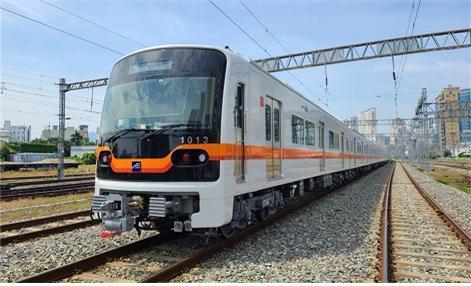 Busan subway to ban e-scooters, high-capacity lithium batteries over fire risk SEOUL, December 10 (AJP) - Busan plans to ban personal mobility devices and large-capacity backup batteries equipped with high-capacity lithium batteries from its subway system, citing growing fire safety concerns. The Busan Transportation Corporation said on Wednesday it is revising its passenger transport regulations to introduce the ban. The restrictions will apply to personal mobility devices that use lithium batteries and to backup batteries with capacities exceeding 160 watt-hours, roughly four times the size of typical portable power banks. Mobility aids used by people with disabilities will be exempt. The move follows a series of fires and smoke incidents linked to lithium batteries on urban rail systems. In September, the Ministry of Land, Infrastructure and Transport urged operators to minimize the carriage of devices with large lithium batteries, prompting other cities, including Seoul, to consider similar measures. Busan Transportation Corporation said internal reviews have been completed and that the rules could take effect as early as next month, subject to approval by its board and authorization by the city government. Once implemented, station staff will be authorized to prevent passengers from boarding or to ask them to disembark if they are found carrying restricted devices. * This article, published by Economic Daily, was translated by AI and edited by AJP. 2025-12-10 14:02:39
 -
 Rise in vaping keeps smoking rate from declining further, survey finds SEOUL, December 8 (AJP) - Although conventional cigarette smoking has decreasing, the rising use of e-cigarettes means that overall tobacco consumption is not declining as much as it could be, a new survey suggests. The Korea Disease Control and Prevention Agency surveyed 230,000 adults between May and July and released its findings on Monday. According to the survey, the smoking rate for traditional cigarettes dropped to 17.9 percent, down 1 percentage point from the previous year. But the proportion of e-cigarette smokers rose 0.6 percentage points to 9.3 percent, causing overall tobacco consumption to fall by only 0.5 percentage points to 22.1 percent. By region, North Chungcheong Province had the highest rate of tobacco smokers, while Sejong had the lowest. Alcohol consumption showed a slight decrease as well. The proportion of people who drink at least once a month dropped 1.2 percentage points to 57.1 percent. The proportion of high-risk drinkers, those who consume seven or more drinks (for men) or five or more (for women) at least twice per week also fell slightly to 12 percent. Obesity rates, however, continue to rise. The proportion of people with a BMI of 25 or higher increased 1 percentage point to 35.4 percent. Despite more people trying to lose or maintain weight, those efforts have failed to curb rising obesity rates. Walking and moderate physical activity have seen a slight decline, with walking at 49.2 percent and moderate activity at 26 percent, suggesting a drop in daily activity levels. More people were diagnosed with chronic diseases such as hypertension (21.2 percent) and diabetes (9.6 percent), although treatment rates have remained stable at around 93 percent. More than half of respondents were aware of the symptoms of heart attacks and the signs of strokes, though the agency stressed the need for enhanced public education to further boost awareness. Those suffering from depression dropped to 5.9 percent, a slight decrease from last year, while stress levels saw a slight increase to 23.9 percent. * This article, published by Economic Daily, was translated by AI and edited by AJP. 2025-12-08 17:20:31
 -
 Korea to up crackdown on drug trafficking on record smuggling SEOUL, December 05 (AJP) - South Korean authorities will up border control and crack down on drug trafficking after seizing a record 3,000 kilograms of illicit substances this year, mostly brought in through smuggling channels. The Korea Customs Service (KCS) said Friday it confiscated 2,913 kilograms of illegal drugs between January and October, nearly quadruple the volume seized during the same period last year. The surge underscores what officials describe as the sharpest escalation in smuggling attempts in recent years. Air travelers accounted for the most cases, with 505 detected attempts, while substantial quantities were also intercepted in express cargo shipments and international mail. Southeast Asia remained the dominant source of inflows, with Cambodia and Laos emerging as fast-growing hubs for trafficking routes targeting Korea. “Because most illegal drugs distributed domestically originate from overseas smuggling, we will move quickly to strengthen pre-emptive border-control measures,” KCS Commissioner Lee Myeong-ku said. To bolster enforcement, the KCS will launch joint operations with 10 countries where trafficking activity has been most pronounced. Korea’s existing cooperation with Thailand, Vietnam, Malaysia, the United States and the Netherlands will now expand to include Cambodia, Laos, Canada, Germany and France. Under the plan, participating nations will station customs officers in each other’s airports and border offices to jointly screen high-risk travelers and cargo. The agency said it has also agreed with Cambodia to conduct coordinated anti-smuggling operations following an emergency meeting between the two sides, amid mounting concerns over organized criminal networks operating across the region. Korea recently imposed a travel ban and raised advisories for several Cambodian cities after a spike in online scam syndicates and drug-related crimes involving Korean nationals. *This article, published by Economic Daily, was translated by AI and edited by AJP. 2025-12-05 14:35:47