
Journalist

AJP
khs@ajunews.com
-
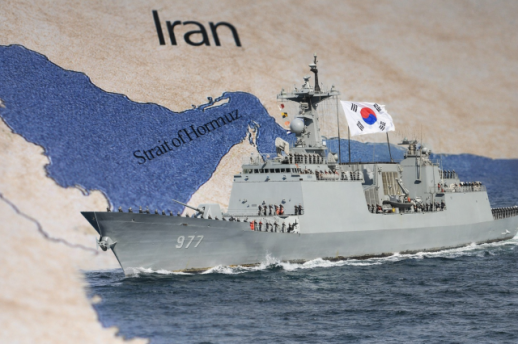 GULF CRISIS: Korean naval ability to answer Trump's Hormuz call in doubt SEOUL, March 17 (AJP) - U.S. President Donald Trump made pretty much clear that Washington expects South Korea to join escort operations in the Strait of Hormuz, but defense experts doubt the country's navy capabilities can meet the call. Iran’s Islamic Revolutionary Guard Corps has attacked at least 10 vessels, including tankers and tugboats, using missiles and surface drones, and threats to strike any attempting to pass the waterway off Iran coastline. A strategic chokepoint between Iran to the north and Oman to the south, the Strait of Hormuz is just 30 kilometers at its narrowest point. Much of the cargo that passes through it is bound for South Korea, Japan, China and India, which together account for roughly 70 percent of global output. With Tehran effectively treating the closure of the strait as a fait accompli, oil-producing nations and the global shipping industry have begun suspending operations or seeking alternative routes. The main threat to tankers and escorting warships comes from land-based anti-ship missiles and suicide drones, experts say. While much of Iran’s conventional naval and air assets, along with some missile bases, have reportedly been put out of action by successive U.S. and Israeli strikes, there is a broad consensus that not all launch sites have been eliminated. At sea, Iran’s forces are limited to small boats and unmanned surface vessels. Even if these assets attempt to lay mines or carry out surprise attacks, modern naval forces are capable of detecting and neutralizing such threats, experts say. But without neutralizing Iran’s dispersed coastal missile batteries and long-range drone platforms, simply reinforcing naval escort operations would leave U.S. and allied ships operating for weeks or even months under persistent aerial threats. “As long as land-based threats remain, maritime escort operations are structurally limited to a temporary fix, and inherently dangerous,” one analyst said. A South Korean naval officer, speaking on terms of anonymity, explained that fully ensuring the safety of tankers would require deployment of ground forces to secure Iranian-held islands near the strait and installation of air defense systems to block missile and drone launches. It would also require completely neutralizing land-based launch sites. “Even with such measures, missiles launched from deeper inland would remain a threat, meaning multiple brigades, or even division-level ground forces, along with layered air defense systems would be necessary,” he said. “Without addressing land-based threats, sending more escort ships is less about managing risk and more about dispersing it,” he said. Should Seoul respond to Trump’s request, the most readily available option is the Cheonghae Unit, currently operating in the Gulf of Aden on anti-piracy and escort missions. While the unit’s 4,000-ton-class destroyers are equipped with close-in weapon systems, surface-to-air missiles, and torpedoes, experts agree that they are not designed for the kind of high-intensity threat environment currently seen in the Strait of Hormuz. “In reality, the Cheonghae Unit can engage only a limited number of targets at once,” said Jeong Kyung-woon, a researcher at the Korea Association of Military Studies. “Given radar and system constraints, the unit lacks the means to effectively counter multiple incoming drones or missiles.” However, this picture might change if South Korea operates under U.S. command and control, being integrated into American intelligence networks and missile defense systems. Paik Seung-hoon, a researcher at the Middle East Institute of Hankuk University of Foreign Studies, said that in such a case, participation with just two or three ships could be feasible as part of a combined task force. “However, there’s a fundamental issue,” Paik said. “If South Korea operates under U.S. wartime operational control, it would be seen as endorsing and participating in the conflict against Iran.” “If, on the other hand, Seoul wants to carry out an independent mission, as it did in 2020, when it retained wartime operational control and focused on protecting Korean merchant vessels, it would need to deploy a separate fleet of around 10 ships, including Aegis destroyers, submarines, and mine countermeasure vessels,” he said. Sources say that, within military circles, there is a growing consensus that if South Korea is to deploy naval assets to the Strait of Hormuz, it would need to form a new task group centered on Aegis destroyers. Such a force would require not only close-in defense systems but also advanced air and missile defense capabilities to intercept Iranian threats, along with logistics and maintenance support for sustained operations far from home waters. Operational difficulties extend to sustainment. The naval officer said it takes three to four weeks for a 7,000-ton-class Aegis destroyer to reach the Strait of Hormuz from South Korea. Once deployed, ships typically require resupply every 15 days for fuel, food, and ammunition. “In near-war conditions, returning to port for resupply is virtually impossible,” he noted. “A fully self-sustaining expeditionary task group, with large supply ships enabling continuous operations at sea, would be necessary.” Caught between alliance pressure and operational limitations, Seoul faces a difficult dilemma: given the close defense relations, it cannot easily ignore Washington’s request, yet it also cannot readily commit to a mission that may exceed its capabilities. “The U.S. ultimately wants to shift some of the burden, not just financially, but in terms of responsibility,” Paik said. “We need to watch how the situation unfolds, but if deployment remains a possibility, it would be better to prepare accordingly rather than avoid it outright.” “At the same time, South Korea must clearly define the nature of its mission, including command structure and assigned roles, before making any decision,” he said. 2026-03-17 16:42:52
 -
 GULF CRISIS: Trump's coalition push puts Korea's Cheonghae Unit in spotlight SEOUL, March 16 (AJP) - U.S. President Donald Trump’s call for other countries to help escort commercial shipping through the Strait of Hormuz has drawn cautious and broadly noncommittal responses from allies, with South Korea’s Cheonghae Unit emerging as the most likely naval asset should Seoul decide to participate. South Korea and other countries asked by Washington to help protect merchant vessels from Iranian attacks in the strategic waterway are quietly weighing the request, while officials in Seoul stress that no formal decision has been made. The Strait of Hormuz is one of the world’s most critical maritime chokepoints, carrying roughly 20 percent of global crude oil shipments. At its narrowest point, the channel is about 39 kilometers wide. As the conflict between the United States and Iran has intensified, Iran has begun laying naval mines in the waterway after U.S. strikes degraded much of its conventional military capability, effectively halting civilian shipping. Trump has argued that countries heavily dependent on Middle Eastern energy should take responsibility for securing the route. “We have already destroyed 100 percent of Iran’s military capability, but it’s easy for them to send a drone or two, drop a mine, or deliver a close-range missile somewhere along this waterway,” Trump said, emphasizing the need for naval escort operations. He claimed the United States itself does not rely heavily on the route for energy supplies and urged countries that do to help protect it, with his tone shifting within a day from “hopefully” urging allies to participate to saying “I’m demanding” that they join and adding “we will remember” if they do. Governments identified as potential members of an escort coalition are weighing their responses as pressure from Washington grows more direct. For South Korea, the naval unit most suited to such a role is the Cheonghae Unit, an anti-piracy force deployed in the Gulf of Aden near Somalia. Formed in March 2009, the unit is the South Korean Navy’s first permanently deployed overseas combat unit. Its name comes from Cheonghae-jin, the maritime base established by the Unified Silla naval commander Jang Bogo. Under United Nations Security Council resolutions addressing piracy, the unit’s mission has been to escort Korean and foreign vessels in waters off Somalia and protect Korean nationals in the region. Since its establishment, the Cheonghae Unit has maintained a continuous presence in the Gulf of Aden on a rotational basis. Each deployment typically includes a 4,400-ton destroyer, a maritime operations helicopter and a 30-member UDT/SEAL boarding team, with roughly 300 personnel in total. The destroyer is equipped with anti-ship missiles, a 127-millimeter main gun, surface-to-air missiles, anti-submarine torpedoes and a close-in weapon system. Through operations such as the rescue of hijacked vessels in the “Dawn of the Gulf of Aden” mission and the escort of hundreds of merchant ships, the unit has become a symbol of the Korean Navy’s blue-water operations. The Cheonghae Unit operates under the direct control of South Korea’s Joint Chiefs of Staff, allowing the navy to maintain a permanent operational presence in distant waters. Its deployment is based on an overseas troop dispatch mandate that requires annual approval from the National Assembly. The mandate designates the Gulf of Aden off Somalia as the primary area of operations and defines the mission as counter-piracy, escort duties and protection of Korean nationals. However, it also includes a clause allowing operations in “other waters designated for the protection of our nationals in emergency situations.” In 2020, when tensions between the United States and Iran escalated after Washington killed Iranian commander Qassem Soleimani, the South Korean government used this clause to expand the Cheonghae Unit’s operational area to waters near the Strait of Hormuz without separate parliamentary approval. At the time, Seoul avoided formally joining the U.S.-led International Maritime Security Construct and instead carried out an independent mission focused on protecting Korean vessels. Defense experts say any redeployment to Hormuz now would likely require renewed review by the National Assembly because the situation has evolved into an active armed conflict. Six years ago the unit operated largely on its own in a limited mission. Any new deployment would take place during an ongoing war and potentially as part of a multinational naval operation. Military analysts also note that the operational environment in the Strait of Hormuz differs significantly from the anti-piracy missions the Cheonghae Unit typically performs. “The biggest threats to tankers in the Strait of Hormuz are Iran’s land-based anti-ship missiles and drones,” said Jeong Kyung-woon, a research fellow at the Korea Association of Military Studies. “If those land-based threats are not neutralized, the risks will remain even if naval forces escort tankers,” he said. Iran’s remaining naval capabilities include small attack craft and mine-laying operations, while missiles and drones launched from coastal areas and nearby islands pose additional threats. International reaction to Trump’s proposal so far has been negative. China’s state-run Global Times criticized the idea, saying it resembled “someone who set the fire now asking the whole world to help put it out.” Japan has also signaled caution. Prime Minister Sanae Takaichi said on Monday that Tokyo is considering possible responses within the limits of domestic law. Its defense minister said the government wasn't considering the option of sending its self defense forces to the Middle East. Australia's transport minister also made a similar remark. The South Korean Navy maintained a reserved stance. “The U.S. president has made certain remarks, but those need to be translated into concrete requests before we can offer any real opinion,” a Navy official in Seoul said. “We need to see exactly what is being asked before discussing whether it is feasible.” 2026-03-16 16:21:39
 -
 Hyundai halts sales of some Palisade models after U.S. fatal accident, plans recall SEOUL, March 14 (AJP) - Hyundai Motor has suspended sales of certain versions of its large sport utility vehicle (SUV), the All-New Palisade, after identifying a potential safety issue. Hyundai said Saturday that the power-folding function of the second- and third-row seats may fail to detect contact with occupants or objects under certain conditions, prompting the company to temporarily halt sales of vehicles equipped with the feature. According to Reuters, a two-year-old girl died in Ohio on March 7 in an incident related to the Palisade’s power seat mechanism. Hyundai said it plans to resume sales after improving the vehicle’s anti-pinch safety function. For vehicles already sold, the automaker plans to carry out a voluntary recall and will report the measure next week to South Korea’s Ministry of Land, Infrastructure and Transport and the U.S. National Highway Traffic Safety Administration (NHTSA). The company said it will strengthen overall system safety by increasing the sensitivity of the occupant and object detection system and limiting the power-folding seat function to situations when the tailgate is open. The exact number of vehicles subject to recall is still being calculated, but the measure is expected to cover models produced through March 11 this year. The affected vehicles are estimated at 57,474 units in South Korea and 74,965 units in North America. The All-New Palisade exported about 100,000 units worldwide last year, while 59,506 units were sold in South Korea, according to the company. Hyundai apologized for the inconvenience caused to customers, saying it will continue to prioritize safety and thoroughly review all related issues to maintain customer trust. 2026-03-14 15:42:22
 -
 Ryu Hyun-jin retires from national team after WBC as Korea loses to Dominican Republic SEOUL, March 14 (AJP) - South Korean ace Ryu Hyun-jin will retire from international baseball after the 2026 World Baseball Classic (WBC), bringing an end to a national team career that spanned two decades. Ryu started for South Korea in the WBC quarterfinal against the Dominican Republic at loanDepot Park in Miami, Florida, on Friday, pitching 1⅔ innings. He threw 40 pitches and allowed three hits and two walks while striking out one batter and giving up three runs. South Korea was overpowered by the Dominican lineup and fell 10–0 in a seven-inning mercy-rule defeat. “It’s disappointing, very disappointing,” Ryu said after the game. “I should have given our fielders more time to settle in, but I couldn’t do that.” He added that the experience would still benefit younger players on the team. “It will be a valuable lesson for the younger players who had the chance to compete on a big stage,” he said. Born in 1987, Ryu treated the tournament as his final appearance for the national team. He was first selected for the national squad shortly after making his professional debut in 2006 and went on to become one of the central figures of South Korean baseball in international competitions. He represented South Korea in major tournaments including the 2006 Doha Asian Games, the 2008 Beijing Olympics and the 2009 WBC. At the Beijing Olympics, Ryu delivered a memorable performance by throwing a 126-pitch shutout against Canada, helping South Korea secure the gold medal. In the 2009 WBC, he contributed as both a starter and reliever as South Korea finished runner-up. After moving to Major League Baseball in 2013, injuries including elbow and shoulder surgeries limited his participation in international events. However, at the request of the national team, he returned to wear the Taegeuk mark again for the first time in 16 years and made his WBC comeback after 17 years. Ryu had prepared the game against the Dominican Republic as his final appearance for the national team. “I hope today becomes a starting point for younger players to step up and lead the team going forward,” he said. 2026-03-14 15:06:44
 -
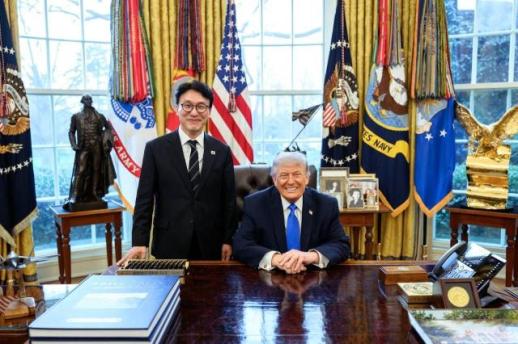 PM Kim says Trump asked if Kim Jong-un wants talks with U.S. SEOUL, March 14 (AJP) - South Korean Prime Minister Kim Min-seok said Saturday that U.S. President Donald Trump asked him whether North Korean leader Kim Jong-un is interested in resuming dialogue with the United States. Kim said he spoke with Trump for about 20 minutes on Friday about North Korea and other issues during a meeting at the White House. He added that much of the conversation involved Trump asking for his views on the North Korean issue. According to Kim, he told Trump that South Korean President Lee Jae Myung often describes Trump as “the only leader capable of resolving the Korean Peninsula issue.” Kim said Trump showed strong interest in North Korea during the conversation and even asked an aide to bring a photo taken with Kim Jong-un at Panmunjom while discussing the matter. “President Trump said he maintains a good relationship with Chairman Kim and asked whether Kim wants to engage in talks with the United States or with him personally,” Kim told reporters. Kim said he responded by noting that Trump is the only Western leader who has held direct talks with the North Korean leader and that he believes Trump has unique capabilities as a peacemaker on the Korean Peninsula. “He appeared to find the remarks meaningful and reacted with satisfaction,” Kim said, without disclosing further details about the advice he gave the U.S. president. Kim also said he asked Trump whether he could submit a more detailed written memo in English outlining his views before leaving the United States, adding that the U.S. president agreed. Kim said Trump indicated that a potential meeting with the North Korean leader could take place during or after his upcoming visit to China, though the timing was not the most important factor as long as dialogue and contact with Pyongyang resume. Trump is scheduled to visit China from March 31 to April 2 for talks with Chinese President Xi Jinping, raising speculation that the trip could open a path toward renewed U.S.-North Korea diplomacy. Earlier in the visit, Kim met U.S. Vice President JD Vance and U.S. Trade Representative Jamieson Greer to discuss bilateral issues, including the recently passed Special Act on Investment in the United States, which aims to support expanded South Korean investment in the U.S. and strengthen industrial cooperation between the two allies. 2026-03-14 14:30:16
 -
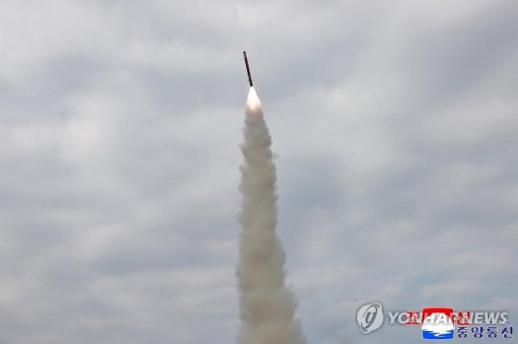 North Korea fires over 10 ballistic missiles despite Trump's outreach SEOUL, March 14 (AJP) - North Korea launched more than 10 ballistic missiles toward the East Sea on Saturday, South Korea’s military said. “Our military detected more than 10 unidentified ballistic missiles launched toward the East Sea from the Sunan area near Pyongyang today at around 1:20 p.m.,” the JCS said in a statement. The military added that it has strengthened surveillance and vigilance in preparation for additional launches while closely sharing related information with the United States and Japan. Pyongyang previously fired a ballistic missile toward the East Sea on Jan. 27. If the latest launch is confirmed to be a ballistic missile, it would mark the country’s first such launch in 47 days and its third this year. Launching more than 10 missiles at once is unusual and is widely seen as a show of force. The launch came a day after U.S. President Donald Trump signaled openness to dialogue with North Korean leader Kim Jong-un. During a meeting with South Korean Prime Minister Kim Min-seok at the White House on Friday, Trump reportedly said he maintains “a good relationship” with Kim and asked whether the North Korean leader still wants to engage in talks with the United States and with him personally. Since returning to the White House in January last year, Trump has repeatedly expressed willingness to resume dialogue with Pyongyang. However, North Korea appeared to respond to Trump’s overture with a show of force just a day later. The launch is also seen as a protest against the ongoing South Korea-U.S. joint military exercise Freedom Shield (FS), which began on March 9 and runs through March 19. The allies have reduced the number of field training exercises (FTX) to less than half compared with last year during this year’s FS drills, a theater-level combined exercise designed to prepare for potential contingencies on the Korean Peninsula. Despite the reduction, North Korea has continued to denounce the drills as a “rehearsal for invasion.” Kim Yo-jong, vice department director of the ruling Workers’ Party of Korea, issued a statement a day after the drills began, warning that the hostile forces’ military demonstrations near what she called the country’s sovereign security zone could lead to “horrific consequences.” 2026-03-14 14:16:47
 -
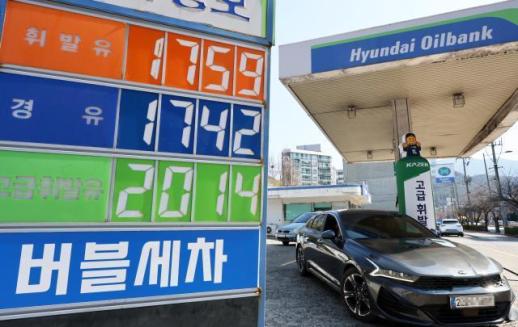 Fuel prices decline a day after government price cap begins SEOUL, March 14 (AJP) - Average fuel prices at gas stations across South Korea continued to fall on Saturday, a day after the government’s oil price cap took effect. According to the Korea National Oil Corp.’s price information system Opinet, the nationwide average price of gasoline stood at 1,851.9 won ($1.24) per liter as of 9 a.m., down 12.2 won from the previous day. Diesel prices fell more sharply to 1,856.1 won per liter, down 16.6 won. Diesel remained slightly more expensive than gasoline, though the price gap narrowed significantly. Domestic fuel prices have been declining since peaking on March 10 following the outbreak of the U.S.-Iran war, according to industry data. Dubai crude, the benchmark for imported oil in South Korea, rose by $34.6 from the previous week to $123.5 per barrel. International gasoline prices climbed $25.3 to $126.3, while international automotive diesel rose $37.5 to $176.5. An official from the refining industry said that changes in global oil prices typically take about two to three weeks to be reflected at domestic gas stations, but the recent introduction of the price cap has made it difficult to predict short-term price movements. Industry sources added that uncertainty among gas station operators is growing as most refiners have yet to announce whether settlement prices will be applied retroactively to Friday, the day the price cap took effect. 2026-03-14 14:10:08
 -
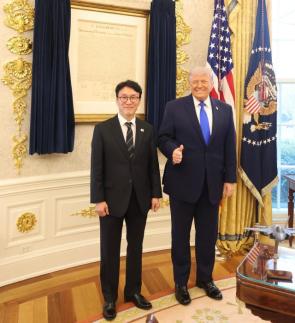 PM Kim holds surprise meeting with Trump at White House SEOUL, March 14 (AJP) - South Korean Prime Minister Kim Min-seok held a brief, surprise meeting with U.S. President Donald Trump at the White House on Friday, the Prime Minister’s Office said. Kim, who is visiting Washington, met Trump briefly and exchanged remarks after holding talks the previous day with U.S. Vice President JD Vance, according to the office. Details of the conversation were not disclosed. Observers believe the two may have discussed pending Korea-U.S. issues, including South Korea’s Special Act on Investment in the United States, which was passed by the National Assembly a day earlier. Trump is scheduled to visit China from March 31 to April 2 for talks with Chinese President Xi Jinping, raising the possibility that Kim and Trump also exchanged views on North Korea-related matters, officials said. 2026-03-14 09:59:39
 -
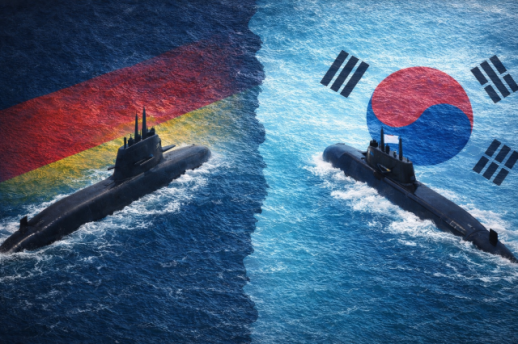 Canada unlikely to split $40B submarine contract between Korea and Germany SEOUL, March 12 (AJP) - Canada is unlikely to divide its planned multibillion-dollar submarine procurement between South Korea and Germany despite speculation in local media, as analysts say a split contract would drive up costs and complicate naval operations. The idea of awarding portions of the project to both bidders — sometimes described as a “6+6” split procurement — has circulated in Canadian media as Ottawa weighs final proposals from a South Korean consortium and a rival bid led by Germany and Norway. But South Korean officials say the option is not under consideration. Kim Jung-kwan, South Korea’s minister of trade, industry and resources, told lawmakers at a parliamentary committee meeting Monday that Canadian officials had made it clear there were no plans to divide the order between multiple suppliers. Analysts broadly agree. One major obstacle is the program’s financial structure. The Canadian Patrol Submarine Project (CPSP) — valued at roughly $40 billion and aimed at replacing Canada’s aging Victoria-class submarine fleet — was designed on the assumption that a single supplier would deliver the entire fleet of up to 12 submarines. Splitting the order between two countries would require separate contracts, logistics networks and maintenance systems, likely pushing the overall cost significantly higher. Given the political sensitivity surrounding defense spending in Canada, analysts say Ottawa would face difficulty justifying such increases. Operational considerations pose another hurdle. Running two different submarine classes would complicate maintenance, repair and overhaul (MRO) operations as well as day-to-day fleet management. Separate supply chains, spare-parts inventories, training programs and shore infrastructure would be required for each platform, eroding economies of scale and raising life-cycle costs. The debate over a possible split comes as the CPSP reaches a key stage. Final bids for the project were submitted on March 2, narrowing the competition to two contenders: a South Korean consortium and Germany’s Thyssenkrupp Marine Systems (TKMS). The Korean bid is led by Hanwha Ocean, with participation from HD Hyundai Heavy Industries. A Hyundai Heavy Industries official said Hanwha Ocean handled the formal submission of the proposal documents. Ottawa is currently reviewing the bids, with a preferred bidder expected to be selected between May and June, followed by contract negotiations. Canadian officials have emphasized that the project is intended not merely as a procurement deal but as a long-term defense-industrial partnership. According to the Canadian government’s project guidelines, bidders must propose not only submarine construction but also long-term in-service support, supply-chain development and industrial partnerships with Canadian companies. Both competitors have therefore focused heavily on local industrial cooperation. TKMS has strengthened ties with Canadian firms in recent months. According to naval industry outlet Naval Today, the German shipbuilder recently signed a partnership with Canadian simulation and training company CAE to develop submarine crew training and maintenance support systems. The company is also working with Canadian aerospace manufacturer Magellan Aerospace to explore cooperation in heavy-torpedo production and maintenance, while proposing next-generation digital operational technologies through partnerships with artificial-intelligence firms. The Korean consortium has also broadened its industrial partnership proposals. Hanwha Ocean has reportedly outlined cooperation with Canadian companies in areas including steel, satellite communications, artificial intelligence and battery technology as part of its supply-chain development plan. Hyundai Motor Group has suggested potential collaboration within Canada’s hydrogen industry ecosystem. Industry observers say long-term sustainment capabilities will likely prove decisive in the competition. “Maintenance costs are just as important as the initial acquisition price for submarines,” one industry source said. “The ability to secure personnel and infrastructure for long-term operations and maintenance will be a crucial evaluation factor.” Some analysts say recent developments may slightly improve South Korea’s chances. Volkswagen Group, previously seen as a potential industrial partner supporting the German bid, recently said it would not participate in the Canadian submarine program. According to local media reports, Volkswagen CEO Oliver Blume said Tuesday that the company would not take part in the procurement project, effectively declining Ottawa’s request for additional industrial investment linked to the German proposal. The move, analysts say, could modestly strengthen the South Korean consortium’s position as Ottawa weighs the competing bids. 2026-03-12 17:11:46
 -
 Iran's 'Drones vs Patriots': If U.S. forces shift, who guards South Korea's skies? SEOUL, March 11 (AJP) - As U.S. air-defense assets are increasingly drawn into the widening war with Iran, South Korea faces an uncomfortable question: how much of its own air and missile defense can it sustain without American cover. Seoul has quietly acknowledged it cannot prevent U.S. tactical assets from being redeployed if Washington needs them elsewhere. The concern is not abstract. North Korea’s missile and drone tactics bear striking similarities to those now being tested in the Middle East. Iran’s campaign illustrates the emerging battlefield logic. Tehran is firing waves of cheap suicide drones and ballistic missiles that cost tens of thousands of dollars each. The United States and Israel are shooting them down with Patriot and THAAD interceptors costing hundreds of thousands — sometimes millions — per shot. It is a classic “cost-mass” war: low-cost weapons forcing defenders to expend far more expensive interceptors. Every military now faces the same question — how long it can afford to sustain that exchange. The current phase of the conflict began in late February when the United States and Israel launched coordinated strikes on Iranian nuclear facilities, missile bases and Islamic Revolutionary Guard Corps command centers. Iran responded with large-scale retaliatory barrages — hundreds of ballistic and sea-launched missiles and roughly 2,000 drones targeting U.S. bases, Israel and energy infrastructure across the Gulf. Although the tempo of launches eased in March, the pattern has settled into a grinding contest of attrition. At the center of Iran’s strategy is the Shahed-136 loitering munition, a relatively simple drone costing between $20,000 and $50,000 that can be launched in swarms to overwhelm air defenses. These drones are paired with Fateh and Shahab ballistic missiles and low-flying cruise missiles designed to saturate and probe Western missile shields. Opposing them is a multilayered U.S.-led defense network built around Patriot PAC-3 and THAAD batteries, backed by fighter aircraft and long-range bombers striking launch sites and command nodes. Interception rates in some sectors have exceeded 90 percent — but the exchange is costly. For South Korea, the battlefield dynamics unfolding in the Middle East mirror a scenario military planners have long warned about. North Korea has repeatedly rehearsed what analysts call “compound saturation attacks” — launching ballistic missiles, cruise missiles and drones simultaneously to overwhelm defenses. Pyongyang has also unveiled short-range missiles believed capable of carrying tactical nuclear warheads. Greater Seoul is already exposed to long-range artillery. In a crisis it could also face salvos of dozens or even hundreds of missiles launched in quick succession. The Iran conflict has begun to reshape the defense calculus on the peninsula. The Washington Post, citing Pentagon officials, recently reported that Washington has begun moving elements of a THAAD battery out of South Korea to reinforce missile defense in the Middle East. The Pentagon is also examining Patriot and THAAD interceptor stocks across the Indo-Pacific as potential reserves for a prolonged campaign against Iran. The U.S. Defense Department has declined to comment on specific redeployments, but officials acknowledge that air-defense assets are being shifted between theaters as Iranian missile and drone attacks intensify. For Seoul, the message is blunt: in a prolonged conflict, American missile defenses will be deployed where they are needed most. South Korea’s answer to that strategic uncertainty is L-SAM, its first domestically developed upper-tier missile interceptor. Hanwha Aerospace declared the program complete last November, marking the first time the top layer of Korea’s missile-defense architecture — the Korea Air and Missile Defense system (KAMD) — has been filled with a fully indigenous weapon. L-SAM interceptors are designed to destroy incoming ballistic missiles at altitudes of roughly 50 to 60 kilometers using hit-to-kill technology. Only a handful of countries — including the United States and Israel — have independently developed the full combination of interceptor, long-range radar and battle-management systems required for such missions. “From a technology perspective, South Korea is clearly capable of developing systems like L-SAM,” said Choi Seung-woo, head of the North Korea Nuclear Response Policy Center at the Seoul Security Forum. But missile defense, he noted, must be viewed as a layered architecture rather than a single weapon system. “Air and missile defense runs from high altitude through midcourse to terminal interception,” Choi said. “Simply asking whether L-SAM can replace Patriot is far too narrow.” Building a layered shield Under the current KAMD structure, Patriot PAC-2/3 and the domestically developed Cheongung-II (M-SAM-II) cover interceptions up to roughly 40 kilometers. L-SAM takes over in the 50-to-60 kilometer band. Above that layer — between roughly 40 and 150 kilometers — South Korea still relies heavily on the U.S.-operated THAAD battery deployed on the peninsula. A follow-on system, L-SAM-II, now under development, is intended to extend South Korea’s indigenous intercept capability into that upper tier in the early 2030s. The Iran war, analysts say, underscores why such capabilities matter. “For interception performance, Cheongung-II already reaches the mid-90 percent range,” said Choi Gi-il, a military studies professor at Sangji University. “Together with L-SAM, South Korea has the ability to substitute for U.S. airpower in key areas. I don’t think talk of an air-defense vacuum is justified.” He added that L-SAM should be compared not with Patriot but with higher-tier systems such as THAAD or Israel’s Arrow interceptor. “Viewed that way, South Korea is not in a position where it needs to panic about defending against North Korea.” Still, the longer the Iran war drags on, the more it exposes a structural reality of the U.S. alliance system. American strategic assets — Patriots, THAAD batteries and interceptor stockpiles — are global resources that can be shifted wherever Washington deems the threat most urgent. For Seoul, that makes the drive toward an indigenous missile shield less a matter of prestige than strategic insurance. With L-SAM now operational and follow-on systems under development, South Korea is gradually building the kind of multilayered air-defense architecture that would allow it to hold its own skies — if allied interceptors are needed elsewhere. 2026-03-11 17:58:23