
Journalist

Abraham Kwak
khs@ajunews.com
-
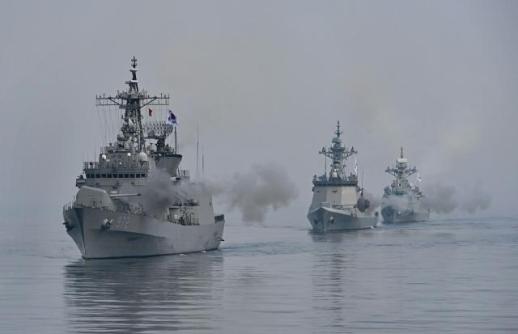 South Korea joins France-led defense chiefs talks on Hormuz SEOUL, March 27 (AJP) - South Korea joined a France-led meeting of chiefs of defense from 35 countries Thursday to discuss security in the Strait of Hormuz, officials said. France’s Ministry of Armed Forces said the video conference was chaired by Chief of the Defence Staff Gen. Fabien Mandon and brought together military leaders from countries interested in contributing to maritime security in the strategic waterway. “The meeting provided an opportunity to gather the positions of nations willing to participate in joint efforts to contribute to safe maritime navigation in this strategic region,” the ministry said in a statement. French officials emphasized that the meeting was unrelated to ongoing military operations in the region and described it as “purely defensive in nature.” The discussions focused on organizing the resumption of maritime traffic in the Strait of Hormuz after hostilities subsided. South Korea was represented by Joint Chiefs of Staff Chairman Adm. Jin Yong-sung, according to the South Korean military. A military official said the meeting served as an opportunity to exchange views and build a basic consensus on the Hormuz situation, adding that no decisions were made regarding specific military contributions. “The defense ministry and the Joint Chiefs of Staff will closely monitor international developments related to the Strait of Hormuz and continue communication for joint efforts,” the official said. “In coordination with relevant ministries, the government will carefully review possible response measures.” Earlier, U.S. President Donald Trump requested allied nations in Europe and Asia, including France, to dispatch naval vessels to help reopen the Strait of Hormuz, which Iran has effectively blockaded. However, most allies have declined the request, citing concerns about becoming entangled in the conflict. Many countries have indicated they would only consider escort missions after a ceasefire is reached. British media recently reported that the United Kingdom and France are exploring multinational efforts to reopen the Strait of Hormuz, and the multinational chiefs of defense meeting led by France appears to be part of such preparatory efforts. Separately, France’s navy chief also held discussions with naval leaders from several countries, including the United Kingdom, Germany, Italy, India and Japan, regarding the Middle East situation, French officials said. 2026-03-27 14:20:39
 -
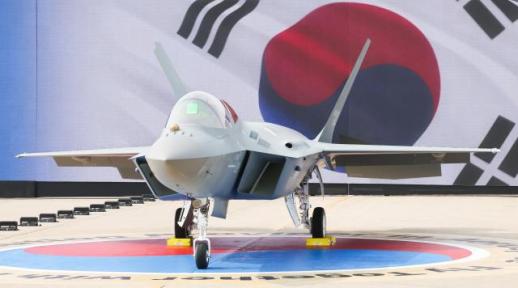 Hot Stock: KAI defies market rout as KF-21 rollout fuels defense rally SEOUL, March 26 (AJP) -Shares of Korea Aerospace Industries (KAI) bucked a broad market selloff Thursday, riding a surge of investor optimism tied to the rollout of South Korea’s first mass-produced KF-21 fighter jet and rising expectations for arms demand amid expanding Middle East conflicts. While the wider market reeled, KAI climbed. The stock extended its recent rally, gaining for a second straight session and closing at 188,000 won, up 1.6 percent on the day — a stark contrast to the KOSPI’s 3 percent slide. The divergence underscores how defense names are increasingly trading as geopolitical proxies rather than cyclical industrial plays. At the center of the momentum is the KF-21 Boramae — South Korea’s first indigenous fighter jet and a flagship outcome of the KF-X (Korea Fighter eXperimental) program led by KAI in collaboration with the Air Force and the Agency for Defense Development. The program, backed by 7.48 trillion won ($5 billion) in investment and involving some 64,500 researchers and engineers, is now transitioning from development to mass production, with 120 aircraft scheduled for deployment by 2032 — a shift that marks the beginning of a long-cycle revenue stream. But the real upside lies beyond Korea. The KF-21 is gaining traction across a widening arc of potential buyers. Indonesia has already joined as a development partner, while the United Arab Emirates, Saudi Arabia, the Philippines and Poland have all expressed interest, according to government and industry sources. The UAE, in particular, has emerged as a pivotal node. A $15 billion comprehensive defense cooperation framework agreed last November includes discussions on procurement, joint production and technology transfer — pointing to a deeper strategic alignment rather than a one-off sale. Saudi Arabia is also weighing the KF-21 as part of its broader air force modernization push. South Korea’s entry into the club of advanced fighter jet producers — now the eighth globally to field a 4.5-generation or higher supersonic fighter, alongside the United States, China, Russia, Japan, France, Sweden and a European consortium — is beginning to translate into market value. Analysts see the inflection point approaching. “The KF-21 will become a core pillar of KAI’s earnings as mass production ramps up,” said Chae Un-saem of Hana Securities. “From here, the duration of the upcycle will increasingly depend on export execution.” Brokerages are also turning more constructive on the broader defense sector, viewing the current geopolitical environment as a structural tailwind rather than a temporary spike. Yuanta Securities maintained its “overweight” call, noting that “the KF-21 is not just a development milestone — it anchors a long-duration growth story spanning production, exports and next-generation capabilities such as manned-unmanned teaming.” 2026-03-26 17:58:47
 -
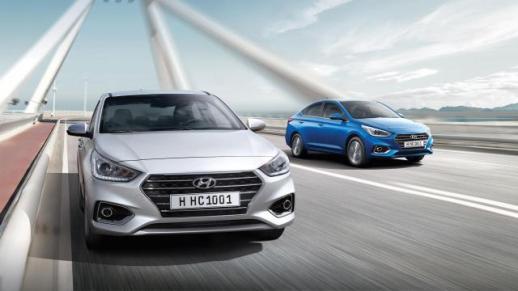 Hyundai's US, Europe plants run full while Southeast Asia lags SEOUL, March 26 (AJP) - Hyundai Motor Group is facing widening disparities across its global production network, with plants in the United States and Europe operating at or above full capacity while Southeast Asian facilities remain underutilized. The divergence comes as the automaker accelerates localization strategies amid rising global protectionism, but weak demand and intensifying competition have weighed on its Southeast Asian operations. According to Hyundai Motor Group on Wednesday, the company produced 3,847,741 vehicles across nine global plants last year, recording an average utilization rate of 81.2 percent. Plants in Korea, the United States, Türkiye and Brazil all posted utilization rates exceeding 100 percent. Hyundai’s domestic plants produced 1,846,837 vehicles, with utilization reaching 102.1 percent. Brazil recorded 214,139 units at 102 percent, while the Alabama plant in the United States produced 362,000 units with a 100.6 percent rate. Türkiye produced 197,000 vehicles at 98.5 percent, and India produced 772,830 vehicles at 94.2 percent. The Hyundai Motor Group Metaplant America (HMGMA) in Georgia, which began operations last year, produced 66,420 vehicles, with utilization rising to 65.3 percent. In contrast, Hyundai’s Vietnam plant recorded a utilization rate of 37.6 percent, down from 48.9 percent a year earlier, with output falling to 42,540 units. Indonesia also lagged, posting a utilization rate of 47.3 percent, down from 57.2 percent the previous year. Analysts attributed the slowdown to weaker regional demand, intensifying competition and the rapid shift toward electric vehicles. Hyundai, which once topped Vietnam’s market in 2021, has recently struggled against local brand VinFast and low-priced Chinese EV makers. While Vietnam’s total auto sales rose 22.2 percent to 604,064 units last year, Hyundai’s sales fell by about 20 percent, according to the Vietnam Automobile Manufacturers’ Association. Indonesia also saw domestic sales decline 7.2 percent to 803,687 units, data from the Indonesian Automotive Industry Association showed. Japanese brands Toyota, Mitsubishi and Suzuki held about 45 percent of the market, while China’s BYD entered the top five. Hyundai ranked 10th with about 3 percent. Despite the slowdown, Southeast Asia remains central to Hyundai’s localization strategy. The company plans to increase local sourcing in Vietnam and introduce new EV models, while building a full EV value chain in Indonesia and launching 15 new models by 2028. 2026-03-26 10:55:07
 -
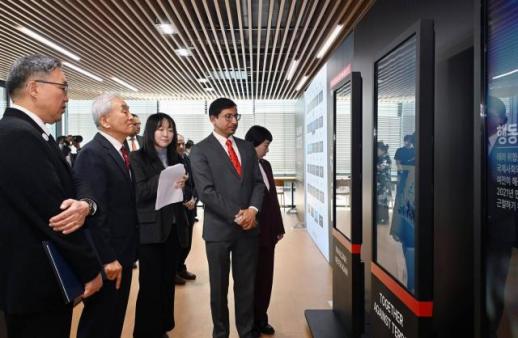 Embassy of India in Seoul hosts digital exhibition on "Human Cost of Terrorism" SEOUL, March 25 (AJP) - The Embassy of India in Seoul, in association with the Korea Democracy Foundation, hosted a two-day digital exhibition titled “Human Cost of Terrorism” at the National Museum of Korean Democracy. The exhibition was inaugurated on Tuesday by Mr. Lee Jae-oh, President, Korea Democracy Foundation (KDF); H.E. Mr. Gourangalal Das, Ambassador of India to the Republic of Korea (ROK); and Ms. Kim Jae-won, Hon’ble Member of the National Assembly. Mr. Lee Jae-oh in his welcome remarks underscored the symbolic significance of the venue, noting that a site once associated with the denial of freedom and human rights now stands as a reminder of the enduring value of democracy and human dignity. He emphasized that democracy is sustained through sacrifice and solidarity, and called for continued collective efforts to ensure that such tragedies are never repeated. In his keynote address, Ambassador Gourangalal Das highlighted the shared democratic values underpinning the India–Republic of Korea Special Strategic Partnership. He emphasized that terrorism remains a global threat to peace and stability and democracies like India and the ROK have the extra responsibility to speak out against terrorism in all its forms and manifestations. He underlined that perpetrators, organizers, and financiers of terror acts must all be held accountable and called for a coordinated, resolute and global response. Ms. Kim Jae-won, Member of the National Assembly during her special address highlighted the importance of cultural cooperation in promoting shared humanitarian values. She expressed hope that India and the ROK would continue to work together to advance peace, democratic principles, and cultural understanding. Over the two days the exhibition saw participation of the people from diverse fields including journalists, civil society representatives and government officials. The digital exhibition aims to fosters greater awareness of the universal nature of terrorism and reinforces the importance of international cooperation in combating terrorism in all its forms and manifestations. 2026-03-25 17:48:00
 -
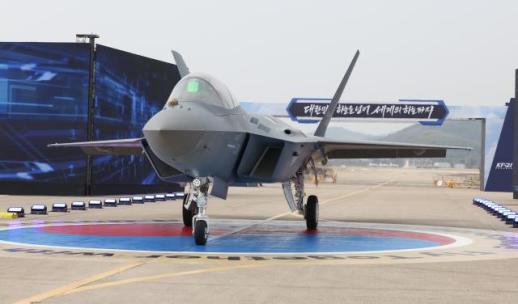 Korea unveils first domestically built KF-21 fighter jet SEOUL, March 25 (AJP) - South Korea rolled out the first mass-produced KF-21 Boramae fighter jet on Wednesday, marking a major milestone in the country’s decades-long push to develop the domestically built 4.5-generation supersonic fighter. President Lee Jae Myung, who attended the ceremony at Korea Aerospace Industries (KAI) in Sacheon, described the rollout as a historic step toward strengthening self-reliant defense capabilities. “South Korea has finally secured weapons developed with our own technology and determination to protect peace not only on land and sea, but also in the skies,” Lee said. “This marks a proud achievement for self-reliant national defense,” Lee said, calling the moment a “historic milestone” for the nation. About 500 attendees joined the ceremony, including test pilots of the KF-21, defense industry officials, air force cadets, students from the aviation science high school and diplomatic representatives from 14 countries. The KF-21 Boramae is a 4.5-generation supersonic fighter jet developed by KAI in cooperation with the Republic of Korea Air Force and the Agency for Defense Development under the KF-X (Korea Fighter eXperimental) program. Lee emphasized that the KF-21 represents decades of national ambition. “This fighter, designed with our own technology and built by our own hands, embodies our long-standing aspiration for self-reliant defense,” he said. He also highlighted the long development process, noting that the project dates back to 2001 when then-President Kim Dae-jung first announced plans to develop a domestically produced fighter jet. “This historic achievement did not come easily,” Lee said. “For 25 years, our researchers and military personnel overcame countless challenges and turned what once seemed impossible into reality.” He added that the KF-21’s success goes beyond strengthening national defense saying that the jet has already drawn strong interest from overseas even before its rollout. Lee also noted that South Korea has already demonstrated its defense capabilities through exports such as the K9 self-propelled howitzer and the Cheongung air defense missile system. The KF-21 is expected to be deployed to the South Korean Air Force later this year. According to government and industry officials, the fighter jet is drawing interest from several countries, including the United Arab Emirates, Saudi Arabia, the Philippines and Poland, in addition to Indonesia, which has already signed on as a development partner. With the KF-21 rollout, South Korea has become the eighth country or region to successfully develop a 4.5-generation or higher supersonic fighter jet, joining the United States, China, Russia, Japan, France, Sweden and a European consortium. 2026-03-25 17:14:46
 -
 Hanwha's stealth KAI stake signals opening salvo in battle for Korea's fighter SEOUL, March 25 (AJP) - The widening Gulf conflicts have caused disruption across markets but are simultaneously delivering a windfall for South Korea’s defense sector, galvanizing acquisition appetite around Korea Aerospace Industries (KAI), the country’s sole aircraft platform maker. Adding to its renewed strategic appeal, KAI rolled out its first mass-produced KF-21 Boramae fighter jet on Wednesday. Hanwha Aerospace disclosed in its latest business report that it holds a 4.41 percent stake in KAI, or 4.86 million shares. Including an additional 0.58 percent held by affiliate Hanwha Systems, the group’s total stake stands at 4.99 percent — just shy of the 5 percent threshold that would trigger stricter disclosure requirements. The precision of that stake has fueled market speculation. By stopping short of the reporting threshold, Hanwha appears to be pursuing a calculated strategy to secure influence while avoiding early scrutiny. Industry officials describe the move as a classic case of “stealth accumulation,” often seen as a prelude to a larger acquisition attempt. The market widely interprets the stake as an opening move toward a potential takeover. If realized, such a deal would allow Hanwha to build an integrated defense structure spanning platforms and core systems — a long-standing gap in its portfolio. Hanwha has steadily expanded its defense footprint in recent years. It has built strength in land systems through Hanwha Aerospace, precision-guided munitions and radar through Hanwha Systems, and naval capabilities through its 2023 acquisition of Hanwha Ocean. Yet aircraft platforms remain the missing piece — an area dominated by KAI. As the country’s only aircraft platform manufacturer, KAI produces the KF-21 fighter, FA-50 light combat aircraft and Surion helicopters. Hanwha, by contrast, has largely remained a component supplier, providing engines and radar systems while relying on KAI for system integration and export negotiations. “Securing a stake in KAI could transform this dependence into a partnership and, over time, allow Hanwha to internalize platform technologies,” said Jeong Kyung-woon of the Korea Association of Military Studies. However, Hanwha is unlikely to move unchallenged. LIG Nex1 is also reviewing participation in a potential KAI acquisition and has reportedly formed a task force, including options for a consortium with LS Group, both of which tracing their origin to LG Group family tree. The combination would bring together missile systems, radar and communications with LS’s strengths in armored vehicle components. Still, financial capacity remains a key differentiator. LIG Nex1, despite record sales exceeding 4 trillion won ($2,667 billion) in 2025, holds roughly 1 trillion won in cash, compared with more than 10 trillion won held by Hanwha Aerospace — underscoring a clear gap in acquisition firepower. KAI itself remains effectively state-controlled despite being publicly listed. The Export-Import Bank of Korea holds a 26.41 percent stake, while the National Pension Service owns 8.20 percent. Privatization has been discussed for decades but repeatedly delayed due to political sensitivities and valuation concerns. Hanwha’s current position could make it a leading contender should the government decide to divest. Although the policy bank has said it has no immediate plans to sell, it has left open the possibility of consultation with the government — keeping the door ajar. Recent moves suggest Hanwha may already be preparing. Hanwha Systems’ sale of its stake in Hanwha Ocean, reportedly worth about 1.7 trillion won, is seen as a step to secure funding for a larger strategic acquisition. The intensifying competition reflects broader shifts in the defense industry, where demand for advanced aircraft, missiles and space-based capabilities is rising alongside geopolitical tensions. As warfare expands beyond traditional domains, control over aerospace platforms is increasingly emerging as the decisive factor shaping the next generation of defense power. Hanwha Aerospace rose 4.9 percent to close at 1,400,000 won, while LIG Nex1 jumped 14.5 percent to 734,000 won. 2026-03-25 17:01:22
 -
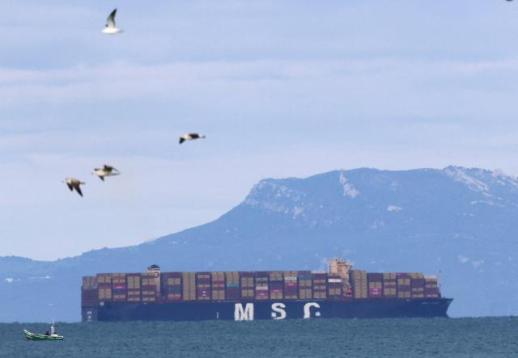 Little-known Korean tanker bet pays off as Hormuz crisis turns VLCCs into liquid gold SEOUL, March 24 (AJP) - A little-known South Korean shipowner has emerged as one of the biggest winners of the Persian Gulf crisis, as a wartime chokehold on the Strait of Hormuz transforms oil tankers into highly profitable floating storage — and draws takeover interest from the world’s largest container carrier. Janggeum Maritime, the tanker arm of Sinokor Merchant Marine Group, has struck an investment deal with Geneva-based Mediterranean Shipping Company (MSC), under which the global shipping giant is seeking to acquire a 50 percent stake in the firm. The two sides have signed an agreement and filed for merger approval with South Korea’s Fair Trade Commission, as well as regulators in Greece and Cyprus. Details of the deal including financial terms were not disclosed. The deal comes as Janggeum Maritime rides an extraordinary windfall from a market dislocation triggered by war in the Middle East. With the Strait of Hormuz effectively crippled following U.S.-led strikes on Iran in late February, crude exports from key Gulf producers have plunged while onshore storage capacity has rapidly filled. That imbalance has pushed global oil majors and traders to charter very large crude carriers (VLCCs) as floating storage units, sending demand — and earnings — sharply higher. Floating storage in the region has surged from around 10 million barrels before the conflict to more than 50 million barrels, according to Reuters. Over the same period, crude exports from eight Middle Eastern countries dropped from 25.13 million barrels per day to 9.71 million barrels. Janggeum Maritime moved early. The company had aggressively expanded its fleet of secondhand VLCCs ahead of the conflict — a strategy that is now paying off. Since late December, Sinokor has been linked to the purchase of 29 VLCCs built between 2010 and 2016, paying between $68 million and over $100 million per vessel, well above benchmark valuations, according to a Lloyd’s report. The acquisitions included eight vessels from John Fredriksen’s Frontline, six from Belgium’s CMB.Tech, three from the UK’s Zodiac Maritime, and two from New York-listed International Seaways. Other reported sellers include Greece’s Marinakis Group, George Economou’s TMS Tankers and Chandris Group. Industry insiders say the nature of those purchases offered an early clue. “Buying older VLCCs — especially without scrubbers — is a strong signal they’re intended for storage rather than transport,” a shipping source said. “Fuel efficiency matters less when vessels are anchored.” That strategy was reinforced in late January, when the company pre-positioned at least six empty tankers in the Persian Gulf. When the conflict escalated on Feb. 28 and shipping routes tightened, oil companies scrambled to secure storage — and Janggeum was already in place. The payoff has been dramatic. The company is now estimated to be earning about $500,000 per day per vessel from floating storage leases — up from $30,000–40,000 a year ago, $70,000–80,000 in late February, and even above the roughly $400,000 currently earned on key Middle East–Asia transport routes. With MSC entering the picture, Janggeum Maritime is now looking beyond opportunistic gains. The tie-up is aimed at diversifying into broader shipping operations by leveraging MSC’s global container network, potentially transforming the tanker-focused firm into a more integrated maritime player. Janggeum Maritime declined to comment on its fleet acquisitions and VLCC strategy. MSC did not respond to requests for comment. 2026-03-24 17:23:37
 -
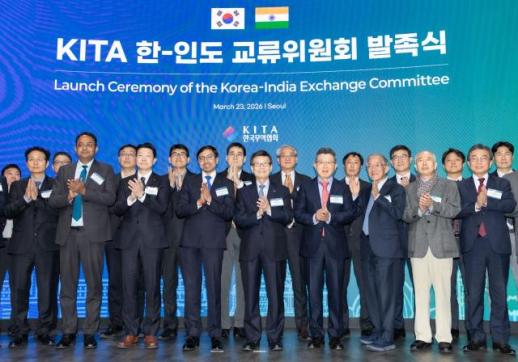 KITA launches Korea-India Exchange Committee to boost business cooperation SEOUL, March 24 (AJP) - The Korea International Trade Association (KITA) announced Tuesday that it has launched the Korea-India Exchange Committee in Seoul to strengthen bilateral economic cooperation. The committee will operate through two groups: an India committee within KITA comprising 28 Korean companies either operating in or seeking entry into India, and a Korea committee under the Confederation of Indian Industry (CII), made up of Indian companies interested in expanding into South Korea. Founded in 1895, CII is India’s largest private-sector business organization, representing more than 360,000 member companies. Around 30 representatives attended the launch ceremony, including KITA Chairman Yoon Jin-sik, Indian Ambassador to South Korea Gourangalal Das, and officials from participating firms such as Meta Biomed, Shinhan Bank, LG Electronics, YG-1, Jusung Engineering, Hana Bank, Hyundai Motor, and Hyosung Heavy Industries. In his opening remarks, Yoon described India as a rapidly growing global manufacturing hub. “India is the world’s fourth-largest economy and is expected to enter the top three within the next three years,” he said. “We hope the Korea-India Exchange Committee will serve as a practical communication channel at the private-sector level and play a key role in elevating bilateral economic cooperation.” Ambassador Das also emphasized the potential for stronger bilateral ties, noting that South Korea is an important strategic partner for India, particularly in manufacturing and advanced technology sectors such as semiconductors, shipbuilding and defense. During an expert session, Korea Institute for International Economic Policy (KIEP) researcher Kim Kyung-hoon presented on recent trends in Korea-India economic cooperation. Kim highlighted India’s role as a key production base for automobiles, smartphones and home appliances, while noting that South Korea’s exports and investment in India remain at about 30 percent and 20 percent, respectively, compared with Vietnam. “This paradoxically suggests significant potential for expanding economic cooperation between the two countries,” he said. The committee plans to co-host the 9th Korea-India Business Forum with CII in the second half of this year to strengthen business partnerships and discuss trade and investment cooperation. KITA also said it will enhance support for Korean companies operating in India through its New Delhi office, which serves as the secretariat for the Korean Chamber of Commerce in India. The office will share information on local regulations and help relay business difficulties — including customs, certification and incentive delays — to the government. 2026-03-24 13:14:23
 -
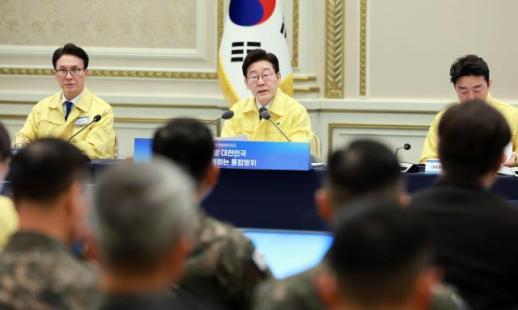 President Lee vows self-reliant defense amid Middle East tensions SEOUL, March 23 (AJP) - President Lee Jae Myung said Monday that self-reliant defense is the core of South Korea’s integrated defense strategy, citing increasingly complex and fluid global security conditions. “Self-reliant defense is the most important core of integrated defense,” Lee said while presiding over the 59th Central Integrated Defense Council at the Cheong Wa Dae in Seoul. The council, held annually, brings together senior officials across various national defense sectors to assess the country’s integrated defense posture and discuss ways to strengthen it. This marked the first such meeting since Lee took office. Lee stressed that ensuring public safety, maintaining everyday stability and safeguarding national continuity are the fundamental responsibilities of the government. “The most critical aspect of national security is ultimately our integrated defense capability, and at its core lies national defense,” he said. He emphasized that defense must remain a sovereign responsibility. “It is something we must never entrust to others, a core responsibility we must ultimately bear ourselves,” Lee said. “We must be able to protect ourselves under any circumstances without relying on external assistance.” Lee highlighted South Korea’s defense capabilities, noting that the country’s annual defense spending is about 1.4 times North Korea’s gross domestic product and that it ranks fifth globally in military strength. “With an economy among the top 10 globally and a defense industry envied worldwide, we have sufficient capacity to defend ourselves without external support,” he said. He called on officials to strengthen preparedness and maintain confidence, urging them to build systems capable of ensuring national defense under any conditions. Lee also underscored the importance of coordination among civilian, military, police and emergency response sectors. Regarding global tensions, including the conflict involving the United States, Israel and Iran, Lee described the international situation as “highly complex and fluid.” He warned that threats now extend beyond conventional military risks to include cyberattacks, terrorism, climate-related crises and disasters. “In such an environment, all elements of defense must respond in a unified and coordinated manner in times of emergency,” he said. 2026-03-23 17:24:32
 -
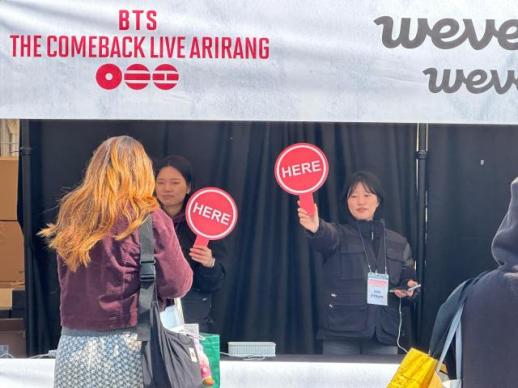 BTS Live: Global fans throng merchandise booths as BTS prepares return SEOUL, March 21 (AJP) - Fans from across the globe gathered at official BTS merchandise booths in central Seoul on Saturday, marking a festive prelude to the first major performance by the group following a prolonged hiatus. The process for purchasing items, including a new lightstick for the seven-member group, was governed by a strict reservation system to manage crowds and prevent unauthorized resale. Lana Ro, 25, from Russia, bought two lightsticks—one for herself and one for her friend. Having followed the group for three years, she focused on the specific design of the items. "I bought a special edition of the lightstick just now," she said. She also selected apparel in various colors. "These are T-shirts in different colors. I bought one white and one red," she said. The scene near the stalls remained orderly as fans of different ages and nationalities waited to buy exclusive merchandise ranging from apparel to limited-edition collectibles. While there were no long lines due to the reservation system, the area remained active with fans taking photos and exchanging small gifts. Adriana, an American teaching in Seoul for six months, was among those who secured a large volume of products. She moved through the area holding a full load of items in both hands, representing the diverse demographic that has traveled to the capital for the event. The atmosphere remained focused on the shared experience of the fandom and the tactile connection to the group through these products. Ami Ostrovskaia, 23, from Russia, has been a fan of the group for six years. On Saturday, she limited her purchase at the booth to a single item. "I only bought a lightstick today. We will go to the pop-up store in Shinsegae Department Store," she said. For Ostrovskaia, who was interested in a wider range of apparel, the cost of the clothing kept her from a shopping spree. Each T-shirt at the booth is priced at 59,000 won. Ostrovskaia expressed a particular interest in the designs featuring the members, but had to hold back due to her budget. "I like the T-shirt with black-and-white photos of the seven members. I want to have each one of them, but I don’t have enough money," she said. Despite the financial considerations, she described her connection to the group as a personal support system. Showing a tattoo related to her fandom, she explained the role the members have played in her life. "I think it’s because they’re always saving me when I go through really rough times. They’re always there to help me, to listen to me," she said. The booths are scheduled to remain open throughout the evening as the city prepares for the start of the performance. 2026-03-21 19:31:39