
Journalist

Kim Hee-su, Han Jun-gu
khs@ajunews.com
-
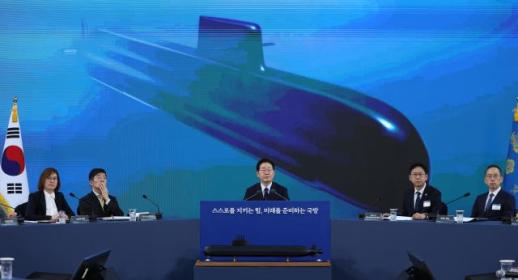 AJP Focus: Seoul's nuclear submarine push raises broader regional security questions SEOUL, May 27 (AJP) - South Korea's new "Jangbogo N" nuclear-powered submarine program is raising questions over whether the project is designed primarily to deter North Korea or whether it could eventually become part of a broader U.S.-led effort to counter China. Officials have described the submarine as a symbol of Seoul's determination to take greater responsibility for its own security. But the move comes after the commander of U.S. Forces Korea recently described South Korea as a "dagger" from China's strategic perspective. Under the current timetable, the first vessel is expected to become operational in the mid-2030s. Defense Minister Ahn Gyu-back unveiled the plan during the first meeting of the Future Defense Strategy Committee at the Navy Submarine Command in Jinhae on Tuesday. "The nuclear-powered submarine, to be built on the foundation of a strong South Korea-U.S. alliance, will be a symbol of our will to take responsibility for peace and security on the Korean Peninsula ourselves," he said. Ahn added that the project would also contribute to strengthening South Korea's defense industry and play a key role in countering North Korea's submarine-based nuclear and missile threats. According to the Defense Ministry, the submarine South Korea plans to build will carry conventional weapons and is unrelated to strategic nuclear submarines armed with nuclear weapons. Its reactor will use low-enriched uranium at around 20 percent, rather than highly enriched uranium that can be used to produce nuclear weapons. The U.S. currently uses highly enriched uranium of more than 90 percent for its nuclear submarines, while France and China are known to operate nuclear-powered submarines based on low-enriched uranium. Under the South Korea-U.S. nuclear cooperation agreement signed in 2015, Seoul requires Washington's consent to enrich uranium below 20 percent and reprocess spent nuclear fuel. South Korea has so far been effectively unable to enrich uranium and imports all nuclear fuel used in its power plants. If Seoul seeks to receive nuclear fuel for its submarines from Washington, the two countries will need further discussions, including a separate agreement under the U.S. Atomic Energy Act. Any transfer of nuclear fuel would also require approval from the U.S. Congress. The plan comes as the second Trump administration, under its "Make America Great Again" agenda, presses allies to invest more in their own defense and assume a greater share of collective security responsibilities. South Korea is also facing growing pressure as the U.S. war with Iran drags on. Washington has called on Seoul, where about 28,500 U.S. troops are stationed, to contribute more to U.S.-led security efforts, while President Lee Jae Myung has emphasized the need for greater defense self-reliance. According to the U.S. Army War College website on Tuesday, Gen. Xavier Brunson, commander of U.S. Forces Korea, said during a podcast hosted by the school on May 22 that, from China's perspective, "what they see is Korea, a dagger in the heart of Asia, and Japan, which is kind of the shield or the blocking wall as they have ambitions to get beyond the South China Sea." Experts say the Jangbogo N program is not merely a matter of strengthening military capabilities, but a strategic decision about how South Korea will acquire and operate nuclear-powered submarines. They note that the issue has become more complex amid the AUKUS pact and intensifying U.S.-China maritime competition. Seoul must pursue domestic shipbuilding capabilities while complying with the global nonproliferation regime, even as its new submarines are likely to be viewed by Beijing as part of a wider effort to check China's growing naval reach. Because nuclear-powered submarines can operate for more than 40 years, heavy dependence on foreign technology or components in the first vessel could lock Seoul into long-term reliance on outside support for maintenance and upgrades. Jeong Kyung-woon of the Korea Association of Military Studies said in a report that the SSN project is "not a one-time purchase, but a structural choice that will define South Korea’s future submarine force," adding that the level of domestic shipbuilding and defense industry involvement from the initial stage will determine the country's technological autonomy and long-term cost curve. Still, the government appears to be leaving room for further consultations with Washington over where the submarines will be built. President Donald Trump wrote on Truth Social the day after the Oct. 30 summit that South Korea would build its nuclear-powered submarines "right here in the good ol' U.S.A. shipyards of Philadelphia.” The South Korean government, however, has since made clear that it intends to build them domestically. Analysts also warn that while SSNs could eventually be drawn into long-range missions aimed at countering China, Seoul should clearly define their primary role as deterring North Korea. "South Korea already has enough strategic requirements within its exclusive economic zone and surrounding waters," Jeong added. "If Seoul openly expands the mission of its nuclear-powered submarines to counter China, it could invite responses from the Chinese and Russian navies and fuel a regional arms race." Experts said that the more deeply South Korean SSNs are integrated into U.S.-Japan combined operational networks, the more likely China is to view them as forward-deployed U.S. offensive assets — much as it viewed the THAAD missile defense system, elements of which have reportedly been redeployed from Korea to the Middle East amid the prolonged war with Iran. 2026-05-27 17:53:52
 -
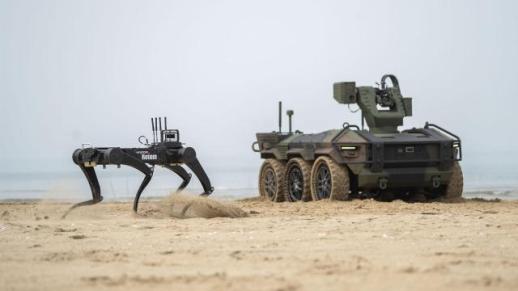 Hyundai Rotem wins state projects for AI-based unmanned military robots SEOUL, May 27 (AJP) - Hyundai Rotem said Tuesday it has been selected for two state-funded research and development projects aimed at advancing unmanned robot technologies based on physical artificial intelligence. The company said it was chosen as the final contractor for two projects commissioned by the Ministry of Trade, Industry and Energy and the Agency for Defense Development (ADD). The industry ministry project focuses on developing control software that can manage multiple types of unmanned robots through natural language commands and text. Until now, operators had to control each unmanned robot separately by entering fixed commands through dedicated remote-control devices. Once the integrated control system is developed, a small number of operators will be able to control multiple unmanned platforms at the same time using spoken or written commands. Hyundai Rotem plans to apply the technology to its key unmanned platforms, including the HR-Sherpa multipurpose unmanned ground vehicle and quadruped robots. The project is part of a government program designed to support the rapid commercialization of AI-based products. The ADD project involves developing a digital twin simulator and a modular unmanned robot platform. The simulator is designed to test the performance of unmanned robots in virtual environments that closely resemble real-world conditions. The modular unmanned robot platform will have detachable wheels on four legs and will be able to carry various mission equipment, including robotic arms and explosive detection devices. The ADD project is part of a future challenge defense technology R&D program designed to develop innovative defense technologies before formal military requirements are set. Hyundai Rotem also signed a memorandum of understanding with U.S. defense technology firm Anduril earlier this month, as part of efforts to expand technology cooperation across the public and private sectors. “We are devoting all our capabilities to advancing physical AI technologies that put national security and public safety first,” a Hyundai Rotem official said. “We will continue working to develop manned-unmanned weapon systems that the Republic of Korea Army can trust and use.” 2026-05-27 16:17:21
 -
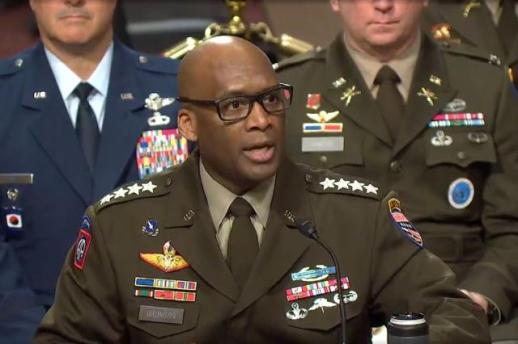 USFK chief calls Korea a 'dagger' in Asia from China's strategic view SEOUL, May 27 (AJP) - Gen. Xavier Brunson, commander of U.S. Forces Korea, has described South Korea as a “dagger” in the heart of Asia from China’s strategic perspective, underscoring the peninsula’s growing role in Washington’s broader efforts to counter Beijing. According to the U.S. Army War College website on Tuesday, Brunson made the remarks during a podcast hosted by the school on May 22. “When they look out from the East Coast of China, what they see is there’s Korea, the dagger in the heart of Asia. There’s Japan, again, sort of the shield or the blocking wall as they have ambitions to get beyond the South China Sea,” Brunson said. His description of Korea as a “dagger” appears to reflect both South Korea’s strategic value to the U.S. in countering China and Beijing’s wariness over the presence of a U.S. ally and American troops so close to its territory. China has long opposed the deployment of the U.S. Terminal High Altitude Area Defense system, or THAAD, in South Korea, arguing that the system serves as a military tool aimed at containing Beijing. Brunson’s remarks can be seen as highlighting the need to maintain the Korea-U.S. alliance and U.S. troop presence on the peninsula. At the same time, they also suggest his willingness to expand the role of the alliance and USFK beyond deterring North Korea to include a broader focus on China. The comments may indicate that while the Trump administration continues to value the Korea-U.S. alliance and USFK, it is placing greater emphasis on their utility in countering China rather than solely defending South Korea from North Korean threats. Brunson has repeatedly stressed the alliance’s role in checking China, in line with the concept of “alliance modernization,” which has become a key phrase for the Korea-U.S. alliance under the second Trump administration. In May last year, he also described South Korea’s geographic position as strategically important, comparing it to “an island or like a fixed aircraft carrier” between Japan and mainland China. Brunson also said USFK is working with Samsung to develop advanced cloud infrastructure that would allow the U.S. and its regional allies to maintain communications even if networks are cut off or disabled. 2026-05-27 13:34:47
 -
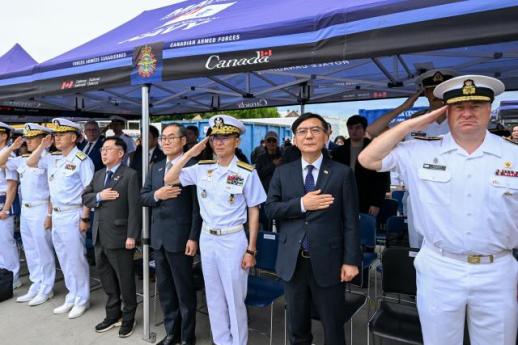 Korean submarine scores high with Canadian crew ahead of Ottawa decision SEOUL, May 26 (AJP) - The Canadian crew after their first onboard journey aboard a South Korean submarine had only high praise for the ROKS Dosan Ahn Chang-ho, boosting Team Korea’s momentum in the final stretch of Ottawa’s multibillion-dollar competition to replace its aging submarine fleet. The KSS-III-class diesel-electric submarine arrived at Canadian Forces Base Esquimalt on Saturday after a nearly two-month voyage from Jinhae in southern Korea, marking the first trans-Pacific deployment by a South Korean submarine. The vessel was officially welcomed Monday before scheduled joint exercises with the Royal Canadian Navy and allied forces. The visit comes at a crucial stage in Canada’s Canadian Patrol Submarine Project, or CPSP, aimed at replacing the country’s aging Victoria-class submarines with up to 12 modern diesel-electric vessels. Glenn Copeland, managing director of Hanwha Defence Canada, described the timing of the submarine’s arrival as significant as Ottawa prepares to narrow the field. Hanwha Ocean, the maker of ROKS Dosan, is leading the Korean consortium against the European rival led by Germany’s ThyssenKrupp Marine Systems, with the Canadian government expected to make its choice as early as next month. “I think this is the best conventional submarine available in the world today,” Copeland said, arguing that the KSS-III meets Canadian operational requirements in range, endurance, size and weapons capability. “We feel very positive about our chances,” he added. “Right now, if you ask anyone, they will say it is 50-50. But there are clearly factors working in our favor.” The Dosan Ahn Chang-ho departed Jinhae on March 25 and traveled roughly 15,000 kilometers across the Pacific, stopping in Guam and Hawaii for supplies. Two Canadian sailors boarded the submarine in Hawaii on May 7 and sailed aboard the vessel to Victoria, giving Ottawa a rare firsthand opportunity to evaluate Korean submarine operations at sea. Their reactions were notably enthusiastic. Petty Officer 2nd Class Jake Dixon compared the experience to “buying a brand-new Tesla and then you’re coming out of a ’99 Honda Civic,” according to local media reports. Lieutenant-Commander Brittany Bourgeois, who also spent about two weeks aboard the submarine, praised the vessel’s condition and spacious interior. “Being on board a modern submarine really opened our eyes to the possibilities ahead of us,” she said. The positive reviews could strengthen South Korea’s standing as Canada grapples with severe operational strain in its submarine fleet. Ottawa currently operates four Victoria-class submarines purchased secondhand from Britain in 1998, but reports indicate only one remains operational while the others are undergoing repairs. Rear-Admiral David Patchell, commander of Canada’s Pacific fleet, recently told CBC that the country needed replacement submarines “yesterday.” “We’ve operated submarines for more than 100 years, but we have not truly been a submarine-owning nation,” Patchell said. “With 12 modern submarines, Canada can become one.” The contest has increasingly evolved beyond submarine specifications into a broader strategic and industrial competition. Hanwha Ocean has sought to distinguish itself through wider economic cooperation proposals, including an equity investment in Canadian space startup Reaction Dynamics and a $345 million steel infrastructure project tied to Algoma Steel. Canadian media have generally viewed the Korean bid favorably compared with TKMS’ proposal centered on German launch infrastructure technology. Still, analysts note that the KSS-III’s strengths could also pose questions for Canadian planners. Its vertical launch system and heavy strike capability — developed in response to threats from North Korea and broader regional tensions involving China — may exceed the Royal Canadian Navy’s current operational requirements, which do not include ballistic or cruise missile submarine missions. By contrast, TKMS’ Type 212CD is widely viewed as highly suitable for Arctic operations because of its smaller size, maneuverability and ability to operate in shallow and ice-covered waters across Canada’s Arctic archipelago. But the German bid faces mounting concerns over delivery schedules. TKMS already has a substantial production backlog tied to orders from Germany, Norway, Singapore, Türkiye and India, leading some Canadian defense analysts to question whether deliveries could realistically meet Ottawa’s target timeline in the mid-2030s. For South Korea, the Pacific crossing itself may prove strategically significant beyond the Canadian bid. The deployment demonstrated not only the endurance and operational reliability of the KSS-III platform, but also Seoul’s growing ambition to compete directly with established European defense manufacturers in high-end naval procurement markets increasingly shaped by geopolitical competition and supply-chain reliability. A South Korean Navy official said the Dosan Ahn Chang-ho is expected to participate in joint exercises with Canadian forces in early June, though exact schedules have not been disclosed. 2026-05-26 16:57:59
 -
 N. Korea tests mixed-fire tactics as Xi's possible Pyongyang trip looms SEOUL, May 26 (AJP) - North Korea fired several close-range ballistic missiles and artillery rockets into the Yellow Sea on Tuesday, South Korea’s military said, amid speculation that Chinese President Xi Jinping could visit Pyongyang soon. The Joint Chiefs of Staff said it detected various types of projectiles, including close-range ballistic missiles, fired from the area of Jongju, North Pyongan Province, toward waters off the North’s west coast at around 1 p.m. The close-range ballistic missiles flew about 80 kilometers, and the military believes North Korea also fired artillery rockets, a type of multiple rocket launcher system, along with them. It is unusual for North Korea to fire close-range ballistic missiles and artillery rockets at the same time. The launch is seen as an apparent attempt to demonstrate its ability to evade air defenses and conduct mixed-fire strikes. Military authorities are also keeping open the possibility that loitering munitions, or so-called suicide drones, may have been used in the launch. Officials reportedly detected trajectories on radar that differed from those of typical ballistic missiles or artillery rockets, raising the possibility that a new weapons system was involved. The military said further analysis is needed to make a precise assessment. The launch marked North Korea’s first ballistic missile firing in 37 days and its eighth such launch this year. On April 19, North Korea fired several short-range ballistic missiles from the eastern coastal area of Sinpo, South Hamgyong Province, toward the East Sea, claiming they were equipped with cluster warheads. North Korean state media said Kim Jong-un oversaw the launch of five upgraded Hwasong-11 Ra tactical ballistic missiles, which struck a target zone 136 kilometers away and covered an area of about 12.5 to 13 hectares. The test was aimed at assessing new warheads carrying cluster bombs and fragmentation mines. The South Korean Unification Ministry later noted that an unusually large number of commanders from North Korean frontline units were present at the test, saying this appeared to underscore Kim’s push to expand tactical missile deployments against South Korea. Tuesday’s launch drew attention as it came amid speculation that Xi could visit North Korea as early as this week. If Xi’s visit takes place following recent U.S.-China and China-Russia summits, it would be Xi’s first trip to North Korea since June 2019. “The government once again calls on North Korea to respond to our peace policy and efforts to reduce tensions,” South Korean Foreign Ministry spokesperson Park Il said at a briefing Tuesday. Park said South Korea will continue pursuing a phased and pragmatic approach to resolving the North Korean nuclear issue while maintaining close coordination with the international community. 2026-05-26 16:07:04
 -
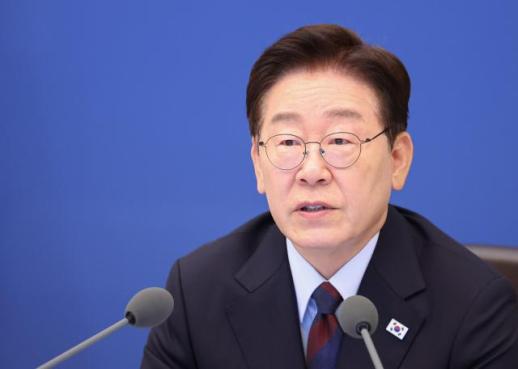 Lee calls for faster push to acquire nuclear-powered submarines SEOUL, May 26 (AJP) - President Lee Jae Myung on Tuesday called for accelerating South Korea’s push to acquire nuclear-powered submarines, as the government is seeking to unveil a basic plan for the development of a Korean nuclear-powered submarine by the end of this month. “We must speed up the introduction of AI and drone technologies and move faster to acquire nuclear-powered submarines, a key strategic asset for future defense capabilities,” Lee said during a Cabinet meeting at Cheong Wa Dae. Lee said South Korea must hurry its transition into a future-oriented, advanced military. His remarks came as the Navy recently submitted a formal request to the Joint Chiefs of Staff for the acquisition of Korean nuclear-powered submarines. The request marks the first step in the country’s weapons acquisition process, under which the military formally lays out operational requirements, concepts of operation, the number of units needed and the timing of deployment for a new weapons system. “South Korea’s defense capabilities currently rank fifth in the world, and its annual defense spending far exceeds North Korea’s annual gross domestic product,” Lee said. “We already have sufficient capability to defend ourselves, but we must further strengthen our defense power in the face of the harsh international reality of self-reliance and survival of the fittest.” Lee also called for greater national efforts to foster the country’s defense industry by continuously expanding research and development budgets, localizing key components and strengthening public-private cooperation. “Winning a war is important, but efforts to build peace so that war does not break out are also very important,” he said. “Above all, what matters most is the attitude that we will take responsibility for and defend our own security.” Lee also called for a swift transfer of wartime operational control from Washington to Seoul, after U.S. Forces Korea Commander Gen. Xavier Brunson recently told the House Armed Services Committee that the transition could be completed before the first quarter of 2029. “Only with a firm commitment to self-reliant defense can we earn the respect of our friends and keep our alliance even stronger,” Lee said. “I ask that the transfer of wartime operational control proceed swiftly and smoothly, in a way that further strengthens the South Korea-U.S. alliance.” “True and capable security is not only about winning a war, but also about creating peace so that war does not break out,” Lee said. “We will do our utmost to strengthen our defense capabilities in a way that supports peace on the Korean Peninsula and South Korea’s continued progress.” 2026-05-26 11:27:51
 -
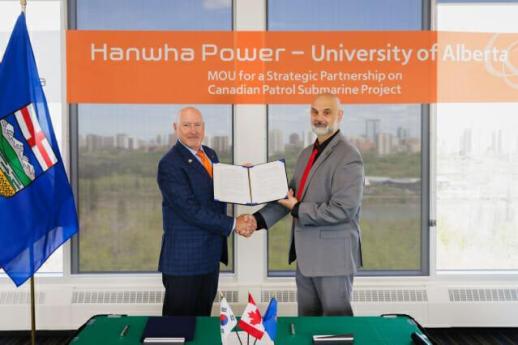 Hanwha Power signs MOU with Canadian university to support submarine bid SEOUL, May 26 (AJP) - Hanwha Power Systems said Tuesday it has signed a memorandum of understanding with the University of Alberta to jointly conduct research and development on clean energy technologies, as part of efforts to support Hanwha Ocean’s bid for Canada’s submarine procurement project. The agreement, signed Friday, was arranged as part of an industrial and technological cooperation program linked to the Canadian Patrol Submarine Project, or CPSP, in which Hanwha Ocean is competing with Germany's TKMS. Under the MOU, Hanwha Power and the university will work on energy recycling technologies, including systems that generate electricity from gas turbine waste heat and pressure energy. The company also plans to explore the feasibility of applying such technologies in the North American market, drawing on the University of Alberta’s research capabilities and talent pipeline. Beyond joint R&D, the two sides will assess potential industries where the technologies could be used, review business structures and evaluate economic viability as part of efforts to move toward commercialization. “We are pleased to work with the University of Alberta, a hub of the energy industry,” said Michael Sicker, head of Hanwha Power Systems Americas. “We hope students will grow into future energy experts through this cooperation, while Hanwha Power will also gain a valuable opportunity to verify and advance its technologies in Canada.” David Bressler, vice president of international and enterprise at the University of Alberta, said, “This will also provide our students with a valuable foundation to apply basic research to real industrial settings.” 2026-05-26 10:40:46
 -
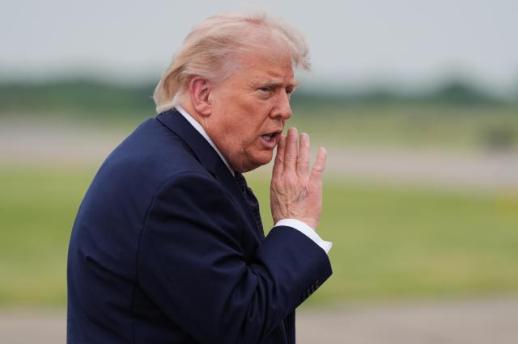 Trump weighs resuming strikes on Iran as talks hit deadlock SEOUL, May 23 (AJP) - U.S. President Donald Trump is considering a possible resumption of airstrikes on Iran, raising concerns that military confrontation between Washington and Tehran could return to the forefront after he canceled plans to attend his eldest son’s wedding and decided to remain in Washington. The move came as little progress has been made in negotiations since Washington delivered what U.S. media described as a “final offer” to Iran on May 20. Trump is reportedly seriously considering new strikes if Tehran does not accept the proposal soon. According to U.S. political circles and foreign media reports, Trump met with key national security officials at the White House on Friday, including Vice President JD Vance, Defense Secretary Pete Hegseth, CIA Director John Ratcliffe and White House Chief of Staff Susie Wiles, to review the status of negotiations with Iran and possible military options. Axios reported that Trump is increasingly frustrated with the talks and is seriously considering resuming strikes unless there is a breakthrough. Secretary of State Marco Rubio was absent due to a trip to Europe, while Gen. Dan Caine, chairman of the Joint Chiefs of Staff, did not attend because he was at the U.S. Naval Academy graduation ceremony, according to reports. Trump had initially planned to spend the Memorial Day weekend at his golf club in New Jersey after a speech in New York on Friday evening, before traveling to the Bahamas over the weekend for the wedding of his eldest son, Donald Trump Jr. But he said on Truth Social that he would skip the wedding due to “circumstances pertaining to the Government” and his “love of the United States of America,” adding that he felt it was important to remain at the White House during “this important period of time.” Defense and intelligence officials have also reportedly canceled holiday plans as they prepare for the possibility of renewed military confrontation in the Middle East. The U.S. and Iran have been engaged in indirect talks since agreeing to a temporary cease-fire on April 7, discussing Iran’s blockade of the Strait of Hormuz, its nuclear program and terms for ending the war. Washington reportedly delivered a final proposal to Tehran on May 20 that included terms for maintaining the cease-fire, handling nuclear material and guaranteeing passage through the strait. If Iran rejects the offer, the Trump administration is said to be reviewing renewed strikes on Iranian energy infrastructure, missile sites, nuclear-related facilities and leadership targets. Iran, however, has acknowledged that talks are continuing while maintaining that a deal is not imminent. Iran’s Foreign Ministry has said discussions on key issues are still underway, while figures close to the Islamic Revolutionary Guard Corps have reportedly said the talks are focused on ending the war and that other issues will not be addressed until that goal is achieved. U.S. officials have described the negotiations as “painful,” saying the process remains stuck in an exchange of draft documents with little substantive progress. At the same time, mediators including Pakistan and Qatar are said to be making last-minute efforts to prevent another escalation. Pakistan’s army chief Asim Munir arrived in Tehran on Friday to meet Iranian leaders, while Qatari officials are also reportedly involved in efforts to revive the talks. Some U.S. officials believe that unless an unexpected breakthrough emerges within the next 24 to 48 hours, Trump could move closer to ordering renewed airstrikes. 2026-05-23 17:45:48
 -
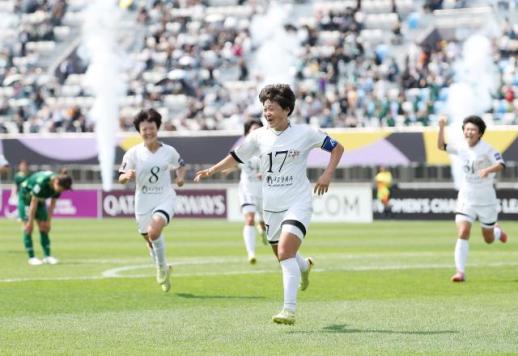 Naegohyang becomes first N. Korean club to win Asian women's football title SEOUL, May 23 (AJP) - North Korea’s Naegohyang Women’s Football Club defeated Tokyo Verdy Beleza of Japan on Saturday to win the Asian women’s club football title. Naegohyang beat Tokyo Verdy 1-0 in the final of the 2025-26 Asian Football Confederation Women’s Champions League (AWCL) at Suwon Sports Complex, with captain Kim Kyong-yong scoring the winner in the 44th minute. The victory made Naegohyang the first North Korean team to win the tournament and will also receive $1 million in prize money. The AWCL, Asia’s top women’s club football competition, was officially launched in the 2024-25 season. Naegohyang FC reached the final after defeating South Korea’s Suwon FC Women 2-1 in the semifinals at the same venue on Wednesday, also thanks to a decisive goal by Kim. The visit marked the first trip by North Korean football players to South Korea since the 2014 Incheon Asian Games. It was also the first visit to South Korea by a North Korean women’s football club team. 2026-05-23 16:15:27
 -
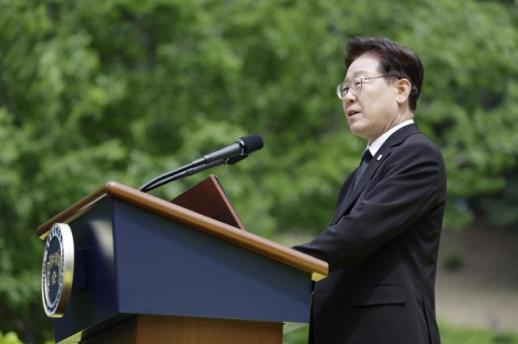 Lee pays respects to former President Roh in Bongha Village SEOUL, May 23 (AJP) - President Lee Jae Myung attended a memorial ceremony for former President Roh Moo-hyun in Bongha Village in Gimhae, South Gyeongsang Province, on Saturday. Lee made the remarks marking the 17th anniversary of Roh’s death, saying he would push ahead with reforms regardless of pushback from vested interests. “Beyond mourning you, I now feel the heavy responsibility and weight as president of the Republic of Korea, and I seek to carry on your will,” Lee said. Referring to the Oct. 4 South-North Summit Declaration, which included efforts toward denuclearization of the Korean Peninsula and the establishment of a peace regime, Lee said he would continue Roh’s vision. “I will steadily walk the path of peaceful coexistence and shared growth, inheriting the will of the president who turned the line of division into a path of peace and achieved the declaration,” Lee said. Lee said Roh envisioned a Korea where no one is driven to give up on life over making a living, and where people are treated with dignity. Lee also drew applause when he said, “After you left us, countless Roh Moo-hyuns were born again on this land. I am one of them.” It marked Lee’s first attendance at Roh’s memorial ceremony as a sitting president. Lee, who took office in June last year, attended the ceremony on May 23 last year as a presidential candidate. 2026-05-23 15:59:20