
Journalist

Kim Hee-su, Han Jun-gu
khs@ajupress.com
-
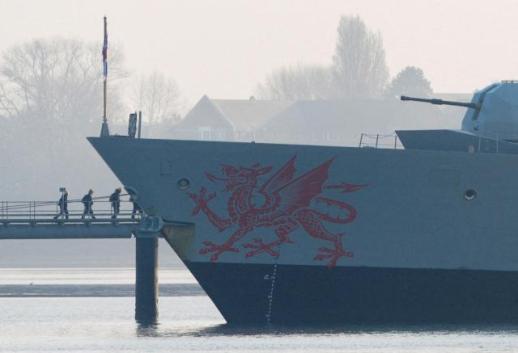 Korea joins UK-France-led Hormuz defense talks, Sinokor vessel slips through Hormuz SEOUL, May 12 (AJP) - South Korea will take part in a defense ministerial video conference led by Britain and France on Tuesday to discuss efforts to restore safe passage through the Strait of Hormuz, as Seoul faces growing pressure to clarify its role in a possible multinational maritime mission. The Ministry of National Defense said Woo Kyung-seok, director general for defense policy planning and an Army major general, will attend the meeting on discussions related to a U.K.- and France-led multinational military mission. Woo is expected to attend on behalf of Kim Hong-cheol, deputy minister for national defense policy, who is currently in the U.S. accompanying Defense Minister Ahn Gyu-back. “The government has been actively participating in international discussions aimed at ensuring safe passage through the Strait of Hormuz, while closely monitoring the situation and communicating with related countries,” a ministry official said. Britain and France have been leading talks on forming a multinational force to restore navigation through the key waterway after a possible end to the Iran war. The talks began with a French-hosted video conference among chiefs of defense in March and have continued at various levels, including leaders and senior officials. South Korea has also taken part in the discussions. Tuesday’s meeting marks the first defense ministerial-level session of the grouping, raising speculation that the U.K. and France may be seeking to move the discussions toward a more concrete policy decision as their operational plan takes shape. Seoul’s participation comes as attention grows over how it will respond after the fire aboard the Korean vessel Namu was confirmed to have been caused by an external attack. The government has yet to identify who was behind the incident. The defense ministry repeated its previous position, saying it will “carefully review realistic ways to contribute” in consultation with related ministries, while comprehensively considering international law, the safety of international sea lanes. Meanwhile, a very large crude carrier owned and operated by South Korean shipping company Sinokor Merchant Marine reportedly passed safely through the Iran-blockaded Strait of Hormuz earlier this month after turning off its location-tracking device. Reuters reported Monday, citing shipping data from Kpler and the London Stock Exchange Group, that three tankers were recently found to have exited the Strait of Hormuz with their tracking systems switched off. Among them was the VLCC Basrah Energy, owned by Sinokor. The vessel loaded 2 million barrels of crude oil at the Zirku crude export terminal operated by the Abu Dhabi National Oil Company in the United Arab Emirates on May 1 and passed through the Strait of Hormuz on May 6, according to the report. It remains unclear which company chartered the vessel. Reuters said it had requested comment from Sinokor but did not receive a response. Sinokor has expanded its presence in the tanker market in recent years through aggressive purchases and chartering of vessels. The company is estimated to control around 150 VLCCs as of the end of last month. Industry sources said Sinokor had deployed at least six empty tankers to the Persian Gulf from late January over a four-week period. Some market watchers believe the company may have profited significantly by using its tankers as floating storage for crude from Gulf producers whose export routes were disrupted by the Iran war, even as some of its vessels became stranded in the region. 2026-05-12 11:02:01
 -
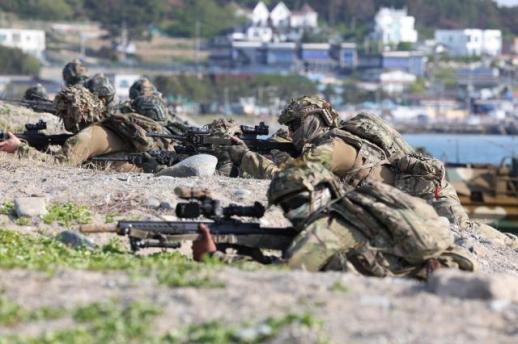 Seoul mulling deploying Hyundai Motor robots for border patrol SEOUL, May 11 (AJP) - South Korea’s military is quietly studying whether robotic dogs and wearables built by Hyundai Motor Group could one day complement human patrols along the tense front lines dividing the Korean Peninsula, as demographic collapse begins to hollow out the ranks of one of the world’s largest conscript armies. The discussions, still at an early stage, underscore how a shrinking birthrate is forcing Seoul’s military planners to confront a strategic dilemma once considered unthinkable: how to defend one of the world’s most heavily armed borders with fewer and fewer soldiers. “The Army is seeking cooperation with the government, industry and academia to become a more technology-driven force,” an Army official told AJP. “We are also exploring possible cooperation with Hyundai Motor.” Behind the bureaucratic language lies a more urgent reality. South Korea’s standing military force has fallen from 563,000 troops in 2019 to roughly 450,000 this year, according to Defense Ministry data, with Army enlistment numbers dropping by nearly 100,000 over the same period. “The decrease in military manpower is unavoidable,” the Army official said. “In line with that, we are also looking at ways to improve the efficiency of our forces.” Military and industry officials say working-level talks have already taken place between Army Headquarters and Hyundai Motor Group over possible deployment concepts involving robotics systems ranging from the MobED unmanned mobility platform to the X-ble Shoulder wearable robot and Spot, the four-legged robot developed by Boston Dynamics, the U.S. robotics company controlled by Hyundai. For South Korea’s military, the interest is less about futuristic combat fantasies than basic arithmetic. The Defense Ministry says the armed forces are already about 50,000 troops short of their target manpower level of 500,000. The military has loosened physical standards for conscription to compensate, but the pool of eligible young men continues to contract as the country’s fertility rate remains among the lowest in the world. The strain is already reshaping the structure of the force itself. Since 2006, the number of divisions and higher-level units has shrunk from 59 to 42 through mergers and disbandments. What Seoul is confronting is part of a broader military trend emerging across aging societies. From Washington to Beijing, armed forces are increasingly experimenting with unmanned systems to compensate for shrinking manpower and rising battlefield risks. The U.S. military has tested semi-autonomous robot dogs for perimeter security at facilities including Cape Cod Space Force Station, viewing them as force multipliers capable of conducting repetitive patrols in dangerous areas without exhausting human troops. China, meanwhile, has moved more aggressively, publicly showcasing rifle-equipped robot dogs during exercises including the Golden Dragon 2024 drills with Cambodia, hinting at future battlefield roles alongside infantry units. South Korea’s military appears far more cautious. Officials and defense experts say current discussions center primarily on non-lethal missions such as surveillance, reconnaissance, logistics transport and patrol support rather than armed combat roles. Still, the symbolism is difficult to ignore in a country where military service has long rested on mass mobilization and manpower. The war in Ukraine has further accelerated military interest in unmanned systems, demonstrating how wheeled robotic platforms can transport ammunition, food and medical supplies while evacuating wounded soldiers under fire. For Hyundai Motor Group, any eventual military deployment could also become a pivotal test case for its broader robotics ambitions after the conglomerate deepened its push into physical AI and robotics through its acquisition of Boston Dynamics in 2021. The company, however, stopped short of confirming any formal defense partnership. “We are reviewing ways to cooperate with various parties in robotics,” Hyundai Motor Group said, “but no cooperation with a specific partner has been decided beyond what has already been publicly disclosed.” 2026-05-11 17:33:32
 -
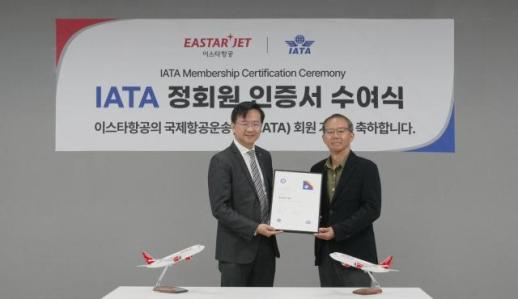 Eastar Jet joins IATA as full member to strengthen global competitiveness SEOUL, May 11 (AJP) - Eastar Jet has joined the International Air Transport Association as a full member, the airline said Monday, in a move aimed at strengthening its global competitiveness and safety standards. IATA is the world’s largest airline industry association, with 374 member airlines from 129 countries. It plays a central role in the global aviation industry by setting and managing international standards and regulations for air transport, as well as assigning airline designator codes such as Eastar Jet’s “ZE.” Eastar Jet obtained the IATA Operational Safety Audit certification on Dec. 30 last year, a mandatory requirement for full IATA membership. The airline was officially approved as a full member on May 4. Eastar Jet held a ceremony at its headquarters in western Seoul on Friday to mark its IATA membership, with CEO Cho Joong-seok and IATA officials in attendance. Eastar Jet said the membership will help the airline strengthen cooperation with global carriers and further enhance its safety management system in line with international standards. “Joining IATA as a full member is meaningful because it shows that our safety and operational systems have been officially recognized at the international level,” Cho said. “Based on our safety capabilities that meet global standards, we will continue to grow into an airline trusted by our customers.” The airline also received a perfect score of 100 in the safety category of the 2025 Air Transportation Service Evaluation conducted by the Ministry of Land, Infrastructure and Transport and the Korea Transport Institute. Eastar Jet has also been expanding its international network. On May 1, the airline launched its Busan-Almaty route, becoming the first and only carrier to operate the service. The route operates twice a week, on Mondays and Fridays, and the inaugural flight from Busan recorded a load factor of 99 percent, according to the company. 2026-05-11 17:08:09
 -
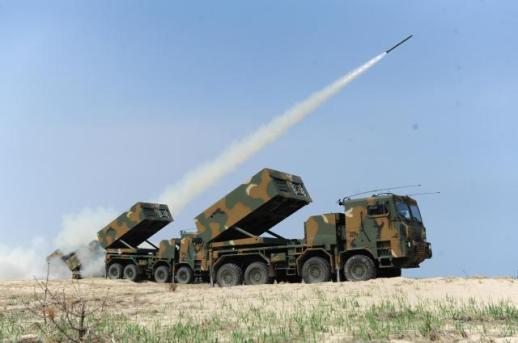 Hanwha Aerospace to supply additional Chunmoo launchers to Estonia SEOUL, May 11 (AJP) - Hanwha Aerospace will supply three additional Chunmoo multiple rocket launchers to Estonia, the company said Monday, marking a follow-up deal just five months after its first contract with the Baltic nation. The latest purchase reflects the growing defense partnership between South Korea and Estonia, which began with Estonia’s acquisition of K9 self-propelled howitzers and has since expanded to include precision-guided multiple rocket launchers. Hanwha Aerospace said the additional supply was confirmed after the Korea Trade-Investment Promotion Agency (KOTRA) and the Estonian Centre for Defence Investments (ECDI) signed a government-to-government export contract earlier in the day. The deal follows a contract signed in December last year, worth about 290 million euros, or around $336 million based on the exchange rate at the time. The initial agreement included six Chunmoo launchers, three types of missiles — the CGR-080, CTM-MR and CTM-290 — as well as operational and training support. Estonia is currently moving quickly to acquire and modernize a multiple rocket launcher capability under its National Defence Development Plan 2031, known as RKAK 2031. The follow-up contract is seen as a result of Hanwha’s ability to meet Estonia’s delivery requirements and the trust built between the two sides during the implementation of the first contract. “The additional purchase of three Chunmoo launchers is highly significant for strengthening Estonia’s defense capabilities,” Estonian Defense Minister Hanno Pevkur said. “It also shows that our cooperation with Hanwha continues to deepen.” “We are pleased to further contribute to strengthening Estonia’s national defense and defense industry ecosystem through this additional supply,” Hanwha Aerospace CEO Son Jae-il said. “We will continue to introduce Hanwha’s defense solutions across the Baltic region and strengthen our position as Estonia’s trusted strategic partner.” 2026-05-11 16:44:04
 -
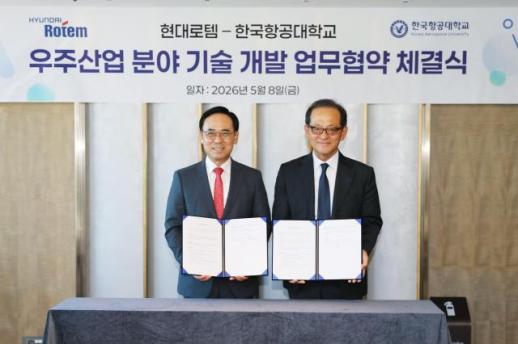 Hyundai Rotem partners with Korea Aerospace University to strengthen space business SEOUL, May 11 (AJP) - Hyundai Rotem has signed a memorandum of understanding with Korea Aerospace University to cooperate in the space industry, the company said Monday. The agreement, signed on Friday, is aimed at building an industry-academia cooperation platform in the space sector through joint research, networking and talent development. Under the MOU, the two sides will work together on joint research and commercialization of next-generation space technologies, establish a virtuous cycle of technology and academic information sharing, and foster future space professionals through field-based training programs. As part of efforts to strengthen joint research and commercialization capabilities, Hyundai Rotem and Korea Aerospace University will cooperate in planning and carrying out national research and development projects, while the university’s expert groups will support technical verification of Hyundai Rotem’s projects. The two sides also plan to jointly utilize research infrastructure. “We expect this partnership with Korea Aerospace University’s expert groups and research infrastructure to help strengthen our space technology capabilities,” a Hyundai Rotem official said. “We will put strong momentum behind our space business and build a virtuous cycle of shared growth with partners contributing to the development of Korea’s space industry.” 2026-05-11 11:35:07
 -
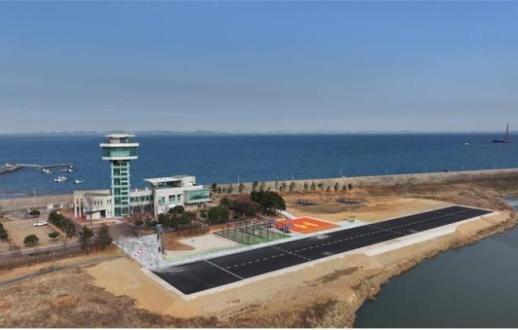 S. Korea expands drone security push with Army pact, coastal test site SEOUL, May 08 (AJP) - South Korea is expanding efforts to strengthen its drone security capabilities, as the National Intelligence Service signed a cooperation agreement with the Army and the government opened the country’s first integrated test site for land, sea and aerial unmanned systems. The moves reflect Seoul’s push to turn lessons from overseas battlefields into practical drone operations at home, as unmanned systems play a growing role in both military and public security missions. The NIS said Friday it signed a memorandum of understanding with the Army at Gyeryongdae, the military headquarters in South Chungcheong Province. Under the agreement, the two sides will share domestic and overseas drone security information, improve regulations on advanced drone use, verify drone and counter-drone systems and conduct joint drills against threats to national security facilities. The spy agency said it will also share information and analysis on drones used in overseas conflicts to support the Army’s efforts to strengthen its drone capabilities and upgrade tactics. The NIS signed a similar agreement with the Navy in October last year. “Information on drones used in overseas battlefields is an important asset for improving our military’s operational capabilities,” the NIS said. “Through close cooperation with the Army, we will support responses to drone threats and help establish a national drone security system.” In a related move, the Ministry of Science and ICT opened a coastal test site for unmanned vehicles in Dangjin, South Chungcheong Province. The facility, located at the Dangjin Drone Industry Support Center, is the country’s first test site where land, sea and aerial unmanned systems can be operated together for cooperative missions. The ministry said the site will support demonstrations of integrated control technologies for coastal security missions, including monitoring illegal entry, detecting pollution sources and responding to maritime accidents. The project will be carried out in cooperation with the Korea AeroSpace Administration and the Korea Coast Guard. 2026-05-08 16:45:07
 -
 South Korea pushes for drone autonomy through standardization SEOUL, May 08 (AJP) - South Korea is moving to standardize its drone industry around K-MOSA as the government seeks to shorten development cycles, lower production costs and build a scalable domestic manufacturing ecosystem for unmanned systems. The initiative comes as drones rapidly redefine modern warfare from Ukraine to the Middle East, exposing how military competitiveness increasingly depends not only on advanced unmanned systems but also on resilient supply chains and the capacity for fast, low-cost mass production. “Drones have already changed the battlefield, but South Korea still has a long way to go,” said Chun In-bum, a retired South Korean Army lieutenant general. The Office for Government Policy Coordination said Thursday that it had finalized key policy tasks during the third meeting of the government’s drone and counter-drone task force. Officials said they had completed scenario analyses on evolving security threats, including hybrid drones, and agreed to coordinate inter-ministerial response systems under a broader national defense framework. At the center of the strategy is a standardized marketplace built on K-MOSA, short for Korea’s modular open systems approach for defense unmanned systems. The framework is designed to move the industry away from fragmented proprietary specifications by allowing certified drone parts and modules to operate interchangeably across platforms. Under the envisioned system, authorized buyers would be able to compare, select and procure interoperable components through a digital platform, reducing dependence on single vendors while making drone systems easier to upgrade as battlefield requirements evolve. The government said the framework is intended to shorten development timelines and enable low-cost mass production. The push also reflects a broader industrial vulnerability. Although South Korea’s drone exports have expanded rapidly, the domestic ecosystem remains heavily exposed to cheaper Chinese products and components. According to a report by the Korea International Trade Association (KITA) released last November, South Korea’s drone exports reached $27.54 million in 2024, nearly 10 times higher than three years earlier. Yet the country still accounted for less than 0.5 percent of global drone exports, underscoring the gap between outward growth and meaningful global competitiveness. The same report showed global drone trade more than doubled over the past three years to exceed $6 billion, while the overall market is projected to expand more than 14 percent annually to reach $163.6 billion by 2030. Despite that growth, South Korea’s drone sector continues to struggle with weak manufacturing infrastructure, low localization of critical parts and heavy dependence on imports. DJI remains the dominant global player. Trade data cited by Monthly Trade, a publication affiliated with the KITA, showed China accounted for roughly 37.8 percent of global drone exports in 2024, down from 64.5 percent in 2022 but still by far the largest share. DJI alone is estimated to control more than 70 percent of the global finished-drone market. South Korea’s dependence is especially acute in components. Recent trade analysis found that Chinese products accounted for roughly 70 percent of South Korea’s drone-parts imports on average over the past three years, leaving domestic manufacturers vulnerable to supply disruptions or export controls from Beijing. Industry officials say the imbalance ultimately comes down to cost. Chinese components are often significantly cheaper than domestic alternatives, making it difficult for smaller Korean drone makers to source locally while competing in an intensely price-sensitive market. Kim Mu-hyun, a researcher at the KITA, said South Korea’s dependence on Chinese drone parts does not stem from a lack of technological capability. “South Korea has the technology,” Kim said. “The fundamental problem is that there is not enough domestic demand, so even if companies make the parts, it does not become profitable.” Kim argued that localization is necessary over the long term, but demand must come first. Without sustained civilian, public-sector or defense procurement, manufacturers have little incentive to invest in production lines or expand hiring. That imbalance is reflected in the industry’s structure. According to the 2024 Drone Industry Survey cited in industry reports, South Korea had 6,835 drone-related companies as of December 2023, but combined industry sales totaled just 1.09 trillion won ($1.4 billion). Of those firms, only 608 were manufacturers, while 6,227 focused on services or drone utilization, highlighting how the sector remains centered more on operation than deep manufacturing capacity. Employment data points to a similar weakness. According to figures from the Korea Institute of Aviation Safety Technology cited in local industry reports, the number of workers employed by drone manufacturers fell from 4,152 in 2021 to 2,740 in 2023, even as the number of drone manufacturers rose from 345 to 608 over the same period. Experts say the government’s latest initiative could mark a shift from fragmented support measures toward a more coordinated national drone strategy. But its ultimate success will depend on whether the framework can generate enough sustained demand to justify large-scale domestic investment and reduce South Korea’s reliance on cheaper foreign supplies during a military contingency. 2026-05-08 16:14:50
 -
 Hanwha Group moves to bring aerospace under its defense arm SEOUL, May 07 (AJP) - Defense-heavy Hanwha Group has climbed to No. 5 in South Korea’s latest conglomerate rankings by the Fair Trade Commission, and it appears to be aiming to go literally higher by bringing aircraft and rocket manufacturing business back into the family. The group has recently secured more than a 5 percent stake in Korea Aerospace Industries, the country's aircraft-making monopoly, for the stated purpose of “management participation,” signaling that its long-rumored ambition to build a “Korean Lockheed Martin” is moving into clearer view. Hanwha Aerospace and Hanwha Systems recently purchased additional KAI shares on the open market, raising their combined stake to 5.09 percent. The group is reportedly planning to invest an additional 500 billion won ($345 million) by the end of this year to lift its holdings further to 6.43 percent. The move marks Hanwha’s return to possible management involvement in KAI roughly eight years after it sold its entire stake in 2018 to improve its financial structure. Hanwha had quietly re-entered KAI’s shareholder base in March with a 4.99 percent stake, deliberately stopping just below the disclosure threshold that would have triggered stricter reporting requirements and intensified takeover speculation. By crossing the 5 percent threshold, Hanwha has effectively shown its hand and will to bring KAI back home to complete its broader aerospace and defense ambitions. KAI is de facto state-owned with the Export-Import Bank of Korea holding the largest 26.41 percent stake, followed by the National Pension Service with roughly 8 percent. Hanwha would become the largest non-public shareholder in KAI once stake purchase is completed. Hanwha itself has openly acknowledged the possibility of pursuing a larger role. “If discussions on a government-led privatization of KAI become public, we plan to review whether to pursue an acquisition or integration in line with the government’s policy direction,” the group said. Hanwha’s ties with KAI date back to 2015, when it acquired Samsung Techwin, now Hanwha Aerospace, and inherited Samsung Group’s roughly 10 percent stake in KAI. But the group sold the entire holding in 2018 as part of efforts to shore up its balance sheet. Speculation over a renewed KAI bid intensified after Hanwha acquired Hanwha Ocean, formerly Daewoo Shipbuilding & Marine Engineering, in 2023, strengthening its ambition to build an integrated defense structure spanning land, sea, air and space. Since then, Hanwha has repeatedly emerged as the leading candidate whenever discussions resurfaced over the possible sale of the Export-Import Bank’s KAI stake. Industry watchers also point to significant technological synergies. Hanwha Aerospace has strengths in fighter jet engines and space launch vehicles, while KAI specializes in aircraft manufacturing, satellite platforms and systems integration. A combination of the two could create South Korea’s first vertically integrated aerospace champion with the scale to compete more directly against global defense giants such as Lockheed Martin and Boeing. “Hanwha’s grand ambition is ultimately to create Korea’s Lockheed Martin,” said Kim Houng-yu. “KAI could become a key pillar in completing that vision.” The push is also viewed as a strategic investment in the emerging “new space” economy, where private companies are taking increasingly central roles in satellite development, launch systems and defense-related aerospace technologies. Still, major obstacles remain before any actual takeover could materialize. The most immediate issue is likely to be monopoly scrutiny. If Hanwha acquires KAI, the group would effectively control both fighter aircraft manufacturing and engine supply, a structure that could face close examination from the Fair Trade Commission. Concerns over privatizing a strategically sensitive defense company, potential clashes in corporate culture and labor union opposition are also viewed as major hurdles. “Defense is a special market, unlike ordinary industries, so the government could play some role in adjusting monopoly-related concerns,” Kim said. “Conditions could be attached during the acquisition process.” Another defense industry expert argued that the emergence of a Korean version of Lockheed Martin could ultimately strengthen South Korea’s global competitiveness. “South Korea still does not have a comprehensive defense company that covers everything from ground weapons and missiles to advanced weapons systems and aircraft platforms,” the expert said. “Rather than looking only at domestic competition, it could be positive to have a defense-specialized group like Korea’s Lockheed Martin when considering global competitiveness.” Hanwha’s latest stake expansion also reflects how Chairman Kim Seung-youn’s aggressive mergers, acquisitions and restructuring efforts are increasingly translating into stronger profitability rather than simply a larger corporate footprint. According to the Financial Supervisory Service, Hanwha Corp. posted 189.5 billion won in first-quarter operating profit on a standalone basis, up 24.8 percent from a year earlier, driven by improved operational efficiency and dividend income from key affiliates. Core defense affiliates also posted strong results. Hanwha Aerospace and Hanwha Ocean recorded first-quarter operating profit increases of 20.6 percent and 70.6 percent, respectively, as exports of K9 self-propelled howitzers and Chunmoo multiple rocket launch systems expanded amid rising global defense demand following Russia’s invasion of Ukraine and ongoing instability in the Middle East. Buoyed by growing confidence on land and at sea, Hanwha is now looking higher – toward aerospace. 2026-05-07 17:59:48
 -
 KF-21 cleared for combat, opening era of Korean-made fighter jets SEOUL, May 07 (AJP) - South Korea’s homegrown KF-21 fighter jet has received final combat suitability approval, clearing the last major hurdle in its development 10 years and five months after the project began. The Defense Acquisition Program Administration (DAPA) said Thursday that the KF-21 was declared suitable for combat use, meaning the aircraft has met the Air Force’s required operational capability and secured the technical reliability needed to carry out missions in actual battlefield conditions. The KF-21 development project began in December 2015. Since testing and evaluation began in May 2021, the aircraft has undergone about five years of ground tests through February this year to verify its durability and structural integrity. The aircraft also completed more than 1,600 flight tests, covering over 13,000 test conditions, including aerial refueling and weapons launch trials. Through the tests, authorities verified the KF-21’s flight performance and stability. With the latest approval, the project is expected to be formally completed next month. The first mass-produced unit is scheduled to be delivered to the Air Force in the second half of this year. The KF-21 will replace the Air Force’s aging F-4 and F-5 fighter jets, marking a major step in South Korea’s efforts to build an independent fighter aircraft development capability. “This combat suitability approval is the result of close cooperation among the Defense Ministry, the Joint Chiefs of Staff, the Air Force, Korea Aerospace Industries and other related organizations,” said Noh Ji-man, head of DAPA’s Korean Fighter Program Office. “It is a symbolic achievement showing that South Korea has fully secured its own fighter jet development capability,” he added. However, some officials say the deployment timeline could still be subject to change as pressure grows on the defense budget. 2026-05-07 17:43:12
 -
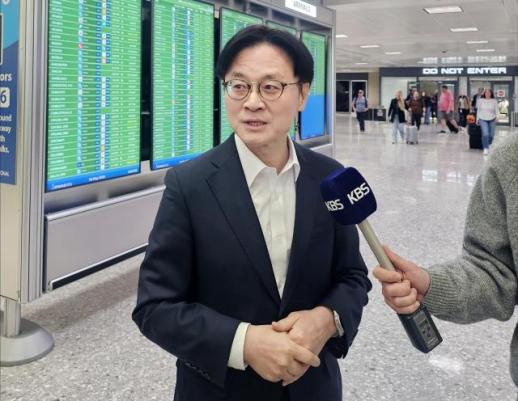 Korea weighs Louisiana LNG project for $200 bln US investment package SEOUL, May 07 (AJP) - South Korea has begun reviewing a liquefied natural gas export terminal project in Louisiana as a potential first project under its $200 billion strategic investment package with the U.S., officials and industry sources said Thursday. The Ministry of Trade, Industry and Energy recently selected a consortium of Samil PwC and Kim & Chang to advise on the Louisiana LNG project, part of the Korea-U.S. strategic investment package agreed last year. Industry watchers say the Louisiana LNG project reflects Washington’s broader push to increase LNG exports, particularly as demand for non-Russian energy has grown in Europe following the war in Ukraine and Asian demand for alternative supplies has risen amid instability around the Strait of Hormuz. The project involves building export infrastructure to liquefy and ship natural gas produced along the U.S. Gulf Coast to markets in Europe and Asia. For South Korea, however, the key issue will be whether the investment can generate tangible benefits for Korean companies, rather than simply meeting U.S. demands. Seoul is expected to seek conditions that allow Korean firms to participate in construction, supply steel and equipment, and secure stable access to U.S. LNG. The move comes as Industry Minister Kim Jung-kwan departed for North America on Tuesday for a four-day trip focused on advancing investment talks with the U.S. and strengthening industrial cooperation with Canada. Kim arrived in Washington on Thursday after visiting Ottawa, where he sought Canadian support for Korean companies bidding for the country’s submarine procurement project. He said the U.S. Trade Representative’s ongoing Section 301 investigation into countries including South Korea and Japan appeared to be aimed at restoring the 15 percent reciprocal tariff that had been ruled unlawful. “I understand the purpose of the investigation is to restore the 15 percent tariff,” Kim said. “Any U.S. measures following the investigation are likely to remain within that scope, and we will make every effort to ensure that they do.” Kim also pushed back against concerns that South Korea was moving slower than Japan in implementing its U.S. investment package. “Specific projects cannot be realized simply by announcing them. They need to be carried out in concrete terms,” he said. Kim said details could be discussed only after the special act on U.S. investment takes effect in June. The special act on the management of Korea-U.S. strategic investment was passed by the National Assembly on March 12 and is scheduled to take effect on June 18. Asked about the Louisiana LNG project, Kim stopped short of confirming it as the first investment. “It is true that the Louisiana project was among the projects being reviewed,” Kim said. “But we are not yet at a stage where we can say whether it will become the first project.” 2026-05-07 10:45:10