
Journalist

Kim Hee-su, Yoo Na-Hyun
khs@ajupress.com
-
 South Korea eyes role in Europe-led Hormuz security push after Gulf war SEOUL, April 16 (AJP) -South Korea is moving to join Europe-led multinational talks aimed at restoring safe passage through the Strait of Hormuz once the Gulf conflict subsides, signaling a cautious but deliberate step toward postwar maritime security operations. The presidential office said Thursday that President Lee Jae Myung is “positively” considering participation in a video summit set for Friday, bringing together 70 to 80 countries and international organizations with stakes in the strategic waterway, which carries roughly one-fifth of global energy shipments. “It is in our interest to work with like-minded states to ensure the free and safe reopening of the Strait of Hormuz,” a senior official said. The meeting, led by the United Kingdom and France, is expected to focus on postwar plans to restore freedom of navigation in the chokepoint. Defense Minister Ahn Gyu-back told a parliamentary hearing earlier this week that London and Paris are spearheading discussions on forming a multinational maritime force, adding that Seoul has already signaled its willingness to take part. “As a responsible member of the international community, we are preparing step-by-step plans,” Ahn said, noting that a four-phase strategy has been drawn up in coordination with the Joint Chiefs of Staff and the Defense Ministry. Military officials say options under review range from dispatching personnel to a multinational command structure to providing remote or logistical support without a direct deployment to the strait. French President Emmanuel Macron said Tuesday the initiative would take the form of an international security mission excluding parties directly involved in the conflict — namely the United States, Israel and Iran. The European-led framework aims to ensure safe navigation through the strait even after active fighting subsides, though officials cautioned that restoring full maritime operations could take time. Germany, historically cautious about overseas deployments, is also likely to participate, according to a senior official. Its involvement would broaden the scope of the mission, given Berlin’s financial resources and key military capabilities. Seoul has already taken part in online consultations led by the UK and France. Joint Chiefs of Staff Chair Jin Young-seung joined videoconference discussions on March 26 and again on Wednesday, alongside parallel vice foreign minister-level talks. With limited allied support to reopen the chokepoint — where traffic has dwindled under tight Iranian control — Washington has moved unilaterally. U.S. forces began a “reverse blockade” on Iranian activities over the water corridor since earlier this week. President Donald Trump said on Truth Social that the United States had begun “clearing out” the strait “as a favor” to countries including China, Japan, South Korea, France and Germany, while criticizing them for failing to act. Despite a ceasefire, uncertainty persists over when the strait can fully reopen. A report by The New York Times said Iran has been unable to locate or remove naval mines it previously deployed, complicating efforts to resume maritime traffic. Citing U.S. officials, the report added that Tehran may not have recorded the precise locations of all the mines, some of which were designed to drift with ocean currents. While Iran has released maps indicating safe routes, those corridors are considered limited. Analysts say South Korea could be assigned mine-clearing duties if it joins the mission. “Possible roles would likely include mine removal, securing the strait and escorting oil tankers,” said Jeong Kyung-woon, a researcher at the Korea Association of Military Studies. He added that even the formation of a multinational naval force could itself serve as pressure on Iran by narrowing its strategic options. Ahn emphasized that any deployment would only take place after the war ends. Experts urged caution. “While South Korea is allied with the United States, it is important to avoid being drawn into a conflict that is not directly our own,” said Choi Gi-il, a professor of military studies at Sangji University. Separately, top naval commanders from South Korea, the United States and Japan held talks in Seoul on Wednesday — the first such trilateral meeting since 2022 — fueling speculation that Washington may seek broader allied support for Hormuz-related operations. 2026-04-16 15:33:22
 -
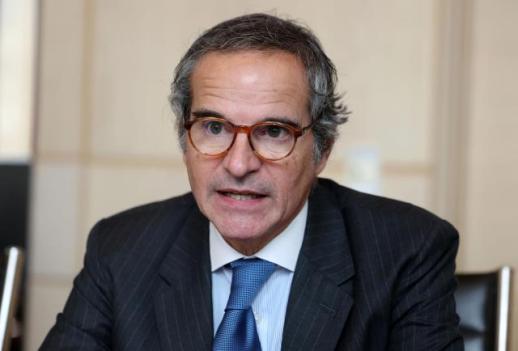 IAEA urges safeguard on Korea's nuclear submarine plan, verification on Iran SEOUL, April 15 (AJP) - South Korea must enter into a special safeguards arrangement with the International Atomic Energy Agency (IAEA) if it proceeds with nuclear-powered submarines to ensure that nuclear material is not diverted from propulsion use, its director general said Wednesday. “The use of nuclear technology to power submarines has a number of very important technical implications,” IAEA Director General Rafael Grossi said at a press briefing in Seoul, describing the visit as a “kickoff” for discussions with Seoul on its naval nuclear propulsion plans. As a signatory to the Nuclear Non-Proliferation Treaty (NPT), South Korea is subject to IAEA safeguards. However, Grossi noted that nuclear-powered submarines pose a unique challenge because fuel loaded into vessels on long missions falls outside routine inspections. “Because of the nature of these vessels, the nuclear material is not continuously accessible to inspectors,” he said, warning that large quantities of enriched uranium — potentially even highly enriched uranium — could remain outside direct oversight for extended periods. To address this, Grossi stressed the need for a tailored verification system between the IAEA and South Korea to ensure that nuclear material is not diverted for military purposes beyond propulsion. “We need technically sound arrangements so we can verify that the material remains where it is and is used only for propulsion,” he said, adding that such frameworks are being developed with countries including Australia and Brazil. He emphasized that “ironclad guarantees” are essential to ensure the program does not contribute to nuclear proliferation, noting that the process would involve coordination across government, military and shipbuilding sectors. Grossi also cautioned that developing nuclear-powered submarines is a long-term undertaking, likely to take many years, involving extensive research, construction and testing phases. On Iran, Grossi said the country has already mastered uranium enrichment technology and currently possesses roughly 440 kilograms of uranium enriched up to 60 percent, with most of the stockpile located at known sites such as Isfahan. He described any potential suspension of enrichment as a “political decision,” noting that the duration of a moratorium — whether five, 10 or 20 years — carries little technical difference but reflects levels of political trust. More importantly, he stressed that any nuclear agreement must include rigorous verification. “Without verification, any agreement is just a piece of paper,” Grossi said. “We must be able to check every gram of nuclear material and how it is used.” Turning to North Korea, Grossi said the IAEA has observed a continued expansion of nuclear activities, including operations at Nyongbyon and other facilities, despite the absence of inspectors since 2009. Recent assessments indicate a “significant increase” in Pyongyang’s nuclear capabilities, with estimates suggesting the country may have material sufficient for dozens of nuclear warheads. While there is no clear evidence of Russian military nuclear assistance, he said current cooperation between Moscow and Pyongyang appears limited to civilian nuclear projects. Grossi reiterated that pursuing nuclear weapons does not enhance national security, warning instead that it risks triggering a broader arms race. “Moving toward nuclear weapons would not give any country greater security,” he said. “It would encourage others to follow, leading to dangerous escalation.” Grossi also addressed his candidacy for the next United Nations secretary-general, highlighting what he described as a deepening crisis of confidence in the global body. “The world is going through a very difficult period marked by polarization and multiple conflicts,” he said, calling the upcoming leadership transition a critical moment to restore trust in multilateral institutions 2026-04-15 15:44:43
 -
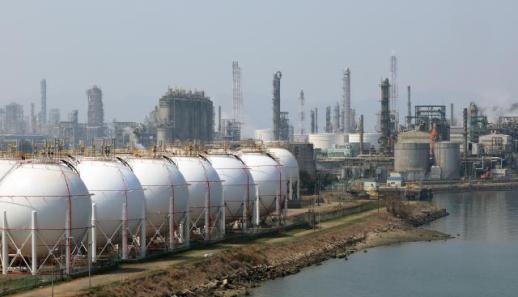 Korean refiners activate 'Plan B' as Hormuz risks complicate crude diversification SEOUL, April 14 (AJP) - South Korea’s refiners are activating contingency plans to diversify crude imports from North America as tensions around the Strait of Hormuz escalate, though analysts warn that hidden costs could limit the effectiveness of such moves. At first glance, alternative sourcing appears feasible. But industry officials say higher freight rates, refinery compatibility issues, and premiums on substitute crude could significantly raise costs. According to the Korea Petroleum Association and the Korea International Trade Association, the Middle East accounted for 70.7 percent of South Korea’s crude oil imports last year, followed by the Americas at 22.8 percent and the Asia-Pacific region at 4.3 percent — underscoring the country’s structural reliance on the region now at the center of geopolitical risk. Crude oil is far from uniform. It varies by density — light versus heavy — and sulfur content — sweet versus sour. Middle Eastern grades such as Dubai and Saudi crude are typically heavier and more sulfur-rich, while U.S. West Texas Intermediate (WTI) and shale output tend to be lighter and sweeter. Korean refiners have long optimized their facilities to process heavier Middle Eastern crude, making any abrupt pivot toward lighter alternatives far more complex than headline diversification suggests. With the country importing roughly 3 million barrels per day, largely via maritime routes, refiners are now reviewing alternative sourcing scenarios spanning North America, Australia and UAE benchmarks such as Dubai and Murban. Technically, these sources offer sufficient variation in quality to allow blending and substitution. The economics however are not straightforward. Compared with the Middle East–East Asia route via the Strait of Hormuz, shipments from the United States can take nearly twice as long, raising overall transport costs even when freight rates themselves appear favorable. Freight dynamics are already tightening. Daily charter rates for Very Large Crude Carriers (VLCCs) from the Middle East have surged to $150,000–$170,000 — the highest in six years — and analysts warn that diversified sourcing could further strain vessel availability and push up costs across routes. Refinery efficiency poses another constraint. Facilities calibrated for heavier Middle Eastern crude risk lower yields and compressed margins if forced to process lighter North American or Australian grades. “Switching crude types affects not only purchase prices but also refining conditions, catalyst use and maintenance cycles,” an oil industry official said. “In the short term, diversification may effectively mean paying an insurance premium.” Still, some refiners have moved faster than others to hedge against concentration risk. SK Innovation, long known for its aggressive diversification strategy, has expanded its North American exposure through the Trans Mountain Expansion (TMX) pipeline in Canada, which began full operations in mid-2024. By securing stable volumes of Canadian crude alongside frequent spot purchases of U.S. WTI, the company has materially reduced its reliance on Middle Eastern supply. At the GS Caltex complex in Yeosu — the world’s fourth-largest single refinery with a capacity of 800,000 barrels per day — diversification efforts are also visible. Last week, the company imported roughly 1 million barrels of Kazakhstan’s Caspian Pipeline Consortium (CPC) crude via the tanker Nantucket from the Russian port of Novorossiysk, equivalent to fueling about one million passenger vehicles. By contrast, S-Oil remains among the most exposed to Middle Eastern supply due to its long-term contracts with Saudi Aramco, its largest shareholder. While such arrangements provide stability, they also constrain flexibility. The company is expected to maintain core Saudi and UAE supply while gradually increasing imports of lighter grades and condensates linked to its Shaheen Project, a major petrochemical expansion underway in Ulsan. HD Hyundai Oilbank continues to lead in diversification, with Middle Eastern dependence at roughly 40 percent as of 2025 — the lowest in the industry. The company has broadened its sourcing footprint to include South American producers such as Guyana and Brazil, while incorporating North Sea grades from Europe. It was also the first Korean refiner to introduce Canadian crude, underscoring a long-standing strategy of supply flexibility. “In the medium to long term, demand for petroleum is expected to decline. For example, gasoline demand will likely fall as electric and hydrogen vehicles become more widespread. Refiners are already moving beyond oil and looking to diversify their business portfolios,” an official from the Korea Petroleum Association said. “If refiners need to modify their facilities to diversify crude supply beyond Middle Eastern sources, government-level support will also be necessary,” the official added. 2026-04-14 17:58:39
 -
 South Korea rises as attractive offshore oil storage base for Gulf nations SEOUL, April 14 (AJP) - South Korea is moving to capitalize on the prolonged disruption in the Strait of Hormuz by leveraging its extensive oil stockpiling infrastructure to generate additional income while reinforcing its energy security. Although instinctively oil-poor, the country has quietly built one of the most sophisticated stockpiling systems among non-producing nations. Its extensive network of underground storage and refining infrastructure has turned it into an attractive “offshore reserve base” for major Gulf exporters seeking to hedge against geopolitical choke points. Multiple Middle Eastern oil producers have approached Seoul to explore storing their crude in Korea, home to the nine fuel storage bases including underground tanks and the world's single largest oil storage base with a combined capacity for 146 million barrels. “Countries, particularly in the Middle East, are showing increasing interest in using Korea’s stockpiling facilities,” Yang Ki-wook, director general for industrial resource security at the Ministry of Trade, Industry and Energy, said in a press briefing Tuesday. The interest reflects a strategic shift among exporters such as Saudi Arabia, the United Arab Emirates and Kuwait, whose economies are heavily dependent on uninterrupted oil flows through the Gulf. By pre-positioning crude outside the Strait of Hormuz, they can reduce exposure to geopolitical risks and maintain supply flexibility. The arrangement offers both commercial and strategic gains for the country. Under its international joint stockpiling program, state-run Korea National Oil Corp. (KNOC) leases idle storage capacity to foreign producers, generating rental income while securing priority rights to purchase the stored oil during supply disruptions. Korea on March 12 joined the International Energy Agency's emergency release by contributing 22.46 million barrels of strategic oil reserves to help contain international oil prices after the U.S.-Israeli attacks on Iran. The country currently holds about 100.1 million barrels of government-controlled reserves, fifth largest among IEA members. Korea also stores roughly 10 million barrels of foreign crude under joint agreements, including 4 million barrels for Kuwait Export Crude and 4 million barrels of light sour grades from Abu Dhabi National Oil Co. The government is stepping up contingency measures to stabilize supply and prices while securing alternative crude supplies as the war stretches close to two months. Seoul has secured 118 million barrels of extra crude, with 46 million barrels allocated for April and 72 million barrels for May. The volumes are sourced from 17 countries, including Saudi Arabia, the United Arab Emirates, the United States, Brazil and Australia. “Saudi Arabia accounts for the largest share of April shipments,” Yang said, adding that stockpile swap volumes stand at around 32 million barrels. Of the swap requests filed by four domestic refiners, 8.38 million barrels across six contracts have already been delivered, with an additional 8 million barrels expected to be contracted within the month. The stockpiling framework has played a supporting role in these negotiations, officials said, as Korea’s ability to offer storage options strengthened its position in securing replacement cargoes. For emergency actions at home, the government will extend a credit ceiling of up to $3 billion to the Korea National Oil Corp. (KNOC), backed jointly by the Export-Import Bank of Korea and the Korea Development Bank, to support timely crude imports. Demand-side controls are also being introduced, including adjusting construction schedules to manage asphalt demand and monitoring market disruptions in construction additives. 2026-04-14 13:56:55
 -
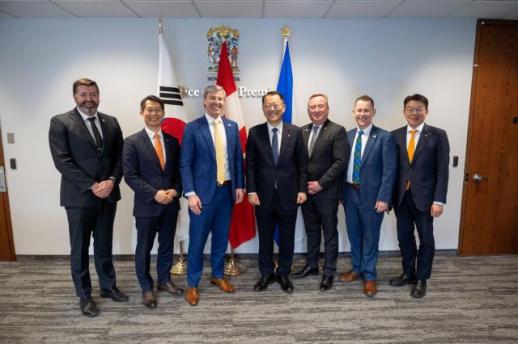 Hanwha Ocean ramps up Canada submarine bid with Halifax talks SEOUL, April 14 (AJP) - Hanwha Ocean is ramping up its bid for Canada’s $40 billion submarine program, as its chief executive met with government and shipbuilding officials in Halifax. According to Hanwha Ocean on Tuesday, CEO Kim Hee-cheol recently visited Halifax, Canada, where he met with Premier of Nova Scotia Tim Houston and other provincial officials to explore potential collaboration for the submarine program. The talks covered defense readiness, MRO capabilities, workforce development and industrial infrastructure, as Hanwha Ocean shared its long-term strategy for the Canadian Patrol Submarine Project (CPSP). Kim also met with Dirk Lesko, president of Irving Shipbuilding, Canada’s largest shipyard, to discuss cooperation aimed at enhancing the Royal Canadian Navy’s sovereign submarine capabilities. “We will continue to enhance our competitiveness by working closely with Canadian industry and government to build a sustainable, Canada-centered submarine operational ecosystem,” Kim said. Hanwha Ocean has also been expanding partnerships with local companies as part of its bid for the CPSP. The company signed a teaming agreement with PCL Construction last week, one of Canada’s largest construction firms, to jointly develop submarine-related infrastructure. The deal follows a memorandum of understanding signed between the two companies in November last year. Industry sources said the partnership is part of Hanwha Ocean’s strategy to shorten delivery timelines and strengthen localization as it competes with Germany’s ThyssenKrupp Marine Systems (TKMS) in the final stage of the bid. According to industry officials, Hanwha Ocean also recently formed partnerships with five Canadian firms — OSI Maritime Systems, EMCS Industries, Techsol Marine, Jastram Technologies and Curtiss-Wright — to strengthen its local industrial base for the CPSP. Such local partnerships are considered critical, as Canada places strong emphasis on industrial and economic contributions in the bidding process. Analysts say the competition between Hanwha Ocean and TKMS could ultimately hinge on these factors, given both companies’ advanced submarine capabilities. Canada’s CPSP involves the procurement of up to 12 diesel-electric submarines of around 3,000 tons. The contract value alone is estimated at $13.5 billion, while the total project size, including 30 years of MRO, could reach around $40 billion. A consortium of Hanwha Ocean and HD Hyundai Heavy Industries is currently competing against Germany’s ThyssenKrupp Marine Systems (TKMS), with the final selection expected around June. 2026-04-14 13:51:31
 -
 Seoul shares details of Korean vessels with Iran amid Hormuz transit talks SEOUL, April 14 (AJP) - South Korea has shared information on its vessels stranded near the Strait of Hormuz with Iran as part of ongoing negotiations over maritime transit, government sources said Tuesday. Jeong Byeong-ha, special envoy of the foreign minister, reportedly provided details about South Korean ships and crew members during talks with senior Iranian officials, focusing on the safety of vessels currently unable to pass through the strategic waterway. Iran had previously indicated that information on South Korean vessels would be necessary to coordinate any potential transit arrangements, officials said. According to the Ministry of Oceans and Fisheries, a total of 26 South Korean vessels and 173 crew members remain unable to pass through the Strait of Hormuz. Seoul had previously maintained that all vessels, including those of South Korea, should be allowed to transit freely and had taken a cautious stance toward bilateral negotiations focused solely on Korean ships. Observers are now watching whether the latest information-sharing signals a shift in the government's approach. However, prospects for near-term progress remain uncertain following the collapse of ceasefire negotiations between the United States and Iran, which analysts say could delay any meaningful resolution to the transit issue. 2026-04-14 10:13:30
 -
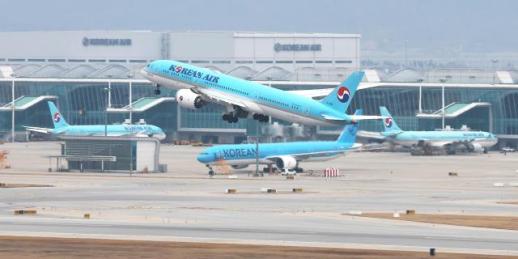 Korean Air posts record Q1 revenue as Middle East risks loom SEOUL, April 13 (AJP) - Korean Air posted record first-quarter revenue despite rising geopolitical risks in the Middle East. The airline said Monday it recorded 4.52 trillion won ($3.03 billion) in revenue and 516.9 billion won in operating profit for the first quarter on a standalone basis. Revenue rose 14.1 percent from a year earlier, marking the highest first-quarter performance in the company’s history. Operating profit climbed 47.3 percent year-on-year, while net profit increased 25.6 percent to 242.7 billion won. Korean Air said both passenger and cargo businesses contributed to improved earnings despite ongoing instability in the Middle East. Passenger revenue rose 7.3 percent from a year earlier to 2.61 trillion won, supported by solid travel demand during the Lunar New Year holiday in February and increased sales on key transfer routes, including Europe. Industry officials said disruptions at Middle Eastern airports, including Dubai, due to the regional conflict may have boosted transfer demand through Asian hub airports such as Incheon. According to aviation data from the Ministry of Land, Infrastructure and Transport, Korean Air carried 8.04 million passengers in the first quarter, up 5 percent from a year earlier. Cargo revenue increased 3.5 percent to 1.09 trillion won. The airline attributed the growth to expanding fixed-volume contracts and flexible route operations, including additional charter and ad hoc flights on strong-demand routes to North America. Cargo volume reached 431,500 tons, up 2.7 percent from the same period last year. However, Korean Air warned that the impact of geopolitical tensions in the Middle East would likely intensify in the second quarter, as rising fuel costs and exchange rate volatility weigh on profitability. A Korean Air official said the airline had shifted to an emergency management in April to prepare for surging fuel costs and would pursue cost efficiency measures. “We are strengthening our financial fundamentals and using this period as an opportunity to build a stable foundation for future growth,” the official said. 2026-04-13 17:10:48
 -
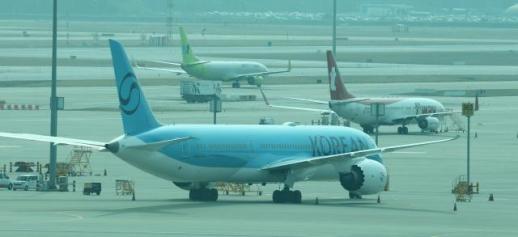 Korean LCCs streamline routes and payroll on Gulf war impact SEOUL, April 13 (AJP) - The Gulf war is not yet two months old, but South Korean low-cost carriers are already scaling back long-haul routes and trimming payroll as surging fuel costs and a weakening won curb overseas travel. T’way Air has begun accepting applications for unpaid leave from cabin crew, marking its first such program since August 2024, according to industry sources Monday. The airline said the move is intended to manage crew fatigue and adjust workloads following schedule changes. Industry officials, however, say it reflects mounting financial strain as the U.S.-Iran conflict drives up fuel costs and pressures the currency. T’way Air had already declared emergency management mode on March 16, becoming the first domestic carrier to take such action amid the crisis. The carrier has posted operating losses for two consecutive years, with a 12.3 billion won ($8.3 million) loss in 2024 widening sharply to 265.5 billion won in 2025, as higher fuel costs, exchange rate volatility and weakening demand compound its challenges. The strain is spreading across the low-cost carrier (LCC) sector. Data released by the office of Rep. Park Yong-gap showed that international flights operated by nine domestic LCCs fell from 40,111 to 39,006 in the month following the outbreak of the conflict, while cancellations rose from 479 to 604. Some carriers saw steeper pullbacks. Jin Air cut mid-haul flights by 27.7 percent, while T’way Air reduced operations by 12.6 percent but posted a cancellation rate of 31.2 percent. Cost pressures are being amplified by currency swings. Airlines typically pay for fuel, aircraft leases and maintenance in U.S. dollars, leaving them highly exposed to exchange rate volatility. The dollar has averaged close to 1,500 won in April, the highest since the 2008 global financial crisis. Jet fuel prices have also spiked, with Singapore benchmark aviation fuel rising to around $197 per barrel—more than double pre-conflict levels near $90—making it increasingly difficult to sustain marginal routes. Full-service carriers are not immune. Korean Air saw its long-haul cancellation rate jump from 0.2 percent to 3.9 percent after the conflict, largely due to airspace closures over Dubai and subsequent route adjustments. The government has begun preparing support measures. The Ministry of Land, Infrastructure and Transport issued a “concern” level resource security alert and launched a crisis response task force, while considering administrative support such as temporary relief on financial restructuring requirements. 2026-04-13 14:44:45
 -
 Seoul readying to redraw energy map with Hormuz substitutes in postwar order SEOUL, April 10 (AJP) - It remains uncertain whether — or how — the war will wind down and the Strait of Hormuz will fully reopen after U.S.-Iran negotiations in Pakistan on Saturday. But one thing is already clear: access to the strategic waterway along Iran and Oman will not return to what it was. Against those odds — and the rising cost burden — Seoul is moving to rethink its energy routes. A presidential envoy mission to Kazakhstan, Oman and Saudi Arabia is beginning to signal where those alternatives may lie. Presidential Chief of Staff Kang Hoon-sik led a joint government-corporate delegation to the three countries this week, aiming to secure long-term crude oil and naphtha supplies in what is increasingly being viewed as a postwar energy order. Shipping data underscores the scale of disruption. Vessel activity in the Strait of Hormuz showed only a marginal uptick this week, with just four bulk carriers transiting between midnight and 8 p.m. UTC on Wednesday, according to MarineTraffic. Before the conflict erupted in late February, more than 100 ships passed through the strait daily. Traffic has since collapsed by more than 80 percent in the immediate aftermath of the attacks, according to Lloyd’s List Intelligence. Even under the ceasefire framework, flows remain tightly controlled. A senior Iranian source said fewer than 15 vessels per day would be allowed to transit, with all movements subject to prior approval and strict protocols. “All vessels transiting the Strait of Hormuz should, until further notice, use alternative routes designated by the IRGC Navy,” the force said, warning ships to avoid potential contact with naval mines. The new routing system effectively redraws the map. Traffic is being pushed closer to Iran’s Larak Island — home to military facilities — while previously used channels are now labeled “danger zones.” Nearly 2,000 vessels remain stranded near the chokepoint, including 26 South Korea-linked ships and seven Korean oil tankers. Rethinking supply lines South Korea’s energy dependence leaves little room for disruption. In 2025, crude imports were led by Saudi Arabia (33.6 percent), followed by the United States (17 percent), the United Arab Emirates (11.4 percent), Iraq (10.4 percent) and Kuwait (8.5 percent). Seoul has already moved to secure emergency volumes, including 24 million barrels from the UAE late last month — equivalent to just over eight days of consumption. But the buffer is thin. “We need about 2.8 million barrels per day. Even if Kazakhstan provides supplies, it would likely be less than 2 million barrels. It’s not easy to rely on that alone,” said Yoo Seung-hoon, professor at Seoul National University of Science and Technology. “The 24 million barrels secured from the UAE would last less than 10 days — about eight days. That’s not a huge amount. We need to secure supplies from Oman and other producers to sustain operations.” The geography of alternatives Oman is emerging as a key strategic option. Unlike most Gulf exporters, it can ship crude directly through the Arabian Sea without passing through Hormuz. Its main export terminals — including Duqm and Sohar — sit outside the strait, offering rare insulation from chokepoint risk. Kazakhstan, while landlocked, presents a different kind of workaround. Its extensive pipeline network connects inland fields to export terminals on the Caspian and Black Seas, allowing crude to reach global markets without touching Hormuz. “Cargoes from Kazakhstan can avoid the Red Sea and move via Russian routes before detouring around the Cape of Good Hope,” an industry official said. Since Houthi attacks in the Red Sea in 2023, such longer routes have already become more common despite higher costs and extended delivery times. In emergencies, safety is beginning to outweigh efficiency. GS Caltex has already tested the route, importing 80,000 tons of Kazakhstan’s CPC crude this week. The cargo, loaded via pipeline and shipped from Russia’s Novorossiysk port, arrived at the company’s Yeosu terminal. “We load the crude from pipeline shipments in Russia and transport it by tanker,” a GS Caltex official said. 2026-04-10 16:41:52
 -
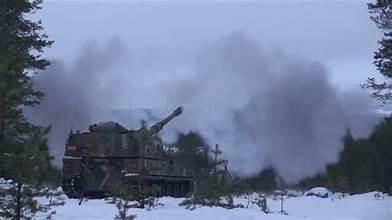 K9 howitzers expand in Europe with additional orders from Finland SEOUL, April 10 (AJP) -South Korea will export an additional 112 K9 self-propelled howitzers to Finland under a government-to-government (G2G) deal valued at 546 million euros ($634 million), marking a follow-up order from the Nordic country after its initial purchase in 2017. The agreement was signed in Helsinki between the Korea Trade-Investment Promotion Agency, representing the Korean government, and Finland’s defense ministry, according to the Defense Acquisition Program Administration. Under the contract, Hanwha Aerospace will supply 112 K9 howitzers. Finland previously acquired 96 units through a similar G2G agreement in 2017. The latest deal follows about seven months of negotiations involving KOTRA, Hanwha Aerospace, the Defense Acquisition Program Administration and the Korean embassy in Finland. Officials from both sides attended the signing ceremony, including KOTRA President Kang Kyung-sung and Oli Ruutu, director general for resource policy at Finland’s defense ministry. The K9 howitzer has been in operation in Finland for eight years, where it has been deployed in harsh conditions including extreme cold and heavy snowfall. The additional order reflects continued confidence in the system’s mobility and firepower under such environments, officials said. The G2G export framework allows the Korean government to participate directly in contracts alongside private firms, supporting negotiations, legal reviews and communication with the purchasing country. The structure is designed to reduce risks for exporters and improve transparency in the contracting process. The follow-up order comes as South Korea’s defense exports continue to expand in Europe amid shifting security dynamics, including strains within the North Atlantic Treaty Organization and heightened geopolitical tensions following Russia’s war in Ukraine. The K9 howitzer is currently operated by more than 10 countries, including six NATO members. Upon increasing demand, Hanwha Aerospace has been ramping up manufacturing base in Europe. In February, the company began construction of a production facility in Romania, dubbed “H-ACE Europe,” to manufacture K9 howitzers and K10 ammunition resupply vehicles locally. The facility will include assembly, testing and maintenance capabilities, with localization rates targeted at up to 80 percent. Romania signed a deal in 2024 to purchase 54 K9 units and 36 K10 vehicles, becoming the 10th member of the K9 user group and the sixth NATO country to operate the system. 2026-04-10 07:49:38