
Journalist

Kim Hee-su
khs@ajupress.com
-
 Filipino domestic workers in Korea struggle with low pay, study finds SEOUL, January 17 (AJP) - Many Filipino domestic workers in South Korea who came under a government pilot program have faced low wages and undervalued care work, according to a new academic study. In a paper published Saturday in the journal of the Korean Association for Immigration Policy and Administration, Lee Mi-ae, a professor at Jeju National University’s Research Institute for the Tamla Culture, examined the experiences of Filipino domestic and care workers employed under a pilot project run by the Seoul Metropolitan Government and the Ministry of Employment and Labor. The program brought 100 Filipino housekeepers to Korea to provide child care and household support for dual-income, single-parent and multi-child families. Lee and her research team conducted surveys and in-depth interviews between April and May last year with 21 Filipino workers in their 20s and 30s, along with two interpreters. During the first six months of the program, participants earned an average monthly wage of 1.92 million won ($1,301) before taxes. After deductions for housing, insurance and communication costs, their take-home pay fell to about 1.18 million won, or roughly 51 percent of South Korea’s average monthly wage in 2024, which stood at 3.74 million won. Their hourly wage was set at 9,860 won, 27 to 35 percent lower than that of domestic childcare providers and household workers, whose pay ranges from 13,590 won to 15,000 won per hour. Even under a standard 30-hour workweek, monthly deductions of 470,000 to 520,000 won for items such as housing left many workers with less than 1 million won in net pay. Several respondents also reported being asked to perform tasks beyond their original scope of work. In addition to child care, they said they were expected to clean the house, wash dishes, care for pets and provide English lessons. Lee attributed these problems to the exclusion of migrant domestic and care workers from the policymaking process, saying discussions focused mainly on users’ needs and employers’ interests. “Workers’ experiences and voices must be reflected at every stage of policymaking,” she wrote, calling for stronger labor protections. She also stressed that migrant domestic workers should be allowed to change workplaces without automatically losing their residence status and that their fundamental labor rights be protected. Lee further urged policymakers to move beyond a narrow focus on low wages and re-evaluate the social value of child care and household labor. 2026-01-17 17:49:02
 -
 BTS to release fifth full-length album 'Arirang' in March SEOUL, January 17 (AJP) - K-pop supergroup BTS will release its fifth full-length album titled "Arirang," drawing its name from Korea's most iconic folk song. According to BigHit Music on Friday, BTS revealed the album title during a live broadcast on fan platform Weverse at midnight, announcing that the album will be released on March 20. Leader RM said during the live stream that the group wanted to incorporate something symbolic of Korea into the album's concept. "We thought it would be meaningful to include something that represents Korea, and the word 'Arirang' came to mind," RM said. "As we're releasing an album after a long time, we felt it could bring together the full range of emotions we've experienced." BTS said the album reflects the group's identity as artists who began their journey in Korea, as well as themes of longing and deep affection rooted in their personal experiences. BigHit Music described "Arirang" as a symbolic title that captures the emotional core the members aim to convey in the new release. "Ahead of their long-awaited comeback, BTS naturally turned their attention to the team’s roots, starting point and inner stories," the agency said. "By exploring universal emotions such as longing and deep love, the album is expected to resonate with listeners around the world." During the live broadcast, the members hinted that the new album would defy expectations. "Each of us has released solo projects, so whatever people expect, it will be different," the group said. "Yet the music still feels distinctly like us." The album marks BTS's first new full-length release in three years and nine months since their 2022 anthology album "Proof." The fifth studio album will feature a total of 14 tracks. Following the album's release, BTS will embark on a new world tour beginning April 9 at Goyang Stadium in Gyeonggi Province. The tour will span 34 cities with 79 shows — the largest in K-pop history — and will feature a 360-degree stage designed to enhance audience immersion. 2026-01-17 15:41:48
 -
 Kim Jong-un hails North Korean troops deployed to Russia at Pyongyang youth event SEOUL, January 17 (AJP) - North Korean leader Kim Jong-un praised North Korean troops deployed to Russia, calling their participation something "only young Korean people could do," state media reported Saturday. According to the state-run Korean Central News Agency, Kim made the remarks on Friday while attending a ceremony marking the 80th anniversary of the founding of the Socialist Patriotic Youth League at Kim Il Sung Stadium in Pyongyang. "Present here are also young soldiers who have recently defended the dignity and honour of their country in overseas special military operations by displaying the excellence, heroism, self-sacrificing spirit and character peculiar to their fellow people," Kim was quoted as saying. He added that such actions were something only young Korean people could accomplish. Kim also said there were no soldiers in the world who would fight on the battlefield as faithfully as North Korean troops, "expecting no reward or private interest," stressing that the existence of such youth was a source of incomparable pride for the state. He further addressed the significance of marking the youth league's 80th anniversary ahead of the Workers' Party of Korea's upcoming ninth congress. "The 80-year history of struggle of the youth league is being reviewed in the light of socialist ideals, noble patriotism, a passionate sense of justice and a pure spiritual world," Kim said, adding that this had once again elevated the status and prestige of North Korean youth. He went on to say that preparing the next generation and building a future that carries the country's proud past into a glorious present was a historic achievement of the North Korean youth movement that no one else could replace. During the event, Kim awarded the Order of Kim Jong Il, the country's highest state decoration, to the youth league. He personally attached the medal to the league's flag and presented the certificate to its committee chairman. Senior officials, including Choe Ryong-hae, Workers' Party secretaries Ri Il-hwan and Ri Hi-yong, and propaganda chief Ju Chang-il, also attended the ceremony, along with Youth League Chairman Mun Chol. Kim's daughter, Kim Ju-ae, did not appear to be present. The Socialist Patriotic Youth League, North Korea's largest youth organization, was founded in 1946 under the name the North Korean Democratic Youth League. Membership is mandatory for all young people and students aged 14 to 30, with total membership estimated at around five million. 2026-01-17 14:11:51
 -
 South Korea urges 50 citizens in Iran to leave as unrest continues SEOUL, January 17 (AJP) - The South Korean government said Friday that around 50 citizens are currently staying in Iran, urging them to leave the country as soon as possible amid continuing unrest. According to a joint meeting held Thursday by the Ministry of Foreign Affairs and overseas missions to assess safety measures in Iran—where violent crackdowns have followed recent anti-government protests—no casualties involving South Koreans had been reported. The meeting was attended by officials from South Korea’s embassies in Iran, Azerbaijan, Israel, Turkmenistan and Türkiye. Iran has been gripped by widespread protests sparked by economic hardship, with authorities carrying out a hardline response using snipers and other security forces. Some estimates suggest that the death toll may range from several thousand to more than 10,000, though the exact scale remains unclear as Iranian authorities have restricted internet access and information flows. Vice Foreign Minister Kim Jin-a said the situation remains highly uncertain due to numerous variables, stressing the need to prioritize citizen safety even at the risk of criticism. "Even if we are criticized for taking excessive precautions, it is preferable to act in a way that minimizes risk," Kim said, echoing remarks previously made by the president. She urged officials to take all necessary steps to ensure the safety of South Korean nationals. Kim also emphasized that a Level 3 travel advisory—recommending departure—has been issued for all regions of Iran, calling on South Koreans in the country to leave as quickly as possible. She further instructed South Korean missions in three neighboring countries to thoroughly prepare all necessary measures to ensure the swift and safe evacuation of citizens in the event of an emergency. South Korean Ambassador to Tehran Kim Jun-pyo said the embassy is checking the safety of all South Korean nationals in Iran on a daily basis and actively encouraging them to depart. "Departures are continuing," Kim said, adding that the embassy is maintaining constant communication with the local South Korean community and regularly reviewing and updating evacuation plans in case the situation deteriorates further. 2026-01-17 11:50:04
 -
 U.S. makes clear Taiwan chip tariff deal will not apply to South Korea SEOUL, January 17 (AJP) - Washington has made clear that semiconductor tariffs and related exemptions will be set through country‑by‑country negotiations, meaning the criteria agreed with Taiwan will not be copied and applied automatically to South Korea. An administration official said on Friday that the U.S. would pursue "separate agreements for separate countries" when asked whether the semiconductor tariff waiver terms offered to Taiwan would also be granted to South Korea. This suggests that Washington intends to define specific tariff and exemption conditions bilaterally with each major chip‑exporting partner, rather than adopting a single unified standard. President Donald Trump has argued that semiconductor imports have reached a level that threatens U.S. national security and has instructed his administration to negotiate with relevant countries to address this perceived risk through tariffs. Under this approach, Washington plans to negotiate first with countries that export semiconductors to the U.S. and only then impose tariffs, while offering "tariff offset programs" to companies that invest in strengthening the U.S. semiconductor supply chain. Within this framework, the U.S. announced a trade agreement with Taiwan on Thursday that sets out the tariff waiver rules for Taiwanese semiconductor exports. In return for a commitment by Taiwanese firms to undertake $250 billion of direct investment in the U.S., Washington agreed to cut the reciprocal tariff rate on Taiwanese products from 20 percent to 15 percent, aligning it with the rate applied to South Korea and Japan. Previously, South Korea had agreed to $350 billion in U.S. investment and Japan to $550 billion, in exchange for reductions in their respective reciprocal tariffs. The Trump administration also decided that Taiwanese companies establishing new semiconductor production capacity in the U.S. will receive substantial tariff relief. While a new facility is under construction, imports of up to 2.5 times its production capacity can enter the U.S. market without paying the new semiconductor tariffs. After the facility is completed, imports of up to 1.5 times the new capacity can continue to enter tariff‑free. South Korea finalized its trade negotiations with the U.S. at the end of October last year, ahead of Taiwan, and secured assurances that it would not be placed at a disadvantage compared with countries whose semiconductor trade volumes with the U.S. exceed South Korea's. This implies that South Korea is expected to receive conditions at least equivalent to those applied to Taiwan, one of its key competitors, although how this principle will be implemented remains uncertain and is expected to be clarified through further negotiations with Washington. 2026-01-17 11:11:50
 -
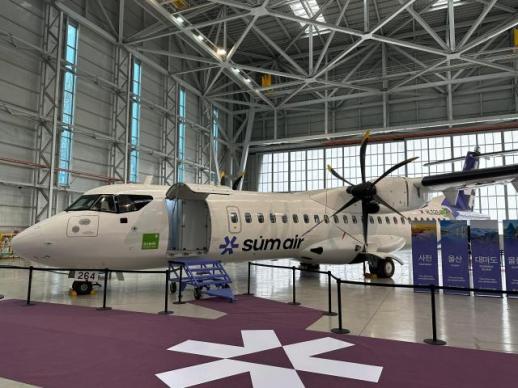 Korea's new regional airline targets islands and emergency medical transport SEOUL, January 15 (AJP) - South Korea's new regional airline SUM Air, which aims to become a major transport link between regional areas and islands, unveiled its first brand-new aircraft at Gimpo International Airport on Thursday. The carrier plans to connect underserved islands and provide essential medical transport services, positioning itself as the only airline capable of serving various island airports. As a Regional Air Mobility (RAM) operator led by CEO Choi Yong-duck, SUM Air will initially deploy its first brand-new ATR 72-600 aircraft on flights from Sacheon in South Gyeongsang Province between March and April, and will sequentially expand routes to Ulsan and islands such as Tsushima, Ulleung, Heuksan and Baengnyeong, Choi said. At the delivery ceremony, attendees included CEO Choi, ATR (Avions de Transport Régional) Chief Commercial Officer (COO) Alexis Vidal, ATR Sales Director Jean-Daniel, as well as airport officials, government representatives and investors. "I'm very happy to be with you. I think your presence today, your engagement, shows how important regional aviation and regional mobility are for Korea," said Alexis Vidal, CCO of ATR. SUM Air's latest ATR 72-600 series aircraft, equipped with turboprop engines, is optimized for short runways of around 1,200 meters and for airfields exposed to environmental constraints such as frequent bird strikes, making it well-suited to many of Korea's island airports and small regional airfields. Highlighting short runways at future island airports such as Ulleung and Heuksan, as well as at foreign regional airports like Japan's Tsushima Island where narrow runways prevent larger jets from operating, Choi stressed that SUM Air will avoid direct competition with major low-cost carriers (LCCs) and instead concentrate on niche regional markets where smaller aircraft have a clear advantage. Ulleung Island has long been considered a transport-isolated region, and the burden of that isolation has fallen squarely on its roughly 9,000 residents. With no branch of a major commercial bank on the island, residents must commit to at least an overnight stay on the mainland just to complete basic banking tasks, and even two nights are often not enough when combining multiple errands. Each trip to the mainland entails several days of accommodation costs and lost time. To address these challenges, the Korean government is investing about 600 billion won ($408 million) to build a new airport on Ulleung Island. Construction began in July 2020 and, as of October 2025, the project had passed 70 percent completion, with foundational work largely finished. The airport, slated to open in 2027, will feature a 1,200-meter runway—too short for typical narrow-body jets like the Airbus A320 or Boeing 737, which generally require around 1,800 meters for safe operations. SUM Air is then currently the only airline in Korea able to operate at Ulleung Airport once it opens. Before Ulleung Airport opens, SUM Air plans to operate regular flights between Sacheon and Gimpo, with the flight time between the two cities expected to be just over one hour. Choi revealed plans to operate up to eight round-trip flights per day, including peak morning and evening commuter timings. Starting with Sacheon, the airline intends to gradually increase scheduled services to small regional airports across the country, thereby knitting together a dense network that reduces transport blind spots. Most inhabited Korean islands have at least a public health subcenter, while smaller islands often have a simple public health post. At these facilities, public health doctors and nurses, or in some cases only nurses, handle basic care such as monitoring blood pressure and blood sugar, administering vaccinations and issuing simple prescriptions. However, when residents require specialized or emergency treatment, they must still travel to urban hospitals on the mainland—a journey that can be particularly difficult in remote islands where ferries operate only once or twice a day. In urgent cases, air ambulances such as doctor helicopters may be deployed, but operations are limited by weather conditions and high costs, leaving many islanders exposed to delays in receiving critical care. To help fill this gap, SUM Air has formed a shareholder partnership with Seoul Bumin Hospital, enabling the airline to support regional medical transport services for island residents who need specialized treatment. "We are equipping our new ATR aircraft from the manufacturer with an option that allows us to fold the third row of seats and install a stretcher," Choi explained. He added that when SUM Air begins serving destinations like Baengnyeong, the airline expects significant demand for emergency transport of Marine Corps personnel, with similar needs anticipated for Ulleung and Heuksan. Noting that Ulleung effectively has no full-service hospital, Choi underscored the airline's commitment to providing regional medical transport services to island communities. 2026-01-15 17:29:44
 -
 Contrary to long-held belief, kimchi and traditional Korean diets may not be as healthy as assumed SEOUL, January 14 (AJP) - Kimchi, South Korea's fermented staple, has been included in U.S. government dietary guidelines for its potential benefits to gut health. Yet a new Korean study suggests that high salt intake from kimchi and other traditional foods may contribute to cancer risk — challenging the widely held view that the Korean diet is inherently healthy. The study, led by researchers from Seoul National University and published in the government-funded journal Epidemiology and Health, estimates that 6.08 percent of cancer cases and 5.70 percent of cancer deaths in Korea are attributable to dietary factors. The findings, indexed in PubMed at the U.S. National Library of Medicine, raise fresh questions about the long-term health impact of salt-heavy eating patterns. Using national health and nutrition survey data and large Korean cohort studies, the research team calculated population-attributable fractions (PAFs) for diet-related cancers between 2015 and 2030. Korea's diet-attributable cancer incidence exceeds that of the United States (5.2 percent) and France (5.4 percent), though it remains lower than that of the United Kingdom (9.2 percent) and Germany (7.8 percent). Among dietary factors, salted vegetables — including kimchi, salted cabbage, radish and cucumber — emerged as the single largest contributor to cancer burden. In 2020, salted vegetables accounted for an estimated 2.12 percent of all cancer cases and 1.78 percent of cancer deaths, with a particularly strong association with stomach cancer. More than 44 percent of diet-related cancer cases were stomach cancers, which also made up over 37 percent of diet-related cancer deaths. The PAFs for diet-related stomach cancer reached 24.61 percent for incidence and 24.27 percent for mortality, suggesting that roughly one in four stomach cancer cases in Korea may be linked to dietary factors. "The findings quantify how a salt-heavy diet structurally drives the burden of stomach cancer in Korea," the authors wrote. The dietary impact was notably higher among men than women. For men, 8.43 percent of cancer cases and 7.93 percent of cancer deaths were linked to diet, compared with 3.45 percent and 2.08 percent, respectively, for women. The researchers attributed the gap to higher consumption of salted vegetables, red and processed meat, and lower intake of vegetables and fruit among men. Salted vegetable consumption has been gradually declining, driven by sodium-reduction policies and changing eating habits. Even so, the study projects that salted vegetables will remain Korea's largest dietary cancer risk factor through 2030, underscoring the need to reduce both portion size and salt content. The researchers also warned that cutting back on salty foods alone will have limited impact unless accompanied by broader dietary changes. Low intake of non-starchy vegetables and fruit was identified as another major driver of cancer risk. Koreans consume an average of 340.5 grams of vegetables and fruit per day — well below the internationally recommended range of 490 to 730 grams. The shortfall increases the risk of stomach and colorectal cancers, as well as certain respiratory and digestive cancers. The cancer burden linked to insufficient produce intake is expected to remain largely unchanged through 2030. Red and processed meat showed relatively low PAFs in Korea — accounting in 2020 for just 0.10 percent and 0.02 percent of cancer cases, respectively — largely because consumption remains lower than in many Western countries. However, the study warned that steadily rising intake since the mid-2000s could raise the PAF for processed meat to 0.08 percent by 2030, amplifying its impact over time. "Diet-based cancer prevention in Korea must go beyond reducing salted vegetables," the authors wrote. "It is essential to increase the consumption of fresh vegetables, fruit and dietary fiber at the same time." For Koreans, kimchi is more than a side dish. It anchors daily meals and symbolizes warmth and hospitality at the table. Sharing kimchi is often a way of sharing affection — whether passed to a neighbor or sent to family living far away. Each winter, families and communities gather for gimjang, the traditional kimchi-making season, salting and seasoning cabbage in large batches to last through the cold months. Even as Korean kimchi gains global popularity, domestic consumption has been gradually declining, reflecting rising incomes and the steady westernization of diets. 2026-01-14 16:08:56
 -
 Korean classrooms are thinning fast and remain isolated from AI transition SEOUL, January 13 (AJP) - Fewer than 300,000 children will enter first grade across South Korea when the school year begins in March — the smallest cohort on record. The number is set to fall further as the country's ultra-low birthrate continues to hollow out the school-age population. These eight-year-olds are starting school at a moment when artificial intelligence (AI) is rapidly reshaping work, production and decision-making across society. Yet serious doubts remain over whether South Korea's education system is prepared to equip them for an AI-driven future — amid a shortage of trained teachers, weak curriculum guidance and limited classroom exposure to AI-related learning. Dropping below 300,000 first-graders is rare among OECD countries. The demographic shock is already reshaping schools: classes are being merged, and campuses are closing, particularly in rural areas where student numbers have collapsed. South Korea's total fertility rate rebounded slightly last year to around 0.8 — its first increase in four years — but remains the lowest in the OECD, far below the group's 2023 average of 1.43. According to the Ministry of Education's latest projections for 2026–2031, the number of first-graders nationwide will fall to 298,178. The milestone was originally forecast for 2027, but updated population registry and enrollment data pushed it forward by a year. In Seoul, education guidelines flag schools with fewer than three classes per grade or fewer than 18 students per class for potential teacher reductions. Daecheong Elementary School in Ilwon-dong, Gangnam — which has just 75 students in total — proposed a merger with nearby Yeonghee Elementary last November, but shelved the plan after parent opposition. In 2025, Daecheong had a single first-grade class with just eight students. AI fills labor gaps — but where do children go? As robots and AI systems increasingly replace younger workers, artificial intelligence is no longer viewed in South Korea merely as a technology, but as a structural response to demographic decline. Education, however, is lagging far behind that shift. Efforts to raise AI literacy and close skills gaps remain rudimentary. While AI capabilities are advancing at breakneck speed, school textbooks still reflect the 2022 curriculum revision, instructional hours devoted to information and AI education remain limited, and trained teachers are in short supply. Under the revised national curriculum in 2022, instructional time for information subjects in primary and secondary schools was roughly doubled. Even so, it remains low by international standards. In elementary schools, information education totals just 34 hours — 0.58 percent of the 5,892 hours taught over six years — and is embedded within practical arts classes rather than taught as a standalone subject. Middle school students receive 68 hours over three years, about 2 percent of total instruction time. In high school, AI-related courses are electives, meaning many students may graduate without ever taking one. By comparison, students in the UK receive about 374 hours of information-related instruction, compared with 405 hours in Japan and 212 hours in Beijing. Reflecting this gap, a survey by the Korea Youth Policy Institute found that teenagers rated their experience with AI education at just over 2 out of 4, indicating limited exposure. "South Korea is trying to build its own AI ecosystem right now, but when it comes to education, I see almost no strategic approach," said An Sun-hoi, a professor at the Graduate School of Education at Joongbu University. "Education is the area where democracy functions the least," An said. "Policies tend to favor educators as a group, while the demands of industry, parents and national strategy are barely reflected." As birth cohorts shrink, the stakes are rising, he warned. "We now have to raise a very small pool of human resources into the core talent that will lead the country." He added that greater authority in student evaluation has not translated into clear improvements in learning outcomes. Teaching fewer children — more deeply Global institutions are calling for a fundamental shift in how societies prepare workers for AI. The World Economic Forum has outlined four possible futures for AI and labor, arguing that a "copilot economy" — where humans and AI work together — is more likely than mass job displacement. McKinsey has likewise emphasized that AI and robotics will increase the value of uniquely human skills such as judgment, communication, coordination and creativity. Both stress that the future will depend not on a small elite of AI developers, but on a broad workforce capable of understanding and collaborating with AI systems. "If South Korea continues with its current education system, we risk creating a society where people are subordinated to AI rather than empowered by it," An said. "Critical and creative thinking cannot exist without a solid foundation in knowledge and concepts." Dr. Nancy Le Nezet, a high school principal at Seoul Foreign School, also emphasized education over restriction. "Adults need to keep pace with technological developments so they can understand how their children use AI and social media," she said. "Taking an interest in their world is the best way to protect them — and also a way for adults to keep learning." Experts increasingly argue that instead of shrinking classrooms and cutting staff in line with falling student numbers, South Korea should seize this moment to redesign public education — allocating more teachers, time and resources to each child. The imbalance is already visible. In Gyeonggi Province, average class sizes in 2025 stood at 21.7 students in elementary schools and 25 in middle schools, both above the national average. Nearly a quarter of classes are overcrowded, forcing schools to rely heavily on temporary teachers. Meanwhile, rural regions are seeing a rapid rise in schools with fewer than 100 students, where staffing shortages make it difficult to offer a full curriculum. 2026-01-13 17:56:02
 -
 Korean Air–Asiana union nears; what does it mean for Asiana passengers? SEOUL, January 12 (AJP) - The long-awaited merger between Korean Air and Asiana Airlines is finally approaching completion. But for millions of Asiana passengers, one question matters more than regulatory approvals or aircraft numbers: What happens to my miles, status and benefits? As Asiana is absorbed into Korea's larger flag carrier, its brand, loyalty program and global alliance will all disappear. While the combined airline promises greater scale and efficiency, many frequent flyers fear they may lose hard-earned advantages along the way. Miles: the biggest unresolved issue The most sensitive issue remains mileage integration, now widely seen as the final hurdle to full merger approval. In September last year, Korean Air proposed converting flight-earned miles at a 1:1 ratio, while credit-card miles would be converted at 1:0.82. Consumer groups objected immediately, arguing that the two airlines' mileage programs are not equal in value. Industry estimates put the value of a Korean Air mile at about 21–23 won ($0.02), compared with 17–19 won for an Asiana mile. The gap reflects stricter qualification rules at Korean Air, where elite status requires far more flying. Asiana flyers currently reach Gold status at 20,000 miles, while Korean Air's entry-level elite tier, Morning Calm, requires 50,000 miles. That difference has allowed many travelers to earn a higher status more easily on Asiana. Why elite flyers are worried Under the merger, the two loyalty systems will eventually be combined. That raises fears on both sides: Asiana customers worry their miles and status will be downgraded, while Korean Air elites fear their hard-earned privileges will be diluted if the elite pool suddenly expands. One frequent flyer summed it up online: "If lounge access and upgrades don't expand with the number of elite members, benefits will lose their meaning." To address criticism, Korean Air revised its plan, proposing to keep the two mileage programs separate for 10 years, with no conversion during that period. After a decade, all miles would move under Korean Air's Skypass program. The Fair Trade Commission (FTC) rejected that proposal in December, asking for stronger guarantees on award-seat availability and mileage upgrades — a decision that has pushed final integration further into the future. Alliance change: fewer global perks Another major change is Asiana's exit from Star Alliance in October. The airline will move to SkyTeam, Korean Air's alliance, because airlines cannot belong to two alliances at once. For many Asiana frequent flyers, this is a clear loss. Star Alliance has 25 member airlines, compared with SkyTeam's 19, and offers broader global coverage and lounge access. Korean Air says SkyTeam is sufficient for major routes and that customers will gain better access to its direct flights. Business travelers, however, say the shift reduces flexibility rather than improving it. One brand survives — and it's not Asiana The merger also ends Asiana Airlines as a standalone brand. Korean Air has made clear it will operate the combined carrier under its own name. Last year, it unveiled a refreshed logo and aircraft design, replacing "KOREAN AIR" with a simplified "KOREAN." For Asiana customers, the message is clear: this is not a merger of equals. The physical transition will also take time. Korean Air must repaint 238 aircraft, including 68 from Asiana, by 2027. Each repaint can take up to 15 days and cost nearly 1 billion won, raising questions about cost and disruption during the transition. Bigger airline, lingering doubts Legally, the deal is almost done. Korean Air completed the acquisition on Dec. 11, 2024, after securing approvals in 14 jurisdictions. Once fully integrated, the airline will rank among the world's top ten, with more than 230 aircraft, service to 120 cities and annual revenue exceeding 23 trillion won. At Incheon Airport, it will control about 37 percent of slots, with Asiana moving to Terminal 2 in mid-January 2026 for smoother transfers. Yet analysts say scale alone won't determine success. "If customers feel their loyalty was simply erased, the merger's long-term value will suffer," one industry official said. The question is no longer whether the merger will happen — but whether Korean Air can keep the trust of Asiana’s passengers once it does. 2026-01-12 16:26:34
 -
 S. Korea's airline passengers hit record high last year on strong short-haul demand SEOUL, January 09 (AJP) - The number of airline passengers traveling through South Korea's airports reached an all-time high last year, boosted by a surge in short-haul international routes, particularly to Japan and China. According to aviation statistics released Friday by the Ministry of Land, Infrastructure and Transport and the Korea Civil Aviation Association, the combined number of domestic and international air passengers totaled 124.79 million last year, up 3.9 percent from 120.06 million a year earlier. The figure surpassed the previous record set in 2019, before the COVID-19 pandemic, when passenger traffic stood at 122.36 million, by about 1.2 percent. Domestic air travel declined 2.8 percent on the year to 30.25 million passengers, while international traffic rose 6.3 percent to a record 94.55 million, offsetting the domestic downturn. By region, Japan-bound routes carried 27.31 million passengers, an 8.6 percent increase from the previous year and a sharp 44.8 percent jump compared with 2019 levels. Analysts attribute the rise to the prolonged weak yen and an expansion of routes, including services to smaller regional cities. Passenger numbers on China routes climbed 22 percent to 16.8 million, recovering to 91.2 percent of pre-pandemic levels. The rebound was supported by China's visa-free entry policy for South Korean travelers, the resumption of visa-free entry for Chinese group tourists to South Korea from late September, and aggressive low-fare strategies by Chinese airlines. As traffic concentrated on Japan and China, routes to other Asian destinations, including Southeast Asia, edged down 0.5 percent year on year to 34.82 million passengers, or 95.6 percent of 2019 levels. Transpacific routes to the Americas recorded 6.82 million passengers, up 4.7 percent, while European routes carried 4.85 million, a 5.5 percent increase. International passenger numbers rose overall across the industry, but airline performance varied widely. Among low-cost carriers, Jeju Air saw the steepest decline, with passenger numbers falling 9 percent to 7.78 million. Air Busan carried 4.16 million passengers, down 7.4 percent, while Air Seoul posted an 8.4 percent drop to 1.68 million. In contrast, airlines that expanded seat capacity recorded sharp gains. Aero K saw passenger numbers surge 75.4 percent to 1.5 million, while Eastar Jet carried 3.07 million passengers, up 59.7 percent. Air Premia also posted strong growth, with 1.08 million passengers, a 42.3 percent increase. T’way Air transported 7.06 million passengers, up 7.3 percent, while Jin Air carried 6.67 million, a 2.2 percent rise. Parata Air, a new entrant that launched international services in November, recorded about 71,000 passengers. Among full-service carriers (FSC), Korean Air carried 19.14 million international passengers, an 8.2 percent increase, while Asiana Airlines transported 12.15 million, up 1.3 percent. Industry officials said safety concerns following recent aviation incidents prompted some passengers to shift demand toward full-service carriers from early last year. 2026-01-09 16:40:19