
Journalist

Park ki rock
kirock@ajunews.com
-
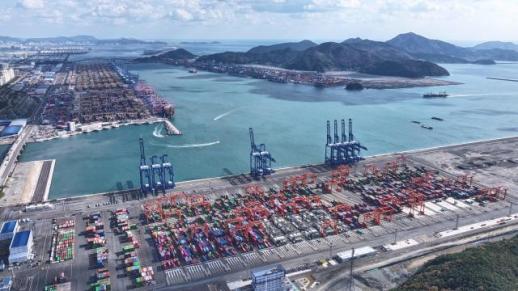 Government Warns of Economic Downside Risks Amid Ongoing Middle East Conflict 정부는 최근 우리 경제가 중동전쟁 장기화에 따른 지정학적 리스크로 경기 하방 위험이 이어지고 있다고 진단했다. 국제유가와 원자재 가격 불안이 지속되면서 물가 상승과 민생 부담 확대 우려도 함께 커지고 있다는 판단이다. The government has assessed that the South Korean economy continues to face downside risks due to geopolitical uncertainties stemming from the prolonged Middle East conflict. Concerns over rising prices and increased burdens on households have also intensified amid ongoing volatility in international oil and commodity prices. In its May report on recent economic trends, the Ministry of Economy and Finance stated, "While domestic consumption and the service sector show signs of recovery, the geopolitical risks associated with the Middle East conflict persist, leading to continued downside risks for the economy." The government reiterated its concerns about external uncertainties, maintaining similar language from its April report, which noted that the escalation of geopolitical risks due to the Middle East conflict has heightened economic downside risks. Notably, this month, the government emphasized the impact of high oil prices on inflation and household burdens. Recent inflation trends have also shown signs of instability. In April, consumer prices rose 2.6% compared to the same month last year, an increase from the previous month's 2.2%. The inflation rate for industrial products climbed to 3.8%, while the cost of living increased by 2.9%. Fluctuations in international oil prices and exchange rates are additional burdens. At the end of April, the won-dollar exchange rate stood at 1,483.3 won, remaining at a high level, and government bond yields also rose due to the impact of the Middle East conflict. However, the government noted improvements in some indicators, such as production and exports. In March, total industrial production increased by 0.3% compared to the previous month, and service sector output rose by 1.4%. The coincident composite index and leading composite index also saw increases of 0.5 points and 0.7 points, respectively. Exports continue to show signs of recovery, particularly in the semiconductor sector. In the first quarter of this year, the current account recorded a surplus of $65.4 billion, and net financial assets also increased. Notably, strong exports in the information and communication technology sector, driven by semiconductors, have propelled overall export growth. In the financial markets, the stock market has shown significant strength. In April, the KOSPI surged 30.6% to reach 6,598.87, influenced by improved earnings from major companies. The proportion of foreign ownership in the market has also expanded. The government has stated that it will maintain an emergency economic response system to minimize the impact of the Middle East conflict, expedite the disbursement of support funds for high oil prices, manage the supply of key items, and ensure stability in prices and livelihoods.* This article has been translated by AI. 2026-05-15 10:13:20
 -
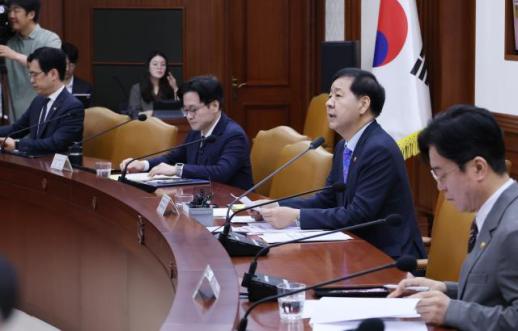 Construction of Taereung Project Advanced by One Year as Government Pushes for Rapid Housing Supply The South Korean government has decided to accelerate the construction schedule for the Taereung district by advancing the start date by one year to enhance the speed of housing supply. This move comes amid ongoing signs of instability in the real estate market, with the government aiming to stabilize the market through increased housing supply. During a meeting of real estate ministers on May 14, Deputy Prime Minister and Minister of Economy and Finance Koo Yun-cheol emphasized, "Rapid supply is of utmost importance," adding that the government is compressing all execution stages to ensure that announced plans translate into actual housing for citizens. The government plans to begin construction on the Taereung Golf Course site in 2029, one year earlier than originally scheduled. This decision aims to alleviate market concerns over delays in supply and to realize tangible housing availability sooner. In addition, the government is pushing forward with projects in the Gangseo military site and the redevelopment of aging government buildings, targeting the construction of approximately 2,900 housing units by 2027, following the exemption from preliminary feasibility studies. The government will designate supply responsibility officers for each site to closely monitor project progress. Short-term supply expansion measures are also being pursued. The government is considering rapid supply options for available housing, including non-apartment units such as officetels, to minimize supply gaps and mitigate market instability. Furthermore, the government plans to strengthen market order management. Koo stated, "We are thoroughly implementing the separation of the real estate market and finance," and pledged to work with relevant agencies to rigorously inspect and respond to market disruption activities. To support this effort, management of housing mortgage loans will be tightened. The government plans to expand inspection targets to include not only individuals but also corporate rental businesses, and will check all housing mortgage loans for potential misuse. This initiative aims to minimize oversight gaps, including small loans.* This article has been translated by AI. 2026-05-15 08:45:19
 -
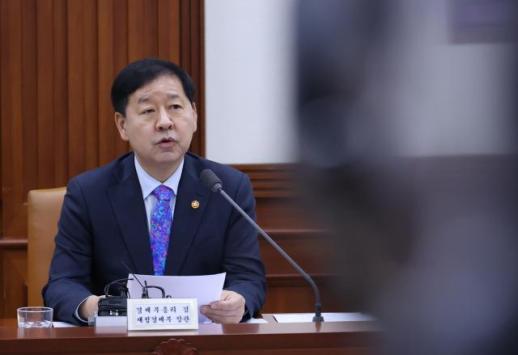 Deputy Prime Minister Koo Yoon-cheol Reports Slight Drop in Gas Prices Amid Rising Oil Costs Koo Yoon-cheol, Deputy Prime Minister and Minister of Economy and Finance, stated that despite recent increases in oil prices, retail gas prices at stations are showing a stable trend. He announced plans to unveil a mid-year economic growth strategy focused on structural reforms by the end of June. During an emergency economic meeting held at the Government Seoul Building on May 15, Koo reviewed the government's response to the ongoing conflict in the Middle East and assessed the direction of economic policy for the second half of the year. He noted, "Currently, the supply prices set by refiners are below the announced maximum prices, and retail gas prices are slightly decreasing," expressing gratitude to the refiners and gas station operators for their cooperation with government policies. The government is committed to a comprehensive response to stabilize prices amid high oil costs. Koo emphasized, "The prolonged conflict in the Middle East is beginning to visibly impact prices and employment in the real economy," and pledged to closely monitor domestic and international conditions to minimize the burden on citizens. To achieve this, the government will continue implementing measures to stabilize food prices, including applying tariff quotas on imported chicken and pork and expanding the supply of pork in wholesale markets. Starting May 18, the government plans to proceed without delay with the second round of support payments for those affected by high oil prices. The meeting also included a review of supply chains for essential energy and industrial goods. The status of key items such as syringes, agricultural fertilizers, asphalt, and concrete additives was assessed, and stabilization measures were discussed. The government plans to closely monitor market disruptions, including stockpiling, for items experiencing price increases. Koo remarked, "The global economy is at a turning point where a new paradigm is beginning," and stressed the need to seize opportunities amid structural changes driven by shifts in trade environments, geopolitical risks, and transitions to AI and green economies. Based on this understanding, the government is preparing the '2026 Mid-Year Economic Growth Strategy.' Koo stated, "We are developing comprehensive measures that include strengthening economic security, energy transition strategies, boosting potential growth rates, and addressing polarization," with plans to announce these strategies after discussions with relevant ministries at the end of June. The growth strategy will address supply chain restructuring and energy security in the aftermath of the Middle East conflict, as well as revised growth forecasts and macroeconomic policy directions in response to changing economic conditions.* This article has been translated by AI. 2026-05-15 08:40:18
 -
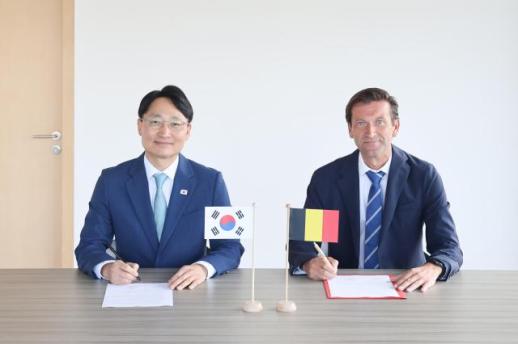 South Korea to Conduct Simultaneous Tax Investigations with European Countries The National Tax Service (NTS) of South Korea is set to conduct simultaneous tax investigations with local tax authorities in Europe targeting high-value tax delinquents who have hidden assets abroad. This initiative marks a significant step in international cooperation aimed at recovering unpaid taxes through tracking overseas hidden assets. On May 14, the NTS announced that Im Kwang-hyun, the head of the agency, visited Hungary, Belgium, and the United Kingdom to sign memorandums of understanding (MOUs) for tax collection cooperation and discuss plans for simultaneous tax investigations of high-value delinquents. The discussions focused on expanding the tax collection cooperation network to Europe to facilitate the recovery of tax debts from individuals with overseas assets. The NTS plans to request cooperation from foreign tax authorities to conduct simultaneous tax investigations when they identify hidden assets abroad. Simultaneous tax investigations involve tax authorities from two countries conducting concurrent investigations on individuals suspected of tax evasion who have economic ties in both nations. The process allows for the exchange of tax information obtained during the investigations, enabling the identification of hidden assets abroad. The NTS emphasized the need for such cooperation by sharing examples of tax delinquents who have relocated their activities to Europe. For instance, foreign professional athletes who have failed to pay taxes while playing in South Korea have been targeted by foreign tax authorities for asset seizure in their respective countries. Another case involves a domestic habitual tax delinquent who has been operating businesses under false names in various countries to evade taxes. Additionally, instances of receiving technology fees through accounts held by overseas corporations without reporting taxes in any country have also been uncovered. The NTS plans to request rapid exchange of tax information with foreign counterparts regarding these cases and, if necessary, conduct simultaneous tax investigations to uncover hidden assets and recover unpaid taxes through cooperative efforts. During meetings with tax officials from various countries, Im stated, "Swift tax collection cooperation based on legitimate enforcement authority is essential," urging active collaboration. The NTS expects that this agreement will accelerate efforts to recover overseas assets. With a system in place for simultaneous responses to cross-border tax evasion and delinquency, the effectiveness of overseas tax collection, which has been criticized for its limitations, is anticipated to improve. As global asset mobility increases, leading to a rise in tax evasion by high-value delinquents fleeing abroad, this simultaneous tax investigation framework is expected to serve as a means to extend international enforcement of tax collection. 2026-05-14 13:10:42
 -
 Tax Corrections for Year-End Settlement Due by June 1 Taxpayers who made errors in applying deductions during the year-end settlement can correct these mistakes without incurring penalties by filing their comprehensive income tax returns by June 1. The National Tax Service announced on May 14 that individuals can amend any missed or incorrectly applied deductions during the comprehensive income tax filing period, which runs from May 1 to June 1. If a taxpayer omitted deductions during the year-end settlement, they can still claim these deductions on their comprehensive income tax return. Refunds will be issued to the taxpayer's account within 30 days after the filing deadline. Local income tax refunds will be processed separately within four weeks. If a taxpayer has over-applied deductions and paid less tax as a result, they can also correct this without penalties during the same period. However, failing to make corrections during the filing period may lead to additional penalties for underreporting (10%, or 40% in cases of fraud) and late payment. Starting this year, the National Tax Service will provide individual notifications regarding errors in dependent family member deductions for the first time. This includes cases of duplicate claims for the same dependent or including deceased individuals or non-eligible family members. Notifications will be sent via KakaoTalk or Naver alerts, and detailed information can be checked on the Home Tax website. Taxpayers should also note that if there are errors in dependent deductions, related deductions such as insurance premiums, medical expenses, educational costs, donations, and credit card usage must also be excluded. Additionally, individuals with multiple sources of income are required to file comprehensive income tax returns. This includes those with business income, other income, or interest and dividend income exceeding 20 million won. Employees receiving salaries from two or more companies due to job changes are also required to report their income collectively. The National Tax Service plans to expand pre-notifications regarding errors in dependent deductions and various other deductions to minimize taxpayers' burdens.* This article has been translated by AI. 2026-05-14 13:10:03
 -
 First Quarter National Budget Deficit Reaches 39.6 Trillion Won, Lowest Since COVID-19 The national budget deficit for the first quarter of this year has decreased to below 40 trillion won, marking the lowest level since the COVID-19 pandemic. This improvement is attributed to a significant increase in revenue, primarily from national taxes. According to the "Monthly Fiscal Trends for May" report released by the Ministry of Economy and Finance on May 14, the management fiscal balance recorded a deficit of 39.6 trillion won as of the end of March. This figure represents an improvement of 21.7 trillion won compared to the same period last year and is the smallest deficit for March since 2020. The management fiscal balance excludes the revenues from social security funds such as the National Pension, providing a clearer picture of the government's actual fiscal condition. During the same period, the consolidated fiscal balance showed a deficit of 22.8 trillion won, while social security funds reported a surplus of 16.8 trillion won. A spokesperson from the Ministry of Economy and Finance noted, "In terms of cumulative figures for March, this is the ninth lowest level since we began tracking these statistics in 2012. Compared to the deficit of 55.3 trillion won during the COVID-19 period in 2020, we are seeing a normalization of fiscal conditions." The improvement in fiscal balance is driven by increased revenue. Total revenue for the first quarter reached 188.8 trillion won, an increase of 28.9 trillion won from the previous year. National tax revenue rose by 15.5 trillion won, along with increases in non-tax revenue (5.8 trillion won) and fund revenue (7.5 trillion won). The rise in national tax revenue is attributed to several factors, including an increase in income tax and capital gains tax, improved corporate performance leading to higher corporate taxes, a decrease in value-added tax refunds, and increased import volumes. Additionally, the expansion of stock market transactions contributed to higher securities transaction taxes, further boosting revenue. The increase in fund revenue was significantly influenced by expanded investment returns from the National Pension. The recent positive performance in financial markets has been reflected in the growth of fund revenues. Total expenditures amounted to 211.6 trillion won, an increase of 1.7 trillion won compared to the same period last year. The growth in revenue outpaced the increase in expenditures, leading to an overall improvement in the fiscal balance. Central government debt saw a slight decrease. As of the end of March, central government debt stood at 1,303.5 trillion won, down by 9 trillion won from the previous month.* This article has been translated by AI. 2026-05-14 11:01:07
 -
 Government Strengthens Regulations Against Price Gouging Amid Middle East Conflict The government is set to amend the Price Stability Act to strengthen sanctions against unfair practices such as price gouging, in response to rising price uncertainties stemming from the conflict in the Middle East. A multi-agency approach will also be implemented to stabilize prices of essential goods. On May 14, Lee Hyung-il, First Deputy Minister of Finance, chaired a meeting of the "Middle East War Price Response Team and Price-Related Deputy Ministers" at the Government Seoul Building, where he reviewed price trends of key items and discussed response measures. Lee stated, "While inflation in our country is lower compared to major countries, there are upward pressures on prices due to uncertainties from the Middle East conflict and base effects. I urge all relevant ministries to work together to stabilize prices of individual items." He emphasized a strong response to unfair practices, particularly price gouging, saying, "Unfair practices such as price gouging must be eradicated to stabilize living costs. We will swiftly push for amendments to the Price Stability Act, which will include measures to ensure the effectiveness of confiscation, reward systems for reporting, and penalties for unjust profits." The government plans to implement price stabilization measures for essential goods, including agricultural, livestock, and fishery products, as well as petroleum. Between May and June, it will provide 22 billion won in discounts for agricultural and fishery products and plans to supply 8,000 tons of government reserves of key fish species such as mackerel, squid, and hairtail to the market this month. To increase the supply of livestock products, the government will apply emergency tariff quotas to import 30,000 tons of chicken by the end of July and 12,000 tons of pork by the end of the year. It is also considering increasing the supply of pork in wholesale markets and additional imports of eggs from the United States or Thailand. For petroleum products, which are currently under a price ceiling, the government plans to encourage price reductions through designating "good gas stations" and will raise the payment criteria for diesel price-linked subsidies to alleviate the burden on bus and freight transport operators.* This article has been translated by AI. 2026-05-14 11:00:39
 -
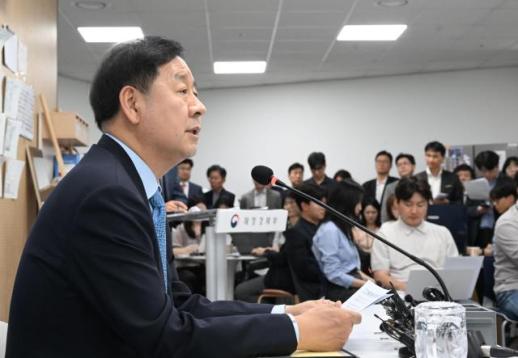 Finance Minister Gu Yoon-cheol Projects Over 2% Economic Growth This Year Finance Minister Gu Yoon-cheol projected that South Korea's economic growth rate will exceed 2% this year, driven by a semiconductor boom and increased exports. He expressed hope for a smooth resolution to the ongoing strike at Samsung Electronics, emphasizing the importance of not missing opportunities during this favorable period for the semiconductor industry. During a press briefing on May 11 at the Ministry of Economy and Finance in Sejong, Gu stated, "I expect this year's economic growth rate to surpass 2%. The exact extent will depend on the semiconductor boom and the impact of the conflict in the Middle East." He added that a specific growth rate forecast will be announced in the upcoming 'Second Half Economic Growth Strategy' report at the end of June. Gu provided a positive assessment of recent macroeconomic indicators, noting that the first quarter GDP grew by 1.7%, significantly exceeding market expectations. He also mentioned that South Korea's exports have risen from seventh to fifth in the world, surpassing Japan and Italy. Additionally, he highlighted a current account surplus of $73.3 billion in the first quarter, showcasing the growth potential of the South Korean economy compared to the previous record of $39.2 billion in the fourth quarter of 2025. However, he cautioned against overly optimistic views on economic recovery, stressing the importance of managing inflation and external risks. Gu acknowledged the uncertainties posed by the semiconductor market and the Middle East conflict, stating, "While the economic indicators are positive, the government will not become complacent. We will respond more meticulously to these challenges." He identified inflation as a pressing risk, assuring that the government will closely monitor living costs through special management and task forces. In light of high international oil prices due to the Middle East conflict, Gu mentioned price caps and fuel tax reductions as measures to combat inflation. He indicated that the price cap would remain in place until stability is restored in the region, and he is initiating revisions to the price stabilization law to implement effective sanctions against hoarding and profiteering, including rewards for reporting and penalties for unjust gains. He noted that the sustainability of these policies will depend on future oil price trends and the geopolitical situation in the Middle East. Gu reaffirmed the government's commitment to balancing supply expansion and demand management in real estate policy. Following the expiration of the temporary suspension of capital gains tax for multiple homeowners on May 9, concerns about a potential housing market freeze have arisen. He stated, "The government is coordinating with relevant agencies to expand supply and will manage demand until adequate housing supply is available." He emphasized that the government's demand management strategy focuses on helping first-time homebuyers acquire housing, shifting the perspective from profit-making to ensuring housing stability. Regarding the Samsung Electronics strike, Gu urged both labor and management to reach a peaceful agreement. He noted that the semiconductor sector is a key driver of export and growth forecasts, and labor disputes could hinder the industry's recovery. Gu expressed hope that the parties involved are working towards a resolution through the Central Labor Relations Commission, stating, "It would be unfortunate to miss opportunities during this critical time when the world is seeking semiconductor chips from Korea due to labor discord." On the stock market, Gu emphasized the need to address undervaluation rather than focusing on short-term overheating. He remarked, "Based on the price-to-book ratio, South Korean stocks are still undervalued compared to developed countries. Given the pre-orders made until next year, this reflects the perspectives of both global and domestic investors on the potential of our stock market." Gu maintained a cautious stance on inheritance tax reform, stating, "We are listening to various opinions regarding tax reform, but no decisions have been made at this time." He also commented on the government's sale of some NXC shares received as payment, noting that the shares were acquired at 5,534,000 won each and will be sold at 5,558,000 won, describing it as a successful transaction. The government expects to secure over 1 trillion won in non-tax revenue from this sale, contributing to foreign exchange market stability as NXC brings in foreign capital. Gu addressed concerns regarding the missed meeting with U.S. Treasury Secretary Scott Bansen, who is visiting South Korea on May 13 ahead of the U.S.-China summit. He disagreed with claims of 'Korea passing,' stating, "We are in constant communication with the U.S. Treasury. Unlike in the past, meetings do not have to be face-to-face, and we are regularly updated through communications between deputy ministers. Minister Kim Jeong-kwan recently visited the U.S., ensuring good cooperation with them on investment matters."* This article has been translated by AI. 2026-05-11 16:22:13
 -
 Government Plans Renewable Energy Roadmap for Agriculture by July The South Korean government is set to restructure the energy framework for agriculture and rural areas to achieve "oil price worry-free agriculture." The plan aims to create a long-term roadmap connecting renewable energy-based energy independence to farm income. On May 8, the Ministry of Agriculture, Food and Rural Affairs announced the launch of a task force (TF) to develop a strategy for the energy transition in agriculture and rural areas during its first meeting at the Government Sejong Center. This task force will comprehensively address rural energy independence, agricultural energy transition, and ways to utilize agricultural and rural resources to contribute to national energy transformation. It plans to establish a renewable energy transition roadmap and detailed implementation tasks by July. Amid rising energy price volatility due to recent instability in the Middle East, the agricultural sector, which is experiencing increased energy demand from the expansion of smart farms and electrification, is facing greater burdens. The government aims to shift agriculture from an energy-consuming industry to a producer and supplier of energy in response to these changing conditions. Specifically, to achieve rural energy independence, the government will promote the expansion of solar energy in farming, the establishment of energy-independent villages, and the distribution of solar power systems for farms. This initiative aims to create a "locally produced, locally consumed" energy structure in rural areas. The government will also work on improving energy efficiency throughout the entire agricultural production process. This includes transitioning old farming machinery to electric and hydrogen-based systems, expanding renewable energy facilities in greenhouses and livestock farms, and introducing self-generation facilities in processing facilities such as distribution centers and slaughterhouses. Additionally, renewable energy production models utilizing agricultural infrastructure like reclaimed land and reservoirs, as well as biomass from livestock waste and agricultural byproducts, will be established. The government expects rural areas to function as energy production hubs, providing additional sources of income. The task force is led by Kim Jong-gu, Deputy Minister of Agriculture, Food and Rural Affairs, and Kim Jeong-wook, Director of Agricultural Industry Innovation Policy, with three divisions focusing on rural energy independence, agricultural energy transition, and agricultural resource utilization, all staffed by senior officials. A private advisory group comprising industry and academic experts will also be involved. Based on the discussions of the task force, the government plans to gradually implement energy transition policies that can be felt in the agricultural and rural sectors, alongside financial projects and institutional improvements. On this day, Deputy Minister Kim stated, "Energy security is food security," adding that the government plans to establish fundamental principles and performance indicators for the energy transition in agriculture and rural areas that align with the national renewable energy transition policy, as well as to refine related systems.* This article has been translated by AI. 2026-05-08 17:13:39
 -
 Government Allocates Record 104,000 Foreign Workers for Agriculture in First Half of 2026 The South Korean government is addressing labor shortages in agriculture by allocating a record 104,000 foreign workers for the first half of 2026 and increasing support for domestic labor. On May 8, Minister of Agriculture, Food and Rural Affairs Song Mi-ryeong visited a seasonal foreign labor site in Imsil, North Jeolla Province, to assess working conditions and announce the agricultural labor supply plan for the busy farming season. This year, the government has allocated a total of 104,000 foreign workers for the agricultural sector, including 94,000 seasonal workers and 10,000 under the employment permit system. This measure aims to alleviate the ongoing labor shortage, which has seen over 60% of agricultural labor demand concentrated during specific periods. The new measures will significantly expand public seasonal labor programs. The National Agricultural Cooperative Federation will directly employ workers and supply them to small farms on a daily basis, increasing the number of operational sites from 91 last year to 142 this year, and expanding the workforce from 3,067 to 5,039. Additionally, the government plans to promote a 'contract-based seasonal labor' system, allowing qualified corporations to utilize seasonal workers for agricultural tasks. To facilitate the swift deployment of foreign workers, a dedicated team will operate at immigration offices, along with a 'mobile fingerprint registration service.' Support for domestic labor will also be enhanced. The subsidy for workers supplied through rural labor brokerage centers will be increased, raising transportation costs from a maximum of 10,000 won to 20,000 won per day, and accommodation costs from 20,000 won to 30,000 won. The government aims to encourage domestic labor influx by providing agricultural job information through private recruitment platforms and expanding assistance programs in collaboration with businesses and public institutions. During the busy farming season, the government will operate a 'special task force for labor support.' From April 9 to June 30, the task force will monitor labor supply and wage trends weekly in 35 major fruit and vegetable producing cities and counties, sharing labor pools from nearby regions as needed. Minister Song Mi-ryeong stated, "We will strengthen communication with the field to prevent labor shortages during the busy farming season and establish a close collaboration system with relevant agencies."* This article has been translated by AI. 2026-05-08 17:10:56