
Journalist

Park ki-rock
kirock@ajunews.com
-
 More Than Half of South Korea’s Farm, Forestry and Fishing Population Is 65 or Older More than half of South Korea’s farm, forestry and fishing population is now 65 or older, as household sizes continue to shrink rapidly. According to the National Data Policy Agency’s preliminary results of the “2025 Census of Agriculture, Forestry and Fisheries” released on the 28th, the farm, forestry and fishing population totaled 2,576,000 people as of last December, living in 1,276,000 households. That compares with about 2.38 million people and 1.06 million households in the 2020 census — increases of about 196,000 people and 216,000 households. The agency said the rise reflects an expanded statistical scope as more people moved to rural areas and additional administrative records — including farmland ledgers, fisheries registration lists and forestry management databases — were added to the survey coverage. The share of residents ages 65 and older in farm, forestry and fishing households rose to 51.0% in 2025 from 41.9% in 2020, up 9.1 percentage points. That is more than 2.5 times the share in the overall population, which stood at 20.3%. By sector, the elderly share was 51.3% for farm households, 48.2% for fishing households and 47.9% for forestry households. In farm households, the share of working-age residents (15-64) was 45.8% and the share of children (0-14) was 2.9%, down 23.7 percentage points and 7.3 percentage points, respectively, from the overall population. The median age was 65.3, or 18.6 years higher than the national figure. Smaller households also became more common. One-person households accounted for 27.2% in 2025, up from 20.0% in 2020, an increase of 7.2 percentage points. The share of three-person households fell to 11.6% from 14.3%, and four-person households dropped to 7.4% from 11.9%. Two-person households made up 53.8% last year, the largest share, meaning one- and two-person households accounted for more than 80% of all farm, forestry and fishing households. By area, the share living in “dong” neighborhoods rose to 32.4% in 2025 from 27.5% in 2020, while the share in “eup” and “myeon” areas fell to 67.7% from 72.5%. The shift reflects a move toward dong areas, where medical care, transportation and education are generally more accessible than in eup and myeon communities. 2026-04-28 12:10:16
 -
 South Korea to Issue 200 Billion Won in Retail Treasury Bonds in May The Ministry of Economy and Finance said April 28 it plans to issue 200 billion won ($200 billion won) in retail Treasury bonds in May. By maturity, the ministry will offer 5 billion won each in three-year coupon bonds and three-year compound-interest bonds. It will also supply 50 billion won in five-year bonds, 110 billion won in 10-year bonds and 30 billion won in 20-year bonds. Coupon rates will be based on the winning yields for government bonds of the same maturities sold in April. The three-year bond will carry a 3.450% coupon rate, the five-year 3.530%, the 10-year 3.715% and the 20-year 3.610%. Additional rates will be added to the five-year (0.3 percentage points), 10-year (1.05 percentage points) and 20-year (1.3 percentage points) bonds. No additional rate will be applied to the three-year bond, citing recent rate increases and returns on financial products. If held to maturity, the pretax return is expected to be about 10% for the three-year coupon bond and about 11% for the three-year compound-interest bond, about 21% for the five-year bond, about 59% for the 10-year bond and about 161% for the 20-year bond. Subscriptions will run from May 11 to May 15. Individual investors can apply in person or online through Mirae Asset Securities, the selling agent. The minimum subscription is 100,000 won, and the annual purchase limit is 200 million won per person. If total subscriptions are within the issuance cap, investors will receive full allocations. If subscriptions exceed the cap, up to 3 million won will be allocated equally, with the remaining amount distributed in proportion to subscription size. Allocation results will be provided on the next business day after the subscription period ends. In May, investors will also be able to redeem early retail Treasury bonds issued from June 2024 through April 2025. In that case, they will receive only principal and interest based on the coupon rate applied at purchase, and will not receive compound interest including the additional rate or benefits such as separate taxation on interest income.* This article has been translated by AI. 2026-04-28 10:04:04
 -
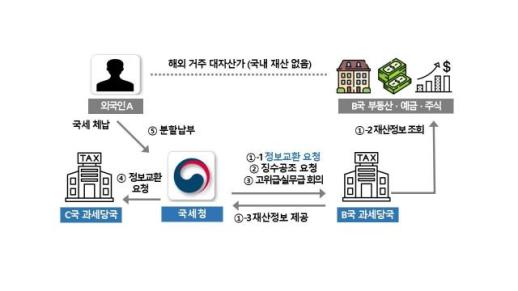 Korea Tax Agency Recovers 33.9 Billion Won in Hidden Overseas Assets From Delinquents The National Tax Service said it has recovered 33.9 billion won in delinquent taxes by strengthening international cooperation against people who hid assets overseas. The agency said dozens of additional cases are still moving through international collection procedures, raising expectations that hundreds of millions of won more could be recovered. According to the NTS on the 27th, since NTS Commissioner Im Gwang-hyeon took office in July last year, the agency has recovered 33.9 billion won in five cases over the past nine months through collection cooperation with tax authorities in three countries. The figure accounts for most of the cumulative results since 2015 — 37.2 billion won across 24 cases — as the agency says international cooperation is now producing tangible collection results. The NTS said it uses two main channels to track overseas assets held by tax delinquents: information exchange and collection cooperation. It identifies overseas accounts and financial assets through automatic exchange of financial information with 119 countries, and obtains information on assets such as real estate through case-by-case requests with 163 countries. When those efforts confirm where a delinquent’s overseas assets are located, the NTS proceeds with collection cooperation by asking the relevant country’s tax authority to carry out compulsory collection. The agency said Korea cannot directly enforce seizures abroad, so local tax authorities conduct attachment and collection on its behalf. In one case, a foreign wealthy individual living overseas who had failed to pay taxes in Korea sold local assets and paid after cooperation with the person’s home-country tax authority began, the NTS said. In another, a foreign professional athlete who had worked in Korea left the country without filing taxes, but paid voluntarily through a representative in Korea after the athlete’s home-country financial account was identified. The NTS also cited a case involving a foreign businessperson who had dispersed and concealed assets across multiple countries. After a third-country financial account was detected and collection cooperation was initiated, the case ended in voluntary payment. For Korean nationals, the agency said it has recovered taxes by tracing accounts of overseas corporations operated under borrowed names and collecting the full deposits, or by using information exchange with countries where delinquents hold permanent residency to seize and collect from overseas accounts. The NTS said it is expanding its methods by directly participating as a creditor in overseas bankruptcy proceedings and by attaching high-end homes abroad. In one case, a delinquent immediately signaled an intent to pay after a luxury home overseas was attached, it said. An NTS official said shifting assets overseas while benefiting in Korea and failing to pay taxes leaves compliant taxpayers feeling deprived, undermines the foundation of public finances, and seriously damages fairness and justice in society. The official said the agency will mobilize all available tax enforcement capacity to respond strictly to malicious delinquents who evade their tax obligations. 2026-04-27 12:04:09
 -
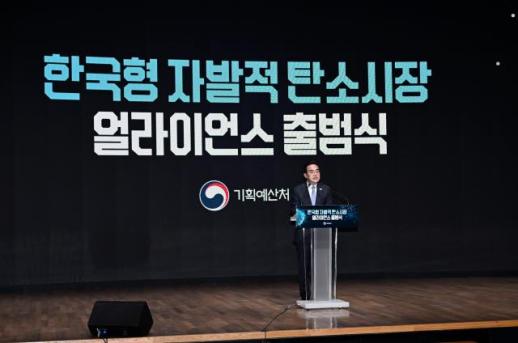 Park Hong-geun Pushes Voluntary Carbon Market Law, Unified Exchange Park Hong-geun, minister of the Office of Planning and Budget, said on the 27th that the government will move to institutionalize a voluntary carbon market as a key tool for meeting carbon-neutrality goals and will pursue the creation of a unified exchange. Speaking at the launch ceremony for the “Korean-style Voluntary Carbon Market Alliance” at the Korea Chamber of Commerce and Industry, Park said carbon cuts are “no longer a cost but a new business model that raises corporate value.” The government also announced its “Korean-style voluntary carbon market development plan,” focusing on building the institutional framework, expanding trading infrastructure and broadening demand to foster a carbon-market ecosystem. As a legal foundation, it will push to enact a “Voluntary Carbon Market Act.” The bill would include operating a registry institution to manage the full lifecycle of carbon credits — issuance, distribution and retirement — and disclosing evaluation standards to improve transparency and trust. To strengthen fairness and stability in trading, the government plans to establish a dedicated voluntary carbon market exchange. It aims to open the exchange within the Korea Exchange by the end of this year to consolidate dispersed carbon-credit trading and improve convenience through standardization by product category. The government also plans to work with overseas rating agencies to bolster international credibility for traded emissions-reduction results and to expand links with international carbon markets. The newly launched alliance is a public-private governance body bringing together companies, financial institutions and research organizations to connect supply and demand and identify tasks for improving the system. The government said activating the voluntary carbon market is needed to strengthen incentives for emissions cuts in nonregulated areas, including small and medium-sized companies and startups that are not covered by the emissions trading system, or ETS. The ETS currently covers about 70% of national greenhouse gas emissions, but incentives for the remaining 30% are insufficient, it said. Park said the government will provide institutional support so the domestic market can become an Asian hub amid the global expansion of carbon markets, and pledged to build a virtuous cycle in which emissions-cutting performance leads to investment and growth. * This article has been translated by AI. 2026-04-27 11:18:39
 -
 South Korea’s Tax Take Seen Surging Past 400T Won This Year, Possibly 500T Next Year South Korea’s government is facing a pivotal choice in fiscal policy as tax revenue is expected to far exceed earlier projections, reversing several years of shortfalls. After an estimated 25 trillion to 35 trillion won in excess revenue this year, some forecasts say national tax revenue could top 500 trillion won next year, well above the government’s initial outlook. As of the 26th, the Finance and Economy Ministry and other officials estimate this year’s national tax revenue will surpass 400 trillion won and reach about 415 trillion won, sharply higher than earlier projections. In its “2025-2029 National Fiscal Management Plan,” the government had forecast about 390 trillion won for this year and about 412 trillion won for next year, based on a conservative assumption of 4.6% average annual growth. Changing conditions are now forcing a revision. Revenue conditions have improved quickly this year, helped by a semiconductor boom, a strong stock market and a recovery in employment. When the government drafted its first supplementary budget this year, it made a 22.6 trillion won revenue adjustment, a procedure used to revise the budget when tax receipts come in higher or lower than expected. By category, corporate tax revenue was projected to rise by 14.8 trillion won, while the securities transaction tax and the rural special tax were expected to increase by 10.3 trillion won. Earned income tax was also projected to rise by 4.8 trillion won, reflecting broader gains in the tax base. With growth across major tax items now expected to be steeper than previously assumed, some observers say excess revenue this year could exceed the 25 trillion won used to finance the first supplementary budget and reach as much as 35 trillion won. Next year’s increase could be even larger. Using operating profit forecasts that reflect a “semiconductor supercycle” for major companies such as Samsung Electronics (300 trillion won) and SK hynix (198 trillion won), a simple calculation suggests corporate tax revenue from those two firms alone could generate more than 130 trillion won in additional revenue. That has fueled speculation that next year’s national tax revenue could far exceed the 412 trillion won forecast and climb well past 500 trillion won. If the unexpected surge materializes, debate is expected to intensify over how to use the windfall. Some argue it should be used to repay government bonds and strengthen fiscal soundness, saying rapid growth in national debt during years of revenue shortfalls makes this a chance to rebuild fiscal room. Others say the government should play a more active fiscal role during a period of low growth. The government has also stressed the need for spending to strengthen the growth foundation. Park Hong-geun, minister of the Planning and Budget Office, said at a news briefing on the 21st, “To raise the growth rate, the role of fiscal policy is needed,” signaling support for an expansionary stance. With the decline in potential growth becoming entrenched, the government sees fiscal spending as unavoidable for investment in new industries and structural reform. Questions remain about sustainability, however, because the revenue boom may be temporary and tied to a specific industry cycle rather than structural change. Critics note that external uncertainty remains high, including high oil prices and a weak won, and that tax receipts could still swing sharply with corporate earnings. The broad direction of fiscal management is expected to take shape at a National Fiscal Strategy Meeting in June after local elections. Chaired by the president, the meeting sets medium- and long-term fiscal policy and the basic principles for drafting next year’s budget, effectively serving as the government’s fiscal control tower. Officials are also expected to outline a more concrete plan there for how to use excess revenue.* This article has been translated by AI. 2026-04-27 05:03:19
 -
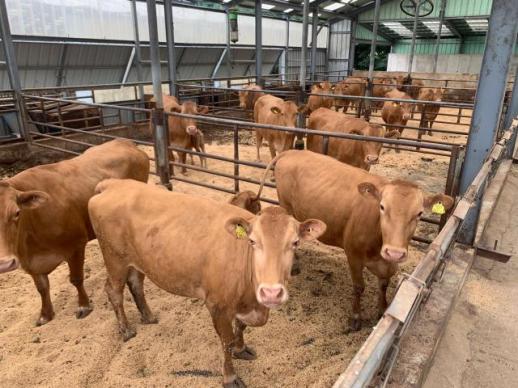 South Korea’s Q1 Livestock Herds Fall; Broiler Chickens Rise Major livestock numbers in South Korea fell in the first quarter of 2026, with broiler chickens the only category to increase, according to a government survey released Thursday. The National Data Center said its “2026 first-quarter livestock trends survey” showed that as of March 1, the combined number of Korean native cattle and beef cattle totaled 3,218,000, down 4.9% from a year earlier. With fewer breeding cows, the number of animals under 1 year old fell 6.9%, those aged 1 to 2 years fell 3.2%, and those 2 years and older fell 4.7%. Dairy cattle totaled 371,000, down 1.7%. With fewer breeding dairy cows, animals under 1 year old fell 5.4% and those 2 years and older fell 1.8%. The pig herd stood at 10,716,000, down 0.7%. Pigs aged 2 to under 4 months fell 3.0%, while some other age groups were little changed, resulting in a mild overall decline. Laying hens totaled 77,747,000, down 0.3%. The agency cited culling tied to outbreaks of highly pathogenic avian influenza, with birds 6 months and older down 5.5%. Duck numbers dropped 15.9% to 5,294,000, as fewer meat ducklings were placed, sharply reducing overall production. By contrast, broiler chickens rose 2.7% to 96,463,000 as chick placements increased. Broilers were up 3.0%, and samgye chickens rose 3.4%, the survey said. 2026-04-24 12:04:26
 -
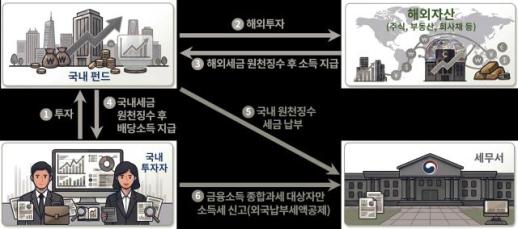 Korea Launches First Tax Credit for Overseas Fund Investors; Must Claim in May Filing 올해부터 펀드를 통한 해외투자에 대한 세액공제 제도가 처음 시행되면서, 해당 투자자는 5월 종합소득세 신고 시 공제 신청 여부를 확인해야 한다. The National Tax Service said on 24일 that a new tax preference for overseas investments made through funds applies for the first time to income attributable to 2025. The measure is intended to encourage overseas investing and diversification. Individuals who invest in qualifying overseas-investment funds may claim a tax credit when filing their comprehensive income tax return. The program is designed to reduce tax burdens at the investment stage and support Korean investors expanding into foreign assets. The agency noted that it is structured as a tax credit, not an income deduction, meaning it reduces calculated tax directly and can provide a larger practical benefit for the same amount. Eligibility is limited. It applies to residents whose combined annual interest and dividend income exceeds 20 million won and who invest in foreign assets through certain products, including: domestically listed ETFs tracking the S&P 500 or Nasdaq 100; domestically listed overseas real estate REIT ETFs; and overseas bond-type public funds established in Korea. The credit is available only when taxable income such as dividends or interest is generated and tax is actually paid overseas. Investors can claim the credit only if they report the fund’s dividend or interest income under comprehensive taxation. It does not apply when a taxpayer has only financial income that is finalized under separate taxation. Investors can confirm with their financial institution or fund manager whether their fund qualifies. The credit applies within a set limit to part of the investment amount and is deducted directly from calculated tax. Not all invested amounts qualify because the cap and other requirements are fixed. The credit is not applied automatically. Taxpayers must select and claim it when filing their comprehensive income tax return. Even if some data provided by financial institutions appears in the Hometax simplified service, investors must verify eligibility and the amount themselves. With the program in its first year, the agency warned that credits could be missed if taxpayers are unaware. The National Tax Service said it will strengthen guidance during the filing period and provide materials to help taxpayers determine eligibility in advance. * This article has been translated by AI. 2026-04-24 12:03:20
 -
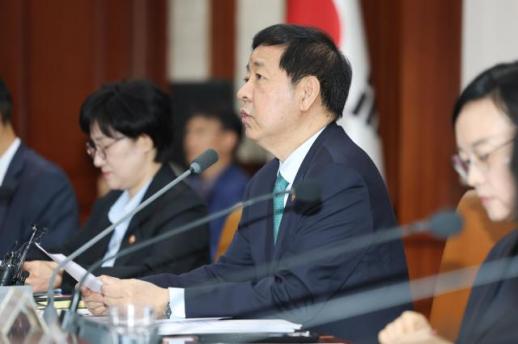 Finance Minister Koo Yoon-cheol to Unveil Green Consumption, Tourism Boost Plan Next Week Deputy Prime Minister and Minister of Finance and Economy Koo Yoon-cheol said April 24 the government will announce a plan next week to spur “eco-friendly green consumption and tourism,” aiming to respond preemptively to concerns about weakening consumer sentiment. Speaking at the Government Complex Seoul during a meeting of the emergency economic headquarters and the National Entrepreneurship Era Strategy Meeting, Koo said the government would closely monitor the Middle East war and respond quickly. Koo noted that South Korea’s first-quarter gross domestic product growth came in at 1.7%, “a strong gain,” but said spillover effects from the Middle East war persisted and pushed April’s consumer sentiment index below its long-term average. A day earlier, the Bank of Korea said the April consumer sentiment index fell 7.5 points from the previous month to 99.2. A reading of 100 or higher indicates optimism, while below 100 signals pessimism. The index turned pessimistic for the first time since April last year, and the drop was the largest since the emergency martial law in December 2024. Koo said the government would “prepare in advance for the dawn after the crisis,” stressing that it would use a “golden time” from a semiconductor boom, along with industrial innovation and measures discussed at the meeting on startups and venture support, to strengthen the foundation for the economy to rebound globally. Agenda items included steps to build momentum for startups under the National Entrepreneurship Era strategy and a project plan to develop “startup cities.” Koo said the government will push a second project of “Startup for Everyone,” which is collecting ideas from the public through May 15, starting in June. He also said locations of science and technology institutes will be designated as four major startup cities, with six more to be selected next year to create key hubs for tech startups. On a separate agenda item, Koo said the government will prepare a “youth New Deal” plan within the month to provide skills development and work experience, helping young people respond to new technological changes such as AI and strengthen their job capabilities. On support for non-capital-region companies through public procurement, Koo said the ceiling for small, discretionary contracts in areas with declining populations will be raised to 50 million won from 20 million won. He also said the amount eligible for immediate purchase under multiple-award contracts will be doubled, adding that the government will continue bold and speedy institutional improvements so public procurement can drive balanced national development.* This article has been translated by AI. 2026-04-24 10:24:17
 -
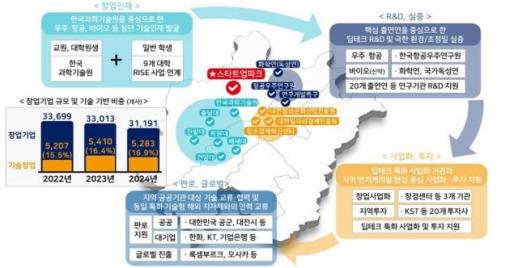 South Korea to Grant 10 Startup Cities Mega-Zone Regulatory and Funding Perks The government will roll out a broad package combining regulatory exemptions with fiscal, financial and talent support for 10 “startup cities” to be designated by next year, aiming to spur a nationwide startup boom and reshape local startup ecosystems beyond simple subsidies. The Finance and Economy Ministry announced the plan on the 24th at an emergency economic headquarters meeting and National Startup Era strategy session chaired by Deputy Prime Minister and Finance and Economy Minister Koo Yun-cheol. To build talent-driven startup hubs, the government will first select four cities this year that host science and technology institutes such as KAIST, DGIST, GIST and UNIST. It will add six more non-metropolitan areas by the first half of next year, for a total of 10 startup cities. The designated areas will receive “mega special zone” level regulatory easing to lower barriers for testing new technologies and business models. Sectors that previously had to go through separate regulatory sandbox procedures are expected to get faster permits and temporary regulatory waivers within startup cities. The government expects the changes to speed commercialization in strategic industries including AI, biotech and advanced manufacturing. Fiscal and financial support for startups in the regions will be expanded. Eligible firms will be offered up to 350 million won in commercialization funding, with follow-on investment linked through a newly created regional growth fund. The fund is set to launch this year at 450 billion won or more and expand to 2 trillion won by 2030. The government also plans tax and fiscal incentives for non-capital-area investment to draw more private venture capital. To strengthen exit options, the government will create a “venture capital brokerage platform” to support trading in unlisted startup shares and will pursue steps to expand venture investment by retirement pensions and public pension funds. The goal is a virtuous funding cycle from early-stage growth through exit. The government will also revise rules to help startups recruit talent. Approval time for professors and researchers to start businesses will be cut from up to six months to about two weeks, and startup-related leave will be allowed for up to seven years. For university students, restrictions on taking a leave of absence to start a business will effectively be eliminated. Plans also call for linking R&D with startup infrastructure. Startup cities will establish innovation startup institutes and deep-tech startup hub universities so technology development, commercialization and investment can be connected in one place. The package will include work space, testbeds and demonstration infrastructure, operating as a cluster linking “labs, companies and investment.” To better connect startups with local economies, the government will develop “glocal” commercial districts and local theme shopping areas near startup cities. Companies that attract investment will be eligible for additional support, including matching loans of up to 500 million won and about 200 million won in extra commercialization funding, to help local startups translate into sales and jobs. The government said the startup-city model is intended to disperse a capital-area-centered startup ecosystem and create conditions for technology-based startups to grow in the regions. A government official said startup cities are “comprehensive startup clusters” that simultaneously loosen constraints on regulation, funding, talent and infrastructure, adding that the government will build a foundation for unicorn companies to emerge outside the capital region.* This article has been translated by AI. 2026-04-24 09:34:07
 -
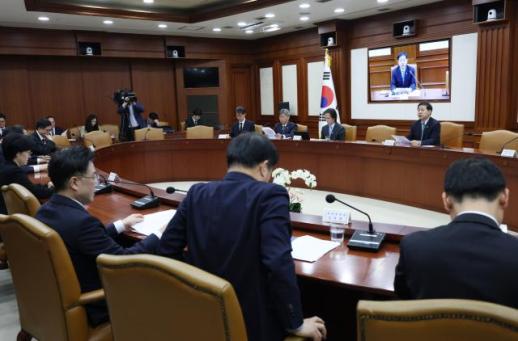 South Korea to Add 200 Billion Won to ‘Startup for All,’ Name 10 Startup Cities The government said it will expand a nationwide, public-participation startup initiative and build technology- and region-based startup ecosystems, aiming to ease a growth structure centered on the Seoul metropolitan area and large conglomerates and shift toward a startup-driven economy. The Ministry of Finance and Economy announced the plan on April 24 after an emergency economic headquarters meeting and a National Startup Era strategy meeting chaired by Deputy Prime Minister and Finance and Economy Minister Koo Yun-cheol. The ministry said it sees “K-shaped growth,” in which gains concentrate in the capital region and big companies, as becoming entrenched, while automation is reducing structural employment. It said it will push a strategy to spread entrepreneurship to shift the jobs paradigm from “finding” work to “creating” it. As part of the effort, the government will expand the “Startup for All” project. Following the first nationwide idea contest now underway, it plans a second round later this year using a supplementary budget of about 200 billion won. Entrepreneurs will be selected through regional audition-style competitions, and the final winner will receive prize money of at least 1 billion won and support linked to follow-on investment. The government said it aims to run the project as a practical startup incubation program rather than a simple contest. The government will also develop 10 “startup cities” as hubs for technology-based entrepreneurship. It will designate four cities hosting KAIST, DGIST, GIST and UNIST later this year, then select six more, mainly outside major metropolitan areas, by the first half of next year. The startup cities will receive a package of support combining talent development, research and development, investment and startup space. Planned steps include creating innovation startup institutes at each science and technology institute, expanding deep-tech startup-centered universities, shortening approval procedures for faculty and student startups from up to six months to about two weeks, extending startup leave from three years to up to seven years, and removing limits on leaves of absence. Startups in these regions will be eligible for up to 350 million won in commercialization funding. The government said it will build a regional growth fund of at least 450 billion won this year and expand it to 2 trillion won by 2030. Support for entrepreneurship tied to local commercial districts will proceed in parallel. Under a “Local Commercial District for All” strategy, the government will foster 17 “glocal” commercial districts and 50 local theme districts. It will also expand the LIPS program, which provides matching loans of up to 500 million won and commercialization funds of up to 200 million won for companies seeking investment, to 450 firms from 300. An additional 40 billion won in supplementary funding will be投入 into support for everyday-technology development. To improve the broader startup ecosystem, the government said it will introduce a “three-part package” to encourage private investment: expanded incentives for venture investment outside the capital region, a new intermediary platform for venture capital to boost early-stage stock trading, and permission for retirement pensions and public pension funds to invest in venture capital. It also plans to strengthen funding support, including a 50 billion won “startup boom” fund and a “second-chance” fund totaling 1 trillion won by 2030. The government said it will introduce “mega special zones” to grant regulatory exemptions to startups in strategic industries, and provide up to 340 million won for open-innovation projects between large companies or public institutions and startups. It also plans to develop AI solutions using manufacturing-site data and apply them to 1,000 processes by 2030. It said it will institutionalize support for entrepreneurs seeking to try again after failure by introducing a “challenge resume” that datafies startup experience, expanding support for re-founders, and creating a youth startup challenge school, aiming to make failure experience an asset. “Startups are a jobs policy, a youth policy, and a strategy for balanced regional development and national growth,” Koo said. “We will do everything we can to create an environment where anyone can start a business anywhere with just an idea, open a ‘startup boom National Startup Era,’ and spread ‘Startup for All’ into ‘growth for all,’” he said. * This article has been translated by AI. 2026-04-24 09:33:22