


Latest by
-
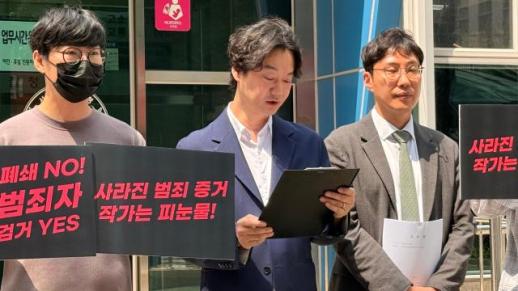 Webtoon and Web Novel Creators Amplify Their Voices to Protect Rights and Combat Illegal Distribution Webtoons and web novels have emerged as key assets in K-content, prompting creators in the field to raise their voices against illegal distribution and to protect their rights. According to industry sources, the Korean Digital Content Creators Association will hold its founding general meeting on June 27 to establish a non-profit organization. The association is composed of 78 members, including current webtoon and web novel authors. Over the past year, the association has focused on combating illegal distribution of webtoons and web novels, addressing damages from illegal sites like Newtoki and Booktoki, and advocating for creator rights. This general meeting is a step toward transitioning the association into a non-profit organization under the Ministry of Culture, Sports and Tourism. An association official stated, "We are pushing for the establishment of a non-profit organization based on our activities over the past year. As a collective representing webtoon and web novel creators, we plan to expand our scope under the ministry's oversight." Currently, the only ministry-approved organizations related to webtoons are the Korea Cartoonists Association and the Korea Webtoon Industry Association. However, there are concerns that the Korea Webtoon Industry Association, which comprises companies, agencies, and publishers, does not adequately reflect the voices of creators. In response, the Korean Digital Content Creators Association aims to focus on digital-based webtoon and web novel creators. The association plans to concentrate its efforts on eradicating illegal distribution of webtoons and web novels. Following the recent extradition of the operator of the illegal comic site ManaMoA to South Korea, the association and 134 affected authors from Newtoki and Booktoki filed a criminal complaint with the police. They urged for a swift investigation into the Newtoki operator and a thorough examination of any connections and complicity between Newtoki, Booktoki, and ManaMoA. The government is also ramping up its response to copyright infringement sites. Since May 11, the Ministry of Culture, Sports and Tourism has implemented an emergency blocking system for copyright infringement sites, issuing its first blocking orders to major illegal sites like Newtoki. However, Newtoki continues to operate by frequently changing its domain, raising concerns about the effectiveness of these measures. An association official remarked, "The extradition of the ManaMoA operator is significant as it marks the first case of extraditing an operator of an illegal site residing abroad. We are just at the beginning stage, and we will continue to work towards eliminating copyright infringement and improving unfair practices."* This article has been translated by AI. 2026-06-24 17:00:00
 -
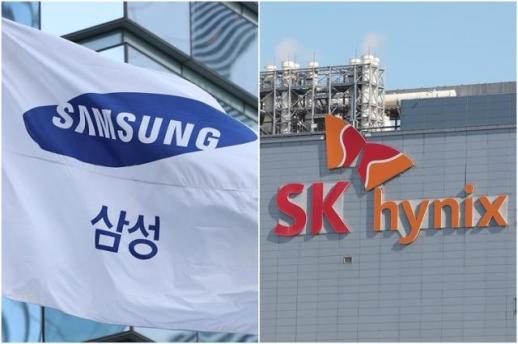 Samsung and SK Hynix Stock Plunge Spreads to Nasdaq, Amplifying Global Market Volatility A sell-off in AI-related stocks triggered by a sharp decline in Asian semiconductor shares is impacting global risk assets, according to analysts. On June 23, Bloomberg reported that the drop in semiconductor stocks, particularly in South Korea, combined with the structure of leveraged exchange-traded funds (ETFs), is increasing volatility in global markets. The significant declines in major semiconductor companies like Samsung Electronics and SK Hynix have shaken the Asian markets and extended their effects to U.S. tech stocks. U.S. markets closed lower on June 23, with the S&P 500 down 1.44%, the Nasdaq falling 2.21%, and the Dow Jones Industrial Average dropping 0.09%. The semiconductor sector was particularly weak, with the Philadelphia Semiconductor Index plunging 7.9%. Individual stocks also saw substantial declines, with Micron down 13.2%, Qualcomm falling 8.0%, Intel decreasing by 6.1%, and Nvidia dropping 4.1%. The shock in the South Korean market is seen as a catalyst for the global trend. The previous trading day, the KOSPI experienced heightened volatility, triggering a circuit breaker, with Samsung Electronics and SK Hynix leading the decline with drops of around 12%. Analysts point out that the mechanical rebalancing of structured products like leveraged ETFs has amplified selling pressure, exacerbating the downturn. These leveraged products are designed to maintain ratios through automated trading, which can lead to additional selling in a down market, increasing volatility. Market observers note that the adjustment in South Korean semiconductor stocks is triggering a risk-averse sentiment across global asset markets, extending beyond regional issues. Kim Se-hwan, a researcher at KB Securities, stated, "The semiconductor shock originating from Asia has led to a sharp decline in the Nasdaq," adding that concerns over valuations in AI and semiconductor sectors are contributing to the market's downturn.* This article has been translated by AI. 2026-06-24 17:00:00
 -
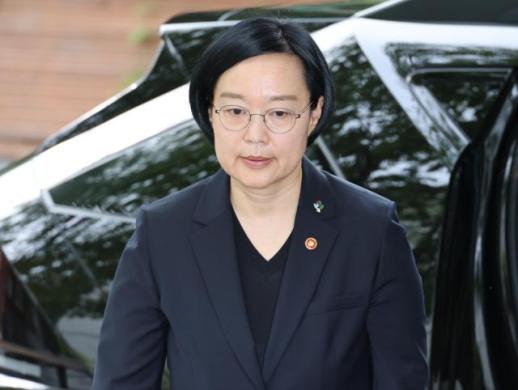 Han Seong-sook's Confirmation Hearing Sparks Political Tensions As the confirmation hearing for Han Seong-sook, the Prime Minister nominee, approaches on June 25-26, tensions are rising between the ruling and opposition parties. The People Power Party (PPP) has called for President Yoon Suk-yeol to withdraw Han's nomination, while the Democratic Party has dismissed this as an "exaggerated claim." Members of the PPP's confirmation hearing special committee held a press conference on June 24, stating that nearly 40% of the 1,170 documents requested from Han were not submitted. They also emphasized that the Democratic Party opposed all witness selections. During the press conference, committee members Kang Seung-kyu, Kim Hee-jung, Kim Seon-kyo, and Jo Jeong-hun criticized Han for failing to provide adequate documentation regarding allegations of "improper gifting" raised last year, including proof of gift tax payments and evidence of farming land ownership in Yangpyeong. They stated, "There is no documentation where there are allegations. It is not that the documents are missing; they are simply not being submitted." They also pointed out that Han, who was previously a multiple property owner, disposed of assets just before the hearing, claiming, "Neither of the two transactions even included contracts, making it a mere declaration of sale without evidence to avoid the hearing." They condemned, "A hearing without documents or witnesses is not a hearing. We demand that Han submit proper documentation before the hearing." The call for President Yoon to withdraw Han's nomination was echoed by PPP Secretary-General Jeong Hee-yong, who referenced the recent personal data leak incident involving 'Everyone's Startup.' He urged, "According to the standards set by President Yoon, Han is subject to punitive fines and class-action lawsuits. He must explain how these principles can coexist with this appointment." Kang also stated on his Facebook that Han's nomination should be immediately withdrawn. Despite the PPP's ongoing attacks on Han, the Democratic Party has dismissed these claims as unreasonable. They argue that raising issues before the hearing even begins is absurd, especially since the allegations against Han were sufficiently addressed during her previous confirmation process as Minister of Small and Medium Enterprises and Startups. Democratic Party committee member Kim Han-kyu criticized the PPP on Facebook on June 22, stating, "The PPP is making absurd demands for the withdrawal of the nomination based on unreasonable reasons. We should listen to the nominee's position and explanations during the hearing. I hope we can focus on meaningful verification during the confirmation process." He further emphasized during a subsequent meeting that the PPP's claim that the country needs personnel to revive the economy while simultaneously arguing that a nominee from Naver should not be Prime Minister is ridiculous. He urged the PPP to stop making outdated claims and to properly conclude the confirmation process. Political analysts predict that the PPP will intensify its offensive during the hearing, given the obstacles faced in witness selection and document submission. However, with the ruling party holding a majority in the National Assembly and President Yoon emphasizing a "speedy approach" in his second year of office, the confirmation process is expected to proceed smoothly, including the adoption of the progress report and the approval of the nomination agreement. 2026-06-24 17:00:00
 -
 Korea's Small Business Agency and LG Energy Solution Partner to Strengthen K-Battery Ecosystem The Small and Medium Business Administration announced on June 24 that it has signed a memorandum of understanding (MOU) with LG Energy Solution to strengthen the K-battery ecosystem. The signing ceremony took place the previous day at LG Energy Solution's Daejeon Technology Center. This MOU follows a collaborative initiative launched last month focused on non-partner companies as part of the 'K-Battery Open Innovation' program. The partnership expands support to include partner companies, establishing a 'public-private cooperation model for large and small business coexistence,' according to the Small and Medium Business Administration. Under the agreement, a value chain stabilization track will be implemented to ensure supply chain stability for existing partners. The administration will support stable financing based on its policy funds and connect with carbon neutrality support programs (MRV) to respond to the European Union's Carbon Border Adjustment Mechanism (CBAM). The K-Battery Open Innovation initiative will also provide joint technology verification (PoC) and follow-up investment opportunities for innovative technologies developed by startups. Kim Je-young, Chief Technology Officer of LG Energy Solution, stated, "This agreement will allow us to expand collaboration with promising domestic companies and accelerate growth, contributing to the competitiveness of the K-battery industry." Ban Jeong-sik, Director of Regional Innovation at the Small and Medium Business Administration, remarked, "We will spare no effort to support this as a model of successful public-private collaboration, providing large companies with opportunities to secure future innovative technologies and offering small and medium enterprises a ladder to leap onto the global stage."* This article has been translated by AI. 2026-06-24 16:52:00
 -
 Korean Lawmaker Kwon Seong-dong Refuses to Attend Special Prosecutor's Inquiry The second special prosecutor team, led by Kwon Chang-young, has summoned Kwon Seong-dong, a member of the People Power Party, regarding allegations of covering up investigations into the Unification Church. However, Kwon has refused to attend the inquiry. According to legal sources on June 24, the special prosecutor's office sent a notice for Kwon to appear for questioning on July 1. However, Kwon has indicated he will not attend. The special prosecutor's office stated, "We plan to coordinate the attendance schedule with his attorney later." The allegations of covering up the Unification Church investigation center on claims that police were aware of overseas gambling activities involving church leaders, including its president, Han Hak-ja, but failed to investigate, instead leaking information to political circles to suppress the case. In the past, the Chuncheon police received reports from insiders of the Unification Church between May and July 2022, indicating that President Han frequently engaged in overseas gambling with cash from church members. Despite creating intelligence reports based on these tips, the investigation was hindered by Kwon's involvement, leading to suspicions of a cover-up. Last year, the Kim Geon-hee special prosecutor team began a thorough investigation, conducting searches at the National Police Agency and other locations in July. They concluded that Kwon, a close associate of former President Yoon Suk-yeol, received police intelligence and passed it on to the Unification Church, resulting in charges against Kwon and President Han. However, the investigation into the internal leak and higher-ups' involvement remains unresolved.* This article has been translated by AI. 2026-06-24 16:52:00
 -
 Broadcasting Commission Confirms JTBC Will Air 2026 World Cup Without Disruption The Broadcasting Media and Communications Commission (BMCC) announced that JTBC will proceed with its coverage of the 2026 North and Central America World Cup without any disruptions, despite the network's ongoing corporate rehabilitation process. On June 24, the BMCC met with JTBC to review the circumstances surrounding its corporate rehabilitation application and future broadcasting plans. The commission emphasized the importance of protecting the public's right to view broadcasts, as guaranteed by broadcasting laws, and focused on assessing the impact on World Cup coverage and programming operations. During the meeting, discussions included the reasons behind the corporate rehabilitation application, the sustainability of World Cup coverage, potential disruptions to production and scheduling, and the effects on external production companies and their staff. A BMCC official stated, "We have currently formed an internal monitoring team to keep track of the situation. We have confirmed that the coverage of the 2026 North and Central America World Cup will proceed without any issues." This meeting follows a report by Japanese broadcaster TBS, which highlighted concerns regarding JTBC's payment for World Cup broadcasting rights. TBS reported that JTBC had not yet made some payments due to FIFA for the World Cup rights, warning that failure to pay on time could lead to disruptions in World Cup coverage in South Korea. TBS noted, "If payments are not made by the deadline, there is a possibility that TV coverage in South Korea will be limited after the knockout stage." 2026-06-24 16:52:00
 -
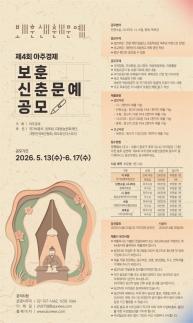 Fourth Annual Aju Economic Veterans Spring Literary Contest Awards 18 Winners Aju Economic Newspaper announced the winners of the Fourth Annual Aju Economic Veterans Spring Literary Contest on June 24. The contest is hosted by Aju Economic Newspaper and sponsored by the Ministry of Veterans Affairs, the Korean Independence Association, the Dongnong Cultural Foundation, the Republic of Korea Army Association, and Auto Industry Co., Ltd. As the first veterans-focused literary contest in South Korea, the Aju Economic Veterans Spring Literary Contest aims to revive the noble legacies of those who dedicated themselves to independence, freedom, and national defense through literature, connecting their spirit to the present. The contest's themes include various narratives reflecting the values of veterans, such as the Provisional Government of the Republic of Korea, anti-Japanese independence movements, volunteer army activities, student independence movements, and the spirit of patriotism and love for the nation. This year, the award system underwent significant reform to enhance the contest's prestige. The previously singular Grand Prize awarded by the Minister of Veterans Affairs has been expanded to recognize the best works in six categories. A total of 1,000 entries were submitted, with 18 works ultimately selected. Each Minister's Award comes with a prize of 2 million won. The Minister's Award for the short story category went to Seong Baek-gwang for "The Light of the Old Medal." This story depicts a record keeper at a veterans' hall who realizes that veterans are not merely victims but "people who have handed down tomorrow" when meeting the family of a national hero. It illustrates that honoring veterans involves remembering not only their sacrifices but also their pride and lives. Seong Baek-gwang expressed, "I hope we do not forget that our ordinary today is built on someone else's sacrifice." The Minister's Award for the screenplay category was awarded to Lim Hyo-seon for "The Grandmother Who Hates Exercise," while the poetry category's award went to Lee Jeong-hyeon for "Unnamed." "The Grandmother Who Hates Exercise" tells the story of college student Min-ho living with his 88-year-old grandmother, reflecting on the weight of life as a descendant of an independence activist and the sacrifices and loneliness faced by families of national heroes. Judges noted, "The work stands out for portraying the lives of veterans and their families through a modern family drama." Regarding "Unnamed," judges commented, "It effectively conveys the theme of veterans through restrained language, with fresh and unique expressions in each stanza, showcasing exceptional skill in connecting the segments." Lim Hyo-seon remarked, "I have always emphasized the importance of new challenges to my students in the university classroom, and I am even more moved to realize that I could practice that value through writing." Lee Jeong-hyeon stated, "I would like to take this opportunity to express my gratitude to all the unnamed heroes who rest beneath the large Taegeukgi at our feet." The Minister's Award for the children's literature category went to Kim Yu-young for "100-Year School." Set in a century-old school that produced many independence activists, it humorously depicts a rapper hopeful who time travels to 1919, exploring the past. The Minister's Award for the essay category was awarded to Lee Kyung-hee for "The Day I Moved to the National Cemetery," a letter to her father resting in the cemetery that reflects on the lives and deaths of Vietnam War veterans. The Minister's Award for the book report category went to student Kim Yul-gok for "In a World Where the Long-Handled Spoon Does Not Look Like a Gun." This piece, inspired by the book "My Grandfather Was a 15-Year-Old Boy Soldier," contemplates the sacrifices and wounds hidden behind the names of national heroes and expresses gratitude for current peace and safety. The Grand Prize for the short story category (Korean Independence Association Award) was awarded to Jin Hwan-joo for "Happy Birthday, Anarchist in the Corner," while the Excellence Award went to Kim Ah-won for "The One Who Cries Instead." In the screenplay category, the Grand Prize (Korean Independence Association Award) went to Lee So-ri for "To Your Name," and the Excellence Award went to Seo Yoon-joo for "One Beautiful Word for Each Star." In the poetry category, the Grand Prize (Dongnong Cultural Foundation Director's Award) was awarded to Jo Sook-ja for "The Ring of My Father from the Grave," while the Excellence Award went to Heo Kyung-ho for "Compass." In the children's literature category, the Grand Prize (Dongnong Cultural Foundation Director's Award) went to Kim Yeon-soo for "Running Train," and the Excellence Award went to Lee Kwang-ho for "Doctor Ahn Jung-geun and Chiba Toshichi." In the essay category, the Grand Prize (Republic of Korea Army Association President's Award) went to Seong Hyun-gyeong for "Ode for Forgotten Names," while the Excellence Award went to Kim Young-bong for "A Familiar Fight." In the book report category, the Grand Prize (Aju Economic President's Award) went to student Kim Ga-bin for "The Name I Could Not Call for Attendance," and the Excellence Award went to student Kim Yoon-ho for "The Fire of Choi Pechika." The awards ceremony will take place on June 30 at the Maeheon Yun Bong-gil Memorial Hall in Seocho-gu, Seoul. View the winning works* This article has been translated by AI. 2026-06-24 16:48:00
 -
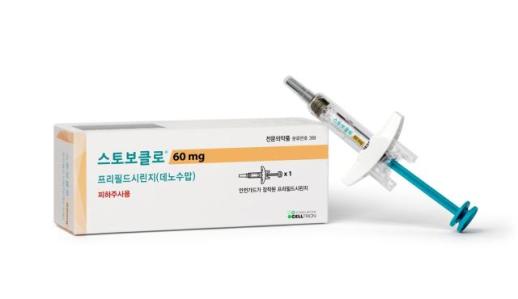 Prolia Market Faces Disruption as Domestic Biosimilars Gain Ground The market for the osteoporosis treatment Prolia (active ingredient denosumab) is rapidly restructuring following the expiration of its patent. With Celltrion Pharmaceutical, Samsung Bioepis, and HK inno.N entering the biosimilar market, competition is intensifying against the established dominance of Jongkundang and Amgen in the Prolia market. According to market research firm IQVIA, the domestic osteoporosis treatment market was estimated to be around 360 billion won last year, with the denosumab segment accounting for approximately 160 billion won. Given its substantial size as a single-ingredient market, competition among biosimilar companies is heating up. Prolia, developed by global pharmaceutical company Amgen, is administered via a subcutaneous injection every six months, promoting increased bone density and fracture prevention. In South Korea, Amgen Korea and Jongkundang have established a sales network, with Amgen focusing on general hospitals and Jongkundang targeting semi-general hospitals and clinics. However, following the expiration of its patent in April last year, sales of the original drug have begun to decline. Jongkundang reported Prolia sales of about 30 billion won in the first quarter of this year, a 33.3% decrease compared to the same period last year. The introduction of biosimilars and additional price reductions have contributed to the weakening position of the original product. Indeed, drug prices have been adjusted. According to Amgen Korea, the reduced price for Prolia has been in effect since the 1st of this month. An Amgen Korea representative stated, "Original biologics are subject to price reductions when biosimilars are listed for reimbursement. The first biosimilar was listed last year, leading to an adjustment to about 80% of the previous price, and with the recent listing of the third biosimilar, the price has been readjusted to about 70% of the original price." In contrast, biosimilar products are quickly expanding their market share. The first entrant was Celltrion's Stoboclo, which recorded sales of 11.8 billion won last year and generated 5.7 billion won in sales in the first quarter of this year. Since the fourth quarter of last year, quarterly sales have consistently exceeded 5 billion won, indicating rapid growth. Daewoong Pharmaceutical's sales efforts have bolstered this market expansion. Celltrion Pharmaceutical and Daewoong Pharmaceutical have established a co-marketing system for Stoboclo, targeting both general hospitals and clinics. This marks the first instance of a Celltrion biosimilar being sold by a pharmaceutical company other than Celltrion Pharmaceutical. The two companies have adjusted the price of Stoboclo from 111,384 won to approximately 108,290 won to facilitate market growth. Samsung Bioepis is also in pursuit with its biosimilar, Obodens. After its launch in the third quarter of last year, Obodens generated 2.6 billion won in sales and recorded 3.8 billion won in the first quarter of this year. Samsung Bioepis has partnered with Hanmi Pharmaceutical for the sales of Obodens, with Samsung Bioepis handling production and supply while both companies participate in domestic sales and marketing. This marks the first time Hanmi Pharmaceutical has sold a biosimilar developed by another company. The price remains at approximately 108,290 won. A latecomer, HK inno.N, has also entered the competition with its biosimilar, Izambia, which has received approval. According to company representatives, Izambia is expected to launch within this month, promising to compete at the same price level as existing biosimilars. Industry experts believe that the Prolia market is evolving beyond mere biosimilar competition into a battleground for the sales capabilities of major domestic pharmaceutical companies. As Jongkundang's established market faces challenges from Daewoong Pharmaceutical, Hanmi Pharmaceutical, and HK inno.N, the pace of market restructuring is accelerating. An industry insider noted, "Denosumab has accumulated prescription experience, making the transition to biosimilars relatively less burdensome. The larger the product, the greater its market potential, leading to intensified competition."* This article has been translated by AI. 2026-06-24 16:48:00
 -
 Japan Fans Face Accommodation Dilemma Ahead of World Cup Knockout Stage As the final group stage match approaches, fans of the Japan national football team are grappling with travel and accommodation arrangements. Japan's advancement to the knockout stage will depend on their final group ranking, which determines the host city for their first match. If they finish third, fans will need to monitor results from other groups, complicating their plans. Local supporters are struggling to finalize flights and accommodations, while Japanese municipalities are facing challenges in organizing group viewing events. The Japanese team will face Sweden in their final group match on June 26 at 8 a.m. KST. This tournament features an expanded format with 48 teams, up from 32, with the top two teams from each of the 12 groups, plus the best eight third-placed teams, advancing to the knockout stage. According to the Nihon Keizai Shimbun (Nikkei), if Japan finishes first in their group, the Round of 32 will likely take place in Monterrey, Mexico. If they finish second, Houston, Texas, is the probable location. A third-place finish could lead to one of five cities: Boston, New York, San Francisco, Vancouver, or Mexico City. The challenge lies in the fact that the venues will only be determined after all group rankings are finalized. While a first or second-place finish narrows down the options, a third-place finish requires waiting for results from other groups. This uncertainty makes it difficult for fans to secure accommodations and flights. According to the Nikkei, Megumi Masuda, a 63-year-old housewife from Hyogo Prefecture, plans to watch all three of Japan's group matches with her sister and daughter. She has already purchased conditional tickets for the knockout stage in case Japan advances. To prepare for a first or second-place finish, she has made provisional reservations for accommodations near Monterrey and Houston that allow free cancellations. However, if Japan finishes third, she will have to choose from five potential host cities, leaving her without a fixed lodging plan. "It's hard to finalize transportation like flights until the last minute," she said, expressing concern about sold-out flights and rising prices. The uncertainty surrounding the schedule has also complicated preparations for group viewing events in Japan. Organizing public viewings with large screens requires coordination with police and fire departments, but the timing for the Round of 32 is still undecided. If Japan finishes first, the match will be held at 10 a.m. JST on June 30; if they finish second, it will be at 2 a.m. on the same day. A third-place finish could lead to five different match times, depending on other group results. Abiko City in Chiba Prefecture, the hometown of Keito Nakamura, who scored against the Netherlands, held a public viewing during the group stage but has yet to decide on the Round of 32. A city official told the Nikkei, "We will work with relevant agencies to push for public viewing as soon as the rankings are confirmed." Amid concerns about accommodations and schedules, discussions about potential matchups are heating up. According to the Yomiuri Shimbun, if Japan finishes first, they could face Morocco; if second, Brazil; and if third, France. Among fans, opinions vary: some argue that finishing second is preferable since Japan has previously beaten Brazil in a friendly and the travel would be easier, while others believe that Japan's positive memories from their training camp in Monterrey make finishing first more desirable. However, the players are distancing themselves from these calculations. Team captain Ko Itakura stated, "There are many scenarios, but it's realistically impossible to adjust our ranking for a desired matchup. We need to focus on winning every match." Veteran Yuto Nagatomo echoed this sentiment, emphasizing the importance of advancing as the top team, saying, "It's crucial that we win based on the football we've built, regardless of who our opponent is in the knockout stage." Forward Daizen Maeda added, "The only thing that matters is winning against Sweden." Japan's experience at the 2022 Qatar World Cup, where they defeated Germany but struggled against Costa Rica, lingers in their minds. With that memory fresh, the team's priority remains securing a victory against Sweden rather than contemplating potential matchups. The expanded World Cup format offers more opportunities for teams, but it also leaves fans with the last-minute challenge of finalizing flights and accommodations.* This article has been translated by AI. 2026-06-24 16:44:00
 -
 Apple Surpasses GE, While Nvidia Takes the Lead in Semiconductor Market The stock market reflects the economy. The composition of top market capitalization companies reveals the current state of a country's economy and industry. Over the past decade, the top ten market capitalizations in major stock markets, including the U.S., Japan, China, and Taiwan, have undergone dramatic changes. The previous dominance of traditional manufacturing, banking, and energy sectors is being replaced by semiconductor and artificial intelligence (AI) technology companies. We are now in the era of semiconductor and AI unification. The rankings of the largest companies by market capitalization on the U.S. stock market have changed significantly over the past decade. In 2016, the top companies were primarily in the energy, manufacturing, and financial sectors, with ExxonMobil, General Electric (GE), and JPMorgan Chase leading the way. By 2026, the landscape has transformed dramatically, dominated by AI and semiconductor companies such as Nvidia, Broadcom, Tesla, and Micron. The smartphone industry, led by Apple, disrupted the stronghold of energy and manufacturing, which has now been further challenged by semiconductor and AI firms. The decline of the energy and manufacturing era According to CompaniesMarketCap, as of June 24, 2026, the top ten companies by market capitalization in the U.S. are now dominated by the semiconductor and IT sectors. Nvidia ranks first with a market cap of $4.845 trillion, followed by Apple at $4.322 trillion and Alphabet at $4.223 trillion. Microsoft holds the fourth position with a market cap of $2.812 trillion. The fifth to tenth positions are also occupied by companies closely related to AI, including Amazon ($2.564 trillion), SpaceX ($2.254 trillion), Broadcom ($1.898 trillion), Tesla ($1.536 trillion), Meta ($1.452 trillion), and Micron ($1.343 trillion). The rise of the semiconductor and AI age The U.S. stock market looked different ten years ago. In December 2016, a report from Daishin Securities indicated that Apple was the top company with a market cap of $607.1 billion, followed by Microsoft ($481.8 billion) and Amazon ($369.0 billion). ExxonMobil ($365.2 billion) and Johnson & Johnson ($305.9 billion) were fourth and fifth, respectively. Other notable companies in the top ten included Facebook ($305.4 billion), Alphabet ($287.0 billion), GE ($281.1 billion), AT&T ($280.2 billion), and JPMorgan Chase ($271.2 billion). Nvidia and the top six companies in the semiconductor and AI sector The most significant change in market capitalization over the past decade has been Nvidia's rise. Currently, Nvidia's market cap of $5.155 trillion exceeds the combined market cap of the top ten U.S. companies in 2016, which was $3.554 trillion. This indicates that Nvidia alone is valued higher than the total of the companies that once dominated the market. While Nvidia has surged, many traditional industrial companies that held top positions in 2016 have fallen out of the rankings. ExxonMobil, Johnson & Johnson, and GE are now outside the top ten. Their places have been filled by companies connected to the semiconductor and AI ecosystem, such as Nvidia, Broadcom, Tesla, and Micron, replacing the previous dominance of energy, healthcare, and industrial sectors with AI semiconductors, electric vehicles, and memory companies. Nvidia's position as the top company illustrates the shift in industrial leadership. Kim Seok-hwan, a researcher at Mirae Asset Securities, noted, "The change in the top market cap company signifies a shift not just in stock prices but also in the paradigm of the era and the flow of capital. Since the late 1990s, the global stock market has transitioned from a focus on traditional manufacturing and energy to the current era of generative AI." He explained that Nvidia surpassing Apple as the top company reflects the overwhelming value assigned to monopolistic firms amid the generative AI revolution. Expansion of the AI ecosystem and potential for long-term dominance Market analysts predict that Nvidia's dominance will continue for the foreseeable future. As the adoption of generative AI and competition for data center investments intensify, demand for AI semiconductors is expected to rise steadily. Nvidia, with its overwhelming share of the GPU market, is seen as the primary beneficiary of expanded investments in AI infrastructure. According to financial investment firm JP Morgan, on June 18, it estimated that investments in AI semiconductors and core hardware will exceed $3 trillion over the next five years. JP Morgan identified Nvidia as the company most likely to benefit from this trend, predicting that its dominance within the AI ecosystem will strengthen further. 2026-06-24 16:44:00