


Latest by
-
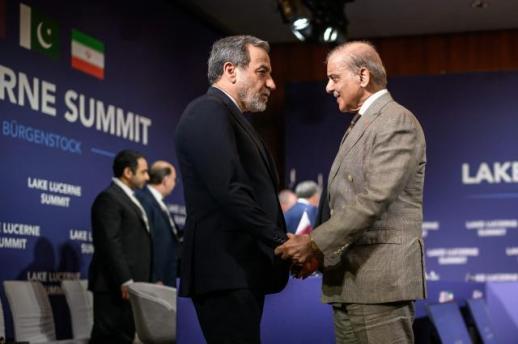 OPINION: Bürgenstock proves Pakistan's new place in world This opinion piece was contributed by Dr. Imran Khalid, a Karachi-based geostrategic analyst and senior fellow at Foreign Policy In Focus - USA. His work centres on international affairs and global security. KARACHI, June 24 (AJP) - Early Monday morning, as Lake Lucerne reflected the first light over the Bürgenstock resort, something unusual happened in the history of American foreign policy. Foreign Minister Abbas Araghchi of Iran declared publicly that "tireless Pakistani and Qatari mediation has delivered major progress to end the Lebanon War." Iran, which has spent decades treating Washington with contempt and suspicion, publicly credited a third country for narrowing the gap. That country was not France, not Germany, not the United Nations. It was Pakistan. The conventional media narrative this week frames the Bürgenstock summit as an American diplomatic triumph. Vice President JD Vance flew to Switzerland, sat across from Iran's parliamentary speaker Mohammad Bagher Ghalibaf, and the two sides agreed to a 60-day roadmap toward a final deal, with nuclear, sanctions, and dispute-resolution working groups to follow. The headline writes itself: Trump delivers where Biden failed. But that reading misses the structural story. The real shift at Bürgenstock was not American leverage. It was Pakistani credibility, built painstakingly over twelve months by two men who spent the past year transforming their country's place in the world: Prime Minister Shehbaz Sharif and Field Marshal Asim Munir. Washington supplied the political weight. Islamabad supplied the trust. Without that combination, there would have been no summit to attend. To understand Bürgenstock, you have to start in May 2025. When India launched Operation Sindoor on May 7, striking targets inside Pakistan and Pakistan-administered Kashmir, the assumption in many capitals was that Islamabad would absorb the blow, absorb the humiliation, and quietly de-escalate. Instead, Pakistan responded with precision in what became a four-day conflict that ended only after US-brokered backchannel diplomacy secured a ceasefire on May 10. Pakistan's National Assembly formally celebrated the outcome as a national victory. General Asim Munir was elevated to the five-star rank of Field Marshal, a distinction last held in Pakistan in the 1960s. The significance was strategic, not ceremonial. Pakistan did not simply emerge from the India conflict intact. As analysts have noted, it emerged emboldened. Field Marshal Munir moved immediately to convert that military credibility into geopolitical currency. He made multiple visits to Washington – including one-one-lunch with President Trump - developing what American officials describe as a direct and trusted line to the White House. In September 2025, Prime Minister Sharif and Field Marshal Munir met President Trump at the White House, signing a mutual defence agreement with Saudi Arabia along the way and repositioning Pakistan as an active, constructive presence in Gulf security architecture. This is the twelve-month arc that produced Bürgenstock. It was not accidental. It was engineered. When the US-Iran conflict began in February 2026 and the world searched for a credible intermediary between Washington and Tehran, the answer was already clear to those who had watched Pakistan's trajectory. Pakistan hosts no US military bases and maintains functional diplomatic ties with Tehran. In a conflict ecosystem where every major power is perceived as partisan, Islamabad occupied the rare middle position: close enough to Washington to carry credibility, trusted enough by Tehran to carry messages. Field Marshal Munir and Prime Minister Sharif worked this channel with relentless discipline. Munir made multiple personal trips to Tehran, sitting across from Iranian President Masoud Pezeshkian and Parliamentary Speaker Mohammad Bagher Ghalibaf. Interior Minister Mohsin Naqvi visited the shrine of Imam Reza in Mashhad hours before the Bürgenstock meeting, a gesture of cultural seriousness that no Western envoy could credibly replicate. Foreign Minister Ishaq Dar shuttled between capitals. The ceasefire that took hold on April 8, 2026, and the subsequent first round of direct talks hosted in Islamabad, were the direct product of this sustained, unglamorous effort. The White House noticed. When a Republican senator attempted to cast doubt on Pakistan's role in May, President Trump was unequivocal: "They're great. I think the Pakistanis have been great. The field marshal and the prime minister of Pakistan have been absolutely great." On May 7, Trump reinforced the point publicly: "Pakistan has been fantastic. And its leaders have been fantastic — the marshal and the prime minister." The White House issued a formal statement confirming that "Prime Minister Shehbaz Sharif and Field Marshal Asim Munir have been helpful mediators, and the United States is grateful for Pakistan's efforts to bring an end to the conflict." At Bürgenstock on Sunday, Vance went further. Speaking publicly at the opening ceremony, he made a personal remark that captured the depth of the working relationship he had built with Field Marshal Munir over the preceding months. "I have joked that I have two very, very important people in my life. An Indian and a Pakistani. The Indian is my wife, and the Pakistani is Field Marshal Munir," Vance said, adding that he had "probably talked to Field Marshal Munir more than anyone else over the last few months." That is not diplomatic courtesy. That is a senior American official publicly confirming that the most consequential back-channel of a major geopolitical crisis ran through a Pakistani general and a Pakistani prime minister. The formal framework for last weekend's talks was the Islamabad Memorandum of Understanding, signed on June 17, 2026, with Prime Minister Sharif as co-signatory representing the mediating party. That framing matters legally and politically. Pakistan is not merely a go-between; it is a named party to the foundational document governing this negotiation. When the summit nearly collapsed Saturday — Israel struck Lebanon, Iran threatened to close the Strait of Hormuz again, and Vance originally cancelled his attendance — the Pakistani team, led by Prime Minister Sharif and Field Marshal Munir, held bilateral sessions with both the American and Iranian delegations through the night, threading through the disagreements that threatened to derail everything. The Pakistan-Qatar joint statement confirmed the outcome: a High Level Committee with political oversight, IAEA inspectors invited back into Iran, oil and petrochemical waivers for Tehran, the lifting of port blockades, and a reconstruction plan. Both sides left the table claiming progress. That is the hardest thing to achieve in any mediation. It is craft, not luck. And it was delivered by the same duo that had spent twelve months building the conditions that made it possible. Pakistan's transformation over the past year carries implications that extend well beyond this one negotiation. Before May 2025, Islamabad was frequently dismissed in Western foreign policy circles as a security liability, a country defined by internal fragility rather than regional ambition. That framing is now empirically obsolete. Pakistan today maintains its strategic partnership with China, sustains functional ties with Iran, operates a mutual defence agreement with Saudi Arabia, and holds a direct working channel to the Trump White House simultaneously. This is the definition of a middle power that has learned to operate across otherwise incompatible geopolitical spheres. Pakistan is fast emerging as a "third pillar" alongside Saudi Arabia and Turkey in southwest Asian security architecture, a shift that was inconceivable before the May 2025 conflict and the diplomatic sprint that followed it. The work is unfinished. Iran's enrichment capacity, the stockpile of highly enriched uranium, the future of Lebanon, the Strait of Hormuz's long-term status, and the sanctions architecture all remain contested. Israel, absent from the talks and explicitly hostile to the accord, retains the ability to disrupt the process at any moment. The High Level Committee and the technical working groups now provide the structure. Pakistan and Qatar provide the trusted channel. Two months from now, if a final agreement takes shape, the world will credit the leaders who signed it. It will not automatically credit the two men who made the signing possible: the Prime Minister who flew to Zurich on a Saturday night and the Field Marshal who had spent months earning the trust of both Washington and Tehran before that flight was ever scheduled. That invisibility is, in some ways, the mark of effective mediation. The mediator succeeds when the principals take the credit. Pakistan, and the Sharif-Munir partnership that built this moment, should take its own. 2026-06-24 16:40:43
 -
 SK Broadband Launches AI Development Platform to Enhance Network Quality SK Broadband has developed a platform that allows employees to create AI agents for immediate application in their work, enhancing the company's network quality management system. On June 24, SK Broadband announced that it launched the 'Playground' platform in February, in collaboration with its internal network organization and the AT&DT Center. This platform features network data analysis and coding support, streamlining a previously complex process that required individuals to request server access, set up development environments, and install libraries—tasks that could take over two months. The Playground automates these steps, reducing the time to start development to just five minutes. The Playground integrates with the location-based internal data analysis system, known as the Location Data Analysis System (LDAS). Employees can immediately utilize internal data such as network equipment, quality, traffic data, and customer experience indicators (CEI) for AI agent development. Currently, approximately 600 AI applications are being developed and operated through the Playground, with over 30 AI agents already deployed in the field that can assess situations and take actions autonomously. The flagship agent is 'C-One,' an AI monitoring and diagnostic agent that automatically detects anomalies in wired networks based on CEI, identifying causes and prioritizing checks instantly. It analyzes various factors, including quality score changes, complaint statuses, and optical signal strength, to pinpoint problem areas and suggest immediate actions such as remote equipment resets or on-site inspections. C-One also features an automated report generation and dispatch function for identified inspection points. SK Broadband plans to enhance C-One into an 'autonomous recovery agent' that can independently perform detection, handling, and recovery of issues. Additionally, the company operates a system that sends signals directly from nationwide servers to subscriber devices, measuring Wi-Fi and high-speed device quality in real time. This system automatically identifies low-quality devices, with AI analyzing fault history and time-based patterns to provide diagnosis, cause estimation, and immediate corrective actions all at once. Seong Jin-soo, head of the Network Center at SK Broadband, stated, "As employees create AI agents and apply them in the field, the way we work is fundamentally changing. We will continue to promote a culture of AI development to consistently improve network quality."* This article has been translated by AI. 2026-06-24 16:40:00
 -
 Minimum Wage Negotiations Begin Amid Calls for Freeze from Small Businesses As discussions on next year's minimum wage commence, small and medium-sized enterprises (SMEs) are urging for a freeze. Many businesses are already struggling due to high inflation and interest rates, raising concerns that further increases could exacerbate their financial crises. On June 23, the Minimum Wage Commission held its eighth plenary meeting at the Sejong Government Complex to officially begin discussions for the 2027 minimum wage. Labor representatives proposed an initial demand of 12,000 won per hour, a 16.3% increase from this year, which translates to a monthly salary of 2,508,000 won based on a 209-hour work month. In contrast, business representatives are advocating for the wage to remain at this year's level of 10,320 won per hour. On the same day, SMEs held a press conference at the Korea Federation of Small and Medium Enterprises in Yeouido, Seoul, where they officially called for a freeze on the minimum wage. Participants argued that any increase would threaten the survival of SMEs already struggling under the pressures of high inflation, soaring oil prices, fluctuating exchange rates, and rising interest rates. Kim Hyun, chairman of the Korea Reinforcing Bar Processing Cooperative, stated, "An increase in the minimum wage will further tighten the already struggling small manufacturing sector, which is losing competitiveness due to sluggish domestic demand and rising labor costs." Lee Joong-hak, policy director of the GS25 Management Council, added, "The burden of rapidly rising labor costs is falling heavily on small business owners. If they collapse, local economies will be shaken, ultimately impacting the national economy," emphasizing the need for a wage freeze. The sense of crisis among SMEs is significant. A survey conducted by the Korea Federation of Small and Medium Enterprises from May 19 to June 10 found that 60.4% of the 994 SMEs and small business owners reported that their management conditions had worsened compared to last year. Moreover, 77.6% of respondents indicated that this year's minimum wage has been a burden on their operations. Consequently, a majority of respondents called for next year's minimum wage to either be frozen (41.5%) or reduced (21.0%). Nearly half (48.6%) stated that if the minimum wage rises to an unbearable level, they would reduce hiring or lay off existing employees. Many self-employed individuals also expressed that they would have to consider closing their businesses if the minimum wage increases. A survey conducted by the Korea Economic Association from May 14 to 18 among 500 self-employed individuals revealed that one in three (34.0%) reported their average monthly income fell below the minimum wage for workers (2,156,880 won, based on a 40-hour work week). Among self-employed respondents, 14.6% indicated they would consider closure if the minimum wage rises by 1-3%, while 13.8% stated that a rise of 15% or more, as demanded by labor groups, would make closure unavoidable. The SME sector is determined to push for a freeze on the minimum wage. They plan to strengthen their response to ensure that the voices from the field are reflected in the deliberation process. Lee Jae-gwang, chairman of the Labor and Workforce Committee of the Korea Federation of Small and Medium Enterprises, expressed concern that "an increase in the minimum wage that does not consider payment capabilities could push small businesses to the brink of collapse," emphasizing that next year's minimum wage must be frozen at the current level. The legal deadline for minimum wage deliberations is 90 days from the date the Minister of Employment and Labor requests the review. This year, discussions must conclude by June 29. However, there is no legal enforcement, and historically, final decisions have often exceeded the usual timeframe. Even if the deadline is missed, the minimum wage proposal must be submitted to the Minister of Labor by mid-July, considering remaining administrative procedures. The Minister will finalize and announce the minimum wage by August 5, which will take effect on January 1 of the following year. Notably, there has never been a case of a wage freeze in the history of minimum wage deliberations. Over the past five years, the minimum wage has increased annually, reaching 9,160 won in 2022 (a 5.1% increase from the previous year), 9,620 won in 2023 (5.0%), 9,860 won in 2024 (2.5%), 10,030 won in 2025 (1.7%), and 10,320 won in 2026 (2.9%).* This article has been translated by AI. 2026-06-24 16:40:00
 -
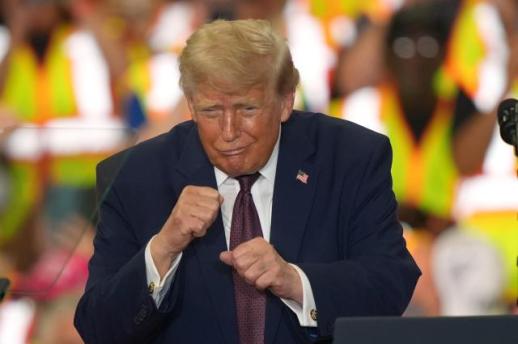 Iran Studies Trump's 'The Art of the Deal' to Counter U.S. Pressure Tactics Iranian diplomats are reportedly referencing President Donald Trump's book, "The Art of the Deal," to navigate his unpredictable negotiation style. According to the Wall Street Journal (WSJ) on June 23, the Iranian negotiating team is studying the 1987 publication to better understand Trump's approach. The book outlines negotiation strategies Trump employed during his real estate career, emphasizing extreme and unpredictable demands to unsettle opponents and elicit concessions. The WSJ also reported that Iranian diplomats have consulted psychologists to respond to Trump's unusual negotiation tactics. Some mediators indicated that the Iranian team aimed to comprehend Trump's mindset and predict his public reactions to their proposals. However, a source familiar with Iranian diplomacy stated that the Swiss negotiation team does not include a psychologist, and Iran prefers not to speculate psychologically about Trump's motives or decisions. During recent negotiations in Switzerland, Trump's social media comments became a significant factor. Over the weekend, while talks were ongoing, Trump suggested that if Iran did not cease funding the Lebanese militant group Hezbollah, it could face military action. At that time, the head of the Iranian negotiating team, Mohammad Bagher Ghalibaf, announced the suspension of face-to-face negotiations after hearing about Trump's threats. Nonetheless, indirect discussions continued through mediators from Pakistan and Qatar. Iran interpreted Trump's remarks as a form of intense pressure but maintained the negotiations. Mohammad Ameri, an Iran expert at the Wilson Center's Global Advisory Council, stated, "Trump is applying the lessons from 'The Art of the Deal' to test his opponents' resolve with extreme threats. However, Iran is well aware of his tactics, so the negotiation dynamics are unlikely to change." In fact, Iran has previously dismissed Trump's threats as negotiation tactics and ultimately secured favorable terms. In April, when the U.S. proposed a 45-day ceasefire, Iran expressed concerns that this period could be used by the U.S. and Israel to bolster their military capabilities. Iran judged Trump's threats as pressure tactics and did not accept them, eventually achieving a ceasefire lasting 15 days. However, Trump's public statements are placing pressure on Iranian negotiators. Iranian officials and mediators noted that Trump's social media posts complicate efforts for pragmatists in Tehran to convince hardliners that they can trust U.S. commitments.* This article has been translated by AI. 2026-06-24 16:36:00
 -
 Study Shows Radiation Embolization Improves Survival in Liver Cancer Patients with PVTT A recent study has found that transarterial radioembolization (TARE) offers longer survival for patients with hepatocellular carcinoma (HCC) accompanied by portal vein tumor thrombus (PVTT) compared to combination therapy with atezolizumab and bevacizumab. HCC, particularly when it invades the liver's major blood vessels, is challenging to treat and has a poor prognosis. Without treatment, patients with PVTT typically have an average survival of only three months. A research team led by Professor Kim Yoon-jun at Seoul National University Hospital conducted a multicenter study comparing treatment outcomes between 213 patients with HCC and PVTT who received TARE and those who underwent atezolizumab-bevacizumab therapy from 2016 to 2023. The findings were announced on June 24. The team analyzed overall survival, progression-free survival, objective response rate (ORR), and safety by dividing patients into TARE and atezolizumab-bevacizumab groups. To account for differences in baseline characteristics, inverse probability weighting and propensity score matching were applied. The median overall survival was 27.5 months for the TARE group, significantly longer than the 8.6 months observed in the atezolizumab-bevacizumab group. Notably, in patients whose cancer had not yet progressed to the main portal vein (involvement at the segmental or lobe level), the risk of death in the TARE group was 36% lower compared to the atezolizumab-bevacizumab group. However, no significant differences were found between the two treatments in patients with main portal vein involvement. There were no significant differences in progression-free survival or tumor response rates between the two treatment groups. In terms of safety, the TARE group showed a trend toward lower rates of certain adverse reactions. The incidence of ascites affecting daily life was 12% in the TARE group compared to 20.5% in the atezolizumab-bevacizumab group, while variceal bleeding rates were 1.7% and 8%, respectively. Professor Kim stated, "TARE is significant for sequential personalized treatment strategies in advanced liver cancer, as it relatively maintains liver function, allowing for subsequent chemotherapy." The study results have been published in the latest issue of the international journal 'Diagnostic and Interventional Imaging.'* This article has been translated by AI. 2026-06-24 16:36:00
 -
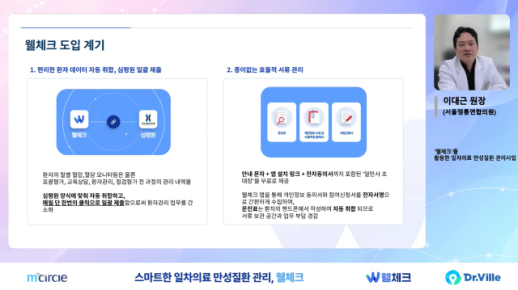 Welcheck Digitizes Chronic Disease Management in Primary Care to Reduce Administrative Burden Daewoong Pharmaceutical's affiliate, M Circle, showcased a fully automated administrative process for managing chronic diseases in primary care, significantly reducing operational burdens. Over 5,600 healthcare professionals participated in the online seminar, demonstrating high interest in practical applications. On June 24, M Circle announced that it shared a case study on chronic disease management in primary care, presented by Lee Dae-geun, director of Seoul Jeongtong Union Clinic, during an online seminar hosted on the medical platform Dr. Bill. The seminar aimed to introduce patient management cases utilizing the digital healthcare platform Welcheck in primary care settings. During the seminar, Lee discussed his experiences and outcomes from implementing the "Welcheck-based chronic disease management program in primary care." Seoul Jeongtong Union Clinic has established personalized care plans for patients and continuously monitors blood pressure and blood sugar data. This approach has enhanced continuity in patient management while alleviating administrative burdens. The chronic disease management program in primary care, operated by the Ministry of Health and Welfare and the Health Insurance Review and Assessment Service, assigns local clinics as primary care providers responsible for developing annual management plans for patients with hypertension and diabetes, offering education, counseling, and monitoring. Currently, primary care institutions nationwide can participate. Welcheck is a platform that integrates and manages patient health data, enabling healthcare professionals to utilize this information in their practice. It enhances patient engagement through features like record-based monitoring and educational materials. The entire process, from sending patient invitations to automated consent forms, collecting questionnaires, developing care plans, and evaluations, has been digitized. It also supports the automatic compilation and submission of materials required by the Health Insurance Review and Assessment Service. Lee stated, "The use of Welcheck has significantly reduced administrative burdens, and both patient and healthcare provider satisfaction have increased due to continuous monitoring of health data." The seminar also highlighted the benefits for patients participating in the chronic disease management program. Participants can receive reduced out-of-pocket expenses and up to 80,000 won annually through the health promotion support program. The operational benefits for healthcare institutions were also presented. According to the presentation, utilizing the fee structure of the program could yield additional reimbursements of up to 380,000 won per patient. Operating the program with 500 patients could potentially generate over 10 million won in additional revenue monthly. Lee expressed hope that more healthcare institutions would leverage digital healthcare platforms to enhance the quality of chronic disease management and provide patient-centered medical services. Meanwhile, Daewoong Pharmaceutical plans to further advance its digital healthcare open innovation strategy. Last year, M Circle launched the "Welcheck-Egis Chart" integration service, which automatically links electronic medical record (EMR) systems. 2026-06-24 16:36:00
 -
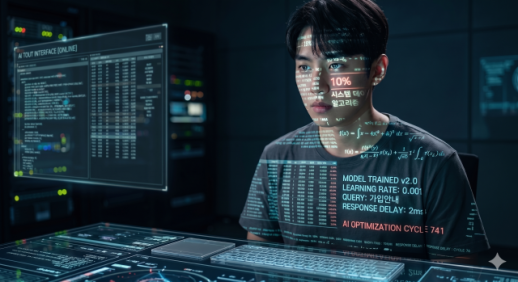 AI touts in Korean teens' hands are a growing worry for parents SEOUL, June 24 (AJP) - Gambling used to be a taboo word in South Korea. Real-money betting is prohibited in online games, as are casinos, bingo and lotteries for most citizens. But illegally, online gambling is proliferating — and increasingly invading classrooms. The episode in Netflix's hit drama "Teach You a Lesson," in which an ordinary high school student becomes addicted to gambling, destroys his family life and is eventually pulled into a criminal ring to repay debts, is hardly an exaggeration. In reality, the touts are no longer human. They are AI-driven advertisements, proxy sites and incessant pop-up attacks that relentlessly target teenagers' smartphones. "Teenagers are easily attracted by lotteries and dreams of sudden wealth," said Jeong You-seon, a counselor who has worked at both middle and high schools in Seoul. Apparently harmless fruit-matching game often serves as the gateway. In academically competitive districts, gambling may remain confined to a smaller group of students. In some vocational schools, however, it can spread much more widely. "People watch these stories on television dramas and think they are fictional," Jeong said. "They are not. They are based on reality." One former student she counseled became so consumed by online gambling that he began directing other students to earn points and money for him. He borrowed cash from friends and stole money from home to continue betting. His case is hardly unusual. In a recent self-reporting campaign run by the National Police Agency, nearly 300 teenagers came forward in just one month. One high school in Gangwon Province recorded 48 self-reported cases, while another in the same province reported 20. Gangwon is home to the country's only casino open to Korean nationals. Among the students was a 15-year-old boy in Incheon who told authorities he had accumulated about 30 million won ($19,500) in gambling debt. He assaulted his mother after she refused to repay 4 million won and later attempted suicide. In another extreme case, a 17-year-old school dropout in North Jeolla Province repeatedly ran away from home and broke into vehicles to finance his gambling habit. Over 14 months, he deposited about 16 million won into online gambling sites. The cases offer a glimpse into what experts increasingly describe as one of the most underrecognized threats facing South Korean adolescents: the rapid spread of online gambling through smartphones, social media and gaming platforms. Police data show the average teenage self-reporter had gambled for about a year and wagered roughly 3 million won. The highest reported amount reached 60 million won. Boys accounted for 93 percent of those who came forward. The problem extends well beyond high schools. Four in 10 self-reporters were middle school students. A survey by the Seoul Metropolitan Police Agency last year of nearly 35,000 students found that 2.1 percent had gambling experience, up from 1.5 percent a year earlier. More strikingly, one in five students said they had witnessed gambling among their peers. The age of first exposure is also falling. Fifth grade in elementary school emerged as the most common starting point, replacing the first year of middle school in the previous survey. Most gambling now takes place online. Students reported participating in esports betting, online instant-win games and illegal internet casinos, with nearly two-thirds using smartphones as their primary device. For Bhang Soo-young, a psychiatrist at Nowon Eulji University Hospital and director of the Nowon District Comprehensive Addiction Management Center, the statistics merely confirm what she already sees in her clinic. "The problem is much bigger than most people realize," Bhang said. "Many teenagers believe everyone around them is gambling. Once they think all their friends are doing it, gambling starts to feel normal." She said adolescents are particularly vulnerable because they are drawn to the promise of easy money without the effort associated with part-time work or traditional employment. Some of the teenagers she treats have accumulated debts that would overwhelm many adults. "I have seen cases where debts reached 150 million won," she said. "Families initially try to repay the money, but eventually they can no longer keep up." As debts mount, gambling often spills into other forms of delinquency and crime. Teenagers may begin extorting classmates, stealing or carrying out online scams in an attempt to recoup losses, Bhang said. In many cases, authorities first discover gambling only while investigating another crime. "Students are often not caught because of gambling itself," she said. "They are caught because they committed another offense, and gambling turns out to be the reason." Researchers and counselors warn that gambling addiction may be particularly damaging during adolescence, when the brain is still developing. Bhang compared the neurological effects of severe gambling addiction to those observed in drug addiction, citing impaired impulse control, attention and decision-making. "The attraction can be as powerful as what drug addicts describe," she said. Police investigators say the typical adolescent gambler falls between the ages of 14 and 18. "We are currently investigating cases involving a high school student who gambled more than 10 million won and a middle school student who gambled more than 1 million won," said a Seoul police officer who handles juvenile gambling cases. The consequences often extend far beyond financial losses. According to the Seoul police survey, some students funded gambling through extortion, fraud and school violence. Others relied on unauthorized microloans known as "proxy loans," an illegal lending practice widely advertised on social media. The arrangements often involve less than $100 but carry exorbitant fees and penalties that can exceed legal interest-rate limits many times over. Because many teenagers lack financial literacy and are reluctant to seek help from parents or authorities, they become easy targets for exploitation. Police extended the voluntary reporting program through the end of August and are encouraging teenagers and parents to come forward without fear of punishment. The battle won't likely be an easy one as the danger will always be literally at hand. A survey released Tuesday by Democratic Party lawmaker Kim Young-ho, 98.1 percent of parents across Seoul, Incheon and South Gyeongsang Province wanted some restrictions on smartphone use by minors. The majority also cited smartphones increase children's exposure to harmful content (97.5 percent). For a generation raised on games, the line between play and betting is disappearing — and by the time parents, schools, and society notice, the addiction may already be entrenched. 2026-06-24 16:33:00
 -
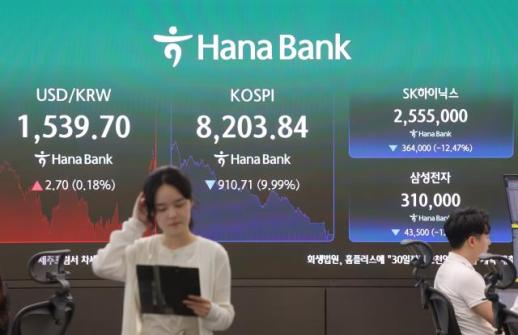 KOSPI Plummets, Triggering Forced Liquidations of Retail Investors On June 23, the KOSPI index recorded its largest drop ever, leading to a significant increase in forced liquidations among retail investors. According to the Korea Financial Investment Association on June 24, the amount of margin trading debt reached 14.792 trillion won ($11.5 billion) as of June 23. This marks an increase of 1.816 trillion won from the previous trading day and is the highest level since June 10. Margin trading allows investors to buy stocks using borrowed funds from brokerage firms, and if they fail to repay within a set period, their holdings are automatically sold off. On that day, the total amount of forced liquidations was recorded at 42.4 billion won, more than double the previous day's figure of 19.8 billion won and the highest since June 12. The proportion of forced liquidations relative to margin debt also rose to 3.3%, up from 1.6% the previous day, marking the highest level since the 4.0% recorded on June 12. Typically, forced liquidations increase during periods of heightened market volatility. In particular, in a sharp decline, additional selling pressure can exacerbate the downward trend in stock prices. Meanwhile, the domestic stock market recorded its largest drop ever on June 23. The KOSPI closed at 8203.84, down 910.71 points (9.99%) from the previous session, marking the largest decline in terms of points. In percentage terms, this is the biggest drop since March 4, when it fell by 12.06%. The KOSDAQ index also faced a downturn, closing at 891.52, down 76.88 points (7.94%). This marks the first time the KOSDAQ has fallen below the 800 level since November 27 of last year, when it closed at 880.06. Additionally, the balance of margin trading loans, which indicates the amount borrowed by investors from brokerage firms, has been on a downward trend. As of June 23, the balance stood at 38.936 trillion won, a decrease of 4.375 billion won from the previous trading day (38.531 trillion won). This follows a record high of 38.4786 trillion won on June 19, marking two consecutive days of decline.* This article has been translated by AI. 2026-06-24 16:32:00
 -
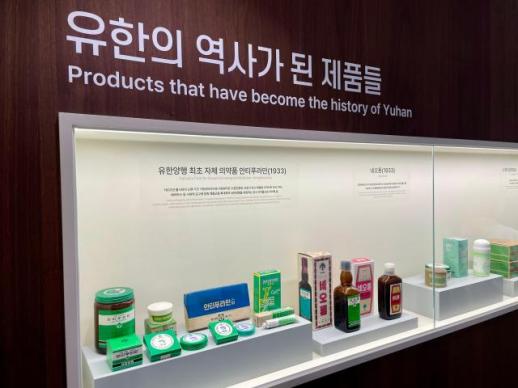 Yuhan Corporation Unveils 'Willow House' to Mark 100 Years of Commitment A century ago, Yuhan Corporation announced its commitment to the public with its willow logo from a small office in Jongno. This year, to celebrate its 100th anniversary, the company transformed its former headquarters into a cultural complex named 'Willow House.' This space, built on a century of history, now presents Yuhan's vision for the next 100 years, focusing on health, sharing, and the future. On June 24, Yuhan Corporation introduced 'Willow House' to the media at its headquarters in Dongjak-gu, Seoul. CEO Cho Wook-je stated, "Willow House is a place that has been with Yuhan since we moved our headquarters to Daebang-dong in 1962 for 35 years. We preserved the old brick structure, remodeling it instead of demolishing it, and created a new space for the next 100 years on top of it." He added, "Our journey to become a global innovative pharmaceutical company that contributes to humanity's health has begun anew. We will add a century of promises on top of a century of trust." Opened on June 20, 'Willow House' is a remodeled version of the former headquarters, which served as the company's main office and pharmaceutical production site from 1962 to 1997. Designed to serve both employees and the public, it reflects the late Dr. Yoo Il-han's vision of giving back to society. The space allows visitors to experience Yuhan's 100-year history and participate in health-focused programs that embody Dr. Yoo's philosophy while showcasing the company's plans for the next century. The newly transformed cultural complex is divided into two main areas: the 'Yuhan Archive' and 'Willow Ground.' The Yuhan Archive showcases the founding spirit and 100-year history of Yuhan Corporation, while Willow Ground serves as a community engagement space, featuring a café, restaurant, and areas for business meetings and small events. Upon entering the first floor of Willow House, visitors are greeted by a large representation of Yuhan Corporation's 'willow' logo on one wall. Additionally, there is a promotional video detailing Yuhan's 100-year history and the various businesses it has engaged in over the years. Historical products, from the 1933 anti-inflammatory pain reliever 'Antiphlamin' to 'Lecraza,' the first domestically produced cancer drug approved by the U.S. Food and Drug Administration in 2024, are displayed chronologically, highlighting Yuhan's role in the growth of South Korea's pharmaceutical and biotech industry. Founded in 1926 by Dr. Yoo Il-han, Yuhan Corporation has grown to become a leading pharmaceutical company in South Korea. According to the Korea Listed Companies Association, Yuhan is the 11th company among domestic listed firms to celebrate its 100th anniversary.* This article has been translated by AI. 2026-06-24 16:32:00
 -
 Hyundai Department Store Donates 5,000 Square Meters of Tidal Flat in Buan Hyundai Department Store announced on June 24 that it has donated 5,000 square meters of tidal flat in Buan, North Jeolla Province, to the National Trust for Nature Conservation in collaboration with the international relief and development NGO World Vision. The area, approximately 1,500 pyeong, is valued at around 50 million won. According to Hyundai Department Store, the National Trust for Nature Conservation is a special corporation under the Ministry of Climate, Energy, and Environment, which engages in public activities to acquire and permanently preserve and manage natural assets of conservation value. This donation follows the "My Tidal Flat" campaign jointly conducted by Hyundai Department Store and World Vision in June of last year. During the campaign, customers donated 15,000 won for every 1.65 square meters (0.5 pyeong) of tidal flat conservation, with Hyundai Department Store matching the donations. With the funds raised, World Vision purchased the 5,000 square meters of tidal flat in Buan, which has now been entrusted to the National Trust for Nature Conservation, enabling long-term ecological preservation and management, the company explained. Yang Myung-sung, executive director of sales strategy at Hyundai Department Store, stated, "We plan to discover and expand various practical programs to create a sustainable environment together with our customers in the future." In addition, Hyundai Department Store is also engaged in resource recycling activities. The company introduced eco-friendly shopping bags across its nationwide stores in June 2022, and by the end of May this year, it had produced a total of 32 million eco-friendly shopping bags. The company reported that this initiative has contributed to saving over 53,000 trees.* This article has been translated by AI. 2026-06-24 16:32:00