


Latest by
-
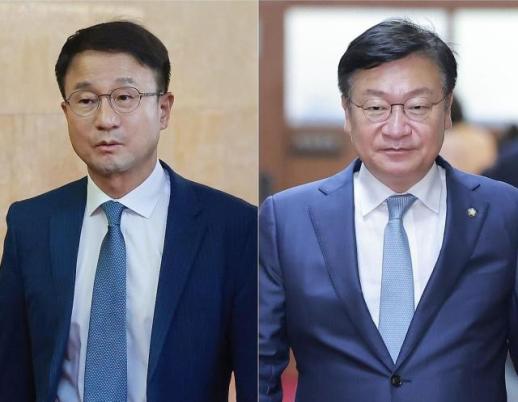 Rising Tensions as Parties Fail to Submit Committee Lists As tensions escalate over the formation of parliamentary committees, the People Power Party rejected a list of committee members proposed by National Assembly Speaker Cho Jeong-sik by noon on June 24. During an emergency press conference, Han Byeong-do, the floor leader of the Democratic Party, stated, "The People Power Party has paralyzed the entire National Assembly over a single position, the chair of the Legislation and Judiciary Committee. They keep repeating the words 'Legislation and Judiciary Committee' and 'tradition' like a parrot." Han emphasized, "The public remembers well what happened when the People Power Party held the Legislation and Judiciary Committee. We cannot hand over such a dangerous tool to a group that neglects the people's livelihood." He issued an ultimatum, saying, "If the People Power Party does not submit the committee member list by noon on June 26, we will make the decision to take full responsibility for operating all 18 committees." After a meeting led by Speaker Cho, Kim Seung-soo, the senior deputy floor leader of the People Power Party, told reporters, "We have consistently stated that we cannot submit the list until an agreement is reached on the Legislation and Judiciary Committee." Kim noted that negotiations on the formation of committees have only been ongoing for about a week, adding, "With no progress on the Legislation and Judiciary Committee, the Speaker's deadline for submitting the list feels like pressure." He further remarked, "In the first half of the 22nd National Assembly, the Democratic Party unilaterally enforced the distribution of committees, leading to disruptions in the National Assembly and ongoing confrontations between the two parties. The People Power Party hopes for a swift normalization of the National Assembly through negotiations, but that requires returning the Legislation and Judiciary Committee to us as per previous practices." In response, spokesperson Jang Hyun-joo told reporters that Speaker Cho expressed disappointment over the lack of a list from the People Power Party. He added, "If the list is not submitted by noon on June 26, the Speaker will have no choice but to consider the committee appointment process himself. There is a consensus within the People Power Party on the need for swift action, so we will wait a little longer." 2026-06-24 16:28:00
 -
 Korea's Fair Trade Commission Investigates Hanwha Group's Brand Licensing Fees Hanwha Group is currently under investigation by the Fair Trade Commission (FTC) regarding potential unfair internal transactions and the misappropriation of profits by the founding family in the process of brand licensing fee transactions among its affiliates. According to industry sources on June 24, the FTC began sending investigators to major affiliates of Hanwha Group, including its effective holding company Hanwha, Hanwha Solutions, Hanwha General Insurance, and Hanwha Life Insurance, to gather relevant documents starting June 23. The investigation is expected to last for one week. The FTC is reportedly examining the appropriateness of the brand licensing fees that Hanwha's affiliates have been paying annually under licensing agreements with Hanwha. Currently, these affiliates calculate the fees based on a certain rate applied to their revenue, excluding advertising costs. The commission is scrutinizing whether this fee calculation method accurately reflects the characteristics of each affiliate's industry and the actual business benefits derived from brand usage. If excessive fees have been set without proper valuation, this could indicate unfair support through the affiliates or preferential treatment for related parties. Charging affiliates for the use of trademarks is generally classified as a standard business practice. However, due to the difficulty in objectively assessing the value of trademarks, concerns have been raised that this could serve as a means to transfer profits to the holding company, in which the founding family's ownership stake is significant.* This article has been translated by AI. 2026-06-24 16:24:00
 -
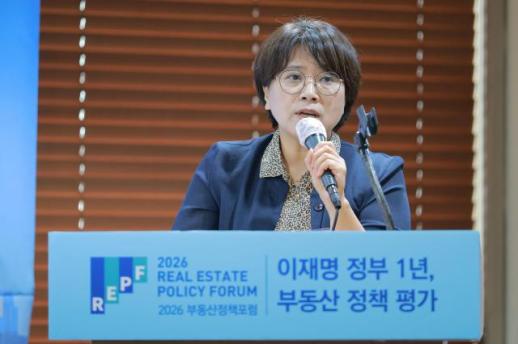 Housing Supply Needs Private Sector Recovery, Expert Says To achieve the housing supply goals set by the Lee Jae-myung administration, experts argue that relying solely on public-led policies is insufficient. They emphasize the need to restore private sector supply capabilities through regulatory improvements. A combination of increased public supply and revitalization of non-apartment and private housing supply is essential for stabilizing the housing market. At the 2026 Real Estate Policy Forum held on June 24 at the Press Center in Seoul, Kim Deok-rye, head of the Housing Research Institute, presented on the topic of "Housing Supply of 1.35 Million Units and Innovations for Revitalizing the Private Sector." Kim stated, "The private sector is responsible for 85% of housing supply, and over 90% in Seoul. While expanding public supply is important, without improving conditions for private supply, it will be difficult to resolve the supply shortage issue." He noted that while the government is pushing for the supply of 1.35 million units in the metropolitan area and the rapid provision of 60,000 units in urban centers, actual supply performance has fallen short of expectations. Although construction activity has entered a recovery phase, residential construction output decreased by 12% in the first quarter compared to the same period last year, indicating that the housing construction market remains sluggish. Kim believes that public-led supply alone has limitations in terms of location, speed, and responsiveness to demand. To meet the diverse housing needs in preferred urban areas, participation from the private sector and improvements in supply conditions are necessary. He identified the stagnation of the non-apartment market as a key factor contributing to the supply shortage. The non-apartment market in Seoul has seen a sharp decline in supply due to the aftermath of rental fraud, regulations on multiple homeowners, and tightening financial and tax regulations. Multi-family homes and officetels, which have a rental household ratio of 80-90%, require investment demand for rental purposes, but the current supply base has weakened. Kim emphasized, "Non-apartment housing is an important ladder for low-income individuals, youth, and elderly households who find it difficult to move into apartments. It is a market that can be supplied relatively quickly to meet market demand and is essential for stabilizing the housing market." He also pointed out that the Seoul housing market cannot be viewed solely as an issue of speculation and demand suppression. The phenomenon of "superstar cities," where global companies and jobs concentrate, is causing a continuous increase in housing demand in Seoul. In a situation where demand is structurally rising, relying solely on supply restrictions will not stabilize the market. Kim remarked, "Seoul has already entered the realm of a global superstar city. As good jobs, education, and commercial areas concentrate, housing demand continues to surge." He added, "There must be a continuous effort to secure residential space and provide housing across various price ranges." To revitalize private supply, he argued that improvements in financial and tax regulations are necessary. He noted, "There are many cases where contracts are canceled and construction is delayed due to difficulties in securing final payments. It is essential to address financing challenges for housing construction and for actual homebuyers." Kim stressed that normalizing the non-apartment and private supply requires a dual focus on financing for consumers and businesses. If sales and financing are obstructed, even with permits, it will be challenging to proceed to construction, which could lead to a shortage of move-in-ready units and instability in the rental market. He concluded, "Public supply is important for stabilizing housing for low-income individuals, but in terms of speed and scale, the role of the private sector is ultimately essential. Both public and private sectors must work together to increase supply to stabilize the housing market." 2026-06-24 16:24:00
 -
 BTS' explosive hit song 'Dynamite' amasses 2.1 billion views on YouTube SEOUL, June 24 (AJP) - BTS' global megahit song "Dynamite" has amassed more than 2.1 billion views on YouTube, becoming the K-pop juggernaut's most-viewed music video. According to their agency Big Hit Music, the video hit the milestone early Wednesday morning, about nine months after surpassing 2 billion views in September last year. The explosive hit single, which was BTS' first all-English-language song, became their first to achieve the feat. The upbeat disco-pop track with its message of hope and encouragement during the coronavirus pandemic, quickly became a global hit soon after its release in August 2020. The song also made history by debuting at No. 1 on the Billboard Hot 100, becoming the first song by a K-pop act to top the singles chart. It then spent three weeks at No. 1 and remained on the chart for a record 32 weeks. The latest YouTube milestone is a testament to the septet's enduring global appeal, with the song remaining popular among fans around the world nearly six years after its release. 2026-06-24 16:21:46
 -
 KOSPI rebounds day after record crash SEOUL, June 24 (AJP) - South Korea's benchmark KOSPI rebounded 3.3 percent to close at 8,471.02 on Wednesday, standing apart from a mixed regional session a day after its record crash. The index rose 267.18 points, recovering less than a third of the 910.71 points it lost on Tuesday. The junior KOSDAQ gained 2.0 percent to 909.31. Samsung Electronics powered the bounce, jumping 9.8 percent after it was reported to be mulling a record buyback of $65 billion buyback scheme, while SK hynix rose just 1.0 percent. The stock reclaimed No. 1 spot in market value in just two days. Domestic buyers carried the recovery, with individuals and institutions buying a combined 4.52 trillion won against another 4.63 trillion won of foreign selling. The snap-back fit a pattern that has held after the market's steepest falls, when a heavy drop is almost always followed by a gain. The region diverged. Japan's Nikkei 225 fell 0.9 percent as Tokyo chip stocks slid, Chinese chipmakers rallied while the Shanghai Composite held flat, and the won weakened. The next test for chip sentiment comes after Wednesday's U.S. close, when memory rival Micron Technology reports earnings watched for signs of AI demand. In Seoul, the recovery followed a now-familiar script. The record 12.1 percent crash on March 4 was met by a 9.6 percent surge the next session, and an 8 percent fall on June 8 by a 4.8 percent rebound on June 9. By one count in Korean media, eight of the index's 10 worst single-day drops were followed by a gain the next day. The bounce broadened as the session wore on, moving beyond chips into biotechnology and pharmaceutical shares. Samsung Biologics rose 9.2 percent to 1,390,000 won ($901), among the day's strongest gainers. Tuesday's fall was the largest single-day point drop in KOSPI history and its fifth-largest by percentage, and it triggered the year's fourth circuit breaker. The record by percentage remains the 12.06 percent plunge on March 4, 2026, after the outbreak of the U.S.-Iran war, followed by a 12.02 percent fall on Sept. 12, 2001, an 11.63 percent drop on April 17, 2000, and a 10.57 percent fall on Oct. 24, 2008. In Japan, the Nikkei 225 gave up an early advance to close at 69,174.97. Tokyo Electron fell 4.2 percent to 69,900 yen, Lasertec dropped 2.7 percent to 50,610 yen, and Advantest slipped 0.7 percent to 31,200 yen. In China, chip shares ran the other way. SMIC, the country's largest contract chipmaker, climbed 7.7 percent, JCET Group rose 10.0 percent, and Cambricon gained 3.5 percent, while the Shanghai Composite closed little changed at 4,109.56. The won weakened even as equities rallied, with the dollar quoted at 1,542.60 won, up 9.10 on the day, under the weight of the foreign outflow. South Korea's regulator has signaled it may tighten rules on the leveraged single-stock funds blamed for magnifying the recent swings. The next read on chip demand arrives with Micron's results after the U.S. close. 2026-06-24 16:20:43
 -
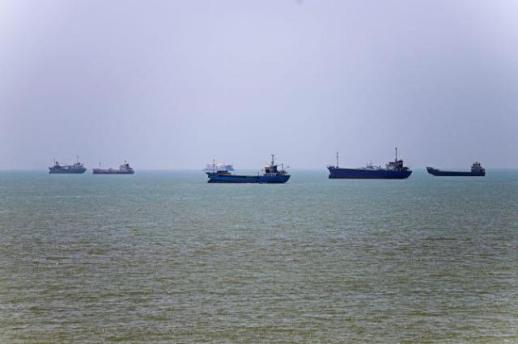 Global Oil Stocks Drop by 3.8 Million Barrels Amid Middle East Conflict, IEA Warns As negotiations between the United States and Iran continue, concerns are rising over global oil supply instability, particularly with summer demand on the horizon. Following the outbreak of conflict in the Middle East, oil shipments through the Strait of Hormuz have plummeted, leading to a daily average decrease of 3.8 million barrels in global oil stocks. Experts warn that if the Strait of Hormuz does not return to normal operations, supply instability in the international oil market could worsen in July and August. According to the International Energy Agency (IEA) on June 24, oil shipments through the Strait of Hormuz, which averaged around 20 million barrels per day before the conflict, fell to an average of 2.7 million barrels per day from March to May. This has resulted in an estimated cumulative supply loss of over 1.3 billion barrels from Middle Eastern oil producers. The IEA has characterized this situation as the "largest oil supply disruption in history," noting that it is effectively the first time the Strait of Hormuz, a critical route for major energy exports including Middle Eastern crude oil, liquefied petroleum gas (LPG), and naphtha, has been blocked. The Asia-Pacific region, which heavily relies on Middle Eastern oil and petroleum products, has faced significant supply pressures since the onset of the crisis. Despite the severe impact on oil supply, the effects have not fully transferred to the oil market. The global release of strategic reserves and alternative export routes from Middle Eastern countries have played a significant role in mitigating the crisis. Additionally, non-Middle Eastern oil exports have also shown an upward trend. The IEA estimates that global oil stocks have decreased by an average of 3.8 million barrels per day since the conflict began. This rapid depletion of reserves has helped fill the supply gap. IEA member countries also agreed to release a historic 400 million barrels of emergency reserves at the onset of the crisis. Middle Eastern oil producers have reduced their dependence on the Strait of Hormuz by utilizing alternative export routes. Saudi Arabia has increased exports through its east-west pipeline to the Red Sea port of Yanbu. The United Arab Emirates (UAE) has maintained exports through pipelines and storage facilities from Habshan to Fujairah, as well as alternative routes. Increased supply from non-Middle Eastern countries, including the United States, has also provided some relief to the market. The IEA noted that export increases from the U.S., Kazakhstan, Brazil, and Venezuela have partially filled the shortfall in the Asian market. Notably, U.S. crude oil and petroleum product exports rose by 25% last month compared to a year earlier. Demand contraction has also alleviated market pressures. The IEA projects that global oil demand in the second quarter of this year will decline by nearly 5 million barrels per day compared to the same period last year. On an annual basis, a decrease of 1.1 million barrels per day is expected, marking a significant shift from earlier forecasts in February, which anticipated an increase of 850,000 barrels per day. However, the current stability is not structurally sound. The release of strategic reserves is merely a short-term measure, lacking sustainability. Alternative exports and increased non-Middle Eastern supply face logistical and infrastructural limitations, making the complete reopening of the Strait of Hormuz essential for the normalization of the oil market. With the summer peak season approaching in the Northern Hemisphere, demand for jet fuel and gasoline is expected to rise in July and August, while global stocks are depleting at a record pace. The IEA warned that if the Strait of Hormuz does not fully reopen, the international oil market risks entering a "red zone" in July and August. South Korea is also facing challenges. The country's energy supply heavily depends on imports of crude oil, LPG, and naphtha, with a significant reliance on Middle Eastern sources. If logistical disruptions in the Strait of Hormuz persist, it could have a cascading effect on refinery costs, petroleum product prices, and the supply of petrochemical feedstocks. Analysts suggest that the government's cautious approach to releasing strategic reserves is aimed at managing supply during the summer months. With international stock declines coinciding with increased summer demand, the burden of energy supply management could intensify in the second half of the year.* This article has been translated by AI. 2026-06-24 16:16:00
 -
 Korean Football Association Confirms Live Broadcasts for All Matches in 2026 World Cup The Korean Football Association has received confirmation from FIFA that all matches of the 2026 North America World Cup will be broadcast in South Korea without interruption, easing concerns over potential disruptions. On June 24, the association stated that its president, Chung Mong-kyu, spoke with FIFA Secretary General Matthias Grafström on June 22 to directly address the domestic broadcasting rights and request FIFA's cooperation. The association reported that FIFA assured them that all matches would be broadcast as scheduled by South Korean broadcasters. The association added that if South Korea advances to the knockout stage, all matches involving the national team, as well as every game in the tournament, will be broadcast domestically as planned. Concerns over the World Cup broadcasts arose following a report by Japanese broadcaster TBS. On June 23, TBS reported that JTBC, the broadcaster responsible for airing all World Cup matches in South Korea, had failed to pay part of the broadcasting rights fees to FIFA. TBS claimed that if the outstanding payments were not made by the deadline, there was a risk that broadcasts in South Korea would be completely halted starting with the Round of 32 matches on June 29. In response, JTBC issued a statement on June 24, asserting that it would broadcast all matches of the 2026 FIFA North America World Cup, including the final, without any issues. They emphasized that they would provide live coverage of the South Korean national team's matches and the tournament's conclusion, urging the public not to be misled by incorrect information. Naver, which holds the exclusive online live streaming rights in South Korea, also stated that it is continuously monitoring the situation regarding the World Cup broadcasting rights and is preparing for stable service, including the upcoming match against South Africa. Meanwhile, TBS highlighted the financial difficulties faced by JTBC as a backdrop to the broadcasting controversy. JTBC secured the domestic broadcasting rights for approximately $125 million (about 190 billion won) but has struggled with negotiations to resell the rights to the three major terrestrial broadcasters (KBS, MBC, SBS). Ultimately, JTBC reached a joint broadcasting agreement with KBS, but reports indicate that KBS paid around 14 billion won for the rights. Under increasing financial pressure due to difficulties in monetizing the rights, JTBC applied for corporate rehabilitation last week.* This article has been translated by AI. 2026-06-24 16:16:00
 -
 2026 FIFA North America World Cup: Seven Nations Secure Spots in Round of 32 The picture of the 32 teams advancing to the 2026 FIFA North America World Cup is becoming clearer. With Colombia securing its spot, the number of nations confirmed for the knockout stage has risen to seven as of June 24. This tournament has expanded to 48 teams, altering the group stage qualification process. The top two teams from each of the 12 groups will advance directly to the Round of 32, along with the eight best third-placed teams. As the group stage progresses, the rankings of the groups and the performance of third-place teams will become increasingly significant. The most recent team to secure a spot in the Round of 32 is Colombia. On June 24, Colombia defeated the Democratic Republic of the Congo 1-0 in their second match of Group K at Estadio Guadalajara in Mexico. Daniel Munoz scored the decisive goal in the 76th minute. Colombia previously triumphed over Uzbekistan 3-1, marking two consecutive victories and earning six points. Regardless of the outcome of their final match against Portugal, Colombia has confirmed its advancement to the knockout stage, becoming the first team in Group K to secure a ticket. As of June 24, the nations confirmed for the Round of 32 include Mexico, the United States, Germany, Argentina, France, Norway, and Colombia. In terms of FIFA rankings, Argentina is the highest at number one. France ranks third, Germany is tenth, Colombia is thirteenth, Mexico is fourteenth, and the United States is seventeenth. Norway has the lowest ranking among the confirmed teams at thirty-first. Looking at the rankings, the initial teams confirmed for the Round of 32 are predominantly strong contenders. World number one Argentina and third-ranked France are advancing as expected, while Germany and Colombia have also demonstrated their strength within the top ten. Host nations Mexico and the United States have quickly secured their spots, leveraging their home advantage. South Korea currently holds the 25th position in the FIFA rankings. While it ranks lower than Argentina, France, Germany, Colombia, Mexico, and the United States, it is higher than Norway. If South Korea defeats South Africa, it would not be surprising given their ranking, as they would be performing as expected against a team within their competitive range. South Korea will face South Africa in their final match of Group A on June 25 at 10 a.m. South Korea began the tournament with a 2-1 victory over the Czech Republic but suffered a 1-0 loss to Mexico, currently earning three points. The outcome of the match against South Africa will determine their advancement to the Round of 32. The most straightforward scenario for South Korea is to secure a victory. If they defeat South Africa, they will earn six points, significantly increasing their chances of advancing. However, if they draw or lose, they will need to consider the results of the concurrent match between Mexico and the Czech Republic, as well as the performance of third-place teams in other groups. While the Round of 32 is open to third-place teams, the scenarios can become quite complex.* This article has been translated by AI. 2026-06-24 16:16:00
 -
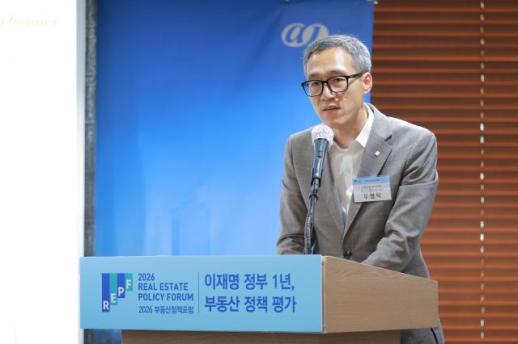 Expert Warns Against Overreliance on Tax Increases for Real Estate Stability "Following the announcement of the end of the capital gains tax exemption for multiple homeowners, the number of apartments for sale in Seoul increased by about 4,000. However, once the tax was actually implemented, unsold listings were quickly withdrawn. This illustrates that the effects of tax increases can be temporary," said Woo Byeong-tak, a specialist at Shinhan Bank's Premier Pathfinder, during the '2026 Real Estate Policy Forum' held at the Korea Press Center in Seoul on June 24. In his presentation on the theme of 'Reforming Real Estate Taxation to Protect Genuine Demand and Resolve Market Distortions,' Woo reviewed key tax measures from the past year, stating, "The market does not respond as policymakers expect." He cited the end of the capital gains tax exemption for multiple homeowners, which was announced on January 27, as a key example. Following the announcement, the number of apartments for sale in Seoul surged by approximately 4,000. However, the actual decrease in prices fell short of expectations, according to Woo. "Market sentiment does not adjust prices downwards by the amount of the tax increase," he noted, adding that owners do not always respond rationally to policy changes. While policies aimed at increasing tax burdens can temporarily boost listings, if transactions do not occur, it can lead to a re-locking of inventory. Indeed, after the tax was implemented on May 10, unsold listings were quickly withdrawn, and asking prices rose again, Woo pointed out. He noted that apartment prices in Seoul had increased by 4.72% by April of this year, suggesting that the upward trend could continue in the second half of the year. Woo also expressed caution regarding proposals to reduce the long-term holding tax exemption for high-value single homeowners. While this would decrease tax benefits for those who have owned their homes for a short time, he argued that the tax difference compared to the capital gains tax for multiple homeowners is relatively small, limiting its potential impact on price stability. He identified the rental market's response as another variable. If high-value homeowners, seeking to maintain tax benefits, evict existing tenants to move in themselves, this could lead to a decrease in rental properties and an increase in demand for jeonse (long-term lease) in preferred areas of Seoul, where supply is already tight. While acknowledging the need for stronger property taxes and a renewed push for realistic property valuations, Woo emphasized the importance of a balanced approach and comprehensive design. "We should not only look at the ratio of property taxes to home prices but also consider the overall structure of real estate tax revenue, including inheritance and gift taxes, as well as capital gains taxes, in relation to GDP," he stated. Regarding the strengthening of the comprehensive real estate tax, Woo explained that the market does not simply respond by listing properties due to increased tax burdens. He cited instances from 2018 to 2022 when some multiple homeowners transferred properties to spouses or children to reduce their tax burdens during a period of rising taxes. On the topic of realistic property valuations, Woo agreed with the direction but warned against rapid implementation. He noted that attempting to correct a 20- to 30-year gap in property valuations over 7 to 10 years, coinciding with periods of price surges, has led to increased tax resistance and a cycle of regression in the system. Woo concluded that the core of real estate tax reform is not simply about raising or lowering tax burdens. "We must design the system to protect genuine demand while reducing market distortions," he said, emphasizing the need to consider not only policy effects but also the actual responses and side effects from market participants. 2026-06-24 16:16:00
 -
 2026 Real Estate Policy Forum: Evaluating the First Year of the Lee Jae-myung Administration As the real estate market faces limited recovery due to supply constraints, tax burdens, and worsening financial conditions, experts are calling for simultaneous tax reform and innovation in private supply systems to restore the housing ladder and revitalize the market. They emphasize the need for a "two-way" solution that protects genuine demand without hindering normal transactions and supply. The "2026 Real Estate Policy Forum," organized by Aju Economic Daily and the Global Economic and Financial Research Institute, took place at the Seoul Club in the Korea Press Center on June 24. The forum focused on evaluating the real estate policies of the Lee Jae-myung administration during its first year, examining the successes and limitations of tax and housing supply policies, and discussing future improvements. Attendees included officials from the Ministry of Land, Infrastructure and Transport, the real estate and construction industries, academia, and the financial sector. Kwak Young-gil, Chairman of Aju News Corporation, opened the forum by stating, "The real estate market and construction industry are at another critical crossroads. I hope this forum will not only identify issues but also gather realistic alternatives and productive suggestions." Woo Byeong-tak, a Premier Pathfinder Specialist at Shinhan Bank, presented on the direction and recommendations for reforming real estate taxation to protect genuine demand and address market distortions. He noted that while the real estate tax aims for market stability, it can also lead to side effects such as reduced transactions and a decrease in rental properties. He analyzed that the increased capital gains tax on multiple homeowners and strengthened holding taxes might lower asking prices in the short term but could also lead to stricter residency requirements and a decrease in rental supply, increasing tenant demand. Kim Deok-rye, Head of the Housing Research Office at the Korea Housing Industry Research Institute, continued with a presentation on "Housing Supply of 1.35 Million Units + α and Innovations for Enhancing Private Vitality." He pointed out that while the current government has proposed supplying 1.35 million units in the metropolitan area, expanding urban housing supply, and supplementary measures for non-apartment housing, the actual market recovery has been slow. He highlighted that the 9·7 measures set a goal of supplying 1.35 million units in the metropolitan area over five years, and the 1·29 measures announced 60,000 new constructions for urban housing supply expansion and acceleration, but the on-the-ground experience has been limited. The forum also emphasized the importance of private housing supply. Short-term challenges include establishing a foundation for rental housing supply, adjusting excessive loan regulations for housing demanders and suppliers, and improving land use and building standards to expand the use of non-residential facilities. A panel discussion followed, moderated by Kwon Dae-jung, Chair Professor at Hanseong University. Panelists included Nam Hyuk-woo from Woori Bank, Lee Yoo-ri from the Ministry of Land, Infrastructure and Transport, Yoon Seong-jin from the Korea Research Institute for Human Settlements, and Ko Jong-wan from the Korea Asset Management Institute, who discussed policy directions for restoring the housing ladder and revitalizing the market. Kim Yi-tak, First Vice Minister of the Ministry of Land, Infrastructure and Transport, stated in his address, "The most urgent task in the current housing market is stable housing supply. The government is focusing on normalizing stalled projects and improving conditions for private supply to reignite the dwindling housing supply." Kim Jong-ho, President of the Korea Association of Realtors, remarked, "The real estate market is a key aspect of people's lives. I hope this forum will objectively assess the policy achievements of the past year and generate realistic alternatives for restoring the housing ladder and revitalizing the market." 2026-06-24 16:12:00