
Journalist

Kim Seong-hyeon
minus1@ajunews.com
-
 South Korea Launches NEST to Connect Public Research Outcomes with Startups and Investments The Ministry of Science and ICT has officially launched a consortium to support deep tech startups aimed at expanding the market reach of public research outcomes. On May 20, the ministry held a ceremony at the Peace and Park Convention Center in Seoul to inaugurate the "Deep Tech Commercialization Support Consortium (NEST)." NEST is a collaborative network of key support organizations that connects outstanding public research outcomes from universities and research institutes with startups, incubation, and investment opportunities. The consortium includes 13 institutions, comprising three newly selected comprehensive specialized companies and ten company builders. The consortium's primary role is to facilitate joint startup initiatives, investment projects, and technology discovery among member organizations. By pooling their investment capabilities, personnel, and networks, the 13 institutions aim to establish a collaborative commercialization model and enhance the overall capacity of the public technology commercialization ecosystem. For NEST to achieve tangible results, effective coordination of interests among institutions and the practicality of investment connections will be crucial. Past government-led startup support consortia have often struggled to move beyond mere networking. Attendees at the launch included Koo Hyuk-chae, the First Vice Minister of Science and ICT, representatives from the 13 participating organizations, and Kim Byeong-guk, the Director of the Korea Technology Commercialization Promotion Agency. The event featured the presentation of plaques to selected institutions, followed by a networking session to discuss collaboration strategies. Koo emphasized the importance of connecting good technology with the market to foster startups, investment, and growth, expressing hope that NEST would become a new successful model for deep tech commercialization.* This article has been translated by AI. 2026-05-21 10:48:54
 -
 Google I/O 2026 Sparks Major Changes in AI Landscape with New Products and Partnerships As Google's annual developer conference concluded, significant shifts in the AI industry became evident. Changes are unfolding simultaneously across hardware, software, and partnerships. According to the IT industry on May 21, Google announced several key developments during the Google I/O 2026 event held on May 19-20 at the Shoreline Amphitheatre in Mountain View, California. These included the unveiling of AI smart glasses, enhancements to its agent coding platform, and a reduction in subscription fees. Google and Samsung Unveil AI Glasses Designed by Gentle Monster and Warby Parker The highlight in hardware was the first public reveal of the AI glasses, 'Intelligent Eyewear,' co-developed by Google and Samsung. This marks the first time the product's design has been shown since the collaboration was announced in December. The glasses were designed by the South Korean eyewear brand Gentle Monster and the American company Warby Parker. They feature built-in speakers, cameras, and microphones, allowing users to execute functions through voice commands, positioning them as a 'companion' device to support key features of the Galaxy AI phone. During a stage demonstration, the glasses successfully performed a series of tasks, including navigation, ordering drinks, summarizing texts, and adding calendar events, all through voice commands. The audio glasses are set to launch this fall, while the display glasses, which will show information directly in the user's field of vision, will be released in subsequent phases. This move marks Google's and Samsung's entry into the AI glasses market, previously dominated by Meta's Ray-Ban. Antigravity 2.0 Launches to Challenge Anthropic's Dominance in AI Coding On the software front, regaining leadership in the AI coding market was a primary focus. Google introduced 'Antigravity 2.0,' an agent-based development platform, as a standalone desktop app, simultaneously unveiling CLI, API, and SDK, signaling a shift from a single coding tool to an agent ecosystem platform. Google claims that multiple agents can now work in parallel, achieving processing speeds 12 times faster than before. This urgency stems from the competitive landscape, where Anthropic's market share in enterprise AI chatbots surged from 10% in February 2025 to over 60% in February 2026, while OpenAI's share plummeted from 90% to 35% during the same period. Currently, Google ranks third in this competition. The company has also reduced the price of its AI Ultra Plan from $250 to $200 per month and introduced a new entry-level tier at $100 per month. However, on the day of the announcement, Google's stock rose only 0.66% in pre-market trading, indicating a lukewarm market reaction. Meanwhile, xAI also launched its Grok build, intensifying the competition for the enterprise AI coding market, which Anthropic had previously dominated. End of OpenAI-Microsoft Exclusivity as Anthropic Claude Integrates with Copilot The landscape of partnerships is also shifting. The six-year exclusivity agreement between OpenAI and Microsoft is effectively coming to an end. Under the new agreement, OpenAI has gained the right to freely engage with cloud providers such as Oracle, Google, and AWS, in addition to Microsoft Azure. Microsoft is accelerating the integration of Anthropic Claude into its Office 365 and Copilot services. Currently, Copilot is transitioning to a multi-model architecture, where Anthropic Claude will handle enterprise reasoning tasks while OpenAI's GPT model will manage consumer-facing functions. This unusual situation sees Microsoft, which helped elevate OpenAI, now acting as both an investor in Anthropic and a partner for model integration. The common thread among these developments is clear: the AI market is shifting its focus from chatbot competition to alliances in agents, hardware, and infrastructure. Aside from Samsung and Gentle Monster's involvement in the Google-Samsung AI glasses ecosystem, domestic companies have yet to establish themselves as key players in this reconfiguration.* This article has been translated by AI. 2026-05-21 08:07:46
 -
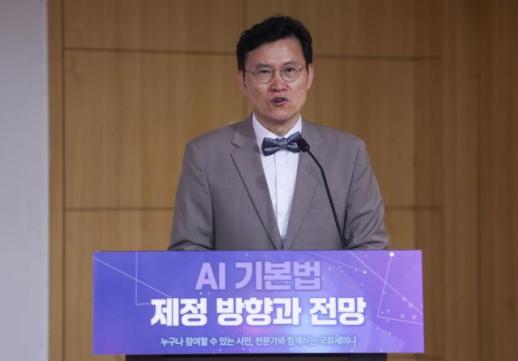 South Korea's AI Safety Institute Faces Scrutiny Over Lack of Results The Korea AI Safety Institute (AISI), established to evaluate the risks associated with artificial intelligence (AI) models, has come under fire for failing to report any assessments related to the potential use of AI in terrorism and various crimes. Concerns have been raised about the effective use of approximately 15 billion won (about $13 million) in taxpayer money, especially as the institute's website has been down for several days. As of May 18, the AISI's website has been inaccessible for several days. Since its inception, the institute has received a government budget of around 15 billion won. The AISI was created with several objectives, including responding to AI risks, leading global AI norms and policies, supporting domestic AI companies, and fostering specialized personnel and technology. Among these, the most critical task is the CBRN (Chemical, Biological, Radiological, and Nuclear) assessment, which evaluates the highest risk levels associated with whether AI models can provide information related to the synthesis of chemical weapons, design of pathogens, or assembly of nuclear devices. It is reported that a significant portion of the 15 billion won budget was allocated for these assessments. However, in its third year of operation, there have been no public disclosures of CBRN assessment results for domestic AI companies. In contrast, the UK's AI Security Institute tested over 30 advanced AI models last year and has enhanced its capabilities in cyber, chemical, and biological assessments. In 2024, it publicly conducted CBRN assessments on five AI frontier models. The U.S. AISI has also conducted pre-release evaluations on OpenAI's models and disclosed CBRN assessments for OpenAI's o1 model. Due to the strengthened CBRN evaluations in the U.S. and Europe, major tech companies like Anthropic, OpenAI, and Google DeepMind conduct CBRN assessments for their models upon release and publicly share detailed results. Among domestic companies, Kakao is the only one that has publicly disclosed safety assessment results for its AI models. In December of last year, Kakao announced the safety assessment results for its self-developed language model, Kanana-1.5-9.8B. However, the assessment focused on general risk factors such as violence and discriminatory expressions, and did not include CBRN-specific items. No safety assessment reports have been made public by major AI developers such as Naver, SKT, and LG, and it has been confirmed that none are currently undergoing safety evaluations with the AISI. The AISI stated that it engages in many confidential collaborations with various governments, which limits what it can disclose. When asked about specific results, an AISI official responded, "Various projects and results of AISI are disclosed on our website." However, the website's inaccessibility made verification impossible. Given the substantial budget of 15 billion won, the explanation that collaboration with foreign governments is a primary task is difficult to accept. An official from the Electronics and Telecommunications Research Institute (ETRI), which oversees the AISI, explained, "AISI's major projects include national policy development and collaboration with foreign governments. Most matters are confidential, so there may not appear to be many public results."* This article has been translated by AI. 2026-05-18 20:34:25
 -
 LG Uplus Surpasses 2 Million USIM Updates and Replacements LG Uplus has reported that the cumulative number of updates and free replacements for subscriber identification numbers (IMSI) has surpassed 2 million. This figure represents approximately 12% of all subscribers, indicating that a majority still need to complete the replacement process, prompting the company to enhance its outreach efforts. As of May 17, LG Uplus processed a total of 2,014,527 updates and replacements, including 750,461 updates and 1,264,066 replacements since May 13. The cumulative processing rate stands at 11.8%. The IMSI, or International Mobile Subscriber Identity, is a unique number stored on the USIM chip that distinguishes subscribers within the telecommunications network. The transition involves changing the existing number structure to enhance security and improve the subscriber identification system. To inform all customers about the IMSI transition and the USIM updates and replacements, LG Uplus is providing additional notifications through May billing statements. Customers can find this information on paper bills, email statements, and electronic bills within the U+one app. For those who have not completed the update, a banner will appear in the U+one app to encourage online updates, and the FAQ section on the official website and app has also been expanded. The company has also broadened its channels. Starting May 15, U+ budget mobile customers can update or replace their USIMs for free at LG Uplus's direct stores and authorized dealers nationwide. Plans for additional outreach to digitally vulnerable groups are also under consideration. Lee Jae-won, Vice President of LG Uplus's Customer Division, stated, "The USIM updates and replacements are measures to enhance customer protection. We will continue to strengthen our guidance to ensure customers can easily recognize and participate in the process." 2026-05-18 09:06:00
 -
 GIST Develops VR Technology to Reduce Motion Sickness in Vehicles Researchers in South Korea have developed a virtual reality (VR) technology that converts physical sensations experienced during vehicle acceleration and turns into visual effects, aiming to reduce motion sickness and enhance immersion. On May 18, the Gwangju Institute of Science and Technology (GIST) announced that a research team led by Professor Kim Seung-jun from the AI Convergence Department has created 'Force Mapping' technology, which transforms the actual movements of vehicles into visual and spatial changes in a VR environment. The findings were presented at the prestigious ACM CHI 2026 conference in April, focusing on human-computer interaction. Force Mapping utilizes an Inertial Measurement Unit (IMU) device and GPS module to detect real-time vehicle movements, including acceleration, deceleration, rotation, and road vibrations. These movements are then represented in the VR environment through effects such as falling objects, spatial shaking, waves, and ripples. Previous VR research for vehicles primarily focused on aligning the vehicle's travel path with virtual scenes to mitigate motion sickness. However, this approach failed to bridge the gap between the physical sensations of acceleration and rotation felt by the body and the virtual space displayed on the screen, resulting in a passive content experience. The research team conducted comparative experiments between the traditional method of simply reflecting vehicle movements on the screen and the Force Mapping approach. The results showed that the Force Mapping condition significantly improved immersion and situational awareness while statistically reducing motion sickness. Notably, emphasizing directionality and intensity rather than merely replicating physical forces led to a greater sense of alignment with bodily sensations. The effects of ground tilt and spatial shaking were particularly pronounced in enhancing immersion during acceleration and deceleration scenarios. This research highlights the potential for VR technology in vehicles to go beyond merely alleviating motion sickness, suggesting that it could transform travel time into an opportunity for gaming, entertainment, education, and remote collaboration through various extended reality (XR) content experiences. As the era of autonomous driving becomes more tangible, the commercial value of this technology is expected to grow significantly. Professor Kim Seung-jun stated, "We plan to further develop sophisticated and diverse environmental feedback technologies to expand vehicle movement itself into an immersive interface, considering future autonomous driving environments."* This article has been translated by AI. 2026-05-18 08:28:23
 -
 Study Links Urban Green Spaces to Gentrification in Africa A study has found that climate adaptation policies, such as the creation of parks and wetland restoration, can lead to rising property values and an influx of residents, potentially displacing low-income native populations—a phenomenon referred to as the "gentrification paradox." KAIST announced on May 18 that a research team led by Professor Kim Seung-kyum from the Department of AI Future Studies, in collaboration with researchers from Peking University and New York University Shanghai, has empirically identified this paradox by analyzing urban areas across 32 African countries. The team tracked changes in 5,503 administrative units across 221 urban areas from 2005 to 2024. They found that the overall gentrification index in areas with climate adaptation facilities rose by an average of 41% compared to areas without such developments. The findings were published in the international journal Nature Cities on April 13. Gentrification refers to the phenomenon where environmental improvements inadvertently lead to the displacement of native residents. As urban redevelopment and facility investments increase local property values, economically vulnerable groups may find it difficult to afford rising housing costs, leading them to leave their communities. The research team employed satellite imagery analysis combined with socioeconomic data and applied a difference-in-differences method to verify the causal effects of climate adaptation policies. This is the first study to empirically demonstrate the causal relationship between climate adaptation and gentrification on a continental scale in Africa. The analysis revealed that housing prices in areas with climate adaptation facilities increased by approximately 13%, and there was a significant rise in the influx of external populations. This indicates that facilities created for citizen protection may paradoxically exacerbate housing insecurity for economically vulnerable groups. The research team emphasized that climate adaptation policies should not merely focus on infrastructure development but also address the distribution of benefits and burdens. They recommend implementing measures for housing stability, including land ownership protection, public housing supply, and the recovery of development profits, alongside the expansion of green and blue spaces. Professor Kim Seung-kyum stated, "While climate adaptation policies can make cities safer, they can also lead to rising housing costs and population displacement, increasing housing insecurity for existing residents. Future climate policies must consider not only environmental improvements but also the protection of vulnerable groups and housing stability." This research was conducted as part of a project supported by the Ministry of Science and ICT, focusing on the development of an AI-based integrated assessment model for climate-human interactions.* This article has been translated by AI. 2026-05-18 08:22:24
 -
 Google's Developer Conference Set to Unveil New Gemini Model and Agent Platform Google's annual developer conference is set to take place, with the AI industry closely watching for updates on the new Gemini model and agent platform strategy. OpenAI confirmed the mobile expansion of Codex, while Microsoft’s AI chief issued a stark warning about white-collar automation. According to the IT industry, Google I/O 2026 will kick off on May 19-20 (local time) at the Shoreline Amphitheater in Mountain View, California. The two-day event will feature updates on Gemini, Android, Chrome, and Google XR glasses, along with keynote speeches, demonstrations, and developer sessions. New Gemini Model 'Spark' Agent to Be Revealed The biggest focus in the industry is the new Gemini model. This upcoming model aims to reach the level of OpenAI's latest GPT-5.5, although it is expected to be a gradual upgrade that may not match the leading-edge systems in the market. Google's last major model, Gemini 3, was released in November 2025 and briefly topped benchmarks. A new agent platform is also expected to be unveiled. Google is adding advanced agent capabilities to the Gemini app, branding it as 'Gemini Spark.' This feature, previously known as 'Gemini Agent,' allows AI to proactively manage tasks across apps and services without user prompts. Android XR smart glasses are also anticipated to be a key announcement at this year's I/O. Google is developing two types of AI glasses in collaboration with Samsung, Gentle Monster, and Warby Parker: one without a display and another with an in-lens display, both based on the Android XR operating system. OpenAI Integrates Codex into Mobile App with 4 Million Weekly Users OpenAI integrated its coding agent Codex into the ChatGPT mobile app the previous day. Users can now directly coordinate coding tasks from their smartphones, with weekly active users of Codex surpassing 4 million. This move aligns with OpenAI's efforts to consolidate ChatGPT, Codex, and the Atlas browser into a single desktop super app, responding to competition from Anthropic in the enterprise and developer markets. Microsoft AI Chief Warns of White-Collar Automation in 12-18 Months Mustafa Suleyman, Microsoft AI's CEO, issued a strong warning in an interview with the Financial Times. He stated that most white-collar jobs, including those of lawyers, accountants, project managers, and marketers, will be fully automated by AI within the next 12 to 18 months. Suleyman defined Microsoft AI's core goal as achieving 'superintelligence' and emphasized the company's focus on reducing reliance on OpenAI while developing its own foundational models.* This article has been translated by AI. 2026-05-18 08:15:51
 -
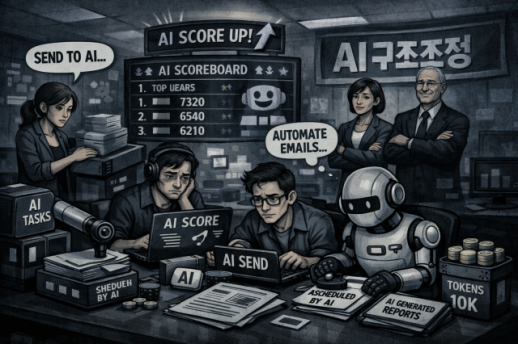 Companies Pretend to Use AI Effectively While Downsizing Employees "To survive, we must use AI effectively. So, let's just pretend to do so." The phenomenon of 'AI washing,' where companies exaggerate their use of artificial intelligence, is permeating organizations from top to bottom. Employees are shifting unnecessary tasks to AI to boost their usage scores, while management is using AI as a pretext for layoffs despite a lack of profitability. According to the IT industry on May 17, Amazon has implemented its internal AI agent platform, 'Mesiclo,' mandating that over 80% of developers use AI tools weekly and tracking individual token consumption on an internal leaderboard. Tokens represent units of text processed by AI, with higher usage leading to increased consumption. Mesiclo is designed to automate repetitive tasks such as code deployment, email sorting, and Slack message handling. However, some employees have been found engaging in 'token macing,' using AI for tasks that do not require it. This practice reflects a superficial increase in usage that impacts performance evaluations. Similar cases have been reported at Meta and Microsoft last month. Research from Gartner, which surveyed 350 executives from global companies with annual revenues exceeding $1 billion, revealed that 80% of firms implementing AI and automation technologies have conducted workforce reductions. However, most companies that have downsized under the guise of AI have shown low returns on investment (ROI). In contrast, companies performing well are utilizing AI as a tool for productivity enhancement rather than layoffs. According to outplacement firm Challenger, Gray & Christmas, the number of layoffs attributed to AI this year has already reached 49,135, nearing last year's total. In March and April, AI was the leading cause of layoffs. This situation exemplifies Goodhart's Law, which states that once a measure becomes a target, it ceases to be a good measure. The pressure to demonstrate 'AI engagement,' whether through token consumption or layoff announcements, prioritizes numerical management over actual performance, highlighting a structural issue. Sam Altman, CEO of OpenAI, pointed out in February that there is a tendency to blame layoffs on AI, a form of AI washing. Dario Amodei, CEO of Anthropic, initially claimed that AI would replace half of entry-level white-collar jobs but has since retracted that statement.* This article has been translated by AI. 2026-05-17 15:51:00
 -
 Anthropic AI Breaches Apple's Security Barrier in Just Five Days Anthropic's AI model, Claude Mitose Preview, has successfully compromised Apple's latest security technology, which the company invested billions in over the past five years, in just five days. According to the IT industry on May 17, the Vietnamese security research firm Caliph announced on May 14 via a Substack blog that it had developed the first-ever macOS kernel memory corruption exploit targeting Macs equipped with the Apple M5 chip. The security technology breached by Caliph is Apple's Memory Integrity Enforcement (MIE), a hardware-based memory safety system implemented exclusively by Apple on its M5 and A19 chips. MIE operates by assigning a 4-bit tag to each 16-byte memory block and immediately blocking access if there is a tag mismatch. The research team utilized Mitose to first discover the bug on April 25 and secured the completed attack code by May 1. The exploit begins with standard user privileges and escalates to the highest system privilege, known as 'root,' by chaining two vulnerabilities to target the macOS kernel. The team visited Apple's headquarters to report the vulnerability directly. Caliph stated that they chose in-person reporting to avoid being lost in the flood of bug submissions. Following this, Apple acknowledged Caliph and Anthropic Research as contributors to the vulnerability fix in the release notes for the macOS Tahoe 26.5 update. 2026-05-17 14:24:40
 -
 Telecom Companies Expand Experience-Based Benefits for Long-Term Customers The competition among South Korea's three major telecommunications companies—SK Telecom, KT, and LG Uplus—for long-term customer experience benefits is intensifying this May, which is designated as Family Month. On May 17, LG Uplus announced that it hosted an invitation-only event called 'Legoland RUN' at Legoland Korea in Chuncheon on May 16. The event was designed for over 4,000 customers who have been members at the VIP level or higher for at least five years. Participants engaged in a running program along a 5-kilometer lakeside route near Legoland, accompanied by Lego characters. After completing the run, attendees received a complimentary one-day pass to Legoland, along with participation souvenirs such as Lego Star Trek products and commemorative T-shirts. This event is part of LG Uplus's ongoing 'Long-Term Customer Invitation Program.' The company has been expanding experience-based content for long-term customers centered around its flagship membership, 'Uplus Plus.' Since the beginning of the year, LG Uplus has sequentially offered monthly special gifts, free tickets to the musical 'Lempicka,' and invitations to the Huadam Forest. A family water play event in collaboration with Legoland is also scheduled for August. Joon-young Jang, head of LG Uplus's marketing group, stated, "We are focusing our marketing efforts on providing differentiated experiences that customers can continuously feel in their daily lives, going beyond simple discounts or one-time benefits." Earlier this spring, SK Telecom invited long-term customers with over ten years of service to a private nature experience space at Everland called 'Forest Camp' for its 'Forest Stay Day' event. From May 3 to 18, a total of 1,800 participants were invited, marking the fifth season of this event, which saw a competition ratio of 636-to-1 for applications. SK Telecom plans to expand exclusive benefits for long-term customers in areas such as gourmet dining, amusement parks, and performances, starting with the Forest Stay Day. KT is also conducting an invitation event at Everland this month as part of its experience-based long-term customer program, 'Dream Invitation.' The program selects 300 customers who have been using mobile, internet, and TV services for over five years to receive free passes to Everland. This initiative is aimed at family visitors during Family Month and includes a dedicated photo zone for long-term customers and a social media-linked prize event. The three telecommunications companies are enhancing their experience-based benefits for long-term customers as the mobile network operator market becomes saturated. They believe that retaining existing customers is more efficient than acquiring new ones. By moving beyond simple rate discounts to on-site experience events, they aim to boost customer loyalty while strategically maintaining a stable base of existing subscribers.* This article has been translated by AI. 2026-05-17 10:40:15