
Journalist

LEE KEONHEE
mkmk@ajunews.com
-
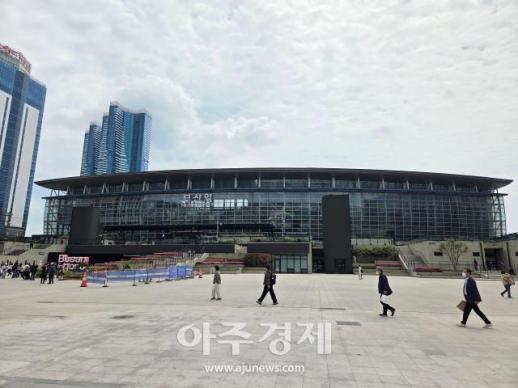 Busan mayoral race tightens as voters weigh change vs conservative unity "For 76 years we kept electing conservatives, but I think it may be time to change. The People Power Party doesn’t even seem sorry to the public. I hear Jeon Jae-soo gets things done." Bae, 75, a taxi driver in Busan, said he plans to vote for Jeon Jae-soo of the Democratic Party in the June 3 local elections, saying he has no expectations for the conservative bloc or for incumbent Mayor Park Hyung-joon of the People Power Party. In interviews across Busan on April 29, including in Busanjin, Haeundae and Buk districts, many residents said the city needs a change. The mood contrasted with the 66.4% support Park received four years ago. Busan also backed then-People Power Party presidential candidate Kim Moon-soo with 51.4% two years ago, but voters now described an unpredictable race. Kim Jun-gyu, 37, who runs a private academy in Dongnae District, said support for the Democratic Party has been growing among younger voters. He said Park’s policies appear focused on Haeundae District, home to Marine City, leaving other areas feeling overlooked. Kim also cited what he called insufficient communication in policy implementation as a reason he supports Jeon. Others said Busan should align with the central government by backing Jeon. Kim Jin-woo, 37, an office worker who has lived in Busan since age 7, said Park’s administration was not bad but may struggle to secure cooperation from the government. He said the next mayor should address Busan’s aging population by ensuring companies such as HMM relocate to the city without setbacks. On the other side, many residents said Busan remains strongly conservative and that Park’s incumbency matters. Supporters said they were satisfied with city administration over the past five years and voiced strong negative views about allegations that Jeon received money and valuables linked to the Unification Church. Park, 67, who runs an electrical construction business, said Park Hyung-joon did a steady job during his term. She added that Jeon should resolve the allegations over receiving money and valuables before seeking office. A man in his 30s living in Nam District said he hears the race is “50-50,” but added that more people than expected say they will not vote for Jeon because of the “Cartier” issue. As the election nears, some residents said conservatives are rallying. A woman in her 80s who has lived in Buk District for more than 30 years said the belief remains strong in Busan that voters should back the People Power Party. She said because the Democratic Party holds a majority in the National Assembly and is acting “bulldozing,” she plans to support the People Power Party for mayor. Taxi driver Kim, 70, said conservatives need to unite, adding that politics has tilted too far to one side and the other side needs more support. A poll reflected the close contest. In a KBS Busan survey conducted by Hankook Research from April 17-19 of 1,000 Busan residents age 18 and older, Jeon had 40% support and Park had 34%, a result within the margin of error at the 95% confidence level of plus or minus 3.1 percentage points. The survey used wireless phone interviews. (For details, see the National Election Survey Deliberation Commission website.) Some analysts said a by-election in Buk-gu Gap, held alongside the local elections because of Jeon’s candidacy, could affect the mayoral vote. A Buk District resident who described himself as a supporter of Han Dong-hoon, identified in the article as the former leader of the People Power Party, said he had not planned to vote but will go to cast a ballot for Han. He said once he receives the mayoral ballot, he expects he will vote for the conservative candidate rather than abstain.* This article has been translated by AI. 2026-04-29 17:45:20
 -
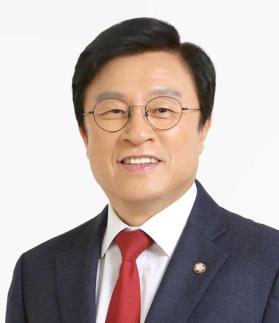 Rep. Park Hyeong-su urges balanced expansion of renewables and nuclear power Rep. Park Hyeong-su of the People Power Party said South Korea needs a major shift to an “energy mix” that can deliver both stable power supplies and carbon reductions, calling for balanced expansion of renewable energy and nuclear power. In written remarks for the “2026 Ajunews Energy Forum” held Tuesday at the Korea Press Center in central Seoul, Park said the country should not repeat “past mistakes” of concentrating national capacity on a single energy source based on ideology or bloc politics. Park, whose constituency includes Uiseong, Cheongsong, Yeongdeok and Uljin counties in North Gyeongsang Province, said Shin Hanul nuclear power plant is operating in Uljin and plans are being pursued to build a national industrial complex for nuclear hydrogen. He added that Yeongdeok is also seeking to attract a new nuclear plant, saying he feels the importance of energy policy “more keenly than anyone.” He cited a government outlook that new electricity demand from future core industries such as semiconductors, artificial intelligence data centers and electric vehicles will more than double, saying a supply environment is emerging that would be difficult to handle with a structure centered only on fossil fuels and renewables. According to demand projections released during the government’s work on the 12th Basic Plan for Long-term Electricity Supply and Demand, South Korea’s power consumption in 2040 is expected to rise to as much as 694.1 TWh, with peak demand reaching up to 128.2 GW. Compared with the previous plan, projected new demand from future core industries jumped to 173 TWh from 79 TWh. Park said choices made by the current generation should not cause future generations to lose competitiveness on the global stage, adding that he hopes the forum will help find practical solutions to protect both South Korea’s energy security and industrial competitiveness.* This article has been translated by AI. 2026-04-29 15:37:01
 -
 PPP Young Lawmakers Say Floor Leader Song Eon-seok Should Serve Full Term A group of first- and second-term People Power Party lawmakers known as Alternative and Future met for breakfast at the National Assembly on April 28, their first gathering in about two months. Participants said they broadly agreed that floor leader Song Eon-seok should serve out his guaranteed term. Rep. Lee Seong-kwon, the group’s secretary, told reporters after the meeting that with the June 3 local elections underway, “the standard for every decision is winning the election.” He said attendees concluded it was not appropriate to hold a vote to pick new floor leadership at this time. Lee said the group had not set an agenda in advance, so the view could not be described as Alternative and Future’s official position. Still, he said those present had no disagreement that it would be undesirable for Song to shorten his own term. Lee dismissed calls from some quarters for a pre-election shake-up in party 분위기, saying such discussions should come after the local election results. “I think the current floor leadership is steering the caucus through the most difficult parliamentary situation in Korean legislative history,” he said. “I understand the hardships, but I ask that they finish strong. Alternative and Future also plans to actively support them.” Lawmakers at the meeting also pledged to work aggressively for victory in the local elections and said conservatives should pool their wisdom to pursue a more inclusive, additive approach to politics. They did not, however, discuss specifics such as forming an election committee or plans for a broader conservative alliance, according to those familiar with the meeting. Twelve lawmakers attended, including Lee, Kim Seong-won, Song Seok-jun, Seo Beom-su, Park Jeong-ha, Cho Eun-hee, Choi Hyeong-du, Kim Jae-seop, Ko Dong-jin, Kim Geon, Kim Yong-tae and Woo Jae-joon. With the argument now raised publicly that Song should complete his term for the sake of election victory, calls for his early resignation are expected to ease for now. Still, Song’s future and the next floor leadership could remain a contentious issue, as the floor leader’s influence could grow depending on the election outcome. If the Jang Dong-hyeok leadership collapses and the party shifts to an emergency committee, the floor leader’s role would be significant because the floor leader would exercise the authority to name the committee chair. Song said at a press briefing last week that he would “carry out my final duties in a direction focused on winning the election.”* This article has been translated by AI. 2026-04-28 11:00:54
 -
 Busan mayoral candidate Jeong I-han hit by thrown drink during campaign; party condemns attack Jeong I-han, the Reform Party’s candidate for mayor of Busan, was struck by a drink thrown from a vehicle while campaigning on the 27th, the party said. According to the Reform Party, Jeong was greeting commuters and asking for support in Busan’s Geumjeong District when a car approached. The driver threw a drink at him and shouted an insult to the effect of, “How can a kid that young run for mayor?” Jeong was born in 1988. Startled, Jeong lost his balance and fell, hitting his head on the ground and briefly losing consciousness. He was taken to a hospital, regained consciousness and remains hospitalized with concussion symptoms. The Reform Party denounced the incident as “terror against democracy.” Party leader Lee Jun-seok told reporters after a meeting of the party’s top council at the National Assembly that people may choose not to support a candidate, but “committing terror is extremely immature behavior.” The party said attempts to resolve political differences through physical force must not be tolerated, adding it would not yield to any effort to suppress “a young candidate’s courageous challenge” through violence and hatred. It urged police to swiftly and thoroughly investigate without leaving any doubts, identify the attacker and hold the person strictly accountable, and take all necessary steps to prevent a repeat. Police are reviewing witness statements and nearby CCTV footage to determine what happened.* This article has been translated by AI. 2026-04-27 17:50:45
 -
 People Power Party Picks Kim Young-hwan as North Chungcheong Governor Candidate Kim Young-hwan, the North Chungcheong governor who was once cut from the People Power Party’s nomination race but returned after a court granted an injunction, was selected as the party’s final candidate for governor in the June 3 local elections. He will face Shin Yong-han, the Democratic Party’s candidate, in the general election. Park Deok-heum, chair of the party’s Nominations Management Committee, told reporters after a committee meeting at party headquarters in Yeongdeungpo-gu, Seoul, on Sunday that Kim was chosen based on the results of the primary held April 25-26. After his win was confirmed, Kim said, “Now we are one under the name of the People Power Party,” and urged unity “for North Chungcheong’s real development and for victory in the general election.” He said he would run “with policies and a vision to develop North Chungcheong and improve residents’ quality of life,” adding that he aims to “raise the level of politics in North Chungcheong” through a “clean and exemplary policy-focused campaign.” Kim had previously been cut from the race under the nomination committee led by then-chair Lee Jeong-hyeon. Kim filed for an injunction seeking to suspend the cut, and the court granted the request, allowing him to enter the party primary. He went on to win the final round and secure the nomination. With Kim’s selection, the People Power Party has decided its candidates for all metropolitan and provincial governor and mayor races except Gyeonggi Province. The party said its Gyeonggi governor candidate will be announced May 2. The party also said all 11 incumbent metropolitan and provincial heads affiliated with the People Power Party, including Kim, will run in the June 3 elections. That contrasts with the Democratic Party, where all five incumbent metropolitan and provincial heads elected in the local elections four years ago lost their party primaries, the party said. Separately, the party’s nominations committee said incumbent Gangneung Mayor Kim Hong-kyu won the primary for the party’s candidate in Gangneung, Gangwon Province.* This article has been translated by AI. 2026-04-27 17:09:07
 -
 South Korea’s People Power Party urges government action over Samsung Electronics union strike threat South Korea’s People Power Party on Sunday called for what it described as a responsible government response to a threatened general strike by a Samsung Electronics labor union. The party also urged the government to roll back what it called pro-union policies and to pursue a new revision of the so-called Yellow Envelope Act, an amendment to Articles 2 and 3 of the Trade Union and Labor Relations Adjustment Act. Party leader Jang Dong-hyeok said at a meeting of the party’s top leadership that “Samsung’s union is holding the South Korean economy hostage.” He said the issue had moved beyond labor-management relations to become “a national economy and livelihoods issue,” and criticized President Lee Jae-myung for offering what he called a meaningless call to “resolve it wisely through dialogue.” Jang warned that with local elections approaching, if the government pressures Samsung and sides with the union, it would be “trading the country’s future for votes.” He said the government and the president should step in to persuade the union and mediate the conflict. Floor leader Song Eon-seok cited the union’s demand for performance pay equal to 15% of operating profit and its notice of a general strike from May 21 to June 7. Industry observers have projected Samsung Electronics’ annual operating profit this year at about 45 trillion won, based on forecasts. Song said demanding 600 million won per worker for all employees, not only top performers, “is difficult to see as meeting global standards.” He added that with semiconductors accounting for 55% of economic growth, he viewed the threatened action as repeatedly “holding the national economy hostage” and damaging shareholder interests and the country’s future. Song blamed what he called one-sided, pro-union government policy for the repeated disputes and stressed the need to revise the Yellow Envelope Act again. He said the law should more clearly define employers through contractual and direct supervisory relationships and limit bargaining topics to wages and working conditions. He also called for more effective rules on liability for losses from illegal labor actions. Supreme Council member Shin Dong-wook said workers’ contributions to South Korea’s industrialization should not be underestimated, but warned that alternative legislation is needed before confusion linked to the Yellow Envelope Act grows further.* This article has been translated by AI. 2026-04-27 10:52:29
 -
 Reform New Party’s Cho Eung-cheon Announces Run for Gyeonggi Governor Cho Eung-cheon, a former Reform New Party lawmaker, announced on the 27th that he will run for Gyeonggi governor in the June 3 local elections. In a Facebook post, Cho declared his candidacy, saying, “Other than the candidates from the two entrenched parties who I just can’t bring myself to support, I’m the only person I truly want to vote for.” He said he had “hesitated for a long time and thought hard,” arguing that while the two major parties “fight while only paying lip service to people’s livelihoods,” the 14 million residents of Gyeonggi have been forced into “the life of an ‘egg white’ surrounding Seoul.” Cho added that he understands “what the problems are,” saying he has served as a Democratic Party lawmaker and also held a role under a conservative administration. “I’m running for Gyeonggi governor. Cho Eung-cheon will do it,” he wrote. A former prosecutor, Cho served as senior presidential secretary for public service discipline at the Blue House under the Park Geun-hye government. He was elected to the 20th and 21st National Assembly as a member of the Democratic Party, then left the party after conflicts with the pro-Lee Jae-myung faction. He switched to the Reform New Party in 2024 and ran in that year’s 22nd general election but lost. With Cho formalizing his bid, the Gyeonggi governor’s race is increasingly likely to take shape as a three-way contest. The Democratic Party has selected Rep. Choo Mi-ae as its candidate, and the People Power Party is set to decide its nominee on May 2. Because the People Power Party and the Reform New Party are both generally classified as conservative, concerns have been raised that conservative votes could split, fueling talk of a possible future unification of candidates.* This article has been translated by AI. 2026-04-27 09:31:59
 -
 Choo Kyung-ho Picked as People Power Party’s Daegu Mayor Candidate, to Face Kim Boo-kyum Rep. Choo Kyung-ho has been selected as the People Power Party’s candidate for Daegu mayor in the June 3 local elections, setting up a matchup with Democratic Party candidate Kim Boo-kyum, a former prime minister. The party’s central nomination committee announced April 26 that Choo won the primary held April 24-25. Speaking at a news conference at the party’s Daegu office in Suseong District, Choo said, “The competition is over. From this moment, we’re one team,” adding that he would “set aside small differences” to pursue “a major conservative unity and a major Daegu unity.” Introducing himself as “Choo Kyung-ho, a professional economy mayor who can be deployed from day one,” he said, “I will answer with the economy,” and vowed to “stay sharp and focused.” Addressing Kim, Choo said key tasks such as Daegu-North Gyeongsang integration should move forward “without wavering” regardless of who wins. He proposed forming a joint consultative body for Daegu’s economic development with participation from both the People Power Party and the Democratic Party to build a framework for “sustainable Daegu development” beyond administrations and parties. Observers said the race could reach a turning point as conservatives rally behind a single candidate. Rep. Joo Ho-young and former Korea Communications Commission Chair Lee Jin-sook, who had signaled independent bids after being cut from the nomination process, announced they would not run on April 23 and April 25, respectively. Lee, in tears, said she would support the People Power Party’s Daegu mayoral candidate, a move seen as helping consolidate conservative support. A poll commissioned by KBS Daegu and conducted by Hankook Research on April 20-22 among 800 Daegu residents age 18 and older, using wireless phone interviews, showed Kim at 43% and Choo at 26% in a head-to-head matchup. Details are available on the website of the National Election Survey Deliberation Commission. Analysts said Choo appeared to trail at the time, but noted the poll preceded the withdrawals and Choo’s nomination. As conservatives unified in Daegu, Democratic Party leaders also traveled to the city to back Kim. Party leader Jung Cheong-rae and policy chief Han Jeong-ae attended the opening of Kim’s campaign office. Kim presented a vision for Daegu in the era of artificial intelligence and robotics, saying the city has “top-level traditional manufacturing” but has struggled as times changed. He said combining that capacity with AI and robots would make Daegu a “digital industrialization hub.” Separately, the People Power Party’s nomination committee on April 26 approved a single-candidate recommendation of former lawmaker Yoo Eui-dong for the June 3 parliamentary by-election in Pyeongtaek-eul, Gyeonggi Province. Yoo is set to face Cho Kuk, leader of the Rebuilding Korea Party, who has declared his candidacy.* This article has been translated by AI. 2026-04-26 17:36:17
 -
 PPP Picks Choo Kyung-ho as Daegu Mayor Candidate; Yoo Eui-dong Sole Nominee in Pyeongtaek-eul Rep. Choo Kyung-ho has been selected as the People Power Party’s candidate for Daegu mayor in the June 3 local elections. The party’s nomination committee also decided to make former lawmaker Yoo Eui-dong its sole recommended candidate in the Pyeongtaek-eul district in Gyeonggi Province for a special election to be held alongside the local vote. Nomination committee chair Park Deok-heum announced the results at a briefing April 26 after a committee meeting, saying, “As a result of the primary, candidate Choo Kyung-ho was selected as the People Power Party’s Daegu mayoral candidate.” Park added, “We resolved to make candidate Yoo Eui-dong our sole recommendation for the Pyeongtaek-eul by-election,” and said Yoo is “the best fit” to lead Pyeongtaek’s next step, citing his policy experience, including as the party’s policy committee chair, and his three-term legislative career. With the committee’s decision, the Daegu mayoral race will pit Choo against Kim Boo-kyum, a former prime minister. The Pyeongtaek-eul seat is also where Cho Kuk, leader of the Rebuilding Korea Party, has declared his candidacy. Park said the party will, in principle, hold primaries to pick candidates in nine districts where vacancies will be created because incumbent lawmakers are running in the local elections. A total of nine sitting lawmakers — including Choo and eight lawmakers nominated by the Democratic Party for metropolitan-level chief executive posts — are expected to resign their National Assembly seats within this month to run. Separately, the nomination committee said it will reopen applications for the Incheon Gyeyang-eul parliamentary by-election. Applications will be accepted April 27-28, followed by candidate interviews on April 29. 2026-04-26 12:21:17
 -
 South Korea’s parliament passes 103 bills, including tenant fraud relief and expanded infertility leave South Korea’s National Assembly on the 23rd passed a package of measures to strengthen protections for victims of rental fraud, including a legal basis to support tenants whose recovered deposits fall short of a minimum guaranteed amount. Lawmakers approved revisions to the Act on Support for Victims of Rental Fraud and Housing Stability by unanimous consent of the 182 members present. Under the changes, if the amount a tenant recovers by exercising opposability rights or priority repayment rights does not reach the minimum guaranteed level, the shortfall can be supported. The Assembly passed a total of 103 noncontroversial bills at the plenary session. Among them was the bill on the establishment and operation of a National Graduate Medical School, creating a legal basis to set up a national institution to train personnel for public health and medical services. The bill requires graduates to serve in the public medical sector for 15 years after obtaining a medical license. Ruling and opposition parties also revised the Equal Employment Opportunity and Work-Family Balance Assistance Act and the Employment Insurance Act to expand paid leave for infertility treatment to four days from the current two. To prevent consumers from being misled by unfair advertising using artificial intelligence, lawmakers revised the Cosmetics Act, the Act on Labeling and Advertising of Foods, and the Pharmaceutical Affairs Act. The plenary session also passed revisions to the Act on the Protection and Support of Small Business Owners to provide a basis for supporting closed small businesses, including management, legal and tax consulting. Another bill established a comprehensive management framework to foster the used-battery industry. Other measures approved included revisions to the Narcotics Control Act to allow undercover or identity-concealed investigations into drug crimes; revisions to the law on exercising sovereign rights over foreign fishing in the exclusive economic zone to sharply raise fines for foreign vessels caught fishing illegally; and a bill on guaranteeing the rights of people with disabilities that spells out dignity and equality rights. Lawmakers also passed revisions to the special act on establishing Sejong Special Self-Governing City, raising the share of proportional-representation seats in the city council to 14% from 10% relative to district seats. The Assembly also completed the lineup for the third Truth and Reconciliation Commission, which investigates past incidents. Lee Ho-jung, a professor at Sogang University Law School recommended by the Democratic Party, and Jang Young-soo, an emeritus professor at Korea University Law School recommended by the People Power Party, were appointed as standing commissioners. Nonstanding commissioners recommended by the Democratic Party were attorney Kim Young-joo of Law Firm Jihyang, activist Kim Jeong-ha of Disability and Human Rights Action Balbadak, and Jeong Won-ok, head of the Cultural and Social Research Institute. Those recommended by the People Power Party were attorney Kim Ung-gi of Sein Partners, Lee Dong-wook, a former member of the May 18 Democratization Movement Fact-Finding Commission, and attorney Choi Chang-ho of Jeongron. The Assembly also approved Lee Hyun-joo, head of the Park Jong-chul Center, recommended by National Assembly Speaker Woo Won-shik, and Park Rae-gun, a director at the Human Rights Foundation Saram, recommended by the Basic Income Party representing non-negotiating parties. Including the 10 members elected on the 23rd, the commission will have 13 members: Chair Song Sang-gyo, standing commissioner Kim Gwi-ok and nonstanding commissioner Park Gu-byeong, all designated by President Lee Jae-myung, along with the newly selected members.* This article has been translated by AI. 2026-04-23 18:55:13