
Journalist

MOONKI CHANG
mkmk@ajunews.com
-
 Inflation Rate at 12.6% and Trade Deficit of $5.3 Billion: Records Connecting DJ and the World For the first time, notes written by the late Lee Hee-ho while preparing for visits to her husband, former President Kim Dae-jung, during his imprisonment have been made public. With the 46th anniversary of the May 18 Democratic Uprising approaching, the release of this book, which includes the couple's 'Prison Records,' is expected to resonate with the spirit of forgiveness and tolerance that Kim emphasized in the political arena. On May 14, the Kim Dae-jung Library at Yonsei University held a press conference in Mapo-gu, Seoul, to introduce the book 'Kim Dae-jung and Lee Hee-ho's Prison Records.' Published by Hangilsa, the book compiles various records from Kim's imprisonment during the March 1 Democratic National Declaration incident in 1976 and the 1980 conspiracy to commit insurrection. Notably, the book includes previously unreleased materials, such as notes Lee Hee-ho wrote between June 1981 and March 1982 for her visits to Kim Dae-jung, as well as letters she sent to advocate for his release. To efficiently convey domestic and international situations to Kim during their brief 10-minute meetings, she prepared notes in advance. On January 20, 1982, she recorded key economic indicators for Kim, including a 7.1% growth in Gross National Product (GNP), a per capita income of $1,636 (the same level as in 1979), an inflation rate of 12.6% for retail, and a trade deficit of $5.3 billion with exports at $21 billion and imports at $26.3 billion. Park Myung-rim, Director of the Kim Dae-jung Library, stated, "The notes encapsulate and summarize the realities of Korea and the world, accompanied by Lee's high-level analysis. It appears that she played a crucial role in helping Kim maintain his sense of reality and grasp global trends while imprisoned." During the press conference, Kim Hong-gul, the son of Kim Dae-jung, recalled anecdotes about his parents. He noted, "After my father was imprisoned, my mother consistently connected with families of other detainees and continued to inform the world about the situation under the Korean dictatorship. It is very meaningful that these related records are being published for a wider audience." The publication of the book has sparked calls for the South Korean political sphere to reflect on the spirit of forgiveness, reconciliation, and tolerance that Kim Dae-jung emphasized. While on death row, Kim stated, "Even if I die, there should never be political revenge again." After being elected as the 15th president, he took steps toward national unity, including pursuing pardons for former presidents Chun Doo-hwan and Roh Tae-woo. Kim Sung-jae, who served as the Chief of Civil Affairs and Policy Planning Secretary and Minister of Culture and Tourism during the Kim Dae-jung administration, criticized the current political climate, saying, "Politicians are only seeking political power and engaging in politics for personal gain." He added, "In his prison memoirs, Kim Dae-jung wrote, 'Without forgiveness and reconciliation, our nation cannot move forward.' While both parties talk about the spirit of Kim Dae-jung, the most important aspect of that spirit is indeed reconciliation and forgiveness."* This article has been translated by AI. 2026-05-15 02:55:32
 -
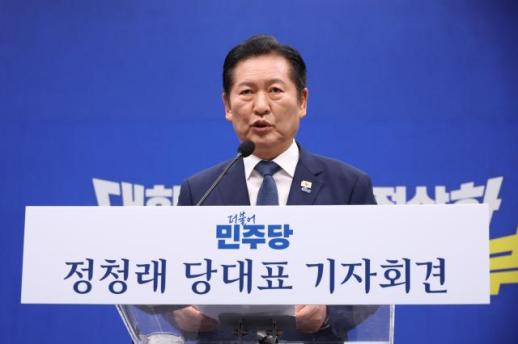 Election Experts Predict Key Races in Seoul, Busan, and Daegu Ahead of Local Elections With just 20 days until the June 3 local elections, political experts are identifying Seoul, Busan, and Daegu as key battlegrounds. The outcome of the Seoul mayoral race is expected to have significant implications for the political landscape moving forward. In a survey conducted by Ajou Economics on May 14, all six experts predicted an advantage for the ruling Democratic Party. However, forecasts varied, with some suggesting the party would win in 9 out of 16 regions, while others anticipated victories in up to 15 regions. Initially, the Democratic Party was expected to achieve a decisive victory, leveraging the early support ratings for the Lee Jae-myung administration and the judgment narrative surrounding the Yoon Suk Yeol administration. However, recent analyses indicate that the local election results have become increasingly uncertain, even among experts. Seoul, Busan, and Daegu: Experts Predict Ruling Party to Secure Majority in Local Elections Experts unanimously agree that Seoul is the most critical battleground in this local election. Its symbolic significance as the capital, along with the perception that the Seoul mayor and Gyeonggi governor positions are stepping stones to the presidency, heightens the stakes. Additionally, Seoul is a region that the main opposition People Power Party won four years ago, making the contest for reclaiming or defending it particularly intense. The Democratic Party and the People Power Party have nominated Jeong Won-oh, the mayor of Seongdong District, and incumbent Mayor Oh Se-hoon, respectively. Eom Kyung-young, director of the Era of Spirit Research Institute, stated, "For the People Power Party, even if they fail to secure a majority of local government positions, winning in Seoul would be considered a success." Jo Sung-joo, head of the Political Development Institute, added, "The Democratic Party must reclaim Seoul to claim victory in the local elections, while the People Power Party will be evaluated positively if they maintain control in Busan, Daegu, and Gyeongnam." The mayoral races in Daegu, featuring Democratic Party candidate Kim Boo-kyum, a former prime minister, against People Power Party candidate Choo Kyung-ho, a former economic minister, and the Busan mayoral race between former lawmaker Jeon Jae-soo (Democratic Party) and incumbent Mayor Park Hyung-jun (People Power Party) are also considered major contests. Political analyst Park Sang-byeong remarked, "I see Seoul, Busan, and Daegu as battlegrounds where the margin of victory could be as narrow as 3 to 5 percent. A significant mistake in the final days could change the outcome." Jo Sung-joo also identified these three cities as key electoral battlegrounds. Overall, experts predict that the Democratic Party will win in more than half of the 16 local government races. However, estimates for the number of Democratic Party winners range from 9 to 15. Park Sang-byeong predicts a decisive victory for the Democratic Party in 15 regions, while Lee Jong-hoon, another political analyst, noted that the worst-case scenario for the People Power Party could be a 15 to 1 loss. Shin Yul, a professor at Myongji University, forecasts 12 to 13 wins for the Democratic Party, while Choi Jin, head of the Presidential Leadership Research Institute, anticipates 13 wins. Conversely, Eom Kyung-young believes that the People Power Party will successfully defend its positions in five regions in the Yeongnam area, predicting a 9 to 7 victory for the Democratic Party. Jo Sung-joo expressed caution regarding predictions of the number of winners. Potential Variables: Special Investigation and Real Estate Issues May Not Shift Overall Trends Experts predict that the special investigation law proposed by the Democratic Party and real estate issues could serve as variables in the upcoming election. The Democratic Party claims that the prosecution and law enforcement agencies manipulated investigations and prosecutions during the Yoon Suk Yeol administration, prompting them to propose a special investigation law. In response, the People Power Party argues that the special investigation aims to dismiss charges against President Lee Jae-myung and erase criminal records. Lee Jong-hoon noted, "The People Power Party candidates are uniting around the special investigation issue rather than focusing on leader Jang Dong-hyuk, which could consolidate their support. Additionally, the impact of real estate prices following the end of the capital gains tax exemption on May 9 and potential last-minute candidate unifications could also influence voter sentiment." Shin Yul added, "The special investigation could provoke anger among moderate voters, and issues related to long-term holding tax exemptions and property taxes may also have an impact. The government's response to the recent attack on a ship in the Strait of Hormuz could also connect to voter sentiment." Conversely, some experts argue that the issues being raised as potential variables may not significantly alter the overall trends in voter sentiment. Choi Jin stated, "While constitutional amendments and special investigations are important topics in the political arena, the election will ultimately be decided through the narratives of 'judgment on Lee Jae-myung' and 'judgment on Yoon again (supporters of former President Yoon Suk Yeol),'" asserting that the 'judgment on Yoon' narrative will likely have a more substantial impact. Park Sang-byeong also commented, "While issues like nomination disputes or inappropriate remarks can be significant, they are not likely to be game-changers in the election. Mistakes made just before the election can directly affect votes, but as the election approaches, the dynamics can shift frequently, so the impact on voter sentiment may not be substantial." 2026-05-14 06:19:36
 -
 Voter Apathy in Gyeonggi Province Ahead of Local Elections As the June 3 local elections approach, the political atmosphere in Gyeonggi Province remains subdued. Many citizens are unaware of the candidates vying to lead the province for the next four years. A taxi driver in his 50s, encountered in Suwon, remarked, "There aren’t many banners on the streets, and the election atmosphere is lacking. I almost forgot there was an election coming up." Similarly, a 43-year-old man in Uijeongbu stated, "I have no interest in politics, so I don’t know who is running. I’ll probably vote for the candidate from the party I usually support when I get to the polling station." With the election atmosphere failing to heat up, voters are expressing fatigue with politics and seem more focused on assigning blame for conflicts between parties rather than evaluating candidates. A 73-year-old woman at Uijeongbu Jeil Market said, "Politicians are always fighting, so I have no interest. I don’t like any of the candidates, and I don’t even know who is running for governor of Gyeonggi Province," but she added, "I think the ruling party shouldn’t have unchecked power, so I’m considering voting for the People Power Party." Conversely, a 27-year-old man from Suwon expressed skepticism about Choo Mi-ae, the Democratic Party candidate, saying, "Even if she wins, I don’t think she’ll pay much attention to provincial issues, only responding to central political issues." He also criticized the People Power Party for not adequately distancing itself from former President Yoon Suk-yeol and for lacking reflection on past actions. A recent poll conducted from May 4 to 5 among 802 voters in Gyeonggi Province indicated that Choo Mi-ae garnered 50.8% support, significantly ahead of Yang Hyang-ja from the People Power Party, who received 31.5%. Cho Eung-cheon from the Reform Party was supported by 6.6% of respondents. This survey was conducted by JoWon C&I using an automated response system (ARS) and has a margin of error of ±3.5 percentage points at a 95% confidence level (for more details, visit the Central Election Survey Deliberation Commission website). However, analysts caution that, based on past election results in Gyeonggi Province, the outcome may remain uncertain until the votes are counted. In the previous election, the margin of victory was just 8,913 votes (0.15 percentage points). At that time, Kim Eun-hye of the People Power Party led in districts like Bundang in Seongnam and Cheoin and Suji in Yongin, but Kim Dong-yeon of the Democratic Party secured enough support in Bucheon, Hwaseong, and Siheung to narrowly win. In fact, many voters encountered on the streets expressed hesitation in choosing whom to vote for, indicating they would decide after thoroughly reviewing the candidates' capabilities and policies. Residents of Gyeonggi Province particularly emphasized the need for policies related to housing and transportation that directly affect their daily lives. A 56-year-old woman from Dongtan, who has not yet chosen a candidate, commented, "Since the GTX line opened, it’s quick to get from Dongtan Station to Seoul, but it still takes a long time to travel within Dongtan. I hope transportation within Dongtan improves." A 31-year-old man living in Bundang expressed a desire for the next governor to effectively address practical issues like transportation and housing prices. In northern Gyeonggi Province, there are also complaints about policies and investments being concentrated in the south. A 38-year-old woman from Goyang stated, "I hope this election focuses more on the economy and people’s livelihoods rather than negative campaigning. It feels like policies are only directed at southern Gyeonggi, and I hope there is consideration for all residents of Gyeonggi Province."* This article has been translated by AI. 2026-05-12 04:14:48
 -
 U.S. April Jobs Report Exceeds Expectations with 115,000 New Nonfarm Jobs The U.S. jobs report for April has significantly exceeded market expectations. As concerns about a recession ease, the timing for potential interest rate cuts by the Federal Reserve may also be reconsidered. The U.S. Department of Labor reported on May 8 that nonfarm employment increased by 115,000 jobs last month, far surpassing Dow Jones' forecast of 55,000 new jobs. The unemployment rate remained steady at 4.3%. Employment in sectors such as healthcare, transportation and warehousing, and retail saw substantial growth, while manufacturing jobs experienced a slight decline. This marks the first time in nearly a year that the U.S. market has shown a clear upward trend for two consecutive months. Prior to the report, there were predictions that job growth would slow significantly due to the ongoing conflict in the Middle East and rising international oil prices. However, the actual job growth figures indicate a robust trend, which may deepen the Federal Reserve's deliberations regarding interest rate cuts. Nonetheless, some analysts express concerns about the uncertainties stemming from the prolonged conflict in the Middle East. Continued high oil prices could lead to inflationary pressures and reduced consumer spending, potentially negatively impacting employment data.* This article has been translated by AI. 2026-05-08 22:00:23
 -
 HMM Approves Relocation of Headquarters from Seoul to Busan HMM Approves Relocation of Headquarters from Seoul to Busan HMM held an extraordinary shareholders' meeting on May 8 and approved a change to its articles of incorporation to relocate its headquarters from Seoul to Busan. The company plans to first move the CEO's office to Busan and then gradually consider relocating other organizational functions. The meeting took place at Park One Tower in Yeouido, Seoul, where HMM CEO Choi Won-hyuk stated, "As a leading national shipping company, we are committed to participating in the social mission of balanced national development and achieving continuous growth." Samsung Electronics Union Accepts Government Mediation, Resumes Negotiations The labor dispute between Samsung Electronics and its union has shifted from a potential clash to a renegotiation phase. However, the threat of a total strike has not been withdrawn, indicating that tensions may rise again depending on the outcome of future negotiations. According to the inter-company union on May 8, the union agreed to participate in post-adjustment procedures on May 11-12 at the government's request. Previously, the union had announced a total strike for May 21 due to unresolved disagreements over wages and performance bonuses. Industry analysts interpret this decision as more than just a scheduling delay, noting that the government's direct mediation suggests significant implications for the broader industry stemming from the Samsung Electronics labor dispute. Constitutional Amendment Proposal Fails Amid Filibuster by Opposition National Assembly Speaker Woo Won-sik attempted to bring 51 items, including a constitutional amendment proposal, to a vote during a session on May 8. However, the opposition party, People Power Party, requested a filibuster on all bills, leading him to withdraw the proposal. Woo criticized the opposition for abusing the filibuster process. People Power Party floor leader Song Eon-seok remarked after the session that any constitutional amendment pushed through without bipartisan agreement is fraught with dictatorship and misfortune. Woo stated, "I convened today’s session to avoid derailing the first constitutional amendment in 39 years, but seeing the response of a filibuster, I feel that proceeding with the agenda is futile, so I will not present the amendment." Finance Minister Proposes Restructuring Real Estate Market for Actual Users The government has assessed that the real estate market is entering a transition phase focused on actual residents, and it plans to review adjustments to tax benefits for rental business operators. Finance Minister Koo Yoon-cheol stated during an emergency economic meeting on May 8 at the Government Seoul Building, "The recent real estate market is moving away from overheating and is being restructured around actual residents." He added, "Loan regulations and land transaction permits are blocking speculative purchases, and expectations for rising housing prices are diminishing. The investment paradigm is also shifting from real estate to productive sectors like capital markets." Financial Authorities to Boost Inclusive Finance with $2 Billion Investment In light of President Lee Jae-myung's recent emphasis on expanding inclusive finance, financial authorities are set to enhance financial support for social solidarity economic organizations. They plan to supply approximately $2 billion this year through public and private financial institutions to promote social solidarity finance. The Financial Services Commission announced on May 8 that it held the first Social Solidarity Finance Council of 2026 at the Korea Inclusive Finance Agency in Jung-gu, Seoul. The meeting included government officials, policy financial institutions, and mutual finance associations to review the implementation and performance of social solidarity finance and discuss future plans. President Lee had previously stated during a Cabinet meeting on May 6 that the notion that financial institutions exist solely to make profits is problematic and called for strengthening the public nature of the financial sector.* This article has been translated by AI. 2026-05-08 21:57:45
 -
 Over 2.94 million apply for first round of high oil price relief payments More than 2.94 million people applied for the first round of the high oil price relief payments, with total disbursements amounting to 1.67 trillion won. The Ministry of the Interior and Safety announced on May 8 that as of 6 p.m. that day, 2,944,073 individuals had applied for the relief payments nationwide. The highest application rate was in Jeollanam-do at 93.6%, followed by Seoul (92.9%), Jeju (92.9%), and Busan (92.7%). Most regions recorded application rates above 90%, but Gyeongsangnam-do (87.8%), Gangwon (89.3%), and Gyeonggi (89.6%) fell below that threshold. Overall, 91.2% of the eligible 3,227,785 individuals applied for the support. The first round of relief payments targeted vulnerable groups, including basic livelihood recipients, those in the second-lowest income bracket, and single-parent families. Basic livelihood recipients received 550,000 won each, while those in the second-lowest income bracket and single-parent families received 450,000 won each. Additionally, residents of non-capital areas or designated population decline regions received an extra 50,000 won each. The government plans to resume payments for those who did not apply during the first round starting May 18, when the second round of payments begins.* This article has been translated by AI. 2026-05-08 21:09:36
 -
 Busan Mayor Candidate Jeong Yi-han Begins Indefinite Hunger Strike Jeong Yi-han, the Reform Party's candidate for Busan mayor, has begun an indefinite hunger strike to protest his exclusion from a televised debate. In a statement released on May 8, Jeong said, "Despite meeting the legal requirements to participate in the TV debate, my legitimate rights have been completely blocked due to the unilateral exclusion by the broadcasting company. I want to express my protest by putting my body on the line." He criticized the situation, stating, "In the 2018 and 2022 Busan mayoral elections, candidates from the third and fourth parties participated in both official and broadcaster-invited debates. This time, that door has been firmly shut. Silencing candidates ultimately obstructs the citizens of Busan's right to know and deprives voters of their choice." Jeong began his hunger strike at 6 p.m. in front of Busan City Hall in Yeonje District after issuing his statement. The Reform Party plans to file a request for an injunction against the broadcasting companies that excluded Jeong and intends to pursue constitutional complaints regarding the matter. A Reform Party official emphasized, "This issue goes beyond mere participation; it concerns the fairness of the public forum and the fundamental principles of democracy. We will rectify this situation through Jeong's hunger strike and legal action." Meanwhile, Lee Jun-seok, the leader of the Reform Party, plans to visit Busan on May 9 to rally support for Jeong from the citizens of Busan and to visit Jeong's hunger strike site.* This article has been translated by AI. 2026-05-08 20:18:24
 -
 Jeju Air Accepts Unpaid Leave Applications Amid Rising Fuel Prices The airline industry is facing challenges due to soaring fuel prices, a consequence of the ongoing conflict in the Middle East, leading to a wave of unpaid leave measures. Following T'way Air, Jeju Air, the largest low-cost carrier (LCC) in South Korea by passenger numbers, has announced it will accept applications for unpaid leave. On May 8, Jeju Air stated it will accept unpaid leave applications from cabin crew members for one month. This decision is seen as a response to the reduction in flight operations due to high fuel costs. Previously, Jeju Air announced a 4% cut in international flight operations for this month and next, attributed to the impact of rising fuel prices from the Middle East conflict. Other domestic airlines are also reducing their flight schedules. The airline industry is considering or implementing unpaid leave to address the issue of surplus staff resulting from these operational cuts. T'way Air is also accepting unpaid leave applications from cabin crew for May and June. Coincidentally, Jeju Air reported strong first-quarter results on the same day. The airline recorded 498.2 billion won in revenue for the first quarter of this year. During this period, it also achieved an operating profit of 64.4 billion won, marking consecutive profits following the fourth quarter of last year. However, industry analysts predict that the impact of high fuel prices will significantly affect performance starting in the second quarter, suggesting that the airline industry is proactively implementing unpaid leave measures in anticipation of declining profitability. A Jeju Air official explained, "The surplus staff is a result of the temporary reduction in flight operations due to high fuel prices. We plan to accept unpaid leave applications freely from those who wish to take time off for childcare, family care, or personal rest during the month of June." * This article has been translated by AI. 2026-05-08 20:03:27
 -
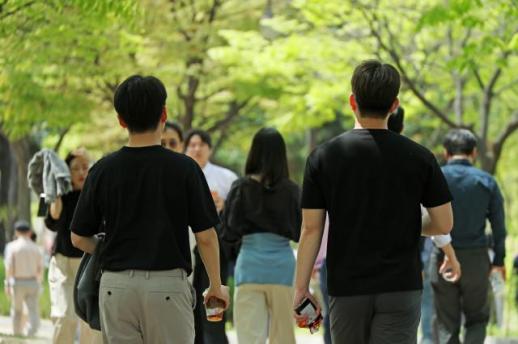 Clear Weekend Weather Expected Nationwide with Significant Temperature Variations On Saturday, May 9, clear weather is expected across the country. However, significant temperature variations are forecasted, particularly in inland areas, with morning lows around 13 degrees Celsius in Seoul. According to the Korea Meteorological Administration on May 8, morning low temperatures nationwide are expected to range from 4 to 11 degrees Celsius, while daytime highs will be between 19 and 25 degrees Celsius. The forecasted morning lows for major regions are as follows: △Seoul 10 degrees △Incheon 10 degrees △Suwon 9 degrees △Chuncheon 6 degrees △Gangneung 11 degrees △Cheongju 8 degrees △Daejeon 8 degrees △Jeonju 7 degrees △Gwangju 6 degrees △Daegu 9 degrees △Busan 11 degrees △Jeju 11 degrees. The expected daytime highs are: △Seoul 23 degrees △Incheon 21 degrees △Suwon 22 degrees △Chuncheon 23 degrees △Gangneung 23 degrees △Cheongju 24 degrees △Daejeon 24 degrees △Jeonju 23 degrees △Gwangju 24 degrees △Daegu 24 degrees △Busan 23 degrees △Jeju 20 degrees. Due to the influence of high pressure, clear skies are anticipated nationwide, with significant temperature differences expected, especially in inland areas. The atmosphere in the Seoul metropolitan area, Chungbuk, and Gyeongnam regions will be dry, and strong winds may increase the risk of fires. Fine dust levels are forecasted to be at a 'good' level across all regions. While there may be some accumulation of fine dust from domestic sources in the morning, improved air circulation in the afternoon is expected to reduce concentrations.* This article has been translated by AI. 2026-05-08 18:27:06
 -
 Filibuster Blocks Reintroduction of Constitutional Amendment Proposal On May 8, National Assembly Speaker Woo Won-sik attempted to introduce a constitutional amendment and 51 other legislative items during a plenary session. However, the People Power Party (PPP) filed a filibuster on all bills, prompting Woo to withdraw the proposal. He criticized the PPP for abusing the filibuster process. After the session, PPP floor leader Song Eon-seok stated that amendments pushed through without bipartisan agreement are historically linked to dictatorship and misfortune. Woo expressed his intention to hold the session to avoid derailing the long-awaited constitutional amendment, stating, "Seeing the response of a filibuster, I feel it is pointless to proceed with the agenda, and I will not present the amendment." He added that the proposed amendment included commitments previously made by the PPP, expressing strong regret towards the party for derailing the process with political maneuvering and unfounded claims. In response to the PPP's objections to what they termed a 'hasty amendment,' Woo remarked, "The PPP has repeatedly rejected proposals I have made in the past without providing any answers. If illegal uprisings occur again in 20 or 30 years, the PPP will be seen as historical criminals." During the filibuster, PPP lawmakers left the chamber around 2:18 PM as Woo's remarks extended. He declared the session adjourned five minutes later without presenting any bills. Following the adjournment, the PPP leadership criticized Woo for violating the principle of no simultaneous sessions. Song stated, "The amendment was clearly rejected in the plenary session yesterday. Reintroducing a defeated bill contradicts the principle of no simultaneous sessions," adding that the failure to vote was appropriately reflected in the proposal to dismiss Minister of Unification Jeong Dong-young, which was not brought to the floor. He further questioned the significance of amending the constitution if the National Assembly Speaker does not uphold the current constitution, warning that unilateral amendments without bipartisan agreement have historically led to dictatorship and misfortune. Meanwhile, the National Assembly attempted to introduce the constitutional amendment the previous day, but only 178 lawmakers participated in the vote, leading to a declaration of failure to vote. For the amendment to pass, it requires the approval of at least two-thirds of the National Assembly's members. The amendment must clear the plenary session within 60 days of its announcement, leaving about a month for action. However, to align with the government's plan to hold a national referendum on the amendment alongside the June 3 local elections, it must pass by May 10, effectively sidelining this attempt at constitutional reform. Woo emphasized the need to establish a special committee for constitutional amendments in the second half of the year, urging both parties to present a clear timetable for the amendment to the public.* This article has been translated by AI. 2026-05-08 16:27:52