


Latest by
-
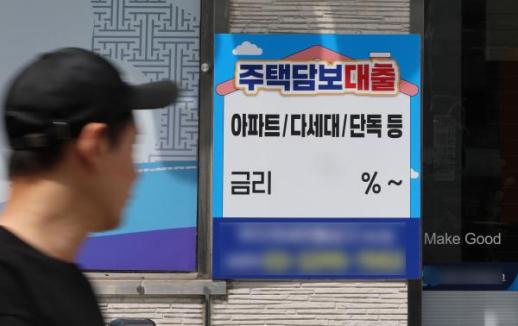 Concerns Grow Over Early Loan Shutdown Amid Rising Household Debt Household loans in South Korea are rapidly increasing. The resurgence of mortgage loans, coupled with rising demand for investment loans driven by stock market optimism, has raised concerns that the traditional year-end "loan shutdown" may occur earlier this year.As of June 23, the total household loan balance from the five major banks—KB Kookmin, Shinhan, Hana, Woori, and NH Nonghyup—stood at 775.3 trillion won, an increase of 4.18 trillion won from the end of the previous month (770.82 trillion won). Although the growth rate has not shown significant increases under the financial authorities' loan management policies, it has risen by 3.53 trillion won compared to the end of April (767.30 trillion won), indicating a growing trend. If this continues, the increase for June is expected to surpass that of May.In response to the rising household debt, banks are tightening their lending criteria. Starting June 26, KB Kookmin Bank will limit mortgage insurance (MCG·MCI) subscriptions, thereby reducing mortgage loan limits. NH Nonghyup Bank has already suspended MCG·MCI subscriptions since last month. Woori Bank plans to cap personal credit loans at 100 million won and reduce overdraft limits to 50 million won starting June 26. Other major banks are implementing similar measures.A significant issue is that the overall household loan growth target for this year has been reduced compared to last year. The Financial Services Commission has announced that it will manage household loan growth at around 1.5%, down from last year's 1.7%. Major banks with large loan volumes have set even lower growth targets. According to Lee Yang-soo, a lawmaker from the ruling People Power Party, Shinhan, Hana, and NH Nonghyup banks have set their household loan growth targets at 0.70% each, while Woori Bank's target is 0.71%, and KB Kookmin Bank has the lowest target among the five at 0.59%. If the current growth trend continues, stricter management of total loan volumes by banks is inevitable in the second half of the year.As a result, there are predictions that the household loan shutdown, typically concentrated at the end of the year, may occur earlier this year. Banks that exceed their annual targets may face disadvantages in setting their household loan management goals for the following year.A financial industry source noted, "With household loans surging recently, there is increasing pressure on total loan management. If the trend of investment loans continues and demand for funds rises during the fall moving season, banks will have no choice but to tighten their lending further."* This article has been translated by AI. 2026-06-24 15:00:00
 -
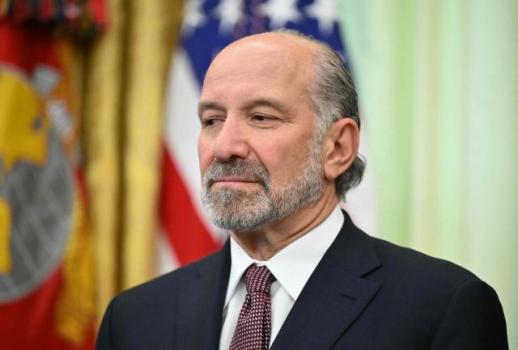 US-China Tech Rivalry Expands to Robotics as US Calls for Domestic Production The technological rivalry between the United States and China is showing signs of expanding from artificial intelligence (AI) and semiconductors to the robotics industry. On June 23, Politico reported that US Secretary of Commerce Howard Rutnik indicated during a closed-door meeting with corporate executives that the Department of Commerce is examining imports of robots supported by the Chinese government and may take strong action. Chinese robots are already subject to US tariffs. However, attendees at the meeting suggested that Rutnik's comments imply the Trump administration is considering additional tariffs or import restrictions as a separate response. According to meeting notes obtained by Politico, Rutnik stated, "We do not want state-subsidized robots attacking America. This is the arms race that is coming, and robotic arms are on the way." He added, "Robots need to be produced in the United States, and we are reviewing this now." Executives from over ten companies, including SpaceX, Boston Dynamics, JPMorgan Chase, Goldman Sachs, Siemens, and Rockwell Automation, attended the meeting. Discussions focused on revitalizing the manufacturing base that has moved overseas for decades and building an industrial ecosystem capable of producing everything from semiconductors to robots within the United States. The US government views China's state-supported robotics industry as a national security threat. There are concerns that if Chinese robots, backed by subsidies, dominate the global market, American manufacturers may lose even the opportunity to enhance their competitiveness. Politico also highlighted that the US has lost a significant portion of the manufacturing base needed for next-generation robot production. With weakened capabilities in machine tools and key component manufacturing, there are fears that the US could rely on China for actual hardware production, despite maintaining competitiveness in AI and software. As of 2024, China is projected to have installed approximately 300,000 industrial robots, accounting for 54% of the global market. This indicates China's intent to dominate the robotics sector, similar to its positions in solar energy and electric vehicles. The Trump administration believes that tariffs alone will not suffice to drive the reshoring of the robotics industry and is also seeking financial support. According to Politico, the Department of Defense's Office of Strategic Capital (OSC) is reviewing low-interest loans for US robotics companies Foundation Robotics and Standard Bots. These loans aim to reduce the financial burden on companies and attract private investment, although they have not yet been finalized. Evan Beard, CEO of Standard Bots, remarked, "The administration understands the urgency of this issue and is taking action, not just talking. They are investing real funds to counteract market distortions abroad and make reshoring economically viable." In response to US pressure, China is also taking countermeasures. The Chinese Ministry of Commerce recently announced export restrictions on dual-use items for ten US military-related companies, following the US's addition of major Chinese tech firms like Alibaba and Baidu to a list of 'companies supporting the Chinese military.' Additionally, Alibaba has filed a lawsuit against the US in response to these measures. The Chinese Ministry of Finance has also implemented a separate measure preventing government agencies from purchasing products from 46 US companies, including subsidiaries of Lockheed Martin, Raytheon, and General Dynamics. Specific reasons for the ban have not been disclosed. However, George Chen, a partner at consulting firm The Asia Group, noted that China's recent actions are a predictable level of retaliation against US restrictions, and the actual impact is likely to be symbolic.* This article has been translated by AI. 2026-06-24 14:56:00
 -
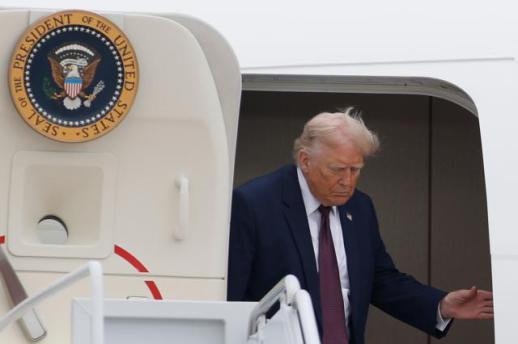 Trump Signs MOU for Iran War, But No One Is Celebrating President Donald Trump, who initiated the Iran War, has finally signed a memorandum of understanding (MOU) for a ceasefire with Iran. However, there are no cheers of victory or sighs of relief. The political landscape in the United States is marked by a peculiar scene where both the war and the ceasefire are subjects of criticism. Recently, the U.S. Senate passed a resolution aimed at preventing Trump from resuming military action in Iran, with a vote of 50 in favor and 48 against, marking the first successful attempt after ten tries. Four Republican senators—Susan Collins, Lisa Murkowski, Rand Paul, and Bill Cassidy—broke ranks to vote against the president. Even members of the ruling party are now questioning the president's war powers. Senate Democratic Leader Chuck Schumer stated, "This war will go down in history as one of the worst diplomatic blunders committed by the United States." However, the context behind the passage of this resolution is not solely driven by anti-war sentiment. Hardline Republicans are expressing their dissatisfaction from the opposite end, arguing that the agreement is too weak. There is significant backlash regarding the inclusion of a $300 billion fund for Iran's reconstruction in the agreement. Texas Republican Senator Ted Cruz publicly criticized Trump, stating, "The president is receiving very misguided advice on the Iran issue." This creates a scenario where both factions—those advocating for more military action and those claiming the war ended too cheaply—are pressuring Trump. The financial implications of the war are also a concern. An estimated $11.3 billion was spent in the first week alone, with total costs nearing $100 billion. Defense Secretary Pete Hegseth is seeking an additional $80 billion budget from Congress to replenish military supplies post-war. This request is unwelcome news for Americans already struggling with high gas prices and rising living costs. The passage of this resolution has raised doubts about the Defense Department's plan to secure the $80 billion war budget. Public opinion is even harsher. A recent Reuters-Ipsos poll of 1,262 American adults found that only 24% believed the Iran War was worth fighting. Just 23% felt the U.S. is stronger now than before the war, while 35% believe the country is weaker. Only 18% expressed confidence that the agreement signed by Trump would lead to lasting peace. This indicates widespread dissatisfaction with both the conflict and the manner in which it has been halted. Trump's approval rating is at a record low of 34%. Ahead of the midterm elections in November, only 17% of independent voters indicated they would support a Republican candidate, compared to 34% for Democrats. The legal effectiveness of the resolution remains uncertain, and it is unlikely that Trump will comply willingly. His true intention appears to be to secure a final agreement through a two-step follow-up negotiation. However, politics is driven by public sentiment rather than legalities. The outcomes of the two-step negotiations could potentially alter these evaluations. Yet, at this moment, Trump's Iran War is recorded as a conflict that has drawn criticism whether fought or paused—satisfying no one.* This article has been translated by AI. 2026-06-24 14:56:00
 -
 Allegations of 16 Trillion Won Tax Evasion from Synthetic Nicotine Imports The South Korean government has refuted allegations that 300 million bottles of synthetic nicotine were imported from China, leading to an estimated tax evasion of 10 trillion won. On June 24, the Ministry of Economy and Finance held a briefing to address claims made by Democratic Party lawmaker Jeong Jin-wook the previous day in the National Assembly. Jeong alleged that natural nicotine from China was misclassified as synthetic nicotine to evade taxes, resulting in tax evasion estimated between 16 trillion and 20 trillion won. He stated that since 2016, approximately 300 million bottles of electronic cigarettes have been imported under the guise of synthetic nicotine, and applying an average tax of 54,000 won would indicate tax evasion exceeding 16 trillion won. In response, the Ministry stated that the figures presented could not be verified. They explained that until the revised Tobacco Business Act took effect in April, synthetic nicotine was not classified as tobacco and thus fell into a regulatory gap. Consequently, there are no official statistics on previous sales volumes. A ministry official added, "Since 2019, we have required six types of documents for synthetic nicotine imports, including specifications on whether the nicotine is natural or synthetic and its nicotine content." The Korea Customs Service developed its own analysis method for distinguishing between natural and synthetic nicotine in November 2022, leading to a decrease in false reporting. Cases of false declarations dropped from 10 incidents (290 liters) in 2022 to 2 incidents (0.02 liters) last year. The ministry noted that while the production of synthetic nicotine solutions in China is strictly regulated, exports are not prohibited, and there are no specific regulations concerning exports to South Korea. Additionally, the ministry announced that no retroactive tobacco taxes would be applied to synthetic nicotine electronic cigarettes imported before the revised Tobacco Business Act took effect. They clarified that due to concerns over retroactive legislation during parliamentary discussions, the law would only apply to products manufactured or imported after the law's implementation date. To prevent long-term distribution of products manufactured or imported before the law took effect, the government has established safety management standards for liquid electronic cigarette stock based on the Consumer Protection Act, effective since April 28. Finally, the Ministry of Food and Drug Safety plans to assess the harmfulness of similar nicotine products intended for inhalation and will seek government-level responses based on the findings. The ministry emphasized, "We will take strict measures against attempts to circumvent regulations, such as the sale of nicotine concentrate or products claiming to be nicotine-free but containing nicotine."* This article has been translated by AI. 2026-06-24 14:52:00
 -
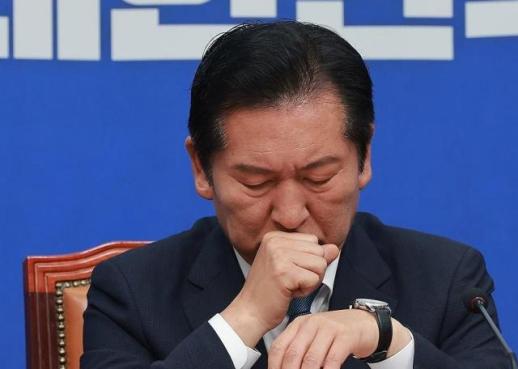 Jeong Cheong-rae Resigns as Leader of Democratic Party, Eyes Reelection Bid Jeong Cheong-rae, a member of the Democratic Party, resigned from his position as party leader on June 24. He has been actively visiting the Honam region to gauge public sentiment and is expected to officially launch his reelection campaign soon. During a Supreme Council meeting held in the National Assembly, Jeong stated, "I raised the banner of a strong reformist party leader, and implementing party member sovereignty, the one-person, one-vote system, judicial reform, and media reform has not been easy. Today, I will step down from the leadership position." He added, "It has not been easy for a single day due to resistance both inside and outside the party, but I have worked diligently. I will do my utmost as part of a united team for the success of the Yoon Suk-yeol government." He emphasized, "I will protect my commitment to President Yoon and will do my best from my position for the success of this government. Even if the road is thorny, I will trust only the public sentiment and the party's will and continue on my path." This move is interpreted as a signal that Jeong is gearing up for a reelection bid. He has been visiting Honam and engaging in activities that suggest he is trying to win over public support in the region, which is seen as a critical battleground for the upcoming party convention. The Democratic Party has faced several conflicts in the Honam region during the recent local elections. Former Jeollabuk-do Governor Kim Kwan-young, lawmaker Ahn Ho-young, and Jeollanam-do Governor Kim Young-rok have publicly criticized issues that arose during the primary process. Honam is considered a key area for the party convention. Lawmaker Song Young-gil, who is also mentioned as a potential candidate, has referenced public sentiment in Honam while positioning himself against Jeong. Additionally, Jeong has recently expressed strong positions on completely abolishing supplementary investigative powers and the one-person, one-vote system. Despite some internal opposition, he has remained steadfast in his beliefs, asserting his presence within the party. With Jeong's resignation, the Democratic Party has transitioned to a leadership role under acting floor leader Han Byeong-do. Jeong, Song, and Prime Minister Kim Min-seok are expected to compete for the party leadership in the upcoming elections. Some speculate that Song and Prime Minister Kim may form an alliance to counter Jeong. Meanwhile, tensions between the pro-Jeong faction and the pro-Yoon faction within the party have escalated recently. During the meeting, pro-Yoon Supreme Council member Kang Deuk-gu expressed dissatisfaction with Jeong, prompting pro-Jeong member Moon Jeong-bok to respond, "President Yoon is the captain of the Republic of Korea, and the captain of the Democratic Party is Jeong Cheong-rae."* This article has been translated by AI. 2026-06-24 14:52:00
 -
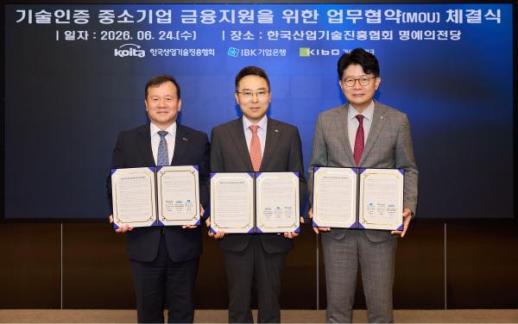 IBK Industrial Bank to Provide 100 Billion Won in Support for Certified SMEs IBK Industrial Bank is set to provide 100 billion won in financial support to foster the growth of small and medium enterprises (SMEs) with strong technological capabilities.On June 24, IBK Industrial Bank announced that it has signed a memorandum of understanding with the Technology Guarantee Fund and the Korea Industrial Technology Association to enhance financial access for certified SMEs facing funding challenges during their growth phases.Under the agreement, the bank plans to implement the 100 billion won financial support program for certified SMEs starting in July. Eligible companies will be those recommended by the Korea Industrial Technology Association and certified by the Technology Guarantee Fund. Selected firms can receive operating funds of up to 3 billion won each. Additionally, they will benefit from a 0.5 percentage point reduction in guarantee fees for two years and a maximum interest rate reduction of 1.3 percentage points.An IBK official stated, "This financial support aims to strengthen the financial assistance framework for SMEs with technological innovation capabilities. We will continue to actively support the growth of technology companies and enhance industrial competitiveness through collaboration with relevant organizations."* This article has been translated by AI. 2026-06-24 14:52:00
 -
 Vivian Shares Rise for Third Day Following 25 Billion Won Capital Increase Vivian has seen its stock price rise for the third consecutive day following its announcement of a 25 billion won capital increase through a third-party allocation. As of 2:30 p.m. on June 24, Vivian's shares were trading at 12,550 won, up 1,570 won (14.30%) from the previous trading day. The stock price peaked at 14,270 won during the session, setting a new 52-week high. This marks an increase of more than 40 times compared to the 52-week low of 345 won recorded in March. Investors are focusing on the large-scale funding plan disclosed the previous day. Vivian announced on June 22 that it would proceed with a 25 billion won capital increase through a third-party allocation. Following this announcement, the stock surged by 30% on June 22 and by 29.94% on June 23, achieving the upper limit for two consecutive trading days. The new shares will total 4,288,164, with an issue price of 5,830 won per share. The entire amount will be subscribed by the Gold 300 Fund. Of the funds raised, 20 billion won will be used for debt repayment, while approximately 5 billion won will be allocated for operational expenses, including payment for goods. With this capital increase, Vivian's total number of issued shares will rise from 2,404,344 to 6,692,508. However, investors receiving the new shares will be required to hold them for one year, limiting the short-term supply in the market. Market analysts believe that this funding could lead to an improvement in Vivian's financial structure. Given that 80% of the raised funds will be used for debt repayment, there are expectations for reduced interest burdens and enhanced financial stability. Earlier this month, Vivian also announced a 5 billion won capital increase through a third-party allocation, bringing the total funds raised this month to 30 billion won.* This article has been translated by AI. 2026-06-24 14:48:00
 -
 DB Insurance Launches AI System for Analyzing Dashcam Footage in Accident Liability DB Insurance has introduced a system that analyzes dashcam footage using artificial intelligence (AI) to determine liability in car accidents. The company announced on June 24 that it is the first in the insurance industry to operate an 'AI Liability Assessment System Utilizing Dashcam Footage.' The system allows customers to upload dashcam footage and accident descriptions via a URL provided during the accident reporting process. The AI then automatically analyzes the footage and provides liability results and related information, with results delivered in an average of five seconds. To enhance the accuracy and speed of the system, DB Insurance conducted AI simulations and training based on approximately 70,000 accident cases over a 20-month period from September 2024 to May 2026. This effort has raised the accuracy of liability analysis to an average of 92.4%. Currently, the AI analysis service is available for vehicle-to-vehicle accident types. DB Insurance plans to improve accuracy and gradually expand the application scope through advanced chart analysis and AI learning. This system is regarded as a 'customer-participation auto compensation system' since it allows customers to directly provide accident footage and descriptions, thereby participating in the compensation process. It is expected to reduce delays in liability determination and customer inconvenience that can occur in traditional compensation processing. A DB Insurance representative stated, “With the introduction of this system, we have created an environment where customers can actively participate in the compensation process. We expect this will significantly enhance customer trust.”* This article has been translated by AI. 2026-06-24 14:48:00
 -
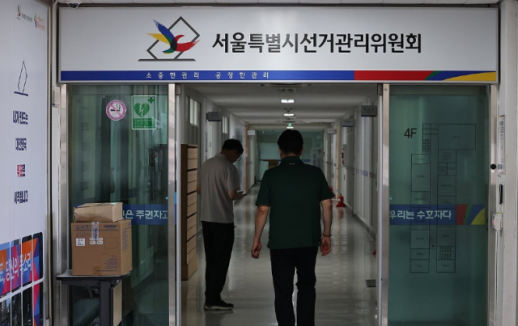 Joint Investigation Team Raids 12 Election Commission Officials Over Ballot Shortage The joint investigation team probing the ballot shortage during the June 3 local elections has launched a forced investigation into officials from the Seoul and Songpa election commissions. The team is focusing on how the ballot shortage was reported on election day and what directives and responses occurred within the commission. According to legal sources on June 24, the joint investigation team, led by Prosecutor Kim Tae-hoon of the Seoul Central District Prosecutors' Office, conducted searches at the homes of three officials from the Seoul Election Commission and nine from the Songpa Election Commission. The team stated, "We conducted the search to meticulously reconstruct the circumstances surrounding the ballot shortage on election day." This search comes 13 days after an initial round of forced investigations targeting seven locations, including the National Election Commission and the Seoul Election Commission, on June 11. All 12 individuals targeted in the search are considered witnesses. The team plans to secure their mobile phones for digital forensic analysis. They aim to determine when the ballot shortage was first recognized and what communications occurred between the Seoul and Songpa election commissions based on call logs, text messages, and messenger conversations. A team official noted, "It is essential to review the contents of social media chat rooms involving not only polling station personnel but also practical staff from the election commission," adding that it is particularly important to investigate how officials from the Songpa Election Commission responded to the ballot shortage. Songpa was one of the key areas where the ballot shortage issue arose on election day. It is reported that the Songpa Election Commission notified the Seoul Election Commission of the ballot shortage at the second polling station in Jamsil 7-dong around 11:40 a.m. However, additional ballots did not arrive at that polling station until around 6 p.m. The joint investigation team is examining whether the Seoul Election Commission failed to promptly report signs of ballot shortages from Songpa and why follow-up actions, such as supplying additional ballots, were delayed. They are also considering potential charges of dereliction of duty and obstruction of official duties based on the analysis of seized materials and witness statements. On June 11, the team conducted searches at the National Election Commission and the Seoul Election Commission, securing voter registries, internal approval documents, and electronic data. They have since been questioning polling officials and local government employees who worked at polling stations where ballot shortages occurred. On June 15, they interrogated nine polling officials from three polling stations affected by the ballot shortage, followed by two officials from the Songpa Election Commission on June 16. On June 19, they questioned two officials from a polling station in Cheongdam-dong, Gangnam, and on June 22, eight local government employees from polling stations in Seoul. The team also received and is analyzing materials from the 'Ballot Shortage Investigation Committee' established by the National Election Commission. The committee reported that out of 14,288 polling stations nationwide, only 140 received additional ballots due to anticipated shortages, while 91 polling stations actually used the additional ballots, and 26 polling stations experienced interruptions in voting. Earlier, Jo Hyun-wook, chair of the National Election Commission's investigation committee, stated during the announcement of the findings, "We confirmed deficiencies in the reporting system and a systemic failure in election management," recommending an investigation into 12 individuals, including former National Election Commission Chairman Noh Tae-ak. The joint investigation team plans to summon officials from the Seoul and Songpa election commissions for questioning as soon as they complete the analysis of the seized materials and the review of the commission's internal investigation data. Following this, investigations into high-ranking officials at the National Election Commission, including former Chairman Noh and former Secretary General Heo Cheol-hoon, are expected to intensify. Additionally, the team is looking into allegations of the disposal and loss of ballot storage boxes that surfaced after election day. There are also discussions about expanding the investigation to include internal operations of the election commission, such as preferential hiring scandals and questionable business trips.* This article has been translated by AI. 2026-06-24 14:48:00
 -
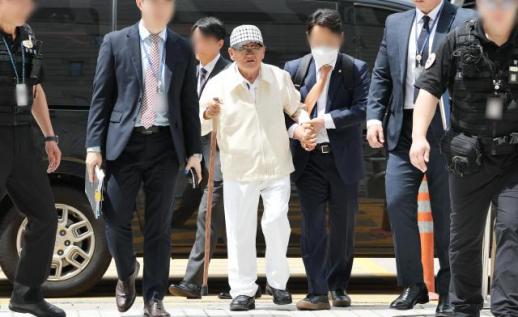 Shincheonji Leader Lee Man-hee Faces Imminent Arrest Over Allegations of Forcing 50,000 Followers to Join Political Party Lee Man-hee, the leader of the Shincheonji Church of Jesus, is facing imminent arrest for allegedly coercing over 50,000 followers to join the ruling People Power Party (PPP). On June 24, the Seoul Central District Court, presided over by Judge Kim Jin-man, began a pre-arrest hearing for Lee, who is accused of violating party law and obstructing business operations. Lee arrived at the court using a cane and was assisted by a friend. He did not respond to reporters' questions regarding whether he directly instructed followers to join the party or if it was intended to support former President Yoon Suk-yeol. As he entered the courtroom, some citizens shouted criticisms at him from the sidelines. The joint investigation team, which is probing allegations of corruption involving religious and political collusion, filed for an arrest warrant for Lee on June 22. This marks the first warrant request since the team's establishment on January 6, 2026. Lee is accused of forcing followers to join the PPP to influence the party's primaries for the presidential and general elections from 2021 to 2024. Article 42 of the party law prohibits coercing individuals into joining or leaving a political party against their will. The investigation team has reported that Shincheonji encouraged membership under the codename "Pilates Project," with at least 56,472 followers joining the PPP. According to the investigation, Shincheonji began recruiting members from July to September 2021, with continuous membership drives occurring after Yoon's election and leading up to the general election in January 2024. Additionally, the investigation team claims that Shincheonji organized these membership drives to address internal issues, such as changing the use of church buildings, which disrupted the PPP's operations. They have also documented a hierarchical structure from the church leader to the general secretary and district leaders through seized membership lists. Notably, ahead of the 2022 presidential election, Lee reportedly stated, "Yoon Suk-yeol must become president. Join as members who pay party dues," and there are indications that a list of followers was passed to Yoon's campaign team. Lee has denied all allegations and is expected to maintain this stance during the hearing. Previously, on June 13, the investigation team arrested three former executives, including former general secretary Ko Dong-an. Legal experts suggest that Lee's advanced age and health condition, as he is over 90 years old, may significantly influence the court's decision on the warrant.* This article has been translated by AI. 2026-06-24 14:48:00