
Journalist

Lee Nak-yeon
nakk@ajunews.com
-
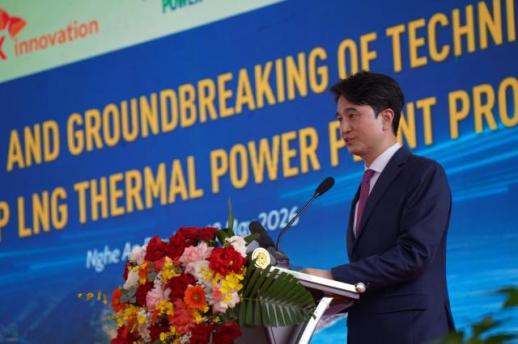 SK Innovation Begins $2.3 Billion LNG Project in Vietnam SK Innovation has officially launched a massive liquefied natural gas (LNG) power generation project in Vietnam, valued at approximately 3.3 trillion won ($2.3 billion), as it accelerates its entry into the Southeast Asian power and advanced industry markets. The company plans to implement a 'Korean-style energy and industrial cluster' model that integrates artificial intelligence (AI) data centers with industrial complexes. On May 18, a consortium formed by SK Innovation, Vietnam's state-owned power company PV Power (Petro Vietnam Power), and local partner NASU (under the TH Group) held a groundbreaking ceremony for the Quynh Lap LNG project in the Tan Mai area of Nghe An Province. The event was attended by SK Innovation CEO Chu Hyung-wook, Doan Minh Huan, head of the Ho Chi Minh National Academy of Politics, Deputy Prime Minister Le Tien Chau, and other senior officials from the Vietnamese central government, as well as local government representatives including Nguyen Khac Thanh, Secretary of Nghe An Province, and Bo Chong Hai, Chairman of the People's Committee. More than 300 attendees included key figures from the consortium, such as Hoang Van Quang, Chairman of PV Power, Le Nu Linh, President, Thai Thi Huong, Chairwoman of the TH Group, and Ngo Van Thu, President of NASU. The Quynh Lap LNG project is a large-scale energy initiative that will construct a 1.5 GW LNG combined cycle power plant and an LNG terminal in the Quynh Lap area, located about 220 kilometers south of Hanoi. The total project cost is estimated at $2.3 billion, with commercial operations expected to commence by December 2030. This project is significant as it represents the realization of the Specialized Energy-Industrial Cluster (SEIC) model proposed by the SK Group to the Vietnamese government, going beyond mere electricity production. The plan includes supplying power generated by the plant to nearby advanced industrial complexes and establishing AI data centers, thereby supporting the industrial advancement of Vietnam. Industry experts believe that the rising demand for power from AI data centers, driven by global tech giants, combined with the Vietnamese government's policies to foster advanced industries, will enhance the local business expansion potential for the SK Group. Notably, SK Group Chairman Chey Tae-won played a crucial role in the project's success. He and the group's executives engaged in multiple meetings with Vietnam's top leadership, including the General Secretary, President, and Prime Minister, to lay the groundwork for this significant investment. Bo Chong Hai, Chairman of the Nghe An People's Committee, stated in his commemorative speech, "This project is important not only for the Nghe An government but also for the energy strategy of the Vietnamese government. The local government will do its utmost to support the central government in meeting the commercial operation timeline." In his address, Chu Hyung-wook emphasized that the groundbreaking of this infrastructure is a historic first step toward alleviating Vietnam's power shortages and creating an advanced industrial ecosystem. He pledged to work closely with partners like PV Power and NASU to achieve the project's goal of commencing commercial operations by 2030. Meanwhile, SK Innovation aims to leverage the Quynh Lap project as a stepping stone to become a major electricity provider with substantial generation capacity in Vietnam.* This article has been translated by AI. 2026-05-19 09:42:00
 -
 POSCO Faces Labor Conflict Over Direct Employment of Partner Company Workers POSCO is facing unprecedented uncertainty as tensions escalate between the company and labor unions over its plan to directly employ workers from partner companies. The union has initiated dispute procedures, claiming the move was made unilaterally without prior consultation. There are even discussions about the possibility of the first total strike in the company's history. In April, POSCO announced its decision to directly hire 7,000 workers from partner companies at its Pohang and Gwangyang steelworks, citing the establishment of a "coexistence labor model." The company also revealed specific hiring methods, conditions, and a new treatment system. A new job category called "Operational Synergy (S)" was created, with a promotion system ranging from S1 to S7. This direct employment initiative is not unprecedented in the steel industry. In 2021, Hyundai Steel became the first private company in South Korea to hire over 4,500 employees from its partner companies as regular staff, followed by Dongkuk Steel, which directly employed 889 subcontracted workers in 2024. However, POSCO's case is notable for its scale and potential impact. The direct hiring plan affects about 40% of POSCO's workforce of approximately 17,000 employees, including those at the steelworks, which could influence the existing regular employment structure and overall organizational operations. The main issue is the lack of sufficient dialogue with the workforce during the implementation of such a significant change. The union has strongly criticized the absence of consultation, emphasizing that their concerns are not about direct employment itself but rather the process leading up to it. Existing employees have also expressed worries about potential changes to job structures, personnel management, and wage systems. Kim Sung-ho, chairman of the POSCO union, stated in a press release at the time of the announcement, "The management ignored the minimum procedure of building consensus among employees, causing deep wounds among union members. The efforts and unique values of each employee should not be undermined during the hiring process." Workers from partner companies slated for direct employment have also voiced their dissatisfaction, particularly regarding the perceived discrimination of being placed in a separate S job category, distinct from the existing regular production E category. Some employees from certain partner companies at the Pohang and Gwangyang steelworks have already refused to work due to grievances over the wage system, disrupting operations. These include workers from companies like POTL and PSC, who are reportedly being replaced by direct hires to maintain operations. Currently, the wage system for the S category is set at over 70% of that of the E category for employees with the same years of service, and it is expected to offer the same benefits as direct employees. The company's concerns are understandable, as there is increasing demand in the industry for enhanced accountability from primary contractors and improvements in safety systems. The ongoing issue of "outsourcing risks" in manufacturing has become an urgent challenge. In this context, POSCO appears to have made a significant decision to pursue large-scale direct employment. However, having the right direction does not guarantee that the process will be fully accepted. In industries like steel, where organizational culture is strong and job structures have been maintained for a long time, the process of persuading members is crucial. There are concerns that if this conflict continues, it could affect not only labor relations but also the stability of production sites. POSCO has consistently emphasized "coexistence" as a core corporate value. The company must consider the joint growth with partner companies and the enhancement of safety as essential tasks. However, true coexistence cannot be achieved through mere declarations. Equally important is how well the members can understand and accept these policies. What POSCO needs now is not rapid decision-making but sufficient communication to restore trust within the workforce.* This article has been translated by AI. 2026-05-19 05:17:26
 -
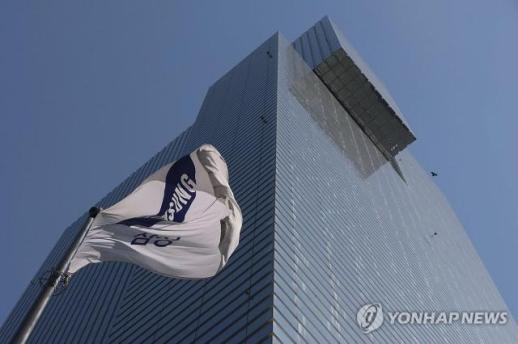 Economic Groups Urge Samsung Union to Withdraw Strike Plans Business groups have expressed concern over the Samsung Electronics union's plans to strike, urging the union to withdraw its strike announcement and return to negotiations. They warned that if a strike occurs, the government should consider invoking emergency measures to address the situation. On May 18, six major economic organizations, including the Korea Employers Federation, the Korea Chamber of Commerce and Industry, the Korea Economic Association, the Korea International Trade Association, the Korea Federation of Small and Medium Businesses, and the Korea Federation of Medium Enterprises, issued a joint statement expressing deep concern over the union's insistence on its position despite efforts by the government and the Central Labor Relations Commission. They stated, "The union's strike threatens the foundation of a key national industry, and it must withdraw its strike plans and seek solutions through dialogue." The business community called on the government to activate emergency measures immediately if a strike occurs, to prevent irreversible damage to the national economy and industrial ecosystem. With semiconductor exports accounting for 37% of the country's total exports this year, the business sector warned that a strike by the Samsung union could lead to reduced exports, a worsening trade balance, and even a loss of tax revenue, adversely affecting the overall economy. They also pointed out that a strike could significantly depress the domestic capital market, as Samsung Electronics accounts for about 25% of the KOSPI's market capitalization, potentially accelerating declines in the KOSPI index and foreign investor withdrawals. The business community criticized the union's demands for performance bonuses, which they described as inappropriate and excessive, noting that a court had already ruled that such bonuses do not constitute wages. The union's demand for approximately 45 trillion won in bonuses exceeds four times the total shareholder dividends from the previous year, which could severely undermine the company's sustainable investment capacity and future competitiveness. They argued that the issue of performance bonuses should be a matter of management judgment rather than a subject of collective bargaining, stating, "Excessive demands from some unions could deepen the dual structure of the labor market and increase social discord." Furthermore, they noted that it is rare for global companies to have pre-agreed systems for distributing a certain percentage of operating profits to employees, emphasizing that decisions on how to utilize operating profits typically fall under the purview of the board of directors. The business sector warned that a large-scale strike by the Samsung union could lead to national opportunity losses beyond mere labor disputes. Given the continuous operation required in semiconductor manufacturing, a strike could halt production lines, resulting in massive waste of wafers, equipment damage, and risks of chemical spills, leading to significant safety incidents. The six economic organizations expressed concern that the impact of the strike would not be limited to Samsung Electronics but could spread to thousands of small and medium-sized partner companies and the broader semiconductor materials, components, and equipment industries. Industry insiders have raised alarms that the economic damage from this strike could reach up to 100 trillion won, a scale that could inflict severe harm across the Korean economy.* This article has been translated by AI. 2026-05-18 15:50:12
 -
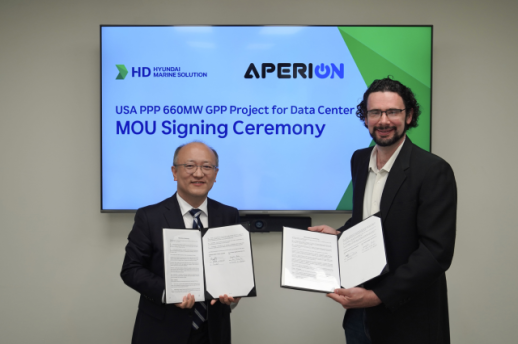 HD Hyundai Marine Solutions to Maintain Power Engines at U.S. Data Centers HD Hyundai Marine Solutions, a comprehensive solutions provider in the marine industry, is entering the North American data center power solutions market. The company announced on May 18 that it has signed a memorandum of understanding (MOU) with Aperion Energy Group (AEG) for the maintenance of power engines at data centers. Under this agreement, the two companies will establish a cooperative system for the long-term maintenance and operation of 33 power engines at a data center being built by AEG in Texas. Earlier, in April, HD Hyundai Heavy Industries signed a supply contract with AEG for a 684-megawatt (MW) power generation facility based on the 20 MW HiMSEN engine. With the rapid advancement of artificial intelligence (AI) technology, the power consumption of data centers has surged, making the reliability of backup and commercial power supply systems a key factor in the efficient operation of these facilities. HD Hyundai Marine Solutions aims to leverage its collaboration with AEG to showcase the proven performance of the HiMSEN engine and its superior engine maintenance technology, thereby expanding its market share in North America. Notably, the cooperation between the two companies is expected to go beyond simple engine supply to include long-term service agreements (LTSA) and operation and maintenance contracts (O&M), allowing HD Hyundai Marine Solutions to establish a robust high-value service revenue model that generates continuous income. Industry observers note that HD Hyundai is expanding its business scope into the land-based data center power infrastructure market, building on its existing shipbuilding and marine engine technology. The company is accelerating its efforts to strengthen a stable recurring revenue base by securing long-term contracts that include maintenance and operational services. A representative from HD Hyundai Marine Solutions stated, "With the explosive growth of the AI industry, the demand for power is surging, highlighting the importance of meticulous maintenance services for data center power engines more than ever. Through this collaboration, we will demonstrate our AM Solutions capabilities and seize new demand related to data centers in the North American market."* This article has been translated by AI. 2026-05-18 14:02:18
 -
 HJ Heavy Industries Reports 347% Increase in Q1 Operating Profit HJ Heavy Industries is accelerating its profitable management, driven by strong orders for high-value ships and defense contracts. The company's operating profit in the first quarter surged over 300% compared to the same period last year. On May 18, HJ Heavy Industries announced that it recorded consolidated sales of 541.4 billion won, an operating profit of 24.6 billion won, and a net income of 25.5 billion won for the first quarter. Sales increased by 32.0% from 410 billion won in the same period last year, while operating profit rose from 5.5 billion won to 24.6 billion won, marking a 347.3% increase. Net income also saw a significant jump from 5.6 billion won to 25.5 billion won, a 355.4% rise. The substantial improvement in performance is attributed to the realization of high-value ship construction orders in the shipbuilding sector and the recovery of cost structures in the construction division. Notably, sales in the shipbuilding sector increased by 70%, from 158.1 billion won to 268.6 billion won. In comparison, sales in the construction sector grew by 8.6%, from 247.9 billion won to 269.3 billion won, indicating a remarkable growth trajectory. Analysts credit the profitability to strategies focused on developing eco-friendly vessels, selecting orders based on cost advantages, and prioritizing key projects such as fast patrol boats. The construction division also successfully maintained profitability by managing cost structures amid a slowdown in domestic and international construction markets and rising raw material and labor costs. HJ Heavy Industries aims to continue its profitable management through a focus on 'qualitative growth' centered on profitability this year. Following the orders received at the end of last year for four new fast patrol boats for the navy, a multi-purpose chemical response vessel for the coast guard, and maintenance, repair, and overhaul (MRO) contracts with the U.S. Navy, the company also secured orders for four 11,000 TEU container ships earlier this year. The goal is to establish a virtuous cycle where quality work leads to improved profitability through various public projects and maintenance contracts. Additionally, the recent move to acquire HD Hyundai's Gunsan Shipyard has heightened expectations for long-term growth. If the acquisition proceeds as planned, HJ Heavy Industries is expected to enhance its production capacity and ability to respond to additional orders based on the Gunsan Shipyard. A representative from HJ Heavy Industries stated, "As the proportion of high-profit projects focused on eco-friendly and high-value vessels increases, our operating profit has significantly risen compared to the same period last year. With stable order backlogs secured for over three years across both major business sectors, we will continue to pursue stable growth through ongoing improvements in our structure and cost management." 2026-05-18 12:30:26
 -
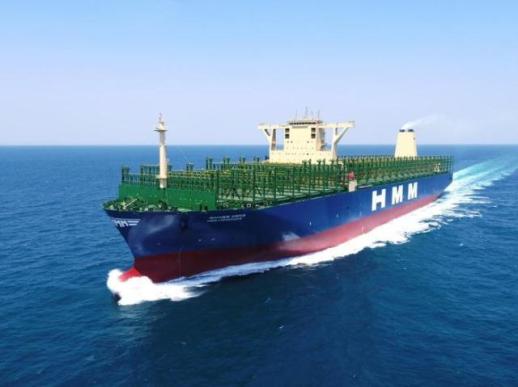 SCFI Index Recovers Above 2000, Boosting Hopes for South Korean Shipping Sector Global container freight rates are showing signs of recovery as the Shanghai Container Freight Index (SCFI) has rebounded, signaling positive prospects for the shipping industry in the second half of the year. Analysts attribute this trend to uncertainties in the Middle East affecting supply and the onset of an early peak season. The market is closely watching to see if this upward momentum will continue into the latter half of the year. On May 15, the Shanghai Shipping Exchange (SSE) reported that the SCFI rose by 186.45 points to reach 2140.66 points, marking an increase of nearly 10% from the previous week. The SCFI is a key indicator of global container shipping trends, calculated based on freight rates from Shanghai. It is recognized for its ability to reflect global trade flows and shipping supply-demand conditions relatively quickly. The industry typically uses SCFI trends to gauge future performance of shipping companies. By route, freight rates for the U.S. East Coast (USEC) increased to $5,043 per 40-foot container (1 FEU), an approximate 8% rise, surpassing the psychological barrier of $5,000. This increase is attributed to a rapid rise in cargo volumes to the U.S. East Coast and challenges related to transiting the Panama Canal. Freight rates for the U.S. West Coast (USWC) also saw a significant increase, rising about 12% to $4,393 per FEU, while European routes climbed to $2,518 per twenty-foot container (1 TEU), up 9.5% from the previous week. The backdrop for this freight rate rebound is the prevailing geopolitical risks. Typically, the global shipping market experiences a surge in cargo volumes starting in the third quarter, leading up to the year-end shopping season. However, due to the recent conflict in the Middle East, concerns about supply disruptions have prompted shippers to secure cargo earlier than usual for the second half of the year. This has led to an early peak season phenomenon in the market. Shipping companies have also actively pursued freight rate increases. Major global carriers, including HMM and Yang Ming, have recently implemented General Rate Increases (GRI) and Peak Season Surcharges (PSS). While there was skepticism about the actual implementation of these increases, the sharp rise in the SCFI indicates that these pricing strategies are being reflected in the market. Industry insiders believe that this freight rate rebound may not be a short-term spike. Although the likelihood of a return to the extremely high rates seen during the pandemic is limited, the ongoing supply shortage could enhance the pricing power of shipping companies more than anticipated. The South Korean shipping industry is closely monitoring freight trends. Domestic carriers, including HMM, have faced sharp adjustments in freight rates due to the impact of the Middle East conflict. Notably, HMM's operating profit in the first quarter of this year was halved compared to the same period last year, with revenues of 2.7187 trillion won, down 4.8% from 2.8547 trillion won last year, and operating profit of 269.1 billion won, a 56.2% decrease from 613.9 billion won a year earlier. However, the recent upward trend has increased expectations for improved performance in the second half of the year. Should the SCFI maintain a strong trajectory, operating profits could significantly exceed initial forecasts. One industry source noted, "Given the high market volatility, a cautious approach is necessary," but added, "The recent rise in freight rates should be viewed as a reflection of actual supply-demand improvements rather than a temporary shift in sentiment."* This article has been translated by AI. 2026-05-16 00:19:04
 -
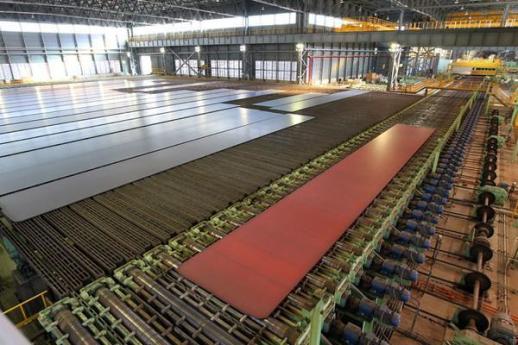 Steel and Shipbuilding Industries Agree on Mid-2026 Plate Prices The steel and shipbuilding industries have reached a final agreement on the supply price of thick plates for the first half of 2026, settling at a mid-800,000 won per ton level. This marks a slight increase from the low 800,000s recorded in the fourth quarter of last year. According to a report by Aju Economy on May 14, the negotiations for the first half of 2026 have recently concluded. The discussions typically proceed with POSCO finalizing agreements with the three major shipbuilders, after which other steel companies, including Hyundai Steel, complete their negotiations. While negotiations are usually held quarterly, this year’s talks extended over a longer period, culminating in a price agreement that encompasses both the first and second quarters. Thick plates, which are steel products with a thickness of 6 mm or more, play a significant role in ship manufacturing, accounting for 20% to 30% of shipbuilding costs. This round of negotiations was prolonged due to the opposing stances of the steel and shipbuilding sectors. Heightened global uncertainties, stemming from conflicts in the Middle East and tariff risks from the U.S., made it difficult for both sides to concede. The steel industry has maintained that, considering the rising costs of raw materials, industrial electricity rates, and logistics, a price increase was unavoidable. In fact, recent surges in iron ore prices, oil prices, and shipping costs have exacerbated cost pressures each year. Conversely, the shipbuilding industry has expressed concerns over rising costs, advocating for price freezes or reductions. Although profitability has significantly improved due to a recent surge in orders, they argue that increases in plate prices directly impact shipbuilding costs, necessitating minimal price hikes. Industry analysts view this agreement as a realistic compromise given the significant burdens faced by both sides. While the steel industry has succeeded in defending prices to a certain extent, it did not achieve the expected level of increases, and the shipbuilding sector could not completely avoid rising cost pressures. Following the conclusion of the first half negotiations, the steel and shipbuilding industries are reportedly set to begin discussions for the second half of 2026 immediately. With ongoing external variables such as fluctuations in iron ore prices, exchange rates, and global trade uncertainties, the outlook for the second half negotiations is expected to be challenging.* This article has been translated by AI. 2026-05-14 19:48:20
 -
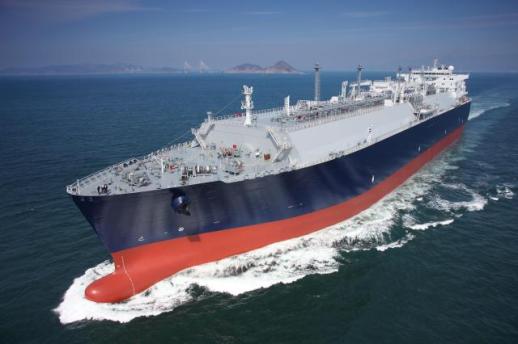 Samsung Heavy Industries Secures $750.5 Million Contract for Two LNG Carriers Samsung Heavy Industries announced on May 14 that it has secured a contract worth 750.5 billion won ($750.5 million) for two liquefied natural gas (LNG) carriers from a shipping company in the Oceania region. This order, along with the LNG-FSRU contract disclosed on May 4, underscores Samsung Heavy Industries' commitment to strengthening its competitiveness in the LNG value chain lineup. Since the beginning of this year, Samsung Heavy Industries has been on a robust order streak, driven by a selective order strategy focused on eco-friendly and high-value vessels. This has heightened expectations for achieving its annual order target. To date, Samsung Heavy Industries has secured a total of 19 vessels, including nine LNG carriers (one LNG-FSRU), two ethane carriers, two gas carriers, two container ships, and four oil tankers, amounting to $3.9 billion. This figure represents approximately 68.4% of its annual target of $5.7 billion for new ship orders, achieving more than two-thirds of its goal before the first half of the year concludes. Industry experts believe that the recent supercycle in shipbuilding is likely to sustain the trend of LNG-focused orders for the foreseeable future. Consequently, there are optimistic projections for additional orders for Samsung Heavy Industries in the second half of the year. In particular, the growing demand for eco-friendly vessels globally has renewed interest in LNG-related ship types. As the proportion of high-value vessels increases and stable workloads continue, expectations for improved profitability are also rising. A representative from Samsung Heavy Industries stated, "With the recent orders for LNG carriers following the LNG-FSRU, the momentum in LNG vessel orders is gaining strength. We will continue to pursue selective orders focused on profitability across all areas of the LNG value chain to maintain this upward trend in orders."* This article has been translated by AI. 2026-05-14 12:55:56
 -
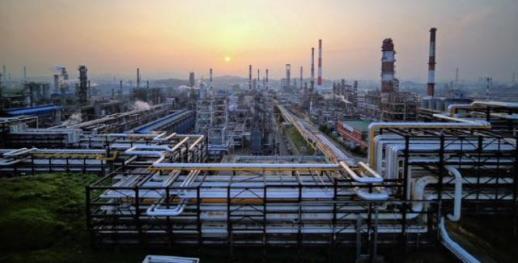 SK Innovation Reports $1.6 Billion Operating Profit in Q1 Amid Rising Oil Prices SK Innovation reported a return to profitability in the first quarter, driven by increased inventory-related profits amid soaring oil prices due to conflicts in the Middle East. In a disclosure on May 13, SK Innovation announced that it achieved revenues of 24.2 trillion won (approximately $18.3 billion) and an operating profit of 2.16 trillion won (about $1.6 billion) for the first quarter. These figures represent increases of 4.54 trillion won and 1.87 trillion won, respectively, compared to the previous quarter. Year-over-year, revenues rose by 3.19 trillion won, and the company returned to profitability. The improvement in first-quarter results was significantly influenced by the lagging effect between crude oil imports and petroleum product sales, as well as increased inventory-related profits. SK Innovation stated, "The operating profit of SK Energy, which operates in the refining sector, saw a substantial increase compared to the previous quarter due to the lagging effect of rising oil prices and increased inventory-related profits. However, these gains are reflected as accounting figures and may diminish or disappear in the event of falling oil prices in the future." The company revealed that approximately 60% of SK Energy's total operating profit of 1.28 trillion won (around $960 million) for the first quarter came from inventory-related profits, amounting to about 780 billion won (approximately $580 million). SK Energy's operating profit increased by 1.05 trillion won compared to the previous quarter, largely due to the surge in oil prices resulting from the blockade of the Strait of Hormuz amid regional conflicts. SK Geo Centric also returned to profitability in the first quarter, benefiting from inventory effects due to rising naphtha prices. The profitability of aromatic products improved due to scheduled maintenance of regional paraxylene facilities and the partial resumption of benzene exports. Despite a decline in margins due to rising oil prices, SK Enmove reported a 7.4 billion won increase in operating profit compared to the previous quarter, thanks to inventory effects. SK Earth On saw a 39 billion won increase in operating profit due to improved composite selling prices driven by rising oil and gas prices. The battery division continued to experience losses, with SK On reporting first-quarter revenues of 1.79 trillion won (approximately $1.35 billion) and an operating loss of 349.2 billion won (about $260 million). The company plans to enhance long-term profitability by stabilizing operations at its European production base and expanding orders for North American energy storage systems (ESS), anticipating favorable conditions from local production incentives and strengthened subsidies in Europe. Additionally, SK Incheon Petrochemicals reported revenues of 3.15 trillion won and an operating profit of 647.1 billion won; SK On Trading International reported revenues of 15.11 trillion won and an operating profit of 156 billion won; SK IE Technology reported revenues of 359 billion won and an operating loss of 732 billion won; and SK Innovation E&S reported revenues of 36.96 trillion won and an operating profit of 283.2 billion won. Looking ahead to the second quarter, SK Innovation plans to operate flexibly in response to global uncertainties stemming from the Middle East conflicts. The chemical industry will address oil price volatility risks through strategic inventory management and optimized marketing. Despite uncertainties from the Middle East conflicts, the lubricants business is expected to see improved spreads due to supply disruptions among competitors and raw material supply issues. With heightened interest in supply stability amid geopolitical risks, the company aims to secure profitability based on its differentiated competitiveness from multiple production bases. Seo Geon-ki, head of SK Innovation's finance division, stated, "With the expansion of global geopolitical risks, the volatility and uncertainty in the energy market are greater than ever. We will strive to secure stable profitability based on operational optimization and competitive business portfolio while continuing to play a responsible role in ensuring stable supply of domestic petroleum products and maintaining energy supply chains." * This article has been translated by AI. 2026-05-13 18:50:59
 -
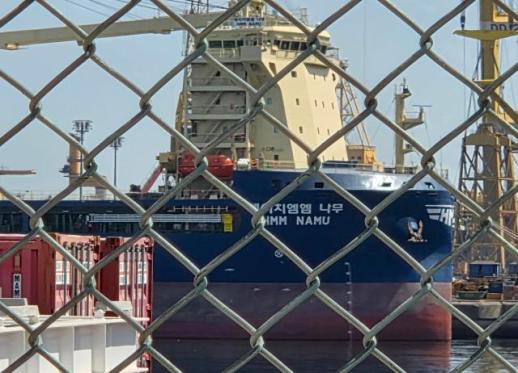 Concerns Rise Among Crew of HMM Namoo After Attack in Middle East The South Korean government has officially announced that the cause of the fire on the HMM Namoo was due to an "external impact," heightening tensions within the domestic shipping industry. Concerns are growing that other vessels waiting near the Strait of Hormuz could also become targets, leading to calls for measures to protect crew members and evacuate ships. As of May 11, crew members of the Namoo are reportedly waiting on-site while investigations and inspections are conducted. Although there have been no requests for collective disembarkation or significant unrest, the prolonged state of tension has resulted in considerable psychological stress and fatigue among the crew. Jeon Jeong-geun, chairman of the HMM Maritime Union, stated, "The crew of the Namoo is waiting calmly, but they appear to be under significant psychological pressure and shock. Disembarking from a war-risk area is a legitimate right for the crew, and we are prepared to facilitate immediate rotations if requested." HMM has also indicated that it will expedite crew rotations for those who wish to disembark. The company noted, "We are currently focused on the ship's repairs and the investigation, and if any crew members wish to rotate, we will proceed immediately." However, the challenge lies in the difficulty of executing crew rotations. Given the uncertainty of potential further attacks, finding replacements willing to enter a conflict zone is proving to be a complex issue. As the ongoing conflict in the Middle East has led to prolonged maritime waiting periods, there is a growing trend among crew members to avoid assignments on Middle Eastern routes. An industry insider remarked, "Initially, many crew members were willing to take on Middle Eastern assignments due to high war-risk allowances and wages, but the atmosphere has changed dramatically since the attack on the Namoo. Recently, families have been urging crew members to disembark or avoid Middle Eastern routes altogether." Currently, there are approximately 26 South Korean vessels and around 160 South Korean crew members in the vicinity of the Strait of Hormuz. The industry and government are monitoring the supply of essentials such as drinking water and food daily, but reports indicate that the psychological fear among crew members has reached critical levels. Shipping companies are also facing escalating financial burdens. The combination of difficulties in crew rotations, rising war insurance premiums, and increased fuel costs has led to soaring operational expenses. According to the Korea Shipping Association, the additional costs incurred by fleets stranded near the Strait of Hormuz are estimated to be around 400 million won per day. Particularly, the industry is closely watching the implications of the government investigation results on the global insurance market. With war insurance premiums and rates already rising for the region, the confirmation of actual attack incidents is expected to further increase the financial burden on shipping companies. Some are even raising concerns about a potential logistics shutdown originating from the Middle East. Kyu-hoon Koo, president of the International Logistics Association, stated, "Even if hostilities cease, supply chain disruptions and logistics delays will persist for some time. Given that the Middle East is a critical hub for global oil and logistics flows, any escalation of anxiety could have a cascading effect on the shipping and logistics markets as a whole."* This article has been translated by AI. 2026-05-12 04:02:39