
Journalist

Kim Bong-cheol
nicebong@ajunews.com
-
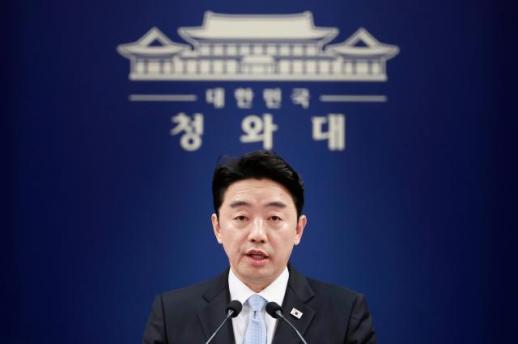 Chief of Staff Kang Hoon-sik Bars Any Election-Influencing Acts Ahead of June 3 Local Vote Kang Hoon-sik, the presidential chief of staff, on Sunday stressed that public officials must remain politically neutral ahead of the June 3 local elections. In a written briefing on a senior aides meeting chaired by Kang, Cheong Wa Dae Deputy Spokesperson Ahn Gwi-ryeong said Kang emphasized that officials must strictly refrain from any act that could influence the election. Kang said election-related involvement by public officials could undermine the fairness of the vote and public trust. He urged thorough oversight and inspections by relevant agencies, including the senior civil affairs office and police, to prevent violations of election law by public officials. Kang also addressed market-disrupting conduct such as hoarding as the Middle East war entered its 59th day. He said the government is securing alternative supply lines for crude oil and naphtha and has imposed anti-hoarding measures on closely related daily necessities, including petroleum products, urea solution and syringes. Kang said overall order has been maintained, but some cases of “antisocial behavior” aimed at making money have been found. He warned that the government will further strengthen inspections of unfair practices that exploit the crisis and respond forcefully to violations through swift investigations, strict punishment and the maximum level of administrative sanctions. Earlier, the Ministry of Food and Drug Safety found 32 distributors of syringes and needles suspected of hoarding, and the Industry Ministry’s nationwide inspections of gas stations confirmed 99 violations, including stockpiling and sales of counterfeit oil. Kang also said applications for high oil price relief payments for basic livelihood recipients, near-poverty households and single-parent families began Sunday. He called for cooperation between relevant ministries and local governments to ensure the payments are carried out without disruption.* This article has been translated by AI. 2026-04-27 18:32:16
 -
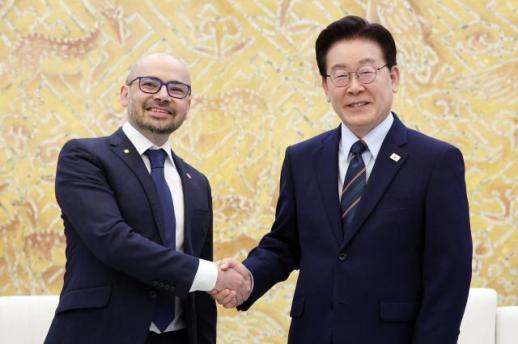 South Korea says Google to open AI Campus in Seoul; Lee discusses AI safety with DeepMind CEO Google will open a Google AI campus in Seoul within this year to expand cooperation with researchers and startups, South Korea’s presidential office said Sunday. Google DeepMind and the government also agreed to build a cooperation framework for “K-Moonshot,” a government project aimed at AI-driven innovation in science and technology. Cheong Wa Dae said President Lee Jae-myung met Demis Hassabis, Google DeepMind’s co-founder and CEO, to discuss ways to cooperate in artificial intelligence. The meeting was arranged as part of the government’s push to broaden global AI cooperation. Since taking office, Lee has met with OpenAI CEO Sam Altman, Nvidia CEO Jensen Huang and SoftBank Group Chairman Son Jeong-ui to discuss AI partnerships, the office said. The government also said it helped lead adoption of an “AI initiative” at last year’s APEC meeting in Gyeongju and is working with international organizations including the World Health Organization, the U.N. Development Programme and the International Telecommunication Union to establish a “global AI hub” in South Korea. During the meeting at Cheong Wa Dae, Lee said he has strong interest in AI and that the country is investing heavily, but questioned whether AI will be used “only in a direction that helps improve human welfare” or could move toward “attacks on humans” or harming peace. Hassabis said Lee had raised an important issue and said AI should be actively used to advance science and in medical fields. If used properly, he said, it could bring major benefits to people worldwide. Hassabis led DeepMind’s work on the 2016 Go match between Lee Sedol and the AI program AlphaGo. He also developed AlphaFold, an AI model for predicting protein structures, and won the Nobel Prize in Chemistry two years ago. Hassabis said AlphaGo helped validate the technology and became a starting point for tackling harder problems. He said the lessons were expanded into science and medicine, citing AlphaFold as a key example that helped researchers understand diseases in greater detail. Lee, referring to Google’s generative AI service Gemini, said he uses it often but that it sometimes does things he did not ask for, and asked whether it was a kind of bug. Hassabis said foundation models can veer in a different direction if guidance is not precise, and said “guardrails” must be built in when using and developing AI. He said as AI becomes more powerful, it will gain autonomy as “agent AI,” and that strong safety controls will be essential if the era of artificial general intelligence, or AGI, arrives. After the meeting, Policy Office Chief Kim Yong-beom told a briefing that the two held an in-depth discussion on rapid advances in AI, where the technology is headed and ways to strengthen global cooperation on responsible AI. Kim said Hassabis predicted that within five years — as early as 2030 — AGI capable of exercising all human cognitive abilities could become visible. Lee and Hassabis also exchanged views on job changes and distribution issues driven by AI, Kim said. Lee raised the need to prepare for unemployment and job disruption, while Hassabis said the impact is hard to predict and argued for a new economic model that rethinks the definition of work and redistribution of wealth. Kim said Lee asked whether now is the time for a basic income, noting he had discussed it for more than 20 years, and that Hassabis responded in a way that indicated agreement on the need. Kim said Hassabis also mentioned ideas such as the state providing housing, education, transportation and health services while incorporating capital-market principles, and linking gains from robot-driven productivity to support for workers. Kim said the government will pursue practical cooperation with DeepMind. He said Lee asked DeepMind to join as a key partner in efforts to establish a global AI hub through cooperation among the government, international organizations and companies so that everyone can share the benefits of AI advances. Kim said Google will also actively consider sending researchers to South Korea along with the AI campus. He said the government requested at least about 10 researchers and that Google agreed on the spot. Kim described the Seoul AI campus as a space where South Korea’s top scientists can freely use Google’s latest models for joint research, and where Korean researchers and Google researchers can conduct reciprocal work, including internships and hiring. Kim said the meeting was “completely unrelated” to issues involving Google Maps. Ahead of the meeting, Hassabis prepared a gift commemorating the AlphaGo match with Lee Sedol, presenting Lee with a Go board signed by both Hassabis and Lee Sedol. At the end of the meeting, Lee said he hoped that just as the AlphaGo match 10 years ago opened the AI era together with South Korea, they would work together over the next 10 to 20 years to build “AI for everyone” and a brighter future. Google attendees included Wilson White, vice president for global government affairs and public policy, and Yoon Koo, head of Google Korea. South Korean officials present included Science and ICT Minister Bae Kyung-hoon, Chief of Staff Kang Hoon-sik, Policy Office Chief Kim Yong-beom, Senior Secretary for AI Future Planning Ha Jung-woo, Protocol Secretary Kwon Hyuk-ki, National AI Policy Secretary Kim Woo-chang and spokesperson Jeon Eun-su. Hassabis is also scheduled to attend the “Google for Korea 2026” event in Seoul on April 29. He is set to hold a discussion with Lee Sedol and author Cho Seung-yeon on “10 years of AlphaGo, a vision of AI for everyone.”* This article has been translated by AI. 2026-04-27 18:27:08
 -
Google to Open AI Campus in Seoul This Year; Lee Says He Often Uses Gemini Google will open a Google AI campus in Seoul within this year to expand cooperation with researchers and startups. Google DeepMind and the government also agreed to build a cooperation framework for K-Moonshot, a government project aimed at AI-based innovation in science and technology. Cheong Wa Dae said on the 27th that President Lee Jae-myung met with Demis Hassabis, Google DeepMind co-founder and CEO, often called the “father of AlphaGo,” and discussed ways to cooperate in the AI field. The meeting was arranged as part of the government’s push to broaden global AI cooperation and work with top AI companies. Since taking office, Lee has met with OpenAI CEO Sam Altman, Nvidia CEO Jensen Huang and SoftBank Group Chairman Son Jeong-ui to continue AI-related cooperation, Cheong Wa Dae said. The government also led the adoption of an “AI initiative” at last year’s APEC meeting in Gyeongju and is working with international organizations including the World Health Organization, the U.N. Development Programme and the International Telecommunication Union to establish a “global AI hub” in South Korea. During the meeting at Cheong Wa Dae, Lee said, “I’m very interested in AI, and the country is investing a lot, but it’s hard to know whether it will go only in a direction that truly helps improve human welfare, or whether it could move toward attacking humans or harming world peace.” Hassabis replied, “You raised a really important topic,” adding, “I think AI should be actively used to advance science and in the medical field. If it is used properly, it looks like it could bring major benefits to people around the world.” Hassabis oversaw the 2016 match between Go champion Lee Sedol and the AI program AlphaGo. He also developed AlphaFold, an AI model for predicting protein structures, and won the Nobel Prize in Chemistry the year before last. He said AlphaGo showed that his team could validate the technology and that it became a starting point for tackling harder problems. He said the goal was to expand those lessons into science and medicine, citing AlphaFold as a leading example that helps researchers better understand diseases. Lee mentioned Google’s generative AI service Gemini, saying, “I use Gemini often, and sometimes it does things I didn’t ask it to do,” and asked whether that was “a kind of bug.” Hassabis said foundation models can veer in a different direction if the guidance provided is not precise, and said safety measures known as “guardrails” must be built in when using and developing AI. He added that as AI becomes more powerful, it will be given greater autonomy, sometimes called agent AI, and said safety controls will be essential if the world enters an era of artificial general intelligence, or AGI. 2026-04-27 17:21:18
-
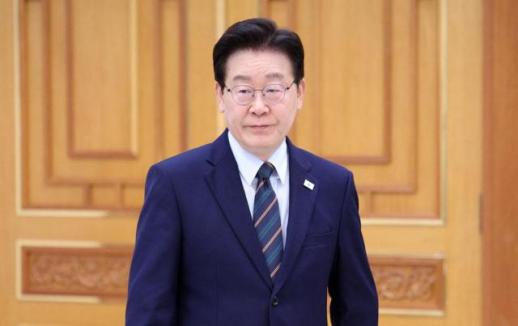 Lee reaffirms his rapprochement policy toward North Korea, urging Pyongyang to respond SEOUL, April 27 (AJP) - President Lee Jae Myung on Monday again reaffirmed his rapprochement toward North Korea for the peace and security of the Korean Peninsula. Lee said South Korea will "steadily push ahead with efforts toward peaceful coexistence on the Korean Peninsula," in a statement read by Hong Ik-pyo, senior presidential secretary for political affairs, at an event marking the eighth anniversary of an agreement signed during a historic meeting between the two Koreas at the border town of Panmunjom in April 2018. "We will proactively take steps to restore inter-Korean trust and achieve peace on the Korean Peninsula," the statement said, urging Pyongyang to respond. Lee added that building lasting peace on the peninsula for shared prosperity was the "core spirit" of the agreement and the future the two Koreas should pursue, stressing that peaceful coexistence has been his top priority since taking office in June last year and that he has taken steps to rebuild trust with the North. He also stressed that his administration has made clear its stance of recognizing and respecting North Korea's system, ruling out any scenario of forced absorption into the South and refraining from any hostile actions toward Pyongyang. "Even if winter is long, spring will come in the end," Lee said, expressing his belief that peace would eventually prevail. Meanwhile, former President Moon Jae-in urged North Korean leader Kim Jong-un to take a bolder approach and engage in talks with the U.S. The remarks were made at an event marking the anniversary at the National Assembly in Seoul later in the day. Moon, who made the trip to Seoul from his retirement home in Yangsan, South Gyeongsang Province, said, "True security cannot be guaranteed by military buildup, which would only deepen isolation and sever ties," adding that dialogue is "the fastest and safest way" to end hostility and bring peace to the peninsula. He also expressed hope for improved inter-Korean relations that could serve as a bridge for talks between Pyongyang and Washington, as they did eight years ago, and urged Trump to leverage his "unique decisiveness and wisdom" to bring the North back to the negotiating table. On April 27, 2018, Moon and Kim pledged to improve inter-Korean relations at their historic summit in Panmunjom, the border truce village within the demilitarized zone that has long symbolized the division of the peninsula. 2026-04-27 16:54:58
 -
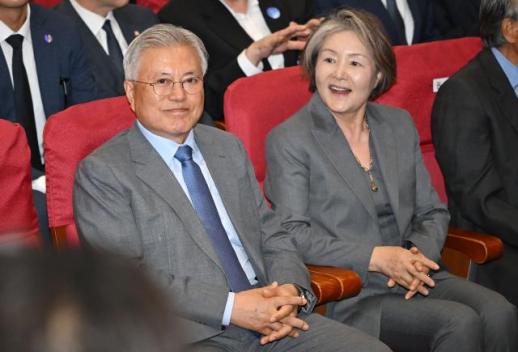 Moon Urges Kim Jong Un to Meet Boldly With Trump as Panmunjom Declaration Turns 8 Former President Moon Jae-in urged North Korean leader Kim Jong Un to “boldly sit down” with U.S. President Donald Trump, saying dialogue remains the quickest and safest way to break the current stalemate. Moon made the remarks in a commemorative speech on April 27 at the National Assembly Members’ Office Building during an event marking the eighth anniversary of the April 27 Panmunjom Declaration, hosted by the Democratic Government Korean Peninsula Peace Inheritance and Development Council and the Ministry of Unification. “True security cannot be guaranteed by building up military power and raising higher walls of isolation and severance,” Moon said. He said he hoped that, as eight years ago, improved inter-Korean ties could again serve as a bridge to U.S.-North Korea talks. “Inter-Korean dialogue will be the fastest and safest breakthrough to resolve the current deadlock,” he said. Moon also called on Trump to show “his unique decisiveness and wisdom” to bring North Korea back to the negotiating table. “Establishing peace on the Korean Peninsula is an especially difficult and arduous journey,” Moon said. But he argued that if the two Koreas overcome those challenges and build a “model of coexistence and peace” on the peninsula, it could become a major milestone for repairing a fractured world order. Moon said “the role of the Lee Jae-myung government is clear,” urging it to strengthen and carry forward past achievements while wisely overcoming earlier limits by starting a new “peace relay.” He said he “sincerely hopes” the stalled peace process will be restarted so the Korean Peninsula can become a place of sustainable peaceful coexistence and prosperity rather than confrontation. On April 27, 2018, Moon and Kim adopted the “Panmunjom Declaration for Peace, Prosperity and Unification of the Korean Peninsula” at an inter-Korean summit in Panmunjom, centered on improving inter-Korean relations and building a peace regime. * This article has been translated by AI. 2026-04-27 16:14:14
 -
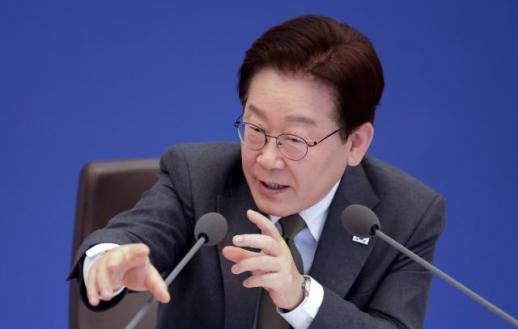 President Lee Jae-myung Vows Steady Push for Korean Peninsula Peaceful Coexistence Policy President Lee Jae-myung said Monday his government will "steadily push ahead" with its "peaceful coexistence policy on the Korean Peninsula." In a written congratulatory message read by Hong Ik-pyo, the presidential senior secretary for political affairs, at an event at the National Assembly Members' Office Building in Seoul marking the eighth anniversary of the April 27 Panmunjom Declaration, Lee said the government will "take the steps we can take first" to restore inter-Korean trust and advance peace. He added that he hopes North Korea will "trust the sincerity" of the government and respond. Lee said ending the war, establishing a permanent peace regime, and achieving coexistence and shared prosperity between the two Koreas are the declaration's core spirit and "the future we must pursue." He urged efforts to ensure uncertainty and anxiety in the international situation, driven by the war in the Middle East, do not spill over to the peninsula, and to build a path where all people on the peninsula can live without fear of war. He said the "people-sovereignty government" has made peaceful coexistence its top policy goal since taking office and has taken preemptive steps to rebuild trust. He said it has also made clear its principles of respecting the North's system, not pursuing unification by absorption, and refraining from any hostile acts. Hong said the government's peaceful coexistence policy presented in early February was based on those principles. "No matter how long the winter lasts, spring will come," Lee said, adding that if efforts toward peaceful coexistence and shared growth are built up "step by step," he firmly believes spring will return to the Korean Peninsula. * This article has been translated by AI. 2026-04-27 14:42:16
 -
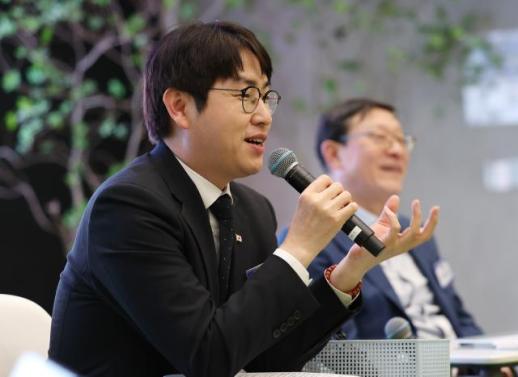 Ha Jung-woo Expected to Decide This Week on Running in Busan Buk-gap By-Election Ha Jung-woo, the presidential office’s senior secretary for AI (artificial intelligence) Future Planning, is expected to announce this week whether he will run in the National Assembly by-election in Busan’s Buk-gap district. The presidential office said Monday that Ha is likely to state his position soon after accompanying President Lee Jae-myung later in the day for talks at the presidential office with Demis Hassabis, co-founder and CEO of Google DeepMind. Ha is reported to be leaning toward entering the race after last-minute deliberations. Under the Public Official Election Act, a public official must resign by May 4 — 30 days before the vote — to run in the by-elections. Democratic Party leaders have repeatedly urged Ha to run in the Busan Buk-gap contest. Party leader Jung Cheong-rae met Ha the previous day and formally asked him to enter the race. Ha did not attend a sports event held by the alumni association of Gupo Elementary School in Busan’s Buk District, where other opposition-aligned contenders for the Buk-gap by-election were present, including Park Min-sik, a former minister of patriots and veterans affairs, and Han Dong-hoon, a former People Power Party leader. Separately, presidential spokesperson Jeon Eun-su is widely seen as the leading candidate for a strategic nomination in the by-election in Asan-eul, South Chungcheong Province. The seat became vacant in June last year when then-lawmaker Kang Hoon-sik was appointed presidential chief of staff as the Lee administration took office. Meanwhile, a Realmeter survey commissioned by Energy Economy Newspaper and conducted April 20-24 among 2,509 adults nationwide found Lee’s job approval rating at 62.2%, down 3.3 percentage points from the previous week. Realmeter said that despite positive signals such as outcomes from summits with India and Vietnam and the Kospi reaching a record high, the rating appeared to fall as the Middle East war pushed up oil prices and inflation, increasing pressure on household finances. The poll was conducted by automated response system (ARS) calls using randomly generated mobile numbers (100%). The response rate for the presidential job-approval question was 5.4%, with a margin of error of plus or minus 2 percentage points at the 95% confidence level. For party support, the response rate was 4.3%, with a margin of error of plus or minus 3.1 percentage points at the 95% confidence level. More details are available on the website of the National Election Survey Deliberation Commission.* This article has been translated by AI. 2026-04-27 09:57:16
 -
 Blue House swaps senior civil affairs and discipline aides; special inspection team moved The Blue House confirmed that its senior secretary for civil affairs and its senior secretary for public service discipline swapped posts on April 24. According to the Blue House, Lee Tae-hyeong, the senior secretary for civil affairs, and Jeon Chi-young, the senior secretary for public service discipline, began working in their new roles that day. The special inspection team, which had been under the public service discipline office, was also moved under the civil affairs office, officials said. The personnel switch within the same senior secretariat was seen as unusual. The Blue House did not disclose the reason for the changes. Separately, President Lee Jae-myung is set to meet Google DeepMind CEO Demis Hassabis at the Blue House on April 27 to discuss cooperation on artificial intelligence. Hassabis, a founder of Google DeepMind, oversaw the 2016 matches between Go champion Lee Sedol and the AI program AlphaGo. He also won the 2024 Nobel Prize in Chemistry for developing AlphaFold, an AI model that predicts protein structures. The Blue House said the meeting is part of the government’s broader push for global AI cooperation and is expected to help accelerate policy efforts through collaboration with a top-tier AI company.* This article has been translated by AI. 2026-04-25 00:33:17
 -
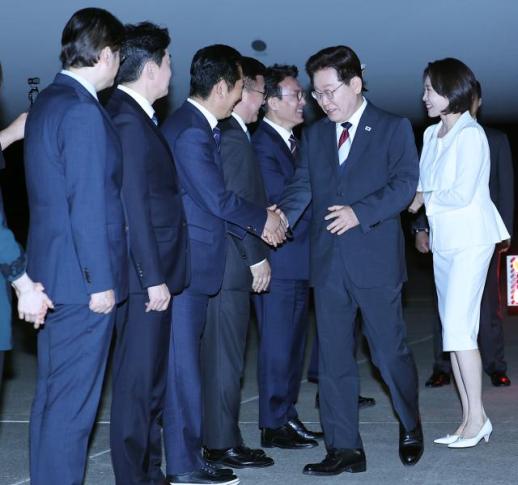 President Lee Jae-myung Returns to Seoul After State Visits to India and Vietnam President Lee Jae-myung returned to South Korea on April 24 after a six-day trip to India and Vietnam. Air Force One, carrying Lee, first lady Kim Hye-kyung and aides, arrived at Seoul Air Base in Seongnam, south of Seoul, at about 9:03 p.m. They were greeted by Democratic Party leader Jung Cheong-rae, Presidential Chief of Staff Kang Hoon-sik and Senior Presidential Secretary for Political Affairs Hong Ik-pyo. Prime Minister Kim Min-seok and Interior and Safety Minister Yoon Ho-jung also welcomed the couple. Lee and Kim stepped off the plane and shook hands with the officials. Lee began the trip in India on April 19, completing a two-night, three-day state visit. In talks with Indian Prime Minister Narendra Modi, the two sides agreed to expand cooperation in strategic industries including shipbuilding, artificial intelligence and defense. They also agreed to strengthen supply-chain cooperation by creating an industrial cooperation committee and speeding up negotiations to improve the Comprehensive Economic Partnership Agreement, and to continue coordination on global issues including the situation in the Middle East. From April 21, Lee made a state visit to Vietnam and held a summit with Communist Party General Secretary To Lam. They agreed to step up cooperation in future-oriented and strategic areas including trade and investment, energy and nuclear power, infrastructure, science and technology, and cultural and people-to-people exchanges. 2026-04-24 21:39:18
 -
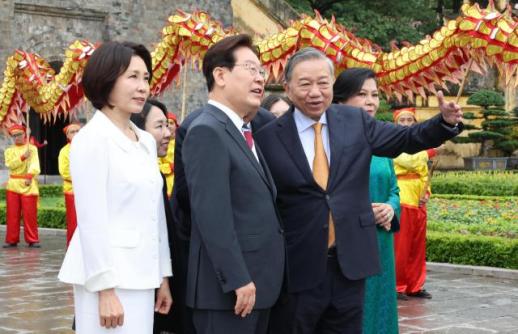 Lee Jae-myung Visits Hanoi’s Thang Long Imperial Citadel During Vietnam State Trip President Lee Jae-myung on April 24 (local time) visited Vietnam’s Thang Long Imperial Citadel, a cultural heritage site, with Vietnamese Communist Party chief and state president To Lam and his spouse as part of a friendship program. Lee, on a state visit to Vietnam, wore a tie featuring red and blue Taegeuk colors, while first lady Kim Hye-kyung wore a white two-piece outfit. The presidential office said the couple chose coordinated attire symbolizing a single Korean flag, expressing national pride and a desire to deepen friendship between the two countries. After arriving, Lee entered an artifacts exhibition hall, viewed traditional items and listened to explanations from citadel officials. He then moved with Lam to the rear garden of Kinh Thien Palace to watch performances, including a Vietnamese traditional lion dance troupe. In a briefing on April 23 at a hotel in downtown Hanoi, presidential office spokesperson Lee Kyu-yeon said the citadel, blending architectural styles from China, Vietnam and France, long symbolized Vietnam’s political center and was listed as a UNESCO World Cultural Heritage site in 2010.* This article has been translated by AI. 2026-04-24 14:07:27