
Journalist

Kim Bong-cheol
nicebong@ajunews.com
-
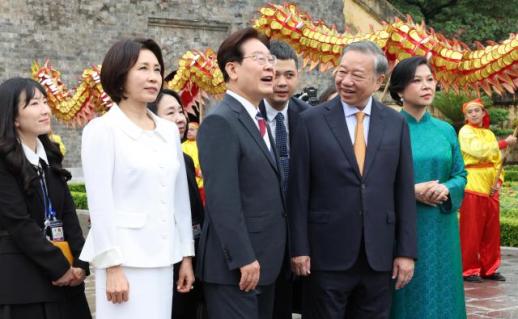 Lee’s tailored gifts to India, Vietnam highlight cultural ties and promote K-culture President Lee Jae-myung used what his office called “tailored gift diplomacy” during state visits to India and Vietnam, selecting items reflecting each leader’s cultural background, personal preferences and governing priorities. The presidential office said the gifts were intended to go beyond protocol, signaling cultural links and promoting Korean beauty and cultural industries. The presidential office on April 24 (local time) disclosed the gifts Lee presented to Indian Prime Minister Narendra Modi, Indian President Droupadi Murmu, and Vietnamese Communist Party chief and President To Lam and his wife. For Modi, Lee gave a bronze model of a pensive bodhisattva and an ink painting of a tiger. The office said the bodhisattva symbolizes cultural ties because Buddhist thought originated in India and later developed in Silla Korea, and it said Modi’s contemplative, philosophical reputation was considered. The tiger painting was chosen for symbolism shared by Korea and India, the office said. In Korea, the tiger represents authority, protection and good fortune, and in Hindu tradition it is also seen as a sacred protector. The office also cited India’s tiger conservation policy under “Project Tiger,” launched in 1973. Murmu received a Korean traditional meditation set and herbal skin care products. Citing her preference for meditation, the office said it selected a large cushion in the style of traditional patchwork cloth and hanji paper featuring a modern interpretation of dancheong patterns. The herbal skin care products were meant to showcase K-beauty, the office said, noting India’s growth potential as an emerging beauty market. In Vietnam, Lee presented Lam with a folk painting combining a haetae and a pine tree, along with a custom-made music frame. The office said the haetae symbolizes judging right from wrong and driving out injustice, while the pine represents strength and steadfast integrity, reflecting Lam’s governing emphasis on anti-corruption and clean government. The music frame is a speaker built into a picture frame featuring a caricature of Lam and his wife. It was specially made with Lam’s preference for classical music in mind, the office said. For Ngo Phuong Ly, Lee gave a set of National Museum of Korea goods, Korean beauty devices and a mother-of-pearl box decorated with butterfly and arabesque motifs. The office said it reflected her strong interest in official museum goods when she visited the museum during a state visit to South Korea in August last year. The mother-of-pearl box features butterflies symbolizing marital harmony and arabesque patterns symbolizing prosperity, the office said, adding it conveyed wishes for the couple’s health and happiness. The presidential office said it took special care in selecting the gifts to express friendship and trust between leaders. In a briefing at a hotel in Hanoi, presidential spokesperson Lee Kyu-yeon said, “On this trip as well, we expressed friendship and trust through thoughtful gifts for the leaders,” adding, “We prepared them with meaning, considering each leader’s disposition and governing priorities.”* This article has been translated by AI. 2026-04-24 12:57:20
 -
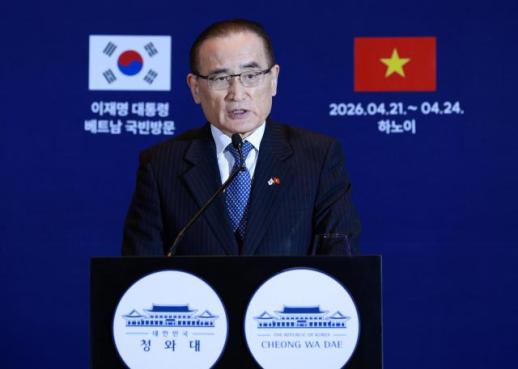 South Korea seeks quick return to normal U.S. cooperation after minister’s North Korea nuclear remarks Cheong Wa Dae said it is consulting with the United States to “return as soon as possible to a normal state of cooperation” following remarks by Unification Minister Jeong Dong-young about North Korean nuclear facilities. Wi, the national security office director, made the comments April 23 (local time) at a press center in Hanoi while meeting with the traveling press corps covering President Lee Jae-myung’s trip to India and Vietnam. Asked about the U.S. reaction to Jeong’s remarks, Wi said it could take time but the two sides should “sort out the current situation through communication.” Jeong said at a National Assembly Foreign Affairs and Unification Committee meeting on March 6 that North Korea is advancing its nuclear program and pointed to three locations — Yongbyon, Kangson and Kusong — as areas where uranium enrichment facilities are operating. The government and the International Atomic Energy Agency have officially confirmed Yongbyon in North Pyongan province and Kangson in Nampo, but Jeong also mentioned Kusong in North Pyongan. It has been reported that the United States viewed Jeong’s remarks as based on U.S.-provided intelligence and, in protest, partially suspended sharing satellite intelligence on North Korea. Lee defended Jeong in a post on X on April 20, calling the information “already widely known facts.” The main opposition People Power Party has said it will submit a motion recommending Jeong’s dismissal unless he is removed. Wi said Jeong has communicated directly with the United States and that he has also been in ongoing contact. He warned that if the issue becomes an excessive domestic controversy and political flashpoint, it could create obstacles to quickly stabilizing the situation and returning to the previous state. Wi described the dispute as a difference in perception. “The United States thinks he spoke using information they provided, and Minister Jeong says he obtained it from other open sources,” Wi said. He added that excessive controversy would not help and that it was important to consult, adjust and find a way forward. Still, Wi said coordination is necessary. “Some compare an alliance to a garden,” he said. “An alliance is a very close relationship, but it must be carefully coordinated and managed.” He again stressed that managing the U.S.-South Korea alliance requires avoiding turning issues into political disputes. Wi said Lee’s social media message was meant to reject arguments and debate based on the premise that Jeong “leaked information received from the United States.” Asked about limits on intelligence exchanges between the two countries after Jeong’s remarks, Wi said it was difficult to confirm or deny. Wi also suggested media coverage contributed to the issue escalating. He said the matter “became a big issue” after recent reporting, which drew political attention and prompted further statements, complicating the situation. Jeong, speaking to reporters after visiting Park In-jun, head of the Korean Conference of Religions for Peace, at Cheondogyo’s Suun Hall in Seoul’s Jongno district, criticized what he called the “intent” of those who “caused the problem.” He called it political maneuvering that harms the national interest. On the reported U.S. step to limit intelligence sharing on North Korea, Jeong said similar things had happened intermittently in the past without becoming public. “That’s the national interest — why stir up conflict?” he said. He did not identify who he meant by “those who caused the problem.” Wi also addressed a letter from 54 Republican U.S. lawmakers to Ambassador Kang Kyung-wha in Washington urging the South Korean government to stop what they called “discriminatory measures” against U.S. companies such as Coupang. Wi said it is true the Coupang issue is affecting security consultations between South Korea and the United States. He said the government has told the United States it will proceed on the Coupang matter “according to legal procedures” while advancing security negotiations separately. He added that security talks should resume quickly because the dispute does not help the alliance. Wi dismissed comments by the commander of U.S. Forces Korea and the Combined Forces Command about transferring wartime operational control by before the first quarter of 2029, calling them the commander’s personal view. Gen. Xavier Brunson told the U.S. House Armed Services Committee on April 22 (local time) that, in response to a question, “We submitted to the Department of Defense a roadmap to achieve those conditions before the second quarter of fiscal year 2029 (first quarter of 2029 by Korean standards)." On the timing of the transfer of wartime operational control, Wi said military considerations cannot be ignored but the transfer is ultimately a political decision. He said the leaders of both governments will decide and that South Korea will make its best efforts to complete the transfer as soon as possible without damaging the bilateral coordination framework. * This article has been translated by AI. 2026-04-24 12:06:30
 -
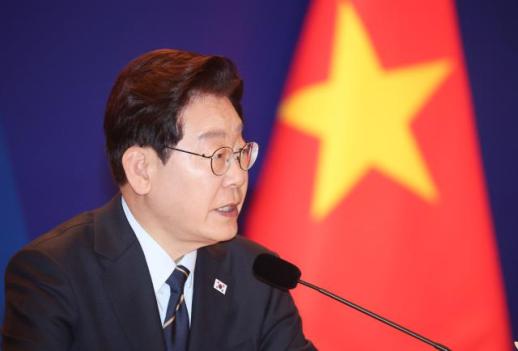 President Lee Calls Daejang-dong Coverage ‘Fabricated,’ Urges Korea Newspaper Award Revocation President Lee Jae-myung on April 24 called for revoking a Korea Newspaper Award given for reporting three years ago on the Daejang-dong development allegations, saying the work was not fact-finding but “massive fabrication.” Lee, on a state visit to Vietnam, wrote on X that the award jury said it honored the coverage because it “consistently uncovered powerful facts” in reporting on the Daejang-dong issue. He argued that the reporting “created” a reference to “that person, Lee Jae-myung” that was not in the Daejang-dong recordings, and claimed it helped defeat the Democratic Party’s presidential candidate in the last election and “changed the course of Korean history.” Lee said the country “moved backward,” people suffered “tremendous pain,” and the fallout continues. He said the outlet should return the award, apologize and correct the report, adding that there must never again be an attempt to change history through election manipulation by state power agencies and the media. The Korea Newspaper Association previously selected the DongA Ilbo legal affairs team’s “Daejang-dong development and illegal campaign funds allegations” as the 2023 winner in the news reporting category. The jury said at the time that the series “consistently uncovered powerful facts” in covering the Daejang-dong issue.* This article has been translated by AI. 2026-04-24 11:45:17
 -
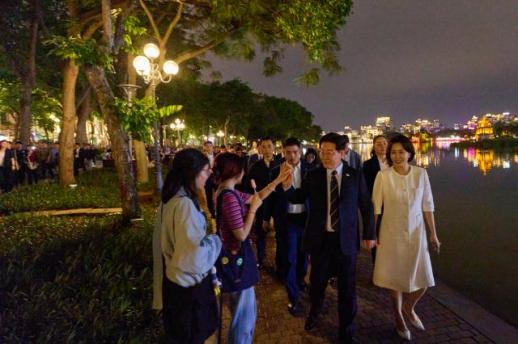 South Korea’s Lee Jae-myung and first lady take surprise walk in Hanoi, greet locals President Lee Jae-myung took a walk through central Hanoi and met Vietnamese residents, later stopping at a local restaurant with first lady Kim Hye-kyung for dinner of pho and fried rice. Lee, who is on a state visit to Vietnam, posted photos on Instagram from April 23 (local time) showing the couple walking the streets of Hanoi and greeting people. “Hanoi’s evening was truly beautiful, and as we walked around Hoan Kiem Lake and the alleys of the Old Quarter, we exchanged warm greetings with Vietnamese people,” Lee wrote. “It was even more meaningful because we could meet in everyday spaces, not in a formal schedule.” Hoan Kiem Lake is a major landmark in central Hanoi where residents relax and spend leisure time. Vietnamese residents welcomed the couple by calling out “Hello” and “Nice to meet you,” presidential office deputy spokesperson Ahn Gwi-ryeong said in a written briefing. Lee and Kim responded in Vietnamese, saying “Xin chao.” Lee patted the head of a Korean student attending elementary school in Vietnam and offered encouragement, while Kim said she was pleased to see a Korean-language sign posted on a shop wall. Lee sampled pork skewers and a sugarcane drink sold on the street and said they were “very delicious.” Kim described the sugarcane drink as “refreshing and impressive,” Ahn said. The couple also bought durian and shared it with aides. They then moved to a nearby restaurant for dinner. Ahn said Kim showed strong interest in local food culture, asking about ingredients after a vegetable similar to Korea’s dried radish greens was served with the fried rice. Posting a photo of the couple dining, Lee wrote, “They say you can’t go wrong at any restaurant in Vietnam, and that turned out to be true. Thanks to that, we’re enjoying a delicious dinner.” Lee added that the visit reminded him “hearts can connect even across different languages and cultures,” and said he would long remember the smiles and greetings they received. He said he hoped the two countries would continue building friendship and trust and expand exchanges. * This article has been translated by AI. 2026-04-24 11:04:07
 -
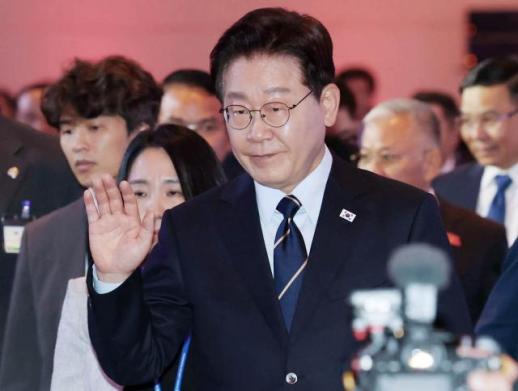 Lee Jae-myung says capital gains tax cuts for nonresidents encourage housing speculation President Lee Jae-myung said April 24 that cutting capital gains taxes simply because someone bought a home for investment and held it for a long time, without living in it, is not a housing protection policy but “a policy that encourages housing speculation.” He also criticized attacks over a bill introduced in the National Assembly to limit the special deduction for long-term holding, saying it is unrelated to the government but is being “manipulated” to look like a presidential proposal. Lee, on a state visit to Vietnam, posted on X, formerly Twitter, alongside an article saying markets were confused by controversy over “abolishing” the long-term holding deduction. His post was titled, “Where there is income, there are taxes. People pay earned income tax on wages, so it is natural to pay capital gains tax on housing sales income.” Lee said he agrees there is a need for capital gains tax relief tied to how long a person actually lives in a home. But he said it is wrong to cut taxes for those who do not live there and bought it as an investment simply because they held it for a long time. “Who are the people who spread ‘buy one prime home’ speculation centered on Seoul’s Gangnam, driving a chain reaction of surging home prices — and who are the people shielding them?” Lee wrote. “Is it a ‘tax bomb’ to normalize the abnormal practice of cutting taxes because someone speculated for a long time on a home they don’t live in?” He also criticized opposition to scaling back long-term capital gains tax benefits, saying, “It seemed quiet for a while, but it looks like forces that encourage real estate speculation are starting to move again.” Lee said a bill proposed by some opposition lawmakers to limit the long-term holding deduction is being portrayed as his initiative. “To properly protect housing for single-home owners, it would be right to reduce tax relief for nonresidency holding periods and increase relief for residency holding periods by that amount,” he wrote. Calling “normalizing the abnormal” and escaping real estate speculation “this country’s final survival strategy,” Lee added, “Home prices must stabilize so people can build a home, get married, and have and raise children.” He asked readers to share their views in comments. Separately, Lee’s approval rating, which had dipped slightly, rebounded in a week to a new high, the report said, citing the KOSPI index hovering around 6,500 and first-quarter economic growth of 1.7%. Gallup Korea said April 24 that in a survey of 1,001 voters nationwide aged 18 and older conducted April 21-23, Lee’s approval rating rose 1 percentage point from the previous week to 67%. The poll was conducted through computer-assisted telephone interviews. At a 95% confidence level, the margin of error was plus or minus 3.1 percentage points. More details are available on the website of the National Election Survey Deliberation Commission.* This article has been translated by AI. 2026-04-24 10:48:57
 -
 Blue House policy chief says Samsung strike talks not at breaking point Kim Yong-bum, the Blue House policy chief, said April 23 (local time) that he hoped talks would resolve the possibility of a strike by Samsung Electronics’ labor union. Speaking at a press center briefing in Hanoi, Kim was asked whether the government could step in to mediate if Samsung workers strike. “I hope it will be resolved wisely through dialogue,” he said. Kim added that he did not yet see it as a special problem, saying labor and management were “not at the stage of heading to extremes” and that he expected the issue to be settled. Asked whether President Lee had been briefed, Kim said he had reviewed what was reported at a meeting, but that the president did not separately comment on it. Earlier, the Samsung Electronics union held a rally of about 40,000 people demanding the abolition of a cap on performance bonuses and warned of a general strike. Kim also addressed the recent death of a union member at a rally by the Cargo Truckers Solidarity, saying he was concerned and was looking into it. He said it was “a great relief” that the Labor Ministry was communicating with the site.* This article has been translated by AI. 2026-04-23 22:36:21
 -
 Samsung’s Lee, LG’s Koo urge results, higher-quality growth at Korea-Vietnam forum President Lee Jae-myung’s state visit to Vietnam brought a large contingent of South Korean business leaders to a Korea-Vietnam business forum, underscoring efforts to deepen economic cooperation. The forum, hosted by Lee and Vietnamese Prime Minister Le Minh Hung, was held April 23 (local time) at a hotel in Hanoi. It drew key officials from both governments, an economic delegation of 109 South Korean companies, and about 500 participants from public institutions and the private sector. Attendees included Samsung Electronics Executive Chairman Lee Jae-yong; SK Group Chairman Chey Tae-won, who also heads the Korea Chamber of Commerce and Industry; LG Group Chairman Koo Kwang-mo; Lotte Group Chairman Shin Dong-bin; POSCO Holdings Chairman Chang In-hwa; HD Hyundai Vice Chairman Chung Ki-sun; GS Chairman Huh Tae-soo; Hyosung Chairman Cho Hyun-joon; Doosan Enerbility Chairman Park Ji-won; Daewoo Engineering & Construction Vice Chairman Jung Won-ju; Hyundai Motor Group President Sung Kim; and Naver CEO Choi Soo-yeon. Leaders of major business groups also attended, including Yoon Jin-sik of the Korea International Trade Association and Kim Ki-moon of the Korea Federation of SMEs. Before a closed-door session, Lee Jae-yong told reporters that “businesspeople should speak through results.” Koo said LG has operations in India and expressed hope that the trip would help business move forward. He noted that exchanges and corporate activity between South Korea and Vietnam are already extensive, adding that he hoped cooperation would advance “not only in quantity but also in quality.” Park of Doosan Enerbility said Vietnam is seeking to build nuclear power plants and that he came prepared to introduce his company. He said he planned to focus on the company’s track record during the forum. At the forum, Samsung Electronics, SK Innovation, the Korea Institute of Science and Technology and the Korea Institute for International Economic Policy discussed ways to upgrade an “industry, investment and science-and-technology partnership.” The talks focused on four areas: nurturing advanced talent, energy, AI transformation and science and technology. On talent development, Na Ki-hong, head of Samsung Vietnam’s strategic cooperation office, introduced cases of manufacturing-innovation consulting and smart-factory support. He also outlined plans to expand “future technology education for youth” to cultivate next-generation talent. Cooperation in AI transformation and energy infrastructure was also discussed. SK Innovation CEO Choo Hyung-wook stressed the importance of power infrastructure for building an AI ecosystem and shared a roadmap for ongoing cooperation projects, including the Quynh Lap LNG power project. Science-and-technology cooperation to support future industries also drew attention. KIST President Oh Sang-rok presented a vision linking talent, technology and industry and proposed a strategy combining South Korea’s maturity with Vietnam’s dynamism. Vietnamese presenter Nguyen Trung Chinh, chairman of CMC, also shared strategies for innovation in advanced industries based on AI and science and technology, calling for stronger technology partnerships. In opening remarks at a prior meeting, President Lee said economic cooperation between South Korea and Vietnam was increasingly important amid rising global uncertainty. He highlighted the need to strengthen supply-chain links in energy-related areas, including rare earths and urea solution, which are essential for advanced industries. Lee said Vietnam needs efficient power distribution networks, including LNG power plants and nuclear power, to support a stable industrial environment. He urged the business leaders gathered to serve as a cornerstone for opening new horizons of cooperation. In a speech, Lee again emphasized the need for closer economic ties, laying out visions for future advanced industries, supply-chain and energy cooperation, and science-and-technology collaboration. “Because we have firm trust and friendship, South Korea and Vietnam can grow together without wavering in the face of any crisis and design the future,” Lee said. “Just as Vietnam’s leap was South Korea’s growth, Vietnam’s future will now be South Korea’s future.” Citing a saying by Vietnam’s late leader Ho Chi Minh — “respond to all changes with what does not change” — Lee said the unchanging friendship built over more than 30 years is the surest answer to complex changes ahead. He pledged that the South Korean government would serve as a “reliable compass and support” so companies in both countries can navigate challenges and write a new era of prosperity. The Korea Chamber of Commerce and Industry said 74 memorandums of understanding were signed at the forum between companies from the two countries in areas including advanced technology, consumer goods, infrastructure, energy and finance. Key areas included AI data centers and digital infrastructure; energy such as nuclear power and power-grid construction; production bases for secondary batteries and advanced materials; smart cities and infrastructure development; and finance and investment. SK Innovation and SK Telecom signed MOUs with Vietnam’s National Innovation Center on building an “AI data center and ecosystem,” and separately with Nghe An province on “AI infrastructure,” expanding cooperation on future infrastructure. Daewoo Engineering & Construction also signed an MOU with Vietnam’s SaigonTel to jointly develop a data center project and participate in construction. Cooperation on secondary batteries and advanced materials also advanced. POSCO Future M said it completed approval procedures with Thai Nguyen province to build a plant for artificial graphite anode material, a key secondary-battery material, and moved to build a supply chain. In energy, cooperation drew on South Korea’s nuclear technology and experience building power grids. Doosan Enerbility signed agreements with Vietnamese companies PTSC and PETROCONs on cooperation related to new nuclear power plants in Vietnam. Taihan Cable & Solution signed an MOU with Vietnam’s Newtecons on upgrading power grids and cooperating on extra-high-voltage cable projects, aiming to expand technical partnerships for local energy infrastructure. 2026-04-23 22:27:19
 -
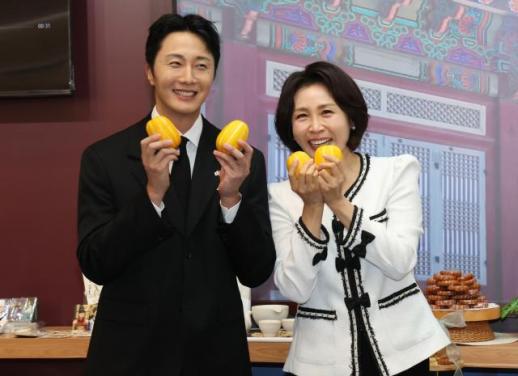 First lady Kim Hye-kyung promotes K-culture during Vietnam state visit Kim Hye-kyung, the wife of President Lee Jae-myung, on April 23 (local time) cast herself as a “K-culture ambassador” during the couple’s state visit to Vietnam. At the K-Culture Tourism Expo at Lotte Mall West Lake in Hanoi, Kim said culture, including film, is “the warmest link that connects people beyond language and borders,” adding that such exchanges will deepen understanding and friendship between the two countries. According to a written briefing by presidential deputy spokesperson Ahn Gwi-ryeong, the expo was organized by the Korea Tourism Organization and others to let visitors experience the K-culture wave spreading in Vietnam across areas including content such as dramas, food, beauty products, heritage and travel. The event runs from April 23 to 26. Lotte Mall West Lake Hanoi is Vietnam’s largest shopping and entertainment complex and is often described as “Korea in Vietnam” and a hub for K-lifestyle. Since opening in September 2023, it has logged more than 25 million cumulative visitors. Wearing a hanbok, Kim toured indoor pop-up zones with actor Jung Il-woo, who appeared in the Korea-Vietnam co-produced film “I’m Going to Abandon My Mom” and is nicknamed “Vietnam’s son-in-law” locally. Kim visited a K-content and K-food pop-up zone themed around the drama “The Tyrant’s Chef,” viewing costumes and props associated with a royal chef from the Joseon era. Guided by chef Ji Jun-hyeok, the first Korean to be listed in the Vietnam Michelin Guide in 2023, she joined a hands-on session making dishes featured in the drama. “I'm looking forward to what new flavors might come out when Vietnamese ingredients are added,” Kim said as she made bibimbap with visitors, mixing rice with water spinach and other vegetables, gochujang and butter. She also finished macarons using Korean black sesame and Vietnamese condensed milk, then handed them out to Vietnamese attendees. At a traditional K-food zone, she heard explanations of persimmon leaf tea, ginseng and yakgwa, and sampled yakgwa. After tasting fruit punch made with Korean melons and strawberries and Vietnamese mango, Kim said, “With all the delicious fruit, it’s even more balanced, and the Korean melon is especially fresh and cool.” She added that she could feel the local popularity of Korean melons, now in their second year of exports to Vietnam. At the K-beauty zone, Kim looked over Korean cosmetics and tried products with visitors. She also visited K-heritage and K-travel zones, along with outdoor K-webtoon and K-game pop-ups. Earlier in the day, Kim drew attention by wearing a pink ao dai. At the Vietnam Museum of Ethnology in Hanoi, she met Ngo Phuong Ly, the wife of Vietnam’s Communist Party general secretary, for a spouse-to-spouse cultural event. Ly told Kim she had seen photos posted on social media and said the ao dai suited her, “like a Vietnamese girl.” Kim replied that Ly looked “even more beautiful” when she wore a hanbok last year. With guidance from the museum director, the two viewed artifacts, models, photos and videos depicting the traditional culture and daily life of Vietnam’s 54 ethnic groups. When Ly asked for explanations, Kim described spaces one by one, including a hanok’s sarangbang and an apartment kitchen. Seeing a traditional gat hat in the sarangbang, Kim noted that the “Saja Boys” wore gat hats in the Netflix animated film “K-pop Demon Hunters.” They also watched a water puppet show, a representative Vietnamese intangible cultural heritage. At the end, puppets in an ao dai and a hanbok danced together, symbolically showing harmony between the two countries. Ahn said the two discussed shared interests including cultural cooperation and people-to-people exchanges, and greeted foreign tourists at the museum. Kim said she hoped efforts to respect and share each other’s traditions — like the hanbok and ao dai — would help bring the two peoples closer. Separately, President Lee’s social media carried thanks for the ao dai gift. The presidential office’s second annex posted on Instagram a message from Kim saying, “Madam Ly, thank you sincerely for sending such a precious gift,” adding that the “beautiful pink ao dai” conveyed Vietnam’s distinctive beauty and that she would cherish the warm sentiment. * This article has been translated by AI. 2026-04-23 21:49:42
 -
 South Korea Says Lee’s Vietnam Trip Deepens Energy, Infrastructure Cooperation The presidential office said Thursday (local time) that President Lee Jae-myung’s state visit to Vietnam produced agreement to upgrade cooperation in areas including infrastructure and energy. National Security Adviser Wi Sung-lac said at a briefing at a press center in Hanoi that Lee and To Lam, Vietnam’s Communist Party general secretary and state president, shared the view at their summit the previous day that the two countries are each other’s most reliable partners in driving development. Wi said the trip expanded exchanges into future-oriented areas and helped raise the quality of bilateral cooperation. To Lam was reported to have welcomed participation by South Korean companies in Vietnam’s energy transition, including nuclear power plant construction. Asked about specific projects such as the Ninh Thuan nuclear power plant project in central Vietnam, Wi said discussions remain at an early stage and both sides are reviewing feasibility and risks. Doosan Enerbility was reported to have signed an MOU with two Vietnamese state-owned companies to cooperate on nuclear power projects. The leaders also discussed supply chains for critical minerals. Wi noted Vietnam ranks fifth to sixth globally in rare earth reserves and said the two sides would broaden cooperation through efforts such as a “Korea-Vietnam Critical Minerals Supply Chain Technology Cooperation Center.” On defense industry cooperation, Wi said there were no “overwhelming” results, but the two sides agreed to explore expanding technology cooperation, joint production and joint development. Wi said the leaders also exchanged views on international affairs, including the Iran war. He said both sides recognized that supply chains have faced disruptions and that Vietnam is also experiencing difficulties related to oil, adding that the two countries would pursue ways to support each other on such issues. Wi said the leaders agreed to strengthen joint efforts for peace and prosperity in the international community and shared the view that peaceful coexistence on the Korean Peninsula serves the common interest of the international community. 2026-04-23 18:13:00
 -
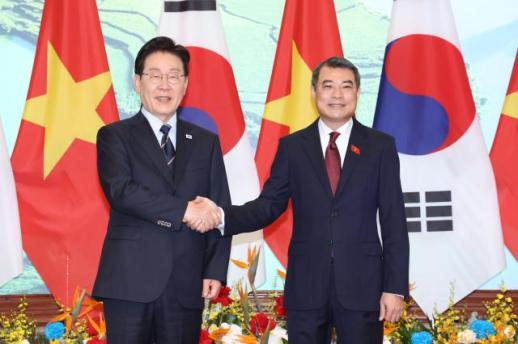 South Korea’s Lee Meets Vietnam’s Prime Minister, National Assembly Speaker on Cooperation South Korean President Lee Jae-myung met Thursday (local time) with Vietnamese Prime Minister Le Minh Hung and National Assembly Speaker Tran Thanh Man, the country’s No. 2 and No. 3 leaders, to discuss ways to strengthen bilateral cooperation. The meetings followed Lee’s talks the previous day with To Lam, Vietnam’s top leader, the Communist Party general secretary and state president, completing two days of meetings with the country’s newly formed leadership. At the prime minister’s office in Hanoi, Lee asked for support to expand strategic cooperation in areas he described as new growth engines for economic development, including nuclear power, transportation infrastructure and energy, saying the two countries could build a new “Red River miracle” together. Lee said he believed the prime minister would provide strong support so South Korean companies could invest with confidence, and expressed hope the talks would further deepen economic cooperation in line with the countries’ close partnership and lead to shared prosperity. Hung said Vietnam is focused on carrying out strategic tasks to achieve rapid and sustainable national development. He said Vietnam aims to become a high-income developing country with modern industry by 2030 and a high-income advanced country by 2045. Hung also formally invited Prime Minister Kim Min-seok to visit Vietnam. Lee later met Tran at the National Assembly building and said he hoped exchanges between the two legislatures would expand so bilateral cooperation could be supported institutionally. He asked for the Vietnamese National Assembly’s active role in ensuring ties continue to develop steadily. Lee said South Korea and Vietnam have built an unusually fast-growing, mutually beneficial partnership based on trade, investment and active people-to-people exchanges. He said bilateral trade has increased 190-fold and people-to-people exchanges 2,400-fold compared with the time the two countries established diplomatic relations in 1992. Lee said the two countries are among each other’s top three trading partners and that South Korea is Vietnam’s largest source of foreign investment, adding that consistent support from the Vietnamese National Assembly helped make those results possible. Tran said Lee’s trip was his first visit to Vietnam since taking office and a state visit taking place after Vietnam’s 16th National Assembly was newly formed, reflecting Vietnam’s special emphasis on relations with South Korea.* This article has been translated by AI. 2026-04-23 17:49:35