
Journalist

Kim Bongcheol
nicebong@ajunews.com
-
 South Korea Says It Is Consulting Iran on Korean Ships’ Passage Through Strait of Hormuz Cheong Wa Dae said Tuesday it is actively seeking ways to resolve navigation issues involving South Korean vessels in the Strait of Hormuz, including through consultations with the Iranian government. Senior presidential spokesperson Kang Yu-jung made the remarks at a briefing at the Chunchugwan press center, responding to a question about whether there had been progress for South Korean ships after reports that a Japanese tanker had made its first passage through the strait with Iranian authorization. Kang said the matter requires consideration of multiple factors, including ship safety and the position of the shipping company, and noted that more than one country is often involved, requiring broad communication and cooperation. She added that the South Korean government maintains that, within international norms, freedom of navigation and safety must be guaranteed for all vessels in the Strait of Hormuz, including South Korean ships, and said talks are underway based on that position. According to foreign media reports, a Japanese tanker was confirmed to have transited the Strait of Hormuz on the morning of April 28 local time.* This article has been translated by AI. 2026-04-29 18:01:16
 -
 South Korea Trains 10 UAE Presidential Guard Officers in Four-Week Protection Course The Presidential Security Service said it provided four weeks of commissioned training for 10 protection officers from the UAE Presidential Guard Command, running from late last month through April 24. The service said on April 29 the program was held at its Security and Safety Training Institute in Seoul’s Gangseo District and other sites. It said the curriculum was tailored to UAE requests while incorporating the agency’s protection capabilities. Weeks 1 and 2 covered protection theory and core skills, while weeks 3 and 4 focused on advanced training and response drills. The Presidential Security Service and the UAE Presidential Guard Command have conducted commissioned training 14 times since 2010, the service said, building a close cooperation framework. Including those sessions, the institute has provided 55 commissioned training programs since 2006 for overseas protection agencies, including those from Uzbekistan, Cambodia, Qatar, Kuwait, Vietnam, Indonesia, Jordan, Russia and Mongolia, it said. A UAE Presidential Guard Command official said, “We express our deep gratitude to the Presidential Security Service for providing an excellent course through systematic planning and high-quality operation.” The official added, “Based on the cooperation and exchanges of experience built so far, we hope the scope of cooperation between the two countries’ protection agencies will further expand and develop.” PSS Chief Hwang In-kwon said the UAE is a key partner that has a “special strategic partnership” with South Korea, and he hoped the training would further strengthen security cooperation. He said the service would continue “protection diplomacy” by sharing “K-security” capabilities to help build trust between countries. * This article has been translated by AI. 2026-04-29 17:21:39
 -
 Lee orders review to allow high-oil-price aid at gas stations with over 3 billion won in sales President Lee Jae-myung on April 29 ordered a review of allowing high-oil-price relief funds to be used at gas stations with annual sales of more than 3 billion won. Lee Kyu-yeon, the presidential office’s senior secretary for public relations and communication, said in an afternoon interview on KBS radio’s “All Politics in the World” that Lee directed aides to consider easing the rules. “Because it’s high-oil-price relief funds, we thought people should at least be able to put in gas, so he told us to review a direction to loosen it,” he said. The relief funds are currently limited mainly to small merchants such as traditional markets and neighborhood shops, and can be used only at businesses with annual sales of 3 billion won or less. Complaints were raised over restrictions at some gas stations, prompting the president to order a review of possible changes. Lee said the sales cap was designed to support small businesses and struggling people, adding that “if that’s the purpose, it’s right not to use it at gas stations with more than 3 billion won” in sales. But he said the program’s name could invite criticism: “Because it’s ‘high-oil-price’ relief funds, people can say, ‘Why can’t I buy gas?’” He said that as complaints emerged, the president asked senior secretaries to share their views. A presidential office official told reporters at the Chunchugwan press center that media reports highlighted the issue and that the president “accepted in a forward-looking way” that people could misunderstand it. The official said the program is livelihood support related to high oil prices, not a fuel subsidy, but that the name could still cause confusion. The president therefore asked aides to review a temporary easing of the criteria so the funds could be used regardless of business size. * This article has been translated by AI. 2026-04-29 17:13:12
 -
 Lee hosts lunch with minor-party, independent lawmakers, urges broader view in politics President Lee Jae-myung on April 29 invited lawmakers from minor parties and independents to the Blue House for a lunch meeting, including the Rebuilding Korea Party, the Progressive Party, the New Reform Party and the Social Democratic Party. Lee previously met leaders of both major parties at a Jan. 16 lunch that also included leaders of minor parties. On April 7, he held a meeting and lunch of a ruling-opposition-government consultative body on the people’s economy with Democratic Party leader Jung Cheong-rae and People Power Party leader Jang Dong-hyeok. It was the first time Lee invited all lawmakers from minor parties outside the negotiating blocs, along with independents, to a lunch meeting, the presidential office said, calling it a sign of his intent to communicate inclusively. Twelve lawmakers from the Rebuilding Korea Party attended, including floor leader Seo Wang-jin. The Progressive Party sent four lawmakers led by floor leader Yoon Jong-oh. The New Reform Party was represented by floor leader Cheon Ha-ram and lawmaker Lee Ju-young. Social Democratic Party leader and floor leader Han Chang-min attended, along with independent lawmakers Kim Jong-min and Choi Hyuk-jin, for a total of 21 lawmakers. New Reform Party leader Lee Jun-seok did not attend due to a scheduled visit to Busan and Ulsan. Basic Income Party leader Yong Hye-in also did not attend because of a standing committee review schedule for the Framework Act on Life Safety. From the presidential office, Chief of Staff Kang Hoon-sik and Senior Secretary for Political Affairs Hong Ik-pyo attended. Rep. Cho Jung-sik, a presidential special adviser for political affairs, also joined. ◆Minor-party floor leaders press for action on Pyeongtaek law, housing policy Regional issues including the Pyeongtaek Special Act and real estate policy were among the main topics. Seo said residents of Pyeongtaek have “endured major sacrifices for decades” for national security, citing the relocation of a U.S. military base and the hosting of the Navy’s 2nd Fleet. While a special support law exists, he said, “special support linked to the base relocation is still limited.” He said the law is operated as a temporary measure that has been repeatedly extended and called for converting it into a permanent law, asking for Lee’s attention and support. Yoon called for overhauling the long-term holding special deduction, saying it “undermines tax fairness” and causes a “lock-up” in property listings. He said the Progressive Party has already introduced a bill to revise the comprehensive real estate holding tax law after the president pointed to the need to better reflect holding-tax burdens on ultra-high-priced homes and address companies’ non-business land holdings. Yoon previously submitted, on April 8 with some Democratic Party lawmakers, an income tax bill to abolish the long-term holding special deduction and cut the lifetime cap on tax breaks available when selling a home to 200 million won. Cheon proposed budget support for the Jeonnam-Gwangju integration and a state responsibility system for lawsuits involving teachers. He said 57.3 billion won in funding essential to the integration was entirely cut during the review of the supplementary budget, comparing it to Lee having “arranged the marriage” of Jeonnam and Gwangju but then saying, “Pay for the wedding yourselves.” Cheon also said frontline teachers are left to handle malicious complaints and civil lawsuits without help, and urged a system so teachers would not have to go to police stations and courts when incidents occur. Han called for pushing an “online monopoly regulation law,” saying the Coupang issue involves not only the leak of personal information of tens of millions of people but also serious abuses against small merchants and violations of labor rights. He said it must be addressed responsibly at home, beyond being treated as a diplomatic matter. The presidential office took a cautious stance on the Fair Trade Commission’s decision to designate Coupang board chairman Kim Beom-seok as the head of a large business group in practice. In a briefing after the lunch, senior presidential spokesperson Kang Yu-jung, asked whether the designation could negatively affect South Korea-U.S. security and trade talks, said, “It was decided by the Fair Trade Commission based on its own laws and principles,” adding, “It is the commission’s decision.” ◆Lee urges unity on foreign, security issues; “Politics needs a broader view” In remarks after the floor leaders spoke, Lee said that even when countries fight over domestic issues, it is hard to find cases where they engage in “self-destructive acts” on external matters such as diplomacy and security. “Unfortunately, it seems some of those elements still remain within us,” he said. Lee added, “I am not saying that applies to anyone here,” but said the public would want politics to show the capacity to unite in times of crisis. Lee said the external environment is “very unfavorable,” adding that while domestic turmoil can be overcome with the country’s own strength, worsening external conditions are not easy to solve alone. He urged lawmakers to take a public-minded approach when viewing foreign relations. “Politics is, by nature, doing others’ work on their behalf,” Lee said. While pursuing political beliefs matters, he said what is truly important is a better life and future for the country and its people. “That is why politics needs a broader view,” he said. He said real politics is competing over what is better for the country and people and earning voters’ choices, despite differences and interests. “Of course, the biggest responsibility lies with me. I will also make efforts,” Lee said, asking for cooperation to “gather the nation’s strength” and overcome difficulties at home and abroad. To attendees, Lee said they likely had much to say and that he also had much he wanted to hear, promising to try to hold such meetings more often. The lunch menu included shrimp and radish rolls with garlic sauce, sweet pumpkin porridge, pan-fried sea bream and mung bean pancakes, braised short ribs topped with chestnuts and ginkgo nuts, mushroom pot rice and clam seaweed soup. The presidential office said the meeting was meant to convey solidarity and gratitude to lawmakers who have cooperated in efforts to overcome crises and stabilize state affairs, while stressing bipartisan cooperation on livelihood issues and legislation.* This article has been translated by AI. 2026-04-29 16:13:13
 -
 Blue House Unveils Plan to Strengthen Civil Service, Including Fast-Track Promotions The Blue House said April 29 it will pursue a broad overhaul to strengthen the civil service, including training specialist officials, revamping promotion systems and expanding recruitment from the private sector. Presidential Chief of Staff Kang Hoon-sik told a briefing at the Blue House press center that the government needs stronger expertise and skills among public officials “not only to overcome emergency situations, but to turn crises into opportunities and make a leap forward.” The government has operated a task force at the Blue House since late last year and, with relevant ministries, prepared five major initiatives aimed at boosting public-sector capacity. First, it plans to develop specialist civil servants who are not rotated through posts. In areas requiring high expertise — including artificial intelligence, international trade and labor supervision — officials would serve for at least seven years, and the government would manage them across ministries rather than within individual agencies. By converting existing general-service officials into specialists, the government plans to secure more than 700 this year and increase the total to more than 1,200 by 2028. When adding new positions, it would designate a set share as specialist posts and run a “two-track” personnel system. The plan also introduces a “fast-track” promotion program for fifth-grade officials to help capable working-level staff move more quickly into management. Promotions would come earlier after performance and competency reviews, starting with 100 people this year and expanding gradually to embed a results-oriented culture. To increase openness, the government will expand the inflow of private-sector talent. It plans to raise the share of open recruitment posts at the director-general and division director levels in central ministries to at least 12% by 2030, abolish salary caps tied to positions, and ease the burden of restrictions on post-retirement employment, Kang said. It also plans to step up personnel exchanges between local and central governments and among ministries. A project-based exchange system to provide “one-stop” support for large regional projects will be piloted in integrated local governments, with the aim of leveling up government capacity and flexibly using talent inside and outside government to deliver policy results more quickly. The government will also build a tailored training system to strengthen job skills. It plans to introduce self-directed learning accounts that officials can use for items such as AI subscriptions or professional certifications, along with “learning days” of up to three days a year dedicated to capacity building. In addition, it will systematically manage overseas human networks and gradually integrate and link network information scattered across overseas missions, ministries and public institutions, with the goal of maximizing national interests and protecting citizens. Kang said the government will “immediately revise relevant laws and regulations and move quickly to implement” the initiatives, adding that the measures will help the government and civil service “make a breakthrough leap” in a rapidly changing environment. He said the government will continue to pursue reforms to remove entrenched practices in the civil service to support more proactive and responsible administration.* This article has been translated by AI. 2026-04-29 15:37:54
 -
 President Lee Jae-myung to Host Lunch With Minor-Party, Independent Lawmakers President Lee Jae-myung will host a lunch meeting April 29 at Cheong Wa Dae with lawmakers from minor parties and independents. It will be the first time Lee has invited all lawmakers from non-negotiating parties to such a meeting. Earlier this month, on April 7, Lee held a meeting and lunch of the ruling-opposition-government consultative body on the people’s economy with Democratic Party leader Jung Cheong-rae and People Power Party leader Jang Dong-hyeok. Cheong Wa Dae said 21 people will attend the April 29 meeting, including lawmakers from five non-negotiating parties — the Rebuilding Korea Party, the Progressive Party, the Reform New Party, the Basic Income Party and the Social Democratic Party — as well as independents. Cheong Wa Dae attendees will include Chief of Staff Kang Hoon-sik, political affairs adviser Cho Jung-sik and Senior Secretary for Political Affairs Hong Ik-pyo. Lee is expected to urge bipartisan cooperation on issues affecting people’s livelihoods. Cheong Wa Dae described the meeting as reflecting Lee’s “inclusive commitment to communication,” extending outreach beyond negotiating parties to include minor parties and independents.* This article has been translated by AI. 2026-04-29 09:21:29
 -
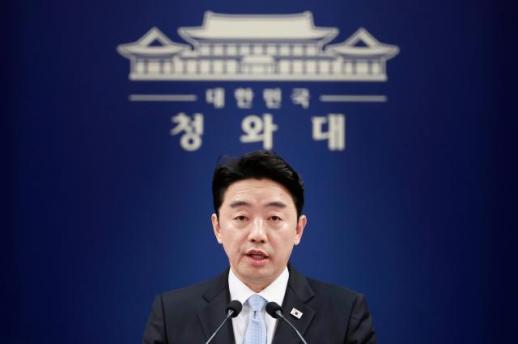 Chief of Staff Kang Hoon-sik Bars Any Election-Influencing Acts Ahead of June 3 Local Vote Kang Hoon-sik, the presidential chief of staff, on Sunday stressed that public officials must remain politically neutral ahead of the June 3 local elections. In a written briefing on a senior aides meeting chaired by Kang, Cheong Wa Dae Deputy Spokesperson Ahn Gwi-ryeong said Kang emphasized that officials must strictly refrain from any act that could influence the election. Kang said election-related involvement by public officials could undermine the fairness of the vote and public trust. He urged thorough oversight and inspections by relevant agencies, including the senior civil affairs office and police, to prevent violations of election law by public officials. Kang also addressed market-disrupting conduct such as hoarding as the Middle East war entered its 59th day. He said the government is securing alternative supply lines for crude oil and naphtha and has imposed anti-hoarding measures on closely related daily necessities, including petroleum products, urea solution and syringes. Kang said overall order has been maintained, but some cases of “antisocial behavior” aimed at making money have been found. He warned that the government will further strengthen inspections of unfair practices that exploit the crisis and respond forcefully to violations through swift investigations, strict punishment and the maximum level of administrative sanctions. Earlier, the Ministry of Food and Drug Safety found 32 distributors of syringes and needles suspected of hoarding, and the Industry Ministry’s nationwide inspections of gas stations confirmed 99 violations, including stockpiling and sales of counterfeit oil. Kang also said applications for high oil price relief payments for basic livelihood recipients, near-poverty households and single-parent families began Sunday. He called for cooperation between relevant ministries and local governments to ensure the payments are carried out without disruption.* This article has been translated by AI. 2026-04-27 18:32:16
 -
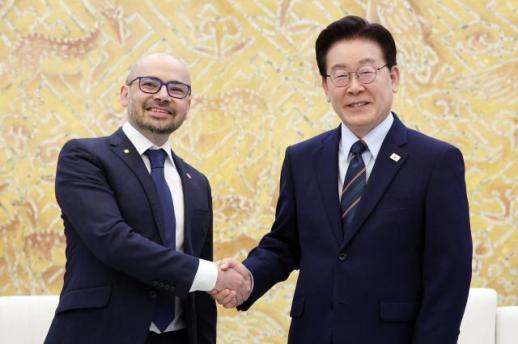 South Korea says Google to open AI Campus in Seoul; Lee discusses AI safety with DeepMind CEO Google will open a Google AI campus in Seoul within this year to expand cooperation with researchers and startups, South Korea’s presidential office said Sunday. Google DeepMind and the government also agreed to build a cooperation framework for “K-Moonshot,” a government project aimed at AI-driven innovation in science and technology. Cheong Wa Dae said President Lee Jae-myung met Demis Hassabis, Google DeepMind’s co-founder and CEO, to discuss ways to cooperate in artificial intelligence. The meeting was arranged as part of the government’s push to broaden global AI cooperation. Since taking office, Lee has met with OpenAI CEO Sam Altman, Nvidia CEO Jensen Huang and SoftBank Group Chairman Son Jeong-ui to discuss AI partnerships, the office said. The government also said it helped lead adoption of an “AI initiative” at last year’s APEC meeting in Gyeongju and is working with international organizations including the World Health Organization, the U.N. Development Programme and the International Telecommunication Union to establish a “global AI hub” in South Korea. During the meeting at Cheong Wa Dae, Lee said he has strong interest in AI and that the country is investing heavily, but questioned whether AI will be used “only in a direction that helps improve human welfare” or could move toward “attacks on humans” or harming peace. Hassabis said Lee had raised an important issue and said AI should be actively used to advance science and in medical fields. If used properly, he said, it could bring major benefits to people worldwide. Hassabis led DeepMind’s work on the 2016 Go match between Lee Sedol and the AI program AlphaGo. He also developed AlphaFold, an AI model for predicting protein structures, and won the Nobel Prize in Chemistry two years ago. Hassabis said AlphaGo helped validate the technology and became a starting point for tackling harder problems. He said the lessons were expanded into science and medicine, citing AlphaFold as a key example that helped researchers understand diseases in greater detail. Lee, referring to Google’s generative AI service Gemini, said he uses it often but that it sometimes does things he did not ask for, and asked whether it was a kind of bug. Hassabis said foundation models can veer in a different direction if guidance is not precise, and said “guardrails” must be built in when using and developing AI. He said as AI becomes more powerful, it will gain autonomy as “agent AI,” and that strong safety controls will be essential if the era of artificial general intelligence, or AGI, arrives. After the meeting, Policy Office Chief Kim Yong-beom told a briefing that the two held an in-depth discussion on rapid advances in AI, where the technology is headed and ways to strengthen global cooperation on responsible AI. Kim said Hassabis predicted that within five years — as early as 2030 — AGI capable of exercising all human cognitive abilities could become visible. Lee and Hassabis also exchanged views on job changes and distribution issues driven by AI, Kim said. Lee raised the need to prepare for unemployment and job disruption, while Hassabis said the impact is hard to predict and argued for a new economic model that rethinks the definition of work and redistribution of wealth. Kim said Lee asked whether now is the time for a basic income, noting he had discussed it for more than 20 years, and that Hassabis responded in a way that indicated agreement on the need. Kim said Hassabis also mentioned ideas such as the state providing housing, education, transportation and health services while incorporating capital-market principles, and linking gains from robot-driven productivity to support for workers. Kim said the government will pursue practical cooperation with DeepMind. He said Lee asked DeepMind to join as a key partner in efforts to establish a global AI hub through cooperation among the government, international organizations and companies so that everyone can share the benefits of AI advances. Kim said Google will also actively consider sending researchers to South Korea along with the AI campus. He said the government requested at least about 10 researchers and that Google agreed on the spot. Kim described the Seoul AI campus as a space where South Korea’s top scientists can freely use Google’s latest models for joint research, and where Korean researchers and Google researchers can conduct reciprocal work, including internships and hiring. Kim said the meeting was “completely unrelated” to issues involving Google Maps. Ahead of the meeting, Hassabis prepared a gift commemorating the AlphaGo match with Lee Sedol, presenting Lee with a Go board signed by both Hassabis and Lee Sedol. At the end of the meeting, Lee said he hoped that just as the AlphaGo match 10 years ago opened the AI era together with South Korea, they would work together over the next 10 to 20 years to build “AI for everyone” and a brighter future. Google attendees included Wilson White, vice president for global government affairs and public policy, and Yoon Koo, head of Google Korea. South Korean officials present included Science and ICT Minister Bae Kyung-hoon, Chief of Staff Kang Hoon-sik, Policy Office Chief Kim Yong-beom, Senior Secretary for AI Future Planning Ha Jung-woo, Protocol Secretary Kwon Hyuk-ki, National AI Policy Secretary Kim Woo-chang and spokesperson Jeon Eun-su. Hassabis is also scheduled to attend the “Google for Korea 2026” event in Seoul on April 29. He is set to hold a discussion with Lee Sedol and author Cho Seung-yeon on “10 years of AlphaGo, a vision of AI for everyone.”* This article has been translated by AI. 2026-04-27 18:27:08
 -
Google to Open AI Campus in Seoul This Year; Lee Says He Often Uses Gemini Google will open a Google AI campus in Seoul within this year to expand cooperation with researchers and startups. Google DeepMind and the government also agreed to build a cooperation framework for K-Moonshot, a government project aimed at AI-based innovation in science and technology. Cheong Wa Dae said on the 27th that President Lee Jae-myung met with Demis Hassabis, Google DeepMind co-founder and CEO, often called the “father of AlphaGo,” and discussed ways to cooperate in the AI field. The meeting was arranged as part of the government’s push to broaden global AI cooperation and work with top AI companies. Since taking office, Lee has met with OpenAI CEO Sam Altman, Nvidia CEO Jensen Huang and SoftBank Group Chairman Son Jeong-ui to continue AI-related cooperation, Cheong Wa Dae said. The government also led the adoption of an “AI initiative” at last year’s APEC meeting in Gyeongju and is working with international organizations including the World Health Organization, the U.N. Development Programme and the International Telecommunication Union to establish a “global AI hub” in South Korea. During the meeting at Cheong Wa Dae, Lee said, “I’m very interested in AI, and the country is investing a lot, but it’s hard to know whether it will go only in a direction that truly helps improve human welfare, or whether it could move toward attacking humans or harming world peace.” Hassabis replied, “You raised a really important topic,” adding, “I think AI should be actively used to advance science and in the medical field. If it is used properly, it looks like it could bring major benefits to people around the world.” Hassabis oversaw the 2016 match between Go champion Lee Sedol and the AI program AlphaGo. He also developed AlphaFold, an AI model for predicting protein structures, and won the Nobel Prize in Chemistry the year before last. He said AlphaGo showed that his team could validate the technology and that it became a starting point for tackling harder problems. He said the goal was to expand those lessons into science and medicine, citing AlphaFold as a leading example that helps researchers better understand diseases. Lee mentioned Google’s generative AI service Gemini, saying, “I use Gemini often, and sometimes it does things I didn’t ask it to do,” and asked whether that was “a kind of bug.” Hassabis said foundation models can veer in a different direction if the guidance provided is not precise, and said safety measures known as “guardrails” must be built in when using and developing AI. He added that as AI becomes more powerful, it will be given greater autonomy, sometimes called agent AI, and said safety controls will be essential if the world enters an era of artificial general intelligence, or AGI. 2026-04-27 17:21:18
-
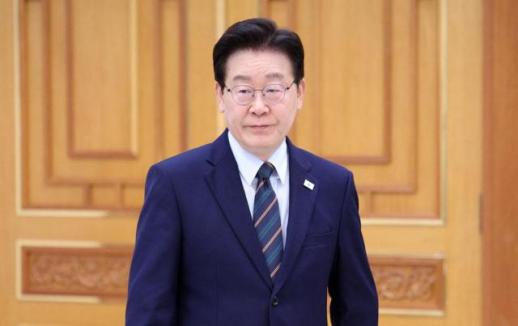 Lee reaffirms his rapprochement policy toward North Korea, urging Pyongyang to respond SEOUL, April 27 (AJP) - President Lee Jae Myung on Monday again reaffirmed his rapprochement toward North Korea for the peace and security of the Korean Peninsula. Lee said South Korea will "steadily push ahead with efforts toward peaceful coexistence on the Korean Peninsula," in a statement read by Hong Ik-pyo, senior presidential secretary for political affairs, at an event marking the eighth anniversary of an agreement signed during a historic meeting between the two Koreas at the border town of Panmunjom in April 2018. "We will proactively take steps to restore inter-Korean trust and achieve peace on the Korean Peninsula," the statement said, urging Pyongyang to respond. Lee added that building lasting peace on the peninsula for shared prosperity was the "core spirit" of the agreement and the future the two Koreas should pursue, stressing that peaceful coexistence has been his top priority since taking office in June last year and that he has taken steps to rebuild trust with the North. He also stressed that his administration has made clear its stance of recognizing and respecting North Korea's system, ruling out any scenario of forced absorption into the South and refraining from any hostile actions toward Pyongyang. "Even if winter is long, spring will come in the end," Lee said, expressing his belief that peace would eventually prevail. Meanwhile, former President Moon Jae-in urged North Korean leader Kim Jong-un to take a bolder approach and engage in talks with the U.S. The remarks were made at an event marking the anniversary at the National Assembly in Seoul later in the day. Moon, who made the trip to Seoul from his retirement home in Yangsan, South Gyeongsang Province, said, "True security cannot be guaranteed by military buildup, which would only deepen isolation and sever ties," adding that dialogue is "the fastest and safest way" to end hostility and bring peace to the peninsula. He also expressed hope for improved inter-Korean relations that could serve as a bridge for talks between Pyongyang and Washington, as they did eight years ago, and urged Trump to leverage his "unique decisiveness and wisdom" to bring the North back to the negotiating table. On April 27, 2018, Moon and Kim pledged to improve inter-Korean relations at their historic summit in Panmunjom, the border truce village within the demilitarized zone that has long symbolized the division of the peninsula. 2026-04-27 16:54:58