
Journalist

Choi Ye-ji
ruizhi@ajunews.com
-
 South Korea's Renewable Energy Goals Face Challenges Amid Infrastructure Concerns South Korea's renewable energy transition policy has faced setbacks over the past two decades, marked by unmet targets, shifts in policy direction, and insufficient investment in the power grid, according to a national research institute. Concerns have been raised that the government's goal of achieving 100 gigawatts (GW) of renewable energy capacity by 2030 may be unrealistic without concurrent improvements in infrastructure and regulatory frameworks.On May 11, the National Assembly Future Research Institute released a report titled "Evaluation of Domestic Renewable Energy-Centric Energy Transition Policy and Recommendations for Basic Planning."The institute noted that renewable energy has evolved from a supplementary power source to a critical infrastructure influencing energy security and industrial competitiveness worldwide. According to the International Energy Agency (IEA), renewable energy is expected to account for 36% of global power generation this year, surpassing coal's share of 32% for the first time.The European Union's Carbon Border Adjustment Mechanism (CBAM) and the increasing participation of global companies in the RE100 initiative (committing to 100% renewable energy) have made the ability to procure renewable energy a key factor in export competitiveness.The South Korean government has also positioned renewable energy as a core national policy objective, promoting "industry growth-oriented carbon neutrality" and aiming to establish 100 GW of renewable energy capacity and an energy highway by 2030.However, fears persist that past policy inconsistencies may recur. Since 2001, most basic plans for renewable energy have failed to meet their targets, and policy directions have shifted dramatically with each change in administration, leading to increased market uncertainty.Since the inauguration of President Yoon Suk Yeol, the previous nuclear phase-out policy has been abandoned, and the energy mix has shifted to prioritize nuclear power. The 10th Basic Plan for Power Supply and Demand has reduced the target for renewable energy's share of generation from 30.2% to 21.6%, while increasing the nuclear share to 32.4%.As a result of these policy shifts, the expansion of renewable energy in South Korea remains limited. The share of renewable energy generation increased from 4.8% in 2016 to 10.5% in 2024, yet it still ranks among the lowest in the Organisation for Economic Co-operation and Development (OECD), significantly trailing the global average of approximately 30%.The concentration of renewable energy facilities in regions like Honam and Jeju has created a structural mismatch with the power demand centered in the metropolitan area. The lack of transmission network expansion has exacerbated issues related to grid connection delays and output control.Jeong Hoon, a researcher at the National Assembly Future Research Institute, stated, "Past basic plans have been implemented with a top-down approach that sets targets based on political goals without analyzing technical and economic potential." He noted that the shifting metrics for generation share, primary energy share, and final energy share have made it difficult to continuously compare and verify policy outcomes.He further emphasized that achieving the 2030 goal of 100 GW of renewable energy capacity will require the installation of 10 to 12 GW of new capacity annually starting in 2026, while the current annual installation rate is only about 4 GW.Therefore, the forthcoming "First Basic Plan for Renewable Energy Technology Development, Utilization, and Dissemination" should include not only simple installation targets but also plans for the power grid and system infrastructure. Jeong stressed the need for strategies that reflect regional grid conditions and plans for securing flexible resources such as energy storage systems (ESS), pumped storage, and virtual power plants (VPP).Industry experts have also pointed out that merely increasing the pace of renewable energy expansion is insufficient. An anonymous industry source warned, "If we only expand capacity without restructuring the electricity market and investing in the transmission network, we are likely to face repeated issues with output control and connection delays," urging that renewable energy expansion policies and grid investment plans must be pursued in tandem.* This article has been translated by AI. 2026-05-11 15:42:29
 -
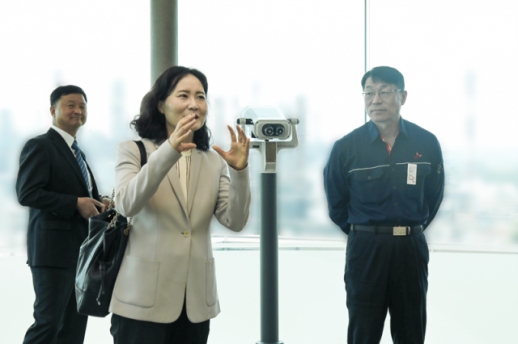 Customs Agency Intensifies Efforts to Secure Petrochemical Raw Materials Amid Middle East Tensions The Customs Agency has launched on-site inspections to address the instability in the supply of petrochemical raw materials resulting from prolonged tensions in the Middle East.On May 11, Lee Jin-hee, Director of the Customs Agency, visited the SK Geo Centric plant located in the petrochemical complex in Ulsan to evaluate the supply situation of key petrochemical raw materials such as naphtha and toluene, and to listen to the industry's concerns. This visit was organized to verify the effective implementation of the Customs Agency's customs and tax support programs in light of the increasing volatility in raw material supply due to the ongoing situation in the Middle East.The petrochemical industry is particularly sensitive to supply chain disruptions in the Middle East, given its high dependence on crude oil and naphtha imports. During the visit, a representative from SK Geo Centric explained that the blockade of the Strait of Hormuz has led to increased shipping costs due to the use of alternate routes, and that managing certificates of origin has become more burdensome during the diversification of supply chains.In response, Director Lee stated, "We can alleviate cost burdens by actively utilizing tax relief measures, such as excluding increased shipping costs from taxable prices, post-application for FTA tariff rates, and extending customs payment deadlines." He also focused on ensuring that recently implemented customs support policies, including 24-hour customs assistance for urgent demand items and pre-import customs clearance, are being appropriately utilized in the field.The Customs Agency plans to expand on-site inspections, particularly for items with unstable domestic supply, and to strengthen communication with the industry to enhance supply chain response capabilities. Director Lee emphasized, "In the current supply chain environment, it is crucial not only to secure quantities but also to ensure a swift connection to production. We will operate the system flexibly around businesses to prevent delays in the customs process and will listen to feedback from the field to make immediate improvements where necessary."He added, "The stable supply of petrochemical raw materials is directly linked to the maintenance of national industries, so we will strengthen cooperation with relevant ministries to minimize factors contributing to supply instability."* This article has been translated by AI. 2026-05-11 13:42:23
 -
 First Comprehensive Review of 'Blue Seed' Retirement Pension for SMEs The government has initiated its first review of the 'Blue Seed' retirement pension system designed for workers in small and medium enterprises (SMEs). This assessment aims to ensure the stability of fund management and internal controls ahead of an expansion of eligible participants. On May 11, the Ministry of Employment and Labor announced that it, along with the Financial Supervisory Service, will conduct a comprehensive review of the Blue Seed fund over the next two weeks. This marks the first evaluation since the system was introduced in 2022. The review will cover not only the fund's performance but also its risk management systems, contract and account management, subscriber protection measures, and internal control operations. The government plans to examine issues of fairness and transparency, particularly regarding potential harm to subscribers' interests, improper inducements, and the fee structure. The Blue Seed program was established to secure retirement income for SME workers. Currently, it has approximately 170,000 subscribers, with total assets around 1.6 trillion won. Over the past three years, the annual return rate has consistently ranged between 6% and 8%. The government plans to gradually expand the eligibility criteria. Starting in July, businesses with fewer than 50 employees will be able to enroll, followed by those with fewer than 100 employees in January 2027. Revisions are also being pursued to allow special employment workers and freelancers to participate in the subscriber contribution accounts. Based on the findings of this evaluation, the Ministry of Labor will recommend operational improvements and develop measures to enhance the system if any deficiencies are identified. Seo Myung-seok, Director of Labor Standards Policy, stated, "This comprehensive evaluation will serve as an opportunity to thoroughly examine the operation of the Blue Seed program ahead of its reform. We will continue to manage operational performance and risks through regular evaluations."* This article has been translated by AI. 2026-05-11 12:12:08
 -
 Government Launches Pilot Project for Comprehensive Management of Refrigerants The government is set to launch a pilot project aimed at managing the entire lifecycle of hydrofluorocarbon (HFC) refrigerants, from usage to recovery, regeneration, and disposal. This initiative seeks to reduce greenhouse gas emissions resulting from refrigerant leaks and to lay the groundwork for future legislation on refrigerant management. The Ministry of Climate, Energy, and Environment and the Korea Environment Corporation announced that they will hold a kickoff meeting for the 'Refrigerant Lifecycle Management Pilot Project' on May 12 at the Sharing and Empathy Conference Room in Yongsan, Seoul. The core of this pilot project is to implement a circular system that recovers waste refrigerants from devices such as air conditioners and refrigerators and regenerates them for reuse. The government aims to systematically manage the entire process of refrigerant usage, recovery, and regeneration to enhance the effectiveness of greenhouse gas reduction. Hydrofluorocarbons, widely used as refrigerants, were developed to replace ozone-depleting substances like chlorofluorocarbons (CFCs) and hydrochlorofluorocarbons (HCFCs). However, HFCs have a global warming potential (GWP) that can be up to 12,400 times greater than that of carbon dioxide, making them significant contributors to global warming. In response, the international community agreed in 2016 under the Montreal Protocol to designate HFCs as regulated substances and to phase them out gradually. As the need for refrigerant management grows domestically, discussions on related regulatory frameworks are accelerating. Industry stakeholders have raised concerns about instances where refrigerants are not properly recovered during the maintenance or disposal of equipment like air conditioners and refrigerators, leading to leaks into the atmosphere. Once charged, refrigerants can remain in devices for extended periods, which can significantly impact greenhouse gas emissions if management gaps occur. Current air quality regulations mandate refrigerant recovery only for large equipment with a legal refrigeration capacity of 20 RT or more. However, many medium and small-sized devices are excluded from this requirement, raising ongoing concerns about regulatory gaps. The pilot project will involve participation from Chungcheongnam-do and the Seoul Transportation Corporation, which plan to actively recover waste refrigerants from devices and products not covered by legal regulations. A system for managing residual refrigerants in containers and recovering, regenerating, and reusing refrigerants will also be established. The Ministry of Climate plans to expand efforts to remove moisture and contaminants from waste refrigerants to utilize them as regenerated refrigerants of new product quality. This initiative aims to reduce dependence on the production and import of new refrigerants and strengthen the foundation for a circular economy. Based on the results of this pilot project, the ministry will also pursue the establishment of a 'Refrigerant Management Act' (tentative title) that encompasses the recovery, transportation, regeneration, and disposal of refrigerants. Kim Jin-sik, Director of the Air Quality Division at the Ministry of Climate, stated, "Hydrofluorocarbon refrigerants can leak for over 15 years after being charged, making thorough management essential for achieving national greenhouse gas reduction targets (NDC). We will do our utmost to ensure that the systems introduced through this pilot project are implemented smoothly in the field."* This article has been translated by AI. 2026-05-11 12:08:51
 -
 Government Implements Dispute Resolution System for Chemical Registration Delays As disputes over costs between companies have led to delays in chemical substance registrations, the government is taking formal steps to mediate these conflicts. The aim is to maintain the principle of shared use of testing data for the same substances while reducing registration delays and the burdens of production and export.The Ministry of Environment and Energy announced on May 10 that a system to resolve disputes arising during the chemical registration process will be officially implemented starting May 12.Under the current Chemical Registration and Evaluation Act, companies seeking to register existing chemical substances must form a consortium with other companies using the same substances to jointly secure and submit the necessary testing data. If a later company wishes to utilize already registered substances, it must also obtain consent from the existing data owner to share the data.In practice, delays in chemical registrations have occurred due to disagreements over data usage fees and cost-sharing arrangements.The Ministry has established principles for cost-sharing and accounting applicable to the production and use of registration application data in relevant laws, allowing the government to step in for official mediation in case of disputes.When a company applies for mediation through the chemical substance information processing system, the government will review legal principles, similar cases, and the opinions of related companies to prepare a mediation proposal, which will then be recommended to the parties involved in the dispute.If mediation fails, the later registering company can apply to the government for a submission deferment regarding the relevant data. If approved, the company can proceed with the registration process without submitting the data and continue discussions afterward.The government expects that addressing cost disputes will reduce delays in registration and disruptions to business operations.Jo Hyun-soo, Director of the Environmental Health Bureau at the Ministry, stated, "The government will continue to support the industry in implementing the system with reasonable costs and procedures while ensuring comprehensive information on the harmfulness of chemical substances is secured."* This article has been translated by AI. 2026-05-11 12:07:12
 -
 Warning Signs for Import Prices: Concerns of Price Shock as Controls End The government has been absorbing the impact of rising international oil prices through measures such as reducing fuel taxes and implementing price controls on petroleum products. However, market sentiment largely views the current price trends as 'suppressed' rather than 'stable.' While consumer price increases are currently limited, there are concerns that a 'price shock' could materialize in the second half of the year as the effects of these policies weaken.According to the oil price information system Opinet, the average price of Dubai crude oil in April was $112.20 per barrel, a 49.4% increase compared to the average of $75.08 in the same month last year. This month, prices have hovered around $103, still significantly higher than pre-war levels.The prolonged conflict in the Middle East has led to a simultaneous rise in international oil prices and the won-dollar exchange rate, increasing pressure on import prices. Domestic industries, which heavily rely on crude oil and raw material imports, are also feeling the strain.However, this cost pressure has not yet been fully reflected in consumer prices. Last month, the consumer price inflation rate was 2.6%, the highest since July 2024, but excluding a 22% surge in petroleum products from the previous year, the rate drops to 1.8%.Analysts attribute this to the government's strong 'price defense' measures. The government estimates that without the price controls, last month's inflation rate would have risen to 3.8%, indicating that the controls have lowered inflation by about 1.2 percentage points.Gasoline and diesel prices are estimated to have soared to 2,200 won and 2,500 won per liter, respectively. Since March, the government has implemented price controls on petroleum products, adjusting or freezing prices five times to date.In comparison to OECD member countries, South Korea's energy price inflation rate of 5.2% in March was lower than that of the United States (12.5%), Germany (7.6%), and France (7.1%).However, some market observers argue that the shock has not disappeared but has merely been postponed. The prolonged high oil prices and exchange rates have led refiners and manufacturers to suppress price increases despite declining profitability.The burden on the refining industry is also nearing its limits. The government has prepared supplementary budgets to compensate refiners for losses incurred due to price controls, but if high international oil prices persist, an increase in fiscal burdens is inevitable.Concerns are growing that the accumulated pressures from high exchange rates and oil prices since the beginning of the year could lead to a sudden release of suppressed price increases if the effectiveness of policies diminishes.Market analysts identify the timing of policy termination as a critical variable. If the reduction in fuel taxes is scaled back or price controls are lifted, there is a possibility that suppressed petroleum prices could surge in a short period.For instance, Hungary, which implemented price controls in 2021, saw a 50% increase in fuel sales after the program ended, while Pakistan experienced a 66% spike in gasoline prices immediately after lifting price freezes from February to May 2022.Consequently, experts are urging the government not to focus solely on short-term price suppression but to develop a gradual 'exit strategy.'Lee Hong, a senior researcher at the Korea Institute for Industrial Economics and Trade, stated, "While price controls can temporarily suppress price surges and alleviate consumer burdens, prolonged measures can lead to shortages, supply distortions, and greater price rebounds after the program ends. Targeted support for industries heavily reliant on fuel costs and differentiated policy designs that consider supply stability are necessary."* This article has been translated by AI. 2026-05-11 05:03:26
 -
 Minister Kim Jung-kwan: U.S. Investment Principles Based on Commercial Rationality Minister of Trade, Industry and Energy Kim Jung-kwan stated on May 10 that the fundamental principle for South Korean investments in the United States is "commercial rationality," adding that the U.S. side fully understands this aspect. Speaking to reporters after concluding his visit to the U.S. and Canada, Kim explained that his trip aimed to consolidate discussions on U.S. investment projects that had previously been held at the working level. From May 6 to 9, Kim visited Washington, D.C., where he met with key U.S. officials to discuss strengthening cooperation in the industrial and trade sectors, including a $350 billion investment project. The first U.S. investment initiative, known as Project 1, is expected to be unveiled following the enactment of the Special Act on U.S. Investments on June 18, when the Korea-U.S. Strategic Investment Corporation is launched. The leading candidate for this initial project includes the construction of a liquefied natural gas (LNG) export terminal in Louisiana and new energy infrastructure projects such as nuclear power plants. However, Kim urged patience regarding specific projects, stating, "Negotiations are currently ongoing, so please watch carefully as things develop." Regarding Coupang, he mentioned, "I actually brought up Coupang first and explained the South Korean government's basic stance on the matter. It seems that this provided an opportunity to clarify any misunderstandings that existed." Before his visit to the U.S., Kim traveled to Canada from May 5 to 6, where he held meetings with cabinet-level officials to discuss specific industrial and resource cooperation related to submarine projects. On the potential $60 billion submarine project in Canada, he remarked, "We are currently in a friendly competition with Germany, and I will do my best until the end to bring good news to our citizens without making any assumptions."* This article has been translated by AI. 2026-05-11 04:02:33
 -
 Doosan Fined $2.3 Million for Delayed Subcontract Agreements Doosan, a major system integration (SI) company, has been penalized by the Fair Trade Commission (FTC) for failing to issue subcontract agreements on time over several years.On May 10, the FTC announced it would impose a corrective order and a fine of 230 million won (approximately $2.3 million) on Doosan for violating subcontracting laws by delaying the issuance of written contracts during the outsourcing of system development and management services.According to the FTC, from January 2022 to October 2024, Doosan failed to provide written contracts containing legally required details for 516 SI service agreements with 182 subcontractors before the start of the services. In some cases, contracts were issued up to 291 days after work had begun, with an average delay of 26 days.The 516 agreements in question represent 35% of all contracts (1,473) during that period, with the total subcontracting amount reaching 40.8 billion won, accounting for 34.6% of the overall contract value. The FTC explained that the scale of the violations and their repeated nature warranted the imposition of a fine.Additionally, Doosan issued 'incomplete documents' for some contracts that did not clearly specify payment deadlines and inspection periods. The company was also found to have failed to retain some subcontracting documents for three years. However, the FTC deemed the violations relatively minor and issued a warning regarding those issues.Industry experts interpret this sanction as a response to the prevalent practice of 'contracting after work begins' in the SI sector. It has been repeatedly pointed out that in large projects, subcontracted workers are often deployed before contracts are finalized or pricing discussions occur.This practice leaves smaller subcontractors vulnerable, as they must incur costs for development personnel and resources without clear contract terms, increasing the risk of disputes over payment and project scope.With the recent expansion of investments in AI and data centers, along with rising demand for digital transformation, the importance of effective subcontractor management in the SI market is growing.According to the FTC, the domestic SI market generated 56 trillion won last year, reflecting an average annual growth rate of 6.58% over the past five years. The high level of internal transactions among large corporations underscores the need for a fair subcontracting order.An FTC official stated, "We will continue to focus our specialized investigative capabilities on the advanced industry sector to correct unfair trading practices that infringe on the rights of subcontractors and impose strict penalties for violations to establish a fair subcontracting order."* This article has been translated by AI. 2026-05-10 12:03:19
 -
 South Korea and U.S. Initiate High-Level Talks on $350 Billion Investment Project The South Korean and U.S. governments have officially begun high-level discussions on a strategic investment project worth $350 billion. The two countries are focusing on joint investments and research and development (R&D) in the shipbuilding and energy sectors, including nuclear power and liquefied natural gas (LNG), to enhance cooperation. According to the Ministry of Trade, Industry and Energy, Minister Kim Jeong-gwan visited Washington, D.C., from May 6 to 9 to discuss the strategic investment project and ways to strengthen industrial and trade cooperation with key U.S. officials. Following the passage of the Special Investment Act, discussions on subsequent legislation and implementation frameworks are gaining momentum. During his visit, Minister Kim met with U.S. Secretary of Commerce Howard Rutnik to explain the South Korean government's progress on subsequent legislation and implementation frameworks following the Special Investment Act's passage. The two sides discussed more concrete directions for advancing the strategic investment project based on previous discussions focused on shipbuilding and energy. As a result of this meeting, the Ministry of Trade, Industry and Energy and the U.S. Department of Commerce signed a memorandum of understanding (MOU) for the Korea-U.S. Shipbuilding Partnership Initiative. Under this agreement, the two countries plan to establish a Korea-U.S. Shipbuilding Cooperation Center in Washington, D.C., by the end of the year to support collaboration among governments, industries, and research institutions. Specific activities will include promoting foreign direct investment in the U.S. maritime industry, workforce development initiatives, shipyard productivity enhancement projects, and technology exchanges. The detailed areas of cooperation will be further defined through subsequent discussions between the two governments. The U.S. Department of Commerce will facilitate exchanges among U.S. shipbuilders, suppliers, universities, and research institutions while serving as a contact point for the center at the government level. The Ministry of Trade, Industry and Energy will coordinate cooperation among South Korean stakeholders in the shipbuilding sector and provide the necessary personnel and funding for the center's operations. Minister Kim also met with Russell Vought, Director of the Office of Management and Budget at the White House, to request U.S. government support for the Make American Shipbuilding Great Again (MASGA) project that South Korea is pursuing. Additionally, he discussed energy cooperation issues, including nuclear power, with U.S. Secretary of Energy Chris Wright, exploring ways to strengthen future collaboration. Minister Kim held a virtual meeting with Senator Bill Hagerty of Tennessee, a prominent supporter of South Korea, to discuss nuclear cooperation and digital issues, continuing outreach efforts to the U.S. Previously, during last year's Korea-U.S. summit, the two countries agreed to pursue the MASGA project, committing to $150 billion in investments in the U.S. shipbuilding sector. This investment is part of the broader $350 billion strategic investment commitment, which includes reductions in tariffs on South Korean products and automobile tariffs in exchange. The Ministry of Trade, Industry and Energy plans to maintain close communication with the U.S. regarding the strategic investment project while actively managing industrial and energy cooperation and trade issues. After concluding his visit to the U.S., Minister Kim is scheduled to return to South Korea via Incheon International Airport on the afternoon of May 10.* This article has been translated by AI. 2026-05-10 11:36:22
 -
 South Korea Moves to Revamp Compensation System for Humidifier Disinfectant Victims South Korea is initiating a process to gather feedback from victims as it prepares to transition to a government-led compensation system for those affected by humidifier disinfectants. This shift is expected to accelerate discussions on compensation standards and support scope.The Ministry of Climate, Energy and Environment announced that it will hold a briefing on the complete revision of the enforcement decree for the "Special Act on Compensation for Humidifier Disinfectant Victims" on May 8 in Seoul. The law is set to take effect on October 8.During the briefing, details regarding the application process for compensation, criteria for determining damages, ongoing treatment costs, and health monitoring procedures will be disclosed. The government plans to incorporate additional feedback from victims before the legislative notice is issued.As the compensation system shifts from a victim-centered approach to a state-led model, key issues such as expanding the scope of compensation and long-term treatment support are expected to be major points of discussion. Some victim advocacy groups are calling for clearer definitions regarding health impacts and support for bereaved families.To facilitate compensation reviews, the government will establish a support organization under the Office for Government Policy Coordination and form a committee to develop detailed compensation standards.The humidifier disinfectant crisis began in 1994 when products linked to lung damage were sold. A 2011 epidemiological study confirmed the connection between these disinfectants and lung injuries. To date, 8,065 individuals have applied for compensation, with 6,011 recognized as victims.In June 2024, 13 years after the causal link was first established, the Supreme Court acknowledged government responsibility in the humidifier disinfectant case. Subsequently, on December 24, the government announced a comprehensive support plan for victims, transitioning to a state-led compensation system.According to the revised law's provisions, individuals already recognized as victims under the previous law will be considered to have applied for compensation as of the new law's effective date. However, new applicants who have not yet been recognized must apply for compensation within six months after the new law takes effect, by April 8, 2027.First Vice Minister of Climate, Kim Han-seung, expressed sincere apologies to victims and their families for their suffering, stating, "We will finalize the subordinate regulations by the law's implementation date and ensure a smooth transition to the new support system for victims."* This article has been translated by AI. 2026-05-08 06:03:25