
Journalist

Shin Dong-kun
sdk6425@ajunews.com
-
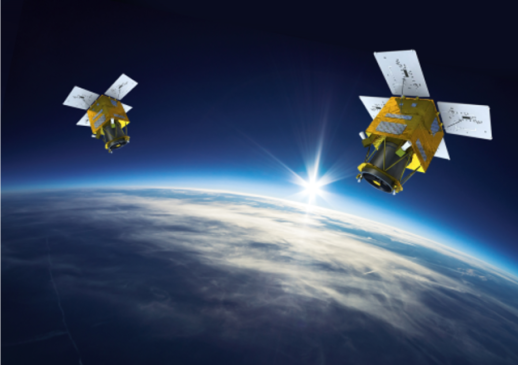 South Korea’s Next-Generation Mid-Sized Satellite 2 Reaches Orbit After Falcon 9 Launch Next-Generation Mid-Sized Satellite 2, an Earth-observation satellite designed for land monitoring and disaster response, has successfully entered orbit and begun preparations for its mission. According to Yonhap News Agency on Saturday, the satellite was launched at 4 p.m. from Vandenberg Space Force Base in California aboard a SpaceX Falcon 9 rocket and was placed into orbit as planned. The Korea AeroSpace Administration said the satellite separated normally from the launch vehicle about 60 minutes after liftoff and made its first contact about 15 minutes later with the Svalbard ground station in Norway, confirming the spacecraft’s systems were in normal condition. The satellite will observe Earth from a sun-synchronous orbit at an altitude of about 498 kilometers. SpaceX also said the satellite separation and separation of additional payloads proceeded normally. Built on a standard 534-kilogram-class platform, the satellite has ground-imaging capability with 0.5-meter resolution in black-and-white and 2-meter resolution in color. Officials said key components of the satellite bus and payload were independently developed with domestic technology, improving technological self-reliance. Korea Aerospace Industries led the development. The satellite had been scheduled for launch in 2022 on a Russian rocket, but the timeline was delayed by about four years due to the Russia-Ukraine war before Saturday’s successful launch. The Korea AeroSpace Administration called the launch a milestone symbolizing a shift toward a private-sector-led space industry and said it strengthens the foundation for independently securing high-resolution land and disaster-monitoring data. The Ministry of Land, Infrastructure and Transport said simultaneous operation of Land Satellite 1 and 2 is expected to expand capabilities for geospatial information services. Oh Tae-seok, administrator of the Korea AeroSpace Administration, said, “The successful launch of Next-Generation Mid-Sized Satellite 2 is an important milestone that opens the era of a private-sector-led NewSpace.” He added that by mounting high-resolution black-and-white and color optical cameras on a 500-kilogram-class standard platform and independently securing ultra-precise imagery needed for land and disaster management on the Korean Peninsula, the launch “greatly strengthened” the localization of satellite technology and the industry’s competitiveness. Also aboard the rocket was BusanSat, a CubeSat developed with participation from the city of Busan, the Korea Astronomy and Space Science Institute and Nara Space Technology, among others.* This article has been translated by AI. 2026-05-03 19:18:27
 -
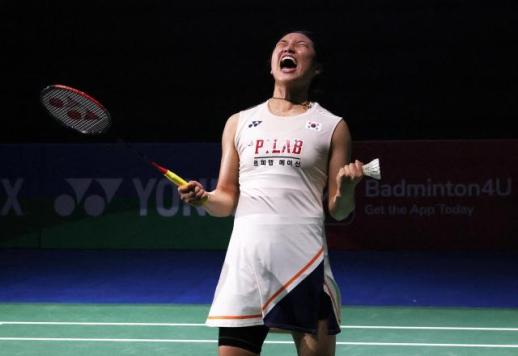 An Se-young routs Wang Zhiyi in Uber Cup final opener for 20th career win vs. rival South Korea’s women’s badminton team got off to a strong start in the Uber Cup final as its top singles player, An Se-young of Samsung Life Insurance, won the opening match. Yonhap reported that An, the world No. 1, defeated world No. 2 Wang Zhiyi of China 21-10, 21-13 in the first women’s singles match of the 2026 Uber Cup final in Horsens, Denmark, on Saturday (Korea time). An controlled the match throughout. Wang never drew level in either game. An jumped ahead 7-1 with a seven-point run early in the first game and led 11-2 at the interval, then closed it out 21-10 by varying pace with half smashes and tight net shots. The second game followed a similar pattern. An led 11-5 at the interval and briefly allowed Wang to close to 12-9 after three straight points, but she steadied, forced errors and finished on a net shot at 20-13. With the win, An improved to 20-5 all-time against Wang. Wang had snapped a losing streak against An in the All England Open final in March, but An has beaten her again, including in the Asian Championships final in April and now in this tournament, maintaining the one-sided rivalry. An has played the first singles match from the group stage through the quarterfinals, semifinals and final, winning every match without dropping a game. The Uber Cup, held every two years, is the women’s world team championship. Teams play five matches — three singles and two doubles — with the first to three wins taking the title. South Korea is seeking its third championship after winning in 2010 and 2022. After An, South Korea’s lineup is Lee So-hee (Incheon International Airport)-Jeong Na-eun (Hwasun County Office), Kim Ga-eun (Samsung Life Insurance), Baek Ha-na (Incheon International Airport)-Kim Hye-jeong (Samsung Life Insurance), and Sim Yu-jin (Incheon International Airport).* This article has been translated by AI. 2026-05-03 19:12:16
 -
 Rubio to Visit Rome and Vatican as Trump-Pope Tensions Test Ties U.S. Secretary of State Marco Rubio will visit Rome and the Vatican this week, a trip that comes amid a series of public clashes between President Donald Trump and Pope Leo XIV and will test whether the sides can ease tensions. Yonhap News, citing AFP and other foreign media, reported on May 3 (local time) that Rubio is scheduled to travel to Rome and the Vatican on May 7-8 for talks with Vatican Secretary of State Cardinal Pietro Parolin and Italian Foreign Minister Antonio Tajani. A meeting with Italian Defense Minister Guido Crosetto is also expected, the report said. The visit comes as strains between the United States and the Vatican have intensified. Since taking office, Pope Leo XIV has criticized the Trump administration’s immigration policy. After U.S. and Israeli military action against Iran in late February, he also issued a series of strong anti-war messages. In early April, the pope called Trump’s hard-line remarks on Iran “unacceptable,” stressing the need for peace and saying “no war can be justified.” Trump responded by publicly criticizing the pope, saying diplomatic and public security responses were inadequate. Italy has also been drawn into the dispute. Prime Minister Giorgia Meloni has maintained close ties with Trump but has shown differences over Iran. She said the U.S. and Israeli military action went beyond international law and expressed regret over Trump’s remarks aimed at the pope. Trump then escalated his criticism of Meloni, keeping the war of words going. Italian media have described Rubio’s visit as a “thaw” meeting.* This article has been translated by AI. 2026-05-03 19:06:15
 -
 Citi Cuts Samsung Electronics Target to 300,000 Won, Citing Union Strike Risk Global investment bank Citigroup slightly lowered its target price for Samsung Electronics, citing the potential cost burden from a possible union-wide strike. While near-term earnings risks have increased, Citi said the broader industry direction remains intact. According to Yonhap News Agency on Saturday, Citi analyst Peter Lee said in an April 30 report that he cut Samsung Electronics’ target price to 300,000 won from 320,000 won. He maintained a “buy” rating. The reduction was limited, but the report formally factored in labor-management risks. Lee said that if a strike materializes, provisions tied to performance pay could rise and weigh on results. He cited the strike’s intensity and duration as key variables that could expand costs. Reflecting that risk, he lowered his operating profit forecasts by 10% for this year and 11% for next year. He described the impact as largely one-time in nature, but said it could still pressure short-term profitability. He said Samsung Electronics remains a leading beneficiary of improving memory-market conditions, but warned that escalating labor tensions could make near-term earnings more volatile. With market expectations elevated, unexpected costs could also increase share-price swings, he added. Samsung Electronics’ union joint struggle headquarters has demanded performance pay equal to 15% of operating profit with no cap and has warned of a general strike from May 21 to June 7. Because the strike’s scale could change depending on negotiations, investors are watching the risk of a prolonged walkout and when related costs might be reflected. Hana Securities recently said uncertainty over operating profit estimates rose due to the bonus-related strike issue, contributing to relatively weak share performance. Even so, analysts said stronger memory demand tied to expanding artificial intelligence investment remains in place. With continued demand from data centers and high-performance computing, the upward trend in DRAM and NAND prices is expected to persist, and demand is forecast to outpace supply for some time. Many see the medium- to long-term upcycle as still solid. Separately, BNK Investment & Securities previously lowered its rating on SK hynix to “hold,” citing weaker profitability as the company increases the share of next-generation products such as HBM4. The firm said that even in an improving market, shifts in product mix and cost structures can lead to diverging results by company. * This article has been translated by AI. 2026-05-03 18:55:08
 -
 Korea Semiconductor Leveraged ETFs Surge, With Top Fund Up Nearly 15-Fold in a Year Korea’s exchange-traded fund market has been dominated by semiconductor leveraged products, posting outsized gains as expectations for an industry upturn lifted related indexes. Because these ETFs are designed to track twice the daily move of their benchmarks, a sustained rally amplified returns through compounding. According to the Korea Exchange on May 3, semiconductor leveraged ETFs led the performance rankings over the past year (April 30, 2025, to April 30, 2026). The top gainer was TIGER 200IT Leverage, which mainly holds shares such as Samsung Electronics, SK hynix and SK Square. It rose to 328,880 won from 20,865 won, a 1,476.23% return. By simple calculation, a 100 million won investment would now be worth about 1.5 billion won. Its one-month return was also about 130%. TIGER Semiconductor TOP10 Leverage climbed 1,307.10% over the same period, to 59,450 won from 4,225 won. KODEX Semiconductor Leverage jumped 1,222.17%, to 100,485 won from 7,600 won. All three rose more than tenfold, highlighting the explosive payoff structure of leveraged ETFs in a strong uptrend. The gains reflect a broader rise in semiconductor shares, as global big tech companies expanded AI investment and demand for data-center buildouts continued, pushing up earnings expectations. As related indexes moved steadily higher, returns for leveraged ETFs tied to them expanded sharply. The same structure can also magnify losses. Because leveraged ETFs target twice the benchmark’s daily return, choppy markets can produce a “negative compounding” effect that erodes value. If an index repeatedly rises and falls within a range, the ETF can gradually lose principal. Investor caution is also being urged as single-stock leveraged ETFs tied to Samsung Electronics and SK hynix are expected to be launched. With volatility in individual shares directly reflected, the potential for gains increases, but so does the risk of losses. Brokerages have raised target prices on the back of positive results from Samsung Electronics and SK hynix, while also flagging risks. Hana Securities raised its target price for Samsung Electronics to 330,000 won, but said, “Uncertainty over operating profit estimates has increased due to a strike issue related to bonuses, and the stock’s recent price movement has been relatively weak.” Some reports have also downgraded SK hynix. BNK Investment & Securities researcher Lee Min-hee lowered the stock to hold, saying, “Despite the steep increase in earnings, it has entered the late stage of the cycle, and considering a slowdown in momentum in the second half, it is now expected to shift into a low price-to-earnings ratio (PER) stock.” 2026-05-03 14:55:15
 -
 Activist Fund Managers Reaped Big Dividends; KCGI Paid Out 100% of Profit, Align 63% Domestic asset managers known for activist investing posted large cash gains from dividends last year, helped by rising share prices at companies they targeted. Align Partners, one of the most aggressive activist firms, paid out more than 15 billion won in cash dividends. According to the financial investment industry on April 30, Align Partners paid 15.1 billion won in cash dividends out of about 23.9 billion won in net profit last year, a payout ratio of 63%. The dividends effectively went to a single owner. Align Partners’ largest shareholder is Align Holdings, which owns 100% of the firm, and Align Holdings is wholly owned by CEO Lee Chang-hwan. Under that ownership chain, the full 15.1 billion won dividend is effectively attributable to Lee. The size and structure of Lee’s dividend stands out even among other activist-oriented managers. KCGI Asset Management, known in the past as the “Kang Seong-bu fund,” paid out all of its 6 billion won in net profit last year as cash dividends, a 100% payout ratio. KCGI holds 60% of KCGI Asset Management and HS Hwasung holds 40%, meaning about 3.6 billion won went to KCGI and about 2.4 billion won to HS Hwasung. KCGI’s largest shareholder is CEO Kang Seong-bu and related parties, who hold about 64%. Based on that, the owner side, including related parties, is estimated to have received about 2.3 billion won in dividends. Another activist fund manager, Truston Asset Management, paid about 4.1 billion won in cash dividends through its year-end payout out of about 17.9 billion won in net profit. CEO Hwang Seong-taek is the largest shareholder with 50.3%, with 29.2% held as treasury shares and about 20.5% held by other minority shareholders. Based on his stake, Hwang’s dividend income is a little over 2 billion won. Industry officials said Align Partners’ ownership structure as a de facto one-person company helps explain the gap in dividend outcomes. They also said Align Partners’ investment gains likely increased sharply, as the share prices of companies in which it built stakes while pursuing activist campaigns rose noticeably. Some in the industry have raised questions about Align Partners’ dividend structure. One industry official said, “Align Partners is unlisted and effectively a private company, so it’s hard to call it a problem that one controlling shareholder takes a high dividend,” but added, “It is worth thinking about the fact that results created by demanding higher dividends and greater shareholder value from companies ultimately concentrate in the hands of the asset manager’s controlling shareholder.” 2026-04-30 11:19:58
 -
 More Big Brokerages Adopt Co-CEO Structures as Businesses Diversify More securities firms in South Korea are adopting a co-CEO structure, particularly among large brokerages, as their scale and business lines expand. The shift reflects broader diversification into areas such as comprehensive investment services and investment banking, with companies splitting accountability by division. As of April 30, three firms have adopted co-CEO structures: Mirae Asset Securities, KB Securities and Meritz Securities, according to the financial investment industry. Mirae Asset Securities has operated under a co-CEO system since 2023, with CEO Kim Miseop overseeing global and IB operations and CEO Heo Seonho leading wealth management and retail. The company has since posted broadly balanced growth across major businesses including WM, global, IB and trading. KB Securities, operating with separate CEOs for IB and WM, has produced results strong enough to enter the annual operating profit “1 trillion won club.” Meritz Securities, after adopting a two-top structure led by Jang Wonjae and Kim Jongmin in 2024, increased its contribution to parent Meritz Financial Group from 19% to 28%. More recently, NH Investment & Securities has moved to switch to a co-CEO structure, citing a larger organization and a more complex business structure following its entry into the IMA (comprehensive investment account) business. NH Investment & Securities in March became the third brokerage to receive approval for the IMA business. After the approval, it launched its first product and has been expanding its asset management business in earnest. The company said the co-CEO structure will run key business units under a system of accountable management and strengthen its mid- to long-term growth base by linking growth in client assets with investment finance capabilities. “As the scope of business widens and the scale of assets under management grows, the weight and complexity of management decisions also increase,” a company official said, calling the shift “a strategic choice to raise the company’s competitiveness and accountable management system by another level” as capital markets grow. Industry officials say the spread of co-CEO structures is being driven by the sharp expansion in brokerages’ size and business scope. The securities business has become too complex to manage under a single standard. Investment banking depends on speed in sourcing deals and executing investments, while wealth management focuses on maintaining a client base and managing stable returns. Under a single-CEO structure, managing businesses with different characteristics can lead to delayed decisions or concentrated risk, the industry says. By contrast, a co-CEO structure separates decision-making authority by division to increase speed, while each CEO bears individual responsibility for the area in charge. Officials say the approach can also improve risk controls and management transparency. * This article has been translated by AI. 2026-04-30 08:00:18
 -
 KOSPI Hits Record 6,690.90 for Third Straight Session Despite OpenAI Jitters South Korean stocks pushed to fresh highs for a third straight session, shaking off overnight weakness on Wall Street tied to concerns about OpenAI and the pace of artificial intelligence growth. The benchmark KOSPI closed at 6,690.90, setting another all-time high, according to the financial investment industry on April 29. In the main board market, individual investors bought a net 167.4 billion won, and institutions were net buyers of 477.7 billion won. Foreign investors sold a net 613.6 billion won, taking profits. U.S. stocks fell overnight, led by technology shares, as uncertainty around OpenAI weighed on sentiment. Reports said OpenAI failed to meet internal targets ahead of a planned initial public offering, and investors also raised concerns that slower revenue growth could make it harder to cover AI data center costs. OpenAI said its business was operating normally, but the comments did not fully ease market worries. AI-related shares were hit. Nvidia fell 1.6%, while Oracle and CoreWeave, key cloud partners for OpenAI, slid 4.1% and 5.8%, respectively. The Philadelphia Semiconductor Index dropped 3.58%. South Korean shares also came under pressure early. Samsung Electronics and SK hynix fell 1.13% and 1.23% at the open, and the KOSPI started the session down 0.33% at 6,619.00. Buying demand picked up later, lifting the index into positive territory. Lee Kyung-min, an analyst at Daishin Securities, said, “Despite OpenAI-related concerns, Samsung Electronics maintained a solid price trend, keeping the KOSPI strong.” Brokerages at home and abroad have been increasingly vocal about expectations for the index to reach 7,000. Hana Securities projected the KOSPI’s upper range in the second half at 7,540 to 8,470 depending on scenarios. Goldman Sachs set a 12-month target of 8,000, and JPMorgan left room for as high as 8,500. Japan’s Nomura Securities also set a first-half target of up to 8,000. Some analysts, however, warned of a pullback after a sharp run-up. The KOSPI has surged more than about 30% in April, quickly building technical 부담. May is often seen as seasonally weak under the “Sell in May” pattern, which could strengthen a wait-and-see stance among investors. Byun Jun-ho, an analyst at IBK Investment & Securities, said, “The KOSPI’s monthly gain in April is around 31%, the biggest surge since January 1998,” adding, “The market is nearing, or has already entered, a 부담 zone, and short-term profit-taking demand could grow.” 2026-04-29 17:15:23
 -
 Korea short-selling hits record high, but top 10 most-shorted stocks all rise South Korea’s stock market rally has pushed past the downward pressure typically associated with short selling. Even as short positions surged during the recent run-up, share prices in heavily shorted names continued to climb. According to the Korea Exchange on the 29th, net short-selling balances stood at 3.05 billion shares as of the 24th, holding near a record high. The balance was 2.95 billion shares on the 22nd, then rose by about 100 million shares in a single day on the 23rd and remained at that level through the 24th. Short-selling balances accounted for 0.47% of listed shares, the highest level since short selling resumed in March last year. Net short-selling balances refer to shares sold short that have not yet been repurchased and returned. A rising balance indicates more investors are positioning for a decline, even as the KOSPI has posted an unusually strong advance. The increase is being viewed as a natural response to the sharp market jump, reflecting both profit-taking short positions and higher hedging demand from institutions and foreign investors. Short selling typically weighs on prices, but recently many of the most-shorted stocks have risen alongside the broader market, suggesting demand has been strong enough to absorb that pressure. All of the top 10 stocks by short-selling value this month (April 1-28) gained. Samsung Electronics, No. 1 at 4.5918 trillion won in short-selling value, rose 17% to 222,000 won from 189,600 won. SK hynix, No. 2, climbed 46% to 1.3 million won from 893,000 won. HD Hyundai Heavy Industries, No. 3, surged about 48% to 667,000 won from 451,500 won even though short sales accounted for 31.3% of trading during the period. Hyundai Motor, No. 4, rose about 14%, and Hanmi Semiconductor gained 34%. Analysts attributed the resilience to strong expectations for earnings improvement across key sectors such as semiconductors, shipbuilding and autos, which helped offset selling pressure. Short covering — buying shares to close short positions — also appeared to amplify gains. The financial investment industry expects solid growth momentum in major sectors to continue. Yang Seung-yoon, a researcher at Eugene Investment & Securities, said HD Hyundai Heavy Industries disclosed a supply contract for land-based power-generation engines for a data center in Texas, adding that “physical systems are not keeping up with the speed of the AI revolution.” Lee Jeong-bin, a researcher at Shinhan Investment Corp., said, “Semiconductors’ 12-month forward operating profit is 599 trillion won, and their share within the KOSPI reaches about 68%,” adding, “It’s not just the direction of profit growth — the level itself has moved higher.” Lee Sang-su, a researcher at iM Securities, said the roadmap that supported higher valuation multiples for domestic automakers — including SDV, autonomous driving and synergy with Boston Dynamics — “remains valid.”* This article has been translated by AI. 2026-04-29 15:26:43
 -
 Hyundai Steel Extends Rally to Five Sessions on Steel Price Rebound, China Output Cut Hopes Hyundai Steel extended its gains for a fifth straight session in early trading, supported by a rebound in steel prices and expectations of higher product prices. As of 10:25 a.m. on April 29, Hyundai Steel shares were trading at 45,950 won, up 1,850 won, or 4.20%, from the previous session. The stock has risen for five consecutive sessions since April 23, gaining more than 10% over that period. The advance was attributed to growing expectations for an industry upturn as China, the world’s largest steel producer, has recently reduced output. According to the World Steel Association, China’s crude steel production last month totaled 87 million tons, down 6.3% from 92.8 million tons a year earlier. China has signaled output cuts, citing carbon-emissions reductions and industrial restructuring. Market participants say that if China-driven supply tightening continues, steel prices could firm further and lift earnings expectations for South Korean steelmakers. Global steel price trends have also been supportive, analysts said, as easing geopolitical risks in the Middle East, expectations for steadier interest rates and a weaker dollar have reduced some pressure on the sector. Brokerages are also focusing on the possibility of near-term earnings improvement. Kim Yun-sang, an analyst at iM Securities, said inflation and high interest rates remain a burden, but recent steel price moves and stabilizing macroeconomic variables are a positive shift. He added that while the price rise is partly tied to supply disruptions, higher prices themselves are supportive for earnings. * This article has been translated by AI. 2026-04-29 10:35:32