

Journalist

Shin Dong-kyun
sdk6425@ajunews.com
-
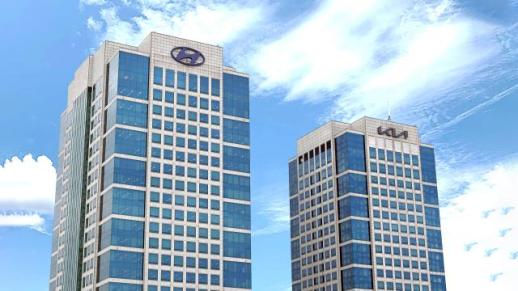 Hyundai Motor Struggles to Maintain 600,000 Won Amid Three-Day Decline Hyundai Motor's stock price has dropped for three consecutive trading days, falling below the 600,000 won mark. This decline is attributed to a weak robotics theme and growing concerns over labor disputes. On May 19, the Korea Exchange reported that Hyundai Motor's shares were trading at 612,000 won at 10:10 a.m., down 7.69% from the previous trading day. The stock has continued to weaken, with losses of 5.29% and 1.69% in the prior two sessions, marking a rapid decline over the last three days. The stock has plummeted from around 700,000 won to the low 600,000s, indicating increased pressure at its peak. Market analysts suggest that profit-taking following a recent surge in stock prices and the associated price pressures have led to this adjustment. Additionally, labor disputes surrounding the sale of Hyundai Mobis's lamp division are escalating. The Hyundai Motor Group union has labeled the sale as a "destruction of labor relations" and is pushing back against it. Following a joint solidarity declaration from the unions of affiliated companies, the Hyundai Motor and Kia unions have issued a supportive statement, strengthening their collective stance. This has raised concerns about potential strikes, further dampening investor sentiment. Despite these challenges, the securities industry maintains a positive outlook for Hyundai Motor. Hyundai Securities has raised its target price for the company from 660,000 won to 950,000 won, an increase of 47%. Analyst Jang Mun-soo cited the expected visibility of achievements in the robotics sector and advancements in autonomous driving technology, as well as anticipated strategic collaborations with companies like NVIDIA and Google, as reasons for the optimistic forecast.* This article has been translated by AI. 2026-05-19 11:43:43
 -
 SK Securities Raises Target Price for SK Square Reflecting Hynix Stake Value SK Securities announced on May 19 that it has raised the target price for SK Square to 1.45 million won while maintaining its investment rating at 'Buy.' This adjustment reflects an increase in equity method income from SK Hynix and the potential rise in stake value. Choi Kwan-soon, a researcher at SK Securities, stated, "SK Square's consolidated operating profit for the first quarter reached 8.3 trillion won, marking the highest quarterly performance on record. This was significantly influenced by the increase in equity method income from SK Hynix." He further noted, "Last year's net profit for SK Hynix was approximately 42.9 trillion won, but it is expected to expand to 205 trillion won this year, which is anticipated to drive improvements in SK Square's consolidated performance." Choi also highlighted the strong correlation between SK Square's stock price and that of SK Hynix. He remarked, "Currently, 98.6% of SK Square's stake value is tied to SK Hynix, and SK Square's 52-week beta is higher than that of SK Hynix, indicating that it tends to experience greater stock price increases during periods of rising SK Hynix shares." Additionally, he mentioned, "As SK Hynix's market capitalization increases, institutional investors' demand for SK Square is likely to rise due to regulations on single-stock holdings. This is a key reason why SK Square exhibits a higher beta compared to SK Hynix." Moreover, he suggested that during the process of promoting overseas depositary receipts, SK Square is likely to maintain a stake of over 20% in SK Hynix to preserve its influence. He concluded that if further stock price increases for SK Hynix are anticipated, expanding SK Square's stake would be a viable strategy. * This article has been translated by AI. 2026-05-19 08:55:50
 -
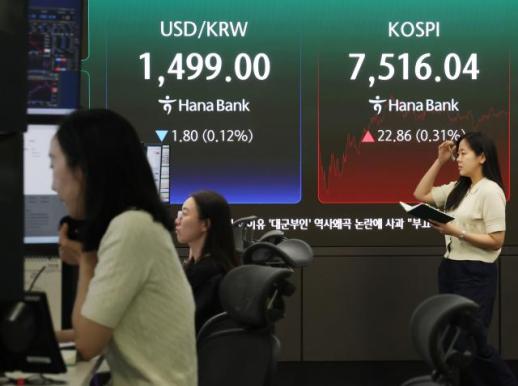 KOSPI Plummets Amid Rising Interest Rate Fears, Individual Investors Bet Big The South Korean stock market experienced another severe "rollercoaster" day on May 18. Fears of rising interest rates from the U.S. led to a sharp drop in the early trading session, prompting concerns of a "Black Monday" akin to last week's "Black Friday." However, the fear of rising rates did not deter individual investors, who have made over 32 trillion won in net purchases over the past eight trading days. On this day, they contributed more than 2 trillion won in buying, helping to lift the index.Despite the rebound, the overall market sentiment remained subdued. Among the 948 stocks listed on the KOSPI, only 203 saw gains, while 688 declined, with 57 remaining unchanged. Notably, 110 stocks fell by more than 5%, indicating a more significant perceived loss.Nevertheless, individual investors aggressively pursued bargain buying. According to the Korea Exchange, they net purchased 2.2 trillion won in the stock market alone on this day. In contrast, foreign investors sold off 3.65 trillion won, while institutional investors bought 1.39 trillion won.Over the last eight trading days, individual investors' net purchases totaled 32.69 trillion won, while foreign investors sold off 35.73 trillion won during the same period. On May 15 alone, individual net purchases reached 7.23 trillion won. As the market continues to decline, individual investors are increasingly intensifying their bargain buying efforts.However, there are concerns that continued market declines could lead to increased risks of forced selling. According to the Korea Financial Investment Association, as of May 15, the amount of margin loans stood at 1.54 trillion won, with forced selling amounting to 37.5 billion won. Analysts suggest that if the index continues to fall, the volume of forced selling could increase, exacerbating the downward trend.While individual investors are actively engaging in bargain buying, some investors who bet on a market decline are facing significant losses. The KODEX 200 Futures Inverse 2X, a popular inverse product, recorded a -40.70% return over the past month. Similarly, the TIGER 200 Futures Inverse 2X posted a 40.48% loss during the same period. The repeated rebounds following sharp declines have also worsened the returns for those betting on a downturn, with the last two trading days showing returns of -1.7% and -1.6%, respectively.Analysts identify the surge in U.S. Treasury yields as a key factor driving volatility in global markets. The yield on the U.S. 10-year Treasury has surpassed 4.5%, while the 30-year yield has exceeded 5%, leading to a rapid spread of risk-averse sentiment. Concerns over the prolonged conflict in the Middle East and inflation pressures from rising oil prices are also contributing to market unease.The South Korean stock market has been affected by increased foreign selling, but semiconductor stocks have provided some support. As Samsung Electronics turned upward during trading, the KOSPI managed to reduce its losses and eventually reversed course. Analysts predict that the domestic market will continue to experience high volatility in the near term, influenced by U.S. interest rate trends, geopolitical developments in the Middle East, and labor issues at Samsung Electronics.Han Ji-young, a researcher at Kiwoom Securities, stated, "The market is expected to be exposed to macro uncertainties. The upcoming earnings results from NVIDIA, scheduled for later this week, could be a pivotal moment for improving market sentiment, particularly for semiconductor stocks."Seo Sang-young, a researcher at Mirae Asset Securities, noted, "The decline in the KOSPI was significantly reduced when Samsung Electronics turned upward amid news surrounding its labor issues. However, the recent surge in Treasury yields is likely to continue, making increased volatility in global markets inevitable."* This article has been translated by AI. 2026-05-18 21:06:00
 -
 KOSPI Defies Rising Interest Rates, Only Global Index to Rise Despite fears of soaring interest rates, the KOSPI managed to maintain its upward momentum. As U.S. Treasury yields surged, stock markets around the world experienced declines, but the KOSPI was the only index to rise, buoyed by strong earnings expectations for Samsung Electronics and SK Hynix.<related articles on page 4> According to the Korea Exchange, the KOSPI closed at 7,516.04, up 22.86 points (0.31%) from the previous trading day. Initially, the index plummeted more than 4%, dropping to 7,142.71. However, as the afternoon progressed, buying interest in semiconductor stocks helped reverse the trend. Notably, major semiconductor companies like Samsung Electronics and SK Hynix supported the market, with Samsung rising 3.88% and SK Hynix increasing 1.15%. In contrast, stock markets worldwide fell due to the spike in U.S. Treasury yields. On May 15, the Dow Jones Industrial Average dropped 1.07%, the S&P 500 fell 1.24%, and the Nasdaq Composite declined by 1.54%. Asian and European markets also continued their downward trend. As of 3:30 PM, Japan's Nikkei 225 was down 0.97%, Hong Kong's Hang Seng Index fell 1.56%, and Taiwan's TAIEX decreased by 0.68%. The Shanghai B-Share Index dropped 2.56%, while the Shenzhen B-Share Index fell 1.10%. The Shanghai Composite and Shenzhen Composite indices also declined by 0.46% and 0.35%, respectively. Essentially, the KOSPI was the only major index showing an upward trend. Market analysts predict that the surge in bond yields will lead to significant volatility in the stock market for the foreseeable future. Concerns over the prolonged conflict in the Middle East and rising international oil prices have reignited inflation fears, pushing the yield on 10-year U.S. Treasury bonds above 4.5% and the 30-year bonds over 5%. Worries about the Federal Reserve's prolonged tightening measures have also resurfaced. Bond yields in major European countries such as the UK, Germany, and France, as well as in Japan and Taiwan, are also on the rise. The increase in interest rates is also raising borrowing costs for companies and putting pressure on growth stock valuations, triggering a sell-off in tech stocks. Reuters reported that the 12-month forward price-to-earnings ratio (P/E) for the S&P 500 is significantly above its long-term average, with rising rates exacerbating concerns about overvaluation. Lee Kyung-min, an analyst at Daishin Securities, stated, "The yield on 10-year U.S. Treasury bonds has risen to the 4.6% level, continuously dampening risk appetite. However, the inflow of bargain hunting in the semiconductor sector has led to a strong performance for the KOSPI."* This article has been translated by AI. 2026-05-18 20:00:33
 -
 LS Shares Surge 13% Following Major U.S. Contract Win LS is experiencing a strong performance in the market, driven by expectations of improved results from its major subsidiaries and news of significant contracts within its group of wire and cable affiliates. As of 1:30 PM on May 18, LS shares were trading at 537,000 won, up 64,500 won (13.65%) from the previous trading day, according to the Korea Exchange. The surge in stock price is attributed to upward revisions of target prices by analysts and growth expectations for the group’s affiliates. LS's subsidiary, Gaon Cable, announced that it has signed a long-term contract with a major U.S. tech company through its U.S. entity, LSCUS, to supply bus ducts for data centers until 2030. The contract is valued at over 4 trillion won, marking the largest order in the history of the domestic wire and power equipment industry. Under this agreement, bus ducts produced at LS Cable's Gumi plant will be prioritized for supply, with plans to expand distribution through its Mexican subsidiary and Gaon Cable's Jeonju plant in the future. Market analysts are increasingly optimistic that the expansion of AI data centers will lead to greater investments in power infrastructure, serving as a long-term growth driver for LS Group's wire and cable affiliates. Additionally, Daishin Securities raised its target price for LS by 37% to 630,000 won, citing structural improvements in the performance of its major subsidiaries. The firm maintained a 'buy' rating. Analyst Heo Min-ho noted, "LS's first-quarter revenue reached 9.5 trillion won, with operating profit of 476.1 billion won, significantly exceeding market expectations. The profit increases from key subsidiaries such as LS Cable, LS MnM, LS ELECTRIC, and LS I&D are the main factors behind this growth." Particularly, expectations for LS Cable's expansion in the submarine cable business have been highlighted. Heo stated, "The selective order volume centered on high-value underground and submarine cables is being reflected in sales this year. Starting from the fourth quarter, revenue recognition for HVDC submarine cables for export to Europe will begin, leading to an expansion in performance." * This article has been translated by AI. 2026-05-18 14:30:21
 -
 KOSPI Reclaims 7500 Mark Amid Heavy Buying by Individual Investors The KOSPI index has reclaimed the 7500 mark, bolstered by significant buying from individual investors despite a sell-off by foreign investors. In contrast, the KOSDAQ index is experiencing a decline of over 2%, primarily driven by weakness in biotech and robotics stocks. According to the Korea Exchange, as of 10:50 a.m. on May 18, the KOSPI rose by 18.83 points (0.25%) to reach 7512.01. Earlier in the session, it had dipped below 7200 but rebounded thanks to strong buying from individual investors, who recorded a net purchase of 1.6191 trillion won. Meanwhile, foreign investors sold off 1.7513 trillion won, while institutional investors made a net purchase of 85.2 billion won. Among the top stocks by market capitalization on the KOSPI, the performance was mixed. Semiconductor and IT-related stocks like Samsung Electronics (up 4.25%), Samsung Electronics Preferred (up 2.29%), SK Hynix (up 1.76%), and Samsung Electro-Mechanics (up 0.79%) showed strength. Conversely, stocks such as HD Hyundai Heavy Industries (down 4.38%), Hyundai Motor (down 4.14%), LG Energy Solution (down 2.52%), Samsung Biologics (down 2.04%), Doosan Enerbility (down 1.99%), and SK Square (down 1.37%) faced declines. The KOSDAQ index, at the same time, recorded a drop of 23.05 points (-2.04%), settling at 1106.77. In the KOSDAQ market, foreign investors made a net purchase of 39.2 billion won, but individual and institutional investors sold off 10.2 billion won and 48 billion won, respectively, contributing to the index's downward trend. Most of the top stocks by market capitalization on the KOSDAQ are also in decline. Stocks such as Rainbow Robotics (down 6.79%), ABL Bio (down 6.87%), Samchundang Pharm (down 5.93%), Alteogen (down 3.93%), Kolon TissueGene (down 3.23%), and HLB (down 3.08%) are experiencing losses. However, JUSUNG Engineering saw a significant surge of 29.96%, while EcoPro BM (up 1.39%) and Rino Technology (up 1.39%) showed slight gains. 2026-05-18 13:05:38
 -
 Hanwha Investment Upgrades Kolon Target Price Amid Chinese Consumer Recovery Hanwha Investment & Securities maintained its "buy" rating for Kolon and raised its target price to 100,000 won, citing a significant improvement in Kolon Sports China's performance due to the recovery of Chinese consumer spending. Lee Jin-hyup, an analyst at Hanwha Investment & Securities, reported that Kolon's consolidated revenue for the first quarter reached 1.5188 trillion won, a 5% increase compared to the same period last year, while operating profit surged by 149% to 98.8 billion won. He attributed this strong performance to improved profitability in both Kolon Global's construction sector and Kolon Mobility Group's retail sector. On a standalone basis, revenue and operating profit were 34.1 billion won and 25.6 billion won, respectively, reflecting decreases of 15% and 20% year-on-year. However, the performance of consolidated subsidiaries showed significant improvement. Kolon Global's operating profit increased by 100% to 21.7 billion won, while Kolon Mobility Group's profit rose by 71% to 20.9 billion won. Notably, Kolon Sports China exhibited remarkable growth, with first-quarter revenue of 362.8 billion won and net profit of 99.9 billion won, marking increases of 66% and 101% year-on-year, respectively. The net profit margin rose by 5 percentage points to 28%. Lee noted, "With a solid brand presence in China and the recent recovery of the Chinese consumer market, Kolon Sports China continues to experience high growth, exceeding our previous forecasts." As a result, Hanwha Investment & Securities has also revised its annual performance outlook for Kolon Sports China, projecting revenue of 1.4724 trillion won and net profit of 335.2 billion won for the year, representing increases of 61% and 98% compared to last year. These estimates are 9% and 11% higher than previous projections. Lee added, "The current market capitalization of approximately 800 billion won is significantly undervalued. Even when excluding the value of Tissue Jin, there is ample room for further growth based on a conservative NAV calculation that discounts Kolon Sports China's value by 50%."* This article has been translated by AI. 2026-05-18 08:27:19
 -
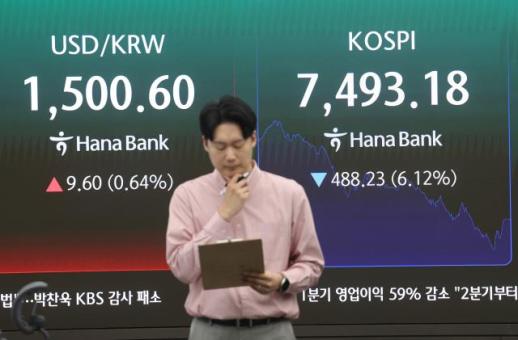 KOSPI Attempts Recovery Amid U.S. Interest Rates and NVIDIA Earnings Concerns Following a sharp decline in U.S. stock markets and a significant drop in the KOSPI, attention turns to whether the domestic market can attempt a rebound this week. External factors such as rising long-term U.S. interest rates, geopolitical risks from the Middle East, and concerns over NVIDIA's earnings are expected to increase market volatility. On May 18, the Korea Exchange reported that the KOSPI closed at 7493.18, down 488.23 points (-6.12%) from the previous trading day. The index briefly surpassed 8000 during the session but experienced significant fluctuations as profit-taking emerged. This week, the KOSPI is expected to continue its high volatility as it reacts to U.S. interest rate trends, comments from Federal Reserve officials, and NVIDIA's earnings report. Kiwoom Securities has projected a weekly KOSPI range of 7150 to 7700. Analysts are also considering the possibility of a technical rebound following the recent sharp decline. The KOSPI's drop of over 6% last Friday has led to perceptions that the recent losses were excessive. The rapid rise of major global stock markets, driven by an AI rally, is also seen as a factor for correction. From the beginning of this month until May 14, the KOSPI surged 21.0%, while the Nasdaq rose 7.0% and Japan's Nikkei 225 increased by 5.7%. The biggest focus this week will be NVIDIA's earnings. The company is set to release its first-quarter results on May 21 at approximately 5 a.m. Korean time. Market participants are keenly watching how NVIDIA's revenue and profitability will compare to expectations. The current market consensus anticipates revenue of $78 billion and a gross profit margin (GPM) of 75.0%. Key variables include demand for the Blackwell (B200) and the production schedule for the next-generation Rubin (R100), as well as the impact of sales to China. These factors are directly linked to the earnings outlook for domestic semiconductor companies like Samsung Electronics and SK Hynix. Analysts believe that if NVIDIA exceeds market expectations with its earnings and guidance, it could reverse the recent negative sentiment in global markets affected by concerns over interest rates and inflation. Additionally, this week will see comments from key Federal Reserve officials, the release of the April FOMC minutes, U.S. May inflation expectations data, and Japan's April Consumer Price Index (CPI), all of which are likely to heighten market sensitivity to macroeconomic events. In South Korea, the planned strike by Samsung Electronics' labor union on May 21 is also seen as a potential variable. If negotiations fail, the possibility of an actual strike and the government's consideration of emergency mediation could impact investor sentiment in the domestic market. Han Ji-young, an analyst at Kiwoom Securities, stated, "While we may see a technical buying trend due to perceptions of excessive short-term losses early this week, macroeconomic uncertainties are likely to persist." Meanwhile, as of 8:09 a.m., major large-cap stocks are showing weakness in pre-market trading. Samsung Electronics is trading down 0.55% at 269,000 won, while SK Hynix (-1.65%), Hyundai Motor (-1.71%), and Kia (-1.31%) are also experiencing declines. Stocks related to shipbuilding and nuclear power, which had recently seen significant gains, are also facing notable declines. HD Hyundai Heavy Industries is down 3.44%, and Doosan Enerbility has dropped 3.34%. SK Square is also down 3.10%. Additionally, most of the top market capitalization stocks, including LG Energy Solution (-1.68%), Samsung Electro-Mechanics (-0.89%), and Samsung Biologics (-0.35%), are showing downward trends.* This article has been translated by AI. 2026-05-18 08:18:33
 -
 Top 10 Securities Firms Report Combined Q1 Profit of 4.3 Trillion Won The dominance of banks in South Korea's financial market is being challenged as securities firms report record profits. Following a strong stock market rally that began in the second half of last year, the top 10 securities firms achieved unprecedented earnings in the first quarter of this year. Their combined net profit surpassed 4 trillion won for the first time, narrowing the gap with the five largest banks to just 1.1 trillion won.According to data from the Financial Supervisory Service's electronic disclosure system, the combined net profit of the top 10 securities firms (based on equity capital) for the first quarter was 4.33 trillion won, a significant increase of 2.3 trillion won (113.65%) compared to 2.07 trillion won during the same period last year.The gap with the five largest banks has also narrowed significantly. The combined net profit of these banks for the first quarter was 4.44 trillion won, leaving a difference of only about 1.1 trillion won. This marks a substantial shift in the financial landscape, as securities firms grow to challenge the long-standing supremacy of banks.Leading the securities sector, Mirae Asset Securities and Korea Investment & Securities outperformed NH Nonghyup Bank (5.58 trillion won) and Woori Bank (5.31 trillion won). Mirae Asset Securities reported a record net profit of 1.01 trillion won for the first quarter, a staggering 288% increase from the same period last year, marking the first time any domestic securities firm has exceeded 1 trillion won in quarterly net profit. Korea Investment & Securities also posted a net profit of 784.7 billion won, driven by increased brokerage revenue and improved performance in the investment banking sector.Kiwoom Securities ranked third with a net profit of 477.4 billion won, while Samsung Securities achieved a record quarterly profit of 450.9 billion won. Most of the top 10 securities firms, including KB Securities (350.2 billion won), Shinhan Investment Corp. (288.4 billion won), Meritz Securities (254.3 billion won), Daishin Securities (145.5 billion won), and Hana Securities (103.3 billion won), reported strong performances.The share of net profit from securities firms compared to banks is also rising rapidly. In 2022, the net profit of securities firms accounted for 27.8% of that of banks, but this figure increased to 36.3% in 2023, 42.9% in 2024, and reached 50.0% last year. The annual combined net profit of the top 10 securities firms was 7.67 trillion won, nearing half of the 15.33 trillion won reported by the five largest banks. Analysts attribute the accelerated narrowing of this gap to the rising stock market and increased trading volumes this year.The increase in trading volumes and a recovery in investor sentiment are key factors behind the improved performance. As the KOSPI index continues to hit record highs, individual investors have poured significant funds into the stock market, accompanied by foreign investments, leading to a surge in brokerage revenue. The recovery in the corporate finance (IB) market, including initial public offerings (IPOs) and corporate bond issuances, has also contributed to profitability. Jeong Tae-jun, a researcher at Mirae Asset Securities, noted, "As the stock market has been on an upward trend since last year, changes are also occurring in household asset composition. We expect the trend of improving performance among securities firms to continue in the future."* This article has been translated by AI. 2026-05-17 17:40:04
 -
 U.S. Stock Holdings Exceed 300 Trillion Won as Big Tech Rally Resumes The resurgence of a rally centered on major U.S. tech companies has pushed the total value of U.S. stock holdings to over 300 trillion won. Following a period of hesitation due to domestic market stimulus policies and expectations for the KOSPI to reach 8,000, overseas investors are preparing to return to the U.S. market. According to the Korea Securities Depository's securities information portal, Saveuro, as of May 14, the value of U.S. stocks held by domestic investors was recorded at $200.11 billion (approximately 300.27 trillion won). This marks the second time that U.S. stock holdings have surpassed $200 billion since May 11. The holdings represent the amount of foreign securities that domestic investors have purchased and are currently held by the Korea Securities Depository. However, considering the recent strength of the U.S. stock market, it is likely that the increase in value is more attributable to rising stock prices rather than actual capital inflow. Despite capital outflows, the increase in U.S. stock holdings indicates significant gains in the U.S. market. Many of the top holdings among domestic investors are concentrated in artificial intelligence (AI), semiconductors, and big tech companies, suggesting that the recent rally has had a direct impact. U.S. tech stocks have recently experienced a sharp upward trend. The Nasdaq index has risen approximately 5.4% this month and has surged about 26.7% compared to its low in March. The S&P 500 index is also reaching new all-time highs, driven by gains in major tech stocks related to AI and semiconductors. Notably, popular stocks among overseas investors, such as Tesla and Nvidia, have increased by approximately 22% and 15%, respectively, over the past month. However, domestic investors have been taking profits, recording net sales of $432 million in Tesla and $738 million in Nvidia during the same period. In the past month, Intel has emerged as the top net purchase among domestic investors. The stock has surged amid expectations for semiconductor production contracts for Apple's next-generation devices. Additionally, other AI-related tech stocks, including Micron and Alphabet, have also ranked high in net purchases. 2026-05-17 10:45:28