
Journalist

Seon Jae kwan
seon@economidaily.com
-
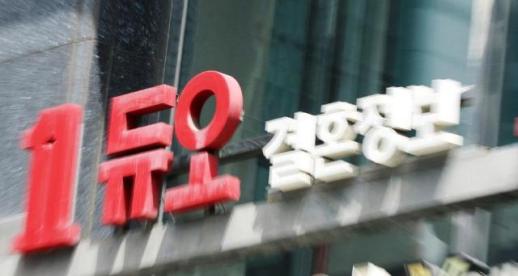 Matchmaking firm Duo slapped with fines for massive data breach SEOUL, April 23 (AJP) - Matchmaking firm Duo was slapped with heavy fines over a massive data leak affecting nearly 430,000 users, a state-run privacy watchdog said on Thursday. The Personal Information Protection Commission imposed about 1.2 billion won (US$810,000) in penalties and fines on the company after a Duo employee's computer was hacked in January last year, exposing sensitive personal information of some 427,464 paid members. The leaked information included names, contact details, resident registration numbers, and passwords, along with personal data such as height, weight, and marriage history. The commission ordered Duo to take immediate steps to correct its lax database management and illegal practices after investigators found that it lacked even basic security measures such as systems to block access after repeated login attempts, making it easy for hackers to gain access to its database. It also used an outdated encryption method that was vulnerable to cyberattacks. The probe also revealed violations in how the company gathered and stored personal data, as it routinely collected sensitive personal information such as resident registration numbers and failed to destroy about 300,000 records of its former members that had been kept beyond the five-year retention period, increasing the scale of the breach. The commission added Duo took 72 hours to report the breach without a valid reason, despite recognizing the leak. "We humbly accept the commission's decision and will do our best to prevent a recurrence and further harm," said a Duo staffer. 2026-04-23 15:11:03
 -
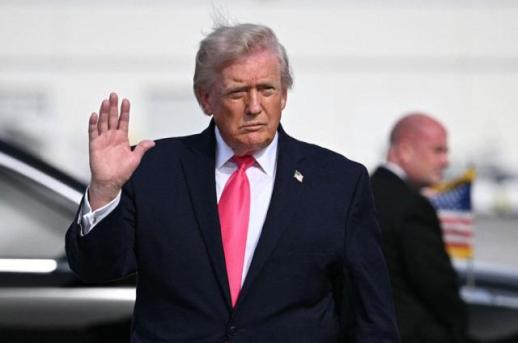 Washington 'very close' to deal with Iran as talks may resume this weekend, Trump says SEOUL, April 17 (AJP) - The U.S. is "very close" to reaching a deal with Iran to end the prolonged conflict in the Middle East, with talks between the two sides likely to resume as early as this weekend, U.S. President Donald Trump said on Thursday. Speaking to reporters at the White House before departing for Las Vegas, Trump suggested some progress has been made in negotiations, though Tehran has yet to comment. "The big thing we have to do is we have to make sure that Iran does not have a nuclear weapon," Trump said, adding "So, very important is that Iran does not have a nuclear weapon, and they've agreed to that." "We have a very powerful statement that they will not have beyond 20 years, that they will not have nuclear weapons," he also claimed. With these developments, another round of talks could be held in Pakistan this weekend after the first round of talks collapsed without a deal last week, signaling that Trump, who may want to save face and leave, is seeking a breakthrough before April 21, when a two-week ceasefire agreed earlier this month is set to expire. "If the deal is signed in Islamabad, I might go. They want me to go," he added. But it remains unclear whether Trump's remarks are accurate. Uranium enrichment is a make-or-break issue for Iran, which is unlikely to abandon it without major concessions. Trump also warned that failure to reach an agreement could lead to renewed confrontations. "I would say the fighting, if there's no deal, fighting resumes," he said. 2026-04-17 09:10:04
 -
 Hyundai to invest over $90 bn through 2030 to build robotics ecosystem in Korea SEOUL, February 22 (AJP) -Hyundai Motor Group said Sunday it will invest a record 125.2 trillion won ($93 billion) in South Korea from 2026 to 2030 under a more aggressive and detailed robotics and physical artificial intelligence roadmap unveiled last month after the high-profile debut of its industrial and humanoid robot lineup at a major global technology exhibition. The five-year domestic investment plan marks the largest in the group’s history and reflects Hyundai’s ambition to position itself as a global hub for next-generation manufacturing and intelligent mobility. Of the total, 71.1 percent — about 89 trillion won — will be allocated to future industries and research and development, including robotics, AI, electric vehicles, hydrogen and software-defined vehicles (SDVs). Hyundai said these technologies form an integrated growth platform centered on physical AI, which combines robotics hardware, real-world data and advanced software. Rather than limiting its focus to robot manufacturing, Hyundai aims to establish a comprehensive value chain spanning contract production, subscription services, training hubs, AI learning systems and real-time control platforms. Group officials said competitiveness in robotics will hinge less on raw performance and more on how effectively robots are deployed and improved through continuous field data. Hyundai plans to leverage massive datasets generated across its affiliates — from automobiles and steelmaking to parts, logistics, defense and rail — to accelerate AI learning and commercialization. “Without real-world operational data, even advanced robots cannot evolve into competitive products,” the group said. By 2028, Hyundai aims to build annual production capacity for 30,000 robots, securing an early foothold in the fast-growing global market. To support large-scale deployment, Hyundai is reviewing plans to establish a dedicated Robot Metaplant Application Center near Savannah, Georgia, close to its U.S. electric vehicle plant, the Hyundai Motor Group Metaplant America. The facility would serve as a large-scale training and validation base for humanoid and industrial robots. At the same time, the group is considering building AI data centers along Korea’s southwestern coast, including South Jeolla and North Jeolla provinces, where renewable energy can support high-intensity computing and data storage. Hyundai is pursuing a dual-track strategy that combines in-house hardware development with external software partnerships. Through its U.S. robotics subsidiary Boston Dynamics, the group produces advanced robots such as the humanoid Atlas and quadruped Spot. Hyundai Mobis supplies core actuators and modules, Hyundai AutoEver operates robot control systems, and Hyundai Glovis manages logistics and distribution. Under the roadmap, Hyundai recently invested several million dollars in U.S.-based startup Field AI, which develops foundation models enabling robots to navigate unfamiliar environments without prebuilt maps. Field AI’s technology has already been tested on Spot robots at construction sites and is expected to be applied to next-generation Atlas models, potentially strengthening Hyundai’s plan to deploy humanoids at its U.S. plant from 2028. Hyundai has also secured 50,000 of the latest Blackwell processors from Nvidia to reinforce its AI computing infrastructure. The long-term robotics drive comes as Hyundai Motor Company has begun accelerating spending under its five-year capital framework. The automaker said last month it will invest 17.8 trillion won in 2026 alone — more than it earned in 2025 — focusing on robotics, autonomous driving and hydrogen technology. The amount accounts for about 23 percent of its previously announced 77.3 trillion won investment plan for 2026–2030. “We plan to concentrate investment in 2026 and 2027,” said Lee Seung-jo, chief financial officer of Hyundai Motor, during an earnings call. “Spending will peak during this period, though the overall investment envelope remains unchanged,” he said. Analysts say the front-loaded strategy reflects Hyundai’s determination to secure early leadership in physical AI and humanoid robotics, as global rivals move rapidly toward commercialization. Hyundai’s robotics push is closely tied to autonomous driving and SDVs, as both rely on similar algorithms for perception, route planning and real-time decision-making. Park Min Woo, head of the group’s Advanced Vehicle Platform division and CEO of 42dot, is expected to play a central role in integrating robotics and vehicle software. A former executive at Tesla and Nvidia, Park is tasked with accelerating Hyundai’s transition toward a unified mobility ecosystem. Hyundai said South Korea is well-positioned to emerge as a global robotics hub under its “DESIGN” framework — demand, experience, supply chain, infrastructure, government and network. The group cited demographic pressures, estimating that Korea will need 1.22 million additional workers by 2034 due to low birth rates and rapid aging, creating structural demand for automation. Korea’s manufacturing robot density — 1,012 units per 10,000 workers in 2023 — far exceeds second-place Singapore, reflecting strong operational experience. Dense supplier networks, high-speed communications and cloud infrastructure further support large-scale AI learning and robot control, Hyundai said. "The target is to complete an intelligent factory where robots can operate autonomously in dynamic environments,” the official said. 2026-02-22 18:45:57
 -
 Seoul "sternly" protests to Japan's 'Takeshima Day' and unjust claim over Dokdo SEOUL, February 22 (AJP) -South Korea on Sunday lodged a formal protest against Japan over a government-backed event asserting sovereignty over a cluster of disputed islets in the East Sea, calling the move an “unjust” repetition of territorial claims over Korean territory. In a statement, Seoul’s foreign ministry said it “strongly protests” the annual “Takeshima Day” ceremony hosted by Japan’s Shimane Prefecture and the attendance of a senior Japanese government official, urging Tokyo to immediately abolish the event. The rocky outcrops — known as Dokdo in South Korea and Takeshima in Japan — have long been a flashpoint between the two neighbors. Seoul maintains effective control over the islets, which lie in rich fishing grounds and are believed to sit atop potentially valuable natural gas hydrate reserves. “Dokdo is clearly South Korea’s sovereign territory historically, geographically and under international law,” the ministry said, calling on Japan to halt what it described as groundless claims and to “face history with humility.” The ministry summoned Hirotaka Matsuo, deputy chief of mission at the Japanese Embassy in Seoul, to formally deliver its protest. According to Japanese media reports, Tokyo dispatched Naoki Furukawa, a Cabinet Office parliamentary vice minister, to the ceremony in Matsue, the capital of Shimane Prefecture. Furukawa said the islets are “clearly inherent Japanese territory” based on historical facts and international law, describing South Korea’s control as “an illegal occupation without any basis” that “cannot be tolerated.” He added that Japan would continue to press its position persistently. Japan has sent a parliamentary vice minister to the annual event since 2013. There had been speculation that a cabinet minister might attend following the inauguration of Prime Minister Sanae Takaichi, known for her conservative stance. However, Tokyo kept representation at the same level as in previous years, in what observers see as a sign of caution amid improving bilateral ties. Shimane Gov. Tatsuya Maruyama also reiterated Japan’s claim, while conservative newspaper Sankei Shimbun argued in an editorial that Tokyo should take a firmer stance, drawing parallels with high-level attendance at Japan’s “Northern Territories Day” events concerning disputed islands with Russia. Seoul has repeatedly objected to Japan’s claims, including a separate protest issued Friday after Japan’s foreign minister reaffirmed Tokyo’s sovereignty over the islets in a parliamentary address. Despite the annual flare-ups, analysts say the dispute is unlikely to escalate into a full-scale diplomatic crisis. Relations between Seoul and Tokyo have improved in recent years, driven in part by shared security concerns over North Korea’s advancing nuclear program and the need for closer trilateral coordination with the United States. A diplomatic source said Seoul intends to maintain a “two-track” approach — responding firmly on sovereignty while separating the Dokdo issue from broader cooperation in security and economic areas. “Strengthening effective control and continuing to inform the international community of Dokdo’s status is more important than reacting to each repeated claim,” the source said. Still, the recurring ceremony underscores how historical grievances rooted in Japan’s 1910–45 colonial rule of the Korean Peninsula continue to shape regional diplomacy, even as strategic realities push both sides toward pragmatic cooperation. 2026-02-22 17:36:59
 -
 Upbit operator probed over unlisted share trading practices SEOUL, February 03 (AJP) - Dunamu, operator of South Korea’s largest cryptocurrency exchange Upbit, is under investigation by the country’s antitrust regulator over suspected unfair practices in the unlisted-share trading market. The Fair Trade Commission (FTC) said Tuesday it recently conducted an on-site inspection at Dunamu’s headquarters in Seoul to examine allegations that the company restricted trading of its own shares to a single platform while denying similar access to a rival operator, potentially limiting competition. Regulators are reviewing whether Dunamu unfairly refused cooperation requested by a competing platform, for trading support involving Dunamu shares. Dunamu operates an unlisted-share platform, where its own shares are actively traded. Dunamu is regarded as one of the most valuable companies in South Korea’s over-the-counter (OTC) market, with a valuation estimated in the trillions of won. Industry sources said the rival trading platform sought cooperation and information sharing to enable trading of Dunamu shares but filed a complaint with the FTC after its request was rejected. Market observers say Dunamu’s own shares are among the most sought-after assets in Korea’s OTC market. The FTC plans to review internal documents and transaction data secured during the inspection to determine whether Dunamu’s refusal materially harmed market competition. If regulators conclude the refusal constituted an unfair trade practice, Dunamu could face corrective orders or financial penalties. The company has not provided detailed public comment but said it would cooperate with the investigation. * This article, published by Aju Business Daily, was translated by AI and edited by AJP. 2026-02-03 13:56:27
 -
 Samsung SDI signs major battery deal in US, possibly with Tesla SEOUL, January 30 (AJP) - Samsung SDI has signed a large battery supply contract in the United States for energy storage systems, the company said on Friday. Samsung SDI said details of the contract, including its value and duration, will remain confidential until Jan. 1, 2030. The counterparty was not also disclosed, but industry officials widely view Tesla as the leading candidate. Tesla has been actively securing battery supplies for ESS, including a 6 trillion won contract signed in July with LG Energy Solution for lithium iron phosphate, or LFP, batteries. The sources said the size and confidentiality period suggest the deal could be worth trillions of won. Samsung SDI said its U.S. unit, Samsung SDI America, signed the agreement with a U.S. customer. The company is increasingly focusing on ESS sales to help offset a temporary slowdown in electric-vehicle demand. Market attention has centered on Tesla, which has been diversifying its battery supply chain as demand grows for its large-scale ESS product, the Megapack. In November, speculation emerged that Samsung SDI would supply Tesla with about 10 gigawatt-hours of batteries annually for three years. At the time, Samsung SDI said it was in talks but had not finalized a deal. Roughly two months later, the company confirmed it had signed a supply contract, without naming the customer. The agreement comes as the industry prepares for what some analysts have described as an “AI power shock.” Data centers running generative AI services such as ChatGPT require stable, round-the-clock electricity, increasing reliance on ESS to store power from intermittent renewable sources such as solar and wind. Samsung SDI has traditionally focused on high-output, high-energy-density nickel-cobalt-aluminum batteries, but has been expanding into lower-cost LFP batteries as part of its technology strategy. The company has begun operating an ESS production line at StarPlus Energy, its joint venture plant with Stellantis, and plans to expand U.S. ESS battery production capacity to about 30 gigawatt-hours a year by the end of this year. It is also moving to convert a production line to manufacture LFP batteries for ESS, with operations targeted by year’s end. Analysts said the new order could help support Samsung SDI’s profitability as electric-vehicle demand growth slows, with the rapidly expanding North American ESS market emerging as a new source of cash flow. Research firm SNE Research forecasts the region’s ESS market will grow from 55 gigawatt-hours in 2023 to 181 gigawatt-hours in 2035. A Samsung SDI official declined to confirm the customer’s identity but said demand for grid-scale ESS is rising sharply. “With the arrival of the AI era, we will strengthen order-winning efforts centered on North America and diversify our lineup, including LFP, to secure market leadership,” the official said. * This article, published by Aju Business Daily, was translated by AI and edited by AJP. 2026-01-30 15:45:28
 -
 HBM4 production nears as Samsung, SK hynix vie for AI chip dominance SEOUL, January 28 (AJP) - Samsung Electronics and SK hynix are set to begin mass production of sixth-generation high-bandwidth memory (HBM4) as early as next month, intensifying competition in the fast-growing market for artificial intelligence semiconductors. According to industry sources on Wednesday, the two South Korean companies plan to start HBM4 mass production in February, with Samsung operating lines at its Pyeongtaek campus and SK hynix at its Icheon facility. The move signals that quality validation by key customers, including Nvidia, is nearing completion and that large-volume supply orders are imminent. Analysts say the company that ramps up production first could secure an early advantage in the next phase of the AI chip race. Samsung is seeking to regain technological leadership by moving early with HBM4. The company has recently passed final HBM4 quality tests conducted by Nvidia and AMD and is preparing to begin formal deliveries next month. Samsung lost ground to SK hynix in earlier generations such as HBM3 and HBM3E but has expressed confidence in its technological edge for HBM4. Samsung’s HBM4 uses a 4-nanometer foundry process for the logic die and sixth-generation 10-nanometer-class DRAM, a combination designed to maximize processing speed and power efficiency. SK hynix, meanwhile, is aiming to defend its market lead by deepening ties with major technology firms beyond Nvidia. The company has been confirmed as the sole supplier of HBM3E for Microsoft’s in-house AI accelerator, the Maia 200, unveiled on Jan. 26. The chip uses six stacks of SK hynix’s 12-layer HBM3E products. The development underscores SK hynix’s expanding role not only in Nvidia’s supply chain but also among large technology companies such as Google, Amazon and Microsoft. SK hynix has said it expects to maintain more than a 50 percent share of the HBM4 market, citing cooperation with Nvidia from the development stage of its next-generation Rubin graphics processing unit. HBM4 is widely seen as a potential game-changer for AI accelerators from 2026, as it offers roughly double the bandwidth of current-generation products, significantly boosting AI computing performance. Bank of America forecasts the global HBM market will reach $54.6 billion this year, up 58 percent from a year earlier. * This article, published by Aju Business Daily, was translated by AI and edited by AJP. 2026-01-28 09:03:29
 -
 SK hynix is sole HBM supplier for Microsoft's Maia AI chip SEOUL, January 27 (AJP) - SK hynix is reportedly the sole supplier of high-bandwidth memory (HBM) for Microsoft’s in-house artificial intelligence accelerator, the Maia 200. Industry sources said on Tuesday the South Korean chipmaker will exclusively supply its fifth-generation HBM, known as HBM3E, for the Maia 200 chip that Microsoft unveiled in the U.S. on Jan. 26 local time. The move adds Microsoft to SK hynix’s roster of key customers alongside Nvidia, reinforcing its lead in AI memory used for advanced computing. Maia 200 is an application-specific integrated circuit manufactured on TSMC’s 3-nanometer process. The chip integrates six 12-layer stacks of HBM3E, providing a total of 216 gigabytes of memory. Microsoft plans to deploy the chips in data centers in Iowa and Arizona as it seeks to reduce reliance on Nvidia’s graphics processing units. Major technology companies are accelerating efforts to design their own AI chips to lower costs and optimize performance, challenging Nvidia’s dominance. Google has introduced its seventh-generation tensor processing unit, Ironwood, while Amazon Web Services has rolled out its third-generation Trainium chip, broadening the AI accelerator market. That shift is creating new opportunities for HBM suppliers, as demand spreads from Nvidia’s GPUs to custom chips developed by large cloud providers, according to industry sources. High-performance HBM is essential for such chips, which are typically designed to be more power-efficient than general-purpose GPUs. "SK hynix’s exclusive supply agreement with Microsoft, following its strong foothold in Nvidia’s supply chain, reflects advantages in advanced memory manufacturing processes and yield management," a source said. Samsung Electronics is seeking to narrow the gap by strengthening cooperation with other big technology companies, particularly Google. Industry sources said Samsung supplies a significant portion of the HBM used in Google’s tensor processing units and Broadcom-designed chips, positioning itself within the Google-Broadcom ecosystem. The next competitive battleground is HBM4, the sixth generation of high-bandwidth memory, which is expected to add computing functions to memory chips and significantly raise technical complexity. Samsung has recently passed HBM4 qualification tests by Nvidia and Advanced Micro Devices and is expected to begin official deliveries as early as next month. SK hynix is also preparing for the transition, having begun building a mass-production system for HBM4 in September and working with Nvidia on performance optimization. * This article, published by Aju Business Daily, was translated by AI and edited by AJP. 2026-01-27 15:55:09
 -
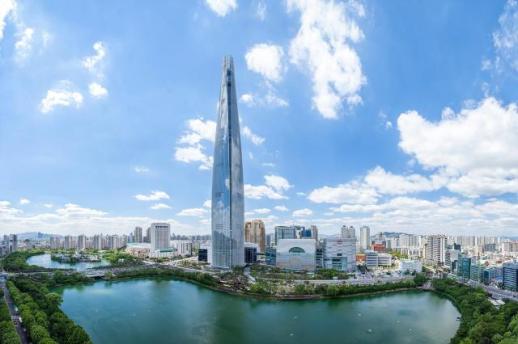 Regulator blocks merger plan for Korea's leading car rental firms, citing monopoly risks SEOUL, January 26 (AJP) - South Korea’s Fair Trade Commission (FTC) has blocked a proposed merger between Lotte Rental and SK Rent-a-Car, the country’s largest and second-largest rental-car operators, citing concerns that the deal would weaken competition and lead to higher prices. The commission said on Monday it had issued such an order on a filing by private equity firm Affinity Equity Partners to acquire a 63.5 percent stake in Lotte Rental. Affinity acquired SK Rent-a-Car in August 2024 and in March last year agreed to buy Lotte Rental shares held by Hotel Lotte and other shareholders for 1.8 trillion won, subsequently submitting a merger notification to regulators. “The transaction would place the two leading competitors in the rental-car market under the control of a single private equity firm,” the FTC said in a press release. It added concerns were “very large” that competition would be restricted, including through price increases. The FTC said the combined entity would command a 38.3 percent share of the long-term rental-car market and would also become the dominant player in short-term rentals. By contrast, the third-largest short-term rental operator holds just over a 3 percent share, raising the risk of a market structure characterized by “one giant firm versus many small operators,” it said. The commission also said its decision was based strictly on concerns that a private equity firm could dominate the top two operators, expand market power and later seek a high-priced resale, potentially distorting the market. The FTC decision is expected to complicate Lotte Group’s efforts to raise cash. The conglomerate has been seeking to sell the noncore Lotte Rental unit amid weak performance and liquidity strains at key affiliates, including Lotte Chemical and Lotte Engineering & Construction. With the 1.8 trillion won inflow no longer expected, the group will need to revise its broader financial restructuring plans. The decision also undermines Affinity’s exit strategy. The firm had planned to merge SK Rent-a-Car and Lotte Rental to strengthen market dominance, boost corporate value and eventually sell the combined business. It must now pursue a standalone strategy to enhance SK Rent-a-Car’s competitiveness or explore alternative structures to acquire Lotte Rental. * This article, published by Aju Business Daily, was translated by AI and edited by AJP. 2026-01-26 17:34:23
 -
 Samsung Electro-Mechanics posts record revenue on AI, auto electronics demand SEOUL, January 23 (AJP) - South Korea's Samsung Electro-Mechanics said Friday growth in artificial intelligence and automotive electronics helped it post the highest annual revenue in its history last year. In a regulatory filing, the company reported consolidated revenue of 11.3 trillion won ($7.7 billion) and operating profit of 913.3 billion won. Revenue rose 10 percent from a year earlier to a record high, while operating profit climbed 24 percent. Fourth-quarter revenue increased 16 percent from a year earlier to 2.9 trillion won, while operating profit more than doubled, rising 108 percent to 239.5 billion won, the company said. Samsung Electro-Mechanics expects continued expansion in AI infrastructure investment and the autonomous driving market this year. A company official said the firm plans to strengthen competitiveness in high-value products, including AI and automotive electronics, while building a mid- to long-term growth base through new businesses such as glass substrates and components for humanoid robots. * This article, published by Aju Business Daily, was translated by AI and edited by AJP. 2026-01-23 15:48:59