
Journalist

Baek So-hee
shinebaek@ajunews.com
-
 First Day of Increased Capital Gains Tax for Multiple Homeowners: Minister Kim Yoon-deok Addresses Concerns On the first day of the reimplementation of the increased capital gains tax for multiple homeowners, Minister of Land, Infrastructure and Transport Kim Yoon-deok dismissed concerns about a potential housing market freeze, stating, "The people's sovereignty government is different." In a post on X (formerly Twitter) on May 10, Kim noted, "Such forecasts are largely based on experiences from past administrations. Should we expect history to repeat itself this time? In the long run, I believe the people's sovereignty government will be different and must be different." This statement comes amid worries that multiple homeowners might withdraw their properties from the market due to the increased tax burden, leading to a housing market freeze. Kim emphasized that the people's sovereignty government has a different perspective and approach to real estate issues. He pointed out that previous administrations pursued stability policies for the real estate market while maintaining the basic framework of macroeconomic management, including monetary and financial policies. He added, "The Lee Jae-myung government is not merely focused on stabilizing the real estate market; we recognize that without addressing barriers to social mobility across income classes and regions, we cannot secure the future and unity of South Korea. We are pursuing fundamental institutional reforms to transform the economy from one reliant on real estate windfalls to a productive economic structure by completely redesigning the economic incentive structures in finance, taxation, and supply." Kim also highlighted the government's exceptional capacity for collaboration and execution. He stated, "As the public has witnessed with the achievement of a KOSPI of 7,000 and our response to the Middle East conflict, our housing supply policies are also different. Within just three months of taking office, we announced a plan to supply 1.35 million homes in the metropolitan area, followed by a plan for 60,000 homes in prime locations on January 29." He continued, "Most importantly, to legally and institutionally support these initiatives, eight legislative bills have been completed, and 14 are awaiting discussion in the National Assembly. We aim to finalize legislation before the end of the first half of the National Assembly session while breaking down barriers between departments to accelerate housing supply in areas like Gwacheon and Taereung more swiftly than ever." * This article has been translated by AI. 2026-05-10 11:33:07
 -
 LH Signs Deal to Seek Second Special Redevelopment Zone for Gunpo Sanbon Rebuild Korea Land and Housing Corp., known as LH, said Wednesday it signed a business agreement with residents’ representatives from Zones 12 and 13 in Gunpo’s Sanbon area to pursue designation as a “second special redevelopment zone.” The aging planned-city redevelopment program targets sites developed more than 20 years ago, including the first-generation new town of Gunpo Sanbon. It aims to improve living conditions through integrated upgrades that include infrastructure such as parks and schools. Projects in these areas will use an improved resident-proposal process under the government’s Sept. 7 housing supply measures. Residents can speed the process by securing consent from a majority of landowners and proposing zone designation to the local government. The Ministry of Land, Infrastructure and Transport has said prepared projects could cut timelines by at least six months because there is no separate preparation period for a public contest. LH said the agreement was intended to strengthen cooperation with residents so Zones 12 and 13 can move forward as a follow-up integrated reconstruction project and be designated as a second special redevelopment zone. Under the agreement, the residents’ group will handle key decisions and collect consent forms. LH will support the overall project, including drafting the special redevelopment plan, assisting with permits and approvals, and providing initial project funding. LH said it will begin by seeking preliminary advice on an application to propose designation of the special redevelopment plan in the second half of the year, aiming to secure zone designation by year’s end. Based on the current draft redevelopment plan, the project is expected to supply about 5,000 housing units in the area. “With the earlier leading districts, we will help drive redevelopment momentum across Sanbon and present a high-quality model based on our public redevelopment know-how,” said Park Hyeon-geun, head of LH’s Seoul metropolitan area redevelopment projects headquarters. In its Sept. 7 housing supply measures last year, the land ministry projected that redevelopment of aging planned cities in first-generation new towns, including Gunpo Sanbon, could enable the supply of 63,000 housing units through improvements to selection methods and project procedures. * This article has been translated by AI. 2026-05-07 15:33:20
 -
 Seoul Apartment Jeonse Listings Plunge, With Sharpest Drop in Outer Districts Jeonse listings for Seoul apartments have fallen by nearly 40% over the past year, with outer districts seeing the steepest declines, according to market data. Analysts said further tightening of rules targeting nonresident owners of a single home could prompt more landlords to move in or pull rentals from the market, worsening housing insecurity for lower-income tenants. As of May 7, the real estate big-data platform Asil counted 16,052 jeonse listings in Seoul, down 38.9% from 26,247 on May 6 last year. The drop was far sharper on the city’s outskirts. Jungnang-gu fell to 67 listings from 407, an 83.6% plunge, the largest decline among districts. Seongbuk-gu dropped 82.6% to 179 from 1,025. Gwanak-gu fell 80.3% to 100 from 507, and Nowon-gu fell 80.0% to 210 from 1,046. Guro-gu (498 to 118, down 76.4%), Geumcheon-gu (249 to 63, down 74.7%) and Gangbuk-gu (228 to 58, down 74.6%) also posted declines of more than 70%. By contrast, Seoul’s three affluent southern districts recorded declines in the teens. Songpa-gu fell 11.4% to 1,781 from 2,010, the smallest drop in Seoul. Seocho-gu fell 14.9% to 4,886 from 5,741, and Gangnam-gu fell 19.4% to 4,192 from 5,196. The pullback has been linked to the government’s Oct. 15 measures last year, which expanded land-transaction permit zones across Seoul and parts of the greater capital area and tightened owner-occupancy requirements and lending limits. Some investment money also shifted to less-regulated areas or to regions outside the capital, the report said. According to the Korea Real Estate Board, the share of Seoul apartment purchases by nonlocal buyers averaged 18.81% over the four months from November, immediately after the Oct. 15 measures, through February, the lowest level in about nine years. The report cited tougher conditions for so-called gap investment, along with the end of a temporary suspension of heavier capital gains taxes for multi-home owners and limits on loan extensions, as additional factors reducing rental supply. Pressure on jeonse prices is rising. Seoul Housing Information Plaza data showed Gangbuk-gu had the highest jeonse-to-price ratio at 67.9%, followed by Jungnang-gu at 67.5%, Gwanak-gu at 66.3%, and Eunpyeong-gu and Geumcheon-gu at 66.1% each. The ratio compares jeonse deposits with sale prices; it is often viewed as a threshold that can start to push up home prices when it exceeds 60%. With the government signaling tougher rules for nonresident one-home owners and additional lending curbs, the market is increasingly concerned that instability in the jeonse market could outweigh protections for end users. If pressure rises on nonresident owners who keep homes with jeonse tenants, landlords may be more likely to switch to living in the home or withdraw it from the rental market. Park Won-gap, senior real estate specialist at KB Kookmin Bank, said outer districts such as Jungnang-gu and Geumcheon-gu are already above 60%. “We need to watch whether the price stimulus that began in mid- to low-priced apartments spreads to Seoul’s high-priced areas,” he said. Park added that higher holding taxes could stabilize the sales market, but the burden could be passed on to tenants through higher rents. “Policies are needed to guide a soft landing so it does not spill over into housing insecurity for low-income households without homes,” he said.* This article has been translated by AI. 2026-05-07 15:24:18
 -
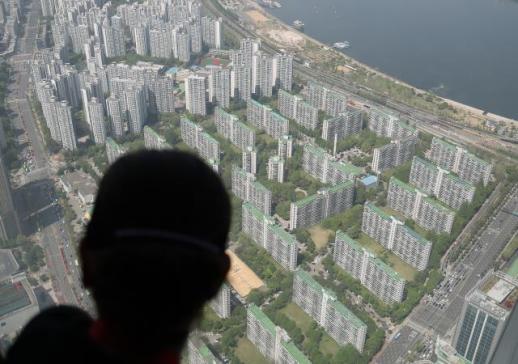 Seoul Apartment Prices Rise 0.15% as Yongsan Turns Up Ahead of Capital Gains Tax Change As bargain listings in high-priced apartment districts thinned out ahead of the end of a temporary suspension of heavier capital gains taxes, apartment prices in Seoul’s Yongsan district turned higher. The shift follows earlier turnarounds in Songpa two weeks ago and Seocho last week. According to the Korea Real Estate Board’s weekly apartment price trend report released on the 7th, Seoul’s weekly apartment sale prices rose 0.15% from the previous week. Seoul prices held a similar pace of gains amid mixed moves by district. They rose 0.15% in the third week of April and 0.14% in the fourth week. Dobong, Geumcheon, Nowon and Gwanak saw slower increases. Gwanak rose 0.17%, easing from 0.28% in the fourth week of April and 0.21% in the third week. Dobong rose 0.11%, down from 0.13% a week earlier and 0.19% two weeks earlier. Key areas along the Han River posted bigger gains. Mapo (0.10%→0.15%), Seongdong (0.14%→0.17%), Gwangjin (0.13%→0.15%) and Gangdong (0.08%→0.09%) all accelerated. The report attributed some of the widening gains to move-up demand from sellers in outlying districts that share the same living areas. Songpa, Seocho and Yongsan also strengthened. Yongsan rose 0.07% in the first week of May, turning positive. After declines began in the last week of February, Yongsan briefly turned up in late March before slipping again. Songpa and Seocho rose 0.17% and 0.04%, respectively, up from 0.13% and 0.01% the previous week. Gangnam fell 0.04%, extending its decline to an 11th straight week. Nam Hyuk-woo of Woori Bank’s real estate research center said that as many bargain listings were absorbed, slightly higher asking prices were reflected in some transactions. But he said Gangnam still showed a price-adjustment trend as additional last-minute bargain listings, centered on redevelopment apartments, came onto the market. In Gyeonggi province, prices rose mainly in areas with strong access to Seoul as end-users moved to buy homes amid tighter regulations. Examples included Anyang’s Manan district (0.12%) and Yongin’s Giheung district (0.21%), as well as Dongtan in Hwaseong (0.25%), Gwangmyeong (0.31%) and Yeongtong in Suwon (0.13%). Nam said tenants continued to opt for purchases in areas where rental listings for jeonse and monthly leases were shrinking faster. He added that districts with many apartments priced under 1 billion won benefited from easier access to policy loans, and from a relatively small gap between jeonse and sale prices. * This article has been translated by AI. 2026-05-07 14:25:42
 -
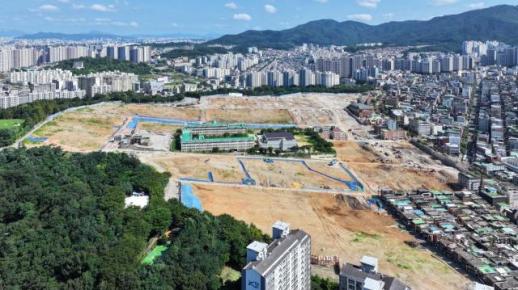 Seongnam’s Sangdaewon 2 Redevelopment Sets Member Forum as Builder Dispute Nears Turning Point A court fight over replacing the builder has deepened divisions in the Sangdaewon 2 redevelopment project in Seongnam, south of Seoul, prompting the union to switch from an ouster meeting to a members’ forum. The move comes as a court ruling has cast doubt on both the builder change and the validity of a key vote, forcing the parties to reassess next steps. Industry officials said Tuesday that the Sangdaewon 2 Housing Redevelopment Union notified members it will hold a “members’ forum to normalize the project” on May 9. May 9 had originally been set for an extraordinary general meeting to vote on removing the union head and executives. The change follows a court decision on April 29 granting DL E&C’s request for an injunction to suspend the effect of a union vote, effectively halting the impact of a general meeting held April 11 to pass an agenda item terminating DL E&C’s construction contract. The court said there was room to believe “a significant number” of written consent forms may have been forged. With the injunction granted, DL E&C’s builder rights remain in place for now. On the same day, the court dismissed the union side’s request to block a planned April 30 meeting to remove the union head. The emergency committee then decided to postpone the ouster meeting to May 9. But three days before that date, the union leadership and the emergency committee agreed to hold a forum instead. The shift comes after GS Engineering & Construction participated alone in the first bidding round and gained preferred bidder status, while the court’s ruling that the termination of DL E&C’s contract was invalid further complicated the process. Union leaders, including Chairman Jeong, had pushed through the contract-termination agenda to sign a construction contract with preferred bidder GS E&C. The emergency committee, however, has argued DL E&C should keep the job. Under the earlier plan, if the ouster agenda passed, DL E&C would begin construction as scheduled in June; if it failed, the union leadership would move to hold a general meeting on May 23 to select a builder. As the dispute over the builder change and union management drags on, delays, higher financing burdens and the risk of additional lawsuits appear unavoidable. Separate from the injunction, DL E&C’s main lawsuit seeking to invalidate the general meeting resolution is also underway, leaving legal uncertainty likely to persist. Some members have already faced cases of “self-paid interest,” in which they must pay interest in advance on relocation loans. That has occurred because a gap opened between interest due dates and loan disbursement dates as financing was delayed amid the builder uncertainty. DL E&C and GS E&C are closely watching the union’s internal discussions. “The court found the general meeting result invalid due to procedural flaws, so talks on selecting a builder have returned to square one,” an industry official said. “Only after the union leadership and the emergency committee reach an agreement will a result on the builder follow.” The Sangdaewon 2 redevelopment project calls for building a 5,090-home complex on a 242,000-square-meter site in Sangdaewon-dong, Jungwon-gu, Seongnam. Construction costs are projected at about 1 trillion won. After signing a contract with DL E&C in 2021, the sides clashed over whether to apply the company’s high-end “Acro” brand.* This article has been translated by AI. 2026-05-06 15:18:24
 -
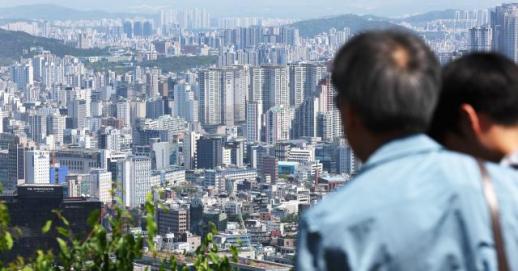 Seoul Jeonse Crunch Deepens as ‘Two-Tier’ Deposits Split Even Within Same Complex As Seoul’s jeonse market tightens, a “two-tier pricing” pattern is spreading, with large gaps in deposits even for the same complex and the same size unit. The split is most pronounced in high-priced complexes where home prices have surged and in complexes with a large share of public rental units that anchor cheaper jeonse deals. According to the Transport Ministry’s real-transaction disclosure system, a new jeonse contract for an 84-square-meter unit in Eunpyeong New Town’s Gupabal 10 Complex (Building 1019, 4th floor) was signed on May 1 for 680 million won. A comparable 84-square-meter lease in the same for-sale section of the complex, signed last month using a tenant’s right to request a renewal, was 580 million won — a gap of about 100 million won. The difference is sharper because the complex separates rental buildings from general-sale buildings. Of 100 jeonse transactions recorded in April for Buildings 1001 to 1028, only one new contract occurred in the general-sale buildings (1011 to 1019). In the rental buildings (1020 to 1028), 95 jeonse contracts were renewals, with 84-square-meter deposits around 25.117 million won, underscoring the internal split. A similar pattern has appeared in complexes with high rental shares. In Gangdong-gu, a new jeonse contract for an 84-square-meter unit in Gangil River Park 10 Complex was signed in February for 640 million won, while renewal contracts last month remained around 385.87 million won. Of the complex’s 694 households, rentals account for 67.7% (470 households), including 377 long-term jeonse units. The rental supply effectively sets a low-end price floor, widening the gap with new contracts. By district, the median deposit gap between new and renewed contracts in Gangdong-gu and Eunpyeong-gu was 100 million won each, well above the Seoul-wide gap of 55 million won. They ranked second in Seoul after Seocho-gu, which posted a 200 million won gap. The figures suggest the two-tier effect is intensifying in areas with expensive complexes or mixed public-rental developments. Yang Ji-young, a specialist at Shinhan Premier Pathfinder, analyzed 74,407 apartment lease transactions in Seoul from Jan. 5 to April 30. Among 38,246 jeonse deals, the median deposit for new contracts (17,825 cases) was 585 million won, 55 million won higher than the median for renewals (19,166 cases), at 530 million won. Gaps were also evident in key areas along the Han River where home prices rose sharply last year. Seocho-gu had the largest median difference at 200 million won, followed by Songpa-gu at 88 million won, Dongdaemun-gu at 75 million won, Seongbuk-gu at 60 million won, and Gangnam-gu and Seongdong-gu at about 50 million won each. In Songpa-gu’s Helio City, a new jeonse contract for a 110-square-meter unit (Building 110, 24th floor) was signed on April 22 for 1.7 billion won. A unit of the same size on the 21st floor in the same building was renewed the same month for 1.33 billion won. With renewal increases capped at 5% by law, the gap between market-priced new leases and capped renewals widened to as much as 370 million won even under similar conditions. Experts said volatility could increase as more tenants who have used up renewal rights are exposed to market prices. Yang warned, “From 2026 to 2027, when the first renewal cycle arrives for many newly built complexes, the market-price shock could begin in earnest.”* This article has been translated by AI. 2026-05-05 17:06:15
 -
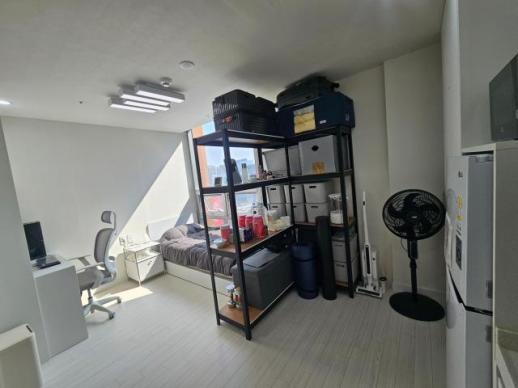 Inside a Seoul Hotel Remade as Youth Housing With AI Training and Coworking “Many residents work in AI, and after joining the community my portfolio really got stronger,” said Lim Ji-yoon, a resident at Eskis Gasan. “They recruited residents and even ran speech training. There were many chances to do productive things.” Lim, who moved into the complex through a special allocation for digital-industry workers, spoke during a visit on April 30 to Eskis Gasan in Seoul’s Geumcheon District. South Korea’s Ministry of Land, Infrastructure and Transport has begun expanding public rentals by remodeling nonresidential buildings. The program is part of a purchase-lease public rental housing initiative that buys vacant office and commercial properties and converts them into homes. The goal is to supply 2,000 units for young people and newly married couples near subway stations and university areas. Eskis Gasan is a converted former hotel, once called Haedamchae Hotel. A second-floor hotel office was turned into a study room, and the rooftop was remade into community space including a lounge. The building is about a six-minute walk from Gasan Digital Complex Station on Seoul Subway Lines 1 and 7. Designed as a “specialized” purchase-lease rental, it includes studios and meeting areas for digital-industry workers. A fitness room is on the second basement level, while the second floor has a coworking area set up like a shared office and a filming studio. “It’s not just a place to live,” Lee said. “We tried to preserve the hotel structure as much as possible while reworking the layout for what young residents need.” The complex also operates education programs alongside housing. It offers AI and startup-to-employment training for residents, with a curriculum designed using big-data analysis. Training can run up to 17 sessions, and some participants can be linked to startups or jobs. The layout is intended to encourage resident study groups and networking. Lim said her monthly rent and maintenance costs are lower than when she lived in a one-room studio apartment, making her finances “much more stable.” She called access to study rooms and shared spaces the biggest advantage for continuing self-development. Another resident said information-sharing is active because people with similar interests live in the same building. Rents were set to reduce housing costs. For a 16-square-meter unit, the deposit is 7.4 million won with monthly rent of 190,000 to 230,000 won. For units of 20 square meters or more, the deposit can be as high as 12.28 million won, with monthly rent around 330,000 won. The Korea Land and Housing Corp., or LH, expanded eligible purchases to buildings up to 30 years old across Seoul and key parts of the greater capital area, widening participation from the previous 10- to 15-year range. Eligible properties include neighborhood commercial facilities, office buildings and lodging facilities. LH plans to speed the program by using both direct implementation and private purchase-agreement methods. Officials said a one-size-fits-all approach is difficult because whether a building can be converted depends on its structure and ownership. In buildings with divided ownership, securing consent can be challenging. The principle is to buy entire buildings when possible, while seeking owner consent in other cases. Purchase prices will be set by weighing the applicant’s proposed price, appraised value and remodeling costs. A down payment is made when the sales contract is signed, and the balance is paid after rights issues are cleared and safety inspections are confirmed. The direct-implementation method was introduced in April, and a notice for the private purchase-agreement method is planned for next month, with purchases expected to begin in earnest in the second half of the year. 2026-05-05 11:07:16
 -
 POSCO E&C to Open Model Home for Daejeon’s The Sharp Gwanjeo Arte, 951 Units POSCO E&C said Wednesday it will open a model home on May 1 for The Sharp Gwanjeo Arte, a new apartment complex in the Gwanjeo-dong area of Seo-gu, Daejeon, and begin sales. The project, planned for 1988 Gwanjeo-dong, will have nine buildings ranging from three basement levels to up to 25 stories, with a total of 951 units. By size, it will include 143 units of 59 square meters, 450 units of 84 square meters, 287 units of 104 square meters and 71 units of 119 square meters. Applications will be accepted through the Korea Real Estate Board’s Cheongyak Home system, starting with special supply on May 6, followed by first-round applications on May 7 and second-round applications on May 8. Winners will be announced May 14. Contracts are scheduled for May 28-30. For first-round applications, applicants must be at least 19 years old and meet requirements including at least six months of subscription-savings account membership and the required deposit amount by region and unit size. Applications are open regardless of whether the applicant is the head of household, and homeowners may apply. There is no restriction on re-winning, allowing those with prior wins to participate. Eligibility is limited to residents of Daejeon, Sejong and South Chungcheong Province as of the date of the subscription notice, with priority given to those who have lived in Daejeon for at least one year. As a private housing project in a nonregulated area, the resale restriction is six months and there is no mandatory occupancy period. POSCO E&C said the complex will feature a curtain-wall look and specialized side-wall design using its premium steel product PosMAC. It also cited wider spacing between buildings and landscaping-focused site planning. Inside units, the company said about 90% will use a four-bay, flat layout to improve daylight and ventilation, with some types offering three-sided openness. It also highlighted storage-focused features such as an alpha room and pantry. Paid options will include a premium kitchen, a styling bath with a dry vanity area, an all-in-one dressing room and a dry utility room. Community facilities are planned to include an indoor multipurpose gym, fitness center, GX room, golf practice range, table tennis room, sauna, multipurpose room, a small library and an education and business lounge. Family-oriented facilities will include a daycare center, a shared childcare center, a kids station and a tea house. The company also said it will operate an AI-based health care lounge with an on-site care manager. Parking is planned at about 1.67 spaces per household. The Sharp Gwanjeo Arte will be the third The Sharp-branded project supplied in the area, following Gwanjeo The Sharp and Gwanjeo The Sharp Phase 2, POSCO E&C said. The company said the site is in the center of the Gwanjeo district, with access on foot to the planned Jinjamnegeori Station on Daejeon Metro Line 2’s tram. It also cited access via Seodaejeon Interchange and Doan-daero, and said elementary, middle and high schools are nearby, along with a planned Third Municipal Library. “Gwanjeo is an area where living infrastructure is already in place, and demand for new housing supply has continued steadily,” a POSCO E&C sales official said. “The Sharp Gwanjeo Arte is expected to complete the Gwanjeo The Sharp brand town and become a representative residential complex for the area.” The model home will be located in the 1747 Gwanjeo-dong area of Seo-gu, Daejeon. Move-in is scheduled for June 2029. * This article has been translated by AI. 2026-04-30 14:38:29
 -
 Seoul Apartment Prices Rise 0.14%; Seocho Joins Songpa in Turning Up High-end apartment districts in Seoul saw their declines ease, while gains also cooled in areas dominated by mid- to lower-priced homes. After Songpa-gu turned positive a week earlier, Seocho-gu also shifted to gains, as bargain listings dried up following the end of a suspension of heavier capital gains taxes on multiple-home sellers. According to the Korea Real Estate Board’s weekly apartment price trend report released Thursday for the fourth week of April, Seoul’s weekly apartment sale prices rose 0.14%. In northern Seoul, gains slowed in districts including Dongdaemun, Gangbuk and Nowon. The 14 districts in the area rose 0.15% from a week earlier. Dongdaemun-gu increased 0.21%, down from 0.25% the previous week. Gangbuk-gu slowed to 0.16% from 0.24%, Nowon-gu to 0.18% from 0.22%, and Seongbuk-gu to 0.21% from 0.27%. Yongsan-gu was the only district in the area to fall, slipping 0.03%, a move attributed to a short-term surge that tightened listings and pushed end-users to the sidelines. In southern Seoul, the 11 districts rose 0.13% in the fourth week of April, narrowing the gap with the north. Seocho-gu edged up 0.01% from a week earlier, ending a slide that had continued since the last week of February. Songpa-gu, which turned positive at 0.07% the previous week, rose 0.13%. Gangnam-gu fell 0.02%, but the decline narrowed from -0.06%. Nam Hyuk-woo, a real estate researcher at Woori Bank, said a series of transactions in discounted listings that began in Songpa-gu has continued steadily into Gangnam and Seocho, and that slightly higher asking prices have been reflected in some price movements. He said, however, that major variables remain — including a second-half tax overhaul plan and the possibility of renewed rate hikes amid inflation — and that prices could stay range-bound for the time being. Gyeonggi Province rose 0.06%, easing from 0.07% a week earlier. Gwangmyeong climbed 0.31%, led by large complexes in Cheolsan and Haan; Guri rose 0.29%, driven by smaller units in Inchang and Gyomun; and Anyang’s Dongan district gained 0.22%, centered on Pyeongchon and Hogye. Nationwide, weekly apartment sale prices rose 0.03% in the fourth week of April. The five major metropolitan cities fell 0.02%, and Sejong fell 0.05%. Eight provinces that had been flat for two straight weeks posted a slight 0.01% increase. * This article has been translated by AI. 2026-04-30 14:08:50
 -
Seoul Apartment Prices Rise 0.14%; Seocho Joins Songpa in Turning Up Price declines eased in Seoul neighborhoods packed with high-end apartments, while gains also cooled in areas dominated by mid- to lower-priced units. After Songpa-gu turned higher last week, Seocho-gu also shifted into gains, as bargain listings dried up following the end of a suspension of heavier capital gains taxes on home sales. Seoul’s weekly apartment sale prices rose 0.14% in the fourth week of April, the Korea Real Estate Board said Thursday. In northern Seoul, gains slowed across 14 districts, which rose 0.15% from a week earlier. Dongdaemun-gu climbed 0.21%, down from 0.25% the prior week. Rapid risers also cooled, including Gangbuk-gu (0.24% to 0.16%), Nowon-gu (0.22% to 0.18%) and Seongbuk-gu (0.27% to 0.21%). Yongsan-gu was the only district in the north to fall, slipping 0.03%, as a short-term surge tightened listings and end-users turned cautious, the report said. In southern Seoul, the 11 Gangnam-area districts rose 0.13%, narrowing the gap with the north. Seocho-gu edged up 0.01%, ending a slide that had continued since the last week of February. Songpa-gu, which turned positive at 0.07% last week, rose 0.13% in the fourth week of April. Gangnam-gu fell 0.02%, improving from a 0.06% drop a week earlier. “Starting with multiple bargain transactions in Songpa-gu, bargain deals have steadily spread to Gangnam and Seocho, and slightly higher asking prices from sellers have been reflected in some price moves,” Nam Hyuk-woo, a real estate researcher at Woori Bank, said. He said macro variables remain, including a second-half tax overhaul plan and the possibility of renewed rate hikes amid inflation, which could affect sentiment in the investment-driven “Gangnam three” market — Gangnam, Seocho and Songpa. He said prices may stay largely range-bound for the time being. Gyeonggi Province rose 0.06%, easing from 0.07% the previous week. Gwangmyeong gained 0.31%, led by large complexes in Cheolsan and Haan. Guri rose 0.29%, driven by smaller units in Inchang and Gyomun. Anyang’s Dongan-gu climbed 0.22%, led by Pyeongchon and Hogye. Nationwide, weekly apartment sale prices rose 0.03% in the fourth week of April. The five major metropolitan cities fell 0.02%, and Sejong fell 0.05%. Eight provinces that had been flat for two straight weeks posted a slight 0.01% gain. * This article has been translated by AI. 2026-04-30 11:16:45