

Journalist

SoHee Baek
shinebaek@ajunews.com
-
 Plans for New Airport and Underground Rail Highlight Major Infrastructure Promises As the June 3 local elections approach, promises surrounding major social overhead capital (SOC) projects, including the underground Gyeongbu Line and new airport construction, have become a focal point. Candidates for key metropolitan mayoral positions in Busan, Gyeonggi, and Daegu are unveiling ambitious development plans that integrate airport facilities, rail systems, and industrial complexes as part of their regional growth strategies. However, concerns have been raised regarding the funding structure and feasibility of these long-term projects, particularly as the underground rail relies on profits from above-ground development and the new airport is contingent on the development of residual land after relocation. According to the construction and real estate sectors on May 28, Busan is the fastest among the regions proposing the underground Gyeongbu Line as a common pledge. The city was included in the Ministry of Land, Infrastructure and Transport's first pilot project for integrated underground rail development last year, marking its entry into national project status. The basic planning phase has begun for the section between Gaya and Busanjin, with a target construction start date set for 2030. Discussions are also underway regarding the development of the above-ground rail land to finance the project, which has led to a relatively optimistic assessment of its feasibility. In addition, Jeon Jae-soo, the Democratic Party's candidate for Busan mayor, has proposed creating a green pedestrian corridor connecting a public park on the above-ground site to the North Port. The People Power Party's candidates, including Park Hyung-jun for Busan mayor and Park Min-sik for the Busan Buk-gap National Assembly by-election, have pledged to include the 8.7 km section of the Gyeongbu Line from Gupo to Gaya in the underground rail project. In Incheon, Democratic Party candidate Park Chan-dae has suggested the undergrounding of the Gyeongin Line connecting Incheon and Guro in Seoul, but is currently awaiting inclusion in the national comprehensive plan. People Power Party candidate Yoo Jeong-bok has emphasized expanding Incheon’s subway lines 1, 2, and 3, as well as linking the metropolitan express train (GTX) and KTX services from Incheon, stating, "We will make all of Incheon a transit-oriented development area." Seoul has presented its own underground rail plan, but it is also waiting for inclusion in the national comprehensive plan. The proposal aims to finance the project through development profits estimated at 25.6 trillion won, generated from above-ground developments around Seoul Station and Yongsan Station. However, these profits may fluctuate based on real estate market conditions and the extent of high-density development permitted. The section from Cheonan Station to Dujeong is not included in the first pilot project, leading to a low likelihood of short-term progress. The new airport promises have emerged as key issues in various regions. In Busan, the focus is on the Gadeokdo New Airport, which is central to the vision of an "aeronautical logistics hub." Candidate Jeon Jae-soo has proposed accelerating the airport's opening and establishing an integrated logistics hub connecting the North Port and Busan Port, along with relocating maritime institutions and establishing a maritime court, to form an economic zone in the southern region. Candidate Park Hyung-jun has emphasized the goal of early airport opening by 2032, proposing the creation of an "Air City" as a complex city behind the airport, along with relocating the Industrial Bank and enacting special laws to consolidate aviation, industry, and tourism functions. In Daegu, the Daegu-Gyeongbuk Integrated New Airport is the top priority, with total project costs estimated at 15 trillion won. While there are differences in funding methods, the overarching goal remains to establish a new economic zone centered around the airport. Democratic Party candidate Kim Boo-kyum has stated that alongside the early promotion of the new airport, he aims to develop a "Digital Transformation Valley" that combines advanced industries, knowledge services, and youth entrepreneurship on the land remaining after the airport's relocation. People Power Party candidate Choo Kyung-ho has stressed the need to promote the airport construction as a national project and has proposed simultaneous development of an Air City in the Gunwi and Uiseong areas and a global complex city on the residual land. The challenge remains that most of these pledges require substantial funding and long-term financial planning. While the underground Gyeongbu Line is proposed to be financed through above-ground development profits, its profitability may be affected by fluctuations in the real estate market. Similarly, the new airport project must navigate complex procedures, including national plan inclusion, preliminary feasibility studies, and private investment eligibility assessments, making it difficult to expect visible results in the short term. The Busan Economic Justice Coalition has also criticized the pledges from both parties, stating, "The financial planning lacks specificity and the funding structure is weak." They pointed out that all candidates exhibit instability in financial planning, a lack of quantitative performance targets, dependence on the central government, and insufficient mechanisms for resident participation, raising significant concerns about the feasibility of fulfilling these promises. An industry insider noted, "While the underground rail and new airport can serve as long-term growth strategies for the region, when presented as election pledges, it is essential to consider the funding methods, construction timelines, and the basis for estimating development profits. Although they appear to be transportation promises, they are fundamentally real estate development projects contingent on above-ground and residual land development." 2026-05-28 14:00:00
 -
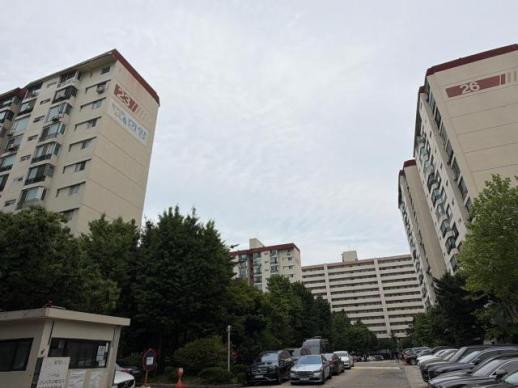 Hyundai Engineering Proposes 'Private Life' Concept for Apgujeong District 5 Hyundai Engineering announced on May 22 that it has proposed a 'Private Life' concept for the Apgujeong District 5, designed to allow residents to utilize community facilities in a separate space. Hyundai explained that to enhance residents' privacy, the pathways connecting the complex, buildings, and units are referred to as 'Private Sequence,' effectively isolating them from outside visitors. To access resident-only facilities, individuals must first pass through the 'Timeless Gate,' the entrance to the building. The pathways leading to the units feature amenities such as the Heritage Garden (individual gardens and water features), Signature Gallery (private gallery), Concierge Lobby (hotel-style lobby), and Hidden Botanic (a second-floor sky garden), all separated from external access. Privacy considerations extend to vertical circulation as well. Each line is designed with one elevator, and there are dedicated drop-off zones and private elevator halls for each building. In addition to open spaces, community areas operated by reservation are available in the basement of each building. These include personal healing saunas, private golf studios, personal workrooms, and private gyms and Pilates studios, allowing residents to focus on exercise, relaxation, and work without disturbances. Private studios are also offered, equipped with heating, ventilation, and security systems, designed to accommodate various lifestyles such as personal libraries, hobby spaces, and private offices. Furthermore, the proposal includes hotel-style concierge services in collaboration with The Plaza Hotel, as well as personal wealth management lounges, senior care centers, and premium healthcare lounges. The aim is to minimize external movement, enabling residents to manage their assets and health, and access concierge services within the complex. The senior care and healthcare services will be supported by a professional operating system to help residents maintain a healthier and more stable daily life. A Hyundai Engineering representative stated, “We focused not only on adding luxury facilities to Apgujeong District 5 but also on how meticulously we can protect residents' personal spaces and daily lives. We propose a new residential direction that enhances privacy alongside the symbolism and premium nature of 'Apgujeong Hyundai.'” Meanwhile, Apgujeong District 5 will be rebuilt through the reconstruction of Hanyang Apartments 1 and 2, consisting of six underground floors and 68 above-ground floors, with eight buildings and a total of 1,397 units. The reconstruction association is set to hold a general meeting on May 30 to select the construction company, deciding between Hyundai Engineering and DL E&C. The estimated construction cost is approximately 1.5 trillion won.* This article has been translated by AI. 2026-05-23 16:15:24
 -
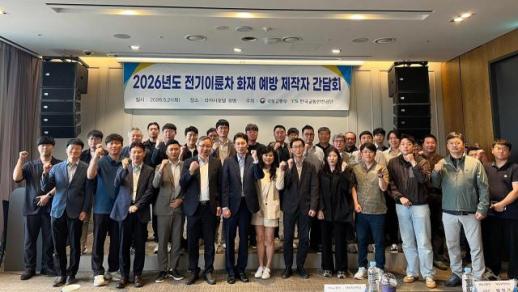 TS Hosts Fire Prevention Meeting for Electric Two-Wheelers with Seoul Fire Department The Korea Transportation Safety Authority (TS) announced on May 22 that it held a fire prevention meeting for electric two-wheelers on May 21 in collaboration with the Seoul Fire Department and relevant associations and manufacturers. The meeting aimed to create a safer environment for the use of electric two-wheelers. As of the end of last year, there were a total of 2.26 million registered two-wheelers in South Korea, of which approximately 76,000 (3.4%) were electric. Although the adoption rate remains low, recent serious incidents involving electric two-wheeler fires in residential complexes have heightened the need for proactive fire prevention and safety management. TS, in partnership with the Automotive Safety Research Institute, introduced the legal obligations of manufacturers and shared actual fire case studies and prevention technologies. Starting this year, electric two-wheelers will be included in the 'Special Safety Inspection for Electric Vehicles.' This initiative, launched in 2023 in response to recommendations from the Ministry of Land, Infrastructure and Transport, aims to alleviate public concerns regarding electric vehicle fires and promote proactive fire prevention through a public-private partnership. Last year, TS conducted special safety inspections on approximately 727,000 vehicles across 88 models in collaboration with the Ministry of Land, Infrastructure and Transport and 14 domestic and international electric vehicle manufacturers. Through these inspections, about 25,000 high-voltage batteries and electrical system anomalies were identified and addressed, and battery software updates were completed for over 260,000 vehicles. Jung Yong-sik, chairman of TS, stated, "Electric two-wheeler fire incidents can lead to significant casualties, making proactive prevention efforts crucial. We will work to create a safe operating environment for electric vehicles through the expanded special safety inspections starting this year."* This article has been translated by AI. 2026-05-23 15:46:26
 -
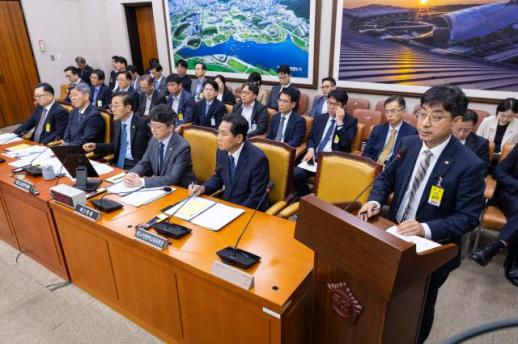 Safety Concerns Rise Amid Ongoing Deep Underground Construction Issues Concerns over safety have intensified following the discovery of rebar omissions in the GTX-A line construction and repeated ground subsidence near the Naeseong Underpass in Busan, which opened just three months ago. Both construction sites involve deep underground work, with depths exceeding 40 meters. As urban congestion increases, the frequency of deep underground projects has risen, yet the regulatory framework has not kept pace with international standards. As of May 21, the construction progress of the Yeongdong-daero underground complex development project is at 57.91%. This large-scale underground infrastructure project has a total budget of 1.7 trillion won. Errors in construction were identified late at the Samsung Station site, where rebar omissions were confirmed on the fifth underground level. Out of 218 columns in the entire platform, 80 were found to be missing rebar, with 50 of those failing to meet design standards. The primary rebar was supposed to be installed in two rows but was incorrectly placed in one. The issue is compounded by the fact that the Ministry of Land, Infrastructure and Transport only confirmed the omissions last month, despite Hyundai Engineering's initial report to the Seoul city government in November. The city explained the delay by stating, "We finalized the reinforcement plan in April after checking the applicability on-site." The city reported the issue to the Korea National Railway Authority six times, but the authority claimed it was not fully aware of the situation. An official stated, "While some related information was included in the reports by section, it was not considered a separate report." The GTX-A Samsung Station section is being constructed under the authority's oversight. In Busan, ground subsidence has occurred multiple times at the entrance of the Naeseong Underpass within a month. The city is investigating the possibility of inadequate backfilling after deep underground construction using ground-penetrating radar (GPR) but has not found any direct signs of abnormalities. Concerns about construction errors and insufficient post-construction management are being raised simultaneously. Experts point out that the current regulatory gaps are increasing the risk of accidents. The Seoul Institute published a report in September 2022, stating, "There is a general absence of regulations and standards related to deep underground construction." Since the GTX project began, the demand for underground urban rail and deep roads has surged due to a lack of available land and challenges in expanding surface infrastructure, making deep underground utilization an unavoidable choice. However, legal and regulatory frameworks remain in their infancy. A special law on deep underground construction proposed in 2020, which included penalties for safety and environmental violations, was not passed and has since been discarded. Currently, related laws are scattered, with only partial adherence to the Integrated Development of Underground Railways Act and the Underground Safety Act. Deep underground construction occurs at much greater depths than typical underground projects, necessitating a more precise approach due to varying ground conditions, groundwater flow, and hydrogeological characteristics. However, existing underground environmental impact assessments and safety management plans are primarily designed to prevent ground subsidence and do not adequately reflect the characteristics of deep underground construction. Comparing with international practices highlights a significant gap. Japan enacted the "Special Measures Law on Public Use of Deep Underground" in 2000, establishing systematic standards. During the construction of the Tokyo Outer Ring Road, they implemented a system for public disclosure of progress and long-term safety monitoring. The Seoul Institute recommends that project owners regularly check whether monitoring plans established during the design phase are being implemented as intended on-site, and take corrective actions as necessary. Suggested measures include establishing a real-time monitoring data sharing system, regular verification by third-party experts, and the introduction of a resident participation monitoring committee.* This article has been translated by AI. 2026-05-21 17:54:30
 -
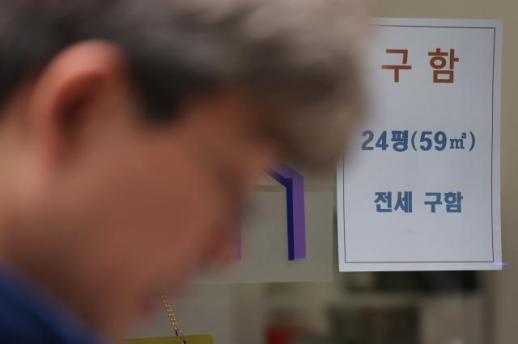 Seoul Apartment Prices Rise 0.31%, With Significant Gains in Gwanak and Gwangmyeong Apartment prices in Seoul have increased by 0.31% in the third week of May, driven by strong demand in the Gangnam Three Districts (Gangnam, Seocho, and Songpa) and an influx of actual buyers in the outskirts. According to the Korea Real Estate Agency's weekly apartment price trends released on May 21, the increase reflects a growing interest in mid- to low-priced apartments, particularly in areas where buyers have access to loans. Gwanak District saw the largest rise at 0.45%, up 0.25 percentage points from the previous week. Other districts with significant increases included Seongbuk (0.47%), Gwangjin (0.42%), Dobong (0.42%), and Nowon (0.39%). Nam Hyuk-woo, a researcher at Woori Bank's Real Estate Research Institute, noted, "In areas like Gangbuk and Gwanak, the ease of obtaining loans and the availability of reasonably priced listings are attracting actual demand from first-time buyers and newlyweds. There is potential for sellers in these areas to move up to higher-priced regions along the Han River, which could have a cascading effect on the market." After a period of decline due to the anticipated resumption of capital gains tax, the Gangnam Three Districts and Yongsan have all turned upward, with increases accelerating last week. Songpa District recorded the highest increase among the four districts at 0.38%, driven by major complexes in Jamsil and Geoyeo-dong. Gangnam (0.20%), Seocho (0.26%), and Gangdong (0.21%) also saw notable gains. Nam added, "As asking prices rise, the market is generally in a wait-and-see mode. However, Songpa is a preferred area for those working in the semiconductor industry, which may continue to attract demand for relocation." In southern Gyeonggi Province, key areas are also showing positive trends in apartment prices. Suji in Yongin (0.38%), Dongtan in Hwaseong (0.46%), Yeongtong in Suwon (0.35%), and Seongnam (0.47%) are leading the upward momentum, reflecting optimism about the booming semiconductor industry. In non-regulated areas like Gunpo (0.18%) and regulated areas such as Uiwang (0.17%) and Gwangmyeong (0.72%), the influx of actual demand continues to support strong apartment prices.* This article has been translated by AI. 2026-05-21 15:19:15
 -
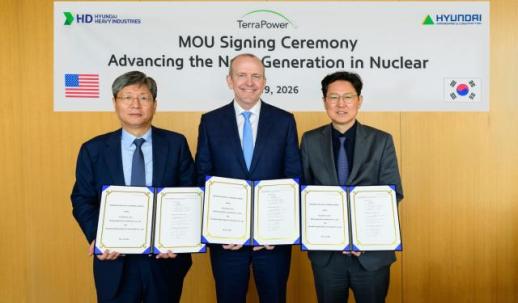 Hyundai Engineering Expands U.S. Nuclear Alliance to Next-Generation Reactors Hyundai Engineering is accelerating its entry into the global energy market by expanding its focus to advanced next-generation reactors. On May 19, Hyundai Engineering announced that it signed a memorandum of understanding (MOU) with TerraPower and HD Hyundai Heavy Industries for the commercial deployment of the next-generation reactor 'Natrium®' at Goldman Sachs headquarters in New York. The signing ceremony was attended by key executives, including Choi Young, Executive Vice President of Hyundai Engineering's New Energy Division; Chris Levesque, CEO of TerraPower; Kang Seok-joo, Executive Vice President of HD Hyundai; and Won Kwang-sik, Vice President of HD Hyundai Heavy Industries. TerraPower is a leading U.S. nuclear company known for its sodium-cooled fast reactor (SFR) technology, which utilizes liquid sodium as a coolant. HD Hyundai Group has been jointly involved in the development of sodium technology since its initial investment of $30 million in 2022, enhancing its collaboration with TerraPower by producing and supplying the reactor vessel for the first Kemerer unit and expanding its supply chain. Hyundai Engineering was selected as a strategic partner for this agreement due to its extensive experience in executing multiple nuclear EPC projects, including the Barakah nuclear power plant in the UAE, and its capabilities related to small modular reactors (SMRs). The company plans to continue discussions with TerraPower and HD Hyundai Heavy Industries to participate in the EPC execution of subsequent commercial sodium reactors. Meanwhile, Hyundai Engineering has identified securing contracts for small modular reactors (SMRs) in Palisades, Michigan, as a key strategy for the year. This project involves constructing two reactors at the Palisades nuclear site in Michigan, based on the SMR-300 model developed by U.S. nuclear firm Holtec International.* This article has been translated by AI. 2026-05-21 11:18:40
 -
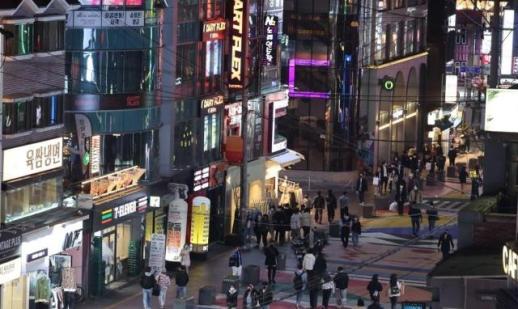 Foreign Tourists Drive Shift from Offices to Hotels Near Hongdae In the bustling commercial areas near Hongdae and Sinchon, foreign tourists have emerged as a key consumer demographic, prompting some office buildings to convert parts of their spaces into accommodations. This shift is attributed to the growing demand for lodging and tourism services driven by international visitors. While sales in college areas have increased, the vacancy rates for small businesses have also risen. This trend is linked to a decline in the proportion of consumers in their 20s and the growing prevalence of delivery, online, and contactless shopping. According to a report from Aju Economy on May 19, rental agreements for accommodations have recently been signed for several floors of the Master Building in Changcheon-dong, Seodaemun-gu. This building, which stands 10 stories tall and is located a four-minute walk from Hongdae Station, was previously the headquarters of Master Motors. After plans for a complete sale were abandoned, it was listed for rent starting in the fourth quarter of last year. Rental prices have been steadily rising. Data collected by the commercial real estate service firm R Square shows that a rental listing in the Fidelia Tower, within walking distance of Sinchon Station, had a net operating cost (NOC) of 174,200 won per square meter in the third quarter of last year. This marks an increase from 142,500 won in the first quarter of 2022 and 170,800 won in the fourth quarter of 2024. NOC represents the total rental cost including management fees. According to the Korea Real Estate Agency, the office vacancy rate in the Hongdae and Hapjeong areas was 6.1% in the first quarter of this year, higher than the Seoul average of 5.2%. However, it was below the city average in the third and fourth quarters of last year. Jeong Seon, CEO of Jeongseon Estate, noted, "Office rentals in this area are limited in supply, and large buildings that have been completed in the past three years have often been leased before they were even finished. With consistent demand, rental prices have been increasing by 3% to 5% annually." As spending by foreign tourists increases, sales in the Hongdae area have also shown an upward trend. According to the Seoul Business Analysis Service, sales in the Hongdae area reached 618.7 billion won last year, a 30.1% increase from 475.5 billion won in 2021. Sales figures for the following years were 590.3 billion won in 2022, 626 billion won in 2023, and 635.9 billion won in 2024. According to Orange Square, which operates the Wowpass payment platform for foreign tourists, Hongdae ranks as the third most popular area for foreign tourist spending. In contrast, the Sinchon area has seen a slowdown in growth. Sales in the Sinchon area were 331.2 billion won in 2021, 383.8 billion won in 2022, and 417 billion won in 2023, but dropped to 407.2 billion won in 2024 and 382.6 billion won last year, marking two consecutive years of decline. This disparity highlights differing trends in foreign tourist demand and foot traffic within the same college town. However, the increase in sales has not benefited all local businesses equally. Since last year, the vacancy rate for small businesses in college areas has surged. Small businesses are defined as those with two stories or fewer and a total floor area of less than 330 square meters. The vacancy rate for small businesses in the Hongdae and Hapjeong areas reached 14.2% in the third quarter of last year, more than tripling from 4.6% in the previous quarter. The vacancy rate remained in double digits at 13% in the first quarter of this year. The Sinchon and Ewha areas also recorded a vacancy rate of 15.1% in the third quarter of last year, maintaining that figure into the first quarter of this year, significantly higher than the 4.6% recorded in the second quarter of 2025. The share of domestic consumers in their 20s, who were once the primary demographic in college areas, has also declined. In the Sinchon area, the revenue share from consumers in their 20s fell from 33.3% in 2021 to 27.2% last year. Similarly, in the Hongdae area, the share dropped from 47.9% in 2021 to 43.4% last year. The end of the COVID-19 loan extension measures for small business owners and self-employed individuals in September of last year has also contributed to the financial burdens of struggling small stores, increasing their costs for loans and rent. Lee Soo-jin, a researcher at the Consumer Trend Analysis Center at Seoul National University, stated, "The changes in consumer patterns are significant. The rise of delivery, online, and contactless shopping has reduced the frequency of in-person visits to stores." She added, "The sharp increase in vacancy rates indicates that policy impacts are substantial. With the end of loan extensions for small business owners and self-employed individuals, the burden has increased for the most vulnerable stores."* This article has been translated by AI. 2026-05-19 17:07:04
 -
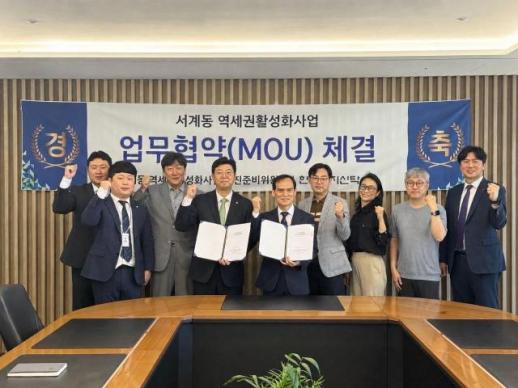 Yongsan District Signs MOU with Korea Land Trust for Station Area Revitalization The Seogye-dong Station Area Revitalization Committee in Yongsan District announced on May 19 that it signed a memorandum of understanding (MOU) with Korea Land Trust on May 15 to advance a trust-based redevelopment project. The revitalization project aims to transform the aging low-rise residential areas in Seogye-dong, specifically the sites at 234-5 (Zone A) and 32-1 (Zone B), into a vibrant hub with a total of 578 housing units (407 in Zone A and 171 in Zone B) centered around the Seoul Station area. The project site is strategically located at the intersection of Seoul Subway Lines 1, 4, Airport Railroad, and Gyeongui-Jungang Line, having passed the selection review for the station area revitalization project by the Seoul city government in March. On April 14, a bidding announcement was made for the trust company, leading to Korea Land Trust being selected as the final pre-trust company to sign the agreement. The committee stated, "We will work closely with Korea Land Trust, which has demonstrated outstanding results in trust-based redevelopment projects, to transform the area into a landmark around Seoul Station." The Seogye-dong revitalization project falls within the district unit plan area, where the need for improving the residential environment has been consistently highlighted due to the concentration of aging housing. Nearby areas, including the northern Seoul Station development project and the rapid integrated planning redevelopment in the Seogye-dong 33 area, are undergoing significant development, which is expected to create synergies. Particularly, the project benefits from excellent transportation access as it is part of the Seoul Station area, with easy connections to major arterial roads such as Manrijae-ro and Cheongpa-ro, which will diversify urban functions through enhanced connectivity with surrounding regions. Following the signing of the MOU, the committee and Korea Land Trust plan to promptly initiate the designation of the redevelopment area and the selection of the project implementer. A representative from Korea Land Trust remarked, "Given the large-scale redevelopment projects underway in the vicinity, we will strive to create differentiated residential value within Seoul through systematic development." Meanwhile, the station area revitalization project has been underway since 2019, aimed at creating a living space that integrates work, residence, and leisure activities.* This article has been translated by AI. 2026-05-19 17:00:00
 -
 May Housing Business Outlook Index Rises Amid Investment Shift to Non-Metropolitan Areas The outlook for the housing business improved in May as investment demand shifted to non-metropolitan areas due to stricter real estate regulations in the metropolitan region. On May 19, a survey of housing developers revealed that the housing business outlook index rose by 13.9 points from the previous month to 77.6. While the metropolitan area saw a decline of 5.3 points to 72.9, non-metropolitan areas experienced an increase of 18.0 points to 78.6. In the metropolitan region, the index fell as follows: Gyeonggi Province dropped by 8.5 points (from 76.9 to 68.4), Seoul decreased by 5.3 points (from 87.8 to 82.5), and Incheon fell by 2.2 points (from 70.0 to 67.8). This decline is attributed to rising interest rates, concerns over tax and loan regulations, and increased construction costs. As mortgage rates rise, the financial burden on buyers has increased, leading to a cautious market stance amid discussions on the end of the temporary suspension of capital gains tax for multiple homeowners and stricter taxation for non-resident homeowners. Conversely, major cities in non-metropolitan areas all reported increases. Ulsan rose by 25.8 points (from 58.8 to 84.6), Daejeon by 25.5 points (from 61.1 to 86.6), Gwangju by 23.5 points (from 52.9 to 76.4), Daegu by 18.2 points (from 68.1 to 86.3), Sejong by 17.3 points (from 75.0 to 92.3), and Busan by 10.5 points (from 60.0 to 70.5). In provincial areas, Chungbuk increased by 29.6 points (from 45.4 to 75.0), Gyeongnam by 29.4 points (from 61.5 to 90.9), Gangwon by 21.7 points (from 58.3 to 80.0), Jeonbuk by 20.3 points (from 61.5 to 81.8), Gyeongbuk by 18.0 points (from 66.6 to 84.6), Chungnam by 6.1 points (from 66.6 to 72.7), Jeju by 3.3 points (from 52.9 to 56.2), and Jeonnam by 2.5 points (from 60.0 to 62.5). This shift in investment demand to non-metropolitan areas is analyzed as a response to the stricter regulations in the metropolitan region. Notably, the Ulsan and Gyeongnam areas benefited from strong performance in the shipbuilding and automotive industries, supporting local economic growth and housing demand. However, regions that experienced significant declines in the previous month showed substantial rebounds, indicating some base effect. The national financing index for May is projected to rise by 6.9 points to 73.0, driven by growing expectations for a recovery in the housing market, particularly in non-metropolitan areas. The easing of financing conditions, including discounts on guarantee fees from the Korea Housing and Urban Guarantee Corporation (HUG) and extensions of project financing guarantees, is also cited as a contributing factor. However, challenges remain, including rising interest rates, tightening project financing loans, and delays in recovering funds due to unsold inventory. The Korea Housing Institute noted, "This increase reflects a slight easing of psychological distress compared to the previous month." The material supply index is projected to fall by 12.5 points to 67.1. This decline is attributed to increased concerns over procurement and construction costs due to the prolonged conflict in the Middle East, which has led to instability in oil and raw material prices. A representative from the Korea Housing Institute stated, "The instability in oil and raw material prices due to the prolonged conflict in the Middle East is increasing construction cost burdens and negatively impacting business outlooks. However, there remains potential for housing prices in the metropolitan area to rise due to the influx of funds from the securities market and concerns over locked-up inventory."* This article has been translated by AI. 2026-05-19 12:22:35
 -
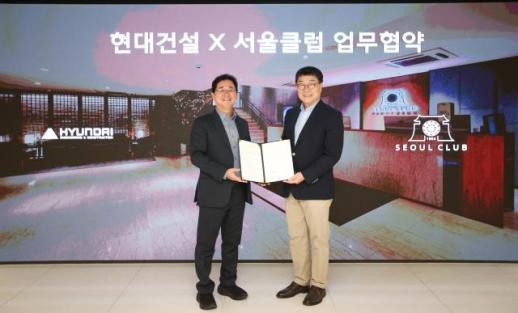 Hyundai Engineering Applies 120 Years of Expertise from Seoul Club to Apgujeong Hyundai Engineering announced on May 18 that it has signed a business agreement with the Seoul Club to apply the club's operational expertise to the Apgujeong Hyundai community. Established in 1904, the Seoul Club is the only international social club in South Korea, fostering social exchanges among diplomats and both domestic and foreign members for 120 years. Hyundai Engineering reported that this marks the first time the club has formed a strategic partnership with an external entity. Under the agreement, the Seoul Club will propose community spaces that enhance social interactions and develop operational scenarios to facilitate exchanges among residents. Signature areas will feature the Seoul Club's certification mark. Additionally, community programs will be implemented to encourage natural interactions among residents, including activities in music, art, sports, and charitable initiatives that embody the principle of 'noblesse oblige.' A representative from Hyundai Engineering stated, "We are collaborating to transform the Apgujeong redevelopment area into a 'private social town' where global leaders can connect and find inspiration, rather than just a residential space. We aim to demonstrate a unique residential value that only Apgujeong residents can enjoy by combining the history of the Seoul Club with Hyundai Engineering's technological expertise." Meanwhile, Hyundai Engineering highlighted that at the promotional center for Apgujeong District 5, located near Apgujeong Station on Line 3 in Gangnam, visitors can enjoy a 420-meter circular walking path comfortably throughout the year, regardless of the season. The facility will also include a fitness center, all-day dining, a wellness spa, a sauna, and a premium two-story golf course with a 35-meter driving range.* This article has been translated by AI. 2026-05-18 20:42:22