

Journalist

SoHee Baek
shinebaek@ajunews.com
-
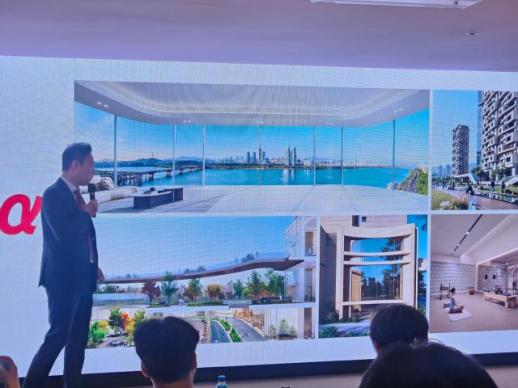 Hyundai Engineering Bets on 240-Degree Han River Panorama in Apgujeong 5 District "We have an advantage over competitors in every aspect." On the morning of May 18, Park Seong-ha, head of Hyundai Engineering's Apgujeong redevelopment team, expressed confidence ahead of the upcoming construction company selection meeting at the promotional center near Apgujeong Station in Gangnam, Seoul. The Apgujeong 5 District will be rebuilt through the redevelopment of the Hanyang 1st and 2nd apartments, featuring six underground floors and 68 above-ground floors, comprising eight buildings with a total of 1,397 units. The total construction cost is estimated at approximately 1.496 trillion won. As the construction company selection meeting approaches on May 30, the competition is expected to be primarily between Hyundai Engineering and DL E&C, the only two bidders among the five districts in Apgujeong. Hyundai Engineering claims that while competitors may appear to have advantages in construction duration and financial conditions, the practical differences are negligible, asserting that their company holds the upper hand. Hyundai Engineering proposed a construction period of 67 months, while DL E&C suggested 57 months. Park explained that the Apgujeong 5 District has over 50% bedrock, which limits blasting operations, and that the project involves four more floors than the Apgujeong 2 District. He also cited Samsung C&T's proposal of 68 months for the Apgujeong 4 District as further justification. "Competitors have a low understanding of the construction timeline for high-rise buildings," Park stated, adding that the examples they cite of other high-rise projects were built before the implementation of the 52-hour workweek and the Serious Accident Punishment Act. He emphasized that Hyundai Engineering offers broader financial guarantees for construction and relocation costs. The company proposed a fixed interest rate of 'COFIX + 0.49%' for the total project cost, which applies to essential project expenses, including additional relocation costs. In contrast, competitors offer a 0% margin on COFIX but limit it to essential project costs. Park noted, "Competitors explicitly excluded additional relocation financing costs that members apply for individually, which only accounts for about 20% of the total project cost." Regarding the construction cost per 3.3 square meters (pyeong), he stated, "Competitors claimed they would cover the construction costs for commercial buildings but calculated the cost per pyeong including commercial space. Excluding the commercial construction costs, the evaluation construction cost exceeds 1.08 million won, making their claim of lower per-pyeong costs completely false." Despite its prime location near the Galleria Department Store and Rodeo Street, the Apgujeong 5 District has lower market prices compared to other areas. Hyundai Engineering stated that it focused on high-end design to align with market prices. To enhance the Han River view, the windows are designed to be 2.9 meters high and 13 meters wide. The promotional center includes a 'Schüco window experience area' that combines curved windows with a rear LED screen, allowing visitors to experience the panoramic view. Hyundai Engineering is proposing Korea's first custom-made units, allowing for flexible interior arrangements based on residents' preferences through a column-style structure. This includes private spaces for one- or two-person households and tailored spaces for families of three or four. The entire basement level is dedicated to community spaces, excluding parking, to enhance the luxury living experience. The basement will be connected to the Galleria Department Store through a collaboration with Hanwha. Each of the eight buildings will feature a guesthouse, and the top floor will include a sky guesthouse managed by Hanwha Group's Hotel and Resort Plaza Hotel. Hyundai Engineering has invested over 10 billion won in landscaping. Notably, a forest covering over 3,800 pyeong surrounds the complex, providing complete privacy, while an elevated walkway to the Han River is closely connected to each building. The company is actively utilizing advanced robotics technology from Hyundai Motor Group in the residential complex. This includes a 'Spot Safety Service Robot' capable of patrolling the area 24/7, as well as 'Mobed' and 'Sharing Mobility' for food delivery and recycling waste disposal, along with an 'unmanned firefighting robot.' * This article has been translated by AI. 2026-05-18 17:18:00
 -
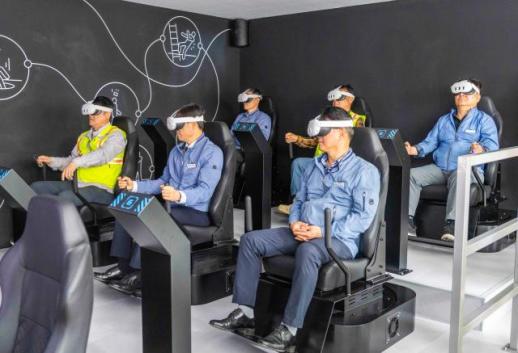 Hyundai Engineering Establishes Safety Training Center at Shinhanul Units 3 and 4 Hyundai Engineering has created an experiential safety management space at the construction site of Shinhanul Units 3 and 4. The company announced on May 18 that it held an opening ceremony on May 14 for the first safety training center at a construction site in South Korea. The safety training center at Shinhanul Units 3 and 4 is designed to allow workers to experience and respond to common hazards encountered during construction. It features five zones: Fire Safety Zone, Safety Inspection Zone, Confined Space Safety Zone, Emergency Response Zone, and Virtual Safety Zone, offering a total of 13 experiential programs. These programs include safety training for fall, suffocation, fire, and electric shock incidents, as well as health education on CPR, the use of Automated External Defibrillators (AED), and the prevention of musculoskeletal disorders. Among these, the Virtual Safety Zone utilizes 4D XR experience facilities, multi-user virtual reality (VR), and Apple Vision Pro technology to create immersive content simulating construction site accidents, according to the company. A Hyundai Engineering representative stated, "The safety training center is a practical training space designed for workers to experience real hazards and develop their response capabilities. We aim to operate it as an open industrial safety education platform that can be utilized by site members and the local community, thereby strengthening a prevention-focused safety management system." Additionally, Hyundai Engineering has been operating a mobile experiential education program called the 'Safety Culture Hub' dedicated vehicle. This program combines experiential content and VR equipment focused on major hazards such as hanging, confined spaces, electricity, and construction equipment, allowing participants to experience various work environments directly.* This article has been translated by AI. 2026-05-18 15:28:54
 -
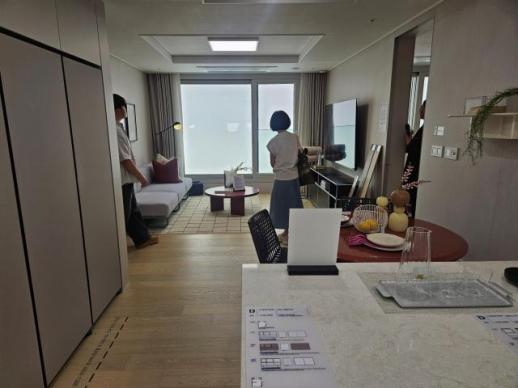 Acro River Sky in Noryangjin Offers Spacious Living Options "The 59㎡A type feels particularly spacious. The high ceiling and the view from the kitchen to the living room create a sense of openness," said a 43-year-old visitor, identified as A, after touring the Acro River Sky model home near Maebong Station in Gangnam on the morning of May 15. Residing in Gangdong District, A noted, "The prices in this area are high, so I am contemplating my options for purchasing, but I do think I will need to upgrade eventually. I am especially interested in Noryangjin, so I came here after visiting the Lacrache Zidefine that was sold last month." Design features aimed at enhancing openness captured the attention of visitors. Middle-aged women expressed admiration for the open pantry connecting the living room and kitchen in the 84㎡A type. This layout maintains a 4-bay structure while incorporating two open windows in the living room to enhance the sense of space. The living room width is 4.5 meters, consistent with the same width in the 36㎡ type designed for single-person households. The 44㎡ and 51㎡ types also include pantries, with the 51㎡A featuring individual balconies for each of its two bedrooms. DL E&C has incorporated its latest residential technology, including a patented D-Silent Floor designed to reduce noise between floors with cushioning materials and finishing mortar. The kitchen is equipped with a D-Silent hood to minimize noise. A remarked, "The master bedroom can accommodate a hotel-style bed frame, giving it a luxurious feel. It seems they have made good use of the elevation both inside and outside the complex." A sky lounge will be available for all residents on the top floor of Building 105. To create a family-friendly living environment, the basement of Building 104 will feature a kids' lounge (community care center), a kids' station for safe drop-offs and pick-ups, and private study rooms styled like individual reading rooms. The basement of Building 102 will be developed into high-end community facilities known as 'Club Acro,' which will include a fitness center, a screen golf lounge with individual spaces for all stations, a sauna, and a sports court. Notably, the indoor gym will be designed as a duplex, allowing for various activities regardless of the weather. DL E&C is overseeing the construction of Acro River Sky, part of the Noryangjin 8 Redevelopment Project, which will consist of four basement levels and 29 above-ground floors across ten buildings, totaling 987 units. Of these, 285 units will be available for general sale. A variety of unit sizes will be offered: 36㎡ (43 units), 44㎡ (9 units), 51㎡ (39 units), 59㎡ (16 units), 84㎡A (73 units), 84㎡B (59 units), 84㎡C (37 units), 84㎡T1 (3 units), 84㎡T2 (3 units), and 140㎡P (3 units). The sale prices for the 84㎡ units are set between 249.92 million and 279.58 million won, with the price per 3.3㎡ (pyeong) at approximately 77.33 million won. This is over 200 million won higher than the recently launched Lacrache Zidefine in Noryangjin New Town, which was priced between 228.73 million and 258.51 million won. The application schedule begins with special supply on May 26, followed by first priority for local residents on May 27, first priority for other areas on May 28, and second priority applications on May 29. The announcement of winners will be on June 5, with contracts taking place from June 20 to 24. To qualify for general supply, applicants must have resided in Seoul for at least two years or be at least 19 years old and reside in the metropolitan area (Seoul, Gyeonggi, Incheon). Additionally, applicants must have held a subscription account for at least 24 months and meet the deposit requirements for their area and unit size to be eligible for first priority. A 10-year restriction on re-applications and a 3-year resale restriction will apply, with no residency requirement.* This article has been translated by AI. 2026-05-17 13:19:15
 -
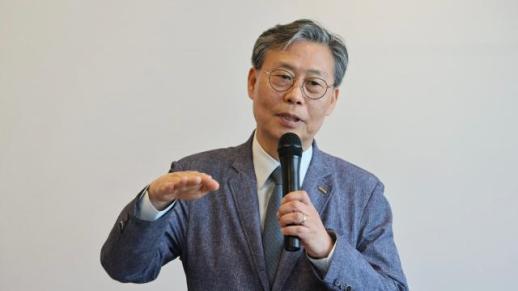 Korea Railroad Corporation President Calls for Accelerated Merger with SR and Government Support for Train Replacement Costs The merger between Korea Railroad Corporation (KORAIL) and SR is progressing well, with expectations that the completion date may be moved up. However, the combination of fare freezes and the burden of multi-trillion won investments has raised concerns about deteriorating financial structures. During a press conference on May 14 at a restaurant in Gwangju, KORAIL President Kim Tae-seung stated, "The integration of our organization, financial structure, and safety systems is going very smoothly. We aim to expedite the merger process as much as possible." He noted that the previously anticipated completion date of September could be moved forward based on internal preparations. Kim highlighted that users will experience significant changes once the merger is finalized. He said, "Passengers will be able to book tickets through a single app without distinguishing between KTX and SRT services, and the issue of seat shortages will be noticeably improved, especially for trains departing and arriving at Suseo Station." However, he pointed out that the financial structure remains a pressing challenge. Kim remarked, "Our financial structure is very weak. If this continues, we may face a situation where trains operate but do not generate revenue." KORAIL has not raised fares in the past 15 years, yet during the merger process, it has promised a 10% discount to align with SRT fares. Kim acknowledged, "While fare discounts are a commitment to the public, we are under significant financial pressure. Raising fares requires public agreement and political consensus, making it difficult." Additionally, there is a substantial investment burden. The KTX trains introduced in 2004 are nearing the end of their lifespan and require complete replacement, with replacement costs estimated at around 5 trillion won. Kim believes that government support for half of the replacement costs is necessary and is currently in discussions with the government to include this in next year's budget. He emphasized that this replacement goes beyond merely updating old trains; it involves the introduction of advanced technology. Kim stated, "We are not just replacing old trains; we are incorporating new technologies. The railway technologies we develop must also be exportable." This underscores the connection between new train acquisitions and the competitiveness of the domestic railway industry. The issue of Public Service Obligation (PSO) compensation is also a critical variable. KORAIL has PSO support for operating losses on conventional rail services, but the compensation is insufficient, leading to accumulated financial burdens. Kim noted, "In Europe, most routes, including high-speed rail, are covered by PSO. We need to expand this to all 27 domestic routes, but we can only approach this gradually." Meanwhile, KORAIL demonstrated a train coupling at the Honam Railway Vehicle Maintenance Center on May 14. The coupled trains underwent checks and tests for braking and door functions before completing a test run from Gwangju Songjeong Station to Seoul Station that afternoon. Coupled trains operate by connecting two trains that depart or arrive at the same station, allowing for increased passenger capacity in areas where expanding service frequency is challenging, such as the bottleneck between Pyeongtaek and Osong. Han Gi-eun, head of the high-speed vehicle operations department, explained, "There is only one maintenance line at Honam that can service coupled trains, referred to as Line K. By connecting two KTX-Sancheon trains, each approximately 201 meters long, we can maintain a total length of about 402 meters." 2026-05-17 12:04:43
 -
 Samsung's Lee Jae-Yong Apologizes Ahead of Union Strike, Negotiations Resume May 18 Lee Jae-Yong Apologizes, "It's All My Fault"...Negotiations Resume May 18 Samsung Electronics Chairman Lee Jae-Yong publicly apologized to the nation and customers just five days before a planned strike by the company’s labor union. The company and the union have agreed to resume negotiations on May 18. Upon arriving at the Seoul Gimpo Business Aviation Center on May 16, Lee stated, "I sincerely apologize to our global customers for the anxiety and concern caused by our internal issues," adding, "I bow my head in apology to the people of our nation who always support, love, and challenge Samsung." During his apology, Lee bowed his head three times. He emphasized, "I will take the brunt of the harsh winds and take full responsibility. Let’s do our best so that we can all be proud to be part of Samsung." Following this, the company and the union agreed to hold a second post-adjustment meeting on the morning of May 18 at the Central Labor Relations Commission in Sejong City. The meeting will be directly overseen by the commission's chairperson. Previously, Samsung Electronics and the union engaged in marathon negotiations mediated by the commission from May 11 to early May 13. However, they failed to reach an agreement on performance bonus criteria, leading to a breakdown in talks. The commission had requested the two parties to reconvene on May 16, but the union declined, resulting in the cancellation of that meeting.* This article has been translated by AI. 2026-05-16 21:28:38
 -
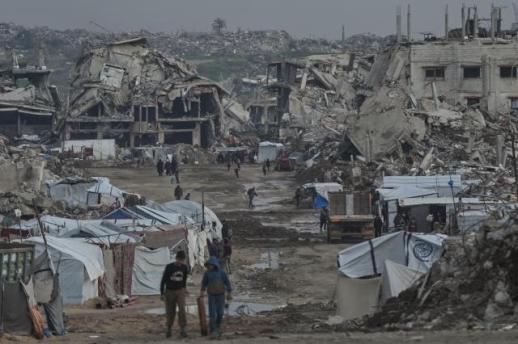 Israeli Military Announces Elimination of Hamas Leader Izz al-Din al-Hadad The Israeli military announced on May 16 that it has eliminated Izz al-Din al-Hadad, a leader of Hamas and head of its military wing, the Izz ad-Din al-Qassam Brigades, in the Gaza Strip. According to Yonhap News, the Israeli military stated that al-Hadad was killed in a targeted airstrike carried out the previous night, describing him as one of the architects of the brutal massacre that occurred on October 7. Al-Hadad took over as the military chief and leader of Hamas in Gaza following the assassination of former Hamas leader Mohammed Sinwar in May of last year. The Israeli military emphasized that al-Hadad had been actively rebuilding the military capabilities of the terrorist organization and planning numerous attacks targeting Israeli civilians and military personnel until recently. Additionally, the military noted that al-Hadad had been responsible for detaining and managing many Israeli hostages throughout the conflict, employing tactics that used hostages as human shields. Earlier, Israeli Prime Minister Benjamin Netanyahu and Defense Minister Yoav Gallant confirmed that targeted strikes had been conducted against al-Hadad in Gaza City, the largest city in the Gaza Strip.* This article has been translated by AI. 2026-05-16 20:36:55
 -
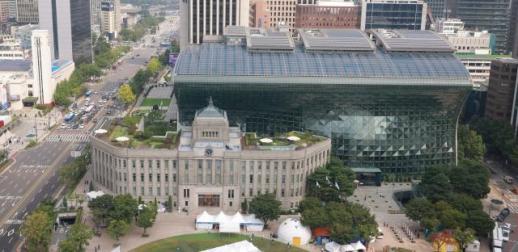 Seoul City Acknowledges Construction Errors in GTX-A Line, Conducts Immediate Safety Checks Seoul City has reported that it became aware of construction errors, including the omission of rebar in the GTX-A Line near Samseong Station, several months before notifying the government, prompting an audit. The city stated that it conducted immediate safety inspections in response. On May 16, the city released a detailed report outlining the timeline of events and confirmed that safety checks and reviews of reinforcement methods were promptly initiated. According to the city, Hyundai Engineering & Construction discovered the missing rebar during its own quality inspection process in November 2025 and voluntarily reported the issue to Seoul City. The city noted that upon receiving this information from the contractor, it conducted immediate safety inspections at the site and comprehensively reviewed the structural stability, construction feasibility, and future maintenance implications of the reinforcement methods. The contractor and the supervisory team reported the construction errors regarding the columns of the underground complex transfer center near Samseong Station to the city on November 10, 2025. According to the Ministry of Land, Infrastructure and Transport, the columns for the GTX platform on the fifth underground level of the complex transfer center were incorrectly constructed with one row of main rebar instead of two, resulting in missing rebar in 50 of the 80 columns. The supervisory team reviewed reinforcement plans on December 19, 2025, and reported them to the city. Following this, on December 30, the city established a plan for implementing structural reinforcement based on advice from external experts, in accordance with the directives of the head of the Urban Infrastructure Headquarters. Subsequently, the city, along with the supervisory team, the contractor, and external experts, conducted site inspections and assessed the adequacy of the column reinforcement plans until March 2026. During this period, there were 19 joint site inspections conducted by the city, the supervisory team, and the contractor, along with one advisory meeting involving external experts, including members of the city’s Construction Technology Review Committee. On March 17, 2026, the contractor submitted the column reinforcement construction plan to the city, which then confirmed the feasibility of the plan before finalizing it. The city reported the details to the Korea National Railway Authority on April 24 and to the Ministry of Land, Infrastructure and Transport on April 29. An emergency safety inspection led by the Ministry of Land, Infrastructure and Transport was conducted from April 29 to May 8, 2026. According to the city, structural calculations for the reinforcement methods confirmed that the structural safety (axial load strength) would be enhanced to 60,915 kN, exceeding the original design standard of 58,604 kN. Hyundai Engineering & Construction will bear the additional construction costs, estimated at around 3 billion won. The city plans to ensure safety beyond the original design by implementing steel plate reinforcements that are over 200% stronger than the existing rebar, along with fireproof coatings to prevent corrosion. The city stated, "We will establish safety measures for the structure and prevent recurrence, working closely with the Ministry of Land, Infrastructure and Transport to ensure there are no delays in the GTX-A Line's non-stop service at Samseong Station. We will thoroughly investigate the causes of the construction errors and rigorously confirm accountability during the supervisory construction process, taking action in accordance with relevant laws." The GTX-A Line is being developed with the goal of connecting Seoul Station to Suseo Station (with non-stop service at Samseong Station) by the end of this year, and plans to have a stop at Samseong Station in the second half of next year, despite the confirmation of missing rebar in the underground structures along Yeongdong-daero. Meanwhile, the Ministry of Land, Infrastructure and Transport stated that it received reports from the city regarding the construction errors and reinforcement plans on April 29. The ministry has initiated an audit of Seoul City and the Korea National Railway Authority, citing concerns over project management due to the delayed reporting of the errors.* This article has been translated by AI. 2026-05-16 20:16:23
 -
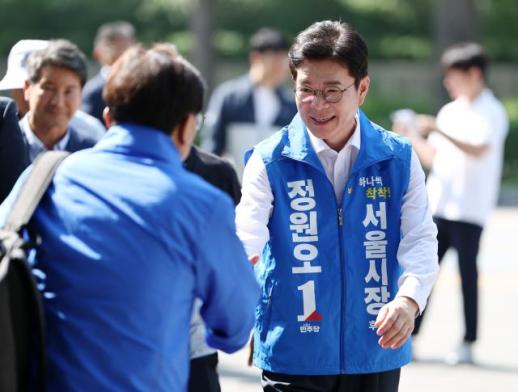 Jung Won-oh Promises 15-Minute Sports Living Zones and 20 Projects in Seongsu-dong Jung Won-oh, the Democratic Party's candidate for Seoul mayor, unveiled his sports-related pledges following the registration deadline for candidates in the June 3 local elections. On May 16, Jung announced on Facebook his plans to establish a "15-Minute Sports Living Zone" and a "20 Hot Places in Seoul" project, stating, "I will ensure that every citizen can exercise close to home and enjoy healthy leisure activities with neighbors." He proposed creating large-scale public sports spaces at the Nanji and Jungnang water recycling centers, expanding access to sports facilities in public institutions, and increasing recreational sports spaces utilizing walking paths and riverside areas. Additionally, Jung pledged to deploy retired athletes and sports instructors as "neighborhood sports doctors" and to expand tailored sports programs for underrepresented groups, including children and women. Jung also committed to building a "Second Life Platform" for middle-aged and retired individuals, establishing lifelong learning centers in every district of Seoul, overhauling the Seoul Run program into a comprehensive AI lifelong learning platform, and creating a Seoul-style lifelong learning certification system. After attending the "2026 Seoul Citizens' Sports Festival" at the Jamsil Indoor Gymnasium, Jung visited Seongsu-dong, where he met with citizens and stated, "I will create 20 Seongsu-dongs in Seoul to revitalize local economies and enhance the city's competitiveness." He outlined plans for development through a "town management" approach involving collaboration among businesses, citizens, and merchants, as well as expanding business districts. Meanwhile, Jung criticized the campaign of Oh Se-hoon, the candidate from the People Power Party, for continuing to attack him over a past violence incident, calling it "political maneuvering and a crime." Kim Jae-seop, a member of the National Assembly and the chief campaign chair for Oh, claimed on May 13 that Jung was fined 3 million won for assaulting a police officer and a political aide during an argument at a café in Yangcheon-gu in October 1995 while he was serving as a secretary to the Yangcheon District Mayor. In response, Jung explained that the incident stemmed from a disagreement over differing views on the May 18 Democratic Movement and expressed remorse, but he denied allegations of coercing a female employee to stay overnight, calling them "unfounded claims."* This article has been translated by AI. 2026-05-16 19:13:12
 -
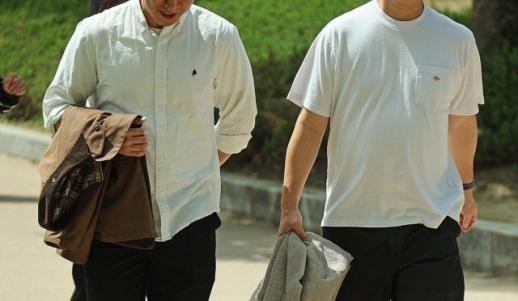 First Heat-Related Death of the Summer Occurs Earlier Than Ever A heat-related death has been reported in mid-May, marking the earliest occurrence on record for this time of year. On May 16, the Korea Disease Control and Prevention Agency (KDCA) reported that an elderly man in his 80s died from heat-related illness in Seoul. This incident represents the earliest heat-related death since the KDCA began monitoring such cases. Starting May 15, the KDCA activated its heat-related illness surveillance system in collaboration with 516 emergency rooms across the country to monitor real-time data on the disease's occurrence. On the first day of monitoring, seven patients were treated for heat-related illnesses in emergency rooms, with two in Seoul, one in Incheon, and four in Gyeonggi Province. The suspected fatality occurred in Dongdaemun District, Seoul. On that day, the national average high temperature reached 28.2 degrees Celsius (82.8 degrees Fahrenheit), while Seoul recorded a high of 31.3 degrees Celsius (88.3 degrees Fahrenheit), significantly above the seasonal average. Heat-related illnesses are acute conditions caused by excessive heat, typically accompanied by symptoms such as headaches, dizziness, muscle cramps, and fatigue. Heat stroke, a severe condition, occurs when body temperature rises above 40 degrees Celsius (104 degrees Fahrenheit) and is accompanied by central nervous system dysfunction, requiring immediate medical attention. Each summer, the KDCA collaborates with over 500 medical institutions and local health offices to track the number of patients treated for heat-related illnesses in emergency rooms, providing daily updates on its website. Last year, the surveillance system recorded 4,460 cases of heat-related illness, the second-highest number since the record-breaking heatwave of 2018. Among these, 29 suspected fatalities were reported, with 68.6% of the victims aged 65 and older. The primary cause of death was heat stroke, accounting for 93.1% of cases. The KDCA emphasized the growing importance of preventing health risks associated with heatwaves, particularly due to climate change, which has increased the frequency and intensity of such events. Elderly individuals, pregnant women, children, and those with underlying health conditions are particularly vulnerable to heat-related illnesses, and the KDCA urged the public to follow preventive measures even when heat advisories are not in effect. "Heat-related illnesses can be effectively prevented by adhering to basic health guidelines," said KDCA Commissioner Lim Seung-kwan. "On hot days, avoid strenuous outdoor activities and regularly check the health status of vulnerable populations exposed to extreme heat."* This article has been translated by AI. 2026-05-16 18:49:01
 -
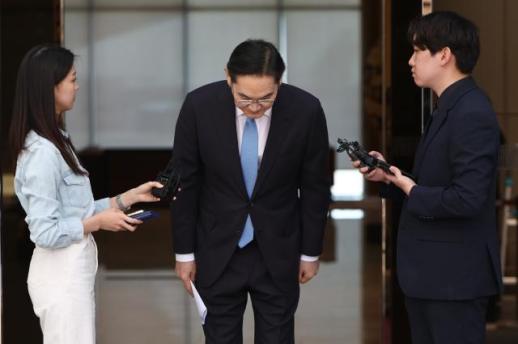 Samsung's Lee Jae-yong Apologizes Ahead of Planned Strike, Negotiations to Resume Lee Jae-yong, chairman of Samsung Electronics, publicly apologized to the nation and customers just five days before a planned general strike by the company’s union. Samsung and the union agreed to resume negotiations on May 18. Upon his return to Seoul on May 16 at the Gimpo Business Aviation Center, Lee stated, "I sincerely apologize to our global customers for the anxiety and concern caused by our internal issues," and added, "I bow my head in apology to the people who always support, love, and challenge Samsung." During his apology, Lee bowed his head three times. He emphasized, "I will take the brunt of the harsh winds and blame myself for everything. Let’s do our best to make Samsung a source of pride for all of us." Following this, both parties agreed to hold a second round of negotiations on the morning of May 18 at the Central Labor Relations Commission in Sejong City, with the commission's chairperson set to oversee the discussions. Previously, Samsung and the union engaged in marathon negotiations from May 11 to the early hours of May 13 under the commission's mediation. However, talks broke down over disagreements regarding performance bonus criteria. The commission had requested the parties to reconvene on May 16, but the union declined, leading to a stalemate. On the afternoon of May 16, around 4 p.m., the two sides held a preliminary meeting at the union office at the Pyeongtaek campus, attended by Choi Seung-ho, chairman of the Samsung Electronics branch of the Samsung Group's major labor union. The company’s lead negotiator was replaced at the union's request, with Lee Myung-gu, head of the Device Solutions People Team, participating. Choi commented on Lee's public apology, saying, "Employees joined the union because trust with the company was broken. In the DS division, 85% of employees are union members, so practically everyone is part of the union. It may take time to rebuild trust, but I hope we can work together starting with this negotiation." On May 15, Minister of Employment and Labor Kim Young-hoon met with Choi to hear the union's demands and subsequently discussed the government's position with Samsung's management in an effort to mediate between the two sides. The Samsung Electronics Labor Union's Joint Struggle Headquarters plans to initiate a general strike from May 21 to June 7, lasting 18 days. More than 46,000 union members have expressed their intention to participate, with the union claiming that up to 50,000 members could join the strike. Below is the full statement from Lee Jae-yong, chairman of Samsung Electronics. I sincerely apologize to our global customers for the anxiety and concern caused by our internal issues. And I bow my head in apology to the people who always support, love, and challenge Samsung. To the labor union and all Samsung family members, we are one body, one family. Now is the time to wisely unite our strength and move forward in one direction. I will take the brunt of the harsh winds and blame myself for everything. Let’s do our best to make Samsung a source of pride for all of us. Finally, I would like to thank the government and all those working hard to resolve our issues. I apologize for causing concern. Once again, I bow my head in apology to our customers and the public.* This article has been translated by AI. 2026-05-16 17:16:32