
Journalist

Yoo Na-hyun
shooting@ajunews.com
-
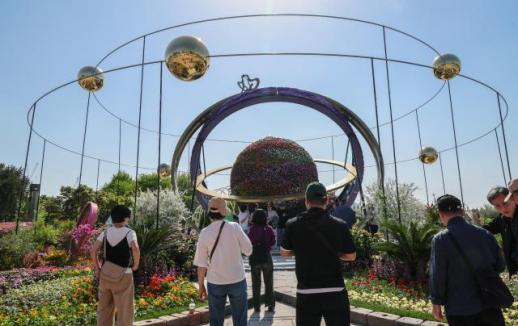 Sea of colorful bloom at Goyang flower festival SEOUL, April 24 (AJP) -Spring arrives in full and assorted colors at Ilsan Lake Park as the 2026 Goyang International Flower Festival opens, drawing visitors into a vast landscape of blooms just northwest of Seoul. Under the theme “Flowers Color Time,” the 17-day festival unfolds across a 250,000-square-meter venue, where more than 100 million flowers shape gardens, installations and winding paths along the lakeside. Large-scale floral sculptures rise against the water, while walking gardens and shaded rest areas offer a slower pace for visitors taking in the season. Families gather around themed spaces featuring Pengsoo, adding a playful touch to the spring outing. Inside, exhibition halls shift the mood from open-air spectacle to curated artistry. Floral designers from around the world present intricate arrangements, while an international flower exhibition brings together participants from some 30 countries, showcasing rare species and diverse plant life. Now in its 18th year, the festival has grown into one of the country’s best-known spring events, attracting more than 9 million visitors over time and cementing its place as a seasonal escape near the capital. 2026-04-25 12:14:46
 -
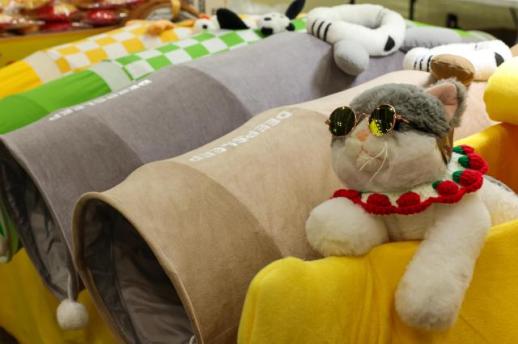 Whiskers and wallets: cat show at KINTEX SEOUL, April 24 (AJP) -The air at KINTEX hums with a different kind of energy this week — softer, furrier, punctuated by the occasional impatient meow. At the “2026 Nyangnyang Punch Cat Show Ilsan,” aisles fill quickly as visitors weave through rows of pastel-toned booths, peering into carriers, testing treats, and pausing for photos with cats that seem, at times, more composed than their human companions. From the entrance, the scale is unmistakable. Around 140 companies and 200 booths stretch across Hall 7, turning the exhibition floor into a marketplace of feline lifestyles — not just products, but identities. Premium feed brands tout grain-free formulas and tailored nutrition. Designers showcase sculptural cat towers that double as living room centerpieces. Even litter has evolved, marketed with the language of sustainability and wellness. At one booth, a vendor demonstrates an automated litter system, its quiet rotation drawing a small crowd. Nearby, a seminar space hosts a talk on feline nutrition, where attendees jot notes as if preparing for an exam. Elsewhere, visitors crouch low, coaxing shy cats forward with feather toys — small, intimate moments unfolding amid the commercial buzz. The crowd itself tells a story. Young couples, families with children, solo visitors — many carrying cats in transparent backpacks or cradling them gently — move through the space with a mix of curiosity and care. Conversations drift between product specs and personal anecdotes: allergies, aging pets, adoption stories. This is not casual browsing. It is, in many ways, caregiving in public. 2026-04-24 14:28:34
 -
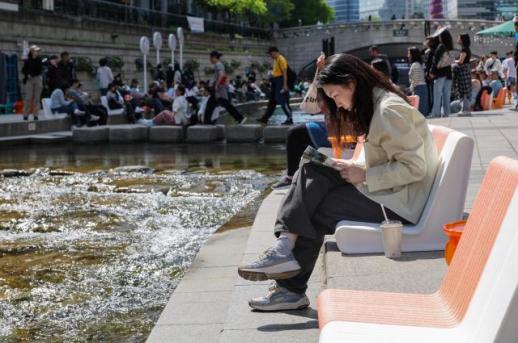 Text-hispters indulge in reading trend in Seoul SEOUL, April 23 (AJP) - In an era dominated by short videos and rapidly consumed content, young people in South Korea are turning back to books and written text. Reading books, copying favorite passages by hand, and visiting bookstores and libraries have become part of a growing lifestyle trend known as “text-hip,” where reading is seen not as an act of studying or self-improvement, but as a way to express personal taste and emotion. April 23 marks World Book and Copyright Day, established by UNESCO in 1995 to promote reading, publishing, and the protection of intellectual property rights. The day is observed around the world through book-related events and campaigns. The trend is visible across central Seoul, where the city government is operating outdoor reading spaces including Gwanghwamun Book Yard, Reading Seoul Plaza, and Reading Clear Stream. The program transforms plazas, streamsides, and other open urban areas into public libraries with bookshelves, beanbags, and lounge areas where visitors can read freely. This year, the city has also introduced walking tours for foreign tourists and a “Travel Library” featuring participation from 14 countries. Scenes at the outdoor libraries differ from traditional quiet reading rooms. Visitors read with drinks beside them, share books with friends, or photograph memorable lines to post online. At sunset in Gwanghwamun Square, reading spaces host concerts and film screenings, turning reading into a leisure activity. The reading boom has also expanded into tourism. At HiKR Ground, a cultural space located in the eastern hipster district of Seongsu, a recent exhibition titled “Text-Hip x Local Travel” introduced 109 regional typefaces from across the country. The exhibition invited visitors to read, write, and experience fonts inspired by local identity, including seaside-themed lettering from Sokcho and typefaces reflecting the landscape of Andong. Programs included handwriting sessions, postcard making, and Korean-language tattoo experiences. The shift reflects changing travel preferences. While tourism once focused on famous landmarks and food, younger travelers increasingly seek local stories, design, and atmosphere. Experts say the trend is also linked to digital fatigue. In a world of endless scrolling, turning paper pages and writing by hand offers a slower form of concentration and rest. Books were once seen as something to enjoy quietly alone. But in Seoul today, they are bringing people together, reshaping urban spaces, and inspiring new journeys. On World Book Day, young readers and tourists alike are experiencing the city through words once again. 2026-04-23 17:58:09
 -
 After rare catch, Han River survey sets sights on new discovery SEOUL, April 23 (AJP) - Expectations are rising for new discoveries in this year’s regular catch season along the Han River, following last year’s rare find of a protected species that underscored improving ecological conditions in the capital’s main waterway. The Seoul Metropolitan Government on Thursday conducted a fish species survey near Bamseom Island beneath Seogang Bridge in Yeongdeungpo-gu, western Seoul, as part of its semiannual monitoring program. Last year’s survey yielded a notable discovery — the endangered golden mandarin fish, designated as a natural monument, was found south of the Jamsil submerged weir. Researchers also identified multiple endemic species native to the Han River, including chamjunggogi, gashinapjiri and kkeokji, pointing to gradual improvements in the river’s waterfront ecosystem. The latest survey aims to assess water quality gains and gauge the extent of ecological restoration. Officials conducted on-site inspections by boat, examining fish distribution and population density across key habitats. The Han River fish survey is carried out twice a year — in the first and second halves — at eight monitoring points across six sections of the river’s main stream. The findings provide granular data on environmental changes and serve as a baseline for a five-year ecosystem research initiative. City officials said the results will support continuous monitoring of the river’s ecological health and help guide policy efforts to restore the natural environment of urban waterways. 2026-04-23 15:26:17
 -
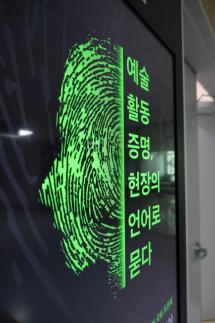 Cash-strapped artists recount struggles with red tape at forum in Seoul SEOUL, April 22 (AJP) - A forum to improve the rights of artists and entertainers alike was held at the National Assembly in Seoul on Wednesday. At the forum hosted by lawmaker Son Sol of the minor far-left Progressive Party, participants discussed various measures to improve their legal rights, address workplace mistreatment, and strengthen support measures. Many of them, hired on independent freelance-based contracts and struggling to make ends meet, are unable to access state-funded support as they are currently bound by regulations that require proof of employment, with red tape making it difficult for them to receive assistance. 2026-04-22 18:25:33
 -
 KOSPI hits new high amid hopes for US-Iran talks SEOUL, April 21 (AJP) - South Korea's stock market rebounded on Tuesday, setting a new record after about two months, amid hopes of looming talks between the United States and Iran. The country's benchmark KOSPI surged 2.72 percent to close at a record high of 6,388.47, breaking its previous closing record of 6,307.27 set on Feb. 26, just ahead of U.S.-led airstrikes on Iran that that pushed the already volatile Middle East into further turmoil. The junior KOSDAQ also edged up 0.36 percent to close at 1,179.03. 2026-04-21 17:13:11
 -
 TWICE Nayeon sports new identity in "Wear Yourself" campaign with GROVE SEOUL, April 21 (AJP) - Nayeon of South Korean girl group TWICE under JYP Entertainment joined fashion brand GROVE in its third campaign. The “Wear Yourself” campaign is built around the idea of dressing in a way that reflects one’s true self, offering a message of personal expression through fashion. The brand presented styles completed in individual ways by combining timeless basics with statement pieces. Nayeon, who serves as Grove’s ambassador for Korea and China, visited the newly renovated GROVE Apgujeong Store to mark the opening of the refreshed space and the launch of the third season. Visitors can also see Nayeon’s own interpretation of the “Wear Yourself” style at the store. 2026-04-21 14:53:15
 -
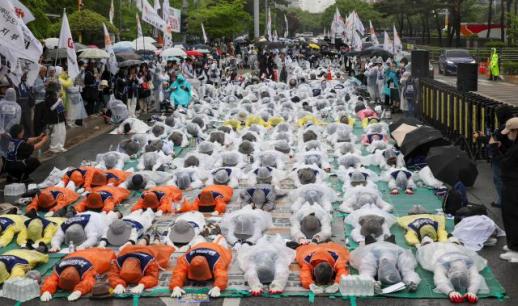 Rally in Seoul raises awareness for people with disabilities SEOUL, April 20 (AJP) - A nationwide association of parents of children with disabilities held a rally in front of the National Assembly in Yeouido, Seoul on Monday. The rally was held to mark the day for the physically challenged, observed annually on April 20 since 1981, to raise awareness of people with disabilities and better protect their rights. At the rally, participants held a procession that included taking three steps and one bow, a Buddhist practice of prostration that is also considered a form of peaceful protest. Monday's rally follows similar processions held in about 17 provincial cities since late last month, which led to meaningful outcomes including government pledges to take full responsibility for people with disabilities through increased state support and to investigate care facilities for any cases of abuse and harassment. 2026-04-20 17:48:04
 -
 NCT WISH drops its first studio album SEOUL, April 20 (AJP) - K-pop boy group NCT WISH has dropped its first full-length album on Sunday after successfully wrapping up an encore concert in Seoul. According to SM Entertainment, NCT WISH releases its first studio album, Ode to Love, at 6 p.m. The 10-track album, featuring the lead single of the same name, brings together the group’s signature “fresh and neo” sound that it has built since debut. Ahead of the release, the group held its first solo concert encore show, NCT WISH 1st CONCERT TOUR INTO THE WISH : Our WISH ENCORE IN SEOUL, from April 17 to 19 at KSPO DOME. The concerts sold out all seats and drew enthusiastic responses from fans after premiering performances of the title track Ode to Love and B-side song Sticky. Having shown steady growth with each release since debut, NCT WISH is expected to showcase expanded capabilities in music, performance and teamwork through the new album. The group will also open a large-scale pop-up store at The Hyundai Seoul from April 21 to May 3 following the album launch. 2026-04-20 16:22:41
 -
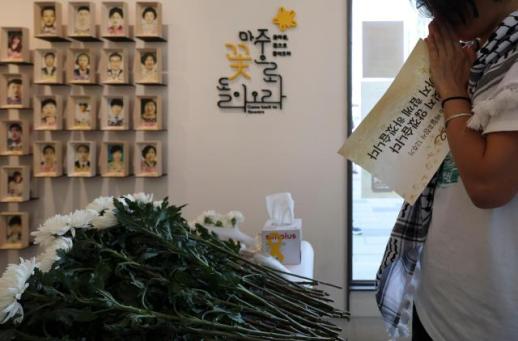 Nation honors Sewol victims as 12th anniversary deepens calls for accountability SEOUL, April 16 (AJP) - A synchronized silence descended upon the plaza fronting the Seoul City Council building at precisely 4:16 p.m. on Tuesday, as hundreds of citizens bowed their heads to mark twelve years since the Sewol ferry disaster. The gathering was held at the "Memory and Light," a civic space that served as a solemn anchor for a nation still grappling with the loss of 304 lives. The vast majority of victims were Danwon High School students from the city of Ansan, southwest of Seoul, on a seasonal field trip. This 12th anniversary underscores the enduring trauma of April 16, 2014, when a vessel bound for Jeju Island capsized off the coast of Jindo. The catastrophic event shattered public trust and remains a defining catalyst for safety reform in Seoul. While over a decade has passed, these dual ceremonies in the capital and Ansan demonstrate that the demand for collective memory has not faded, but rather evolved into a permanent fixture of the civic landscape. The proceedings in central Seoul were meticulously timed to allow participation from those unable to travel to the primary memorial held at 3:00 p.m. at the Hwarang Recreation Area in Ansan. 2026-04-16 18:01:35