

Journalist

Eun-mi. Won
silverbeauty@ajunews.com
-
 Special Prosecutor's Investigation Targets Yoon Suk Yeol Ahead of First Summons The second comprehensive special prosecutor team, led by Kwon Chang-young, is narrowing its investigation into former President Yoon Suk Yeol ahead of his first face-to-face questioning scheduled for June 6. The special prosecutor is summoning key figures involved in the emergency martial law declared on December 3 and the relocation of the presidential residence, including former Defense Minister Kim Yong-hyun, former Minister of the Interior and Safety Lee Sang-min, and former Chief of Staff Kim Dae-ki, to clarify the facts surrounding the allegations and determine what charges to apply against the former president. According to legal sources, the special prosecutor summoned both Kim and Lee as suspects for questioning on June 4. Kim faces allegations of rebellion and organizing a criminal group under military law, while Lee is accused of abuse of power. On the same day, Kim Dae-ki also underwent additional questioning. The focus of the special prosecutor's investigation is the upcoming questioning of former President Yoon, who is accused of directing the National Security Office and the National Intelligence Service to justify the martial law to allied countries, including the United States, immediately after its declaration (abuse of power). Initially, the special prosecutor considered making Yoon's appearance public but opted for a closed summons due to objections from his legal team. Legal experts believe this investigation will extend beyond merely confirming the allegations regarding the justification of martial law. The trajectory of the special prosecutor's investigation suggests a focus on reconstructing the entire command structure of the emergency martial law, with Yoon at its center. In fact, the special prosecutor is investigating Kim Yong-hyun under the charge of rebellion under military law. They believe that Yoon, Kim, and military leaders colluded to deploy armed forces to the National Assembly and the Election Commission. They are also examining evidence that suggests the formation of a so-called 'Second Investigation Division' alongside former Army Intelligence Commander Roh Sang-won to seize control of the Election Commission. The special prosecutor has also applied the same rebellion charges to former Special Warfare Command Chief Kwak Jong-geun and former Capital Defense Command Chief Lee Jin-woo, expanding the investigation to the Joint Chiefs of Staff. The special prosecutor has classified the allegations related to the Joint Chiefs of Staff as a 'first recognized case' and has charged former Chairman Kim Myung-soo and other leaders with serious offenses related to insurrection. There is speculation within and outside the legal community that the special prosecutor aims to establish a 'three-tier command structure' linking Yoon, the Joint Chiefs of Staff, and field commanders. This involves not only confirming that troops were deployed to the National Assembly and the Election Commission but also identifying who issued the orders, how they were communicated, and how they were executed. Amid allegations that some units did not follow normal command and control procedures during the martial law, the special prosecutor is also reportedly reviewing related facts. The necessity of examining whether the military command and control system (C4I) was operational during the emergency martial law and the routes of troop movements has been raised in this context. The investigation into the relocation of the presidential residence is also directed at Yoon. The special prosecutor is investigating the circumstances under which 2.8 billion won was illegally diverted from the Ministry of the Interior and Safety's budget during the 2022 relocation process, questioning whether the presidential office requested or pressured for the budget diversion and examining allegations that civil servants who opposed the diversion faced personnel disadvantages. Further questioning of Yoon is anticipated. The special prosecutor plans to summon former National Intelligence Service Deputy Director Hong Jang-won on June 11 to clarify the circumstances surrounding the delivery of the martial law justification messages. They have recently indicated that evidence suggests preparations for the emergency martial law were ongoing for an extended period. Attention is focused on how far the special prosecutor can pursue charges against Yoon. Currently, the publicized allegations involve abuse of power, but the special prosecutor is also investigating the possibility of charging Yoon with being the leader of rebellion under military law. Legal experts suggest that the scope of charges could expand depending on the testimonies and evidence obtained. Whether the rebellion charges applied to Kim Yong-hyun, Kwak, Lee, and others can be linked to Yoon will likely be a pivotal point in the ongoing investigation. Yoon's first summons is expected to mark the beginning of the comprehensive special prosecutor's investigation reaching its peak.* This article has been translated by AI. 2026-06-04 18:06:00
 -
 Independent Lawmaker Kang Sun-woo Requests Bail Amid Corruption Charges Independent lawmaker Kang Sun-woo, who has been charged with receiving 100 million won in campaign contributions, has recently filed a request for bail in court. According to legal sources on June 4, Kang submitted his bail request to Judge Lee Chun-geun of the Seoul Central District Court on June 2. Bail is a legal procedure that allows for the release of a defendant from custody under certain conditions, such as the payment of a security deposit. Once a bail request is filed, the court will hold a separate hearing to hear arguments from both the defendant and the prosecution before making a decision. A hearing date for Kang's request has not yet been scheduled. Kang was arrested in March on charges of violating political funding laws, including accepting 100 million won from former Seoul city council member Kim Kyung as a bribe for campaign favors ahead of the January 2022 local elections. At that time, Kim, who was affiliated with the Democratic Party, was nominated as the sole candidate for the Democratic Party's city council seat in Kang's constituency of Gangseo-gu, Seoul, and subsequently won the election. The prosecution has also charged Kang's former aide, Nam Mo, who facilitated the meeting between Kang and Kim, along with Kim. While Kim and Nam have acknowledged the charges in court, Kang has denied all allegations.* This article has been translated by AI. 2026-06-04 16:21:00
 -
 Post-Election Push for Prosecutorial Reform in South Korea Following the local elections on June 3, the South Korean government and ruling party are expected to intensify discussions on prosecutorial reform legislation that had been postponed. The Prosecutorial Reform Promotion Team under the Prime Minister's Office plans to unveil a draft amendment to the criminal procedure law this month, with the future of supplementary investigation rights emerging as the primary issue in the second phase of prosecutorial reform. According to legal sources on June 4, the Prosecutorial Reform Promotion Team intends to announce the draft amendment within this month. With the local elections concluded and the upcoming Democratic Party convention scheduled for August, discussions on prosecutorial reform are anticipated to gain momentum. The most significant point of contention is the supplementary investigation rights of prosecutors. Concerns have been raised that if these rights are abolished, prosecutors would only be able to decide on indictments based on cases handed over by primary investigative agencies like the police, potentially leading to delays in case processing and gaps in investigations. The Supreme Prosecutors' Office reported that 45.6% of cases handled by prosecutors in March and April of this year underwent supplementary investigations, underscoring the need to maintain the system. Conversely, hardliners within the ruling party argue that supplementary investigation rights are an extension of prosecutorial powers and should be abolished to uphold the principle of separating investigation and prosecution. They contend that allowing supplementary investigations could lead to an expansion of prosecutorial authority in the future. While supplementary inquiry rights have been proposed as an alternative, there is considerable debate surrounding this issue. Critics argue that supplementary inquiry rights resemble administrative investigations rather than criminal investigations, making it difficult to recognize evidence in court and limiting the protection of defendants' rights, such as the right to refuse testimony and the right to legal counsel. The law firm Hwawoo identified the fate of supplementary investigation rights as a crucial variable in prosecutorial reform in a report released on the same day, titled "Outlook on Corporate Regulatory Environment Following the June 3 Local Elections." Hwawoo stated, "The issue of granting supplementary investigation rights to public prosecutors will emerge as the key point determining the practical success of prosecutorial reform." Discussions regarding the transition to a public prosecution and serious crimes investigation agency system, another key aspect of the second phase of prosecutorial reform, are also expected to become more active. The Serious Crimes Investigation Agency, which is being prepared for launch in October, will be responsible for investigating six major crimes: corruption, economic offenses, defense industry crimes, drug offenses, national security crimes, and cybercrimes. Consequently, a significant number of investigations currently handled by prosecutors in areas such as securities, finance, fair trade, and corporate crimes are likely to be transferred to the Serious Crimes Investigation Agency. Hwawoo advised that businesses should focus on the diversification of investigative agencies rather than merely the reduction of prosecutorial powers. The report predicts that with the establishment of the public prosecution and serious crimes investigation agency system, companies will face a landscape where they must respond to multiple investigative bodies, including the police and special judicial police. Discussions on the so-called "special prosecution law for fabricated charges," promoted by the ruling party, may also resume following the local elections. In April, the Democratic Party proposed a special prosecutor bill aimed at uncovering allegations of fabricated investigations and charges by the prosecution, the National Intelligence Service, and the Board of Audit and Inspection during the Yoon Suk Yeol administration. The provision allowing the special prosecutor to decide on the maintenance of charges for cases they inherit has sparked controversy among opposition parties, who have labeled it a "self-pardon" issue. In addition to prosecutorial reform, corporate regulatory legislation is expected to be a major agenda item in the upcoming regular session of the National Assembly in the second half of the year. Hwawoo highlighted the establishment of a platform law and the abolition of exclusive reporting rights as key variables in the fair trade sector. According to the report, the platform law will regulate practices such as preferential treatment for a company's own products, tying sales, and demands for the best treatment, and discussions may also include the introduction of a cap on delivery app commissions. The abolition of exclusive reporting rights is also a concern for businesses. Hwawoo predicts that the criminalization of fair trade cases could accelerate, with the possibility of direct indictments without going through the Fair Trade Commission and an expansion of reporting rights for local governments. In the labor sector, extending the retirement age to 65 and mandating retirement pensions are identified as key legislative tasks. Hwawoo anticipates that the government and ruling party are likely to push for the extension of the retirement age, the expansion of labor law applicability, and the mandatory retirement pension system. Particularly, following the implementation of the Yellow Envelope Law, disputes surrounding the responsibilities of primary contractors and the scope of collective bargaining are expected to increase. The legal community views the upcoming regular session of the National Assembly as a critical juncture for prosecutorial reform and regulatory legislation. Starting with the debate over supplementary investigation rights related to the amendment of the criminal procedure law, discussions on the transition to a public prosecution and serious crimes investigation agency, platform law, abolition of exclusive reporting rights, and labor legislation are expected to follow, making it increasingly important for businesses to address judicial and regulatory risks.* This article has been translated by AI. 2026-06-04 15:30:00
 -
 Special Prosecutor Summons Former Ministers Lee Sang-min and Kim Yong-hyun for Investigation The Special Prosecutor's Team, led by Kwon Chang-young, summoned former Minister of Interior and Safety Lee Sang-min and former Minister of National Defense Kim Yong-hyun for questioning on June 4. Starting at 10 a.m., the special prosecutor is investigating Lee for allegations of abuse of power related to the relocation of the presidential residence. Lee is accused of illegally diverting approximately 2.8 billion won from the Ministry of Interior's budget to pay an unqualified contractor, 21 Grams, during the relocation project in 2022. The special prosecutor suspects that Lee, under pressure from the presidential office, retaliated against staff members who opposed the budget diversion by excluding them from promotions and other personnel benefits. Investigators are also looking into whether there were directives or involvement from higher-ups, including former President Yoon Suk Yeol and Kim Geon-hee, who had connections with 21 Grams. Last month, the special prosecutor arrested former Chief of Staff Kim Dae-ki and former Secretary for General Affairs Yoon Jae-soon, among other officials from the Yoon Suk Yeol administration, marking the first instance of securing custody since the special prosecutor's establishment. On the same day, the special prosecutor began questioning Kim Yong-hyun, who faces charges of rebellion and organizing a criminal group under military law. Kim is accused of sending armed soldiers to the National Assembly and the National Election Commission to incite rebellion. He allegedly conspired with former Army Intelligence Command Chief Noh Sang-won to establish an unofficial organization called the 'Second Investigation Unit' under a joint investigation headquarters to seize control of the Election Commission. In response, Kim's legal team claims that he is already facing charges of rebellion in a separate trial, arguing that this constitutes double indictment. Through his attorney, Kim stated, "Changing the packaging does not change the contents. This is clearly a case of duplicate investigation and illegal double indictment." The special prosecutor has scheduled a face-to-face investigation with former President Yoon for June 6 at 10 a.m.* This article has been translated by AI. 2026-06-04 13:36:00
 -
 Constitutional Court Upholds Lawyer Exam Law, Excludes Pregnancy and Childbirth Exceptions The Constitutional Court has narrowly upheld a provision in the Lawyer Examination Act that does not recognize pregnancy and childbirth as exceptions to the five-exam limit imposed on law school graduates within five years of graduation. However, the majority of justices expressed concerns about the law's alignment with constitutional protections for maternal rights, indicating that legislative discussions for reform are likely to follow. On June 4, legal sources reported that the court ruled 4 to 5 in favor of upholding Article 7, Section 2 of the Lawyer Examination Act. Although five justices voiced opinions of unconstitutionality, the ruling did not reach the required six votes for a declaration of unconstitutionality, resulting in a final decision of constitutionality. Article 7, Section 1 of the Lawyer Examination Act stipulates that graduates of law schools can take the bar exam only five times within five years from the end of the month in which they obtain their master's degree. Section 2 allows for the exclusion of the period of military service from this five-exam limit, a provision often referred to as the 'typo' system. Claimant Kim Nuri, who graduated from law school in 2016, attempted the bar exam but failed. After giving birth to and raising two children, she was unable to take the exam again after failing in 2020. Kim and others argued that the current law, which recognizes only military service as an exception, infringes on their rights to equality and freedom of occupational choice. Justices Kim Hyung-doo, Jeong Jeong-mi, Jeong Hyung-sik, and Jo Han-chang supported the constitutionality of the law. They argued that the provision aligns with constitutional requirements to prevent disadvantages for those fulfilling military obligations and maintained existing precedents. They also expressed concerns that recognizing additional exceptions could complicate the fairness of exam opportunities and pass rates, potentially undermining trust in the examination system. Conversely, Justices Kim Sang-hwan, Kim Bok-hyung, Jeong Gye-seon, Ma Eun-hyeok, and Oh Young-jun expressed opinions of unconstitutionality. They stated, "Considering the state's obligation to protect maternal rights, this provision violates the principle of proportionality by infringing on the occupational freedom of candidates who cannot adequately take the bar exam due to pregnancy and childbirth." They emphasized that the unconstitutionality lies not in the exemption for military service but in the failure to recognize any other exceptions. This creates a situation where candidates preparing for or experiencing pregnancy and childbirth must choose between forgoing exam opportunities and delaying their family planning. The dissenting opinion also highlighted the state's obligation under Article 36, Section 2 of the Constitution to protect maternal rights. They noted that adequate birth rates and population are fundamental to national existence and development, linking maternal issues to community interests. Furthermore, they argued that many female candidates for the bar exam are of childbearing age, making it excessive to disregard pregnancy and childbirth as potential exceptions. The Constitutional Court has previously upheld Article 7 of the Lawyer Examination Act multiple times. In a 2020 ruling, the court first acknowledged the need to consider unavoidable circumstances like pregnancy and childbirth, leading to ongoing related petitions. The increase in dissenting opinions to five in this case has amplified calls for reform of the system. The Anti-Corruption and Civil Rights Commission also recommended in December of last year that the Ministry of Justice amend the Lawyer Examination Act to exclude one year from the exam limit for those giving birth. Attorney Park Eun-sun, representing Kim, stated, "With five justices now expressing the opinion that this is unconstitutional, we will continue our legislative efforts. We will also seek a ruling from the Constitutional Court if similar cases arise, including those involving serious illness preventing attendance at the exam."* This article has been translated by AI. 2026-06-04 11:00:00
 -
 Special Prosecutor Summons Former Interior Minister for Budget Misappropriation Inquiry The second comprehensive special prosecutor team, led by Kwon Chang-young, has summoned Han Chang-seob, the former Vice Minister of the Interior and Safety, as part of its investigation into allegations surrounding the relocation of the presidential residence. This move comes a day before the first interrogation of Lee Sang-min, the former Interior Minister, regarding the alleged misappropriation of funds for the residence's construction. According to legal sources on June 3, the special prosecutor's team began questioning Han at 10 a.m. as a witness. Han was appointed as the first Vice Minister of the Interior and Safety shortly after the Yoon Suk Yeol administration took office in May 2022 and worked alongside Lee until his retirement in August 2023. The special prosecutor's team is investigating whether the Interior Ministry's budget was illegally diverted during the construction of the presidential residence. Lee is accused of being involved in the misappropriation of approximately 2.8 billion won to pay the construction company 21Gram for the relocation project. Additionally, the team is looking into whether Lee retaliated against Interior Ministry officials who opposed the budget diversion. Reports indicate that the special prosecutor's team has obtained statements from ministry officials suggesting that Lee instructed personnel to "send away" those who opposed the budget diversion. Some officials reportedly expressed their reluctance to accept the budget diversion orders, requesting instead to be reassigned. The special prosecutor's team appears to be confirming the decision-making process behind the budget diversion and the circumstances surrounding personnel actions at that time. The team plans to interrogate Lee as a suspect on the morning of June 4. In the afternoon of the same day, they will question Kim Dae-ki, the former Chief of Staff to the President, and on the morning of June 5, they will interrogate Yoon Jae-soon, the former Secretary for General Affairs at the Presidential Office. Both Kim and Yoon are accused of instructing the Interior Ministry to cover the construction costs for the presidential residence, which they were not obligated to do. A court issued arrest warrants for both individuals on May 22, citing concerns over potential evidence destruction. The special prosecutor's team intends to focus on whether the Presidential Office and the Interior Ministry were involved in the budget diversion to cover construction costs and whether there were any retaliatory actions against opposing officials.* This article has been translated by AI. 2026-06-03 17:12:00
 -
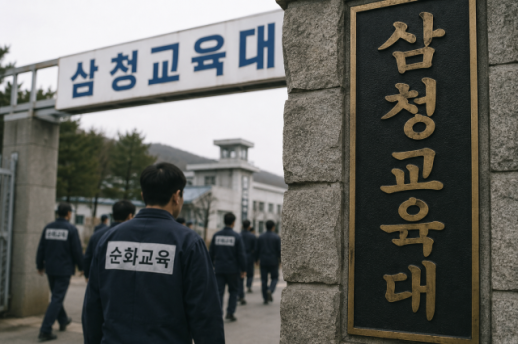 Court Orders South Korea to Compensate Victim of Re-education Camp A South Korean court has ruled that the government must compensate a victim of the re-education camp known as Samcheong Education Center approximately 200 million won (about $150,000). On June 3, the Seoul High Court's Civil Division 33, led by Judge Lee Chang-hyung, partially upheld the victim A's claim for damages against the state in a recent appellate ruling. A was forcibly taken to the Samcheong Education Center in August 1980 for re-education. After completing the program in September of the same year, A was sent to a labor service unit where he was subjected to forced labor. In January 1981, he received a two-year protective detention sentence. In March 1981, A escaped from the detention facility but was recaptured and sentenced to four months in prison. He was released in May 1983 after completing his protective detention. In May 2022, A filed a lawsuit seeking damages from the government. The first trial ruled that the state must pay A over 220 million won. The court stated, "A was significantly deprived of his dignity as a human being and his constitutional rights to personal freedom and residence due to unlawful arrest and detention without legal procedures. The state has a duty to protect the basic rights of its citizens and is responsible for compensating all damages resulting from its unlawful actions against A." The court determined that A's lost income should be calculated for the 33 months from his arrest in August 1980 until his release in May 1983. Regarding A's escape, the court noted that while the exact duration of his escape is unclear, it should be considered a period of unjust detention due to the unlawful actions against him, and thus included in the calculation of damages. The appellate court also recognized the government's liability for damages, ruling that A, who had received a supplementary military service designation, should receive an additional payment of over 3 million won for his military service. Both parties did not appeal the ruling, finalizing the appellate court's decision.* This article has been translated by AI. 2026-06-03 16:15:00
 -
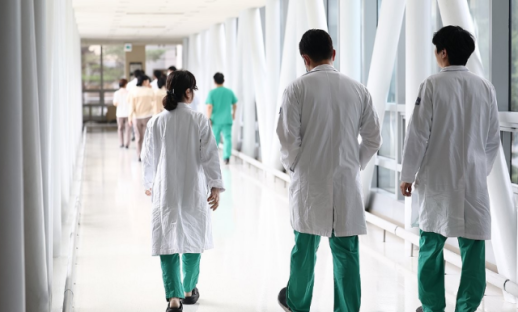 Resident Doctor Found Guilty for Distributing Medical Blacklist A resident doctor has been found guilty by the Supreme Court for distributing a so-called "medical blacklist" that revealed the personal information of doctors and medical students who did not participate in collective actions during a conflict between the medical community and the government. As a result, the doctor is set to lose their medical license under the law. On June 3, legal sources reported that the Supreme Court's third division, led by Justice Lee Suk-yeon, upheld a lower court's sentence of two years in prison with four years of probation for 33-year-old Ryu, who was charged with violating the Stalking Punishment Act and the Information and Communications Network Act (defamation). Ryu was accused of posting the names of 2,974 individuals, including doctors, medical students, and hospital staff who did not participate in collective actions from August to September 2024, on foreign websites. He reportedly uploaded this information a total of 21 times on sites such as "Pastebin" and "Archive." The list, referred to as the "medical blacklist" within the medical community, included names and affiliations of those who either did not join the collective actions or returned to work. During the trial, a key issue was whether posting the list online constituted stalking. Ryu's defense argued that the posts were merely expressions directed at an unspecified audience and did not meet the criteria for persistent and repeated harassment as defined by the Stalking Punishment Act. However, the first trial court rejected this argument. The Seoul Central District Court's Criminal Division 31 stated in June of last year that Ryu's actions caused fear and anxiety among the victims by distributing personal information via the internet to third parties. The court noted, "The defendant defamed the victims and engaged in blatant criticism, malicious attacks, and threats. The victims experienced severe mental distress, including fear of social interactions and concerns for their families' safety, leading to panic and avoidance of public spaces." The appellate court also upheld the guilty verdict. The Seoul High Court's Criminal Division 8 stated in October of the same year that Ryu's actions constituted a socially problematic form of "doxxing" aimed at pressuring others, warranting strict punishment. However, considering that Ryu was a first-time offender, acknowledged his wrongdoing, and reached settlements with some victims, his sentence was reduced to two years in prison with four years of probation. The Supreme Court also found no errors in the lower court's legal reasoning and dismissed Ryu's appeal. With this final ruling, Ryu is now subject to medical license revocation under the medical law. Current regulations stipulate that medical professionals who receive a prison sentence of more than one year with probation are subject to license cancellation, and they can apply for reinstatement three years after the cancellation date. Meanwhile, Ryu's legal team requested a constitutional review of the stalking law provisions applied to him, arguing they violated the principle of clarity, but this request was denied. It has been reported that Ryu has recently filed a constitutional petition with the Constitutional Court. 2026-06-03 13:00:00
 -
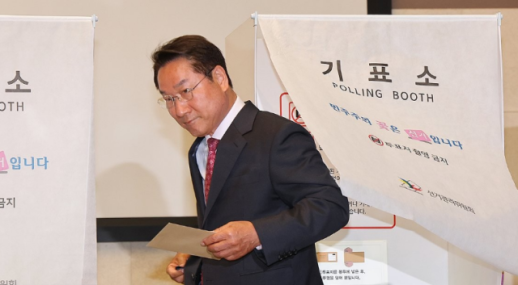 Election Commission Files Complaint Against Incheon Mayor Candidate Yoo Jeong-bok for Asset Disclosure Violation The Incheon Election Commission has filed a complaint against Yoo Jeong-bok, the People Power Party's candidate for Incheon mayor, over allegations of failing to disclose virtual assets. According to legal sources on June 3, the Incheon Election Commission submitted a complaint to the Incheon Police Agency on June 1, accusing Yoo of violating the Public Official Election Act. Yoo is alleged to have omitted part of his spouse's assets during the asset disclosure process, leading to a false report. The National Election Commission announced the day before that the amount of Yoo's spouse's assets was not the previously reported 439.881 million won, but rather 518.579 million won. Consequently, the total family assets of Yoo were determined to be 1.92297 billion won instead of the previously stated 1.844272 billion won. The Election Commission identified the omitted amount as approximately 78.69 million won. The core of the allegations revolves around the overseas virtual asset account held by Yoo's spouse. A media outlet previously reported that Yoo's spouse owned 21,000 virtual assets, which were allegedly transferred to an overseas exchange and omitted from the asset disclosure for the local election candidacy. Yoo's camp has explained that the virtual assets were investments made with proceeds from the sale of his brother's real estate, asserting that they do not represent actual assets of his spouse. However, the Election Commission has deemed that the reported asset values for both the candidate and his spouse were inaccurate, prompting the correction announcement and subsequent complaint. The Public Official Election Act stipulates penalties for candidates who publish false information regarding their own or their spouse's assets for the purpose of election. A confirmed fine of over 1 million won would result in the invalidation of the election. Previously, Park Chan-dae, the Democratic Party's candidate for Incheon mayor, also filed a complaint against Yoo and his spouse for violations of the Public Official Election Act and the Public Officials Ethics Act. Yoo's camp has countered by filing a complaint against those who raised the allegations for disseminating false information. The Incheon Police Agency's anti-corruption investigation unit plans to merge the Election Commission's complaint with the existing investigation into the Democratic Party's complaint.* This article has been translated by AI. 2026-06-03 11:06:00
 -
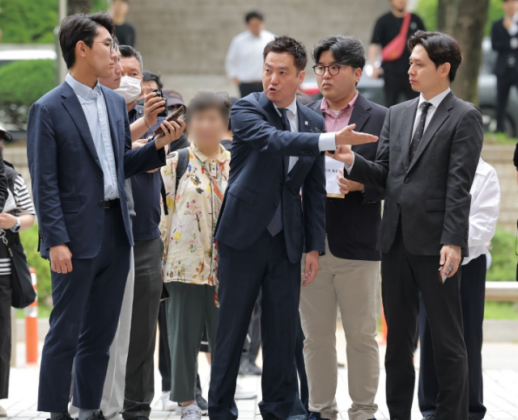 Kim Se-hee Fined for Illegal Possession of Replica Firearm and Defamation Kim Se-hee, the operator of the YouTube channel Garoseyro Institute, has been fined for illegal possession of a replica firearm and for making defamatory remarks against lawyer Kang Yong-seok. On June 3, the Seoul Central District Court's Criminal Appeal Division 5-2, presided over by judges Kim Yong-jung, Kim Ji-sun, and So Byeong-jin, imposed a fine of 5 million won on Kim for violations of the Firearms and Explosives Act and defamation. The appellate court consolidated two separate defamation cases and one violation of the Firearms and Explosives Act for its ruling. In the first trial, Kim was fined a total of 6 million won, with 2 million won for each incident. Kim was accused of purchasing two replica firearms at a survival goods store in Gangnam, Seoul, in October 2021 and modifying them with a color part to shoot an advertising video in February 2022. Color parts are plastic components that cover the muzzle and barrel in bright colors like orange or yellow to prevent confusion with real firearms. According to the Firearms and Explosives Act, possessing a replica firearm that closely resembles a real gun is prohibited, and tampering with color parts can also lead to penalties. In the first trial, Kim denied the charges, arguing that possessing the replica firearm for four hours on private property for an advertisement did not increase social risk. Other YouTubers who used replica firearms to create videos were not prosecuted, raising concerns about fairness. The first trial court ruled that the firearms possessed by Kim were recognized by the Firearms and Explosives Safety Technology Association as having a high potential for criminal misuse due to their resemblance to real guns, stating, "It cannot be said that this does not increase social risk." The court also dismissed Kim's claims that the lack of prosecution against other YouTubers violated his right to equality. The appellate court noted, "Whether the modification was illegal and whether it increased social risk are irrelevant to the fact that possessing a replica firearm during an advertisement shoot constitutes a legal violation. Given that Kim could have legally possessed a firearm with permission, his actions cannot be considered justifiable." Additionally, Kim faces charges of defaming Kang Yong-seok in December 2023 by stating on his YouTube channel, "He must be sent to prison without exception." The first trial found Kim guilty on two counts of defamation, and the appellate court upheld this decision. Meanwhile, Kim was arrested on May 26 for allegedly spreading false information regarding the cause of death of actress Kim Sae-ron, claiming it was due to financial pressure from actor Kim Soo-hyun. He subsequently applied for a detention review, but the court rejected his request, stating there was no basis for the claim.* This article has been translated by AI. 2026-06-03 10:42:00