
Journalist

Won Eun-mi
silverbeauty@ajunews.com
-
 Justice Ministry Rejects Reports Challenging Lee Jae-myung’s Remarks on Criminal Records South Korea’s Justice Ministry on Wednesday rejected what it called “fake news” reports disputing President Lee Jae-myung’s recent remarks about criminal records, saying the figures cited in the coverage were being misread. The National Assembly Research Service also said it is not possible to calculate a single, official total of people with criminal records or make reliable cross-country comparisons. The ministry said some outlets reported that Lee’s comments were untrue, citing a reply from the research service that referenced U.N. Office on Drugs and Crime data. The coverage said the number of people convicted in South Korea in 2022 was about 384 per 100,000 residents. The Justice Ministry countered with different figures from the Supreme Court’s “2023 Judicial Yearbook,” saying about 750,000 people were convicted in 2022 — about 1,460 per 100,000 residents. The ministry stressed that the number reflects annual convictions and “is not appropriate” to interpret as the total number of people with criminal records. It said “people convicted in a given year” and “people with criminal records” are different concepts, because a yearly conviction count does not represent the accumulated number of people with prior criminal punishment histories. In a separate clarification released the same day, the National Assembly Research Service said it did not provide any reply stating South Korea’s total number or share of people with criminal records, or data comparing such figures across countries. It said definitions and scope vary by country, making comparisons difficult, and that it is hard to find official domestic statistics showing a cumulative total. The research service added that UNODC statistics also count newly convicted people each year and have limits for direct comparisons because legal systems and punishment standards differ. It said its reply was not intended to judge whether the president’s remarks were true or false. The dispute stems from Lee’s comments at a Cabinet meeting on April 14, when he said, “Most people have a criminal record,” while criticizing what he described as overuse of criminal punishment. He said the principle of legality had “effectively collapsed.” The government has since been pursuing an “economic penalties rationalization plan” to overhaul more than 1,000 laws that include criminal penalties. The plan would shift simple administrative violations or minor legal breaches to financial sanctions such as fines and penalty surcharges, and limit criminal punishment to cases where it is necessary. As examples, the government is raising the cap on penalty surcharges for telecommunications operators that restrict contract cancellations from 1 billion won to 5 billion won, and reviewing a plan to impose penalty surcharges directly on parties involved in illegal loans by major bank shareholders. At the same time, it is moving to ease some criminal punishment provisions or convert them to administrative sanctions. Political sparring has continued. The People Power Party condemned Lee’s remarks as “outrageous,” saying he smeared the public as criminals. The government says Lee was raising concerns to improve a sanctions system centered on criminal punishment. The Justice Ministry and the National Assembly Research Service both emphasized that producing a single figure for the number of people with criminal records — or comparing such totals across countries — is not realistically possible. * This article has been translated by AI. 2026-04-23 10:21:56
 -
 Prosecutors seek 15-year prison sentence for ex-interior minister in appeals case SEOUL, April 22 (AJP) - Prosecutors on Wednesday again sought a 15-year prison term for former Interior and Safety Minister Lee Sang-min in his appeals trial over allegations related to disgraced former President Yoon Suk Yeol's martial law debacle in December 2024. Lee was sentenced to seven years in prison in his first trial in February this year. During a hearing at the Seoul High Court, prosecutors said Lee played a key role in carrying out Yoon's botched declaration of martial law by instructing police and fire agencies to cut off power and water to major institutions and news outlets on Yoon's orders with the aim of "completely paralyzing" media critical of the abrupt overnight fiasco. "The case is tantamount to terrorism against democracy," they criticized, adding that insurrection or its attempt is a serious crime that would make heavy punishment unavoidable even if it is merely planned. They argued that the absence of casualties and the fact that the debacle failed should not be grounds for a reduced sentence, and called for strict punishment to prevent a recurrence. They also pointed to his uncooperative behavior in investigations and perjury during hearings, saying these should be considered in sentencing. Prosecutors also suspected that he was aware of Yoon's plan in advance, citing evidence that he had spoken with key officials such as former Prime Minister Han Duck-soo and former Defense Minister Kim Yong-hyun. The appellate court is expected to deliver a sentence sometime next month as it must be concluded within three months of the first trial verdict, meaning the ruling would be made before May 12. 2026-04-22 17:14:27
 -
 Yulchon, OnYul conference examines nonprofit regulation, governance and social value metrics Yulchon LLC, the OnYul public-interest foundation and the Social Value Institute held the third Yulchon-OnYul Public Interest Legal System Conference at 2 p.m. April 21 at Yulchon’s lecture hall in Seoul’s Gangnam district. The three organizations have hosted an annual conference since 2024, selecting topics aimed at improving public-interest legal frameworks. This year’s agenda focused on legal and legislative issues surrounding the permit-based system for establishing nonprofit corporations, legislative tasks to improve nonprofit governance, and ways to expand and institutionalize the measurement and compensation of social value. The event opened with remarks from the heads of the co-hosting organizations. Lee In-yong, co-chair of OnYul, said it has become difficult to ignore criticism that laws and institutions are acting as barriers rather than safeguards for people seeking to engage in public-interest work. He said he hoped the discussions would help spur legal and legislative improvements. Kang Seok-hoon, managing partner at Yulchon, said the public-interest ecosystem has been unable to fully exercise autonomy and creativity under an outdated legal system and excessive regulation that has been in place for more than half a century. He said Yulchon and OnYul would work together as partners in reform. Na Seok-kwon, head of the Social Value Institute, cited a remark attributed to Michelangelo about freeing an angel from marble while creating the statue of David. He said he hoped the conference would help chip away at entrenched practices and rigid interpretations to enable major achievements in solving social problems. Discussions then continued in three sessions. In the first session, on legal issues and legislative tasks related to the permit system for establishing nonprofit corporations, Lee Dong-jin, a professor at Seoul National University School of Law, presented arguments that the permit requirement under Article 32 of the Civil Act is unconstitutional. Attorney Lee Hee-sook of the Dongcheon Foundation presented legislative alternatives centered on creating a public-interest commission. Lee Dong-jin cited the Constitution’s Article 21(2), which explicitly bans prior permission for associations, and noted that major countries including Germany, France and Japan have already shifted to a rules-based system. Lee Hee-sook said reform should go beyond simply abolishing the permit system, proposing a new legal framework that would establish a public-interest commission to integrate authorization, support and oversight of public-interest corporations. The session followed a December ruling in which the Seoul Administrative Court referred a constitutional review of Article 32 to the Constitutional Court (2025Hun-Ga20). A panel discussion, moderated by Yulchon attorney Yoon Yong-seop, included Kim Deok-san, chairman of the Korea Public Interest Corporation Association; attorney Jeong Soon-moon of The Ham Law Firm; OnYul attorney Jeon Gyu-hae; and Kim Da-hye, a senior official in the Justice Ministry’s Legal Review Office. Panelists raised concerns about the permit system and exchanged views from their respective positions. The second session addressed legislative tasks to improve nonprofit governance. Bae Won-gi, head of the Nonprofit Organization Evaluation Institute, introduced overseas governance systems, including the U.S. intermediate sanctions regime, the U.K. Charity Commission model, and Japan’s requirement for councils for foundation corporations, and discussed directions for improving Korea’s system. Kim Jeong-yeon, a professor at Ewha Womans University School of Law, outlined limits in current nonprofit regulation and public oversight tools. She presented tasks for rebuilding legal models, including codifying directors’ duty of loyalty, introducing shareholder-style derivative suits, and revising the Public Interest Corporation Act. A discussion moderated by Lim Seong-taek, a director of the Duru foundation, featured Baek Dong-ho of Korea GuideStar; Park Dong-soon of the Korea YWCA; Yoon Hwan-cheol of the Mirae Nanum Foundation; and Kim Hyun-joo of the social welfare corporation Together Walking Children, who discussed governance improvements from the field perspective. The third session took the form of a talk concert on expanding and institutionalizing social value measurement and compensation. It was moderated by Jeong Myeong-eun of the Social Value Institute, with panelists Yoo Mi-hyun of the institute; Kim Young-sik, secretary general of the National Council of Local Governments for Social Solidarity Economy; Kwak Je-hoon, CEO of Pan-Impact Korea; and attorney Lee Seon-min of Duksu Law Firm. The panel reviewed the legislative progress and significance of the Framework Act on Social Solidarity Economy, which was expected to pass the plenary session, and assessed the past decade of performance-based support models, including Social Impact Bonds (SIB) and Social Performance Compensation (SPC). Yoo said the Social Performance Compensation program has, since 2015, paid 76.9 billion won in incentives in proportion to 536.4 billion won in social performance created by 468 companies, and that it has led to policy shifts by local governments including Hwaseong. Kwak cited an SIB case supporting children with borderline intellectual functioning, arguing that innovations difficult under process-focused administration can be achieved through performance-based approaches. Kim Young-sik said some activities that address social problems are inherently difficult to measure, and argued against treating performance-based support and grant funding as a strict either-or choice, calling instead for diversification depending on circumstances. Lee Seon-min pointed to issues that must be resolved in legislation, including the objectivity of social value measurement, who bears measurement costs, and how to ensure fairness. Yulchon, OnYul and the Social Value Institute said they plan to continue related work so that the conference discussions can lead to a legislative roadmap in preparation for a possible unconstitutional ruling on the nonprofit permit system, institutional changes to improve public-interest corporation governance, and the institutionalization of social value measurement after enactment of the Framework Act on Social Solidarity Economy. * This article has been translated by AI. 2026-04-22 16:21:19
 -
Special counsel again seeks 15 years for Lee Sang-min in martial law insurrection appeal Special counsel prosecutors on Tuesday again asked an appeals court to sentence Lee Sang-min, former minister of the Interior and Safety, to 15 years in prison for allegedly taking part in insurrection-related acts during the Dec. 3 martial law declaration. At the closing hearing in Lee’s appeal at the Seoul High Court’s Criminal Division 1, the special counsel team led by Cho Eun-seok urged the court to impose the same 15-year term it sought at trial on charges including performing key duties in an insurrection. Arguments concluded Tuesday, leaving the court to rule. Prosecutors said Lee played a central role in carrying out the alleged insurrection by relaying orders to cut electricity and water to media outlets. They argued the aim was to “completely paralyze” specific news organizations, block coverage critical of martial law and shape favorable public opinion. Calling the case “terror against South Korea’s democracy,” prosecutors said insurrection is a grave crime that can draw heavy punishment even at the planning stage. They argued that the absence of casualties or the fact the alleged acts were not completed should not reduce the sentence, adding that strict punishment is needed to prevent a repeat. Prosecutors also disputed Lee’s claims about intent, saying that as a former judge he was in a position to recognize the unconstitutionality and illegality of martial law but still participated. They cited his phone call with former Defense Minister Kim Yong-hyun on the day martial law was declared and said he remained at the presidential office with former Prime Minister Han Duck-soo, raising the possibility he knew of the plan in advance. The special counsel team further alleged Lee denied the power-and-water cutoff orders to investigators and at the Constitutional Court and committed perjury. They also said he was uncooperative during the investigation and trial, which should be considered at sentencing. Lee was indicted on allegations that he aided Yoon Suk Yeol’s martial law declaration and contacted former National Fire Agency Commissioner Heo Seok-gon and others to order electricity and water cutoffs targeting specific media outlets. Prosecutors also said that as the minister overseeing the government’s martial law-related administration, he failed to stop an illegal declaration and instead joined its execution. In the first trial, the court sentenced Lee to seven years in prison, finding he took part in some acts as a member of an insurrection group. The court said responsibility could be recognized even if the power-and-water measures were not ultimately carried out. The appeals court is expected to decide whether to increase the sentence in line with prosecutors’ request or uphold the lower court’s ruling.* This article has been translated by AI. 2026-04-22 15:52:01
-
 Jipyeong Holds Seminar on Legal, Data Risks in Public-Sector AI Transition Law firm Jipyeong said it held a seminar on April 21 in Seoul on strategies for the public sector’s AI transition, focusing on legal frameworks and practical cases. The event, held at the Grand Central complex in Jung-gu, was designed to broadly review policy direction, legal issues, data governance and responses to infringement incidents tied to public-sector AI transition, also referred to as AX. Moderated by Heo Jong, a Jipyeong partner attorney and head of the firm’s IP and IT group, the seminar opened with remarks by Jipyeong Managing Partner Kim Ji-hong and featured four presentations followed by a Q&A session. Gong Jin-ho, director of the AI Policy Planning Division at the Ministry of Science and ICT, presented first on the government’s AX policy direction. “The government is building a pan-government AX common foundation based on core infrastructure such as AI training data and GPUs, and is pushing a wide-ranging AI transition linked to ministry-specific projects,” Gong said. Song Do-young, a Jipyeong partner attorney, spoke on how to achieve a successful public-sector AI transition from a legal and institutional perspective. “To succeed, it is important to secure legal grounds and a liability structure proactively from the pre-adoption stage,” Song said. He added that beyond the Framework Act on Artificial Intelligence and guidelines, organizations should analyze the many laws being revised or enacted and the national basic cybersecurity guidelines, and manage legal risks systematically across AI development, procurement, contracting and operations. Shin Yong-woo, also a Jipyeong partner attorney, addressed the issue from a data-governance perspective. “Public-sector AI transition is not just about adopting technology; establishing a data-governance system that covers personal information, copyright and standards for data use is essential,” Shin said. He said proactive legal-risk management must accompany governance to produce sustainable AX results. Park Yu-hyeon, a partner at PwC Consulting, presented on practical cases and challenges. Park said AI adoption must move beyond a technology-centered approach and be backed by clear business goals and redesigned work processes that can collaborate with AI, as part of an organization-wide AX strategy. In the Q&A session, moderated by Choi Jeong-gyu, a Jipyeong partner attorney and head of the firm’s IP and IT group, participants including Jeon Su-nam, a team leader at the National IT Industry Promotion Agency, discussed the status of policy efforts, legal issues and practical ways to apply AI in the public sector. Choi said the seminar provided an opportunity to comprehensively review the policy and legal environment and data-governance issues surrounding public-sector AI transition, and to discuss practical challenges facing public institutions and companies. “As the adoption of AI technology accelerates, proactive review of legal and institutional risks is becoming more important,” he said, adding that Jipyeong will offer practical solutions across the full AX process in both the public and private sectors.* This article has been translated by AI. 2026-04-22 15:27:58
 -
 Special Counsel to Question Lee Si-won on Alleged Pressure in Marine Death Probe Kwon Chang-young’s second comprehensive special counsel team, which is investigating unresolved allegations following three earlier special counsel probes (insurrection, Kim Keon Hee and the fallen Marine), will summon Lee Si-won in connection with claims of outside pressure on the Marine death investigation. The special counsel said Lee will be questioned as a witness on the 23rd. The team said the questioning concerns matters tied to the earlier special counsel cases and is unrelated to the North Korea remittance case transferred from the Seoul High Prosecutors Office human rights inspection task force to the Suwon District Prosecutors Office. The inquiry centers on allegations of interference surrounding the death of a Marine Corps 1st Division private in July 2023. At the time, Marine investigator Park Jeong-hun, then head of the Marine Corps investigative unit, transferred the case to police after applying negligent homicide charges to Lim Seong-geun, then commander of the 1st Division, and others. After the transfer, the records were retrieved, prompting suspicions that the presidential office and the Defense Ministry intervened in the investigation. The episode also fueled the so-called “VIP anger” claim — that Yoon Suk Yeol, described in the case as a former president, strongly reprimanded officials after being briefed on the findings and that the direction of the investigation then changed. The special counsel views whether there was improper pressure in the record-retrieval process as a key issue. Investigators plan to examine whether Lee was involved in the retrieval of the records. He is suspected of taking part in checking the transfer process, including speaking in August 2023 with Yoo Jae-eun, then the Defense Ministry’s legal affairs chief, and contacting police after receiving instructions from Cho Tae-yong, described as a former national security adviser, the report said. The earlier special counsel team on the Marine case, led by Lee Myung-hyun, indicted 12 key figures, including Yoon, without detention. It granted Lee discretionary immunity and issued a suspension of indictment, citing his cooperation. The special counsel said it will use the new questioning to recheck the decision-making process at the time and how instructions were conveyed. Separately, Lee is on trial in a case involving allegations that Lee Jong-sup, described as a former defense minister, fled overseas. That case concerns whether the presidential office intervened in the process of appointing him as ambassador to Australia, amid claims he was a central figure in the pressure allegations. The comprehensive special counsel is also separately reviewing whether the presidential office intervened in the investigation into Ssangbangwool’s alleged remittances to North Korea. The special counsel recently received related materials from the Seoul High Prosecutors Office task force, formed a dedicated team and is examining whether Lee and others influenced the direction of that investigation. The special counsel said it will analyze the secured materials and conduct witness interviews to determine, step by step, whether there was organized intervention by the presidential office. * This article has been translated by AI. 2026-04-22 10:54:20
 -
 Special Counsel Seizes Yoon Hee-geun Work PC in Probe of Alleged Unification Church Gambling Cover-Up A special counsel team led by Kwon Chang-young has widened its probe into allegations that police covered up suspected overseas gambling by senior figures of the Unification Church, moving its focus up to the top ranks of the police. According to legal officials on April 22, the team secured a work computer previously used by Yoon Hee-geun during searches a day earlier of the National Police Agency, the Gangwon Provincial Police Agency and the Chuncheon Police Station. Yoon was the agency’s deputy commissioner general in June 2022, when police obtained the gambling tip. The special counsel is investigating why police did not open a formal investigation despite receiving information that Unification Church leader Han Hak-ja and other senior officials gambled about 60 billion won from 2008 to 2011 at casinos in Las Vegas. Investigators have also found indications the information was leaked outside the police. The team is looking into whether the case was effectively blunted after the information was passed to political circles. Reports said the probe is also examining alleged involvement by People Power Party lawmaker Kwon Seong-dong. Kwon has been indicted on charges of receiving 100 million won in illegal political funds from the Unification Church. He was sentenced to two years in prison in the first trial, and an appeal is under way. In a separate case, a court partly recognized that Kwon received investigation-related information tied to the Unification Church. Investigators are analyzing data from Yoon’s seized computer to determine whether he was involved in any effort to block the investigation. Although the search warrant reportedly did not specify a suspect, the inquiry is expanding toward senior police leadership. The investigative scope also includes possible links to Jeon Seong-bae, known as "Geonjin Beopsa." After a text message surfaced in which Jeon referred to Yoon’s personnel matter as something "worked on in advance," the special counsel is treating it as a possible clue to motives for personnel or investigative interference. The case was previously handled by a special counsel team known as the Kim Keon-hee special counsel (the Min Joong-ki team) before being transferred to the comprehensive special counsel. That earlier team indicted suspects on charges including instructing destruction of evidence, alleging the Unification Church received investigative information in advance and ordered deletion of accounting records. A court dismissed the indictment, saying it was not within the special counsel law’s scope. After reviewing materials obtained from police, the comprehensive special counsel team plans to summon related figures for questioning in sequence. What began as a gambling allegation is now spreading to police and political circles, and potentially to the top of the police hierarchy. * This article has been translated by AI. 2026-04-22 10:18:45
 -
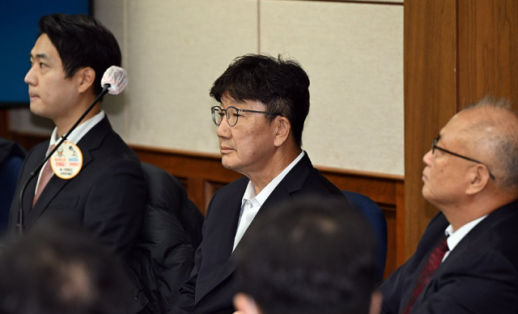 Special Counsel Seeks 4 Years for Rep. Kwon Seong-dong in Appeal Over Unification Church Funds Special prosecutors again sought a four-year prison term for People Power Party lawmaker Kwon Seong-dong in his appeal over allegations he took 100 million won (about $100,000) in political funds from the Unification Church. The case has focused on whether money and requests exchanged ahead of a presidential election reflected improper ties between politics and a religious group. At a closing hearing Monday at the Seoul High Court, the special counsel team investigating Kim Keon Hee, led by Special Counsel Min Jung-ki, asked the court to sentence Kwon to four years in prison and order forfeiture of 100 million won. The request matches what prosecutors sought at the first trial. The special counsel argued Kwon accepted illegal political funds through his relationship with the church. “The defendant colluded with a specific religious group and received a large sum of 100 million won in political funds,” the team said, adding that it undermined election fairness and violated a lawmaker’s duty of integrity. Prosecutors said the Unification Church made requests to Kwon, described as a so-called “Yoon core” figure, while supporting Yoon Suk Yeol during the 20th presidential election. They also cited Kwon’s conduct after the alleged offense, claiming he showed no remorse and tried to destroy evidence by contacting related figures and checking on the investigation’s status. “Given the circumstances and method of the crime and the amount received, the offense is extremely serious,” the special counsel said, urging the court to dismiss Kwon’s appeal and impose a heavier sentence. Kwon was indicted on allegations that in January 2022 he met Yoon Young-ho, a former Unification Church world headquarters chief, at a restaurant in Yeouido, Seoul, and received 100 million won along with requests for support for the church. Prosecutors say the church sought to have its pending issues advanced as government policy in exchange for organizational support and votes from members during the election. In January, the first trial court found Kwon guilty on all counts and sentenced him to two years in prison and forfeiture of 100 million won. The court said taking illegal political funds betrayed constitutional responsibilities and undermined the purpose of the Political Funds Act. If the ruling is finalized, Kwon would lose his parliamentary seat and face restrictions on running for office for the next 10 years. Both the special counsel and Kwon appealed the first ruling. Kwon’s lawyers again disputed the allegations, saying it was “hard to accept” that 100 million won in cash could have been exchanged in broad daylight. They said the Unification Church offered election funding but Kwon rejected it, and denied he accepted money or granted any favors. * This article has been translated by AI. 2026-04-21 18:01:16
 -
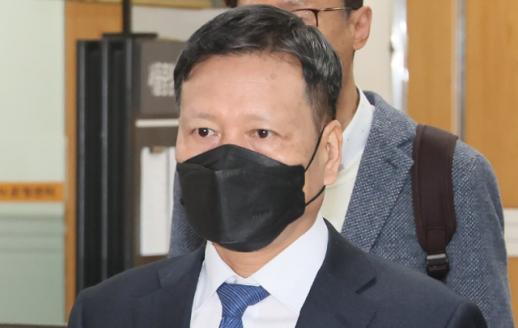 Qoo10 Founder Gu Young-bae Denies Fraud Charges in Tmon-Wemakeprice Settlement Case Executives at Qoo10 Group, including founder Gu Young-bae, denied fraud allegations in court after prosecutors filed additional charges tied to the Tmon-Wemakeprice unpaid settlement crisis. The criminal trial over responsibility for the large-scale nonpayment is now moving into a fuller phase. The Seoul Central District Court’s Criminal Division 24, led by Judge Lee Young-seon, held a hearing on 21 for Gu and seven others, including Ryu Gwang-jin of Tmon and Ryu Hwa-hyeon of Wemakeprice, on charges including fraud and breach of trust under the Act on the Aggravated Punishment of Specific Economic Crimes. Prosecutors said Gu, Qoo10 Technology head Kim Hyo-jong and Qoo10 finance chief Lee Si-jun conspired to deceive marketplace sellers into believing payments would be made even after Qoo10 had lost the ability to pay settlement funds, and allegedly took about 844 million won. Gu’s attorney said the defense denies the indictment, and the other defendants took the same position. Whether the company was already unable to make settlements, and whether executives intentionally misled sellers, is expected to be central to the case. The court decided to merge the newly indicted case with the ongoing trial over the broader Tmon-Wemakeprice settlement crisis, meaning allegations of fraud, breach of trust and embezzlement will be heard together. Prosecutors previously indicted Gu and others in December, alleging they misappropriated about 1.85 trillion won in seller settlement funds from Tmon and Wemakeprice and embezzled about 100 billion won by siphoning affiliate money under the guise of loans and consulting fees. Authorities have put total damages at 1.8563 trillion won. The crisis surfaced in July 2024, when it became known that about 500 merchants on Wemakeprice did not receive payments on their scheduled settlement date. The nonpayment later spread to Tmon, widening the fallout. Qoo10, a Korea-linked e-commerce company founded in Singapore, acquired Tmon in 2022 and Wemakeprice in 2023. After the settlement crisis deepened its management troubles, Tmon was sold to Oasis, and Wemakeprice entered bankruptcy proceedings. Separately, Gu and others are also on trial over allegations of unpaid wages and severance. Prosecutors said they failed to pay about 5.6 billion won in wages to 613 workers and about 20.7 billion won in severance to 733 workers. Future hearings are expected to focus on when the company lost the ability to make settlements, what executives knew at the time, and whether fund management violated the law. * This article has been translated by AI. 2026-04-21 16:00:52
 -
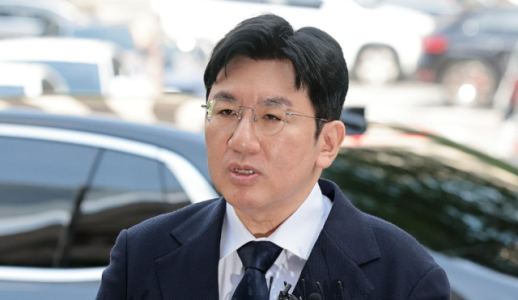 Police Seek Arrest Warrant for HYBE Chairman Bang Si-hyuk Over Alleged IPO Fraud Bang Si-hyuk, chairman of HYBE, is facing possible detention after police sought an arrest warrant over allegations he deceived investors during the company’s initial public offering process and gained about 190 billion won in illicit profits. Police moved to secure his custody about 18 months after opening the probe. The Seoul Metropolitan Police Agency’s Financial Crimes Investigation Unit said Monday it applied for a warrant for Bang on suspicion of fraudulent unfair trading under the Capital Markets Act. The request came about five months after his last questioning in November. Police suspect that in 2019, ahead of HYBE’s listing, Bang told existing investors the IPO was not planned or would be delayed, then steered them to sell their stakes to a specific private equity fund. After the company later went public and the value of those shares rose, investigators say Bang received a portion of the sale profits under a prior undisclosed agreement. Police said they believe Bang gained about 190 billion won. Some findings indicate a structure in which roughly 30% of the profit was to be shared with the private equity fund. An SPC set up by the fund was reportedly used in the stake transfers. The Capital Markets Act bans gaining profits in financial investment transactions through false information or deceptive schemes. If illegal gains exceed 5 billion won, the law allows a sentence of life imprisonment or at least five years in prison. The investigation began after police obtained a tip in late 2024. In June and July last year, police raided the Korea Exchange and HYBE headquarters to secure IPO-related materials and imposed a travel ban on Bang. From September to November, they questioned him five times and continued reviewing the legal issues. The case also involved legal disputes, with prosecutors reportedly rejecting initial search warrant requests twice. As the probe dragged on without additional questioning, police faced criticism for moving too slowly. The warrant request has drawn attention amid a recent diplomatic controversy. The U.S. Embassy in Seoul recently sent police a letter asking that Bang be allowed to travel to the United States. The letter reportedly cited his attendance at events marking the 250th anniversary of U.S. Independence Day in July and the need to support a BTS world tour. Police said they would review the request “in accordance with law and principle,” but the warrant application has effectively limited his ability to leave the country. Bang’s side has denied all allegations, saying he did not mislead investors, the share sales were made at investors’ request, and the IPO process complied with relevant laws and rules. Police said they plan to accelerate the investigation if the court grants the warrant and they take Bang into custody. * This article has been translated by AI. 2026-04-21 13:39:53