


Latest by
-
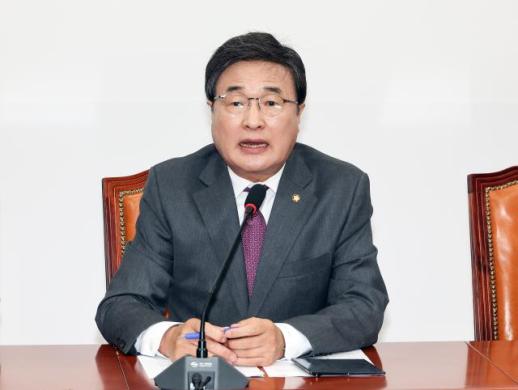 Kim Dae-sik: Discussion Needed on Jang Dong-hyuk's Future On June 24, Kim Dae-sik, a member of the People Power Party, stated that it would not be too late to create a white paper to evaluate the results of the June 3 local elections and hold those responsible accountable. During an appearance on YTN Radio's "Jang Seong-cheol's News Myeongdang," Kim emphasized the need to gather consensus within the party to discuss the future of party leader Jang Dong-hyuk. He noted that the timing of such discussions—whether now or after analyzing the election results—should be considered from a political standpoint. In response to calls from some party members for Jang's resignation, Kim acknowledged that while there are voices urging the leader to step down, there are also those who remain silent. He questioned, "What options do we have unless the leader decides on his own or the four elected supreme committee members resign?" Kim believes that the leadership, including Jang and the supreme committee, should make decisions after thoroughly analyzing the election results and listening to various opinions. He pointed out that the public, disappointed with the government and ruling party, is currently supporting the People Power Party as an alternative, and the party must consider the implications of prolonged internal conflict. Kim also mentioned a recent dinner with independent lawmaker Han Dong-hoon and other lawmakers from Busan. He explained that the collapse of the Nakdong River belt in the recent local elections prompted discussions among local representatives on how to negotiate with the newly elected Busan Mayor Jeon Jae-soo regarding various projects in western Busan. Regarding Han's potential return to the People Power Party, Kim suggested that the party should take its time to build consensus. He remarked, "The party has not yet reached a consensus, but since Han is a significant figure in the conservative camp, it might be wise to observe the situation with the major projects coming up in 2028 and 2030 (general and presidential elections)." * This article has been translated by AI. 2026-06-24 10:08:00
 -
 Samsung Electronics Surges 7%, Reclaims Top Market Capitalization; SK Hynix Rises 3% On June 24, Samsung Electronics saw a significant rise in its stock price, reclaiming its position as the top company by market capitalization on the KOSPI. SK Hynix also experienced an upward trend, reflecting a broader recovery in the semiconductor sector. According to the Korea Exchange, as of 10:01 AM, Samsung Electronics shares were trading at 334,000 won, up 24,000 won (7.74%) from the previous trading day. At the same time, SK Hynix shares rose by 9,000 won (3.52%) to 2,646,000 won. With this increase, Samsung Electronics' market capitalization reached 1,958 trillion won, surpassing SK Hynix's 1,885 trillion won to regain the top spot. The surge in stock prices is believed to be linked to news that Samsung Electronics and SK Hynix are considering plans to establish a large-scale semiconductor cluster in the Honam and Chungcheong regions. According to Yonhap News and industry sources, the two companies are discussing the possibility of unveiling local investment plans at a public-private joint meeting hosted by President Lee Jae-myung at the end of this month. The proposal includes building semiconductor production and packaging facilities in the Honam region, including Gwangju and Jeonnam. Initially, investments were expected to focus on post-processing, such as packaging, but discussions have expanded to include core production processes like wafer manufacturing, potentially increasing the scale of investment significantly. Positive forecasts continue from the securities sector. Kim Dong-won, a researcher at KB Securities, stated, "With the launch of NVIDIA's next-generation AI platform 'Vera Rubin,' demand for high-bandwidth memory (HBM) 4 and next-generation memory is expected to grow, benefiting SK Hynix the most. Notably, the upcoming U.S. ADR listing in August is likely to narrow the valuation gap with Micron, serving as a catalyst for SK Hynix's stock price increase in the future." Earlier, BNK Investment & Securities adjusted its earnings forecasts upward for Samsung Electronics for this year and next, despite accounting for special performance bonuses in its DS division.* This article has been translated by AI. 2026-06-24 10:08:00
 -
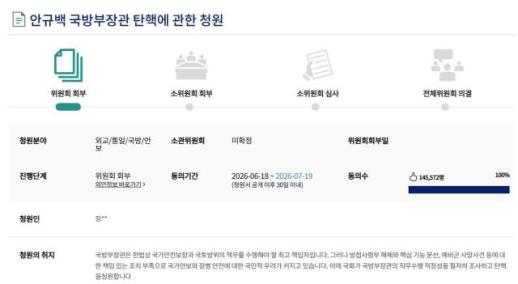 Public Outcry Grows for the Impeachment of Defense Minister An Gyu-baek More than 145,000 people have signed a petition demanding the impeachment of Defense Minister An Gyu-baek. According to Yonhap News on June 24, as of that day, 145,572 individuals had supported the petition titled "Call for the Impeachment of Defense Minister An Gyu-baek," which was posted on the National Assembly's public petition website on June 18. The petitioners expressed concerns over national security and the safety of military personnel, citing issues such as the restructuring of the Defense Security Command and the response to a recent incident involving the death of a reservist during training. They urged the National Assembly to investigate An's performance and initiate impeachment proceedings. The main opposition People Power Party has called for An's dismissal, pointing to the surge in petition signatories as evidence of public discontent. Floor Leader Jeong Jeom-sik stated on Facebook, "Policies that undermine the foundation of national defense, such as the disbandment of the Army's Defense Security Command, the consolidation and relocation of military academies, and the outsourcing of rear unit security duties, are being pursued without adequate review." He criticized the lack of accountability regarding the death of a reservist during training last month, asserting, "President Lee Jae-myung must take this public petition seriously and not dismiss it lightly." Additionally, Chief Spokesperson Choi Soo-jin commented that the ongoing calls for An's impeachment reflect not just a failure in personnel management but also the consequences of the government's distorted security perspective. She demanded An's removal and a reshuffling of the diplomatic and security teams. Meanwhile, Floor Leader Jeong also noted that a public petition regarding the upcoming amendment to the Information and Communications Network Act has surpassed 100,000 signatures, urging the Democratic Party to halt the law's implementation and engage in discussions for its revision. He argued that the criteria for identifying false and manipulated information in the law are ambiguous, raising concerns about potential infringements on freedom of expression.* This article has been translated by AI. 2026-06-24 10:08:00
 -
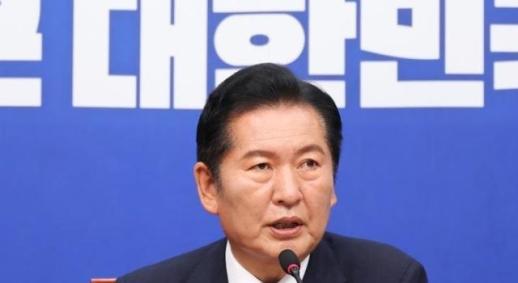 Democratic Party Urges Election Commission Officials to Cooperate with Investigation The Democratic Party on June 24 urged officials from the Election Commission, who did not attend a national investigation related to the shortage of ballots during the June 3 local elections, to "stop avoiding responsibility and cooperate." The party emphasized that there are no exceptions when it comes to protecting citizens' voting rights. During a Supreme Council meeting at the National Assembly, Jung Cheong-rae, the party leader, stated, "This investigation must be conducted with a sense of heavy responsibility like never before." He added, "What the public wants to see is not excuses or avoidance, but an honest acknowledgment and a commitment to rectify the situation responsibly." Jung also noted, "Since the President has called for a thorough investigation into various allegations against the Election Commission, the National Assembly will fulfill its duties as well. Independence does not mean exemption from responsibility. There are no exceptions in protecting citizens' voting rights." Han Byeong-do, the floor leader, remarked, "Attempts to uncover the truth in this national investigation have faced obstacles from the start," expressing surprise that those responsible for infringing on citizens' voting rights did not show their faces to the public. He further pointed out that issues have arisen not only regarding ballot management but also concerning inappropriate business trips and excessive meeting allowances, highlighting a lack of accountability in light of the significant authority held by the Election Commission. He urged Election Commission officials to remember that sincere cooperation is the quickest way to calm public anger. Meanwhile, during the first national investigation held the previous day, 16 individuals, including seven members of the Central Election Commission, were absent. Lawmakers from both ruling and opposition parties criticized this as a "collective defiance."* This article has been translated by AI. 2026-06-24 10:08:00
 -
 LG Electronics Strengthens Premium 'LG Signature' OLED TV Lineup LG Electronics is enhancing its premium 'LG Signature' OLED TV lineup with the introduction of new products, aiming to solidify its leadership in the OLED TV market, where it has maintained the top position for 13 consecutive years.On June 24, LG Electronics announced that it will sequentially launch its next-generation Wallpaper TV, the 'LG Signature OLED W' (model W6), starting in South Korea and expanding to global markets.The new model boasts a thickness of just 0.9 cm, allowing for close wall installation as a 2026 wireless Wallpaper TV. The design incorporates ultra-slim technology across all components, including the panel, power board, main board, and speakers, achieving an all-in-one ultra-slim design.A key competitive advantage of this product is its wireless transmission technology. LG Electronics has received the world's first certification for 'true wireless low-latency vision' from the global certification body TÜV Rheinland. This technology enables real-time transmission of high-quality 4K resolution video at a 165Hz refresh rate without degradation or delay. The absence of complicated cable connections around the TV enhances both space utilization and interior aesthetics.The 'Zero Connect Box,' which connects set-top boxes and gaming consoles, has also been reduced in size by approximately 35% compared to previous models. Users can enjoy wired TV-quality video while placing external devices in separate spaces.Picture quality performance has significantly improved. The 2026 OLED TV is equipped with the '3rd Generation Alpha 11' AI processor, which enhances NPU performance by 5.6 times compared to the previous generation. Graphics processing performance has also improved by 70%, delivering clear and natural images even during fast transitions. The 'Dual Super Upscaling' feature enhances low-resolution content to 4K quality.Display technology differentiation is also notable. The new product has received the industry's first 'Reflection Free Premium' certification from the global certification body Intertek. Unlike conventional anti-glare methods that disperse light, this technology reduces reflective light itself, maintaining the OLED's signature perfect blacks and color representation even in brightly lit environments.AI capabilities have been significantly enhanced. The TV includes six major AI features: AI Concierge, AI Search, AI Chatbot, AI Personalized Screen, AI Sound Wizard, and Voice ID, which support personalized content recommendations and optimization of picture and sound quality. The dedicated AI Magic Remote allows for easy voice commands and pointing functionality.LG Electronics is also launching a new model of the world's first wireless and transparent TV, the 'LG Signature OLED T' (model T6). This product allows users to switch between black screen and transparent screen modes, providing a unique viewing experience based on augmented reality (AR) as well as traditional TV viewing. The T6 also incorporates the latest wireless transmission technology and the 3rd Generation Alpha 11 AI processor.Through the expansion of its ultra-premium lineup, LG Electronics aims to reinforce its position as the leader in the OLED TV market. According to market research firm Omdia, LG Electronics maintained a 50.5% share in global OLED TV shipments and a 47.7% share in revenue in the first quarter of this year. The company continues to lead in major regions, including North America, Europe, Asia-Pacific, Latin America, and the Middle East and Africa.Park Hyung-se, head of LG Electronics' MS Business Division, stated, "The LG Signature OLED W and OLED T are innovative products that showcase LG's TV technology. We will further solidify our leadership in the premium TV market based on differentiated technological innovation."* This article has been translated by AI. 2026-06-24 10:04:00
 -
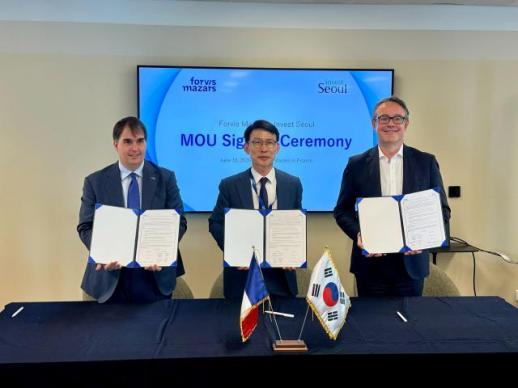 Forvis Mazars Signs MOU with Invest Seoul to Attract French and European Companies Global accounting and consulting firm Forvis Mazars, through its Korean partnership firm (Saebit Accounting Corporation), has signed a memorandum of understanding (MOU) with Invest Seoul, the city’s foreign investment promotion agency. This agreement aims to establish a framework to support the entry and settlement of French and European companies in Seoul. The MOU was signed on June 18 during the Viva Tech, the world's largest technology startup fair, held in Paris. This year marks the 140th anniversary of diplomatic relations between Korea and France, making the agreement a significant milestone for enhancing economic cooperation and investment between the two countries. Under the agreement, Invest Seoul and Forvis Mazars will collaborate to support French and European companies in entering the Korean market and expanding their businesses. They plan to implement joint programs to ensure the stable growth and settlement of foreign-invested companies in Seoul. With the expertise of Forvis Mazars’ Korean partnership firm and its local network in France, overseas companies will receive comprehensive support from the initial stages of market entry to corporate establishment, tax, accounting, regulatory compliance, and business operations. Forvis Mazars boasts a global network spanning over 100 countries and regions and ranks as the fifth-largest accounting firm in France. The firm facilitates smooth communication and project execution between companies in both countries through its Korean Desk in Paris and French Desk in Seoul. Julien Erbo, lead partner at Forvis Mazars Korea, stated, "This agreement will serve as a new foundation for economic cooperation between Korea and France. We will actively support the entry of French companies into Korea and the global growth strategies of Korean firms based on Forvis Mazars' global network and expertise in both markets." As Korea and France celebrate their 140th anniversary of diplomatic relations, recent visits by President Lee Jae-myung to France and President Emmanuel Macron of France to Korea have further expanded cooperation in advanced technology and startups. During a summit in April, the two leaders agreed to increase bilateral trade to $20 billion by 2030. Thus, this MOU is expected to promote exchanges between European companies aiming to establish a foothold in Northeast Asia and domestic firms seeking to enter the European market. * This article has been translated by AI. 2026-06-24 10:04:00
 -
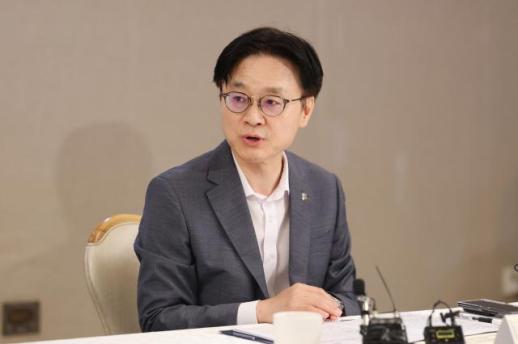 Government Supports K-Consumer Goods Exports with Certification and Market Access The South Korean government is taking steps to expand exports of K-consumer goods by supporting overseas certification, entry into the halal market, and linking to distribution platforms. This initiative aims to create an inclusive export environment that fosters growth for both small and medium-sized enterprises (SMEs) and consumer goods, moving beyond a focus on large corporations and key products. On June 24, the Ministry of Trade, Industry and Energy held the second public-private joint export expansion meeting, chaired by Minister Kim Jeong-kwan. During the meeting, the ministry announced a comprehensive support strategy for overseas certification for export companies, measures to support entry into the halal market for consumer goods, and plans to establish a combined export platform for distribution and K-consumer goods. According to the Korea Customs Service, exports from June 1 to 20 reached $61.99 billion, a 60.4% increase from the previous year. The surge was largely driven by a 188.4% increase in semiconductor exports, which totaled $25.5 billion. Cumulatively, exports for the year reached $456.45 billion, marking a 45.6% rise compared to the same period last year. However, concerns remain regarding the heavy reliance on semiconductor exports. In response, the government is implementing support measures to increase exports of K-consumer goods, leveraging the popularity of the Korean Wave (Hallyu). To alleviate the burden of overseas certification for export companies, which is often seen as a significant non-tariff barrier for SMEs, the government plans to expand the number of overseas test and certification types available domestically from 212 to 500 by 2028. This initiative aims to reduce costs and time by allowing companies to obtain certifications without having to seek out foreign certification bodies. The scope of export voucher support will also be broadened. Previously excluded costs for prototype production and long-term certification processes exceeding one year will now be eligible for voucher support. Additionally, the reimbursement rate for failed certification attempts will increase from 50% to 70%, easing the financial burden on companies. The government will enhance its information provision system by launching an AI-based portal for overseas certification and technical regulations. This portal will offer integrated information on certification procedures, application forms, certification body guidance, and cost support programs. Consulting services, where experts assist companies from product development to certification acquisition, will be expanded to 2,000 firms by 2027. The government also plans to strengthen cooperation with relevant agencies to address unreasonable certification systems imposed by foreign regulatory authorities and is pushing for the enactment of a law to support and respond to trade technical barriers. Support for entering the halal market will also be intensified, as the consumer market for halal products is expanding beyond food to include cosmetics, pharmaceuticals, and daily necessities. The Korea International Trade Association aims to double the market share of K-consumer goods in the halal sector from 1% to 2% by 2028. To achieve this, the government will assist domestic certification bodies in expanding mutual recognition agreements with Middle Eastern countries such as Saudi Arabia and the United Arab Emirates. The range of products will also be broadened from food to include cosmetics and daily necessities. A halal consulting service will be established on the trade association's consultation platform, along with low-interest loans from a trade promotion fund worth 10 billion won. Local bases in Southeast Asia and the Middle East will also be utilized. Distribution platforms and consumer goods SMEs will collaborate for joint market entry. By 2030, the government aims to nurture ten 'national representative K-direct purchase platforms' specialized in K-consumer goods. Additionally, five promising direct purchase platforms will be selected to analyze export items and target regions, providing logistical and marketing support as a package. K-consumer goods confirmed to have demand online will be linked to overseas offline distribution networks. Minister Kim Jeong-kwan stated, "To achieve our goal of becoming a robust top-five export nation despite external uncertainties, it is essential that all parties share in the success of 'everyone's exports,' not just certain companies or products. We will work together with the private sector to provide comprehensive support so that K-consumer goods SMEs can overcome barriers to overseas certification and expand globally alongside distribution platforms."* This article has been translated by AI. 2026-06-24 10:04:00
 -
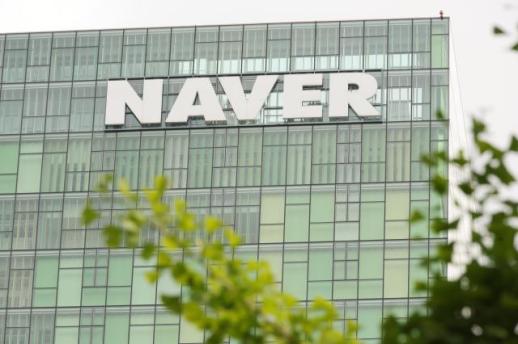 Naver Cloud, Siemens partner to bring AI to factory floors SEOUL, June 24 (AJP) - Naver Cloud has joined forces with Siemens to accelerate the adoption of artificial intelligence across the manufacturing sector. The two companies signed a memorandum of understanding Wednesday at Naver 1784 in Seongnam, south of Seoul. Naver Cloud chief executive Kim Yu-won and Siemens Korea President Chung Ha-joong attended, alongside Cedrik Neike, a member of the Siemens managing board and chief executive of its Digital Industries division. Under the deal, the partners aim to forge an innovation model for manufacturing by pairing Naver Cloud's AI and cloud capabilities with Siemens' expertise in industrial automation and digitalization. The companies plan to combine Siemens' automation, digital-twin, industrial-AI and OT/IT convergence solutions with Naver Cloud's infrastructure. Building on Naver Cloud's hyperscale and modular data centers, they will also pursue joint customer acquisition, market expansion and the co-development of reference architectures. "We will help domestic manufacturers feel the tangible value of AI on the ground, drawing on an AI and cloud platform equipped with data sovereignty and the capacity to meet local regulations," said Kim. Neike said Siemens would accelerate manufacturing innovation by placing AI at the heart of the entire process from design to production and operation, setting a new standard for the industries of the future. 2026-06-24 10:03:27
 -
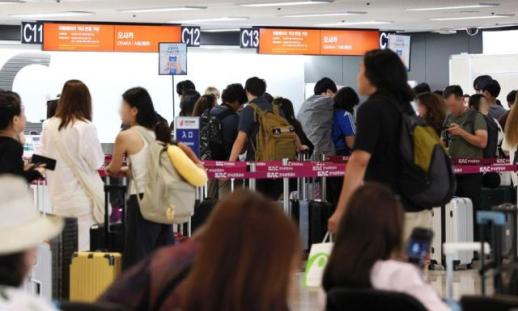 More South Koreans head to Japan, widening travel gap with neighboring country SEOUL, June 24 (AJP) - More South Koreans have been traveling to Japan amid the weak yen, while far fewer Japanese tourists are visiting Seoul. According to entry and departure records from the Ministry of Justice, nearly 9.46 million South Koreans headed to Japan last year, compared with about 3.65 million Japanese travelers who visited South Korea during the same period. Japan also remained the most popular overseas destination for South Koreans this year. In April alone, more than 850,000 people flew to Japan, accounting for 37.2 percent of all outbound travelers from South Korea. Combined with China, the two destinations made up more than half of all South Korean travelers leaving the country that month. Industry watchers attribute the trend largely to the weak yen, which has made travel and shopping in Japan more affordable for South Koreans. Short flight times and expanded air routes to smaller Japanese cities have also boosted demand. But that pushed their spending in the neighboring country to a record high last year, widening South Korea's travel deficit with Japan to an all-time high as the number of Japanese tourists visiting Seoul remained comparatively low. According to data from the Bank of Korea (BOK) released earlier this week, South Korea's travel deficit with Japan reached US$5.75 billion last year, the highest since the central bank began compiling relevant figures in 1998. South Korea's travel balance with Japan recorded a surplus during the coronavirus pandemic in 2020, when it stood at $368.70 million, and in 2021, when it reached $129.90 million, but turned into a deficit of $575.70 million in 2022. The deficit continued to widen in 2023 to $4.07 billion and in 2024 to $4.91 billion. The deficit with Japan was larger than those recorded with other countries and regions. Last year, South Korea's travel deficits stood at $4.71 billion with the U.S., $2.05 billion with Southeast Asia, $912 million with the European Union, and $23 million with the Middle East. 2026-06-24 10:00:03
 -
 Spiritual Asia (18): Mencius and Xunzi, are humans good or evil? This is the eighteenth installment of AJP's Spiritual Asia series exploring the religious traditions, philosophical ideas and moral foundations that have shaped Asia's civilizations. This chapter turns to Zoroastrianism, one of the world's oldest living faiths, and examines how its teachings on truth, free will and moral responsibility continue to resonate in an age increasingly shaped by artificial intelligence. East Asian Political Philosophy Created by Theories of Human Nature as Good and Evil After Confucius passed away, China entered an even greater upheaval. The order of the Spring and Autumn period collapsed, and the wars of the Warring States period were incessant. Feudal lords vied to conquer the world, and the people suffered amidst war and poverty. People began to ponder how to stabilize the nation and create a humane world. Against this historical backdrop, Confucianism developed beyond a philosophy of personal cultivation into a political philosophy for operating states and organizing society. At the center of this transformation stood two great thinkers, Mencius and Xunzi. If Confucius presented the Tao that humans ought to walk, Mencius and Xunzi posed a more fundamental question: what exactly is a human being? Are humans inherently good, or are they driven by desire? This question was not a simple philosophical debate. An understanding of human nature was an understanding of politics, an understanding of education, and an understanding of how a state should be operated. If humans are inherently good, the role of politics is to help that goodness blossom; if humans are inherently swayed by desire, laws and institutions must control them. Ultimately, the debate between Mencius and Xunzi became the starting point of East Asian political philosophy, leaving a profound impact on the modern philosophies of democracy, the rule of law, education, and management. Mencius was a thinker with deep trust in humanity. He believed that human nature is inherently good. This is the famous theory of original goodness. Mencius explained that if people walking down a road saw a young child about to fall into a well, anyone would feel alarmed and distressed. That feeling does not arise to gain profit or honor. It is a feeling that naturally arises in any human being. Mencius saw that the true essence of human nature is contained within this very heart. He explained that four good sprouts exist within the human mind. The feeling of commiseration, which feels pity for others, is the beginning of benevolence; the feeling of shame and dislike, which feels ashamed of unrighteousness, is the beginning of righteousness; the feeling of deference and compliance, which yields and shows consideration, is the beginning of propriety; and the feeling of right and wrong, which judges right from wrong, is the beginning of wisdom. Mencius called these the Four Sprouts. He believed that everyone is born with these good possibilities and can cultivate them through education and self-discipline. Mencius's philosophy extended to political thought. He viewed the people as the foundation of the state. His famous saying, "Min wei gui, she ji ci zhi, jun wei qing," means that the people are the most precious, the state comes next, and the ruler is the lightest. It is truly remarkable that such an argument emerged 2,500 years ago during an era ruled by absolute monarchs. Mencius valued the hearts of the people over the power of the ruler. He believed that a ruler who lost the support of the people could no longer retain legitimacy. He advocated kingly governance based on virtue over hegemonic governance based on force, asserting that the purpose of politics is to make the people prosperous and comfortable. Mencius's ideas are significantly reflected in the core concepts of modern democracy, such as popular sovereignty, the welfare state, and human dignity. Although institutional democracy developed in the West, the people-oriented philosophy that placing the people at the center of the state was already proposed in the East long ago. In that sense, Mencius can be evaluated not merely as a Confucian scholar, but as one of the pioneers in the history of human political thought. On the other hand, Xunzi viewed humanity more dispassionately. Experiencing the fierce reality of the late Warring States period, he concluded that human nature could not be viewed solely with optimism. Humans are born with desires. They covet wealth, demand power, and prioritize their own interests. He believed that leaving these desires unchecked would inevitably plunge society into chaos. Therefore, he argued that "human nature is evil." This is the theory of original evil. However, Xunzi's theory of original evil should not be understood simply as a doctrine that views humans negatively. The evil Xunzi spoke of does not mean crime or depravity. It is an acknowledgment of the fact that humans are beings driven by desire. It meant that everyone possesses a self-centered tendency, and failing to govern this properly leads to conflict and confusion. Therefore, he argued that what humans need is education and training, and what society needs is laws and institutions. Xunzi especially emphasized the importance of learning. He viewed humans not as complete beings at birth, but as beings that must constantly learn and cultivate themselves. He highlighted the power of acquired education by stating, "If one does not learn, one cannot become a Junzi." This realism of Xunzi heavily influenced the later Legalist thought of China. Han Feizi and Li Si, who transformed the Qin Dynasty into a unified state, are representative figures who absorbed Xunzi's academic influence. If Mencius believed in human conscience, Xunzi believed in the power of institutions. If Mencius was the philosopher of morality, Xunzi was the philosopher of order. An interesting fact is that most successful nations and organizations throughout human history have utilized the philosophies of both Mencius and Xunzi in tandem. A nation that lacks trust in its citizens easily slides into dictatorship, while a nation without laws and institutions easily falls into disorder. The same principle applies to corporations. Members must be respected and trusted, but fair evaluations and clear discipline are simultaneously required. Schools must respect student autonomy while teaching basic norms and responsibilities. Ultimately, a healthy community becomes possible when Mencius's idealism and Xunzi's realism achieve equilibrium. Here we discover another profound dimension of Confucianism. Confucianism did not exclusively assert human goodness nor exclusively assert human evil. Rather, it observed human potential and limitations simultaneously. Mencius saw the hope within humanity, while Xunzi saw the danger within humanity. These two perspectives did not collide, but served as two windows enabling a more multi-dimensional understanding of human existence. The Doctrine of the Mean, one of the core scriptures of Confucianism, emphasizes precisely this spirit of balance. Achieving harmony without leaning toward either extreme is the exact Tao that humans and society should pursue. In fact, the enduring debate between original goodness and original evil ultimately forms one complete picture within the philosophy of the Mean. It brings the realization that humans are beings with good potential yet simultaneously beings with desires, making education and cultivation necessary while making institutions and laws equally necessary. Today we live in an era of artificial intelligence and digital revolution. Technology advances daily and rapidly replaces human capabilities. Yet no matter how much technology develops, fundamental questions about human nature do not disappear. AI can calculate, but it cannot possess a conscience. Algorithms can predict, but they cannot bear moral responsibility. Even if superintelligence emerges, the sustaining force of human society will ultimately remain timeless values such as trust, responsibility, conscience, and moderation. In that regard, Mencius and Xunzi are becoming even more crucial today. Mencius urges us not to lose hope in humanity, while Xunzi warns us to guard against human desire. Mencius emphasizes a warm heart, while Xunzi emphasizes a cool-headed system. And the Doctrine of the Mean teaches us to integrate the two harmoniously. Perhaps the greatest challenge confronting humanity in the 21st century is preserving human dignity amidst technological advancement. The debate between Mencius and Xunzi that began on the Chinese mainland 2,500 years ago is not over yet. It lives on today within our politics, within our education, within corporate management, and within our families and communities. The question of whether humans are good or evil ultimately leads to the question of what kind of human beings we should become. And the most vital teaching Confucianism offers is the conviction that humans can become better beings through ceaseless cultivation and introspection. If Confucius opened the Tao, Mencius planted hope, and Xunzi established order, the spirit of East Asian civilization that blossomed upon that foundation was ultimately human dignity. What matters more than the size of a nation is the dignity of its people; what matters more than technological advancement is human morality; and what matters more than the strength of power is the responsibility of leaders. Mencius and Xunzi were already teaching us this truth 2,500 years ago, a truth that will remain unchanged even in the AI era. 2026-06-24 09:54:37