

Journalist

Song Seung-hyun
songsh@ajunews.com
-
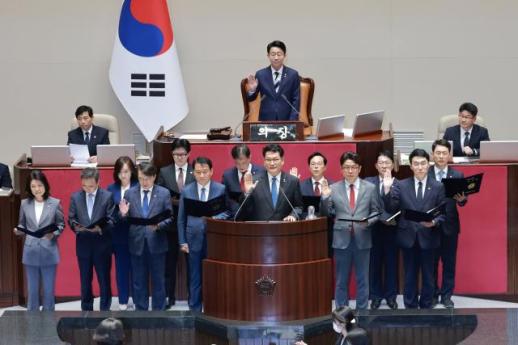 14 Newly Elected Lawmakers Begin Their Duties After Taking Oath On June 5, 14 lawmakers elected in the recent by-elections took their oaths during a session of the National Assembly, marking the beginning of their official duties. Among them, Kim Nam-kuk, Kim Nam-jun, and Jeon Eun-soo, who have previously worked at the Blue House, emphasized the need for swift policy implementation and the success of the Lee Jae-myung administration. In contrast, Lee Jin-sook and Kim Tae-kyu, who have backgrounds in the Korea Communications Commission, highlighted recent issues, including a shortage of ballots at polling stations in Songpa, Seoul, positioning themselves in opposition to the ruling party. The newly elected lawmakers from the Democratic Party include Song Young-gil, Kim Nam-jun, Lim Mun-young, Kim Nam-jun, Lee Kwang-jae, Jeon Eun-soo, Kim Ui-gyeom, and Park Ji-won. From the People Power Party, the newly elected members are Lee Jin-sook, Kim Tae-kyu, Yoo Ui-dong, and Yoon Yong-geun, along with independent lawmaker Han Dong-hoon. Kim Seong-beom, also elected as a Democratic Party member, did not attend due to personal reasons. After taking their oaths, the lawmakers expressed their commitments. Song Young-gil was the first to speak, referencing the recent declaration of martial law, stating, "The attempt by armed troops to invade the National Assembly is unprecedented in our constitutional history. I am honored to join the 22nd National Assembly, which has a significant historical mission, and I will strive to uphold the order of our democratic republic." Jeon Eun-soo, who has worked at the Blue House, remarked, "I will work tirelessly for the success of this government, even if it means sacrificing sleep." Kim Nam-kuk and Kim Nam-jun pledged to focus on stabilizing people's livelihoods and economic recovery, with Kim Nam-jun stating, "I will be a strong partner in ensuring the success of the government's initiatives for restoring livelihoods and national development." Lee Jin-sook and Kim Tae-kyu, both former officials at the Korea Communications Commission, addressed the ballot shortage issue. Lee Jin-sook expressed, "It is extremely regrettable and unacceptable that a shortage of ballots occurred in 21st-century South Korea. Lawmakers, as representatives of the people, must take responsibility and work together to resolve this issue." Kim Tae-kyu echoed her sentiments, urging, "Let us not export a democracy where ballots are unavailable due to a lack of paper." Additionally, Han Dong-hoon stated, "I was here in this assembly on the night of December 3, 2024. After the decisions and actions I took as the leader of the People Power Party, I entered a path of political hardship. However, if I were to go back, I would walk the same path again."* This article has been translated by AI. 2026-06-05 18:00:00
 -
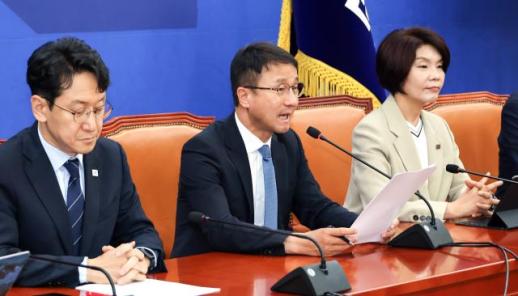 Democratic Party Pushes for National Investigation into Voting Paper Shortage The Democratic Party announced plans to pursue a national investigation into the shortage of voting papers that occurred at polling stations in Songpa District, Seoul, during the June 3 local elections. Han Byeong-do, the party's floor leader, stated that the People Power Party is also taking the situation seriously, and they will work together to conduct a swift and thorough investigation. In a press conference following the National Assembly session on June 5, Han described the voting paper shortage as "an incomprehensible and outrageous situation." He emphasized, "We will push for a national investigation. This is an opportunity to implement bold reforms within the National Election Commission to regain public trust." Han noted that with the election of the new National Assembly leadership, including Chairman Jo Geum-sik, and the People Power Party's serious approach to the matter, they aim to initiate the investigation as quickly as possible. He stated, "With the chairman elected, there should be no disagreements between the ruling and opposition parties on this issue. If there is consensus, we can proceed with the investigation in any format or method. We will explore ways to expedite this process in consultation with Chairman Jo and the People Power Party rather than through the regular committee channels." However, Han acknowledged that discussions regarding the specific timing and methods of the investigation have not yet taken place. He asserted, "The Democratic Party is committed to ensuring that nothing undermines public trust. There are even movements attempting to spread false claims of electoral fraud, and we will clarify the truth to restore public confidence."* This article has been translated by AI. 2026-06-05 18:00:00
 -
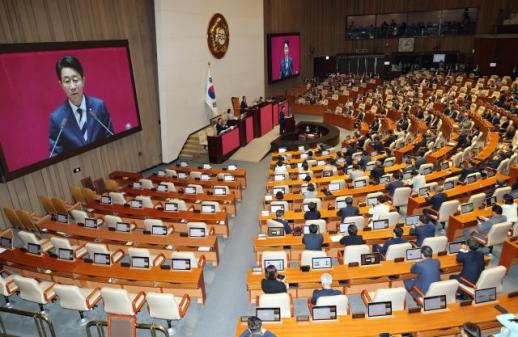 National Assembly Elects New Leadership with Cho Jung-sik as Speaker On June 5, the National Assembly convened a plenary session and elected Cho Jung-sik of the Democratic Party as the Speaker for the second half of the 22nd National Assembly. Alongside this, 14 newly elected lawmakers from the recent by-elections also began their terms. During the session, Cho was elected as Speaker with 267 votes in favor out of 276 eligible members. He emphasized the need to address challenges such as the AI revolution, climate crisis, unstable international situations, and economic polarization, stating, "The National Assembly has the duty and responsibility to ensure the safety and happiness of the people with the authority entrusted by them." Cho outlined several initiatives aimed at transforming the National Assembly into a more responsive institution, including: accelerating legislation for public welfare, expanding citizen participation, establishing an advisory body under the Speaker for future advancements, and promoting national interest diplomacy to respond to rapidly changing global circumstances. He also reiterated the necessity of constitutional reform, asserting, "Next year presents a prime opportunity for meaningful discussions on constitutional amendments, as there will be no nationwide elections. Let us fulfill our historical responsibility by realizing a constitution that reflects the aspirations of the people and the future of the nation." Nam In-soon and Park Deok-heum, who were elected as Vice Speakers with 251 votes from 265 Democratic Party members and 214 votes from 246 People Power Party members, respectively, pledged to responsibly tackle issues critical to South Korea's future, such as climate change, energy, and regional extinction crises. They committed to upholding the spirit of cooperation and dialogue maintained by previous leaderships, aiming to create a dignified National Assembly that prioritizes public welfare. The Democratic Party had previously decided on Cho and Nam as Speaker and Vice Speaker during a general meeting on May 13. The People Power Party also elected Park as Vice Speaker on the same day, indicating a smooth formation of the new leadership. The Democratic Party attempted to hold a plenary session on May 20 to expedite the election of the leadership, but it was disrupted by opposition from the People Power Party regarding what they viewed as unilateral actions by the Democratic Party. Following discussions between the floor leaders of both parties on May 19, the election process for the new leadership was successfully completed on this day. Additionally, the plenary session included the appointment of 14 lawmakers elected in the by-elections held on June 3. This included nine seats from the Democratic Party and four from the People Power Party, along with one independent seat.* This article has been translated by AI. 2026-06-05 17:36:00
 -
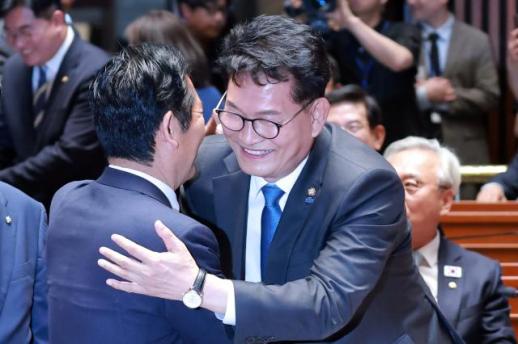 Newly Elected Lawmakers Vow to Serve the Public Following their victories in the recent by-elections, newly elected lawmakers from the Democratic Party, including Song Young-gil, Kim Nam-jun, and Kim Nam-kook, expressed their commitment to finding ways to serve the public. Song, who won in Incheon Yeonsu-gap, spoke to reporters after a party meeting on June 5, stating, "During the four years I was away from the National Assembly, I felt the pain and injustices faced by many ordinary citizens. This experience will serve as a valuable asset in my legislative work. As I have emphasized before, I will engage in politics that alleviates the tears of the people." He also noted the importance of securing the support of younger voters, saying, "If we do not win their hearts, there is no future for our Democratic Party. We need a turning point to regain the support of those in their 20s and 30s who are drifting away from us." Kim Ui-gyeom, representing Jeonbuk Gunsan-Gimje-Buan-gap, remarked, "This is a moment to start anew after the tumultuous period under the Yoon Suk-yeol administration. I will work calmly and productively. With new opportunities arising in Saemangeum, I hope to successfully attract investments from companies like Hyundai Motor." Kim Nam-kook, from Gyeonggi Ansan-gap, stated, "I will find a role within the party and engage in legislative activities for the benefit of the public." Notably, Kim Nam-kook congratulated Han Dong-hoon, an independent lawmaker with whom he had previously clashed over cryptocurrency trading allegations in 2023. When asked if he planned to visit Han, he replied, "I believe we will naturally greet each other." The 14 newly elected lawmakers, including Song, Han, Kim Ui-gyeom, and Kim Nam-kook, officially began their legislative activities with the National Assembly session on this day.* This article has been translated by AI. 2026-06-05 15:51:00
 -
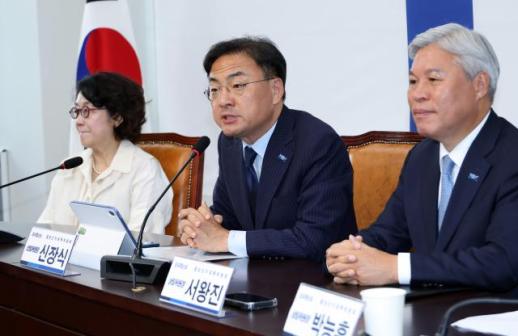 Innovation Party Concludes Election Committee, Acknowledges Failure to Meet Public Expectations The Justice Innovation Party held a conclusion ceremony for its Blue Butterfly election committee on June 5, acknowledging that it "failed to meet public expectations and feels a deep sense of responsibility." The party specifically noted the political resurgence of insurrection forces during the recent local and by-elections, urging the democratic camp to unite against this threat. During the official ceremony at the National Assembly, Seo Wang-jin, the party's floor leader and head of the election committee, stated, "We did not meet the expectations of the people in Pyeongtaek and other areas. I bow my head in apology to the citizens and party members who supported us." Acting leader Shin Jang-sik added, "We could not fully harness the passionate support that filled the Plaza of the Light Revolution. I feel a deep sense of responsibility. Although the democratic reform camp achieved a numerical victory, it is not a cause for celebration." Both leaders emphasized that the recent elections demonstrated the complete political revival of insurrection forces that have undermined governance and constitutional order, calling for swift action from the democratic reform camp to address this issue. Seo remarked, "The painful truth is that the insurrection forces have fully revived just one year after the change of government. The democratic reform camp must not shy away from discussing the causes and responsibilities of this situation to find solutions." He further stated, "This is not solely about pointing fingers at the Democratic Party. The Innovation Party will also reflect on its shortcomings and strengthen itself. Unity and collaboration are impossible without the Democratic Party's self-reflection. We look forward to engaging in discussions with them." Shin also stressed the need for solidarity and unity within the democratic reform camp, warning that insurrection forces will exploit any gaps. He emphasized that the first step to eliminate these gaps is through discussion and empathy, asserting that the core values guiding the democratic reform camp must be clearly defined.* This article has been translated by AI. 2026-06-05 11:48:00
 -
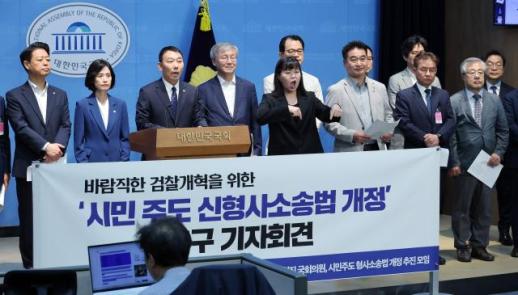 Ruling Coalition Proposes Overhaul of Criminal Procedure Law Members of the ruling coalition and Democratic Party lawmaker Kim Young-ho called on June 5 for a complete abolition of the prosecution's investigative and directive powers, as well as a ban on excessive repeated summons, as part of a proposed overhaul of the criminal procedure law. During a press conference at the National Assembly, lawmakers Kim Yong-min, Kim Young-ho, Park Eun-jung of the Justice Reform Party, and independent lawmaker Choi Hyuk-jin stated, "We stand at a new starting point to realize complete democracy and the rule of law. We aim to propose a new criminal procedure law that fully implements the principles of separation of powers and due process in practical settings." They explained that the need for this amendment arose from the recent special committee investigation into allegations of politically motivated prosecutions, which highlighted the reality of prosecutorial abuse of power. They emphasized that demands to structurally control targeted investigations, information monopolization, and planned investigations that bypass due process have grown stronger. The proposed amendment advocates for the complete separation of investigative and prosecutorial powers by abolishing the prosecution's investigative and directive authority. They stressed that with the establishment of the Public Prosecution Office and the Serious Crimes Investigation Agency, it is essential to revise the provisions related to the prosecution's direct investigative powers, with the core principle being the separation of powers and mutual checks. Additionally, they aim to prevent attempts to transfer all cases to prosecutors under the 'complete case transfer principle' and to exercise 'investigative directive authority' over special judicial police officers. The new criminal procedure law would also include provisions to enhance practical human rights protections, such as banning excessive repeated summons and reducing detention periods to seven days. They proposed measures to curb the abuse of the prosecutor's warrant application and indictment powers, including the introduction of an objective duty for prosecutors, a citizen-led prosecution review committee, and strengthened provisions for dismissal of charges in cases of significant deviation. Furthermore, Kim Yong-min reiterated the need for the party to draft a new criminal procedure law amendment before the government proposal is released. He stated, "I suggested that the party create a separate proposal before the government plan was prepared, but I received feedback that it would be difficult before the local elections, so we created a separate proposal. This way, the National Assembly can quickly amend the government proposal during the legislative process."* This article has been translated by AI. 2026-06-05 11:30:00
 -
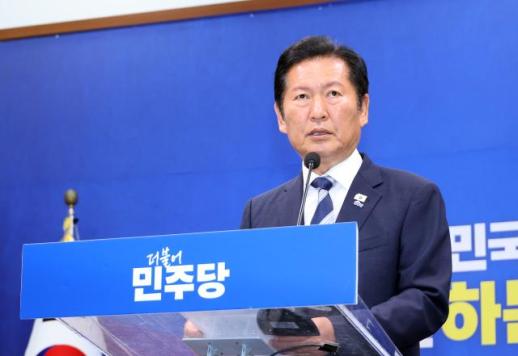 Ruling Party Faces Internal Strife After Local Election Wins and Seoul Loss The Democratic Party achieved a significant victory in the June 3 local elections, winning 12 out of 16 regional leadership positions. However, the party's failure to reclaim the crucial Seoul mayoralty has sparked discussions among some lawmakers about accountability within the leadership. With the party's national convention approaching in August, competition for future leadership roles is intensifying. Park Soo-hyun, the newly elected governor of Chungcheongnam-do and a former party spokesperson, cautioned on Facebook that failing to reflect on the election results and linking them to the upcoming leadership struggle could alienate public sentiment. "What we need to do now is to sincerely reflect on ourselves. Is demanding the leadership's resignation the best course of action?" he asked, emphasizing the need for personal accountability within the party. Following the June 4 mayoral election, where Democratic candidate Jung Won-oh lost to Oh Se-hoon of the People Power Party, some party members expressed their dissatisfaction with party leader Jung Cheong-rae. Lawmaker Yoon Jun-byeong stated, "While the appearance of victory in the local elections is impressive, we cannot claim a complete win if we lost in Seoul." He pressed the party leader for accountability. Similarly, fellow lawmaker Park Beom-gye remarked, "It may not be a defeat, but it certainly feels like a failure. Despite overall positive election results, it is embarrassing to call it a victory. Yet, there has been no acknowledgment of responsibility from the leadership." Kang Deuk-gu, a lawmaker aligned with the pro-Lee Jae-myung faction, also noted, "There were areas where we could have won but ended up with disappointing results. Looking back, there were shortcomings from the nomination process to managing the election period. The leadership failed to capture the urgency felt on the ground." Meanwhile, Jung Cheong-rae expressed gratitude to the public for their support, stating, "I am thankful to the people for giving the Democratic Party a significant victory, but it hurts that we could not reclaim Seoul." Party Secretary-General Cho Seung-rae acknowledged the mixed feelings about the election results, saying, "While there are regrets, I believe this local election was a victory for the Democratic Party. I will remember the warm interest, affection, criticism, and encouragement shown during this election."* This article has been translated by AI. 2026-06-05 09:54:00
 -
 Jokuk Resigns as Party Leader After Election Defeat, Takes Responsibility Jokuk, the leader of the Jokuk Innovation Party, announced on June 4 that he would resign from his position following his defeat in the Pyeongtaek by-election. He stated, "I will step down as party leader, taking responsibility for the election results." However, he left open the possibility of re-election, saying he would reflect and prepare for the future. In a Facebook post, Jokuk said, "I will take a moment to pause, but I urge my fellow party members to move forward confidently. I am resigning as party leader today due to the election results." He attributed the election outcome to his shortcomings, stating, "I was unable to open a new path of hope for the dedicated party members who have devoted themselves under the name of the Innovation Party." Jokuk expressed concern about divisions within the broader democratic camp, yet emphasized, "The fact that the Innovation Party remains the third-largest party in the National Assembly has not changed. I urge the new leadership to strengthen the DNA of the Innovation Party even more." He added, "Please ensure a definitive conclusion to the urgent task of prosecutorial reform. Respect each other and unite to walk the path of social reform without wavering. I, too, will reflect on myself and prepare for what comes next." Previously, Jokuk aimed to secure a seat in the National Assembly through the Pyeongtaek by-election. However, he finished third, behind Yoo Yi-dong of the People Power Party and Kim Yong-nam of the Democratic Party, effectively ending his hopes of returning to the legislature. Jokuk was elected as party leader during the second national party convention held on November 23 last year in Cheongju, Chungbuk, marking the beginning of his term.* This article has been translated by AI. 2026-06-04 17:06:00
 -
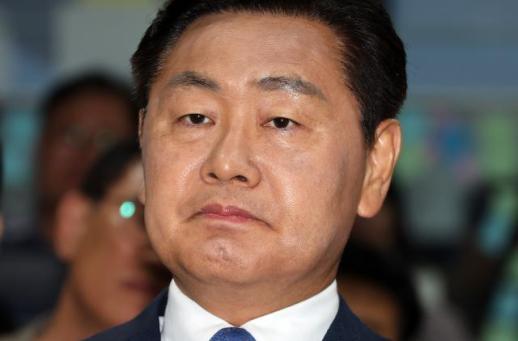 Kim Kwan-young: The Democratic Party is Not Jeong Cheong-rae's Property In the recent local elections, Kim Kwan-young, who ran as an independent after opposing the internal primary process for the Jeonbuk governor candidacy, lost to Lee Won-taek of the Democratic Party. Kim stated that "the Democratic Party is not Jeong Cheong-rae's property" and called for a judgment of Jeong's leadership at the party convention in August. On June 4, Kim expressed on his Facebook page, "I humbly accept the results of this election," but added, "I am not here to report my defeat today. I stand here to discuss the true significance of this election." He reiterated, "I still believe this election was a contest between the people of Jeonbuk and Jeong Cheong-rae's leadership," and emphasized that the judgment of Jeong's faction is not over. "If I had won, Jeong Cheong-rae's leadership should have resigned immediately," he explained. Kim particularly stressed the need to judge Jeong's faction at the upcoming Democratic Party convention in August. He stated, "We must act based on our unwavering resolve. The August convention will be the first stage for that," adding, "The Democratic Party is not Jeong Cheong-rae's property. We must hold Jeong's faction accountable for their unfair nominations." He urged the 42% of Jeonbuk residents who supported him to work together to oust Jeong's faction at the convention, asserting, "We need to change the Democratic Party, support the success of the Lee Jae-myung government, and steer South Korean politics in a better direction."* This article has been translated by AI. 2026-06-04 16:15:00
 -
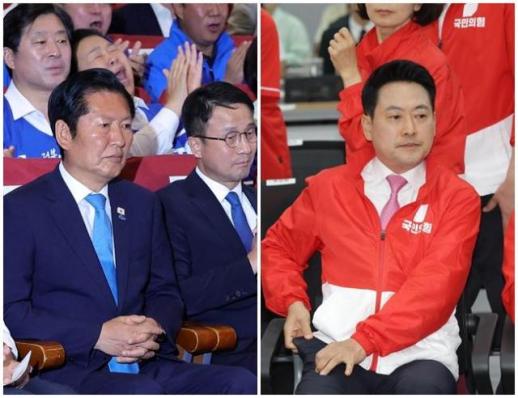 Democratic Party Wins 12 Local Governments, Seoul Mayor Race Goes to People Power Party In the June 3 local elections, the Democratic Party achieved a significant victory by retaining 12 out of 16 regional government positions. However, the party's loss of Seoul to the People Power Party left some disappointment. The People Power Party managed to secure victories in Daegu and other areas in the Yeongnam region, avoiding a complete defeat by holding onto Seoul. According to political sources on June 4, the Seoul mayoral race, initially seen as the most competitive, began with Jung Won-o leading by more than 10 percentage points. However, as the counting progressed, conservative support consolidated in the Gangnam area. By 7:16 a.m., 13 hours after the counting began, Oh Se-hoon of the People Power Party overtook Jung by a narrow margin of 0.04%, eventually widening the gap to secure victory. The results of the Seoul mayoral election brought mixed reactions from party leaders. Jung Cheong-rae, the Democratic Party leader, expressed gratitude for the voters' wise choice but lamented the loss of Seoul, stating, "It hurts not to have reclaimed Seoul." Jang Dong-hyuk, leader of the People Power Party, described the outcome as "disappointing" but emphasized that they had preserved a spark of hope, calling it a mandate from the people to protect the country against the arrogance of Lee Jae-myung and the Democratic Party. Analysts noted that while the Democratic Party's overall victory in the local elections was significant, losing Seoul was a setback. Political commentator Park Sang-byeong remarked, "Although we lost the Seoul mayoralty, the Democratic Party won significantly, and the People Power Party essentially suffered a defeat. Winning Seoul would have made it a perfect victory. The Democratic Party may view this as an unsatisfactory win." Another commentator, Choi Yo-han, stated, "The score indicates a significant win for the Democratic Party, but it feels like an uneasy victory. For the People Power Party, it’s neither a win nor a loss." In addition to the local elections, by-elections for 14 parliamentary seats were held concurrently, with the Democratic Party winning 9 seats, compared to 4 for the People Power Party and 1 for independents, indicating continued momentum for the Democratic Party. Commentators were firm in their assessment that the People Power Party did not perform well in the by-elections. They expressed pessimism about the future political prospects of Cho Kuk, the candidate from the Justice Party who lost in Pyeongtaek, while opinions on a potential merger with the Democratic Party after the local elections were mixed. Park noted, "It cannot be said that the People Power Party performed well. In Pyeongtaek, the fragmented opposition allowed Yoo Yi-dong to win by chance," adding that while Cho's political life is not over, his wings have been clipped. He predicted that the Justice Party would inevitably be absorbed by the Democratic Party. Choi also remarked, "Many people do not see the by-elections as a victory for the People Power Party," and noted that Cho's standing has significantly diminished due to emotional conflicts with the Democratic Party during the election process, making a merger seem unlikely. 2026-06-04 15:36:00