

Journalist

Song Seung-hyun
songsh@ajunews.com
-
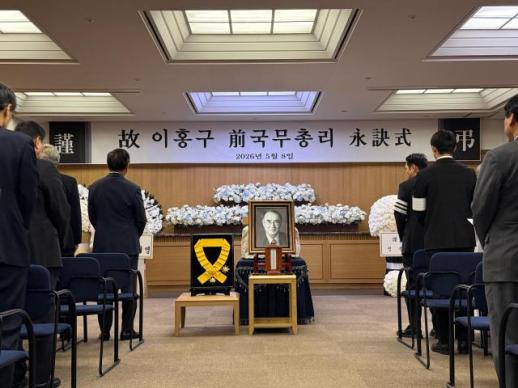 Funeral of Former Prime Minister Lee Hong-koo Concludes The funeral for former Prime Minister Lee Hong-koo, who passed away at 92 on May 5, concluded with a farewell ceremony and burial. On the morning of May 8, a solemn farewell ceremony took place at the Seoul Asan Medical Center, followed by the burial at Cheonan Park Cemetery, marking the end of the funeral proceedings. The ceremony was led by Lee Jae-seung, head of the Korea University Institute of International Relations, and included tributes from Hong Seok-hyun, chairman of JoongAng Holdings; Chung Mong-joon, chairman of the Asan Social Welfare Foundation; and Yoo Hong-rim, president of Seoul National University, among others. In his tribute, Hong expressed, "Today, we gather in profound sadness to bid farewell to our esteemed mentor and elder statesman, Lee Hong-koo. He was an intellectual who criticized the system, far from the image of a chosen elite. He declined offers for ambassador and foreign minister positions during the Yushin era and the Fifth Republic due to his uncompromising spirit." Chung reminisced about his time as a student under Lee, recalling, "As a freshman at Seoul National University, I remember the large crowds drawn to his humorous lectures. His teachings provided invaluable insights into international affairs and the direction of our nation, imparting wisdom beyond mere knowledge." Yoo also reflected, stating, "Lee was my mentor since I entered Seoul National University in 1980, and I feel a deep sense of loss sending him to the eternal world. Remembering his profound teachings is how we can repay his kindness." Born in 1934, Lee entered the Seoul National University College of Law but dropped out the following year to study in the United States. He earned a degree in philosophy from Emory University and a master's and doctorate in political science from Yale University before returning to Korea in 1968 to join the faculty at Seoul National University. Lee began his political career in 1988 as the Minister of Unification, later serving as a special advisor to the president, ambassador to the UK, and Deputy Prime Minister and Minister of Unification under the Kim Young-sam administration, before becoming the 28th Prime Minister in 1994. Notable attendees at the funeral included former Prime Minister Jeong Un-chan, former UN Secretary-General Ban Ki-moon, Minister of the Interior and Safety Yoon Ho-jung, former Bareunmirae Party leader Son Hak-kyu, People Power Party lawmaker Kwon Young-se, British Ambassador to South Korea Colin Crooks, Japanese Ambassador to South Korea Koichi Mizushima, and Kim Hyun-chul, chairman of the Kim Young-sam Foundation. 2026-05-08 11:37:17
 -
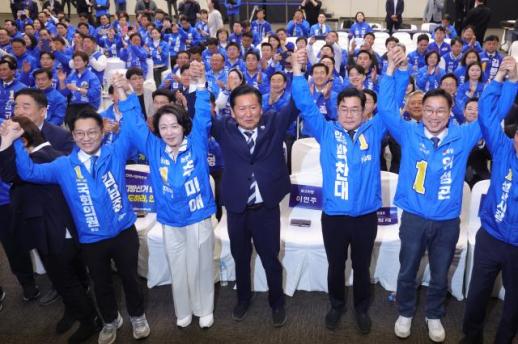 South Korea’s Democratic Party Vows June 3 Local Election Win to Back Lee Jae-myung Government The Democratic Party on May 7 reaffirmed its determination to win the June 3 local elections, saying victory is needed to “end the insurrection” and ensure the success of the Lee Jae-myung government. The party also urged its candidates for Incheon mayor, Gyeonggi governor and Jeju governor — Park Chan-dae, Choo Mi-ae and Wi Seong-gon — to give their all. At a nomination rally for Incheon, Gyeonggi and Jeju held at KINTEX in Goyang, the party said voters should deliver a stern judgment against the People Power Party, accusing it of repeatedly making “Yoon Again” nominations, and said an overwhelming win would help support the Lee government’s state affairs. Party leader Jung Cheong-rae said, “Winning the local elections and ensuring the success of the Lee Jae-myung government is the spirit of the times and a mission for those living in 2026.” He added, “The embers of the insurrection are still stirring in places,” and said the People Power Party, which he said has not yet reflected on the insurrection, would face “the people’s stern judgment.” Jung said the election would be “another challenge” to fully realize what he called President Lee’s agenda of locally led growth, balanced national development and the Lee government’s governing philosophy. He said he hoped the party’s pledge to build a country where people “live well across the board” would be reflected in an election victory. Jung called for strong support for the party’s candidates, saying, “With Choo, we can trust Gyeonggi’s future,” and that Park would reopen Incheon’s “growth potential,” while Wi would make Jeju’s future “brighter than ever.” He added, “The Democratic Party will also mobilize all its capabilities to support the candidates. I ask you to win without fail.” Choo responded, “Only a desperate mindset and effort can protect democracy and subdue the insurrection forces,” adding that winning in border areas would be “more valuable” than any other victory. Park said he was campaigning with the resolve to “win without fail” and show the Lee government’s philosophy and competence in Incheon. “With that sense of responsibility and expectation of victory, we will win,” he said. Wi said, “Today we came here for the Lee Jae-myung government and a Republic of Korea where everyone is happy,” and urged a united push to win the local elections and build a country where “everyone lives well.” The candidates adopted a resolution calling for: uniting as “one team” by region to promote national unity; acting as responsible ruling-party candidates to drive the Lee government’s success and national development; and winning a landslide in the local elections to support state affairs by following “the people’s command.” Also attending were by-election candidates Lee Kwang-jae (Hanam-gap), Kim Yong-nam (Pyeongtaek-eul), Kim Nam-kuk (Ansan-gap), Song Young-gil (Yeonsu-gap) and Kim Nam-jun (Gyeyang-eul). Song and Kim Nam-jun reiterated their determination to win, saying they would work so “everyone can win” as Democratic Party candidates, and, “Kim Nam-jun will keep Lee Jae-myung’s promise.”* This article has been translated by AI. 2026-05-07 15:16:57
 -
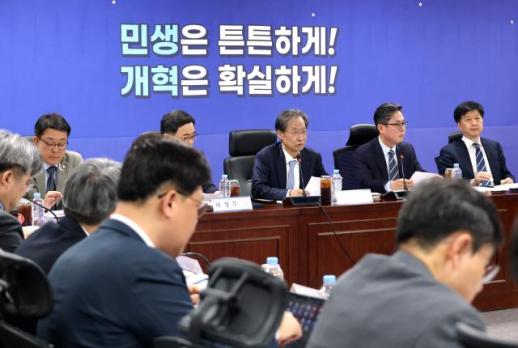 Ruling Party, Government Say 80% of High Oil Price Aid Paid Out; Price Cap Helped Curb Inflation The ruling party and the government said May 7 that relief payments aimed at easing household strain from high oil prices triggered by the Middle East war have been carried out at about the 80% level. They also said a price cap helped offset a significant share of inflation pressures. The Democratic Party’s special committee on economic responses to the Middle East war held its fifth meeting with the government at the National Assembly on May 7 to review measures including the high oil price relief program and the price cap. Rep. Ahn Do-geol, the committee’s secretary, told reporters after the meeting that about 3.8 trillion won of the 4.8 trillion won budget had been executed through the Ministry of the Interior and Safety, or roughly 80%. He said the key issue is whether the money is reaching eligible recipients, and by that measure 1.4 trillion won has been paid out, adding that the rollout appears to be proceeding smoothly. Ahn said that as tensions in the Middle East continue to push prices higher, the price cap on petroleum products and fuel tax cuts helped keep April’s inflation rate lower. “Without the price cap and fuel tax cuts, April’s inflation rate would have been 3.8 percentage points, 1.2 points higher than the 2.6 points actually recorded,” Ahn said. He added that the measures are helping reduce about one-third of the rise in prices. He said the government’s swift response to stabilize oil prices, which affect production costs and consumer prices, is helping keep living costs steady. The party and the government also said they received a briefing from the Financial Services Commission on lowering card transaction fees for gas stations. Ahn said card companies, gas stations and the Korea Petroleum Distribution Association presented sharply different positions and no conclusion was reached. He said further talks are needed and that the Democratic Party decided to work to mediate.* This article has been translated by AI. 2026-05-07 11:27:31
 -
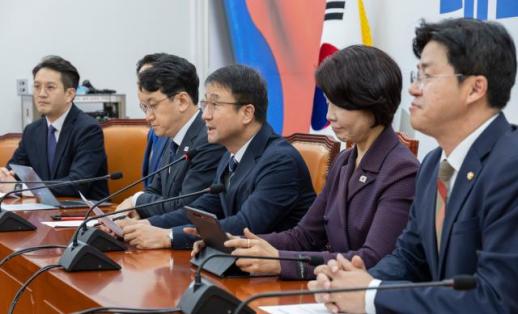 Democratic Party urges People Power Party to join vote on constitutional amendment The Democratic Party on May 7 again urged the People Power Party, which is maintaining a party line opposing a proposed constitutional amendment, to cooperate by taking part in a floor vote. The party also said that if a vote cannot be held at the plenary session because the People Power Party does not attend, it will move to convene another session soon and try again. The Democratic Party made the request at a policy coordination meeting held at the National Assembly on Thursday morning. Floor leader Han Byung-do said, “The only party opposing a constitutional amendment that has built social consensus and is supported by a majority of the public is the People Power Party.” He warned that, as President Lee Jae-myung has said, those who oppose the amendment could be seen as “defenders of an illegal martial law.” Addressing People Power Party lawmakers, Han said, “If you have even a shred of conscience and conviction, I hope you will participate in the vote.” He added that if the party “evades the historic responsibility of constitutional reform,” it will face “the people’s judgment.” Cheon Jun-ho, senior deputy floor leader for parliamentary operations, said a vote is scheduled on an amendment aimed at enshrining the spirit of the May 18 movement in the Constitution. “The National Assembly should not be ashamed before the fallen and the bereaved,” he said, urging the People Power Party to enter the chamber and vote. Cheon added that lawmakers should not “take away the public’s chance to choose the amendment directly,” and said that if they do, they cannot avoid criticism, as Lee has said, of being “defenders of an illegal martial law.” He urged them not to “commit another wrongdoing in history.” After the meeting, Kim Han-kyu, senior deputy floor leader for policy, told reporters that because a constitutional amendment requires approval by two-thirds of lawmakers, it cannot pass without attendance. He said that if the vote is not established, National Assembly Speaker Woo Won-shik, who has the authority to convene and place items on the agenda, will set another plenary schedule. Senior spokesperson Kang Jun-hyeon also said that if the People Power Party does not come to Thursday’s plenary session, the vote cannot proceed. He said he understands the floor leadership is pushing to hold another plenary session as early as Friday if the measure is rejected.* This article has been translated by AI. 2026-05-07 10:51:16
 -
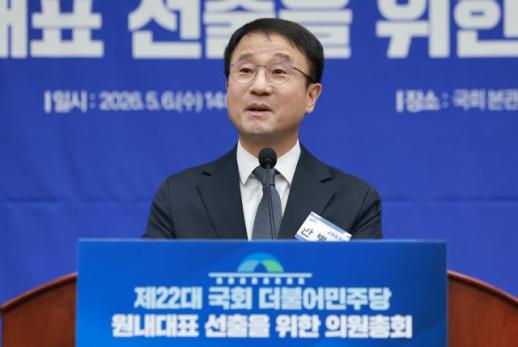 DP Floor Leader Han Byung-do Urges Vote on Constitutional Amendment, Calls on PPP to Join Han Byung-do, the Democratic Party’s floor leader who won a second term, said May 7 he would push for swift passage of a constitutional amendment, move quickly to form the National Assembly’s second-half leadership and complete the Lee Jae-myung government’s legislative agenda. Speaking at his first policy coordination meeting since taking office again, Han warned the People Power Party, which has adopted opposition to the amendment as its party line, that it would face “irreversible public judgment” if it continues to block the measure. Han said the National Assembly would convene a plenary session later in the day to vote on the amendment drafted jointly by the Democratic Party and five opposition parties. He said the proposal would add the spirit of the Bu-Ma Democratic Protests and the May 18 movement to the Constitution’s preamble, strengthen parliamentary control over declarations of martial law and spell out the state’s duty to pursue balanced national development. Responding to the People Power Party’s claim that the proposal is an election-driven pledge, Han challenged the party to specify which provisions it considers political. He said giving the Assembly stronger authority over “illegal martial law” is intended to prevent dictatorship, and added that, as President Lee Jae-myung has said, the public would view opponents of the amendment as defending illegal martial law. Han urged People Power Party lawmakers to take part in the vote, saying those with “even a shred of conscience and conviction” should not stay away. If the party avoids what he called a historic responsibility, he said, it would face “irreversible public judgment.” Han also said the second-half organization of the 21st National Assembly took 54 days, and warned against wasting time while neglecting people’s livelihoods. He said he would prepare the new Assembly lineup without gaps to avoid even a brief constitutional vacuum. He said the Assembly would complete the election of the second-half speaker and deputy speakers at a plenary session on May 20, then promptly choose standing committee chairs to begin legislation aimed at addressing the Middle East crisis and stabilizing livelihoods. Han said he would also work to complete the Lee government’s major policy agenda through legislation by the end of this year.* This article has been translated by AI. 2026-05-07 10:06:44
 -
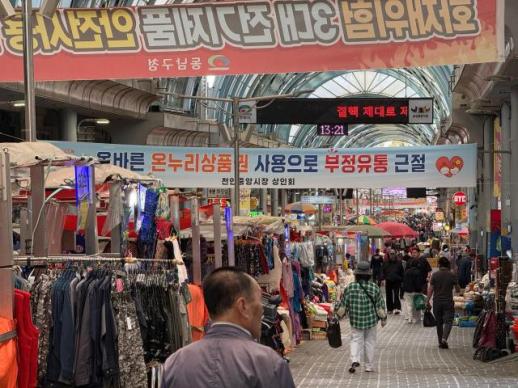 South Chungcheong Governor’s Race Tightens as Voters Split Between Kim Tae-heum and Park Soo-hyun "They’re both about the same, but we should still pick Kim Tae-heum for what he’s done for the province." "Park Soo-hyun is different from other lawmakers. I’m voting for him no matter what." In the Chungcheong region, long seen as a swing area in national elections, voters in South Chungcheong Province were split when Aju News spoke with residents on May 6 in places including Gongju and Cheonan. In Cheonan, more residents interviewed said they planned to vote for Gov. Kim Tae-heum, who is seeking re-election in the June 3 local elections. A 69-year-old taxi operator surnamed Choi praised Kim’s performance over the past four years but said he worried the Democratic Party could become too dominant nationwide. "Gov. Kim did a good job," he said. "I think I’m leaning toward him again." He added, "It feels like the whole country is turning blue. I hope the Democratic Party won’t conduct legislative activities too unilaterally." At Cheonan Central Market, Choi Seung-il, 87, said the two candidates were similar but gave Kim a slight edge. "Kim is ahead by one point," he said, adding he would back Kim again as he did in the previous election. Another market shopper, Kim Dong-wook, 73, said he opposed fiscal support policies such as livelihood support payments and fuel-linked subsidies being pursued by the Democratic Party government. "The Democratic Party has handed out too much money this time," he said. "If this continues, young people will have a hard time living." He said that led him to decide to vote for Kim. In Gongju, which was also Park Soo-hyun’s constituency, support among those interviewed leaned heavily toward Park, the Democratic Party’s candidate for governor. A worker in his 50s, surnamed Ko, said he planned to support Park and described it as a punitive vote against the People Power Party, which he accused of "insurrection" and wrongdoing. A voter in his 30s, surnamed Jang, said he would vote for Park because he supports the Democratic Party. In Gongju, some residents cited calls to punish the People Power Party over former President Yoon Suk Yeol’s martial law declaration, along with strong support for the Lee Jae-myung government. Ko said he voted for the People Power Party in the last local elections but would back the Democratic Party this time. "If the People Power Party, which shows no reflection over acts of insurrection, loses overwhelmingly, they’ll learn the people can be frightening," he said. He also praised the Lee government, citing what he called bold diplomacy with the United States, practical diplomacy including North Korea policy, and a third round of commercial law revisions that he said helped normalize the stock market. Jang also criticized what he called acts of insurrection that caused national turmoil. He said he liked the government’s "practical diplomacy" toward the United States and North Korea and said he expected reforms, including strong punishment for elites such as politicians and the media. Some residents also voiced doubts about Park’s prospects because of anti-Democratic Party sentiment. A 69-year-old taxi driver, Park Jong-young, said Gongju’s mood favored Park but added, "There’s a lot of backlash against the Democratic Party itself, so we don’t know what will happen." Still, he said, "Park is different from other lawmakers. I’m voting for him no matter what." Others said they would not support either candidate and might skip voting. A woman in her 60s who works at Cheonan’s Yeokjeon Market, surnamed Kim, said she had supported the People Power Party but was put off by what she called the recent conduct of party leader Jang Dong-hyeok. "This year I won’t vote," she said. She added that merchants want redevelopment and said she hoped any candidate would pledge it as a campaign promise. Across the province, residents commonly called for stronger industrial infrastructure, better jobs and expanded transportation networks. Ko said he hoped South Chungcheong would become more prosperous by attracting industries that fit local characteristics and by improving construction and transportation infrastructure. Jang said he wanted industrial investment and quality jobs for residents. Park said that, as someone in the transportation business, he hoped for expanded transport infrastructure. Park campaigned in person at Gongju Sanseong Market starting in the morning. Accompanied by Democratic Party candidates for mayor, provincial council and city council, he greeted merchants and shoppers one by one, shaking hands and saying, "I will definitely come back as governor." Some merchants and visitors responded, "Of course we’ll elect Park Soo-hyun as governor. Go, Park Soo-hyun!" Park said he visited the market because he plans to tour all cities in South Chungcheong as he begins full-scale campaigning, and he wanted his first stop to be Gongju because of his close ties to the city. He said he would work to address hardships raised by residents and merchants. * This article has been translated by AI. 2026-05-06 16:21:22
 -
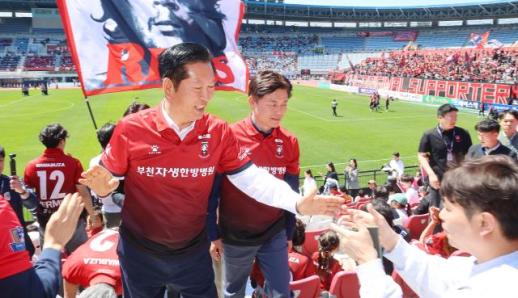 Jung Cheong-rae says timing of special counsel bill will follow public, party input Jung Cheong-rae, leader of the Democratic Party, said Monday the party will decide when to move a bill calling for a special counsel to probe alleged manipulated investigations and indictments under the Yoon Suk Yeol government after gathering views from the public, party members and lawmakers. Jung spoke to reporters after a visit to Dongducheon Big Market in Dongducheon, Gyeonggi Province. He said the party should coordinate with the presidential office, noting that on May 4 President Lee Jae-myung asked the party to determine the timing after collecting public opinion and holding deliberations. “Since the presidential office has stated its position, the party will also decide what to do by collecting lawmakers’ views through a caucus meeting and asking party members,” Jung said. At the same time, Jung reiterated his push to hold what he called “political prosecutors” accountable for actions taken under the Yoon administration and said Lee should be relieved through a special counsel probe. “If, under the Yoon Suk Yeol government, they were obsessed with taking down political opponents and suppressing the opposition and tried to indict and punish people with falsehoods or fabrication, that itself is a crime,” Jung said. He added that the Ssangbangwool remittances-to-North-Korea case and the Daejang-dong case involving Lee were “clearly” fabricated indictments and said “the victim should, of course, be given relief.”* This article has been translated by AI. 2026-05-05 16:00:13
 -
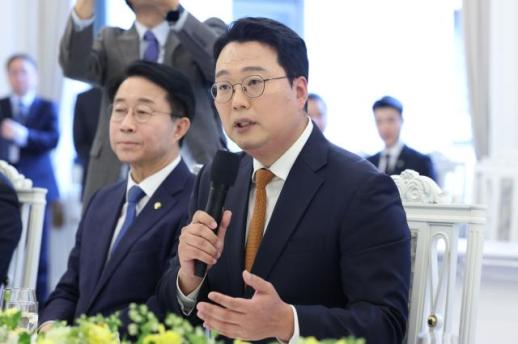 Reform Party floor leader proposes bill to exempt children's play noise from regulation Cheon Ha-ram, floor leader of the Reform Party, said Monday he has introduced amendments to the Noise and Vibration Control Act and the Minor Offenses Act that would, in principle, exclude sounds generated during child care, education and play from being treated as regulated noise. Cheon said the bills would exempt sounds from activities at day care centers, kindergartens, schools and children’s playgrounds from the scope of noise under the current Noise and Vibration Control Act and from “nearby disturbance” provisions under the Minor Offenses Act. “Children’s voices are not noise,” Cheon said. “Schools should not repeatedly end up closing their playgrounds because they feel pressured by complaints and reports.” He said lawmakers from five parties agreed to pursue legal safeguards so children can “run and laugh freely” on Children’s Day. Cheon previously released analysis saying there were 350 reports to the 112 emergency line related to school sports days in 2025, and that 345 of those led to police being dispatched. He also raised the issue during a National Assembly question-and-answer session last month on education, social and cultural affairs, pressing Prime Minister Kim Min-seok, Interior and Safety Minister Yoon Ho-jung and Education Minister Choi Gyo-jin about noise complaints at schools and the need for outdoor activities for children and teenagers. At the time, Cheon said a small number of people who file excessive complaints were depriving children of the right to play. He questioned whether it was appropriate for police patrol cars to be sent to schools when noise-related reports are filed during sports days.* This article has been translated by AI. 2026-05-05 12:00:16
 -
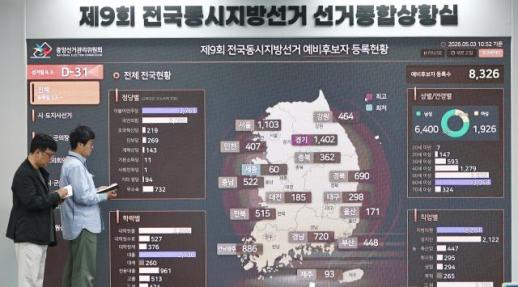 South Korea’s June 3 Local Elections Set as Major Parties Finalize Governor Matchups With about a month left until the June 3 local elections, the People Power Party completed the lineup for all 16 metropolitan mayors and governors after selecting Supreme Council member Yang Hyang-ja on May 2 as its candidate for Gyeonggi governor. With both major parties focused on winning, an all-out campaign is expected in the remaining weeks. Seoul, often seen as the marquee race, will pit Democratic Party candidate Jeong Won-oh against People Power Party candidate Oh Se-hoon. Jeong is highlighting his administrative experience as a three-term district chief, while Oh is emphasizing stability as a four-term mayor. Kim Jeong-cheol of the Reform Party and Kwon Young-kuk of the Justice Party are also running for Seoul mayor. Gyeonggi, another top battleground where a first female metropolitan leader is considered likely, will feature Democratic Party candidate Choo Mi-ae against People Power Party candidate Yang. Choo is a six-term lawmaker and chair of the National Assembly Legislation and Judiciary Committee. Yang is known as Samsung Electronics’ first female executive who rose from a high school graduate track. Attention is also on whether conservatives can unify behind a single candidate in Gyeonggi. Jo Eung-cheon, who initially mentioned unity soon after entering the race as a Reform Party candidate, appeared to shift his stance at an emergency news conference on May 3, saying, “We must not take the tiresome cartel structure of the two major parties for granted.” Whether a unity deal happens remains uncertain. Other races drawing focus include Daegu and Busan. In Daegu, Democratic Party candidate Kim Boo-kyum, who has served as a Cabinet member, will face People Power Party candidate Choo Kyung-ho. Kim, who has served as prime minister and as a four-term lawmaker, also won a seat in Daegu’s Suseong-gap district in the 20th general election. Choo has served as deputy prime minister for economic affairs, as a three-term lawmaker and as People Power Party floor leader. In Busan, Democratic Party candidate Jeon Jae-soo, who served as the first oceans and fisheries minister in the Lee Jae-myung government, will run against People Power Party candidate Park Hyung-joon, who served as senior presidential secretary for political affairs in the Lee Myung-bak government and won reelection as Busan mayor. Reform Party candidate Jeong I-han is also in the race, seeking to become the youngest mayor. In Incheon, Democratic Party candidate Park Chan-dae will face People Power Party candidate Yoo Jeong-bok. Park is considered a leading pro-Lee Jae-myung figure after serving as Democratic Party floor leader when Lee was party leader. Yoo won the Incheon mayoral race in the 2014 and 2022 local elections. In Daejeon, Democratic Party candidate Heo Tae-jeong and People Power Party candidate Lee Jang-woo, both current or former Daejeon mayors, will square off. Heo previously served as Yuseong district chief and became Daejeon mayor in 2018. Lee is the incumbent mayor and previously served two terms as a lawmaker representing Daejeon’s Dong district. In Sejong, Democratic Party candidate Cho Sang-ho, a former deputy director of the Democratic Research Institute, will face incumbent Sejong Mayor Choi Min-ho of the People Power Party. In South Chungcheong and North Chungcheong provinces, Democratic Party candidates Park Soo-hyun and Shin Yong-han will run against People Power Party candidates Kim Tae-heum and Kim Young-hwan, respectively. In Gangwon Province, the Democratic Party nominated Woo Sang-ho, its first nominee in the party and a former senior presidential secretary for political affairs in the Lee Jae-myung government. The People Power Party nominated two-term lawmaker and incumbent Gangwon Gov. Kim Jin-tae. In the Yeongnam region, often viewed as a conservative stronghold, North Gyeongsang Province will see Democratic Party candidate Oh Jung-gi, who ran in the 2018 gubernatorial race, face People Power Party candidate Lee Cheol-woo, a two-term governor and three-term lawmaker. In South Gyeongsang Province, Democratic Party candidate Kim Kyung-soo, elected in the 2018 local elections, will run against incumbent People Power Party Gov. Park Wan-soo, elected in 2022. In Ulsan, Democratic Party candidate Kim Sang-wook, who moved from the People Power Party to the Democratic Party, will face People Power Party candidate Kim Doo-gyeom, who is seeking reelection. Kim Sang-wook, along with Jinbo Party candidate Kim Jong-hoon and Cho Kuk Innovation Party candidate Hwang Myung-pil, has agreed in principle to pursue a unified candidacy by May 13 and is discussing details. For the first-ever elected integrated mayor of the Jeonnam-Gwangju merged city, the Democratic Party nominated Min Hyung-bae, a former Gwangsan district chief and a two-term lawmaker. The People Power Party nominated Lee Jeong-hyun, a three-term lawmaker from a Honam constituency and chair of the party’s nomination committee for this local election. In North Jeolla and Jeju, Democratic Party candidates Lee Won-taek, a two-term lawmaker previously linked to allegations of paying for others’ meal expenses, and Wi Seong-gon, a three-term lawmaker, will face People Power Party candidates Yang Jeong-moo and Moon Seong-yoo, who previously led the Korea Asset Management Corp., respectively. 2026-05-03 15:18:28
 -
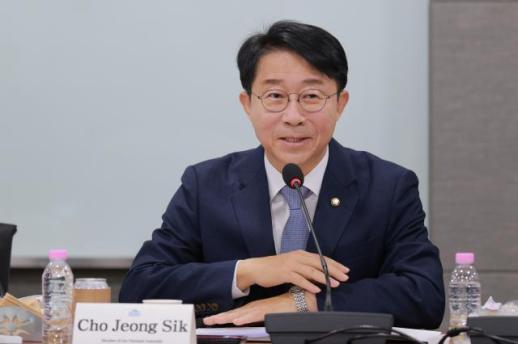 Democratic Party lawmaker Cho Jung-sik resigns as presidential aide to seek National Assembly speaker post Cho Jung-sik, a Democratic Party lawmaker running in the race for speaker of the National Assembly in the second half of the 22nd Assembly, said Saturday he will resign as presidential special adviser for political affairs. In a Facebook post, Cho said he was stepping down from the post under President Lee Jae-myung to pursue what he called a “bolder path,” pledging to move toward a “people’s sovereignty National Assembly” and a “livelihood-focused National Assembly.” Cho said that since being appointed in December, he worked to strengthen communication and serve as a bridge linking the party, government and presidential office. “Over the past four months since my appointment, I worked with a heavy sense of responsibility as a ‘bridge of communication’ connecting the party, government and presidential office as one,” Cho wrote. He said he coordinated key state affairs so the ruling party could move “in one breath” for the success of the Lee administration. Cho added that he would devote himself to his public duty with the “proven stability” of a six-term lawmaker. Lee responded in a comment, saying, “You worked very hard. You were always with us, and I sincerely thank you.” Cho, a six-term lawmaker, is expected to register Sunday as a candidate in the Democratic Party’s primary for National Assembly speaker. The party plans to pick its speaker nominee through a two-day vote of dues-paying party members starting May 11 and an in-person vote by lawmakers on May 13.* This article has been translated by AI. 2026-05-03 11:35:41