

Journalist

Chang SeongWon
sotg813@ajunews.com
-
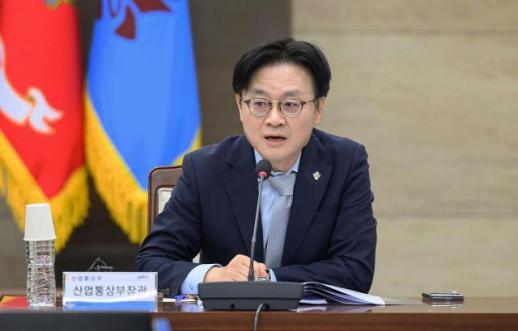 Korean Minister Kim Jong-kwan: U.S. Commerce Secretary Says Not to Worry About Section 301 Tariffs Korean Minister of Trade, Industry and Energy Kim Jong-kwan stated that U.S. Commerce Secretary Howard Lutnick reassured him not to worry about potential increases in tariffs due to the Section 301 investigation by the Trump administration. This investigation raised concerns that Korea's tariff burden could exceed the agreed 15% between the two countries last year. In an appearance on MBN News Wide on June 5, Kim explained details of his video meeting with Lutnick on June 3. "I was worried, but Secretary Lutnick said not to worry. He indicated that the originally agreed 15% would remain in place," Kim said. He added, "This is part of our ongoing investment projects in the U.S., which were built on mutual trust between the two leaders. We discussed how to ensure these efforts succeed." Earlier, on June 2, the U.S. Trade Representative (USTR) announced the results of its Section 301 investigation related to forced labor, warning of new tariffs affecting 60 countries. Among these, 45 countries, including Korea, China, and Japan, could face a 12.5% tariff, while 14 countries and the European Union are expected to see a 10% tariff. However, concerns have been raised that the final tariff rates could exceed 15% as the Trump administration plans to release additional findings related to overproduction. Last year, Korea agreed to invest $350 billion (approximately 540 trillion won) in the U.S. in exchange for reducing mutual tariffs from 25% to 15%. However, the mutual tariff based on the International Emergency Economic Powers Act (IEEPA) was ruled invalid by the U.S. Supreme Court this year. In response, the Trump administration announced a 10% global tariff based on Trade Act Section 122, which is set to expire in July. The administration is planning to impose new tariffs based on Section 301 as a replacement. Regarding Korea's investment in the U.S., Kim mentioned, "We will launch the U.S. Investment Corporation on June 18. We are currently having extensive discussions among our teams to determine if this project is viable and mutually beneficial for both countries." He emphasized, "I believe the trust built over the past year, especially between the two leaders, remains strong. We are continuously discussing strategic mutual benefits and ensuring the commercial viability of these projects." Meanwhile, when asked about this year's export outlook, Kim stated, "I officially expect our exports to exceed $900 billion this year. We are currently ranked around seventh in exports, but we aim to break into the top five." 2026-06-05 22:00:00
 -
 U.S. Nonfarm Jobs Surge by 172,000 in May, Heightening Rate Hike Expectations The U.S. nonfarm payrolls saw a surprising increase of 172,000 jobs in May, nearly double the expected growth, indicating resilience in the economy despite ongoing conflicts in the Middle East. According to the U.S. Bureau of Labor Statistics, nonfarm employment rose by 172,000 in May, significantly surpassing the forecast of 85,000. Additionally, the April nonfarm employment figure was revised upward from an initial increase of 115,000 to 179,000, while March's figure was adjusted from 185,000 to 214,000. The unemployment rate in May remained steady at 4.3%, consistent with both the forecast and the previous month. Despite rising prices linked to the Middle East conflict, the U.S. economy continues to show strength, reducing the likelihood of an economic slowdown and increasing the chances of an interest rate hike. Following the release of the employment data, the yield on 30-year U.S. Treasury bonds surpassed 5%. The CME FedWatch Tool, which tracks market expectations for Federal Reserve interest rate changes, indicated that the probability of a 0.25 percentage point rate increase by the end of the year rose from 38.2% to 41.2%, while the likelihood of a 0.50 percentage point increase increased from 10.9% to 14.4%. Bloomberg reported that the strong employment figures have heightened expectations that the Federal Reserve will raise interest rates by the end of the year. 2026-06-05 21:45:00
 -
 Navy Reports Death of Non-Commissioned Officer During Training Near Yeonpyeong Island A non-commissioned officer died after sustaining injuries during training aboard a naval vessel operating near Yeonpyeong Island in the Yellow Sea.According to a report by Yonhap News Agency, the officer was found unconscious with head injuries during combat deployment training at approximately 1:36 p.m. on June 5. The officer reportedly had bleeding from the head.The Navy stated that after providing emergency care on-site, the officer was urgently transported to the National Military Medical Center via a military medical evacuation helicopter, but was pronounced dead at 4:50 p.m. The officer's death occurred during an internal training exercise, and there was no contact with North Korean forces.The Navy expressed deep condolences to the bereaved family and announced that a joint investigation will be conducted with civilian police and military authorities to determine the exact cause of death.Combat deployment training is designed to prepare crew members to move to designated combat positions within the vessel and practice mission procedures in the event of a combat situation.* This article has been translated by AI. 2026-06-05 19:21:00
 -
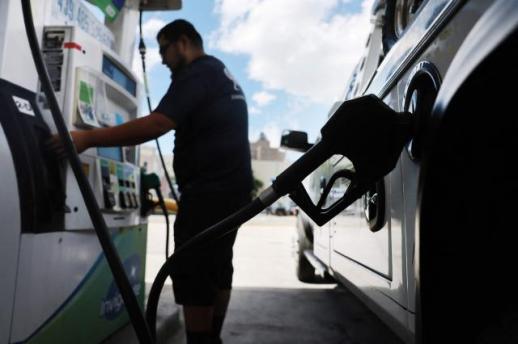 U.S. Oil Industry Warns of Potential Surge in Oil Prices Amid Middle East Conflict The U.S. oil industry has warned the Trump administration that international oil prices could surge in the coming weeks due to the ongoing conflict in the Middle East, according to a report by Politico, citing four oil executives. The oil industry leaders conveyed this warning to senior White House officials during recent discussions with the Trump administration and the U.S. energy sector. An anonymous oil executive stated, "We are already at dangerously low levels of crude oil inventory," adding, "We have communicated to top government officials what we expect to see around mid to late June." The executive emphasized, "We hope they are paying attention to current crude oil inventories, which are at critically low levels." Since the U.S. and Israel launched a preemptive strike against Iran in late February, Iran has effectively blocked the Strait of Hormuz, a major global energy transit route, leading to a significant reduction in Middle Eastern energy supplies. Countries have relied on their strategic reserves, but these reserves are now at dangerously low levels. According to the U.S. Energy Information Administration (EIA), U.S. crude oil inventories fell by 8 million barrels last week, marking the eighth consecutive week of decline and remaining 3% below the five-year average. Additionally, the Strategic Petroleum Reserve (SPR) also decreased by 8 million barrels last week, nearing the low recorded in July 2023, as reported by Politico. If the decline in crude oil inventories continues at this pace, there is a possibility that international oil prices could spike in June. Last week, Neil Chapman, senior vice president of ExxonMobil, predicted that if the inventory depletion continues, Brent crude prices could rise to $150 per barrel, or even $160, representing an increase of nearly 70% from the current futures price of around $95. He noted, "There is debate about whether that depletion point will be in two weeks or three weeks, but once we reach that point, prices will surge." However, the White House has stated that it has not received such warnings from the oil industry, and a U.S. Department of Energy official denied having had "such discussions" regarding crude oil inventories. Nonetheless, another oil executive countered, stating, "The government has already heard about these issues related to oil." The decline in crude oil inventories is affecting not just the U.S. but the global market as well. Current global crude oil inventories are approximately 7.5 billion barrels, down about 500 million barrels compared to pre-war levels in the Middle East. However, most of these stocks are already allocated to buyers and are not held as reserves, according to Jim Burkhard, vice president and global head of oil research at S&P Global. He remarked, "I have never seen inventory levels decrease so quickly and so significantly," noting that some regions have already reached or are nearing their lowest inventory levels. Meanwhile, President Trump indicated that "final negotiations are underway to end the Iran war," suggesting that a peace agreement with Iran could be reached soon.* This article has been translated by AI. 2026-06-05 15:39:00
 -
 Celanese Closes Ulsan Plant Amid Middle East Conflict U.S. specialty materials and chemical company Celanese has decided to close its Ulsan plant due to the impact of the ongoing conflict in the Middle East. According to reports from the Financial Times and other outlets on June 4, Celanese announced that it would immediately halt all production and operations at the Ulsan facility. The company plans to transfer production to its plants in Nanjing and Shenzhen, China, as well as to its facility in Silvassa, India. This move is part of Celanese's 'Grow & Fortify' strategy aimed at increasing production flexibility. The decision follows a surge in crude oil prices, which are essential raw materials for chemical products, due to the recent Middle East conflict. Celanese's first-quarter results, released last month, fell short of expectations, contributing to a more than 20% drop in its stock price to date. In response, Celanese announced price increases for key products in April and May. Last month, the company also revealed plans to operate its Singapore plant only until the end of July before closing it. Celanese, which produces key products such as PET (polyethylene terephthalate), PA (polyamide), PBT (polybutylene terephthalate), HTN (high-heat nylon), and polymers, is one of the world's leading chemical manufacturers, employing approximately 11,000 people globally. The company reported revenues of about $9.5 billion in 2025.* This article has been translated by AI. 2026-06-05 10:42:00
 -
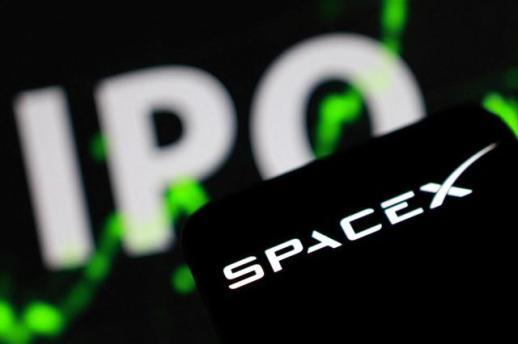 Goldman Sachs Projects SpaceX AI Revenue to Surge 100-Fold by 2030 Goldman Sachs has projected that SpaceX's artificial intelligence (AI) revenue will increase nearly 100-fold by 2030, ahead of the company's anticipated initial public offering (IPO) next week. According to the Financial Times on June 4, Goldman Sachs, the lead underwriter for SpaceX's IPO, forecasts that the company's AI revenue will rise from $3.2 billion in 2025 to approximately $322 billion by 2030. The overall revenue for SpaceX is also expected to grow from $18.7 billion in 2025 to $474 billion in 2030. These projections reflect the recent surge in aggressive AI investments by major tech companies. Goldman Sachs conveyed this information verbally to key investors during SpaceX's IPO roadshow, the Financial Times reported. In February, SpaceX merged with xAI, an AI startup founded by Elon Musk, CEO of Tesla. The majority of the former xAI team is now part of SpaceX's AI division. According to SpaceX's investment prospectus, xAI recorded a loss of $6.4 billion last year but is expected to tap into a total addressable market (TAM) of $26.5 trillion in the future. This marks a significant shift, as the TAM for SpaceX's original core business, the satellite internet service Starlink, was only projected at $2 trillion. Goldman Sachs estimates that Starlink's revenue will reach $144 billion by 2030, which would be less than half of the projected AI revenue. Additionally, the revenue from SpaceX's rocket division is expected to increase from $4.1 billion last year to $8.3 billion by 2030. However, for SpaceX's AI division to achieve these ambitious targets, its proprietary AI model, Grok, must compete effectively with leading models from companies like Google, OpenAI, and Anthropic. The Financial Times also noted that Musk has recently dismissed all ten co-founders of xAI due to performance issues, raising concerns about the rapid organizational changes. SpaceX plans to finalize its offering price on June 11, with trading on the Nasdaq set to begin on June 12. The proposed share price is $135, which could allow SpaceX to raise $75 billion and achieve a valuation of $1.75 trillion.* This article has been translated by AI. 2026-06-05 09:57:00
 -
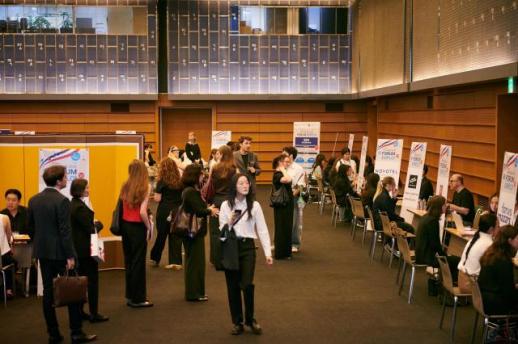 French Chamber of Commerce Hosts Successful 'Career Forum 2026' in Busan The French Chamber of Commerce in Korea (FKCCI) and the French Embassy in Korea co-hosted the 'Career Forum 2026 (Forum Emploi)' last week, with support from the Korea Chamber of Commerce and Industry (KCCI), Pusan National University, and Alumni Day, a global cooperation program of the French Ministry of Foreign Affairs. This year’s event was particularly significant as it was held in Busan for the first time, aligning with the Lee Jae-myung administration's '5 Regions, 3 Special' policy for balanced regional growth. The seventh Career Forum took place on May 27 in Seoul, attracting over 700 attendees who engaged with representatives from 24 major French and global companies, including Louis Vuitton, Novotel, JCDecaux, Richemont, Assurances, Povis Mazar, De'Longhi, and Linas. The event featured conferences across four industry sectors: hospitality and food service, manufacturing, services, and luxury and beauty, providing participants with insights into the latest industry trends, hiring market demands, and various career opportunities. Additionally, the event offered programs aimed at enhancing participants' competitiveness in the international job market, including workshops on resume writing in Korean, English, and French, interview strategies, practical business French, and insights into French corporate culture. The forum continued on May 29 at Pusan National University, marking the first time the event was held in Busan. Approximately 50 participants attended, engaging in various programs designed to facilitate direct interaction between job seekers and company representatives, including recruitment presentations and career talks. The Busan event is seen as a significant milestone, expanding the forum's reach beyond Seoul and creating new opportunities for students and young talent in the southern regions, including Busan and Gyeongnam, to connect with French, Korean, and global companies. The FKCCI aims to connect talent with companies through the Career Forum, promoting global careers for job seekers and continuously strengthening ties within the Korea-France business community. This year marks the 140th anniversary of diplomatic relations between Korea and France and the 40th anniversary of the FKCCI, coinciding with various activities to enhance economic cooperation between the two nations following French President Emmanuel Macron's visit to Korea in April. Since its establishment in 1986, the FKCCI has served as a bridge to foster the Korea-France business community, currently supporting over 475 member companies in their operations within both markets. The FKCCI ranks sixth in revenue among 125 French chambers of commerce worldwide and third among foreign chambers of commerce operating in Korea, based on last year's figures. 2026-06-04 15:54:00
 -
 Israel and Lebanon Agree to Ceasefire with U.S. Mediation, Boosting U.S.-Iran Talks The U.S. State Department announced on June 3 that Israel and Lebanon have agreed to a ceasefire. This development is expected to increase the likelihood of a ceasefire between the U.S. and Iran as well. According to reports from Reuters and the Associated Press, Israel and Lebanon participated in a fourth round of high-level trilateral negotiations in Washington, D.C., on June 2 and 3, where they issued a joint statement agreeing to implement the ceasefire. The ceasefire conditions include a complete halt to attacks by Hezbollah, the Iran-aligned militant group in Lebanon, and the withdrawal of all Hezbollah personnel from the southern Litani region. Additionally, both sides agreed to quickly establish a pilot area under the exclusive control of the Lebanese military, guided by the U.S. They also committed to resuming political and security negotiations aimed at a comprehensive agreement during the week of June 22, with the U.S. facilitating communication between the two parties during that period. Israel and Lebanon had previously agreed to a ceasefire in April amid military clashes resulting from the fallout of the U.S.-Iran conflict. However, as U.S.-Iran ceasefire negotiations accelerated, Israel resumed military operations against Lebanon, leading to renewed hostilities. The recent ceasefire agreement between Israel and Lebanon is expected to enhance the prospects for a U.S.-Iran ceasefire agreement. Reports indicate that the ceasefire proposal currently under discussion between the U.S. and Iran includes a demand from Iran that Israel cease hostile actions against Lebanon. 2026-06-04 08:33:00
 -
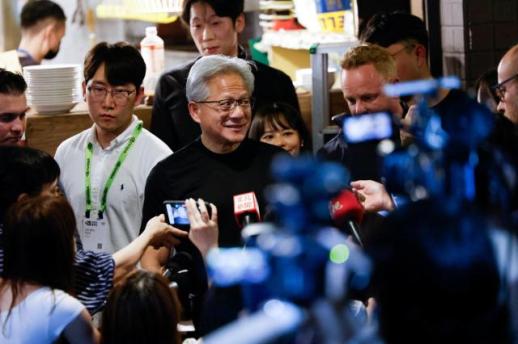 NVIDIA CEO Jensen Huang's Visit Sparks Excitement in South Korea Jensen Huang, CEO of NVIDIA, is generating excitement in South Korea with his visit this week. News of his arrival or even a ceremonial first pitch at a baseball game has led to a surge in stock prices for companies associated with him over the past two days. Huang's previous visit to South Korea last year demonstrated his significant influence. Following what was dubbed the "gangbu meeting," shares of companies like Samsung Electronics and Hyundai Motor soared. Notably, Samsung Electronics saw a more than 3% increase on June 2, even amid a broader market decline, ultimately surpassing Meta to become the 10th largest company globally by market capitalization. This achievement underscores the competitive strength of South Korean firms within the global AI supply chain and highlights Huang's impact as a leading figure in the graphics processing unit (GPU) market. This situation emphasizes that talent remains the most critical factor in the ongoing AI industrial revolution. A fierce global competition for AI talent is underway, with major U.S. tech companies offering substantial financial incentives to attract top researchers. Meanwhile, China is preparing to implement restrictions on outbound personnel and foreign investments to prevent the loss of key talent and technology. As the era of AI reshapes national competitiveness, securing talent has become a matter of survival for countries, not just corporations. The ability to acquire semiconductor and AI technologies will determine the industrial landscape and survival prospects for decades to come. However, the reality in South Korea suggests that the rising stock market is not the only indicator of success. While the government is promoting policies to attract foreign talent, such as expanding the "top-tier visa" program, it still lags behind other advanced AI nations. According to a February report from the Software Policy Research Institute, South Korea ranks between 30th and 40th globally in terms of attractiveness for talent acquisition. Additionally, the Stanford AI Index report from last year indicated that South Korea ranks 35th among OECD countries for net outflow of AI talent, with 0.36 individuals leaving per 10,000 people. In this context, recent developments following the resolution of wage negotiations at Samsung Electronics are significant. After the agreement, applications to semiconductor-related programs surged, and reports suggest that Samsung employees are now as desirable in the marriage market as professionals like lawyers. While salary alone does not drive talent decisions, competitive compensation is essential for attracting skilled individuals. Huang also addressed questions about Samsung's bonuses, stating, "Employees should receive as much compensation as possible." His perspective is informed by his own experiences in Silicon Valley, where he built NVIDIA into a leading company after graduating from engineering school. Last week, the South Korean team achieved a record performance at the Asia Physics Olympiad, winning eight gold medals. This success highlights the presence of exceptional scientific talent in the country. However, it has been noted that many students who excel in math and science competitions often choose to pursue medical degrees for economic reasons. If South Korea fails to connect its top scientific talent to the domestic AI and semiconductor industries, it could result in a national loss. Of course, from a corporate perspective, increasing wages and bonuses can be burdensome and may negatively impact short-term profitability. However, in the long run, securing top talent is more of an investment than a cost, as the competitiveness of the AI era ultimately hinges on people. To attract AI talent, it is crucial to foster an environment conducive to talent development. Therefore, the resolution of Samsung's wage negotiations should serve as a catalyst for the emergence of South Korea's own "Jensen Huang" and potentially the world's leading company by market capitalization. The government must also work on improving the overall system to support this goal. 2026-06-02 15:57:00
 -
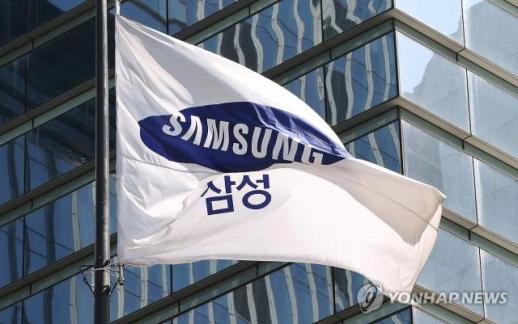 Samsung Electronics Surpasses Meta and Tesla in Market Value, Rises to 9th Globally On June 2, Samsung Electronics' market capitalization surged past that of major U.S. tech companies Meta and Tesla, elevating it to the 9th largest company in the world. According to the global market capitalization comparison site CompaniesMarketCap, Samsung's market value reached $1.581 trillion (approximately 239 trillion won) as of 9:53 AM, reflecting a 4.29% increase from the previous day. This rise allowed Samsung to surpass Meta, which was valued at $1.524 trillion, and Tesla, valued at $1.561 trillion, during trading on June 1 (local time). However, Samsung's stock initially jumped nearly 6% to 370,000 won before the gains moderated, indicating that the market capitalization rankings could shift again depending on the closing prices. Despite this, Samsung's stock price increase has positioned it within striking distance of the 8th largest company, Saudi Arabia's state-owned Aramco, which has a market cap of $1.763 trillion. The top seven companies by market capitalization are currently Nvidia, Alphabet (Google), Apple, Microsoft, Amazon, TSMC, and Broadcom. Samsung's recent stock performance has been bolstered by a surge in demand for memory semiconductors driven by the artificial intelligence (AI) boom. The momentum was further fueled by news this week that Nvidia CEO Jensen Huang announced the next-generation AI chip, Vera Rubin, will feature HBM4 memory from Samsung and SK Hynix. In contrast, Meta has invested heavily in AI development but has yet to achieve significant results, leading to a 5.04% drop in its stock price on June 1 (local time). Tesla also faced challenges, with CEO Sam Altman of OpenAI announcing an accelerated push for talent in robotics, raising concerns about competition in that sector and resulting in a 4.57% decline in its stock price. 2026-06-02 10:00:00