
Journalist

Park Jin-young
sunlight@ajunews.com
-
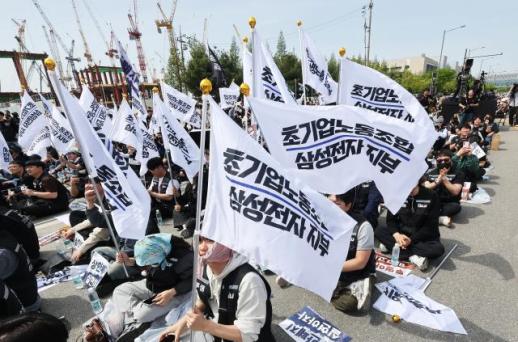 Samsung Electronics Shareholder Groups Rally Against Union’s Planned Strike as Market Cap Tops $1 Trillion As Samsung Electronics’ market value climbed past $1 trillion, some shareholder groups took to the streets to oppose the company’s union plan for a general strike. The groups called for a ban on the strike and said they would pursue tough measures, including damage claims, if an illegal strike occurs. Industry officials said Wednesday that shareholder groups including the Shareholder Action Practice Headquarters hung banners and held a rally in the Hannam-dong area of Seoul’s Yongsan district opposing the union’s planned walkout. The banners said the strike would “only give overseas semiconductor companies a windfall,” and included slogans such as “A strike in essential semiconductor processes is more serious than a strike by the military or police” and “Ban ruinous strikes that hold the national economy hostage through legislation.” The groups said that if the union representing a majority of Samsung Electronics workers pushes ahead with a general strike starting May 21 and holds a rally near the Hannam-dong home of Chairman Lee Jae-yong on the first day, they will stage a counter-rally with more than 100 shareholders. A day earlier, the Korea Shareholder Movement Headquarters warned it would seek damages from all union members if what it called an illegal strike damages key assets. Calling the planned walkout “a self-destructive act that harms corporate value,” the group said that if a strike begins in an illegal form and damages the company’s core assets, shareholders would join forces to seek damages from all union members who participate, citing a legal theory of “infringement of third-party rights.” The union has demanded performance pay equal to 15% of annual operating profit and has announced an 18-day general strike starting May 21. Based on market estimates of operating profit, the amount would total 45 trillion won. Samsung Electronics on Wednesday became the second company in Asia to join the “$1 trillion market cap club.” As of 2:30 p.m., shares were up 15.05% from the previous session at 267,500 won. Market capitalization rose to 1,563 trillion won, or about $1.0738 trillion. That put Samsung Electronics above the $1 trillion mark, following Taiwan Semiconductor Manufacturing Co., the world’s largest foundry operator, with a market cap of $1.86 trillion. 2026-05-06 14:44:12
 -
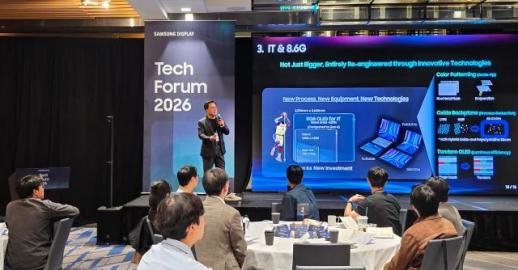 Samsung Display Expands U.S. Recruiting to Broaden Global Talent Pipeline Samsung Display is expanding its recruiting programs in the United States as it steps up efforts to secure global talent. The company said Tuesday it will broaden its U.S. recruiting footprint beyond the West Coast to locations across the country, with senior executives meeting students directly to present the company’s vision. Samsung Display on Monday (local time) held a recruiting program called the “Tech Forum” at the InterContinental Los Angeles Downtown, inviting about 50 doctoral-level candidates to share the company’s vision and promote its organizational culture. The event was tied to “Display Week,” the world’s largest display industry gathering hosted by the Society for Information Display, which has been underway in Los Angeles since May 3. Samsung Display invited top doctoral candidates from universities near Los Angeles. Lee Ju-hyeong, executive vice president and head of the company’s small- and medium-sized display business, delivered a keynote titled “AI meets OLED: Shaping the Next Interface,” urging participants to join its push for next-generation technology innovation. Lee Ho-jung, executive vice president and head of product planning for the same business unit, spoke in a technical session, outlining key innovation achievements and sharing future technology and product strategies aligned with the AI era. Unlike traditional briefing-style sessions, the Tech Forum was run as a networking event, with executives and engineers dining with students and talking informally. Students also received tailored consultations on how their specialties could fit specific departments and roles at Samsung Display. Following the Tech Forum, Samsung Display will begin a series of in-person recruiting meetings on Wednesday in San Francisco and San Jose, then visit major hubs across the U.S. in June, including Chicago, Boston and Atlanta. The company plans to invite dozens of doctoral-level candidates in each region. “In a rapidly changing display market aligned with the AI era, the key to leading innovation ultimately lies with people,” Lee Ju-hyeong said. “We hope outstanding talent active on the global stage will help Samsung Display lead a new future.” Samsung Display also holds a tech forum in Japan each October led by senior executives as part of its broader global recruiting efforts. From 2022 through last year, hundreds of top candidates took part in the company’s recruiting events in North America, Japan and elsewhere. * This article has been translated by AI. 2026-05-06 10:03:22
 -
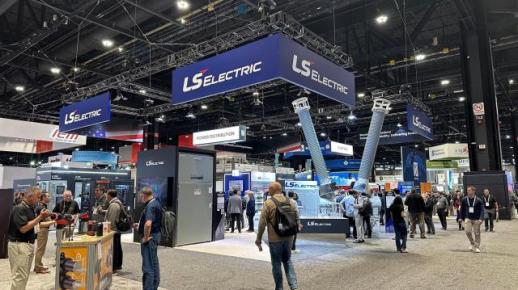 LS Electric Showcases UL-Certified DC Power Gear at IEEE PES T&D 2026, Targets North America LS Electric said it is accelerating its push into North America with next-generation solutions spanning direct current (DC) distribution, extra-high-voltage transmission and data center power infrastructure. The company said Tuesday it is taking part in IEEE PES T&D 2026, North America’s largest power and energy exhibition, being held for three days from May 5 to 7 (local time) at McCormick Place in Chicago, Illinois, where it will present power solutions tailored to the North American market. LS Electric is exhibiting with a 30-booth display covering 278.7 square meters. The booth is organized into three zones: DC solutions, extra-high-voltage transmission and substation solutions, and hyperscale data center solutions, highlighting products aimed at shifts in the global power industry. The company is emphasizing DC capabilities, a key technology for the next power market. It is showcasing a broad lineup of UL-certified DC distribution solutions, including DC switchboards, which it said are essential for entering the North American market. LS Electric said it has moved early to secure the ability to supply UL-certified DC power equipment and aims to take an early lead as the North American DC market expands. The company said its North American performance has been rising sharply. First-quarter North American sales reached about 300 billion won, up about 80% from a year earlier and a quarterly record. It attributed the growth to increased AI data center investment by big tech companies and rising demand for DC solutions that reduce power losses. LS Electric said it has built and operates a “DC Factory” at its Cheonan site, commercializing DC distribution and accumulating field experience and technical know-how. In extra-high-voltage transmission, the company is unveiling a full lineup of core equipment, including 345-kilovolt-class transformers, circuit breakers, switchgear and STATCOM reactive power compensation systems. It plans to highlight total-solution capabilities across transmission and distribution infrastructure, from power plants to substations and end users such as industrial plants, large buildings and data centers. With replacement of aging power grids and new infrastructure investment expanding in North America alongside AI industry growth, LS Electric said it aims to seize opportunities by promoting a broad portfolio spanning extra-high voltage through distribution. For data centers, the company is presenting high-reliability distribution systems and high-efficiency power equipment designed for hyperscale facilities. It said investment in North American data centers is surging as AI spreads, driving demand for high-end power solutions that deliver both stable supply and energy efficiency. LS Electric said it plans to build customer confidence based on local project experience and supply track records, and to further strengthen its position as a key player in the North American data center power market. “Global customers will once again be able to confirm LS Electric’s core solution capabilities that will lead the next-generation power market,” a company official said. “With differentiated competitiveness from extra-high voltage to data centers and DC solutions, we will accelerate our North American push and strengthen market leadership as a game changer in the DC era.”* This article has been translated by AI. 2026-05-06 08:48:21
 -
 Samsung TV Unit Faces Cost Pressures as Panel Prices Jump Nearly 36% in Two Years Samsung Electronics is moving to reshape its TV business, with a sharper focus on improving its cost structure and streamlining operations as profitability remains under pressure from higher input and shipping costs. On May 5, Samsung said it expects it will be difficult to secure strong results and profitability in the TV market this year due to rising raw material prices. The company expects second-quarter demand to grow as major sports events such as the World Cup increase, but it sees overall TV demand remaining largely stagnant this year. A central challenge is the cost of display panels. As panel prices continue to rise, Samsung’s production costs have climbed. According to the company’s business report, Samsung’s spending on display panel purchases rose to 7.9606 trillion won in 2025 from 5.8624 trillion won in 2023, a 35.8% increase in two years. Logistics costs are also rising. With the war in the Middle East dragging on, ocean freight rates have increased, adding to global supply chain cost pressures. Because TVs are bulky and must be shipped worldwide, higher freight costs can directly squeeze margins. Organizational efficiency and cost cuts are expected to be key tasks under President Lee Won-jin. Samsung is seen pursuing a shift from a hardware-centered business toward platforms and services while reducing unnecessary expenses. On the product side, Samsung is pursuing a two-track strategy. In the mid- to low-priced segment, it aims to maintain market share while competing with Chinese brands. In the premium segment, it is expected to focus on advanced markets such as the United States and Europe, centered on organic light-emitting diode (OLED) TVs and ultra-large models. Samsung has recently strengthened its premium lineup by expanding its Micro RGB offerings and has also released new Mini LED models as it seeks to broaden choices and boost share in the mass market. However, Chinese companies such as TCL and Hisense are rapidly improving their technological capabilities, prompting concerns that hardware differentiation alone may not be enough. The key, analysts say, will be how much Samsung can widen gaps in platforms and artificial intelligence. If Samsung strengthens service competitiveness by combining its Tizen OS TV operating system with content and AI features, it could open a new path for growth in its TV business. Kim Won-woo, a vice president in Samsung’s Visual Display Business, said on a recent second-quarter earnings conference call that the company would further solidify its No. 1 position in the global TV market through differentiated product marketing and proactive business responses. He said Samsung will "successfully introduce new models that change the competitive landscape, centered on Micro RGB, OLED and Mini LED, and maximize the launch effect."* This article has been translated by AI. 2026-05-05 17:28:45
 -
 Samsung Taps Software Veteran Lee Won-jin to Lead TV Push on AI and Platforms Samsung Electronics has put software and content specialist Lee Won-jin in charge of its Visual Display (VD) Business, which oversees the company’s TV operations. It is the first time in about 20 years that the VD unit has been led by someone without a hardware development background, since former vice chairman Choi Gee-sung in 2007. The move is widely seen as a bid to counter low-priced competition from Chinese brands by shifting from a hardware-centered approach to a strategy built on platforms and artificial intelligence. Industry officials said Samsung on May 4 appointed Lee, who previously worked at Google, as head of the VD Business, signaling a broader shift in its TV strategy. The personnel change is being interpreted as more than a reshuffle, pointing to a restructuring toward software and services. Samsung has long held the No. 1 spot globally in TV revenue, but it has faced growing pressure on profitability and market share amid aggressive pricing by Chinese rivals. According to market researcher Omdia, Samsung’s share slipped from 30.1% in 2023 to 29.1% last year. TCL and Hisense posted shares of 13.1% and 10.9%, respectively, pushing their combined share into the mid-20% range and narrowing the gap with Samsung. Samsung is accelerating efforts to strengthen its platform business around its Tizen TV operating system. The company aims to generate recurring revenue beyond one-time TV sales through its ad-supported free streaming service, Samsung TV Plus. The service has expanded, with monthly active users topping 100 million worldwide as of January this year. Competition in the global TV market is also intensifying around platforms rather than hardware alone. Omdia forecast that Hisense’s V (formerly Vidaa) will surpass LG Electronics’ webOS in shipments in Europe this year. The Connected TV Marketing Association estimated that in 2024, Samsung’s Tizen OS led the smart TV OS market with a 12.8% share, followed by Hisense V at 7.8% and LG’s webOS at 7.4%. Samsung is also expanding its lineup of TVs with stronger AI features. It plans to apply AI functions to 99% of its new TV models this year as it pushes broader adoption of “AI TVs.” The company is positioning the strategy as a way to secure an edge through high quality and differentiated services, rather than competing primarily on low prices. * This article has been translated by AI. 2026-05-05 17:27:26
 -
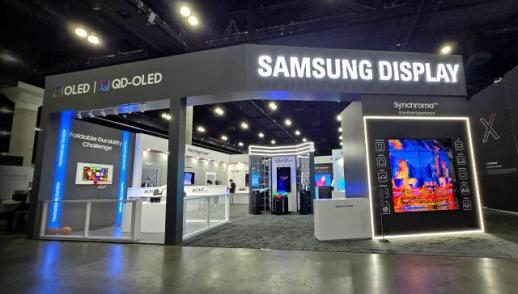 Samsung Display, LG Display unveil next-generation OLED tech at SID 2026 in Los Angeles Samsung Display and LG Display are showcasing next-generation technologies at Display Week 2026 (SID 2026), the world’s largest display event, as they compete for leadership in the global market. Industry officials said Tuesday the companies will present differentiated technology road maps at the exhibition, held May 5-7 (local time) at the Los Angeles Convention Center. Samsung Display is highlighting “display innovation expanded by AI,” while LG Display is focusing on “the evolution of OLED for the AI era.” Samsung Display highlights wide-color-gamut OLED and privacy-focused sensor OLED Samsung Display is emphasizing what it calls a lead in picture quality and “converged” displays. It is unveiling a wide-color-gamut OLED that supports 3,000 nits of peak brightness and 96% of the BT.2020 color space. The company is also showing, for the first time, a product combining 500 PPI organic photodiode (OPD) technology with its Flex Magic Pixel (FMP) privacy feature. The company said the wide-color-gamut performance significantly exceeds the limits of existing smartphone OLEDs, which it said have remained around 70% of BT.2020. It said a low-power structure called LEAD technology, paired with next-generation emissive materials, improves brightness, lifespan and color accuracy at the same time. Samsung Display is also featuring a “sensor OLED” that integrates sensing functions into the display. The 6.8-inch panel delivers 500 PPI resolution and includes functions to measure biometric information such as heart rate and blood pressure. The company said it also applies FMP to selectively block sensitive information from side viewing angles, strengthening privacy protection. Another technology on display is EL-QD, a next-generation emissive approach that directly drives quantum dots with electrical signals. Samsung Display said it achieves 500 nits of brightness and boosts luminance by up to 33% compared with previous levels. It said its research on improving luminous efficiency was selected as an SID “distinguished paper.” The company is also presenting a 200 PPI stretchable display to demonstrate a future vehicle user experience in which an instrument panel can deform in three dimensions. Lee Chang-hee, Samsung Display’s chief technology officer, said, “We are pleased to introduce the company’s latest technologies and R&D achievements to leading scholars and industry experts through SID 2026.” He added, “Samsung Display will continue to lead display innovation through sustained R&D and serve as a technological compass that guides customers and the market.” LG Display debuts third-generation tandem OLED after three years LG Display is promoting an OLED strategy centered on durability and power efficiency, led by what it called the world’s first public showing of its “third-generation tandem OLED.” The company said it is the first unveiling of the next-generation technology in three years, following mass production of second-generation tandem OLED in 2023. LG Display said the stacked-device structure improves both brightness and lifespan, operating stably for more than 15,000 hours at 1,200 nits. It said power consumption is reduced by 18% and lifespan is increased by more than twofold compared with existing technology. The company said it plans to expand tandem OLED applications from automotive displays to IT and mobile devices. It also said it is showing P-OLED for humanoid robots for the first time as it targets the “physical AI” market, emphasizing that flexible, plastic-based displays can support varied robot designs and maintain stable performance in extreme environments. LG Display also showcased premium products, including an OLED TV panel with up to 4,500 nits of brightness, a 720Hz ultra-high-refresh gaming panel, and a 5K2K curved OLED. It also presented a 220 PPI high-resolution OLED and a tandem OLED for AI laptops, aiming at next-generation IT devices through lower power use and lighter designs. The company said the approach reduces thickness and weight while extending battery use by 2.3 hours through low power consumption. In addition, LG Display is exhibiting automotive display solutions optimized for SDVs (software-defined vehicles). In concept-car form, it is showing a 57-inch pillar-to-pillar panel spanning the driver and passenger sides, and a 32-inch slidable OLED that rolls into the ceiling and lowers when in use. Choi Young-seok, LG Display’s chief technology officer, said the company has led “world-first and best” OLED innovation based on its R&D competitiveness. He said it will continue to prioritize customers and strengthen technology leadership as a “technology-driven company” to lead the future display market. 2026-05-05 10:04:43
 -
 LX Semicon Q1 Operating Profit Falls 65.5% to 20.6 Billion Won LX Semicon said in a regulatory filing on the 30th that its first-quarter consolidated revenue totaled 388.77 billion won and operating profit came to 20.594 billion won. Revenue fell 18.4% from a year earlier, while operating profit dropped 65.5%. From the previous quarter, revenue slipped 0.3% and operating profit declined 17.3%, which the company attributed to the impact of higher raw material prices. The company said the decline also reflected a base effect after customers increased inventory demand last year amid uncertainty over tariff policy. LX Semicon said it plans to focus on advanced R&D for its main products — driver ICs, timing controllers and power management semiconductors (PMICs) — and pursue market expansion based on its technology edge.* This article has been translated by AI. 2026-04-30 17:15:40
 -
 Samsung Electro-Mechanics tops 3 trillion won in first-quarter sales on AI demand Samsung Electro-Mechanics said it posted record quarterly results, with sales topping 3 trillion won for the first time, helped by expanding demand tied to artificial intelligence infrastructure. The company said momentum is expected to continue in the second quarter, led by higher-value industrial and automotive products. In a regulatory filing on Wednesday, the company reported first-quarter consolidated sales of 3.2091 trillion won and operating profit of 280.6 billion won. Sales rose 470.5 billion won, or 17%, from a year earlier, while operating profit increased 80.1 billion won, or 40%. The company said demand for industrial and automotive components rose as AI servers and autonomous driving expanded. It said increased supply of high-value products such as multilayer ceramic capacitors, or MLCCs, and flip-chip ball grid array substrates, or FC-BGA, supported the improvement. It added that demand for high-spec parts is rising quickly as data centers upgrade infrastructure and AI servers consume more power. By business, the components division posted sales of 1.4085 trillion won, up 16% from a year earlier, as revenue grew in areas such as AI servers, power and networks and as shipments of automotive MLCCs increased. The package solutions division recorded 725 billion won in sales, up 45%, driven by expanded supply of substrates for AI accelerators, server CPUs and networking to global big-tech customers. The optical solutions division reported sales of 1.0756 trillion won. The company said mass production ramped up for high-performance camera modules, including 200-megapixel cameras and slim folded zoom, and that supply of automotive products such as electric-vehicle and in-cabin cameras also increased. For the second quarter, Samsung Electro-Mechanics said growth in industrial and automotive components is expected to continue as global big tech increases AI investment and autonomous driving technology advances. It said demand for FC-BGA substrates has expanded to a level that exceeds its supply capacity. "As agentic AI spreads, demand for high-performance semiconductors is surging, and FC-BGA demand is exceeding our production capacity," the company said. "We are cautious about the full-year outlook due to external variables, but we expect significant growth in the FC-BGA business as AI investment expands." The company said MLCC demand is also rising across applications, particularly for higher-capacity parts as next-generation AI server platforms draw more power. It said it has launched new products with double the capacity of existing ones for graphics processing units and power modules. It added that it is pursuing long-term supply contracts with customers to ensure stable supply. Samsung Electro-Mechanics said it is expanding MLCC supply beyond AI servers to the aerospace sector. "We will secure an early lead in the aerospace MLCC market to strengthen our mid- to long-term growth foundation," it said. In optical products, the company said it is moving into new markets by pursuing camera-module supply for next-generation physical AI areas such as robotaxis and humanoids. It plans to launch products for robotaxis in the second quarter and camera modules for humanoids in the second half of the year. Samsung Electro-Mechanics said it expects performance growth in the second quarter from both the previous quarter and a year earlier, adding that results should improve further in the second half as AI data center investment and automotive demand continue to expand.* This article has been translated by AI. 2026-04-30 16:09:19
 -
 Samsung Electro-Mechanics tops 3 trillion won in quarterly sales for first time, sees Q2 growth Samsung Electro-Mechanics said it surpassed 3 trillion won in quarterly revenue for the first time, driven by a surge in artificial intelligence-related demand that lifted sales of high-value products for industrial and automotive uses. The company said the growth trend is expected to continue in the second quarter as well. In a regulatory filing on Wednesday, Samsung Electro-Mechanics reported first-quarter consolidated revenue of 3.2091 trillion won and operating profit of 280.6 billion won. Revenue rose 470.5 billion won, or 17%, from a year earlier, while operating profit increased 80.1 billion won, or 40%. The company said results improved as it expanded supply of products such as multilayer ceramic capacitors, or MLCCs, for AI servers and advanced driver-assistance systems, and flip-chip ball grid array, or FC-BGA, substrates, supported by solid demand for high-value industrial and automotive components. It said demand strength is expected to persist for high-value MLCCs and FC-BGA products used in AI servers and data centers, citing upgrades to data center infrastructure and rising power consumption by AI servers. On FC-BGA, the company said demand for high-performance semiconductors is surging as adoption of agentic AI spreads. It said existing customers are asking for more supply and that overall demand exceeds the company’s production capacity. Samsung Electro-Mechanics said it is discussing price increases with major customers to reflect higher raw material prices and supply conditions for materials such as gold and copper. It said its full-year outlook remains cautious given external variables, but added that the FC-BGA business could post a sharp revenue increase on rising demand tied to expanded AI investment by big tech companies. MLCC demand is also surging, the company said, with a growing trend toward long-term supply contracts. It said second-quarter MLCC demand is expected to grow from the first quarter across all applications. The company said it has launched new products with twice the capacity for graphics processing units and power modules as power consumption rises on next-generation AI server platforms, and that customers have responded positively. It added it is pursuing long-term contracts to ensure stable supply. The company said it is also expanding MLCC sales into the aerospace sector. For ground terminals, it said, similar products to those used for AI servers — including small, high-temperature and high-capacity MLCCs — are used, and the company is participating as a key supplier. It said it is doing business with leading global customers and aims to secure an early position in the growing aerospace MLCC market and strengthen its mid- to long-term growth base. Looking ahead, Samsung Electro-Mechanics said it expects performance growth in the second quarter from both the previous quarter and a year earlier. It said AI data center investment is expected to continue in the second half and automotive demand to remain steady, which could lead to a larger expansion in results. The company also said it plans to supply camera modules for robotaxis and humanoid robots. It said it will expand its lineup for high-resolution sensing based on its camera technology for IT devices and its capabilities to internalize key components, and will further develop specialized technologies such as all-weather camera products. It said it plans to supply new camera module products for robotaxis in the second quarter and for humanoids in the second half. It added it plans to secure new solutions for next-generation physical AI in a timely manner to respond proactively to new product needs and future markets. * This article has been translated by AI. 2026-04-30 15:16:38
 -
 Samsung Electro-Mechanics Q1 Operating Profit Rises 40% as Revenue Tops 3 Trillion Won Samsung Electro-Mechanics said Thursday it posted first-quarter consolidated revenue of 3.2091 trillion won and operating profit of 280.6 billion won. Revenue rose 470.5 billion won, or 17%, from a year earlier and 307.0 billion won, or 11%, from the previous quarter. Operating profit increased 801 billion won, or 40%, year over year and 411 billion won, or 17%, quarter over quarter, despite reflecting 71.4 billion won in one-time costs. It was the first time since the company was founded that quarterly revenue exceeded 3 trillion won. The company said results improved on steady demand for high value-added industrial and automotive products, as it expanded supply of multilayer ceramic capacitors, or MLCCs, for artificial intelligence servers and advanced driver-assistance systems, or ADAS, as well as flip-chip ball grid array, or FCBGA, products. For the second quarter, Samsung Electro-Mechanics forecast continued growth in industrial and automotive components on expanding global AI investment and autonomous driving. It said demand should remain strong for high value-added MLCC and FCBGA products used in AI servers and data centers, citing data center upgrades and rising power use by AI servers. The company said it plans timely supply of its most advanced industrial MLCCs and next-generation high-layer, large-area FCBGA products. In the components business, first-quarter revenue rose 16% from a year earlier and 7% from the previous quarter to 1.4085 trillion won. The company cited rapid growth in AI-related sales for servers, power and networks, and expanded supply of automotive MLCCs as vehicle electrification accelerates. In the package solutions business, first-quarter revenue increased 45% year over year and 12% quarter over quarter to 725.0 billion won. Samsung Electro-Mechanics said revenue rose across applications as it expanded supply of high value-added substrates for global big tech customers’ AI accelerators, server CPUs and networks, and increased automotive substrate supply for ADAS and autonomous driving. It expects strong demand in the second quarter for high value-added FCBGA substrates for AI, servers and networks, and said it will begin full-scale supply of new products for big tech customers’ AI data center networks. In the optical solutions business, first-quarter revenue rose 5% from a year earlier and 15% from the previous quarter to 1.0756 trillion won. The company said performance improved as it began mass production of high-performance camera modules for IT devices, including 200-megapixel cameras and slim folded zoom, and expanded supply to global electric vehicle customers and broadened its in-cabin camera lineup for domestic original equipment manufacturers. For the second quarter, it said it will respond to continued demand for differentiated camera modules for flagship models at home and abroad by ramping up next-generation high-resolution folded zoom modules, while expanding automotive supply tied to new EV platform transitions and continuing to increase shipments to domestic OEMs.* This article has been translated by AI. 2026-04-30 12:48:25