
Journalist

Jang Suna
sunrise@ajunews.com
-
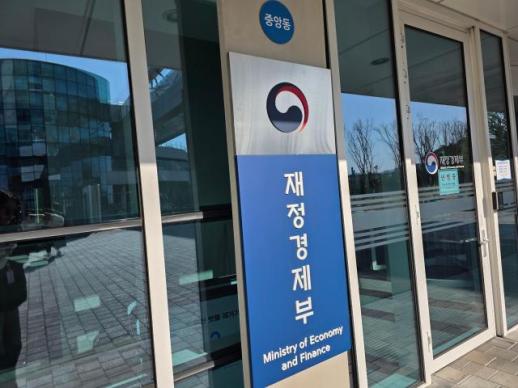 Government Expands Support for Oil Import Companies Amid Ongoing Middle East Conflict As the conflict in the Middle East continues, increasing uncertainty in international oil prices and crude oil procurement has prompted the South Korean government to expand financial support for oil import companies and assist in diversifying import sources. This initiative aims to strengthen responses to the growing financial burdens and supply chain risks faced by the industry. The Ministry of Finance and Economy announced on May 10 that it held the "Second Financial Support Review Meeting for Oil Import Companies" on May 8, in collaboration with the Korea Export-Import Bank, the Korea National Oil Corporation, and domestic oil import firms. The meeting was convened to share the outcomes of industry recommendations raised during the first meeting held on April 8, and to review the current crude oil supply situation, financial support status, and any additional challenges. Participating companies proposed measures including: improving financing conditions, supporting diversification of import sources, deferring tax payments and providing tax incentives, and increasing government stockpiling of oil. Recently, fluctuations in international oil prices and shipping costs have heightened the financial pressures on domestic oil import companies. Analysts note that the reliance on Middle Eastern oil has led to increased payment costs and concerns over supply disruptions. Moon Ji-sung, the Director of International Economic Management at the Ministry of Finance, stated, "Given the significant volatility of the situation in the Middle East, it is essential to closely monitor developments. The risks of potential disruptions in oil exports from Middle Eastern countries and uncertainties within the Organization of the Petroleum Exporting Countries remain." He added, "We are swiftly addressing the recommendations made during the first meeting to alleviate the operational difficulties faced by oil import companies, and we will thoroughly review the government's role in restructuring supply chains for energy security with relevant agencies." During the first meeting, companies had requested stable provision of policy funds for affected businesses until international oil prices stabilize, expanded financial support for crude oil and naphtha purchases, and assistance in identifying alternative supply sources for diversification. The government plans to continue engaging with the industry to assess on-the-ground challenges and enhance related support measures.* This article has been translated by AI. 2026-05-10 12:04:49
 -
 South Korea launches task force to normalize fiscal management, boost transparency The government has launched a task force to correct what it called irrational systems and practices in fiscal management, aiming to strengthen transparency and efficiency. The effort will focus on tightening oversight of fraudulent receipt of national treasury subsidies and normalizing research and development investment, among other reforms. The Planning and Budget Office said it held the first meeting of the “Fiscal Management Normalization Task Force” on Thursday afternoon at the Fiscal Information Service, chaired by Vice Minister Lim Ki-geun. The task force was formed as part of the Lee Jae-myung administration’s “national normalization project,” which seeks to build what it describes as a country grounded in fundamentals. It will review and improve inefficiencies and unreasonable practices that remain in fiscal operations. Lim will lead the group, which includes three director-level officials from the office and six private-sector experts in public finance. Last month, President Lee Jae-myung called for fair, transparent and rational reforms across society, saying the country must end an era in which breaking rules brings benefits while following them brings losses. He instructed ministries to identify and pursue tasks to “normalize the abnormal.” At Thursday’s meeting, participants discussed priority tasks based on ideas developed by the office’s working-level staff and proposals from outside experts. They agreed to focus on steps to improve fiscal transparency and effectiveness, including stronger controls against improper subsidy claims; normalizing R&D investment and restoring trust; and creating a public-interest reporting incentive fund to encourage reporting of wrongdoing such as stock manipulation and collusion. “Planning Office is an institution that oversees public finances beyond individual fiscal projects,” Lim said. “We will continuously review and improve fiscal management until the public is satisfied, and ensure people can feel changes on the ground.” The office said it will finalize the list of tasks after consultations with related agencies, including the Office for Government Policy Coordination. At a second meeting scheduled for early June, it plans to review progress by task and disclose related results to the public.* This article has been translated by AI. 2026-05-07 14:48:47
 -
 Bank of Korea: Stock Wealth Effect Lags Advanced Economies, Could Grow as KOSPI Hits 7,000 South Korea’s stock market generates a much smaller “wealth effect” on household spending than major advanced economies, the Bank of Korea said, though the impact could grow as the KOSPI enters the 7,000 era and stock ownership broadens. In a report released Wednesday titled “BOK Issue Note: An Assessment of Korea’s Stock Wealth Effect,” the central bank estimated that when rising share prices increase household wealth, consumption rises by about 1.3% of capital gains. That implies that a 10,000-won increase in stock prices translates into roughly 130 won available for consumption. In the United States and Europe, about 3% to 4% of capital gains typically feeds into consumption, the report said. The BOK attributed the gap largely to structural factors, including a relatively narrow investor base. As of 2024, stock assets equaled 77% of disposable income, far below the U.S. level of 256% and 184% in major European countries. Stock holdings are also concentrated among high-income, high-asset households, which tend to have a lower propensity to consume, limiting spillover to spending. Market performance has also weighed on the effect. From 2011 to 2024, the S&P 500’s average expected monthly return was 0.53%, compared with 0.09% for the KOSPI, while volatility was 3.43% for the S&P 500 versus 3.77% for the KOSPI, about 10% higher. The probability that gains persist was 67% in the U.S. and 56% in South Korea, and the average duration of gains was 3.1 months in the U.S. versus 2.3 months in South Korea. Investment behavior also constrains consumption, the report said, as stock profits tend to flow first into real estate rather than spending. For households without a home, about 70% of stock capital gains are estimated to move into property. Kim Min-su, deputy head of the BOK’s macro analysis team, said capital gains have tended to shift into real estate because in the past the property market had lower volatility and higher returns, raising the opportunity cost of consumption. Still, the BOK said the wealth effect could strengthen as share prices rise rapidly on factors including expanding global demand for artificial intelligence, increasing household stock holdings and drawing more young and middle- and lower-income investors into the market. Household stock capital gains totaled 429 trillion won last year, about 22 times the average for 2011-2024, the report said. Because new investors tend to show a relatively larger wealth effect, the BOK said the gains could translate into stronger consumption. The central bank also warned that a sharp market correction could produce a larger negative wealth effect. With leveraged investing such as margin loans increasing, a drop in asset prices alongside heavier debt burdens could add to downside pressure on the economy, it said. Kim said it is important over the medium to long term to create a stable investment environment so the stock market can serve as a foundation for household wealth formation. He said policy efforts should curb the concentration of stock gains into real estate and strengthen incentives for long-term stock holding so that companies’ economic performance can translate into household asset accumulation and greater capacity to spend.* This article has been translated by AI. 2026-05-07 12:03:17
 -
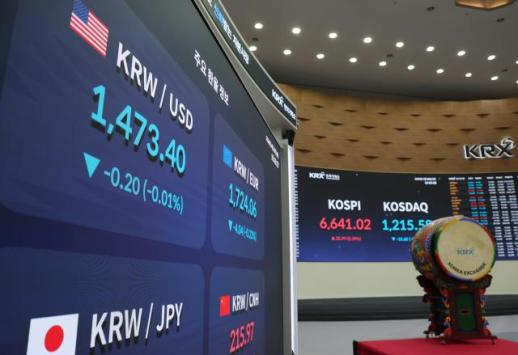 South Korean Won Strengthens to 1,440s on Easing Middle East Tensions The South Korean won strengthened into the 1,440s against the U.S. dollar for the first time in about 2 1/2 months as expectations of easing Middle East tensions revived risk appetite. In Seoul trading, the won was quoted at 1,447.9 per dollar as of 9:20 a.m. Thursday. The exchange rate opened at 1,448.6, down 6.5 won from the previous session, and fell into the 1,440s during intraday trading. It was the first time the rate returned to the 1,440s since Feb. 27, just before the outbreak of the Middle East war. Sentiment improved after renewed expectations for a final agreement between the United States and Iran, lifting risk-on moves across global markets. Overnight, U.S. President Donald Trump said in a media interview that he had “very good talks” with Iran over the past 24 hours and that “there is a very big chance” of reaching a deal. U.S. stocks rose broadly on optimism over negotiations to end the war. The Dow Jones Industrial Average gained 1.24%, the S&P 500 rose 1.46% and the Nasdaq composite climbed 2.02%. The dollar index, which measures the greenback against six major currencies, was up 0.021 at 98.029. Min Kyeong-won, an economist at Woori Bank, said markets are “betting on the possibility of a deal,” adding that continued foreign inflows into South Korean stocks could spur offshore selling and increase downward pressure on the exchange rate. She said demand for dollars from importers’ payments and residents’ currency conversions for overseas stock investment is supporting the downside. With Wall Street hitting fresh highs, she added, demand could return as residents seek to buy more U.S. stocks.* This article has been translated by AI. 2026-05-07 09:30:18
 -
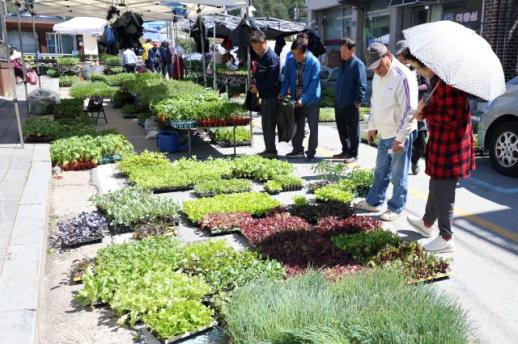 South Korea to tighten tariff-quota oversight, speed bonded-warehouse releases The government said it will tighten customs and distribution oversight of tariff quotas to prevent delays and misconduct, including by speeding releases from bonded areas and strengthening penalty rules. Officials said they reviewed follow-up steps to improve tariff-quota operations at a meeting of the interministerial task force on special management of consumer prices held on May 7. The government has used tariff quotas to help stabilize prices, but it said it identified improper cases in which some agricultural and fishery products were not promptly released from bonded areas after import declarations. In response, it plans to newly designate items for intensive management, revise customs rules to encourage faster release, and strengthen domestic distribution oversight and sanctions. The government previously inspected the full chain of importing, storage and sales for emergency tariff-quota items from March 9 to April 16. It said the review found price declines for bananas (-4%), mangoes (-20%), pineapples (-11%) and frozen mackerel (-3%). In distribution, the government said consumers saw larger price cuts when importers supplied large discount stores directly than when products moved through wholesale and retail channels. It also said imported fruit has a limited shelf life and frozen mackerel is already managed, and it found no problems with delayed market distribution timing. To support the changes, the government is also pursuing amendments to the Customs Act, including a new legal basis for designating intensively managed items. The related bill was submitted to a Cabinet meeting on March 31, then received emergency approval on April 3 and was promulgated and took effect. Since March, authorities have also operated a joint interagency task force on tariff-quota management for agricultural and livestock products to strengthen item-by-item customs and distribution inspections. The government said it will reflect additional measures — including tougher penalty standards and a new release order — in the regular tax law revision package in July, aiming to complete revisions within the year. Under current rules, an additional tax is imposed only after 30 days from the date goods enter a bonded area; the revision would tighten that to 20 days. To speed sugar distribution, the government will shorten the mandatory release period from six months to four months. Starting in August, it will also add five items — including frozen mackerel — to the list of imported seafood subject to distribution traceability management. By year’s end, the government said it will build an integrated system, centered on a dedicated body, to continuously monitor the entire process of importing, distribution and sales for tariff-quota items in agriculture and livestock.* This article has been translated by AI. 2026-05-07 09:05:34
 -
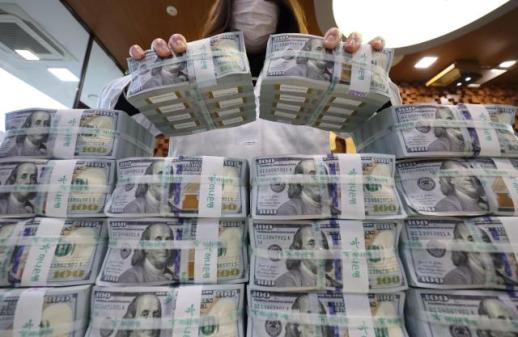 South Korea’s Foreign Reserves Rise $4.22 Billion in April on Weaker Dollar South Korea’s foreign exchange reserves rose by more than $4 billion in April, helped by a weaker U.S. dollar, the Bank of Korea said Wednesday. In its report on foreign reserves as of end-April 2026, the central bank said reserves stood at $427.88 billion at the end of last month, up $4.22 billion from the end of March. By asset type, securities totaled $384.07 billion, an increase of $6.37 billion from a month earlier. Special drawing rights rose by $240 million. Deposits fell by $2.29 billion, and the International Monetary Fund position declined by $90 million. The U.S. dollar depreciated 1.5% in April, based on the U.S. Dollar Index, lifting the dollar value of foreign-currency assets held in other currencies. The Bank of Korea said the increase reflected higher dollar-converted values of non-dollar assets and investment returns, despite market-stabilization measures including foreign exchange swaps with the National Pension Service. South Korea’s reserves ranked 12th in the world as of the end of March, when they stood at $423.7 billion. China ranked first with $3,342.1 billion, followed by Japan ($1,374.7 billion), Switzerland ($1,069.8 billion), Russia ($749.0 billion), India ($691.1 billion), Taiwan ($596.9 billion), Germany ($594.1 billion), Saudi Arabia ($496.3 billion), Italy ($452.5 billion), France ($445.0 billion) and Hong Kong ($430.8 billion).* This article has been translated by AI. 2026-05-07 06:03:14
 -
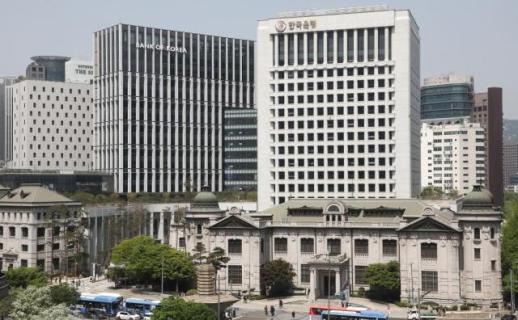 South Korea Inflation Hits 19-Month High as Growth Picks Up, Raising Rate-Hike Talk Rising consumer prices and stronger-than-expected growth are fueling debate over whether the Bank of Korea may shift toward tighter monetary policy. While a hold in the benchmark rate is widely expected this month, markets are increasingly focused on when a hike could come. According to the National Data Agency on the 6th, consumer prices in April rose 2.6% from a year earlier, the highest increase since July 2024, when inflation was also 2.6%. The central bank expects upward pressure on prices to persist for now. At a price review meeting that day, Senior Deputy Gov. Yoo Sang-dae said May inflation is likely to accelerate as oil prices remain elevated and base effects from agricultural, livestock and fisheries products add to the increase. Against that backdrop, the Monetary Policy Board is seen as likely to keep the benchmark rate unchanged at its meeting on the 28th. The Bank of Korea has held the rate at 2.50% after cutting it four times from October 2024 through May last year. Still, a revision to the inflation path appears unavoidable. The bank has projected inflation of 2.2% this year and 2.0% next year, but those forecasts were issued in February, before the Middle East war. With oil prices rising, the inflation outlook in this month’s economic projections is likely to be revised higher. Minutes from last month’s policy meeting show differing views inside the board. Some members said it would be desirable to maintain a wait-and-see stance for the time being. Yoo, speaking recently at a news briefing during the Asian Development Bank’s annual meeting, said it was time to consider raising rates. Growth data are also adding to pressure for a shift. The preliminary estimate for first-quarter real gross domestic product showed 1.7% growth from the previous quarter, far above the Bank of Korea’s forecast of 0.9%, prompting assessments that the case for maintaining an accommodative stance has weakened. Global investment banks have also raised their growth forecasts. JPMorgan (3.0%), Citi (2.9%) and BNP Paribas (2.7%) project growth up to 1.0 percentage point above the Bank of Korea’s 2.0% outlook. External conditions remain challenging. The U.S. Federal Reserve, at last month’s Federal Open Market Committee meeting, upgraded its assessment of inflation to “high” and stressed increased uncertainty. This month’s meeting is also drawing attention as the first under Gov. Shin Hyun-song, who is viewed as a “pragmatic hawk,” raising market interest in whether any signal of a policy shift will emerge. Some in the market are placing more weight on the possibility of a rate hike as early as the third quarter. Cho Yong-gu, a researcher at Shinyoung Securities, said inflation could rise to around 3% from May through August due to the fallout from the Middle East war, and forecast a 25-basis-point hike in August. He added that any additional increases would likely come in the first half of next year, and that the Bank of Korea could opt for a stance of strategic patience.* This article has been translated by AI. 2026-05-06 15:49:12
 -
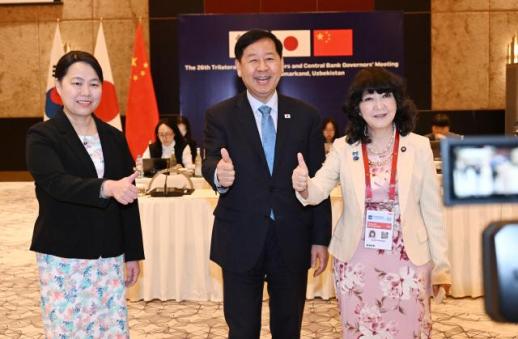 Koo Yoon-cheol Says Green Transition Can Cushion Energy Shocks, Urges Supply Chain Cooperation at ADB Koo Yoon-cheol, deputy prime minister and minister of finance and economy, told the Asian Development Bank’s annual meeting that a green transition and stable supply chains are increasingly critical, the ministry said Tuesday. Speaking as a governor at the ADB’s 59th annual meeting in Samarkand, Uzbekistan, Koo said, “The green transition does not stop at environmental protection; it also has the effect of easing recent volatility in energy prices.” He said South Korea would “actively support” ADB projects in green sectors, adding that “above all, stabilizing supply chains is urgent” given recent economic conditions. Koo also pointed to an artificial intelligence transition as a growth strategy for developing countries. “Adopting and using AI can be a growth opportunity for developing countries,” he said, adding that South Korea and the ADB would strengthen cooperation in the field. On the sidelines of the meeting, Koo met with Japanese Finance Minister Satsuki Katayama to exchange views on responses to energy supply chain disruptions since the Middle East conflict and on diversifying energy import sources. Katayama welcomed improved access for foreign investors following the inclusion of South Korean government bonds in the World Government Bond Index, and the two sides agreed to continue high-level economic dialogue between their finance authorities. Koo also met with IMF Deputy Managing Director Kenji Okamura and outlined South Korea’s response to the Middle East war, including the compilation of an additional budget. Okamura called it “an exemplary case of a balanced policy mix,” according to the ministry.* This article has been translated by AI. 2026-05-06 14:15:15
 -
 No Public Agencies Flagged for Poor Disclosure Compliance in 2025 Review; 18 Earn Top Marks Public agencies’ disclosure quality improved overall in the 2025 integrated disclosure review, with no institutions classified as poor performers for the first time in two years, the Finance and Economy Ministry said Tuesday. The ministry said it approved “the 2025 integrated disclosure inspection results and follow-up measures” at the fifth 2026 Public Institution Steering Committee meeting, chaired by Second Vice Minister Heo Jang, on April 30. Under the 2007 law on the management of public institutions, all public agencies must disclose key management information through a public system. The ministry conducts regular annual checks to improve the reliability of the disclosures. The review found 18 “excellent disclosure institutions” that received no penalty points for integrated disclosure violations for three consecutive years, or two years for other public institutions. That was up four from the previous year. Fourteen institutions were classified as “improved disclosure institutions,” meaning their penalty points fell by at least 50% for two straight years. This year, the number of institutions receiving an “institutional caution” or labeled a “poor disclosure institution” fell to zero, the ministry said. An institutional caution applies to agencies with more than 20 penalty points in a year, while poor disclosure institutions are those with more than 40. The ministry attributed the improvement to joint efforts by the government and public agencies, including tailored training and consulting for weaker performers and incentives for top performers. It also cited stronger internal controls and advance checks to prevent disclosure errors. The ministry said it will reflect the results in performance evaluations for state-owned enterprises and quasi-government agencies, as well as evaluations of other public institutions conducted by supervising ministries. It plans incentives for excellent disclosure institutions, including exemption from the next year’s disclosure inspection and preferential treatment in management evaluations. “As the public’s expectations for the right to know and for transparency at public institutions have risen, the quality of management disclosures must continue to improve,” Heo said. He added that the government will use the integrated disclosure inspection system to further raise disclosure standards.* This article has been translated by AI. 2026-05-06 10:05:37
 -
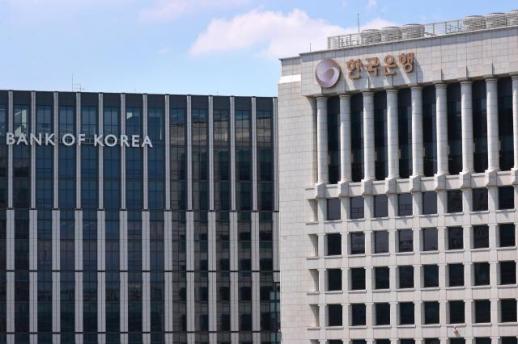 Bank of Korea Warns May Inflation Could Accelerate on Oil Prices, Base Effects The Bank of Korea said May consumer inflation is likely to pick up further as petroleum product prices stay elevated and base effects from agricultural, livestock and fisheries items add upward pressure. Senior Deputy Gov. Yoo Sang-dae said at an inflation review meeting Tuesday at the central bank’s headquarters in Jung-gu, Seoul, that “May prices will rise more as petroleum product prices remain high and base effects from agricultural, livestock and fisheries prices are added.” The National Data Center said the consumer price index in April rose 2.6% from a year earlier, the biggest increase in 1 year and 9 months. Petroleum products jumped 21.9% as global oil prices climbed, while agricultural, livestock and fisheries products fell 0.5% as shipments of major farm goods increased. Yoo said April inflation accelerated from the previous month as petroleum product prices surged on a sharp rise in global oil prices. He added that government measures to stabilize prices — including a cap on maximum oil prices and cuts to fuel taxes — were estimated to have cushioned much of the shock. He said the inflation outlook remains highly uncertain, citing developments in the Middle East, the resulting path of oil prices and the risk of spillover beyond petroleum products. “We will stay vigilant and closely monitor price conditions,” he said.* This article has been translated by AI. 2026-05-06 09:49:14