
Journalist

박세진
swatchsjp@ajunews.com
-
 S. Korean researchers develop hologram technology using light properties as security keys SEOUL, May 04 (AJP) - Researchers at the Korea Advanced Institute of Science and Technology have developed a holographic technology that uses the physical properties of light as an encryption key to reveal hidden information, the university said Monday. The system manipulates how light vibrates and twists to ensure that images are only visible when viewed under specific conditions. The research team, led by ,Shin Jong-hwa, a professor at the Korea Advanced Institute of Science and Technology's (KAIST) Department of Materials Science and Engineering, succeeded in controlling two distinct characteristics of light simultaneously: its polarization and its orbital angular momentum. Polarization refers to the direction in which light vibrates, while orbital angular momentum describes how light twists in a spiral as it travels. While these properties have been used individually in the past, combining them to act as independent security keys within a single device has been a significant technical challenge. To overcome this, the researchers created a bi-layer metasurface using two levels of nanoscale structures thinner than a human hair. These structures are designed to react only when they encounter a specific "total angular momentum," which is the combination of light's vibration and twist. If the incoming light does not match the exact required key, the encoded holographic information remains hidden, providing a high level of security against counterfeiting. The technology also allows for the creation of vectorial holograms, which control both the intensity and the direction of light at every point in an image. Because the twisting of light can theoretically take an infinite number of values, this method could also be used to increase the amount of data transmitted through optical fibers for high-speed telecommunications. "This study demonstrates that the polarization and twisting of light can be combined as independent information keys," Professor Shin Jong-hwa said. "It will serve as a core platform for security systems that are difficult to replicate and for high-speed, high-capacity optical communication technologies." The study, which included Jung Jun-gyo as the first author, was published online in the journal Advanced Materials on March 12, 2026. (Reference Information) Journal/Source: Advanced Materials Title: Arbitrary Total Angular Momentum Vectorial Holography Using Bi-Layer Metasurfaces Link/DOI: 10.1002/adma.202519106 2026-05-04 09:18:02
 -
 S. Korea sees record inbound tourism driven by resurgent Chinese and Japanese markets SEOUL, April 30 (AJP) - South Korea welcomed a record-breaking number of inbound visitors this month, with the majority of travelers arriving from China and Japan, alongside significant contributions from Taiwan and the United States, data released by the state tourism agency showed Thursday. This surge marks a pivotal moment for the nation's tourism sector, signaling a transition from post-pandemic recovery into a period of historic expansion. According to the latest report from the Korea Tourism Organization, total international arrivals for March reached their highest point in the current cycle, comfortably eclipsing benchmarks established in 2019. Total inbound traffic for the month climbed to 2,045,992 visitors, representing a 26.7 percent increase compared to the same period last year. More significantly, this volume represents 133.2 percent of the arrivals recorded in March 2019, suggesting that the industry has established a new, higher baseline for growth. Cumulative figures for the first quarter of 2026 now stand at 4,743,122 visitors, reflecting a broad and sustained upward trend. Mainland China and Japan continue to serve as the primary anchors of this growth. Chinese visitors totaled 501,060 (24.5 percent), while Japanese arrivals followed closely at 481,789 (23.5 percent). Both markets have now fully surpassed their pre-pandemic levels, with China reaching 102.8 percent and Japan reaching 128.4 percent of their respective 2019 volumes. While these regional mainstays provide the bulk of the volume, the current momentum is increasingly reinforced by a successful diversification of source markets. Beyond these traditional hubs, the data highlights a significant structural shift toward broader global appeal. Taiwan and the U.S. have emerged as standout performers. Taiwanese arrivals reached 192,138, a figure that nearly doubles its 2019 performance at 195.0 percent, while the American market contributed 152,416 travelers, standing at 180.9 percent of its pre-pandemic baseline. Southeast Asian demand remains equally robust, led by Viet Nam at 159.3 percent of its 2019 levels and the Philippines at 153,393 cumulative visitors for the quarter. Overall, the broader categories of the Americas and Europe saw their numbers swell to 169.2 percent of historical benchmarks, indicating a surge in long-haul interest. On the outbound side, the appetite for international travel among South Korean citizens has almost fully returned to its previous level. March saw 2,293,716 citizens travel abroad, representing 98.3 percent of the volume seen in March 2019. This stabilization of outbound patterns, coupled with the record-setting inbound performance, underscores the definitive normalization and subsequent expansion of South Korea's standing in the global travel market. 2026-04-30 11:20:39
 -
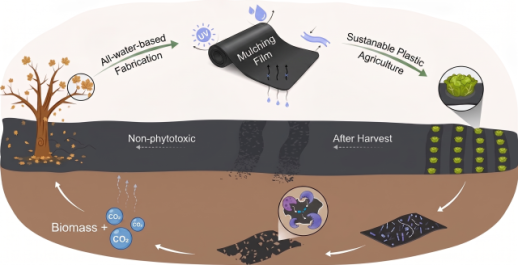 KAIST researchers develop biodegradable farming film from fallen leaves SEOUL, April 30 (AJP) - Researchers at the Korea Advanced Institute of Science and Technology have developed a biodegradable agricultural mulching film using fallen leaves collected from campus grounds and nearby riverbanks. The development offers a potential solution to soil pollution caused by conventional plastic films, the institute said Thursday. Agricultural mulching films are used to suppress weeds and maintain soil moisture. However, most commercial films are made of polyethylene (PE), a petroleum-based plastic that is difficult to recover after use. These films often break down into microplastics that remain in the soil, posing long-term environmental risks. The research team, led by Professor Myung Jae-wook at KAIST's Department of Civil and Environmental Engineering, extracted nanocellulose from fallen leaves using a green solvent composed of citric acid and choline chloride. This plant-derived fiber was combined with polyvinyl alcohol (PVA), a biodegradable polymer, to create a composite film. The entire manufacturing process utilized water as a medium instead of toxic organic solvents. In performance tests, the leaf-based film effectively blocked ultraviolet radiation and maintained soil moisture, with only a 5 percent loss of water over 14 days. Ryegrass grown using the film showed better development compared to crops grown without any covering. Biodegradability tests conducted in soil conditions showed that the film decomposed by 34.4 percent within 115 days, a rate faster than existing biodegradable alternatives. The researchers also confirmed that the decomposition process produced no plant toxicity, ensuring no negative impact on the germination or early growth of crops like ryegrass and bok choy. "This research is significant because it transforms fallen leaves into a functional material that protects the agricultural environment," Professor Myung Jae-wook said. "Because it uses non-edible biomass that does not compete with food resources and employs a water-based process, it can serve as a sustainable replacement for agricultural plastics." The study, with doctoral student Pham Thanh-trung-ninh as the first author, was published in the journal Green Chemistry on February 6, 2026. (Reference Information) Journal/Source: Green Chemistry Title: All-water-based fabrication of biodegradable mulch films from dead leaves via complex hydrogen-bonded networks Link/DOI: https://pubs.rsc.org/en/content/articlelanding/2026/gc/d5gc06616f 2026-04-30 09:00:12
 -
 Ador seeks property seizure as Danielle and Min Hee-jin face deepening legal rift SEOUL, April 29 (AJP) - Ador has secured a provisional attachment on the real estate assets of former NewJeans member Danielle, her mother, and former chief executive Min Hee-jin as the legal fallout from the K-pop industry’s most high-profile corporate schism intensifies. According to Legal sources, the court filing was confirmed on Wednesday, ahead of a full-scale trial scheduled for May, and would represent a tactical shift by the Hybe-owned label to freeze the financial resources of its former star artist and executive leadership. The move underscores the volatile transition of NewJeans from a unified global chart-topper to a fractured group caught in a precedent-setting battle over corporate control and creative independence. At its core, the dispute tests the durability of the multi-label model pioneered by Hybe, demonstrating how the intense loyalty between artists and their creative directors can destabilize the financial foundations of billion-dollar entertainment conglomerates. The conflict traces back to April 2024, when Hybe launched an unexpected audit of Ador, its subsidiary label founded by Min. Hybe accused the former executive of orchestrating a plan to seize independent control of the label and its primary asset, NewJeans, by seeking outside investment and leaking confidential business data. Min denied the allegations, characterizing the audit as a retaliatory strike after she raised concerns that another Hybe-managed group had plagiarized the artistic concept of NewJeans. The ensuing months were marked by a series of public press conferences and court injunctions that divided the K-pop industry and its global fanbase. While a Seoul court initially blocked Hybe’s attempt to fire Min as chief executive, citing a lack of evidence for actual implementation of a takeover, the corporate relationship remained untenable. By late 2024, Min was replaced as chief executive, leading to a direct confrontation between the members of NewJeans and the new Ador management. The members of the group, known for their distinct Y2K-inspired aesthetic and massive streaming success, took the unprecedented step of airing their grievances in a live broadcast, demanding the reinstatement of their former Ador chief. This internal friction eventually led to the departure of Danielle, also known as Mo Ji-hye, who has since aligned herself with Min’s newly established venture, OK Records. The upcoming May proceedings are expected to address the broader financial claims leveled by Ador, which has sought damages for what it describes as catastrophic disruption to the group’s activities. The real estate attachment serves as a legal guarantee to ensure that any potential financial penalties can be collected if the court rules in favor of the label. Lawyers representing Min and Danielle have not issued a formal statement regarding the specific property filings. The Seoul Central District Court is expected to begin hearing oral arguments on the merit of the underlying damages claim within the next month. 2026-04-29 16:33:49
 -
 South Korea benchmarks BTS tourism success as Goyang visitor numbers surge SEOUL, April 29 (AJP) - Foreign arrivals in a satellite city northwest of the capital increased 35 times during a three-day BTS concert series that took place on April 9, 11, and 12, providing South Korean authorities with a statistical mandate to overhaul regional tourism strategies, a report released by the culture ministry showed Tuesday. The massive influx of travelers into Goyang, traditionally overlooked in favor of Seoul's central districts, suggests that high-profile cultural events can serve as a primary engine for provincial economic growth if integrated with local infrastructure. This sudden wave of visitors has provided a blueprint for the government’s transition toward a scalable model for provincial revitalization. By analyzing high-density data on spending and movement, the ministry said that it aims to anchor transient global fandom into long-term growth for cities struggling with stagnant local economies. According to the Ministry of Culture, Sports, and Tourism report, foreign visitor arrivals in Goyang City's Daehwa area increased by 3,377 percent compared to the same period last year. This surge in foot traffic translated into a 3,699 percent jump in credit card spending by international visitors within the immediate neighborhood. The data indicates that these travelers are staying longer and spending more than the average visitor to South Korea. Fans attending BTS' Goyang shows remained in the country for an average of 7.4 days, compared to the 6.1-day average recorded for general tourists in the first quarter of 2026. Individual spending also trended higher, with concertgoers averaging 2.91 million won ($1,969) in expenses, outstripping the 2.45 million won spent by typical visitors. In total, foreign credit card spending in the area injected 337.8 million won into the local economy over the three-day period. Central to this economic ripple effect was "The City," an integrated program that linked BTS' stadium event to pop-up stores and exhibitions in Seoul's tourist hubs, including Myeong-dong and the Dongdaemun Design Plaza. This strategy effectively widened the tourist footprint, drawing visitors to the National Museum of Modern and Contemporary Art and other regional sites. The government now intends to apply these findings to other metropolitan areas to counter the concentration of tourism in the capital. Minister Choe Hwi-yeong has authorized a two-week "Welcome Week" in Busan this June to coincide with upcoming performances, featuring specialized exhibition spaces and travel routes focused on music video filming locations. Later this year, the ministry plans to utilize this data-driven approach to support four upcoming K-pop concerts and two new cultural exhibition spaces across the country. Kang Jeong-won, the ministry's tourism policy chief, stated, "The important thing is to move beyond the 'performance' itself as a single tourism product and connect 'K-culture' with regional tourism contents so that visits to the metropolitan area can lead to the regions". 2026-04-29 15:35:28
 -
 Researchers develop synthetic polymer matrix to improve stem cell survival SEOUL, April 29 (AJP) - South Korean researchers have developed a three-dimensional culture platform that improves the survival rate and therapeutic efficacy of stem cells, the Korea Advanced Institute of Science and Technology (KAIST) said Wednesday. Jon Sang-yong, a professor at KAIST's Department of Biological Sciences, led a research team to create a synthetic polymer material named "poly-Z." This material coats culture plates to encourage human adipose-derived stem cells to self-assemble into spherical structures called spheroids. Standard two-dimensional culture methods often cause these cells to age and lose functionality over time. The poly-Z platform alters the physical and chemical properties of the culture surface, promoting the adsorption of albumin proteins and preventing cells from attaching to the bottom. Stem cells grown in this environment produced more extracellular matrix, which mimics conditions found inside the human body. In animal trials involving mice with acute colitis and liver injury, the spheroids demonstrated higher survival rates and better inflammation control than cells grown using conventional methods. The new environment activates integrin and FAK signaling pathways, enabling the cells to better sense and respond to their surroundings. Seo Chang-jin, a researcher at KAIST's InnoCORE AI-Innovative Drug Discovery Research Center, served as the lead author for the research published in the journal Advanced Science on March 31, 2026. "This research demonstrates that a precise 3D culture environment based on synthetic polymers can simultaneously improve the functionality and therapeutic efficacy of stem cells," Jon said. "We expect this technology to be widely utilized in developing next-generation stem cell treatments for various intractable inflammatory diseases." (Reference Information) Journal/Source: Advanced Science Title: Polymer Matrix-Based 3D Culture Significantly Enhances the Differentiation and Immunomodulatory Functions of Human Adipose-Derived Stem Cells Link/DOI: https://doi.org/10.1002/advs.202518704 2026-04-29 10:45:44
 -
 K-pop girl band Le Sserafim releases world tour schedule as group targets European debut SEOUL, April 28 (AJP) - K-pop girl band Le Sserafim will perform 32 shows across 23 cities starting this July, including the first solo European concerts for the K-pop group, the five-member group's agency Source Music said Tuesday. The tour begins in the western port city of Incheon on July 11 and travels through Japan and the United States before reaching five cities in Europe this October. The expansion into Europe follows a year of commercial growth where the group was ranked among the top 10 highest-grossing K-pop tours. By booking shows in London, Paris, and Berlin, members Kim Chae-won, Sakura, Huh Yun-jin, Kazuha, and Hong Eun-chae are moving into new markets to build a larger international audience. The tour is named after the group’s second studio album, "PUREFLOW" pt.1, which is set for release on May 22. The band's agency said the name is an anagram for "POWERFUL." The group released a lead single titled "CELEBRATION" on April 24 to begin the new album cycle. The North American leg includes nine cities, such as Los Angeles, Chicago, and Newark. These dates follow a 2025 tour where the group became the first K-pop girl group to appear on the NBC program "America's Got Talent." That tour included 31 shows and a performance at the Tokyo Dome. Industry data from last year showed the group earned more from ticket sales than any other K-pop girl group during the 12 months ending in September 2025. The new schedule maintains dates in traditional markets like Taipei and Singapore while adding the European leg. Full details on venues and ticket sales are being posted to the group’s official fan platform. The tour is scheduled to conclude in November with a series of performances across Southeast Asia. 2026-04-28 17:51:46
 -
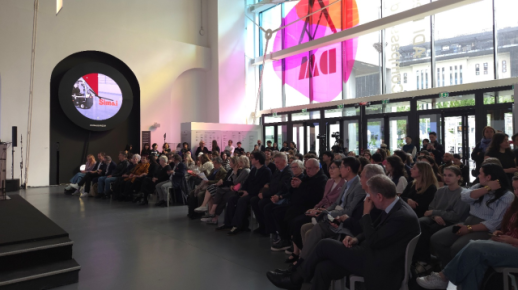 Kookmin University holds inaugural DBEW international design awards in Milan SEOUL, April 28 (AJP) - Kookmin University and the Association for Industrial Design hosted the first Design Beyond East & West Award ceremony at the ADI Design Museum on April 21, coinciding with the opening of Milan Design Week, the prominent South Korean university said Tuesday. The international competition received over 800 entries from 44 countries, focusing on creative design education and outcomes for the future society in the age of artificial intelligence. Unlike traditional design competitions, the Design Beyond East & West (DBEW) Award recognizes both students and their educators for collaborative achievements in fields such as architecture, space design, product design, and visual communication. The event served as an open forum for students, educators, and experts to discuss the future of the industry. The ceremony was attended by prominent figures, including Jury Chair Paola Antonelli, Stefano Giovannoni, and John Thackara. Lorenzo Imbesi, President of Cumulus, and Emilia Gatto, the Italian Ambassador to South Korea, delivered congratulatory remarks emphasizing international solidarity. The Gold Prize was awarded to Baoyi Huang and Professor David Buck from the University of Sheffield for their project, "Ecological Samsara – Soundscape Transformation of Parkwood Springs." Silver prizes were awarded to teams from HTW Berlin University of Applied Sciences, Avantika University, and L'École de design Nantes Atlantique. Andrea Cancellato, Director of the Association for Industrial Design (ADI) Design Museum, noted that the awards grew from a memorandum of understanding signed with Kookmin University last year. "This award is the only model in the world that honors both the educator and the student simultaneously," Cancellato said, adding: "It is an important milestone for the museum in strengthening ties with Asia." Paola Antonelli, who chaired the jury, highlighted that the devotion of teachers is often undervalued and that the DBEW Award brings the necessary attention to the noble value of the educators. Fellow juror John Thackara added that after decades in education, he believes that value lies in the dialogue during the process rather than just the finished result. During a concurrent forum titled "Future-Oriented Redefinition of Design Education," participants discussed the necessity of critical thinking in the AI era. Students at the forum called for curricula that better integrate research with industrial execution and provide a deeper understanding of business mechanisms. The award program is rooted in the work of the Oriental Culture & Design Center (OCDC) at Kookmin University, established by Director Choi Kyung-ran. The center has spent 20 years researching the essential values of design in Asia, providing the foundation for the current international competition. "The DBEW Award is a stage that demonstrates the potential of a global education cluster where universities share technology and philosophy to solve common human problems beyond borders," said Chung Seung-ryul, President of Kookmin University. "It will serve as a practical compass and a new role model for design education in the AI era." The organizers have begun preparations for next year's competition, with schedules for future submissions and forums to be announced on the official DBEW website. 2026-04-28 16:48:20
 -
 Uzbekistan's tax revenues jump 54 percent as regional business activity accelerates SEOUL, April 28 (AJP) - Uzbekistan tax revenues surged 54 percent in the first quarter of 2026 compared to the same period last year, driven by a sharp uptick in provincial commercial activity and property-related receipts. This jump in tax revenues indicates that Uzbekistan's fiscal reforms are effectively capturing a much larger share of domestic wealth, transforming a previously informal economy into a transparent and sustainable national budget. Figures released by the Center for Economic Research and Reforms (CERR) on Tuesday indicate that the fiscal expansion was most pronounced in the Navoi, Syrdarya, Tashkent, and Khorezm regions, where average growth rates hit 33 percent. This jump in collections suggests that the national push to formalize the private sector and broaden the tax base is gaining traction outside the traditional economic center of the capital. The shift reflects a widening of the country's economic geography, as industrial hubs and agricultural regions now contribute a more significant share to the national bottom line. Land tax revenues grew by 33.8 percent and personal income tax receipts rose by 15.2 percent, while customs revenues saw a nationwide increase of 19.5 percent. The Navoi region proved to be a major outlier in trade activity, recording a 77.6 percent spike in customs receipts, followed by the Namangan region at 64.2 percent. Export performance mirrored the domestic gains, with total merchandise exports climbing 30 percent during the quarter. Navoi again led the country with a 71.4 percent increase in export volume, while the Tashkent region recorded 52.4 percent growth. Other regions, including Samarkand, Namangan, and Bukhara, maintained steady export trajectories with growth ranging between 27 percent and 31 percent. These figures indicate that regional manufacturing and processing capabilities are increasingly linking provincial economies directly to international markets. Lending activity provided the liquidity necessary to sustain this growth, as commercial banks increased loan disbursements by 9.1 percent. The Samarkand region saw the most aggressive expansion in credit, with loan volumes soaring 69.5 percent, while lending in the Bukhara, Khorezm, Fergana, and Tashkent regions grew by an average of more than 43 percent. This capital injection coincided with the registration of 22,443 new business entities in March. While the city of Tashkent remains the primary site for new firms with 4,759 registrations, the Khorezm and Samarkand regions combined for nearly 4,000 new enterprises. Market institutionalization also showed gains, as trading volume on the Uzbek Republican Commodity Exchange rose 20.8 percent. The Syrdarya region recorded the highest growth in exchange activity at 68.4 percent, while the Navoi and Namangan regions averaged 33 percent increases. Property tax revenues grew by 10.7 percent nationwide during the review period. Customs revenues in the Republic of Karakalpakstan and the Samarkand region increased by an average of 32 percent. 2026-04-28 16:09:51
 -
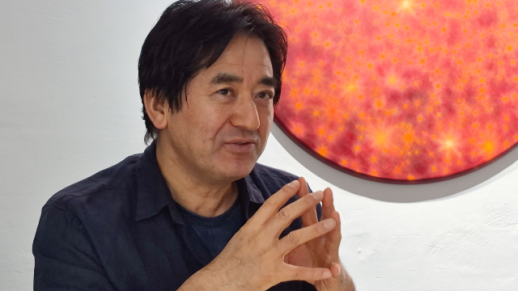 Civilization designer urges transition to meaning as AI automates traditional productivity SEOUL, April 28 (AJP) -Captain Kang Sang-bo, a South Korean civilization designer and author of The Master Key, argues that the rapid integration of artificial intelligence into production and social structures requires a radical reassessment of human value. Speaking in a recent interview, Kang stated that the core transition of the AI era is not a matter of increasing technical skill but moving from "methods" to "meaning." He maintained that this shift is essential for constructing a new form of civilization that prioritizes human purpose over mechanical efficiency. The urgency of this transition stems from the potential for human displacement within purely technical systems. Kang pointed out that when AI can perform nearly all tasks, individuals who fail to set their own direction risk becoming mere functional components of an automated structure. This shift matters because it moves the focus of human progress from the logistics of "how" to the existential "why," requiring a fundamental redesign of social, financial, and educational institutions in South Korea and beyond. Kang has spent years researching the "Meaning Civilization," a concept that attempts to bridge philosophical inquiry with self-growth and the content industry. In his view, the technical civilizations of the past focused on what to build, whereas the AI era forces a shift toward whether something should be built at all. He suggested that technology must operate in a way that brings humans closer to their own essence, moving from a technology-centered loop to a "human-technology-human" cycle. Within this framework, the captain identified four specific domains that define human uniqueness: meaning, vivid dreams, responsibility, and LOVE. He posited that AI and robotics ultimately exist to help humans focus more deeply on these four values, which he believes will become the primary criteria for future judgment. Regarding the definition of success, Kang proposed a formula he calls "BTS x LOVE." In this context, BTS represents Body, Talent, and Spirit, while LOVE signifies human connection and empathy. He argued that because speed and efficiency are being rapidly commoditized by technology, success in the future will depend on creating deeper connections and generating meaning within those bonds rather than simply performing tasks faster. This transition is particularly relevant for the "1030 Young Stars," a demographic of individuals in their teens to thirties whom Kang describes as civilization designers. He noted that this generation cannot expect to gain an advantage by competing with AI on efficiency, which was the logic used by previous generations focused on capital and growth. Instead, he emphasized that their core role must be to create new directions for society. The transition also requires institutional shifts, specifically in the realms of "meaning finance" and "meaning education." Kang suggested that as economic systems begin to function with less direct human labor, finance must move away from a production-centric model and toward investing in human values. He criticized South Korea's current education system for remaining stuck in a "pre-AI" mode of knowledge acquisition. He argued that schools should delegate information gathering to AI and allow students to focus on exploring their own direction, transforming the role of teachers from providers of answers to those who ask the right questions. Kang warned that in a society obsessed with results and capital, the concept of meaning is at risk of being marginalized. He observed that if the public prioritizes only the final outcome, individuals may lose the capacity to judge the purpose behind their actions. He maintained that the 1030 Young Stars currently stand at a crossroads, deciding whether to be the architects of a new civilization or remain passive consumers within an automated system. The interview with Captain Kang Sang-bo was conducted as part of a series examining the long-term social effects of automation in South Korea. 2026-04-28 10:33:02