
Journalist

AJP
swatchsjp@ajunews.com
-
 Im Sung-jae finishes fourth at Valspar as Fitzpatrick claims victory SEOUL, March 23 (AJP) - Im Sung-jae secured a tie for fourth place at the Valspar Championship on Sunday, marking his strongest performance of the 2026 season. The 27-year-old South Korean entered the final round at Florida's Innisbrook Resort with a two-stroke lead, seeking his third career victory on the PGA Tour. A challenging closing 3-over 74 left him at 8-under 276 for the tournament, three strokes behind winner Matt Fitzpatrick. The result signals a vital return to form for Seoul’s most consistent golfer. Im had been sidelined throughout January and February due to right wrist inflammation following his mandatory military basic training. After missing the cut in his previous two starts this month, his 54-hole lead at the Copperhead Course effectively ended concerns regarding his physical recovery. Im established himself as a premier talent early in his career, earning the 2019 PGA Tour Rookie of the Year award. Known as the "Ironman" for his heavy playing schedule, he remains the only player to reach the season-ending Tour Championship in every season since his debut. His performance in Florida marks his first top-ten finish of the year. The final round proved difficult as Im carded five bogeys through his first ten holes. He managed to stabilize his round on the back nine, highlighted by a chip-in birdie from the edge of the green on the par-4 16th. While the late surge was not enough to reclaim the lead, the top-five finish provides significant momentum heading into the Masters in April. Britain's Fitzpatrick clinched the title with a 4-meter birdie putt on the 18th hole to finish at 11-under 273. The victory was his first since the 2023 RBC Heritage and earned him a $1.6 million prize. David Lipsky finished one stroke back in second place, while Jordan Smith took third. Other South Korean competitors also delivered notable performances at Innisbrook. Kim Seong-hyeon shot a 1-under 70 to finish tied for seventh at 7-under 277, his best result since May 2024. Kim Joo-hyung finished in a tie for 18th at 4-under 280, level with Brooks Koepka. The PGA Tour continues next week as players make their final preparations for the first major championship of the year. Im is expected to remain the highest-ranked South Korean player in the world rankings following this result. 2026-03-23 09:15:11
 -
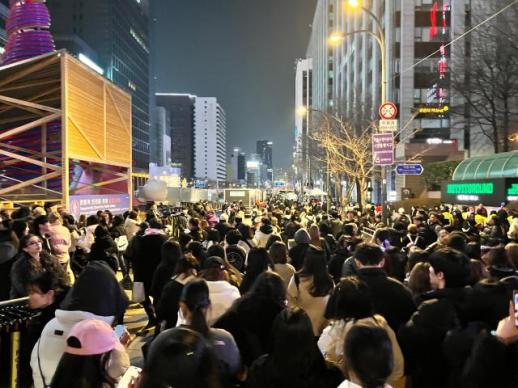 BTS Live: Orderly fan exit caps Gwanghwamun concert SEOUL, March 21 (AJP) - Nearly 50,000 people departed orderly and safely from Gwanghwamun Square late Saturday night as the BTS comeback concert came to a close. According to Seoul's real-time crowd management system, the assembly filled the central plaza to capacity before the performance began. To manage the turnout, city officials and local police released the crowd in stages, opening audience sections one by one to prevent congestion at nearby transit hubs. This phased dispersal followed a performance that marked the first time the group had appeared together in South Korea since 2022. For the international fans, the coordinated exit was as surprsing as the surreal outdoor concert itself. Eeti, a fan from London who moved her travel plans forward to witness the show, described the safety protocols as the most impressive she had seen. "It was so great amd amazing," she said. She found the entire event "very well organized. very convenient, very surprised how smooth everything was" and was impressed how she felt "no danger. Pretty safe," despite the volume of people in the square. Other attendees noted the specific atmosphere during the set. Liana, a fan from Russia who has followed the group for a decade, traveled to Seoul specifically for the Saturday performance. While she described the choreography for the new songs as 'so good,' she was struck by the relative silence of the crowd. 'Why is no one dancing?' she recalled thinking. Liana observed that most people around her remained still and focused on filming the stage, which created a quiet environment. She said she had been waiting four years for the return and was interested in seeing the dance routines live since they were not featured in recent music videos. The demographic in the square included families like Chloe Besner and her daughter from Montreal. Besner, who is in her 50s, attended the show to support her daughter’s interest in the group. "Really enjoyed it. It was great that the boys were really fantastic," she said. Although she suggested the sound could have been "more balanced and stronger," she found the overall experience positive. Besner noted that the group's music is a regular part of her domestic life in Canada. ' "Everything was very smooth and great, came to see the show for my daughter," she said, adding, "I think we are going to still dance in the kitchen with BTS music." Extra subway and bus services remained in operation past midnight to accommodate the dispersal. And ARMY fans cleaned up and made sure they left no trace. 2026-03-21 21:54:08
 -
![[UPDATE] BTS Live: K-pop legend reclaims global spotlight](https://image.ajunews.com//content/image/2026/03/21/20260321201936932741_518_323.jpg) [[UPDATE]] BTS Live: K-pop legend reclaims global spotlight SEOUL, March 21 (AJP) -The silence that has defined the cultural landscape of Seoul for nearly four years vanished in a single, percussive instant as BTS initiated its Arirang comeback performance in the heart of Seoul on Saturday night. At least 50,000 people have occupied Gwanghwamun Square, according to Seoul's real-time crowd management system, creating a dense sea of violet light that stretches from the Sejong Center for Performing Arts to the gates of Gyeongbokgung Palace. This sudden mass assembly triggered the city's highest tier of traffic and safety monitoring, effectively paralyzing the heart of the capital to accommodate the group's first full ensemble appearance since the conclusion of its collective military service. The opening sequence signaled an immediate, aggressive departure from the group's previous polished aesthetics. By launching into "Body to Body," "Hooligan," and "2.0"—all tracks from the new fifth studio album—the seven-member group asserted a raw, industrial identity that suggests a radical creative recalibration during their years away from the public eye. This performance is not merely a musical return but a high-stakes restoration of the primary engine of South Korean soft power, transitioning the ensemble from a period of national conscription back to its position as a global phenomenon. The setlist for the evening reflects a meticulous balance between institutional legacy and future ambition. While the inclusion of "Butter" and "MIC Drop" provides a bridge to the group's past dominance, the narrative core of the performance remains centered on the debut of the title track, "SWIM." The logistics of the event are managed by thousands of police officers and city personnel who have cordoned off the Sejong-daero corridor to maintain order within the historic district. 2026-03-21 20:08:42
[[UPDATE]] BTS Live: K-pop legend reclaims global spotlight SEOUL, March 21 (AJP) -The silence that has defined the cultural landscape of Seoul for nearly four years vanished in a single, percussive instant as BTS initiated its Arirang comeback performance in the heart of Seoul on Saturday night. At least 50,000 people have occupied Gwanghwamun Square, according to Seoul's real-time crowd management system, creating a dense sea of violet light that stretches from the Sejong Center for Performing Arts to the gates of Gyeongbokgung Palace. This sudden mass assembly triggered the city's highest tier of traffic and safety monitoring, effectively paralyzing the heart of the capital to accommodate the group's first full ensemble appearance since the conclusion of its collective military service. The opening sequence signaled an immediate, aggressive departure from the group's previous polished aesthetics. By launching into "Body to Body," "Hooligan," and "2.0"—all tracks from the new fifth studio album—the seven-member group asserted a raw, industrial identity that suggests a radical creative recalibration during their years away from the public eye. This performance is not merely a musical return but a high-stakes restoration of the primary engine of South Korean soft power, transitioning the ensemble from a period of national conscription back to its position as a global phenomenon. The setlist for the evening reflects a meticulous balance between institutional legacy and future ambition. While the inclusion of "Butter" and "MIC Drop" provides a bridge to the group's past dominance, the narrative core of the performance remains centered on the debut of the title track, "SWIM." The logistics of the event are managed by thousands of police officers and city personnel who have cordoned off the Sejong-daero corridor to maintain order within the historic district. 2026-03-21 20:08:42 -
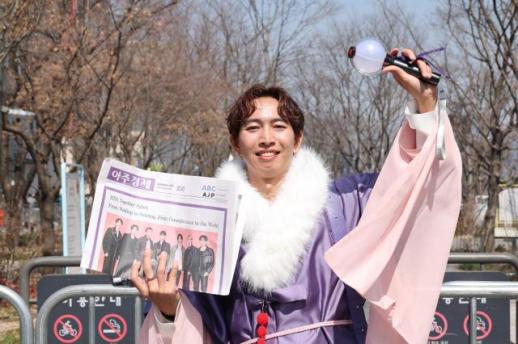 BTS Live: Global fans brave biting winds to witness K-pop legend's Seoul comeback SEOUL, March 21 (AJP) -Thousands of spectators are currently gathering in central Seoul under a clear spring sky, enduring a sharp 6 kilometers per hour southwest wind that has kept temperatures at a persistent 12 degrees Celsius. The conditions, while visually brilliant, present a physical trial for international fans who have occupied the open stone expanses of Gwanghwamun Square since the early morning hours. The massive assembly serves as the live launch for "Arirang," the group’s fifth studio album released only yesterday. Fans have traveled from dozens of countries to witness "The Comeback Live | Arirang," a free, 60-minute spectacle that marks the first time all seven members will perform together since 2022. The choice of venue—the historical gateway to Korea's royal past—was designed to underscore the national significance of their return to civilian life. The arrival of the septet ends a hiatus defined by mandatory military service and a shifting global music landscape. Today's showcase is not merely a concert but a calculated reassertion of dominance by the most significant cultural export of Seoul. As the sun maintains a 14-degree Celsius peak, the real test of endurance will arrive after sunset when the temperature is forecast to plunge to a low of 5 degrees Celsius for the 8 p.m. start. The atmosphere at the square is defined by 39 percent humidity, creating a crisp, high-visibility environment ideal for the Netflix global broadcast but demanding for those standing in the long shadows of the surrounding government buildings. Security personnel and medical units have been deployed across the plaza to monitor the crowd as the wind chill remains a persistent factor for those waiting in the open air. Voices from the cold For those embedded in the crowd, the plummeting temperature is secondary to the emotional weight of the reunion. Aung Pyae-hein, a 30-year-old fan from Myanmar, arrived heavily prepared for the shift in weather. "It's not too cold today, but I am wearing long johns to brace the weather, just in case," he said. Aunge added that he even created handmade merchandise to attach to his traditional Hanbok for the occasion. Others are relying on the sheer density of the 200,000-strong crowd to provide physical warmth. Olivia Lim, 31, who traveled from Singapore, expressed confidence that the collective energy would help her bear the chilly weather. "I think the crowd and the heat of the moment will protect us," Lim said. "It is chilly, but I will be fine. I think the crowd will protect us and we will be too busy focusing on the stage." Her sentiment was shared by Charlotte Tang, 28, also from Singapore, who was dressed in a red Korean traditional dress, Hanbok, to match the new album cover. "I will make it through with the heat of the crowd," Tang said. The performance has even attracted those in Seoul for other purposes. Emma, 43, from England, found herself at the square despite being in the city on a business trip. "It is a bit chilly, but I can handle the cold, being with the fans vibing through the concert. I will make it out alive," she said, noting she is content to watch the performance on the massive digital screens installed across the venue. High-pressure return under clear skies Despite the 12 degrees Celsius chill, the energy at the site remains absolute. The clear conditions have allowed for the deployment of sophisticated crane cameras and drones, which are capturing the scale of the 200,000-strong crowd against the backdrop of the Gyeongbokgung Palace gates. This visual symmetry between Korea's dynastic past and its modern pop royalty is expected to be a central theme of the evening broadcast. As the afternoon progresses, the southwest winds are expected to continue, with the temperature beginning its steady descent toward the 5-degree Celsius evening low. For the fans who have traveled from across the globe, the cold is a secondary concern to the impending performance, yet it remains the primary environmental obstacle for a city currently under a total cultural lockdown. 2026-03-21 12:18:33
 -
 Animuscure receives FDA orphan drug designation for ALS treatment candidate SEOUL, March 21 (AJP) - Animuscure, a biotech startup founded by Sookmyung Women’s University (SWU) Pharmacy Professor Bae Gyu-un, announced that its drug candidate AMC6156 has received Orphan Drug Designation (ODD) from the U.S. Food and Drug Administration (FDA). The drug is currently being developed to treat Amyotrophic Lateral Sclerosis (ALS). Commonly known as Lou Gehrig’s disease, ALS is a progressive neurodegenerative disorder characterized by the gradual damage and loss of motor neurons. This leads to muscle weakness, atrophy, and eventually paralysis. The disease typically affects middle-aged and older adults, with a survival period generally estimated between two and five years after the onset of symptoms. Current medical options to fundamentally stop the progression of ALS remain extremely limited, representing a significant unmet medical need. AniMusCure Inc. (Animuscure) is developing AMC6156 as an oral medication featuring a new mechanism of action aimed at improving muscle function. As an oral formulation, the drug is expected to improve patient convenience, and the company plans to explore combination therapies and commercialization strategies based on future clinical results. The FDA grants ODD to drugs intended for the treatment of rare diseases affecting fewer than 200,000 people in the United States. This designation provides several incentives for developers, including tax credits for clinical trials, eligibility for federal grants, a waiver of prescription drug user fees, and seven years of market exclusivity upon regulatory approval. This marks the second FDA ODD for the company. In September 2025, Animuscure received the same designation for AMC8012, a treatment candidate for Duchenne Muscular Dystrophy (DMD), a rare congenital muscle disorder. By securing consecutive designations for muscle and neurological conditions, the company is strengthening its position in the global drug development market. "With this orphan drug designation as a stepping stone, we will accelerate global clinical development," said CEO Bae Gyu-un. "Our goal is to provide new options for ALS patients who currently have very limited treatment choices." 2026-03-21 10:15:52
 -
 BTS Live D-1: Leader RM injured ahead of landmark Seoul comeback SEOUL, March 20 (AJP) - K-pop sensation BTS' leader and rapper RM has injured his ankle during a rehearsal for the seven-member band's comeback performance scheduled on Saturday, the agency said. The injury means fans will be unable to witness a full-scale choreography by the rapper or the group as a whole during their highly anticipated return. This setback occurred just as the ensemble concluded a nearly four-year hiatus necessitated by mandatory military service. The performance, titled "BTS THE COMEBACK LIVE | ARIRANG," was intended to be a complete demonstration of the septet's reunited power at one of the nation's most symbolic landmarks. Big Hit Music announced on Friday that the incident took place on Thursday during a practice session for the free concert at Gwanghwamun Square. Medical examinations revealed an accessory navicular sprain, a partial ligament tear, and a talus contusion. Following the diagnosis, physicians fitted the performer with a cast and mandated a minimum of two weeks of restricted physical activity to facilitate recovery. Consequently, the agency confirmed that his participation in the complex choreography will be strictly curtailed for the duration of the show. Big Hit noted that while the leader maintained a strong desire to deliver a full performance at the historic venue, the health of the artist remained the primary concern. "RM's will to create a high-quality performance in such a symbolic space as Gwanghwamun was very strong," the agency said in a statement. However, management opted to minimize his movements on stage to prevent further aggravation of the injured area. The remaining members will proceed with the original production routines while the rapper performs from a stationary position. The live event is scheduled to begin at 8 p.m. (1100 GMT) on March 21 at the central Seoul landmark. This comeback marks the first major public appearance for the group since their last collective activity nearly four years ago. The agency pledged to provide all necessary support to ensure the artist returns to full health for future activities. The performance will be broadcast live to a global audience as the group transitions back to active status. 2026-03-20 16:07:26
 -
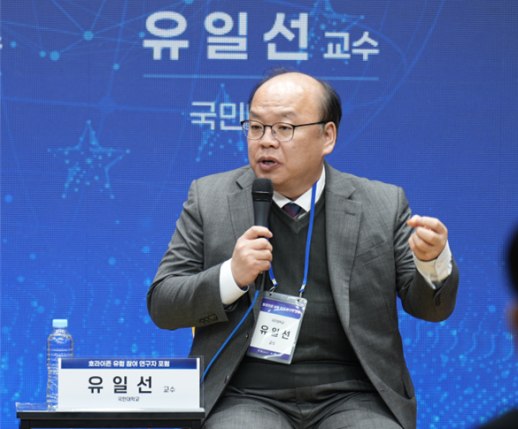 Kookmin University joins major EU research project for quantum and AI security SEOUL, March 20 (AJP) - Kookmin University Professor Yoo Il-sun has been selected to participate in Horizon Europe, the European Union’s premier research and innovation program. This partnership marks a significant milestone for South Korean academia, positioning the university at the forefront of a global effort to integrate quantum technology with digital security. The three-year project, known as the Quantum Computing European Union–South Korea Working Team (QuoUSKWe), operates with a total budget of approximately 2.7 million euros. Led by the Polytechnic University of Milan (Politecnico di Milano), the multinational consortium includes Germany’s Fraunhofer Institute and Finland’s IQM Quantum Computers. Kookmin University (KMU) is tasked with designing and verifying AI-based digital security systems that combine quantum computing with high-performance computing. The research will focus on securing quantum-safe technologies essential for 6G communication environments and the broader hyper-connected digital ecosystem. "This selection is meaningful because it recognizes our university's research competitiveness and innovation in quantum technology and digital security on an international level," Professor Yoo Il-sun said. "Based on cooperation with major European research institutes, we will take the lead in securing technological sovereignty and leading international standards in future strategic technology fields." Professor Yoo currently serves as the director of the Global ICT Convergence Security Innovation Research Center. He also holds leadership roles in international standard-setting bodies, including the IEEE 6G-IoT Quantum Security Standardization Group and the IFIP E-Business Information Systems Group. The university’s selection follows the launch of the KMU VISION 2035: EDGE initiative, which identifies quantum technology and artificial intelligence as core growth pillars. KMU established the first "Quantum Campus" in Korea on July 10, 2025, to bridge the gap between academic research and commercial application. Through this collaboration, the Global ICT Convergence Security Innovation Research Center expects to solidify its position as a global hub for quantum and AI-integrated security. The project officially commenced on March 20, 2026, and will continue to strengthen research ties between South Korea and European scientific institutions. 2026-03-20 15:15:46
 -
 BTS Live D-1: Music video for SWIM surpasses four million views in thirty minutes SEOUL, March 20 (AJP) - The official music video for SWIM, the lead single from the fifth full-length album by the musical group BTS, amassed more than four million views on YouTube within thirty minutes of its 1:00 p.m. (0400 GMT) release today. This rapid digital consumption follows a nearly four-year hiatus during which the seven members completed their mandatory military service. The unprecedented interest serves as a primary indicator of the global anticipation for the album, titled Arirang, which is the first collective project from the ensemble since their return to civilian life. While these digital metrics escalate, the physical landscape of South Korea is transforming to accommodate the first live performance of the new material. Authorities in Seoul have reported that 22,000 ticketed spectators will be permitted into Gwanghwamun Square on Saturday, though officials estimate that 260,000 people will congregate in the surrounding district. The site remains restricted to specialized personnel as technicians finalize the installation of the stage, lighting, and audio systems required for the production. To mitigate the risk of overcrowding and potential stampedes, a stadium-style management system has been implemented with 31 controlled entry points surrounding the square. The municipal government has mandated that subway trains bypass the Gwanghwamun, City Hall, and Gyeongbokgung stations during peak hours to maintain public safety. Traffic congestion in the central business district is projected to reach one hundred percent as the performance time approaches. Security operations and logistical restrictions are scheduled to remain in effect until the conclusion of the event on the evening of March 21. This mobilization of city resources reflects the scale of the return for the group following their period of national service. The surge in online engagement for the SWIM video coincides with the extensive measures taken by the administration to manage the crowds in the heart of the capital. 2026-03-20 13:53:11
 -
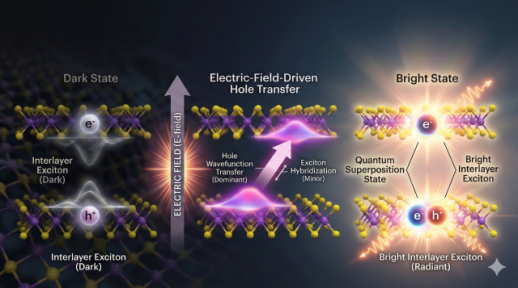 Sookmyung University researchers identify mechanism for observing interlayer excitons SEOUL, March 20 (AJP) - A research team at Sookmyung Women's University in South Korea has uncovered a new physical mechanism that allows scientists to observe "interlayer excitons" in two-dimensional semiconductors using electric fields. Led by School of Intelligent Electronic Systems Professor Cha Soon-young, the study provides a theoretical framework for a phenomenon that had previously been difficult to explain. Two-dimensional semiconductors are key materials for the development of next-generation optoelectronic devices and quantum information technology. In a two-layer structure, an interlayer exciton forms when an electron and a hole—a quasiparticle representing the absence of an electron—are located in different layers. While these excitons have long lifespans and energy levels that can be controlled by external fields, they are notoriously difficult to observe. Because the electron and hole are physically separated, their interaction with light is extremely weak, often leaving them in an invisible "dark" state. The researchers applied electric fields to bilayer tungsten diselenide (WSe2) and precisely measured its optical spectrum. They discovered that as the electric field increased, the normally undetectable interlayer exciton signals grew progressively stronger. Earlier studies attributed this brightness to "exciton hybridization," a process where different exciton states mix together. However, Professor Cha's team determined that hybridization alone could not account for their experimental data. Using an analysis that combined density functional theory (DFT) calculations with exciton modeling, the team proposed a "hole transfer" mechanism. When an electric field is applied, the wave function of the hole in one layer moves partially to the other, creating a quantum superposition state. This process amplifies the exciton's interaction with light, essentially turning the dark state into a "bright" state. The team's calculations confirmed that this hole transfer mechanism is the primary reason for the increased signal strength, while the contribution from hybridization is significantly smaller. "This research shows that the optical properties of interlayer excitons are determined by the quantum superposition of charge wave functions rather than simple state mixing," Cha Soon-young said. "These findings provide a critical foundation for future research into quantum physics and the design of 2D semiconductor-based devices." The study was a collaborative effort with researchers from the University of California, Riverside, Carnegie Mellon University, Nanjing University, National Cheng Kung University, and the National Institute for Materials Science (NIMS) in Japan. The findings were published on March 6, 2026, in Physical Review Letters, a journal ranked in the top 7.5 percent of the physics field. (Reference Information) Journal/Source: Physical Review Letters Title: Brightening interlayer excitons by electric-field-driven hole transfer in bilayer WSe2 Link 2026-03-20 11:24:32
 -
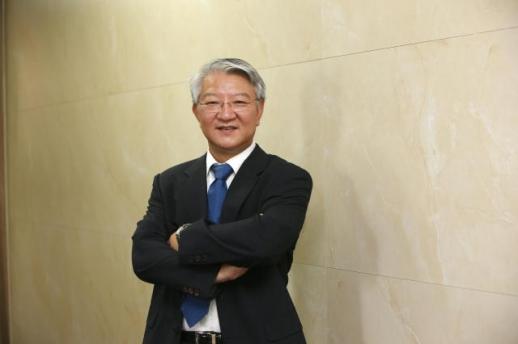 KAIST professor Lee Sang-yup becomes first Asian fellow of European Academy of Microbiology SEOUL, March 20 (AJP) - South Korea has produced its first fellow of the European Academy of Microbiology (EAM) with the induction of Korea Advanced Institute of Science and Technology's Distinguished Professor Lee Sang-yup. The prominent research institute said Friday that Lee was officially elected to the academy on March 19, making him the first researcher from an Asian institution to join the prestigious body. The EAM serves as the leadership tier of the Federation of European Microbiological Societies (FEMS), a network representing 30,000 scientists across 38 nations. Founded in 2009, the academy acts as a primary advisory body for European science policy and international research cooperation. Membership is restricted to scholars who have demonstrated significant impact on the field of microbiology through high-level research and academic leadership. Selection for the fellowship is a closed process where candidates are nominated and vetted by existing members without their knowledge. In the 2026 cohort of 95 new fellows, the vast majority were based in Europe. Outside of the continent, the academy selected 16 researchers from the United States and three from Australia, with Lee standing as the sole representative from Asia. Professor Lee is widely regarded as a pioneer in the fields of systems metabolic engineering and synthetic biology. His work focuses on re-engineering microorganisms to serve as microscopic factories. These microbes are programmed to convert renewable biomass into useful chemicals, fuels, and materials, offering a sustainable alternative to traditional petroleum-based manufacturing. "I find this election to the European Academy of Microbiology very meaningful," Lee Sang-yup said. "I will continue to contribute to solving environmental and energy challenges facing humanity through microbial-based sustainable production technologies, while actively participating in international research and academic exchange." His research at KAIST over the last 31 years has led to several industrial breakthroughs, including the development of biodegradable polymers, high-efficiency succinic acid production, and spider silk that is stronger than steel. To date, he has published 796 journal papers and registered or applied for more than 860 patents. Lee's career has been defined by a series of international firsts. He remains the only scientist in the world to be elected to the National Academy of Engineering (NAE), the National Academy of Sciences (NAS), the Royal Society, and the Chinese Academy of Engineering. He has also been named a Highly Cited Researcher by Clarivate for nine consecutive years, placing him in the top 1 percent of his field globally. 2026-03-20 11:01:27